11 These Mud Kitchen Ideas for Kids Will Transform Your Backyard
Introduction
If your backyard feels underused, a mud kitchen might be the simple upgrade that changes everything. Kids do not always need another plastic toy, another battery-powered gadget, or another indoor activity that gets forgotten after one week. What they often need is a place where they can scoop, stir, pour, splash, sort, pretend, and make a little mess with permission. That is why the idea behind Stop Buying Toys — Try a Mud Kitchen works so well for families who want outdoor play to feel creative, affordable, and memorable.
A mud kitchen can fit almost any USA backyard, from a suburban lawn to a small patio, side yard, garden corner, or shaded fence area. The best setups are not complicated. They use simple materials like crates, bowls, spoons, buckets, old pans, reclaimed wood, herbs, leaves, stones, and water. With the right layout, your backyard can become a mini café, bakery, science lab, garden market, and sensory play zone all in one.
1. Backyard Workbench
- Creates a child-height surface for mixing and scooping
- Works with pallets, crates, benches, or reclaimed boards
- Helps keep messy play in one defined outdoor zone
- Looks best when paired with bowls, hooks, and baskets
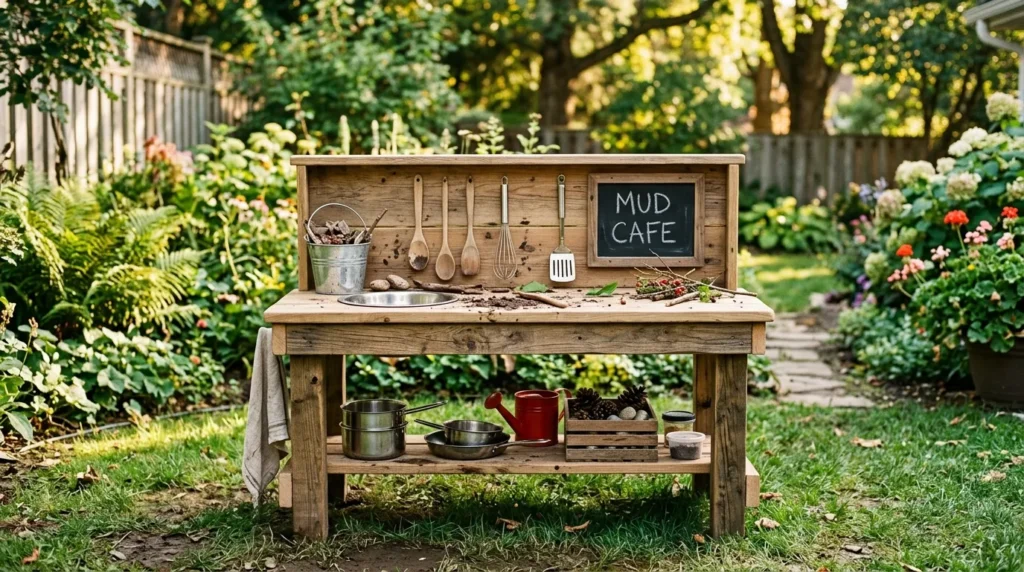
A backyard workbench gives kids a real place to create, and that one detail can completely change how they use outdoor space. Instead of letting bowls, spoons, and muddy mixtures spread across the lawn, a low counter becomes the main station for pretend cooking. You can use an old outdoor table, stacked crates, pallet wood, or a smooth board secured to sturdy supports. In my experience, kids stay engaged longer when the surface feels like their own little kitchen instead of a random table outside.
The finished workbench should feel sturdy, reachable, and easy to reset after play. Sand every rough edge, check that the base does not wobble, and add outdoor-safe sealant if the wood will stay outside. A metal bowl, small tray, and basket of nature supplies can make the setup useful right away. For smaller yards, keep the counter narrow and place it against a fence. For siblings, make it wider so children can work side by side without crowding each other.
2. Bowl Sink
- Adds realistic washing, rinsing, and pretend cooking play
- Works with stainless bowls, enamel basins, or plastic tubs
- Makes muddy water easy to dump and clean
- Avoids permanent plumbing or expensive outdoor fixtures
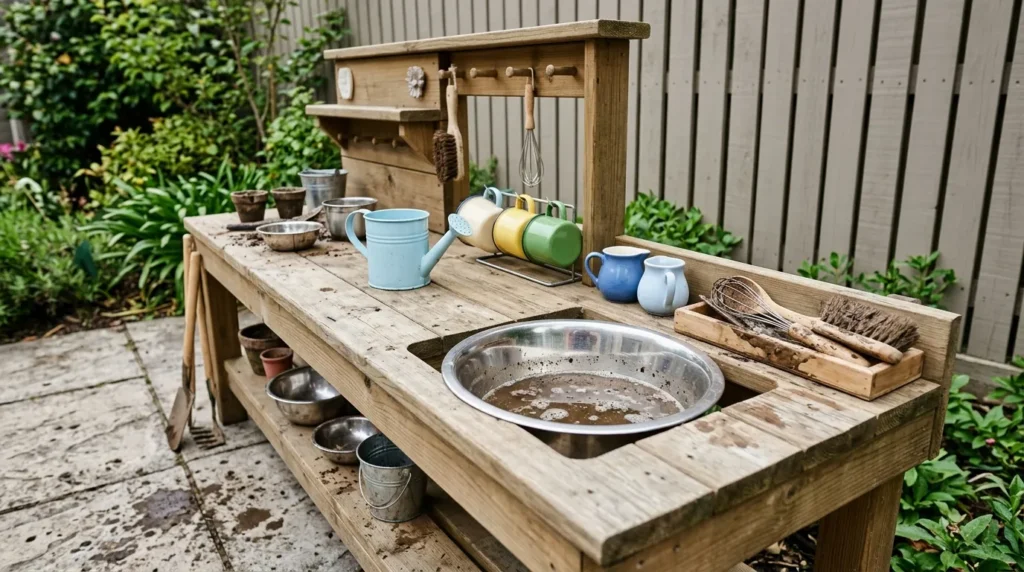
A bowl sink is one of the easiest ways to make a mud kitchen feel real without making the project complicated. Use a stainless-steel mixing bowl, enamel basin, plastic tub, or old dish pan as the sink. It can sit directly on the workbench, or you can place it into a simple cutout for a built-in look. The most practical version stays removable because muddy water needs to be dumped, rinsed, and reset quickly after kids finish washing stones, spoons, leaves, and pretend dishes.
This little sink often becomes the busiest part of the entire backyard setup. Children can stir muddy soup, rinse pebbles, make flower tea, wash pretend bakery tools, and experiment with different textures. Pair the sink with a small pitcher, watering can, or camping jug so water stays controlled. The result feels playful and manageable at the same time. It also looks charming beside rustic wood, hanging utensils, woven baskets, and soft garden greenery, giving the whole play area a more finished look.
3. Pour Station

- Encourages measuring, rinsing, pouring, and texture play
- Uses jugs, watering cans, pitchers, funnels, and buckets
- Helps kids explore cause and effect naturally
- Works best over grass, mulch, gravel, or pavers
A pour station brings the mud kitchen to life because water changes everything kids can make. You do not need a hose connection or built-in outdoor sink. A camping jug, drink dispenser, watering can, small bucket, or plastic pitcher gives children enough water to experiment with mud, leaves, rocks, and cups. Place the water source close to the workbench so kids are not carrying full containers across the yard. This keeps the setup safer and prevents muddy trails from spreading everywhere.
The best pour station starts with drainage, not decoration. Grass, mulch, pea gravel, and patio pavers usually handle spills better than slick concrete. Add funnels, measuring cups, basins, and small pitchers so children can pour in different ways and test how textures change. Dry dirt becomes thick paste, watery soup, or smooth mud batter depending on how much water they add. That kind of hands-on learning feels like play, but it also builds coordination, patience, problem-solving, and confidence.
4. Hanging Utensils

- Saves counter space and keeps tools visible
- Works with hooks, peg rails, fence boards, or metal strips
- Makes spoons, cups, ladles, and colanders look organized
- Helps children return supplies after play
Hanging utensils make a mud kitchen look more finished while solving a real storage problem. Install a wooden peg rail, hook strip, or outdoor-safe bar above the counter, then hang lightweight spoons, measuring cups, small buckets, enamel mugs, ladles, and colanders. Keep the hooks rounded, secure, and low enough for children to reach without stretching. This gives kids visible choices and keeps the main surface clear for mixing, decorating, and serving their muddy creations during everyday backyard play.
The visual upgrade is surprisingly strong because a row of tools creates that real kitchen feeling. It also makes cleanup easier, since every spoon and cup has a clear place to return. Keep the rail simple rather than overcrowded; too many tools can become distracting and messy. Store extras in a bin and rotate them when play starts feeling repetitive. I’ve noticed children are more likely to help reset the area when the storage system is obvious, simple, and within reach.
5. Crate Pantry
- Adds open storage without building cabinets
- Works with wooden crates, baskets, produce boxes, or bins
- Keeps bowls, tools, and nature supplies separated
- Can become market shelves or bakery displays later
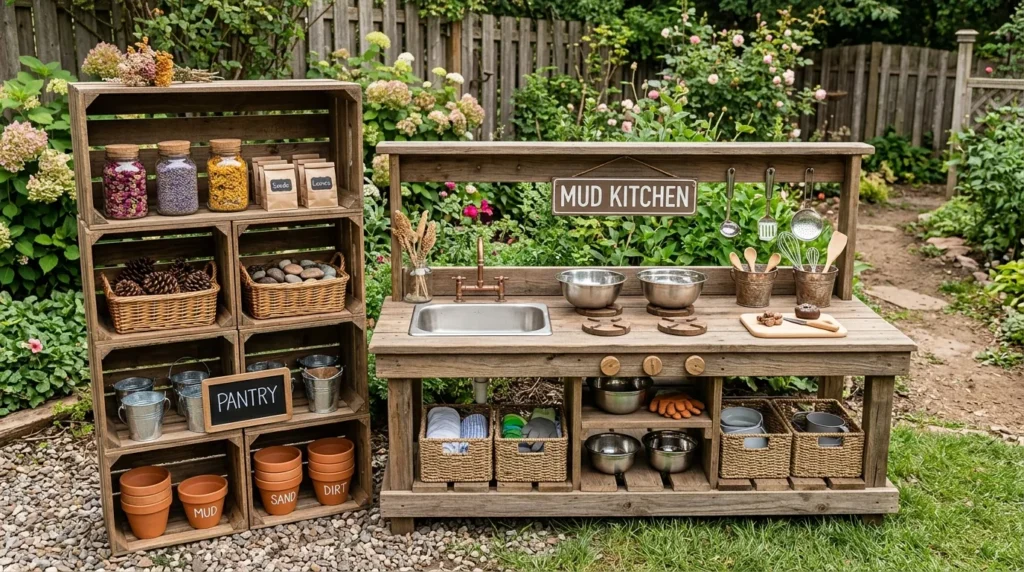
A crate pantry gives the mud kitchen structure and storage at the same time. Turn wooden crates sideways under the counter, stack them beside the station, or use produce boxes as open cubbies. One crate can hold bowls, another can store spoons, another can keep nature supplies, and one can be reserved for muddy tools after play. Secure stacked crates if children may lean on them. Open storage works beautifully because kids can see everything without opening drawers or asking adults for help.
The finished pantry can look rustic, soft, or colorful depending on your backyard style. Leave the crates natural for a farmhouse garden look, stain them to match a fence, or paint them sage, cream, tan, or dusty blue. Add chalk labels or picture labels for younger children who need visual reminders. Keep heavy items low and lighter baskets higher for safety. As play changes, the crates can shift from tool storage to pretend shop shelves, bakery counters, or seasonal nature displays.
6. Nature Ingredients
- Uses free backyard materials for pretend recipes
- Works with leaves, petals, smooth stones, herbs, and pinecones
- Encourages sorting, counting, smelling, and decorating
- Changes naturally with the seasons
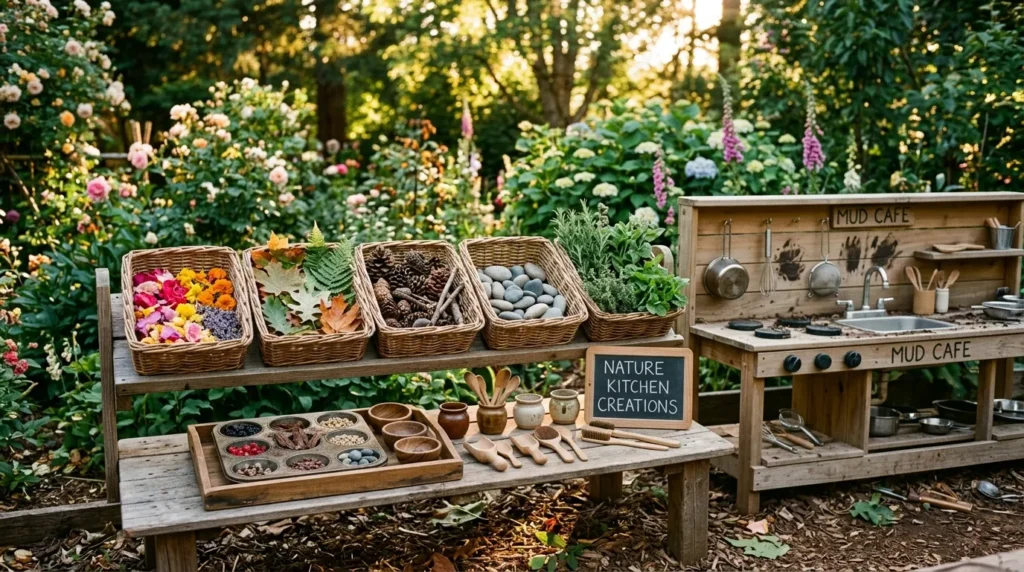
Nature ingredients make mud kitchen play feel fresh without constantly buying new toys. Use shallow baskets, muffin tins, trays, or small bowls to organize petals, leaves, pinecones, smooth stones, grass, seed pods, and safe herbs. When materials are displayed clearly, kids naturally sort by color, compare textures, count pieces, and decorate mud pies. This simple setup turns the backyard into a pretend pantry and helps children notice small outdoor details they might otherwise walk past during regular play.
The seasonal flexibility is what makes this idea so useful for families. Spring can bring flower petals and mint, summer can bring grass and shells, fall can bring acorns and colorful leaves, and winter can include evergreen pieces or smooth stones. Avoid poisonous plants, treated mulch, sharp sticks, and tiny choking hazards for younger children. The result is sensory-rich, beautiful, and budget-friendly. Natural materials also photograph beautifully beside wood, metal bowls, and baskets, giving the play area a softer Pinterest-style look.
7. Chalkboard Café
- Adds pretend restaurant, bakery, and menu play
- Encourages drawing, naming, counting, and early writing
- Works on fences, boards, walls, or small easels
- Makes the kitchen look complete without much cost
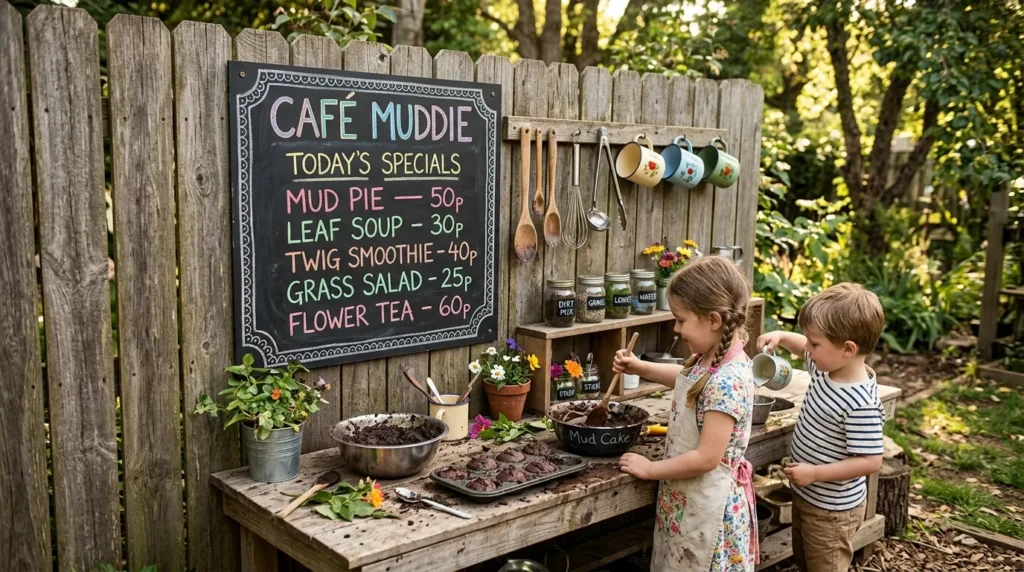
A chalkboard café gives the mud kitchen instant personality because it creates a theme children understand right away. Mount a weather-safe chalkboard on a fence, wall, or simple backing board near the counter. Kids can draw menus, write pretend prices, name their mud pies, and take orders from siblings or friends. This adds storytelling and early literacy without turning the activity into homework. Use outdoor chalkboard paint or a sealed board, and keep chalk in a covered container between play sessions.
The chalkboard also gives the whole setup a strong visual focal point. Parents can write prompts like “leaf soup,” “flower tea,” “stone stew,” or “mud muffins” to inspire new play ideas. Older kids can decorate the board before playdates, birthday parties, or weekend backyard gatherings. The result is playful, affordable, and highly Pinterest-friendly. It changes easily by season, so the same kitchen can feel like a spring café, summer market, fall bakery, or cozy outdoor soup stand.
8. Mud Bakery
- Creates a focused pretend baking area
- Uses muffin tins, cake pans, trays, spoons, and molds
- Encourages scooping, pressing, filling, and decorating
- Great for siblings, cousins, friends, and parties
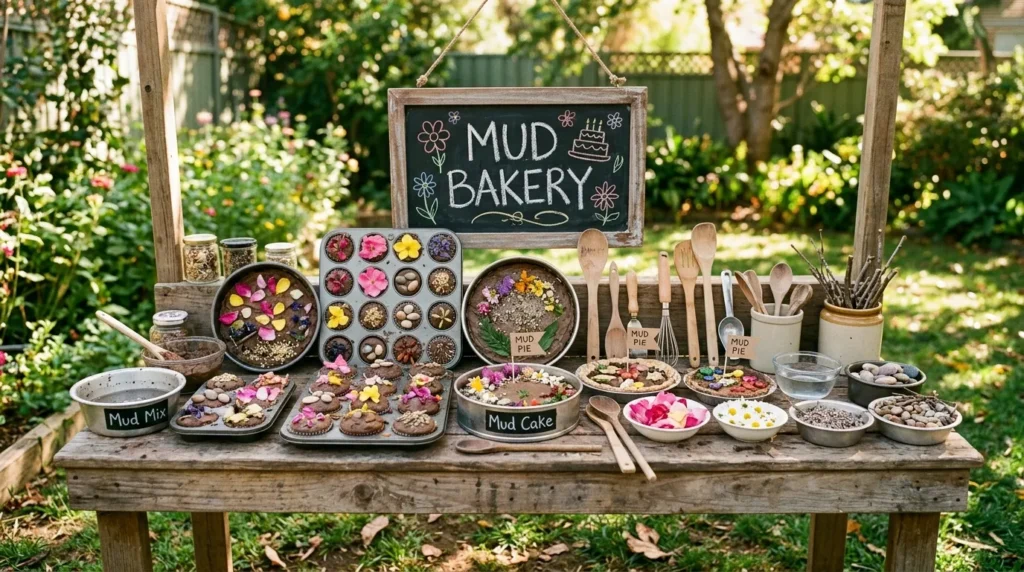
A mud bakery gives children a clear activity they can begin immediately. Set out muffin tins, cake pans, silicone molds, trays, spoons, and spatulas so kids can scoop mud into shapes and decorate each one. Add petals, leaves, pebbles, grass, pinecones, and herbs as pretend toppings. This works well because divided pans give structure without limiting imagination. Children can make cupcakes, pies, cookies, pancakes, birthday cakes, or café treats using the same simple materials again and again.
The finished bakery area feels adorable without requiring expensive supplies. Add a small chalk sign, a serving shelf, and a basket labeled “toppings” for extra charm. Use washable, child-safe tools that are no longer needed indoors, and avoid sharp or breakable items. The result supports fine motor skills, sorting, counting, and pretend storytelling while still feeling like pure outdoor fun. It also works well for group play because each child can decorate their own muddy creation instead of crowding around one bowl.
9. Herb Shelf

- Adds scent, color, and gentle garden learning
- Works with mint, basil, rosemary, thyme, and lavender
- Fits on crates, shelves, rail planters, or narrow tables
- Gives kids natural pretend ingredients for soups and teas
An herb shelf makes a mud kitchen feel alive because scent adds another layer to sensory play. Place child-safe herbs in small pots near the counter so children can smell, touch, pick tiny pieces, and mix them into pretend recipes. Mint, basil, rosemary, thyme, and lavender are popular choices, but always choose plants your family recognizes and feels comfortable handling. This simple detail connects pretend cooking with real garden textures, making the play calmer, greener, and more memorable for kids.
The finished shelf looks beautiful beside wood counters, metal bowls, woven baskets, and natural trays. Use terracotta pots, wooden plant labels, and a shallow tray underneath to catch soil or water. Teach children to pick gently so the herbs keep growing through the season. This upgrade is especially helpful on patios or compact yards where greenery is limited. The result is fragrant, educational, and visually soft. It gives children natural “seasonings” while making the backyard play space feel more styled and thoughtful.
10. Mini Market

- Combines mud kitchen play with shop-style role play
- Uses crates, baskets, jars, trays, and chalk price tags
- Encourages counting, serving, sharing, and conversation
- Perfect for playdates and relaxed backyard gatherings
A mini market transforms the mud kitchen into a bigger imaginative world. Add crates for pinecones, baskets for leaves, jars for petals, and trays for finished mud pies or pretend treats. A chalk sign can label the space as a market, bakery, garden café, or outdoor shop. Kids can cook, sell, serve, collect ingredients, and arrange displays. This works especially well when several children are playing because everyone can choose a role instead of crowding around one mixing station.
The market setup grows beautifully with different ages. Younger children enjoy scooping, sorting, and carrying items, while older kids create menus, prices, customer roles, and pretend conversations. Add reusable cups, small trays, order cards, and baskets for extra detail. The result is social, organized, and endlessly adaptable. It helps children practice cooperation, counting, language, and problem-solving while staying fully engaged outside. Instead of adding more clutter indoors, this kind of setup supports richer outdoor play with simple materials already around the home.
11. Cleanup Corner
- Keeps muddy hands, tools, and shoes contained
- Works with rinse buckets, towels, mats, and labeled bins
- Helps kids learn simple reset routines
- Makes parents more likely to allow messy play often
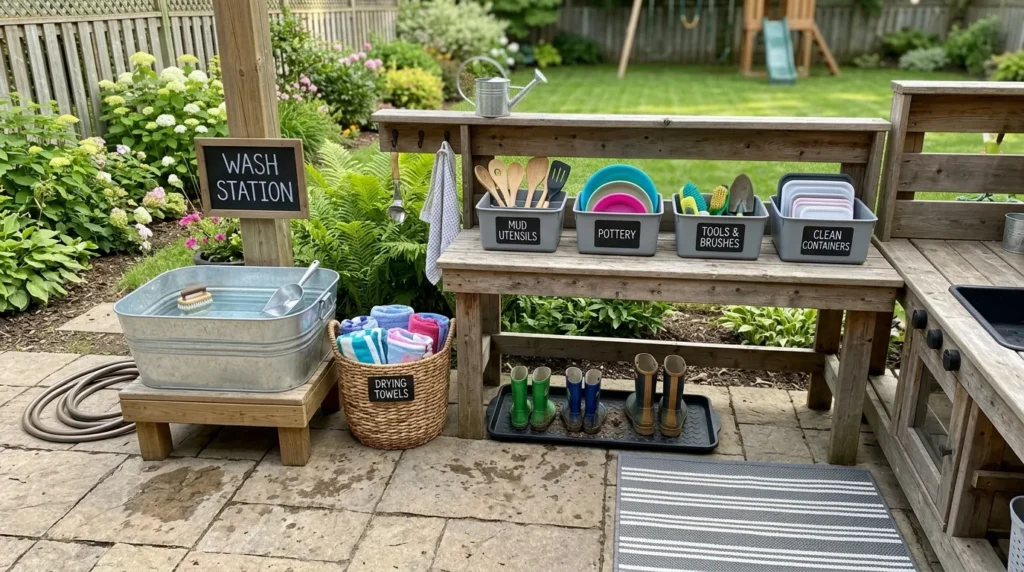
A cleanup corner is one of the most important features for real family life. Place a rinse bucket, towel basket, boot tray, washable mat, or labeled bin near the mud kitchen. Children can rinse spoons, wipe hands, drop muddy tools into one container, and leave wet items outside. In my experience, families use outdoor sensory spaces more often when cleanup feels predictable. Messy play becomes easier to say yes to when the reset system is already built into the layout.
The cleanup area can still look attractive if the materials match the rest of the kitchen. Use a galvanized tub, woven basket, neutral outdoor mat, or simple wooden crate to keep everything organized. Teach children to separate muddy tools from cleaner dishes so the next play session starts smoothly. The result is practical, parent-friendly, and sustainable for daily use. This is where Stop Buying Toys — Try a Mud Kitchen becomes more than a cute idea; it becomes a backyard routine that actually works.