11 These Mud Kitchen Ideas Are Perfect for Small Spaces
Small outdoor spaces can still feel playful, creative, and full of childhood magic. You do not need a huge backyard, custom playhouse, or expensive wooden structure to give kids a place where they can scoop, stir, pour, sort, pretend, and explore nature. A tiny patio, side yard, balcony corner, townhouse garden, or narrow fence line can become a charming mud kitchen with the right layout, safe materials, and smart storage.
These Mud Kitchen Ideas are designed for real families who want something practical, cute, and easy to manage. The goal is not to create a perfect showroom setup. The goal is to build a small outdoor play zone kids will actually use, while keeping cleanup, storage, weather, and space limits in mind.
1. Balcony Cart
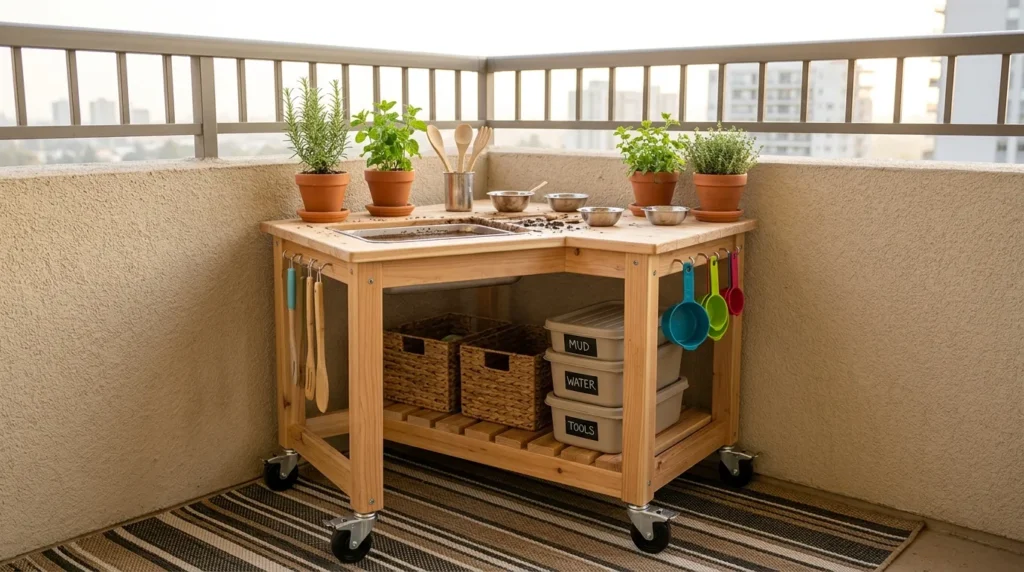
- Works well for apartments, townhomes, and rental patios
- Rolls away easily after playtime or bad weather
- Uses bins, bowls, cups, and small baskets for organization
- Keeps messy play compact without needing a full yard
A balcony cart is perfect when outdoor space is limited because it gives kids a complete pretend kitchen without taking over the area. Choose a sturdy rolling cart with locking wheels, then organize each shelf with lightweight bowls, scoops, measuring cups, and nature supplies. The top shelf can become the mixing counter, the middle shelf can hold tools, and the bottom shelf can store small bins. In my experience, this setup works best when every item has a clear place, so cleanup feels simple for adults and children.
The transformation is surprisingly big for such a small footprint. A plain patio corner becomes a movable outdoor play station that can shift into shade, roll beside a water source, or tuck away when guests arrive. Add a washable mat underneath to protect decking or concrete, and use lidded containers for muddy tools. This idea is especially useful for families who rent or move often. It gives children independence and messy creative play while keeping the whole setup flexible, compact, and easy to reset after every use.
2. Fence Counter
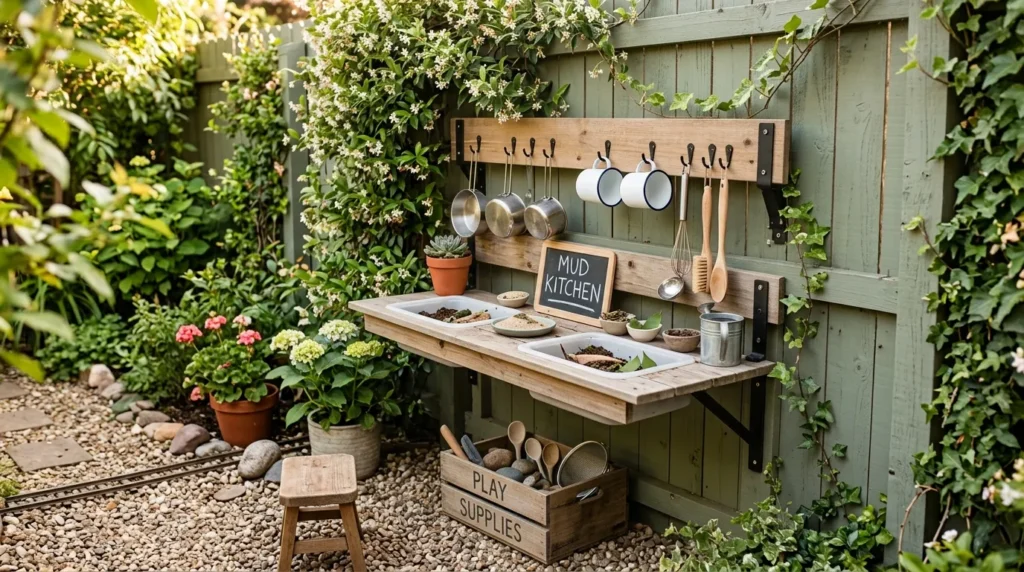
- Uses vertical space instead of valuable floor space
- Works along privacy fences, balcony walls, and side yards
- Adds hooks, shelves, hanging cups, and tool storage
- Creates a built-in look without a large structure
A fence counter is one of the smartest small-space mud kitchen solutions because it uses a wall or fence instead of spreading outward. Attach a narrow shelf, reclaimed board, or small outdoor counter at child-friendly height, then add hooks above it for spoons, cups, and lightweight pans. This design keeps the play area flat against the fence, leaving more room for walking, gardening, or patio seating. Make sure the counter is secure, sanded smooth, and installed with outdoor-safe hardware before children begin using it.
The finished setup can look polished with very simple materials. Hang enamel cups, measuring spoons, a small colander, and a chalkboard sign to create a sweet pretend café feeling. Place one crate or bin underneath for mud-safe supplies, and keep water in a small jug instead of using plumbing. The result feels intentional and tidy, even in a narrow yard. It also makes cleanup easier because tools stay visible and reachable, helping children return items instead of dropping everything across the patio or lawn.
3. Crate Stack
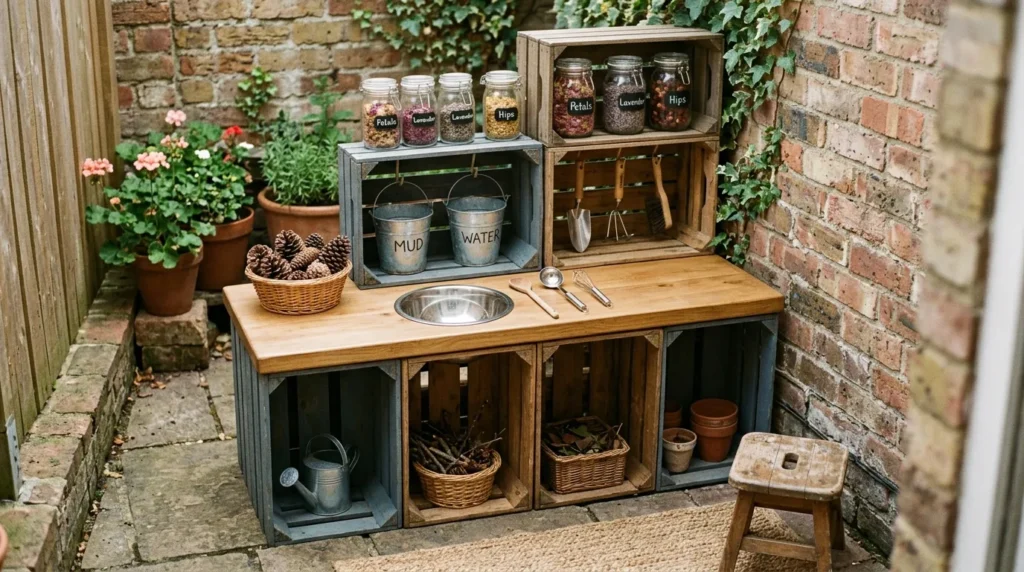
- Builds storage and counter space at the same time
- Uses affordable wooden crates or sturdy plastic bins
- Easy to customize for patios, decks, and narrow corners
- Works with baskets, bowls, jars, and pretend ingredients
A crate stack gives you a mud kitchen structure without complicated building, which makes it ideal for small spaces. Stack sturdy wooden crates horizontally and vertically, then secure them together so they do not tip during play. Add a smooth board across the top if you want a wider work surface. The open crate spaces naturally become shelves for bowls, buckets, pinecones, leaves, and washable tools. This layout works beautifully because storage is built into the design instead of added later as an afterthought.
The final look feels handmade, warm, and practical. You can leave the crates natural, stain them to match the fence, or paint them in soft outdoor colors like sage, cream, or dusty blue. Keep heavier items on the bottom and lighter baskets on top for safety. Add a small removable bowl as a pretend sink and a tray for nature ingredients. The result is a compact kitchen that feels layered and useful while still fitting into small backyards, patios, garden corners, or townhouse outdoor spaces.
4. Corner Bench
- Turns an unused corner into a defined play zone
- Works with small benches, low shelves, or repurposed tables
- Keeps the kitchen contained and easy to supervise
- Great for patios, decks, and compact fenced yards
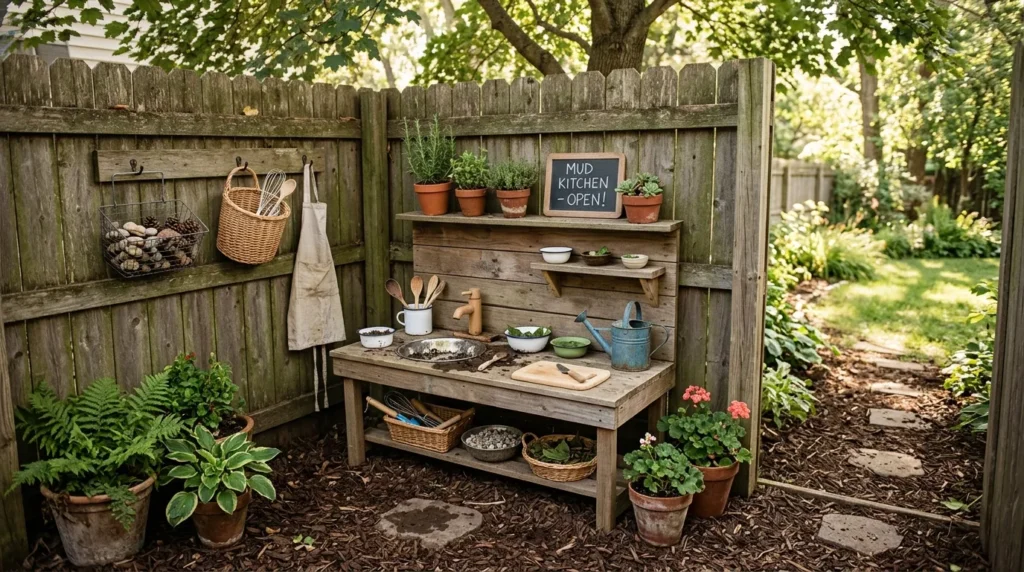
A corner bench setup works beautifully because corners often go unused in small outdoor spaces. Place a low bench, child-height table, or narrow shelf into the corner, then turn it into a pretend mixing station with bowls, spoons, and baskets. The two walls or fence sides naturally frame the play area, making it feel cozy and contained. This helps children understand where messy play belongs. A corner layout also leaves the center of the patio or yard open for movement, seating, or other activities.
The transformation feels intentional without requiring a large build. Add one hook rail above the bench, one crate below it, and a small water jug nearby for controlled pouring. If the corner is sunny, add a patio umbrella, shade sail, or outdoor canopy to keep the area comfortable. The result is a small but complete play kitchen that looks tidy from the rest of the yard. It is especially helpful for parents who want creative outdoor play without sacrificing every inch of usable family space.
5. Bucket Sink
- Creates sink-style play without plumbing
- Uses removable buckets, basins, or metal bowls
- Makes cleanup fast and simple
- Perfect for patios where water needs to be controlled
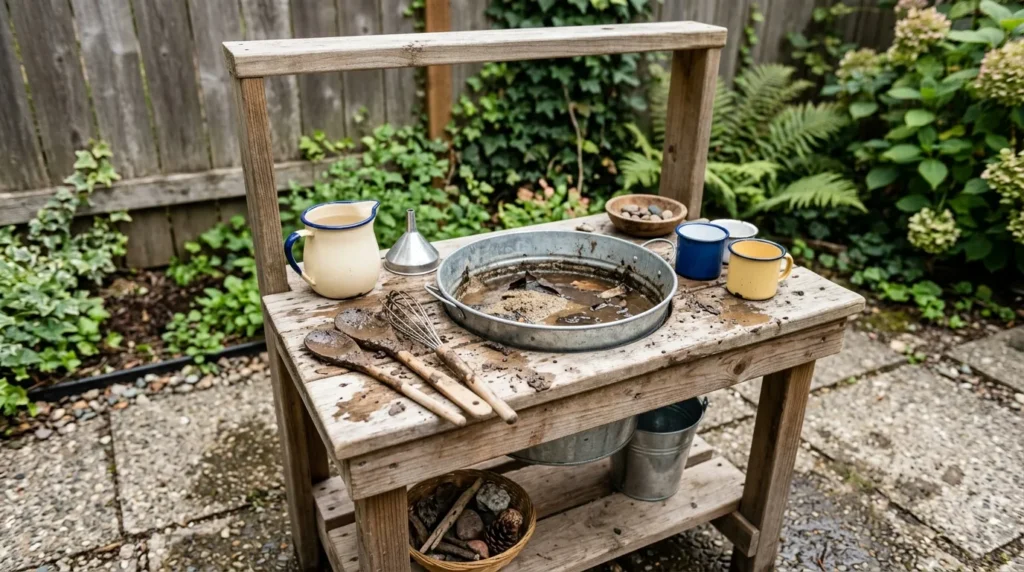
A bucket sink gives children the feeling of a real kitchen while keeping the setup simple and small. Use a removable bucket, plastic basin, enamel bowl, or stainless-steel mixing bowl as the sink. Place it on top of a counter or set it into a crate opening if you want a built-in look. The key is removability. When play is finished, you can lift the bucket, dump muddy water safely, rinse it, and store it upside down to dry before the next outdoor session.
This setup is especially useful on patios, balconies, and decks where drainage matters. Instead of letting water spread everywhere, kids learn to pour, mix, rinse, and reset inside one container. Add a watering can, small pitcher, and funnel to extend the play without creating a flood. I’ve noticed children love this feature because it gives them a clear job, almost like washing dishes or making soup. The result is practical, engaging, and easy to manage in small outdoor spaces where mess needs clear boundaries.
6. Slim Potting Table
- Repurposes garden furniture for kid-friendly play
- Offers counter space, shelves, and storage in one piece
- Works well beside planters, raised beds, and fence lines
- Best for families who want a natural garden look
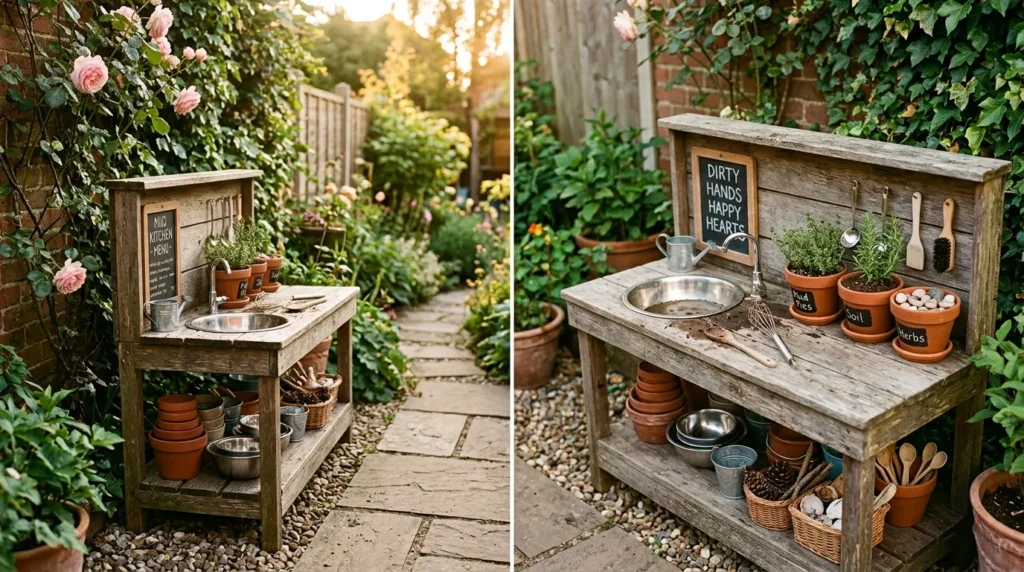
A slim potting table can become a beautiful mud kitchen with very little adjustment. Many potting tables already include a narrow work surface, lower shelf, and small back rail, which makes them perfect for outdoor pretend play. Before using one for children, sand rough edges, tighten screws, remove sharp hooks, and check that it stands firmly. If the table is too tall, choose a lower version or add a sturdy child-safe platform nearby. The goal is comfort, safety, and easy access to tools.
The finished look blends naturally with real backyard spaces because it feels like garden furniture rather than a bulky toy. Add terracotta pots, small metal bowls, wooden spoons, herb planters, and baskets of leaves or pinecones. This Is a good option when parents want the play area to look attractive beside flowers, raised beds, or patio seating. The result is small, charming, and useful. Children get a real-feeling workspace, while adults get a backyard feature that does not look out of place.
7. Wall Hooks
- Keeps tools off the ground and easy to reach
- Works with spoon rails, pegboards, and simple hook strips
- Saves counter and shelf space in compact areas
- Makes the play kitchen look organized and finished
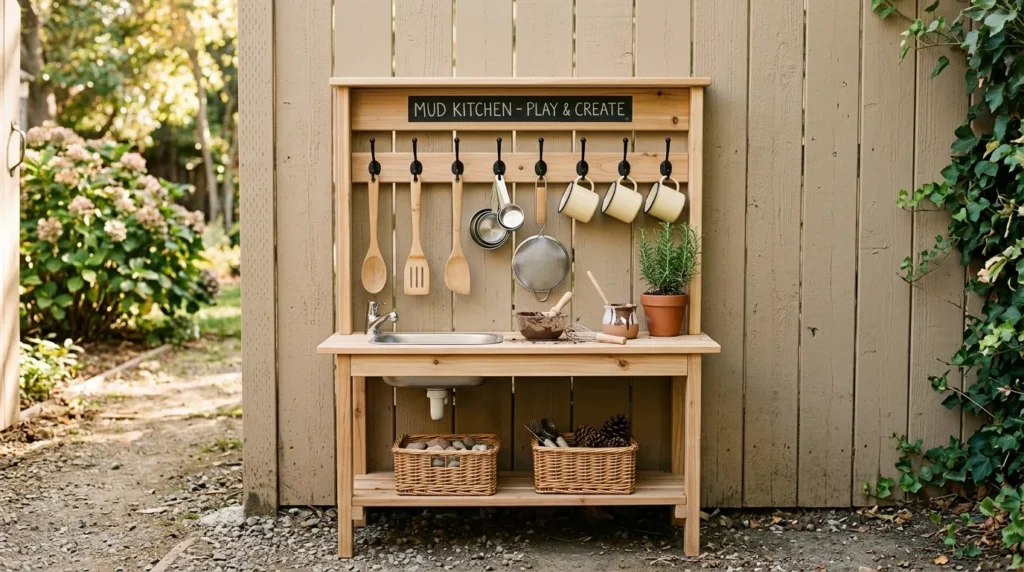
Wall hooks can completely change a small mud kitchen because they move supplies upward instead of letting everything pile on the counter. Install a hook rail, outdoor pegboard, or a few individual hooks above the play surface. Hang lightweight spoons, measuring cups, small colanders, enamel mugs, and tiny buckets where children can reach them. This keeps the counter clear for mixing and prevents tools from getting lost in mud. Use rounded hooks and secure them properly so the setup stays safe during active play.
The visual upgrade is just as helpful as the organization. A row of hanging tools makes the space feel like a real kitchen, even if the actual counter is tiny. Keep the most-used items in the easiest spots and rotate extras seasonally so the area does not feel crowded. That’s why many small-space designers recommend vertical storage first. The result is tidy, practical, and Pinterest-friendly, giving children independence while keeping narrow patios, side yards, and compact play corners from feeling messy or overwhelmed.
8. Mini Market
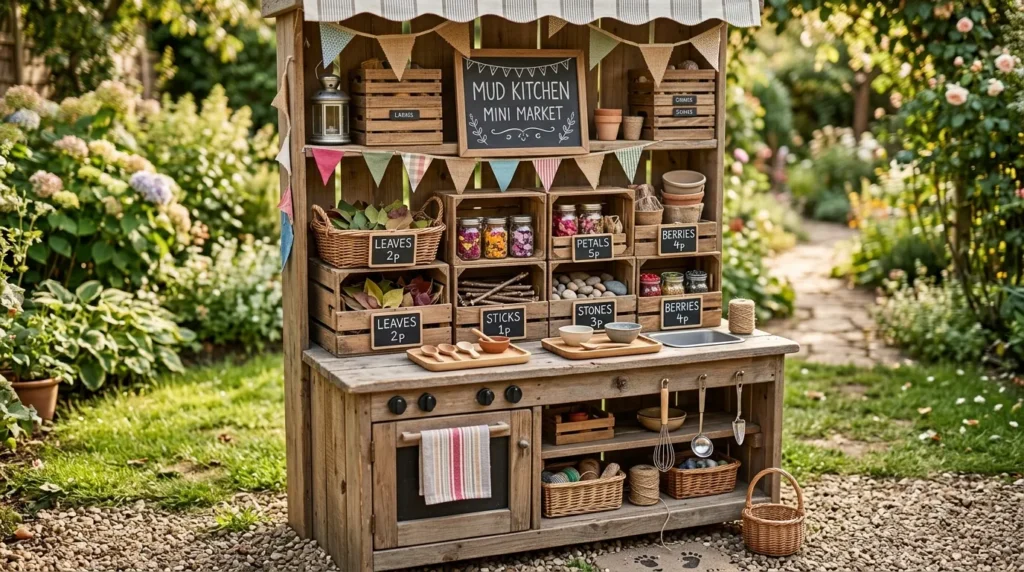
- Combines pretend cooking with shop-style role play
- Uses crates, baskets, chalk signs, and small trays
- Encourages sorting, counting, serving, and sharing
- Great for siblings, playdates, and small patios
A mini market setup makes a small mud kitchen feel bigger because it adds a second layer of pretend play. Instead of only mixing mud, children can arrange pinecones, leaves, stones, petals, and pretend food on tiny trays or baskets. Add a small sign that says “market,” “bakery,” or “garden café,” and use crates as display shelves. This works well in limited spaces because the market can be vertical, with baskets stacked neatly instead of spread across the ground.
The transformation is playful and social, especially when siblings or friends join in. One child can cook, another can sell, and another can collect ingredients. Add chalk price tags, reusable cups, and a small serving tray to make the play feel more complete. The result is charming without needing a larger footprint. These Mud Kitchen Ideas work best when they give children multiple ways to play in one compact zone, and a mini market does that beautifully by combining cooking, sorting, counting, and storytelling.
9. Herb Shelf
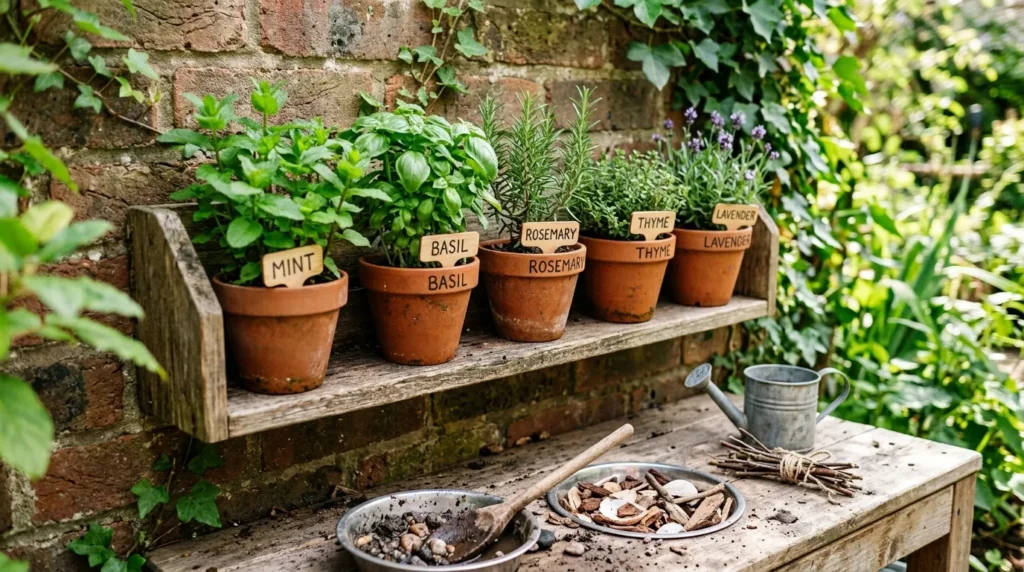
- Adds scent, color, and garden learning to small spaces
- Works with potted mint, basil, rosemary, lavender, and thyme
- Fits on shelves, railings, crates, or narrow tables
- Gives kids safe natural ingredients for pretend recipes
An herb shelf adds life to a small mud kitchen because plants bring scent, color, and texture without taking up much room. Place child-safe herbs in small pots on a shelf, railing planter, crate top, or narrow table beside the play area. Mint, basil, rosemary, thyme, and lavender are popular choices, but always choose plants your family knows and feels comfortable handling. Kids can smell leaves, pick tiny pieces, sort them into bowls, and mix them into pretend soups, teas, and garden cakes.
The finished setup feels beautiful and educational without becoming complicated. Use terracotta pots, simple plant labels, and a shallow tray underneath to catch water or soil. Teach children to pick gently so the plants keep growing through the season. The result is a mud kitchen that changes naturally over time and feels connected to the garden. It also makes small spaces feel softer and more styled, especially when the play area sits on a patio, balcony, or narrow backyard path with limited greenery.
10. Foldaway Station
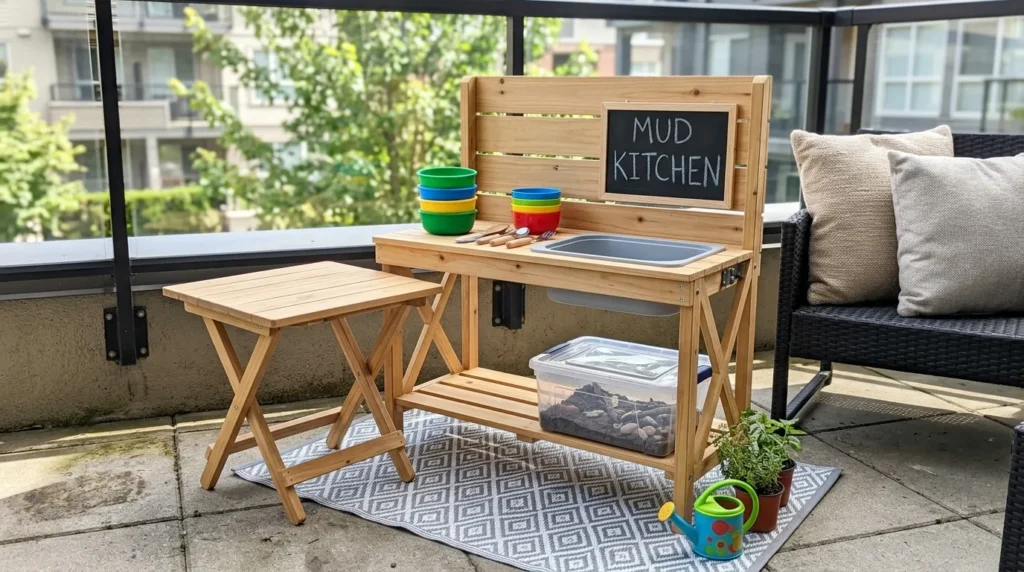
- Saves space when the kitchen is not in use
- Works with folding tables, wall-mounted shelves, or compact benches
- Ideal for renters, shared patios, and narrow yards
- Easy to store during storms, winter, or family gatherings
A foldaway station is perfect when outdoor space has to serve more than one purpose. Use a small folding table, wall-mounted drop-down shelf, or compact bench that can be moved or stored after play. Set out bowls, tools, and ingredient baskets only when children are ready to use them. This approach works especially well on shared patios, rental balconies, and townhome yards where permanent play furniture may not fit. Keep all supplies together in one lidded bin so setup takes only a few minutes.
The biggest benefit is that the mud kitchen never has to dominate the space. After playtime, the table folds, the bowls stack, and the bin slides into a garage, shed, closet, or outdoor storage bench. Add a washable mat to define the play zone while it is active. The result is flexible, realistic, and low-pressure for busy families. It still gives children the full sensory experience of mixing and pretending, but it respects the fact that small outdoor spaces often need to change throughout the day.
11. Tiny Chalk Café
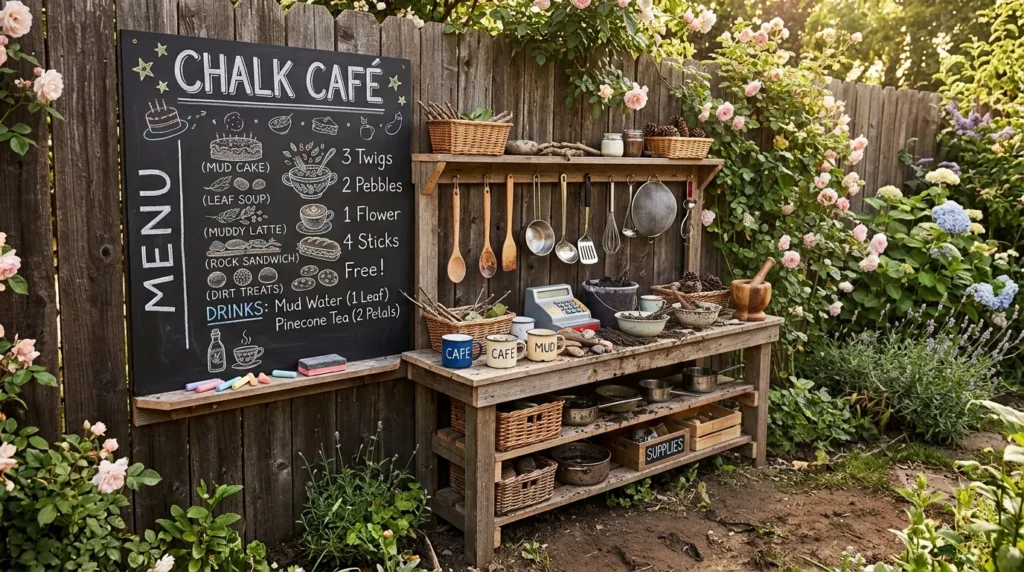
- Adds personality without taking up floor space
- Encourages drawing, writing, menus, and pretend orders
- Works with chalkboards, chalk paint, or framed outdoor boards
- Makes even a small setup feel styled and complete
A tiny chalk café turns a compact mud kitchen into a pretend restaurant with one simple vertical detail. Mount a small chalkboard above the counter, on a fence, or beside the play station. Children can draw menus, write pretend prices, name their mud pies, or take orders from siblings. This detail adds storytelling and early writing practice without requiring extra floor space. Use outdoor chalkboard paint or a sealed board, and keep chalk in a small covered container so it does not get ruined by rain.
The visual effect is charming because the chalkboard gives the setup a clear focal point. Parents can write prompts like “leaf soup,” “stone stew,” “flower tea,” or “mud muffins” to inspire fresh play. Older children can decorate the sign before playdates or backyard parties. The result is small but high-impact, making the kitchen feel finished without adding bulky furniture. It is one of the most practical small-space ideas because it adds creativity, style, and function while using only a narrow wall or fence area.