10 Affordable Mud Kitchen Ideas for Kids That Look Grea
Backyard play feels richer when children have a little space made just for messy imagination. A mud kitchen gives kids permission to scoop soil, stir water, collect leaves, and create pretend recipes while staying outdoors. For USA families, it is also a budget-friendly way to make the yard more useful without buying a large playset. You can build something charming from pallets, crates, bowls, baskets, thrifted furniture, and simple garden supplies. The goal is not perfection. The goal is a safe, sturdy, good-looking setup that invites creative play every day.
The best outdoor play corners usually look intentional, even when they are made from simple materials. A small wooden counter, a bowl sink, a few hooks, and a basket of tools can turn an empty fence line into a pretend café, bakery, or garden lab. This guide shares practical ideas that look great in photos but still work for real families. Each idea focuses on low cost, easy setup, storage, safety, and visual style. You can adjust the size for a patio, suburban backyard, deck, or small side yard outside.
An Affordable Mud Kitchen works because it gives children open-ended play instead of a toy with one purpose. Kids can pretend to cook, wash dishes, serve meals, sort rocks, measure water, and design their own outdoor recipes. Parents get a dedicated zone for messy play, which helps keep the rest of the yard calmer. In my experience, the most successful setups are the ones that combine function and beauty. They give children freedom, but they also give adults a layout that feels easy to clean and pleasant to see daily.
1. Pallet Prep Station
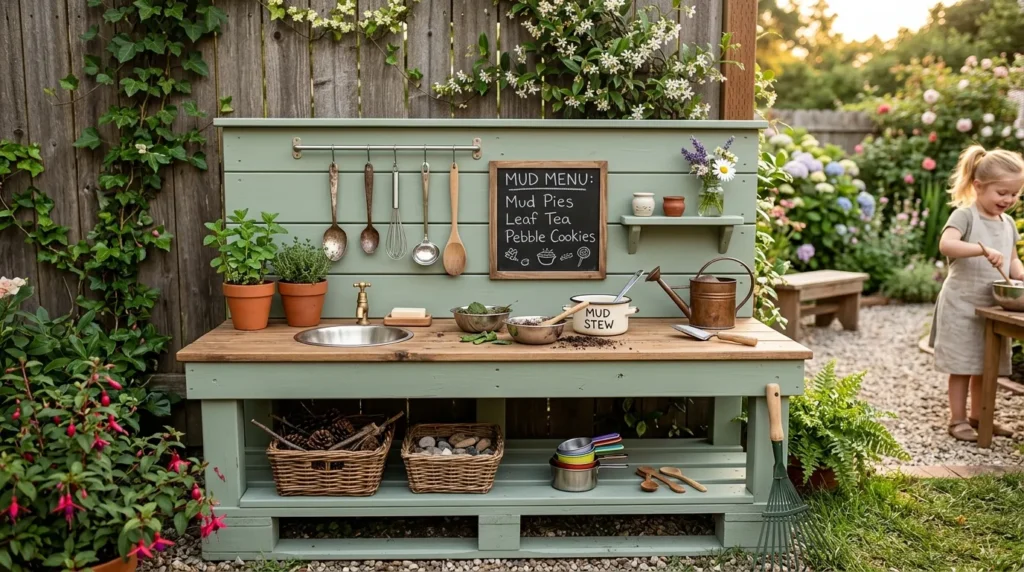
- Reuses a wooden pallet as the main kitchen frame.
- Works well against a fence, shed, or garage wall.
- Creates vertical storage for spoons, pans, and cups.
- Looks beautiful when painted in soft outdoor colors.
A pallet prep station is a smart starting point because it creates structure almost instantly. The upright pallet works like a backsplash, while a simple board across the front becomes the counter. Children get a clear place to mix, pour, and arrange their outdoor ingredients. Parents get a play area that looks contained instead of scattered across the yard. Sand the wood well, remove loose nails, and use outdoor paint or sealant. Soft colors like sage, cream, or muted blue make the setup feel calm, cheerful, and Pinterest-ready for photos.
You can make this idea more useful by adding hooks, baskets, and a removable bowl. Hang spoons, small pans, and measuring cups where kids can reach them without climbing. Place the station against a fence, shed, or garage wall so it feels grounded and safe. A lower shelf can hold buckets, pinecones, and pretend food containers. I’ve noticed pallet kitchens look best when the accessories are simple and repeated, such as matching metal cups or wooden tools. That little bit of order makes the whole corner feel thoughtfully designed and easy.
2. Crate Cooking Corner
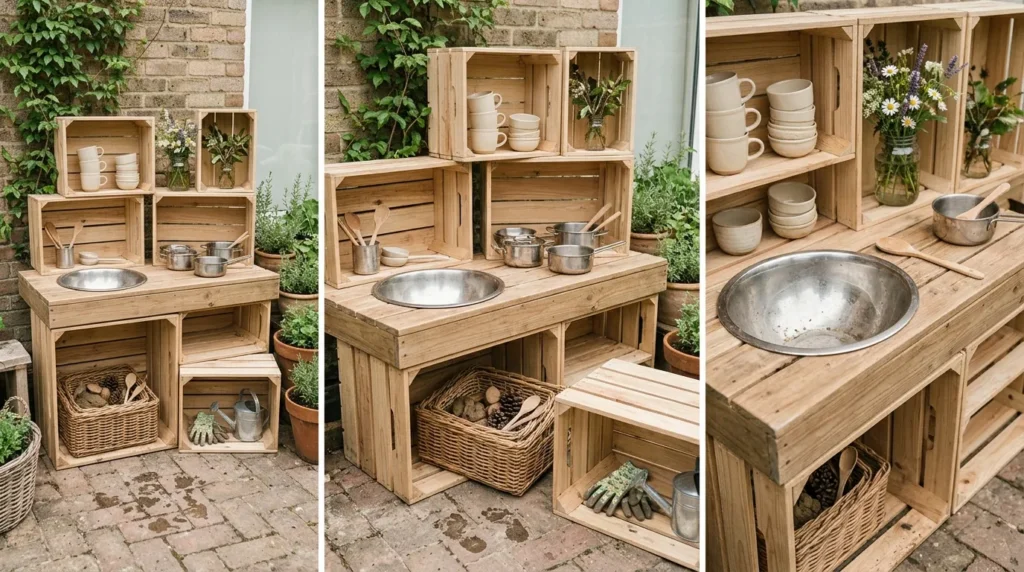
- Uses wooden crates for shelves, counters, and cubbies.
- Makes storage simple for bowls, tools, and nature items.
- Fits small patios, side yards, and compact backyard corners.
- Gives the play area a rustic farmhouse-style look.
Wooden crates are perfect when you want storage and style without building a complicated frame. They can be stacked sideways, placed under a counter, or used as open shelves for bowls and pretend ingredients. The crate openings make it easy for kids to see what they have, which encourages independent play. This idea works especially well for small patios because the crates can fit into tight corners. Choose sturdy crates, sand any rough edges, and secure stacked pieces together if children will lean on them during play safely every time.
A crate kitchen can feel rustic, sweet, and surprisingly polished with only a few finishing touches. Paint the crates white, tan, soft green, or leave them natural for a farmhouse look. Add a flat board on top to create a smoother cooking surface. Use one crate for dishes, one for garden treasures, and one for tools. This keeps cleanup simple after messy play. A small chalkboard sign above the crates can label the space as a café, bakery, or garden kitchen, making the area feel more imaginative and complete.
3. Sink Bowl Setup
- Turns a metal bowl or basin into a pretend sink.
- Adds realistic washing, rinsing, and pouring play.
- Does not require plumbing, pipes, or a real faucet.
- Looks clean and polished when placed into a wooden counter.
A bowl sink makes a mud kitchen feel real because children instantly understand how to use it. They can rinse leaves, wash rocks, stir muddy water, and pretend to clean dishes after cooking. You do not need plumbing, a faucet, or a complex build. A stainless steel mixing bowl, enamel basin, or plastic tub can become the sink. If you can cut the counter, drop the bowl into an opening. If not, simply place it on top and let kids remove it when they are completely finished each day.
The sink area should be easy to empty, rinse, and reset after play. That is why many designers recommend removable parts for outdoor children’s spaces. A loose bowl is often more practical than a fixed one because you can dump water safely and bring it inside during storms. Place a small towel hook nearby, even if the towel is only for pretend play. Add a bucket below the counter for dirty tools. This small detail gives kids a realistic routine and helps the whole station stay cleaner longer.
4. Rolling Cart Kitchen
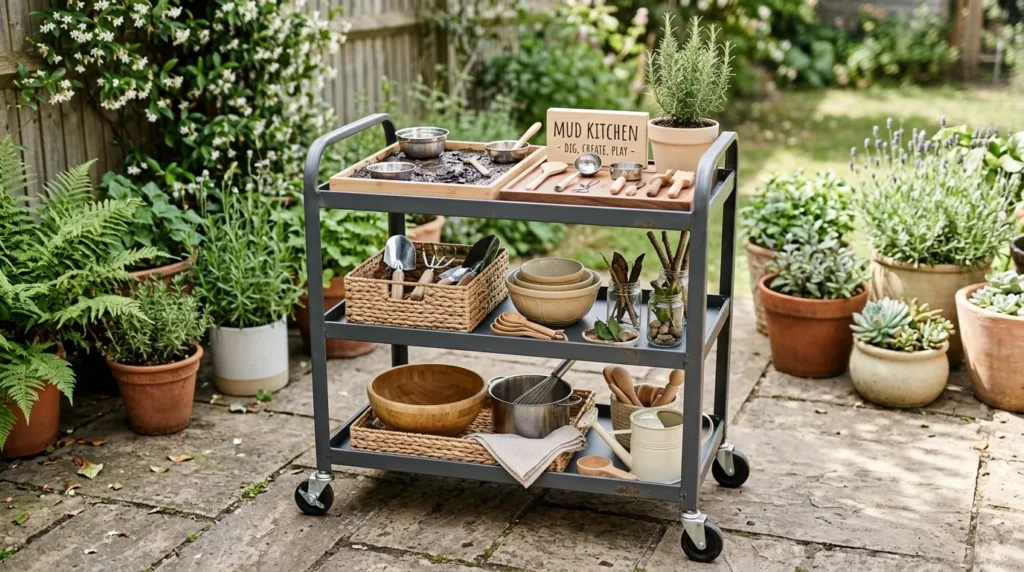
- Uses a thrifted utility cart or outdoor serving cart.
- Works well for renters and small outdoor spaces.
- Can move between porch, patio, garden, or driveway.
- Offers shelves, storage, and a counter in one piece.
A rolling cart kitchen is ideal for families who need flexibility more than permanence. Many USA homes have patios, driveways, decks, or rented outdoor areas where a fixed kitchen is not practical. A sturdy utility cart gives children shelves, storage, and a work surface in one compact piece. You can move it into the shade, roll it near the garden, or store it under a covered porch. Look for locking wheels, strong shelves, and wipeable surfaces that can handle dirt, water, and repeated outdoor use easily. It also photographs beautifully for Pinterest.
This setup becomes more useful when every shelf has a purpose. Keep bowls and cups on the top tray, baskets of natural materials on the middle shelf, and heavier buckets on the bottom for stability. A small clip-on basket can hold spoons and measuring cups. If the cart is metal, choose weather-resistant accessories that will not get ruined after one season. I’ve seen this work well for renters because it feels like a full outdoor kitchen but can disappear quickly when guests arrive or weather changes suddenly. It keeps cleanup simple for busy parents too.
5. Fence Line Kitchen
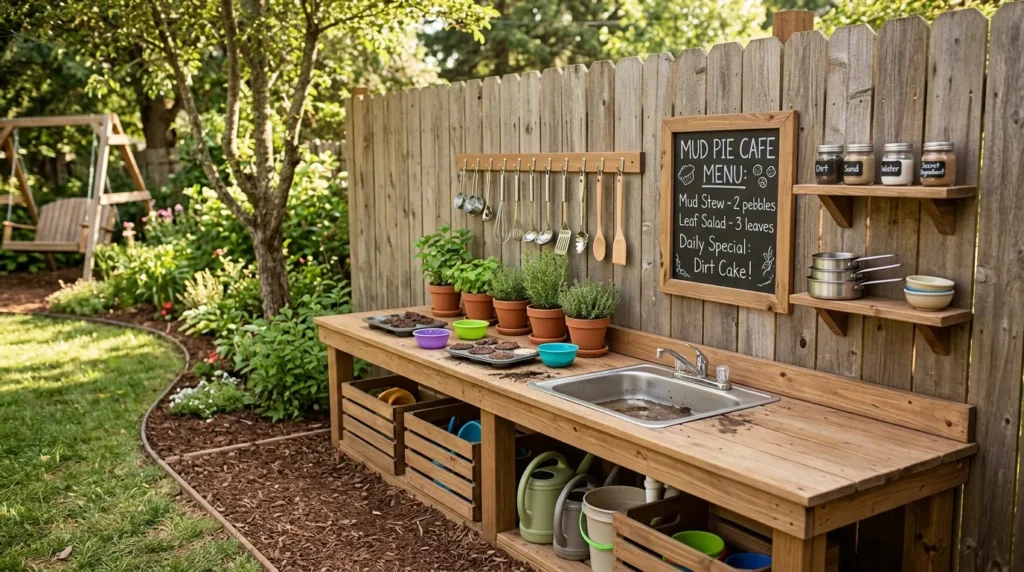
- Uses the fence as a natural kitchen backdrop.
- Saves yard space by keeping play along the edge.
- Allows hooks, shelves, and chalkboards to hang neatly.
- Helps the kitchen feel like part of the backyard design.
A fence line kitchen is one of the cleanest ways to organize outdoor messy play. The fence gives you a built-in backdrop, which means you do not need to build a tall frame. Hooks, shelves, chalkboards, and utensils can all be mounted vertically at child height. This keeps the ground clearer and makes the play zone feel more like a planned backyard feature. It also works well when the yard is narrow, because the kitchen stays along the edge instead of taking up the center space. It also photographs beautifully for Pinterest.
To make it look finished, use a narrow bench, old table, or small wooden counter as the base. Add a strip of hooks above it for pans, ladles, and strainers. A small chalkboard menu adds a cute café feeling without costing much. You can soften the area with mulch, stepping stones, or potted herbs nearby. In my experience, fence line kitchens look best when they match the yard’s existing colors. Natural wood, black hooks, and simple metal bowls usually blend nicely with most outdoor spaces. It keeps cleanup simple for busy parents too.
6. Cinder Block Base
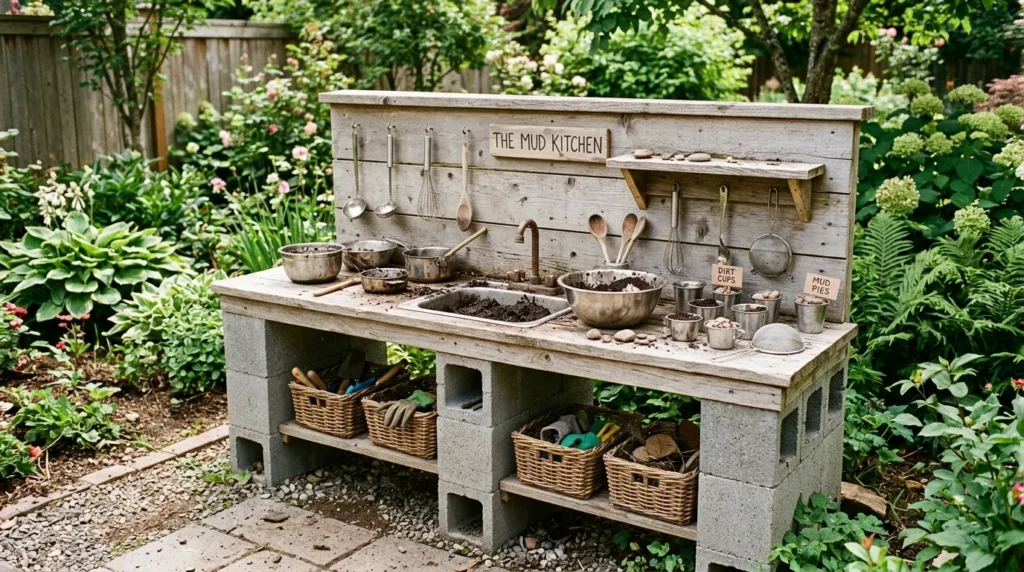
- Builds a strong frame with low-cost cinder blocks.
- Needs fewer tools than a full wood build.
- Holds up well in changing outdoor weather.
- Creates useful cubbies for buckets, jars, and supplies.
Cinder blocks create a strong base without requiring advanced carpentry skills. You can stack them in pairs, slide wooden boards across the top, and create a simple counter in a short time. The blocks are heavy, stable, and made for outdoor conditions, which makes them useful for families who want something durable. Their open centers can also become cubbies for buckets, jars, or garden treasures. Place the blocks on level ground, pavers, or gravel so the kitchen feels secure during everyday play and looks balanced. It also photographs beautifully for Pinterest.
The industrial look can be softened with natural wood, baskets, and warm outdoor details. Use sanded boards for the work surface and seal them if they will stay outside. Small baskets inside the block openings make storage feel neat instead of rough. For a more modern backyard, pair gray blocks with pale wood and simple metal bowls. For a cottage look, add flowers, herbs, and a painted sign. This idea is practical because you can rearrange the pieces later without tearing anything apart or wasting materials. It keeps cleanup simple for busy parents too.
7. Dresser Play Station
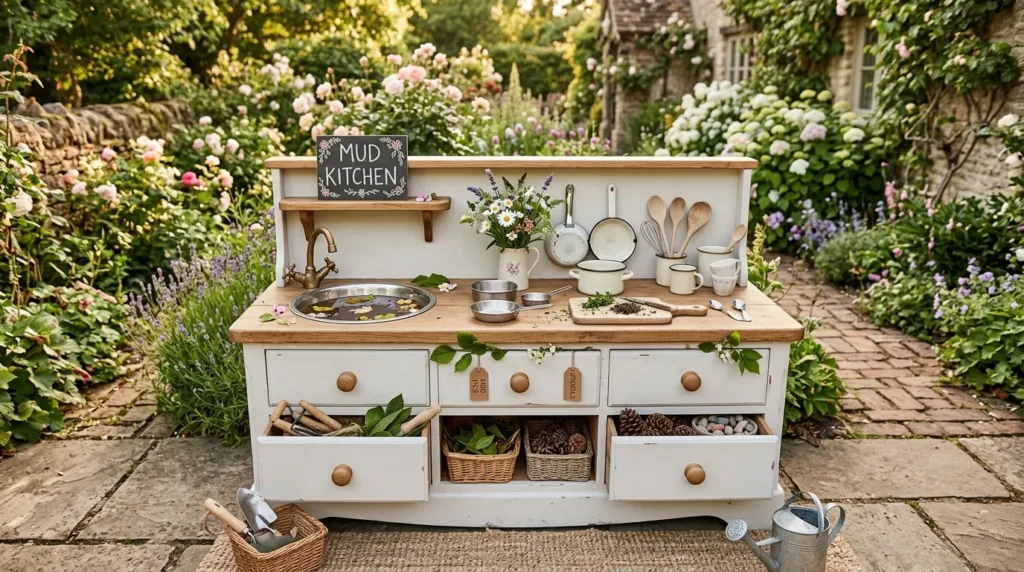
- Repurposes an old dresser into an outdoor play kitchen.
- Provides built-in storage through drawers and compartments.
- Looks charming with soft paint and simple hardware.
- Gives unused furniture a practical second life.
An old dresser can become a beautiful outdoor play kitchen if you prepare it carefully. The flat top creates a generous counter, and the drawers provide storage that most simple builds do not offer. You can keep utensils, cups, aprons, and sensory tools tucked away instead of scattered in bins. Remove one drawer to create space for a bowl sink, or leave the drawers in place for maximum organization. Choose a solid wood dresser when possible because it handles outdoor sealing better than flimsy particleboard pieces outside. It also photographs beautifully for Pinterest.
Before using the dresser outside, sand rough spots and cover it with exterior paint or protective sealant. Replace sharp hardware with smooth knobs or remove unnecessary handles. Soft white, dusty blue, olive green, or natural wood tones can make the piece look charming in a backyard. This setup is especially pretty near a garden bed or playhouse. I’ve noticed children love drawers because they make pretend cooking feel more serious. They can open, store, sort, and serve, which adds another layer to the play experience. It keeps cleanup simple for busy parents too.
8. Bucket Water Corner
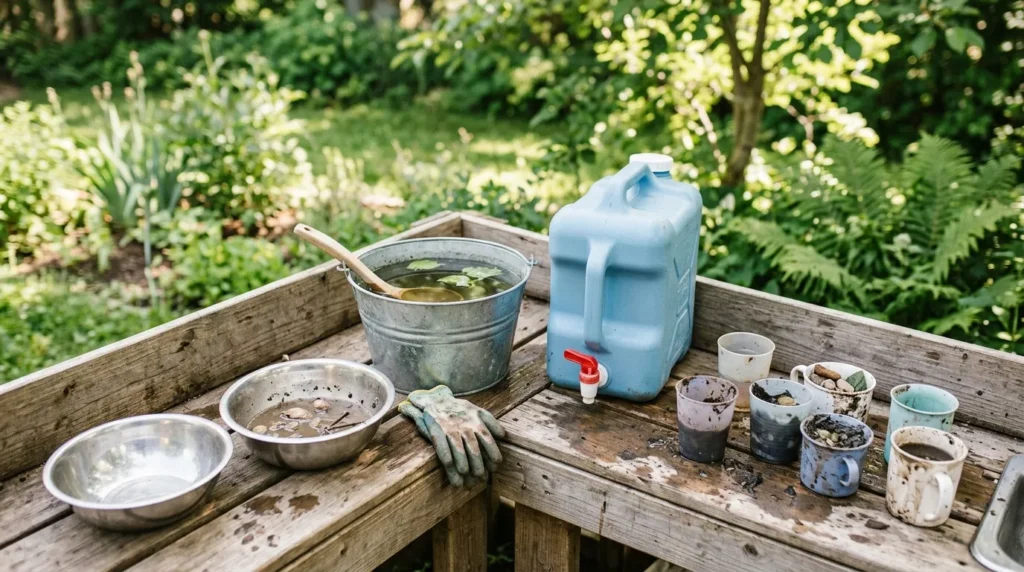
- Adds a simple water source without outdoor plumbing.
- Encourages pouring, measuring, rinsing, and mixing.
- Works with buckets, camping jugs, or drink dispensers.
- Helps control water use during messy backyard play.
A bucket water corner adds the one ingredient that makes mud play come alive. Children love pouring, measuring, washing, and mixing, and a small water station gives them independence. Instead of running back and forth to the hose, they can scoop from a bucket or use a camping jug with a tap. This keeps the play contained while still feeling exciting. A limited amount of water also helps parents manage muddy spots, especially in smaller yards or areas with grass that gets soft after rain. It also photographs beautifully for Pinterest.
Place the water source on one side of the kitchen so the main counter stays open for pretend cooking. Use a small bucket, drink dispenser, watering can, or lightweight jug. Add a ladle, scoop, or measuring cup so children can control how much water they use. This simple upgrade works with almost any low-cost outdoor kitchen and instantly increases play value. For safety, empty standing water after playtime and store buckets upside down. That habit keeps the area cleaner and helps prevent unwanted bugs. It keeps cleanup simple for busy parents too.
9. Porch Step Setup
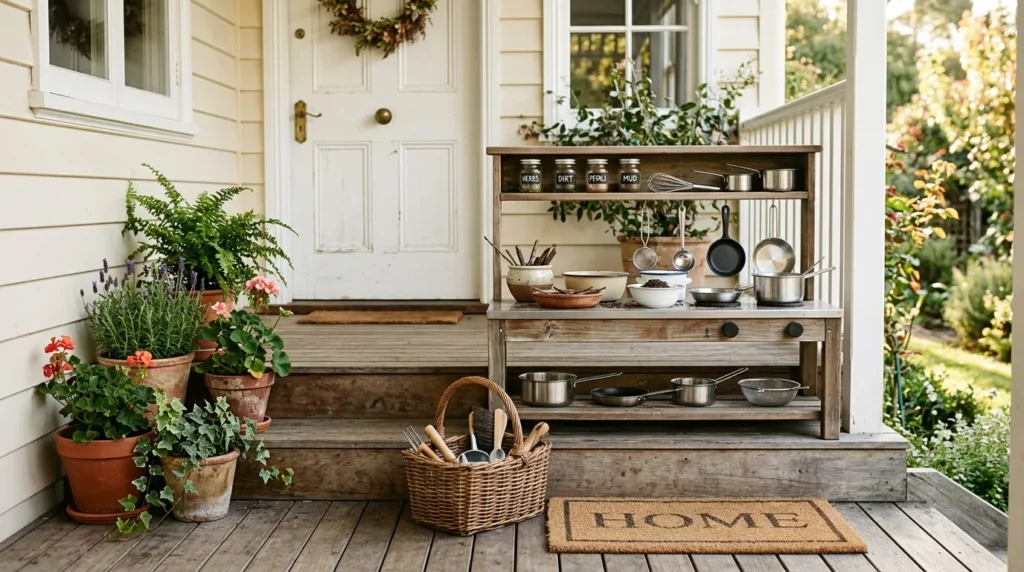
- Uses existing porch steps as shelves and counters.
- Great for townhomes, duplexes, and small patios.
- Requires very few extra materials or tools.
- Can be cleaned up quickly after playtime.
A porch step setup is a clever option when outdoor space is limited. Instead of building a full kitchen, you can use the different step levels as counters, shelves, and serving areas. Kids can line up bowls on one step, place pans on another, and keep natural materials in a basket nearby. This works well for townhomes, duplexes, small patios, and homes where the backyard is still being developed. The setup feels close to the house, which makes supervision easier during short play sessions every day. It also photographs beautifully for Pinterest.
Keep safety first by choosing a low-traffic side of the porch where adults will not need to walk through constantly. Use a waterproof mat or tray to protect surfaces if needed. A basket with cups, spoons, and a removable bowl can turn the steps into a quick play station. When playtime is over, everything goes back into the basket. This idea is not meant to be huge, but it is practical, cute, and easy. It proves children do not need much space to play creatively outside. It keeps cleanup simple for busy parents too.
10. Garden Bench Station
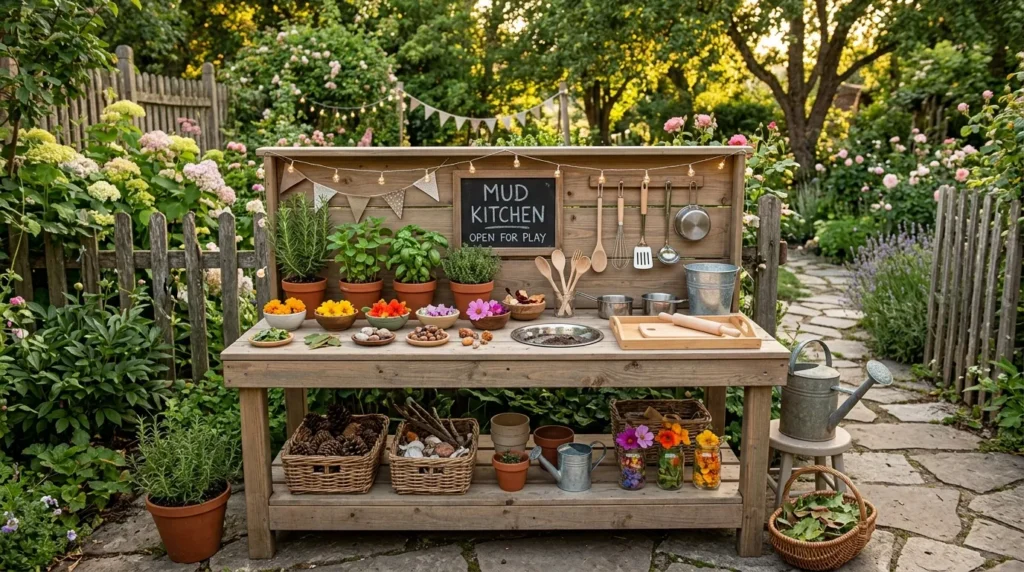
- Turns a bench or potting table into a play kitchen.
- Blends naturally with plants, herbs, and garden beds.
- Offers a wide surface for mixing, sorting, and serving.
- Looks polished with baskets, hooks, and small planters.
A garden bench station blends beautifully into yards that already have plants, pots, or raised beds. A low potting bench, outdoor table, or sturdy garden bench can become a wide cooking surface with very little work. The shelves are perfect for bowls, jars, and nature collections. Children can gather leaves, petals, sticks, and stones, then use the bench as their pretend preparation area. Because the piece already belongs outdoors, it often looks more natural than plastic play furniture sitting in the middle of the lawn. It also photographs beautifully for Pinterest.
To make it child-friendly, check the height, stability, and surface texture before adding supplies. A lower bench is easier for younger kids, while an older child may enjoy a taller potting table. Add a bowl sink, hanging hooks, small herb pots, and a basket for tools. This creates a play space that feels connected to gardening instead of separate from it. Parents who like tidy landscapes often choose this option because it looks intentional, useful, and easy to decorate with seasonal outdoor touches. It keeps cleanup simple for busy parents too.