12 Affordable Mud Kitchen Ideas That Look Surprisingly Good
A mud kitchen does not need to be expensive to feel magical. In fact, some of the best backyard play setups come from old crates, thrifted bowls, leftover wood, garden buckets, and a little creative thinking. Kids do not care whether the kitchen came from a catalog. They care about having a place to scoop, stir, pour, wash, sort, and make pretend recipes with dirt, water, leaves, petals, stones, and whatever treasures they find outside.
For families across the USA, Affordable Mud Kitchen Ideas are especially helpful because backyard upgrades can get costly fast. The good news is that a mud kitchen can look charming without a big budget. With smart layout choices, safe materials, simple storage, and natural textures, you can create a play area that feels Pinterest-worthy while still being realistic for everyday family life.
1. Pallet Counter
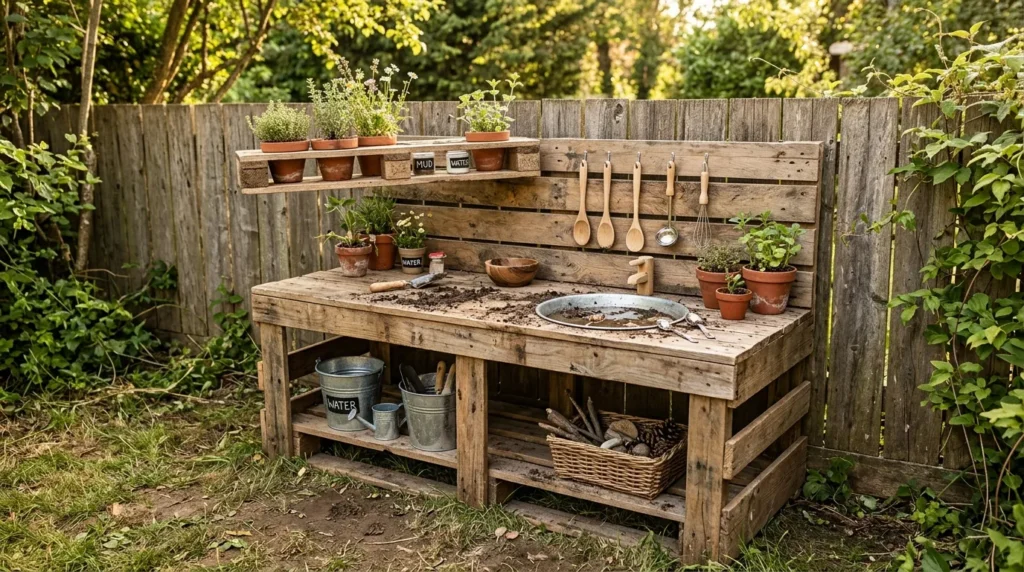
- Uses reclaimed wood for a low-cost outdoor setup
- Works well with metal bowls, hooks, and garden buckets
- Creates a rustic play kitchen without expensive supplies
- Best placed against a fence, shed wall, or garden edge
A pallet counter is one of the easiest ways to make a mud kitchen look charming without spending much money. Start with a sturdy pallet or leftover boards, then sand every rough edge carefully before children play. Add a flat board across the top to create a smoother work surface, and place a removable metal bowl on top as a pretend sink. In my experience, this setup looks best when it sits against a fence because the backdrop makes the whole station feel finished instead of temporary.
The finished design feels rustic, practical, and naturally suited to a backyard. Add hooks for spoons, a crate underneath for buckets, and a small basket for pinecones or leaves. A coat of outdoor-safe sealant helps the wood last longer through rain and summer sun. This idea gives kids a real-feeling counter for mixing mud pies, rinsing stones, and serving pretend meals. It also creates a handmade look that blends beautifully with grass, mulch, garden beds, and casual family outdoor spaces.
2. Thrifted Sink
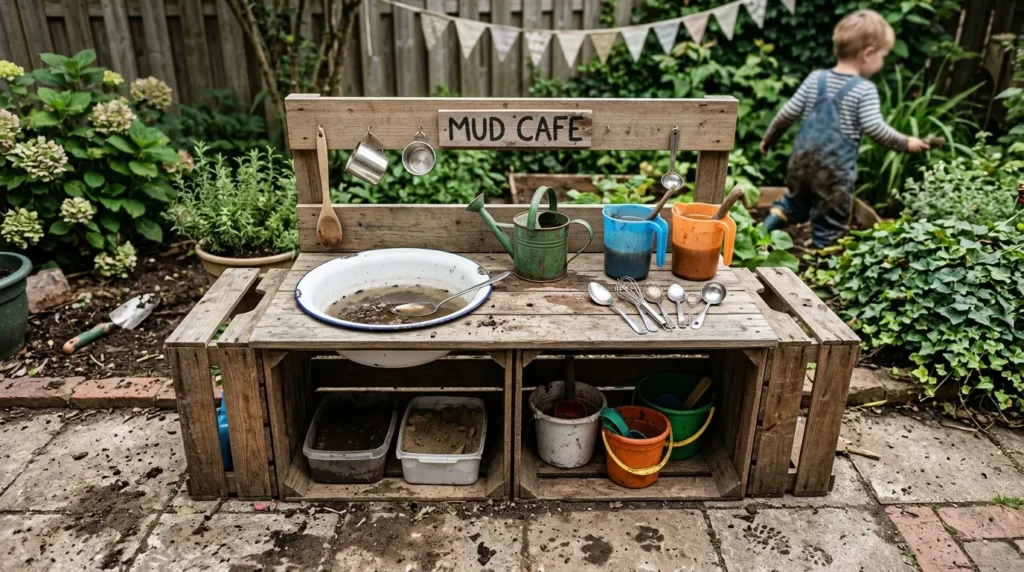
- Turns secondhand bowls into a realistic play sink
- Keeps the build affordable and easy to clean
- Works with enamel pans, mixing bowls, or plastic basins
- Great for renters, patios, and simple backyard setups
A thrifted sink makes the mud kitchen feel instantly more realistic while keeping the cost low. Look for stainless-steel mixing bowls, enamel basins, old dish tubs, or sturdy plastic bowls at thrift stores, yard sales, or discount shops. The bowl can sit directly on a counter, rest inside a crate opening, or fit into a simple cutout if you want a built-in look. The best part is that it stays removable, so muddy water can be dumped, rinsed, and reset without complicated plumbing.
The transformation is simple but powerful because kids love having a place to wash spoons, stir muddy soup, and rinse pretend ingredients. Pair the sink with a small watering can, pitcher, or camping jug so children can control small amounts of water. This setup works especially well on patios where drainage needs to stay manageable. Choose lightweight items without sharp edges, and avoid breakable glass. The result is affordable, practical, and easy to maintain, while still giving the play kitchen a complete and useful focal point.
3. Crate Shelves
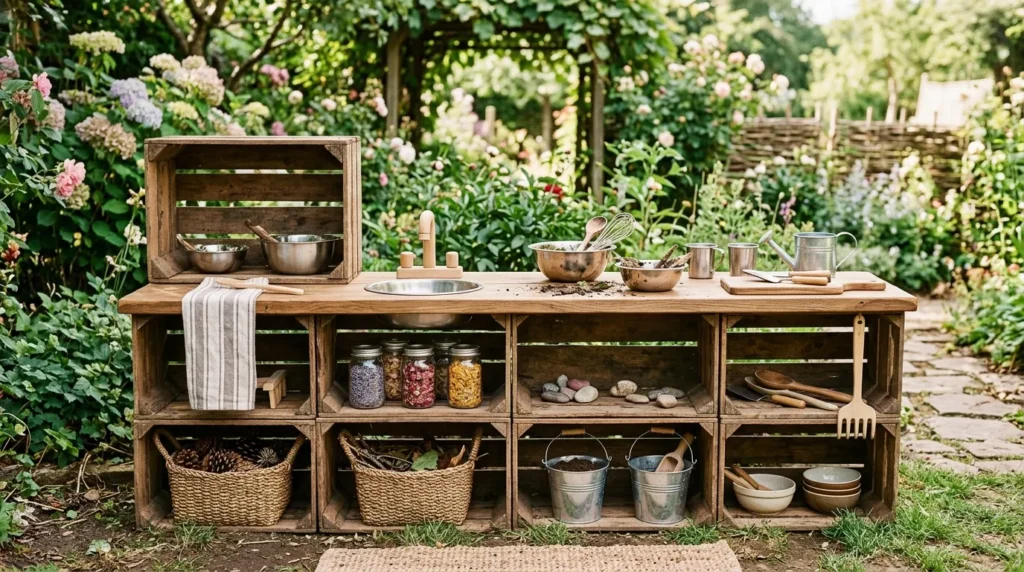
- Builds storage and structure from inexpensive materials
- Works with wooden crates, plastic bins, or old produce boxes
- Keeps tools, bowls, and nature supplies organized
- Easy to customize for small or large outdoor spaces
Crate shelves are budget-friendly because they create both storage and structure at the same time. Stack sturdy wooden crates vertically and horizontally, then secure them together so they do not shift during play. Add a smooth board across the top if you want a wider counter. The open cubbies can hold bowls, cups, pinecones, petals, stones, buckets, and washable kitchen tools. This layout works well because everything stays visible, which helps children choose supplies independently and clean up more easily afterward.
The finished look can feel surprisingly styled with only a few small choices. Leave the crates natural for a rustic garden feel, stain them to match a fence, or paint them in soft colors like sage, cream, or dusty blue. Keep heavier items low and lighter baskets higher for safety. A small chalk label on each crate makes the setup feel organized and intentional. The result is flexible, charming, and affordable, making it perfect for families who want a mud kitchen that can grow or change over time.
4. Dollar Store Tools
- Adds variety without spending much money
- Works with measuring cups, funnels, scoops, bowls, and trays
- Helps kids practice pouring, sorting, filling, and stirring
- Easy to replace if items get muddy, cracked, or lost
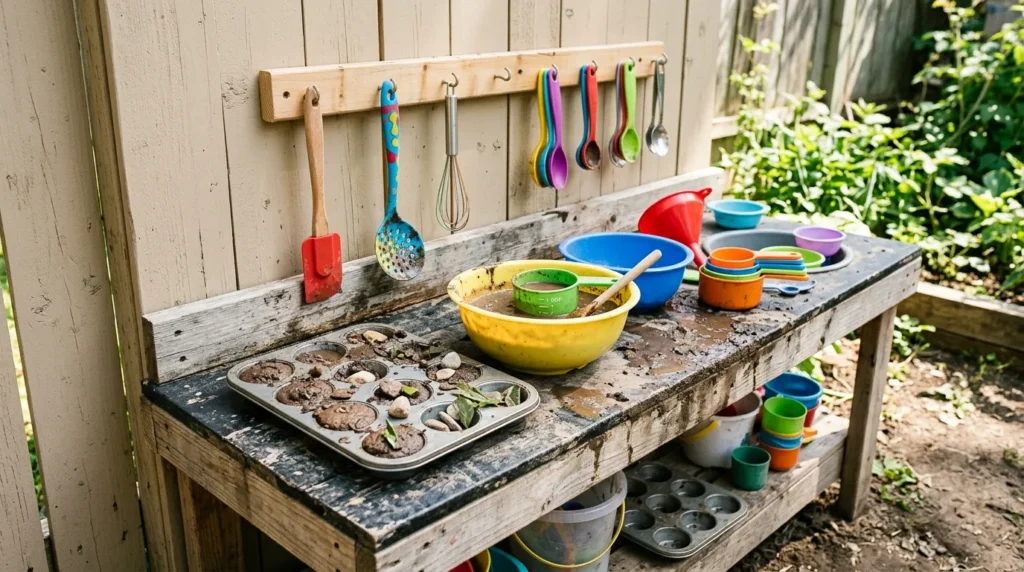
Dollar store tools can make a mud kitchen feel fully stocked without stretching the budget. Look for plastic measuring cups, funnels, mixing bowls, small colanders, silicone spatulas, muffin trays, buckets, and scoopers. These items are lightweight, washable, and easy for children to handle. The trick is choosing tools that invite different actions, not just random pieces. A funnel encourages pouring, a muffin tray supports pretend baking, and measuring cups help children scoop, compare, and experiment with different amounts of mud and water.
The visual effect improves when the tools are grouped neatly instead of scattered everywhere. Place cups in a basket, hang spoons on hooks, and keep muddy items in one bin after play. I’ve noticed children play longer when they have a variety of simple tools that feel real but not precious. The result is low-cost, practical, and easy to refresh each season. Even a very basic wood counter can feel exciting when it has enough spoons, trays, bowls, and scoops to support creative pretend cooking.
5. Fence Station
- Saves space by using a fence as the backdrop
- Works with narrow shelves, hooks, signs, and hanging cups
- Keeps the kitchen compact and organized
- Great for side yards, patios, and small backyards
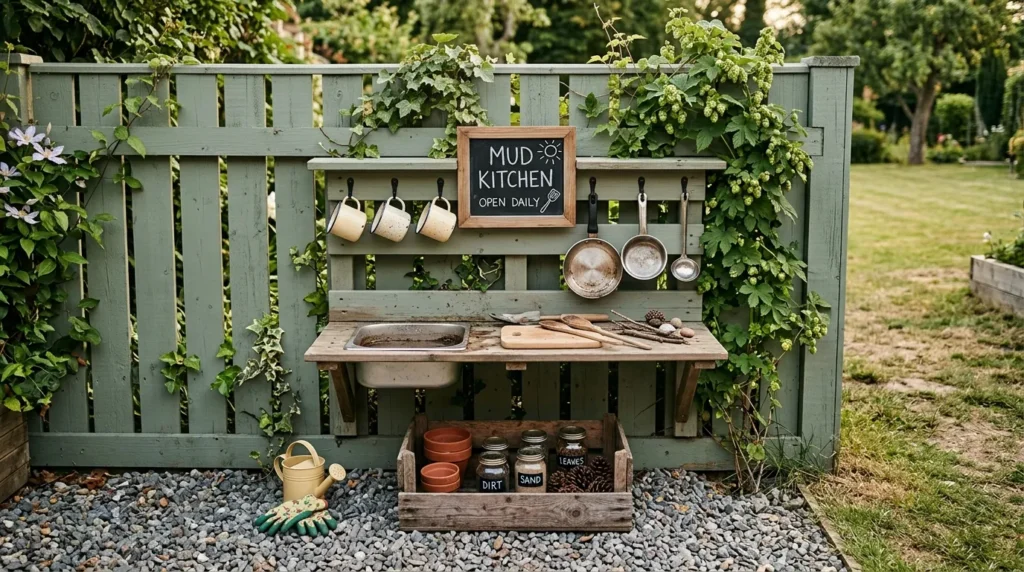
A fence station is smart because it uses vertical space instead of requiring a large freestanding structure. Attach a narrow shelf or simple board at child-friendly height, then add hooks above it for spoons, small buckets, cups, and lightweight pans. This creates a compact mud kitchen that feels built-in without needing much lumber. Make sure every piece is secured with outdoor-safe hardware and placed where children can reach comfortably. Sand the wood and avoid sharp metal edges near the busiest play zones.
The finished setup can look adorable with very little spending. A chalkboard sign, hanging enamel mug, small crate, and removable sink bowl can make the whole area feel like a tiny outdoor café. This layout leaves more yard space open for running, gardening, or patio seating. It is especially helpful for families who have narrow outdoor areas but still want imaginative play. The result is tidy, useful, and visually balanced, with the fence acting as both storage wall and styled backyard background.
6. Old Potting Bench
- Repurposes existing garden furniture into a play kitchen
- Offers shelves, counter space, and storage without rebuilding
- Works with terracotta pots, baskets, pans, and watering cans
- Blends naturally with garden beds and outdoor décor
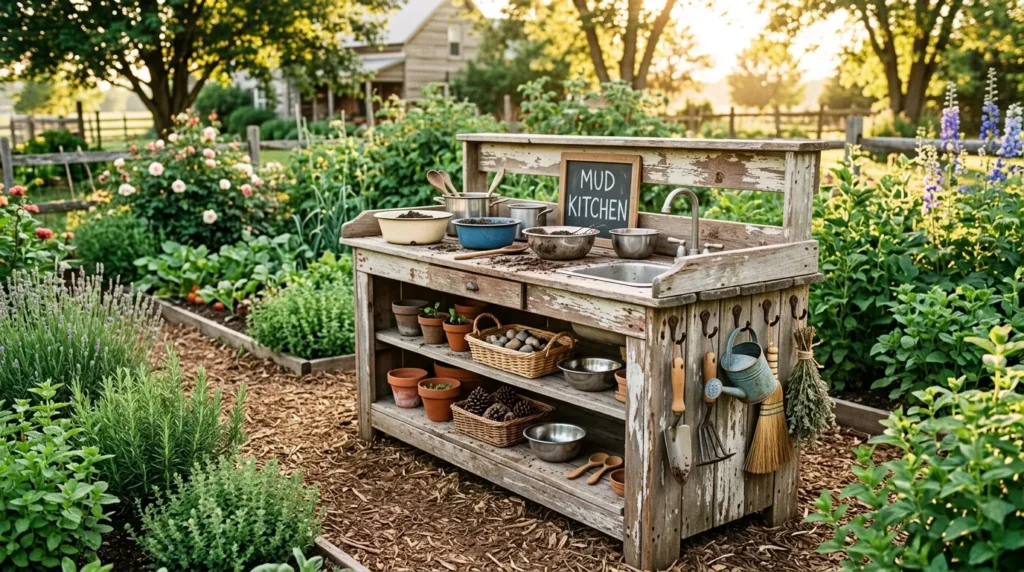
An old potting bench can become a beautiful mud kitchen because it already has the right bones. Most potting benches include a work surface, back shelf, and lower storage, so the main job is making it safe for children. Sand splinters, tighten screws, remove sharp hooks, and check that the bench is stable. If it is too tall, choose a shorter bench or add a sturdy child-safe platform. The goal is to create a comfortable space where kids can stand, reach, and work without climbing.
The transformation feels natural because the bench already belongs outdoors. Add terracotta pots, metal bowls, wooden spoons, and baskets of nature supplies to make it playful without losing the garden style. That’s why many outdoor play designers recommend repurposing garden furniture before buying new play equipment. It saves money and usually looks more attractive in a real backyard. The result is sturdy, charming, and practical, especially for families who want a mud kitchen that blends beside planters, raised beds, mulch paths, or a shed.
7. Painted Scrap Wood
- Uses leftover boards for a custom-looking setup
- Adds color without expensive decorations
- Works with outdoor paint, stain, or sealed natural wood
- Great for matching fences, patios, playhouses, or garden themes
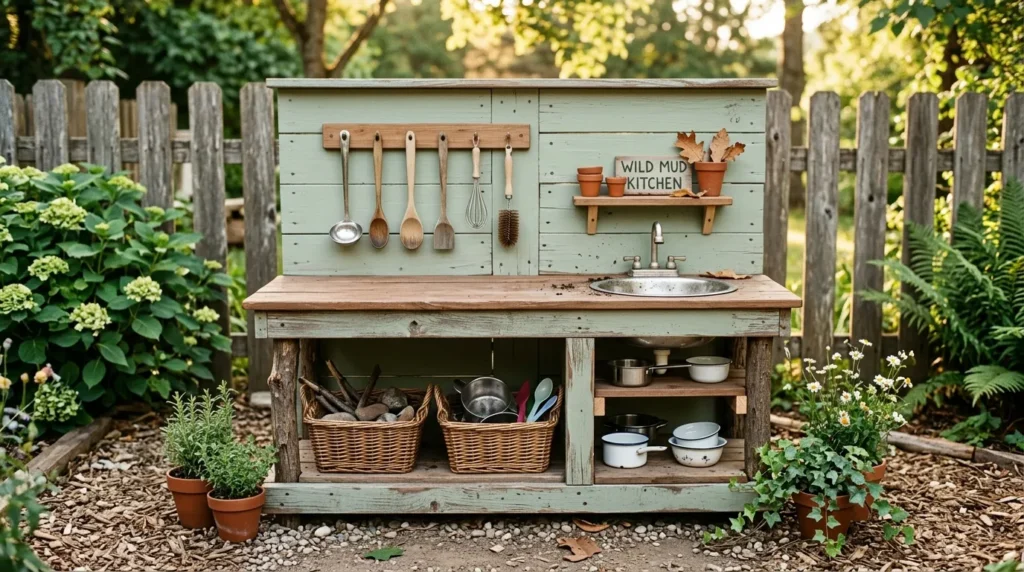
Painted scrap wood can make a low-cost mud kitchen look custom because color instantly pulls the whole design together. Use leftover fence boards, deck scraps, old shelving, or reclaimed planks to build a simple counter, backing board, or storage shelf. Sand the wood well, then paint or stain it with an outdoor-safe finish. Soft green, warm beige, muted blue, white, or natural brown all work beautifully in backyard settings. The paint does not need to be fancy; it just needs to make the pieces feel connected.
The final effect is more polished than the budget suggests. A painted backing board behind a thrifted bowl sink can make the kitchen look intentional, even if most materials were reused. Add matching hooks, a small sign, and simple baskets to complete the look. This is one of the Affordable Mud Kitchen Ideas that works especially well when you want style on a tight budget. The result feels cohesive, durable, and personal while still leaving plenty of room for messy, creative outdoor play.
8. Bucket Water Bar
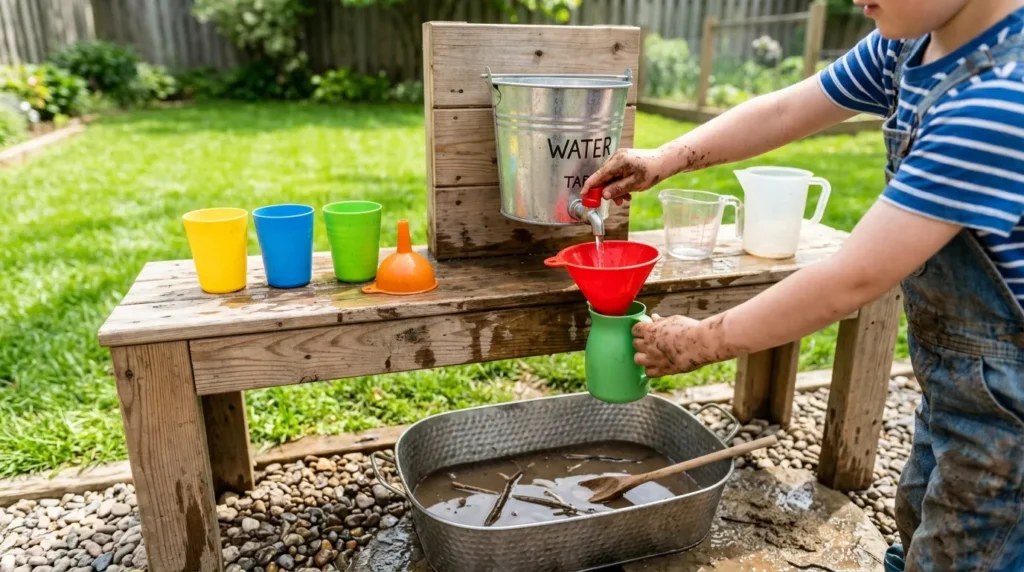
- Adds water play without plumbing
- Works with buckets, jugs, pitchers, and drink dispensers
- Helps children practice pouring, rinsing, and measuring
- Best placed on grass, gravel, mulch, or washable pavers
A bucket water bar brings the mud kitchen to life because water changes everything children can do. Instead of installing plumbing, use a small bucket with a spout, camping jug, drink dispenser, watering can, or plastic pitcher. Place it beside the counter so kids can fill bowls, rinse stones, water pretend recipes, and experiment with texture. This keeps the setup affordable and easy to control. A smaller water source also prevents the backyard from turning into a flooded mess too quickly.
The most important detail is choosing the right surface underneath. Grass, mulch, pea gravel, or washable pavers handle spills better than smooth concrete, which can become slippery. Add funnels, cups, and basins so children have several ways to pour and transfer water. The result is interactive, practical, and endlessly reusable. Kids can make thick mud pies one day and watery leaf soup the next. Parents get the benefit of open-ended sensory play without the cost, maintenance, or commitment of a permanent outdoor sink.
9. Chalkboard Menu
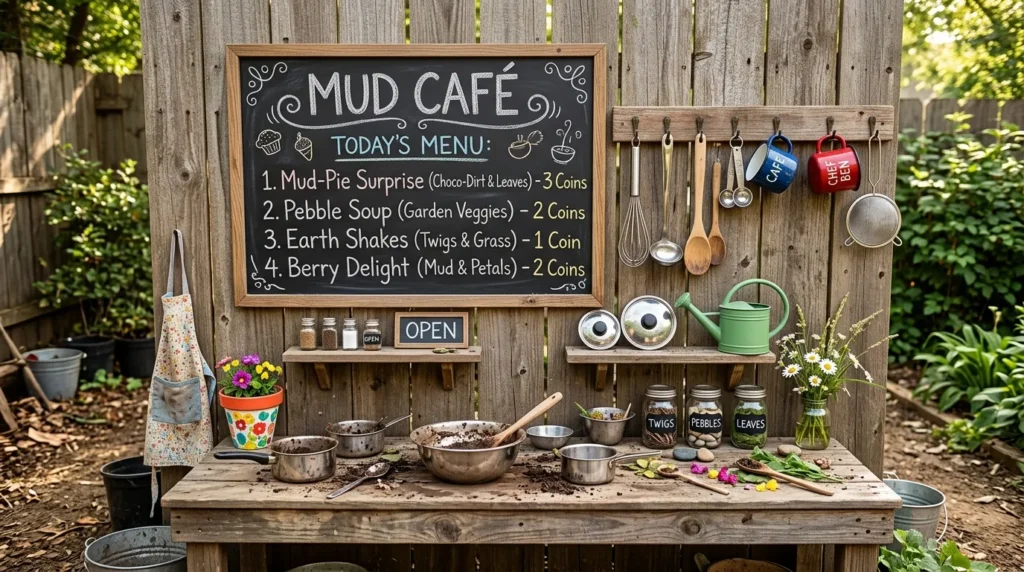
- Adds pretend café and bakery play
- Encourages writing, drawing, naming, and counting
- Works with chalk paint, framed boards, or fence panels
- Makes the mud kitchen look styled and finished
A chalkboard menu is one of the cheapest ways to make a mud kitchen feel complete. Mount a small chalkboard on a fence, backing board, or wall near the counter. Children can draw recipes, write pretend prices, name their mud pies, or create a daily café menu. This adds storytelling and early literacy to messy play without feeling like a formal lesson. Use outdoor chalkboard paint or a sealed board, and keep chalk in a covered container so it lasts longer outside.
The visual upgrade is strong because a chalkboard creates a clear focal point. Parents can write playful prompts like “leaf soup,” “stone stew,” “flower tea,” or “pinecone muffins” to spark new ideas. Older siblings can help decorate the sign before playdates or backyard parties. The result feels cute, practical, and very Pinterest-friendly without costing much. It also changes easily with the seasons, so the same mud kitchen can feel fresh for spring garden cafés, summer lemonade stands, or fall bakery play.
10. Nature Topping Tray
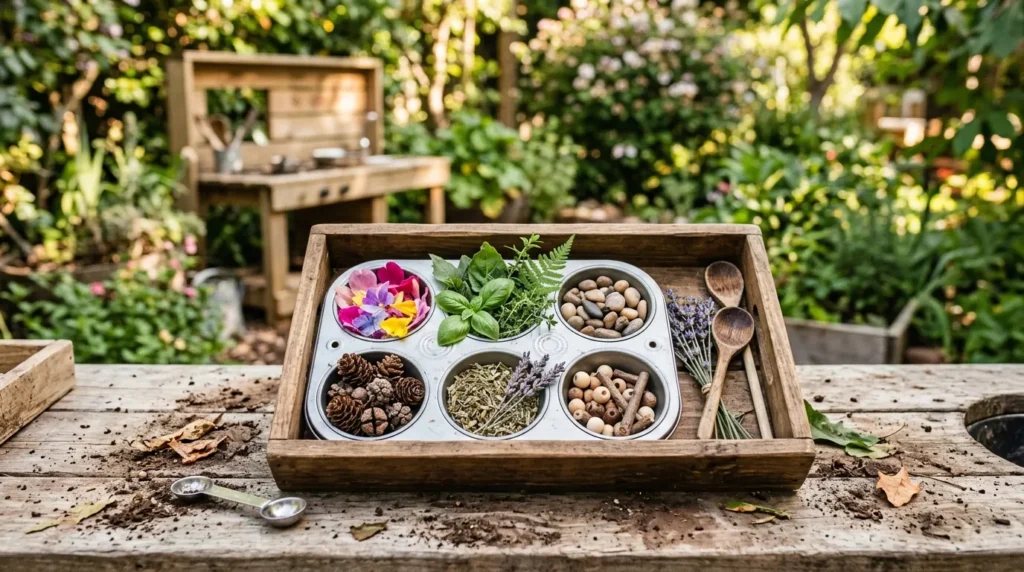
- Uses free backyard materials for pretend cooking
- Works with leaves, petals, pinecones, pebbles, and herbs
- Encourages sorting, decorating, counting, and sensory play
- Makes mud pies and pretend recipes more creative
A nature topping tray turns ordinary backyard finds into beautiful play ingredients. Use a muffin tin, divided tray, small bowls, or an old serving platter to organize leaves, petals, smooth stones, grass, pinecones, seed pods, and safe herbs. Children can decorate mud pies, sort colors, make pretend soup, or create tiny nature cakes. This setup works because kids love choosing from visible materials. When everything is arranged in small sections, the play feels richer than simply digging in a pile of dirt.
The best part is that the supplies are mostly free. Rotate materials based on the season, using spring petals, summer herbs, fall leaves, or winter evergreen pieces where safe. Avoid poisonous plants, sharp sticks, treated mulch, and tiny choking hazards for younger children. The result is beautiful, sensory-rich, and easy to reset. It also photographs well because the natural colors and textures look charming against wood counters and metal trays. This idea adds creativity without adding real cost, which makes it perfect for budget backyard play.
11. Mini Market Stand
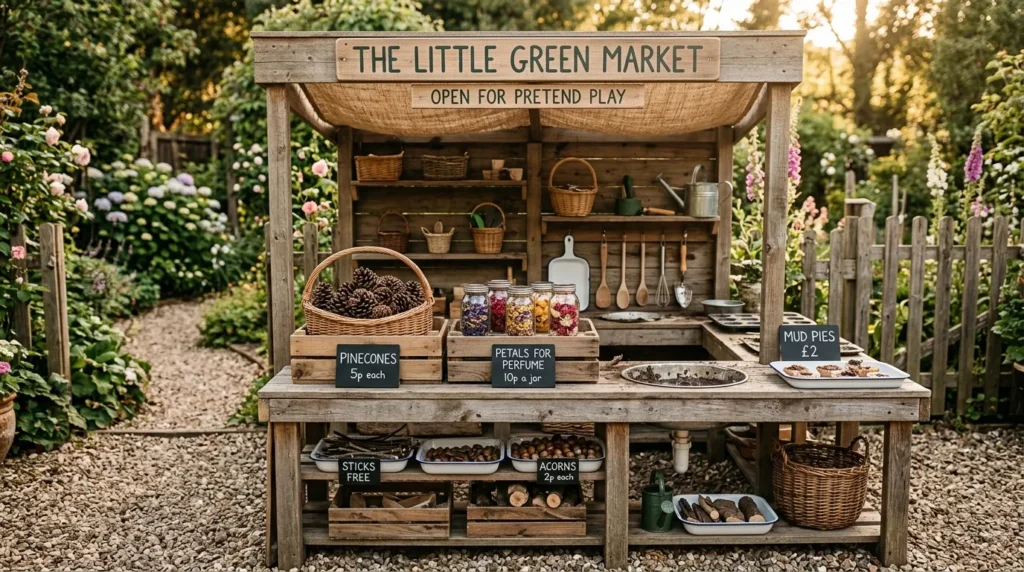
- Expands mud kitchen play into pretend selling and serving
- Uses crates, baskets, chalk signs, jars, and trays
- Encourages counting, sharing, arranging, and role play
- Perfect for siblings, playdates, and backyard parties
A mini market stand makes the mud kitchen feel like a whole pretend world instead of just a counter. Add a few crates, baskets, jars, and trays where children can display mud pies, leaf soup, pinecone muffins, and petal tea. A small chalk sign can label the space as a market, bakery, or garden café. This setup works especially well for siblings and playdates because children can choose different roles, such as cook, customer, server, gardener, or shopkeeper.
The transformation is playful and social while still staying affordable. Use old produce crates, thrifted trays, plastic jars, and scrap wood signs instead of buying a full play stand. Add pretend price tags to encourage counting and conversation. The result is organized, imaginative, and easy to personalize for birthdays, summer afternoons, or weekend backyard gatherings. It also gives children more reasons to return to the mud kitchen because the play can shift from cooking to serving, selling, sorting, and decorating.
12. Washable Cleanup Zone
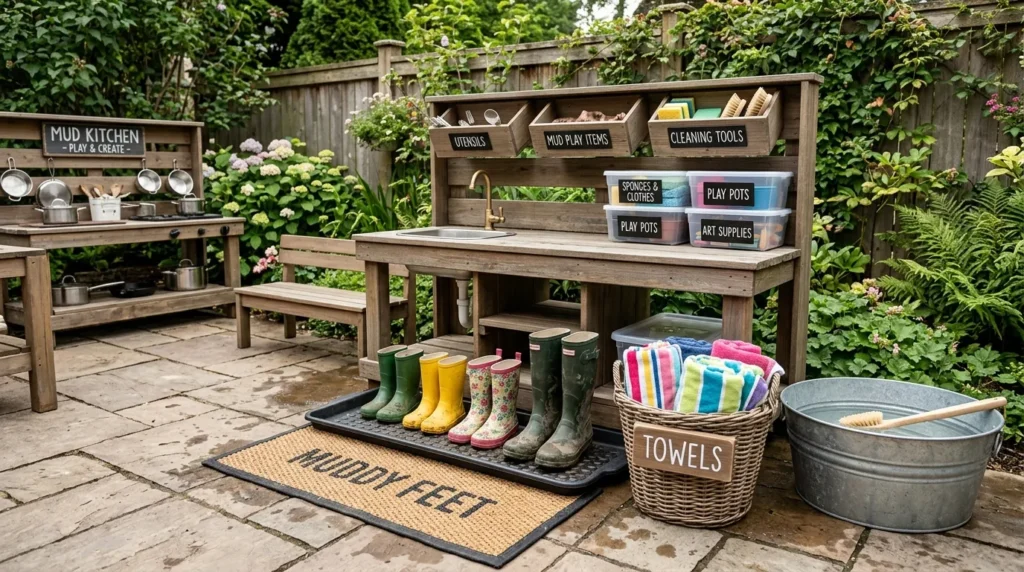
- Makes messy play easier for parents to manage
- Works with rinse buckets, towels, mats, and storage bins
- Helps children learn reset routines after play
- Keeps mud from spreading across patios and doorways
A washable cleanup zone may not sound decorative, but it makes the entire mud kitchen more usable. Place a rinse bucket, towel basket, boot tray, or washable outdoor mat near the play area so children can clean hands, rinse tools, and leave muddy items outside. This small addition prevents the mess from traveling across decks, patios, and back doors. In my experience, families use mud kitchens more often when cleanup feels predictable instead of overwhelming every time kids finish playing.
The finished setup can still look nice if the cleanup items match the rest of the kitchen. Use a galvanized tub, woven basket, neutral mat, or labeled storage bin to keep everything organized. Teach children to place muddy spoons in one bucket and clean tools in another. The result is practical, affordable, and parent-friendly. It supports independence while protecting the house from muddy footprints. A smart cleanup zone makes the whole project feel more sustainable for daily use, not just a one-time backyard activity.