11 This Is How to Create a Mud Kitchen for Kids at Home
A mud kitchen is one of the easiest ways to turn a normal backyard, patio, or side yard into a creative outdoor play space kids actually want to use. Instead of buying more toys that lose attention quickly, parents can create a hands-on area where children scoop, pour, stir, pretend, decorate, clean, and explore real natural materials. For USA families looking for more screen-free play, sensory learning, and simple backyard fun, a mud kitchen feels practical, affordable, and surprisingly beautiful when designed with a little intention.
This Is How to Create a Mud Kitchen that feels useful for real family life, not just pretty for one photo. You do not need advanced DIY skills or expensive supplies. A sturdy surface, a bowl sink, water access, storage, old kitchen tools, and safe nature materials can become a complete outdoor play station. The ideas below are simple, Pinterest-friendly, and easy to customize for toddlers, preschoolers, siblings, playdates, small patios, larger backyards, and every season of outdoor play.
1. Backyard Location
- Choose a shaded, visible, easy-to-clean outdoor spot
- Keep the kitchen close enough for supervision
- Use mulch, gravel, tiles, or mats to define the area
- Avoid placing it directly beside main doors or clean patios
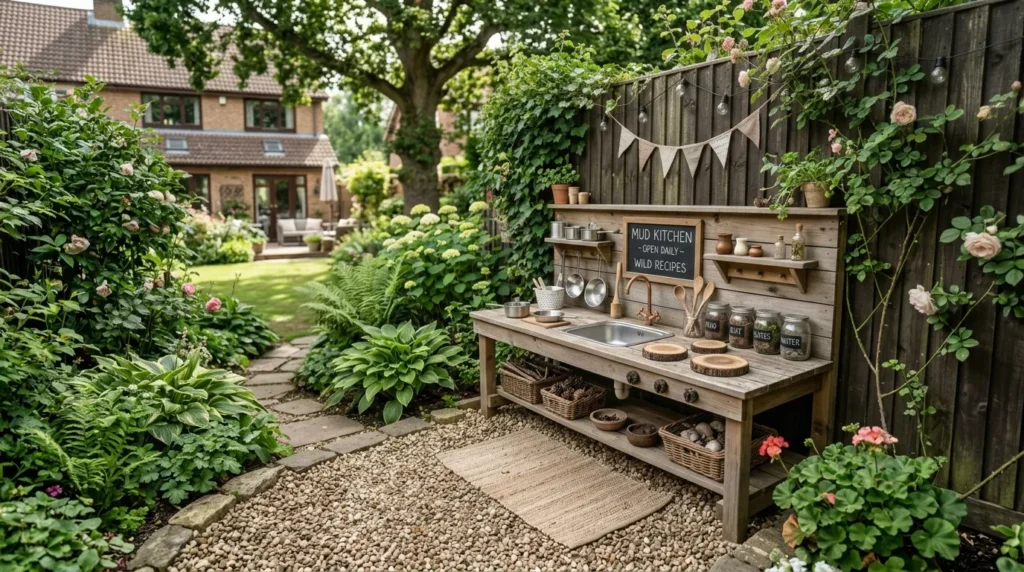
A mud kitchen works best when it begins with the right outdoor location, not the fanciest build. Before choosing supplies, look for a spot that feels easy to supervise, drains well, and can handle splashes. A shaded fence line, patio edge, side yard, or garden corner can all work beautifully for most homes. The location matters because children play longer when the space feels comfortable and parents feel relaxed. In my experience, the best setup is close enough to watch from a window, porch, or kitchen door, but not directly beside the main entrance.
The transformation is immediate once the play area has a defined home in the yard. Use mulch, pea gravel, outdoor tiles, or a washable mat to mark the zone and keep mud from spreading everywhere. Leave enough room for children to stand, bend, carry bowls, and move around without bumping into furniture. If your yard gets hot afternoon sun, add an umbrella or place the kitchen near natural shade. A smart location makes the whole project easier to use, easier to clean, and much more inviting for everyday play and weekend playdates.
2. Sturdy Base
- Use a potting bench, thrifted table, pallet, or low shelf
- Sand rough edges and check for loose screws
- Keep the height comfortable for young children
- Add outdoor sealant if the base stays outside year-round
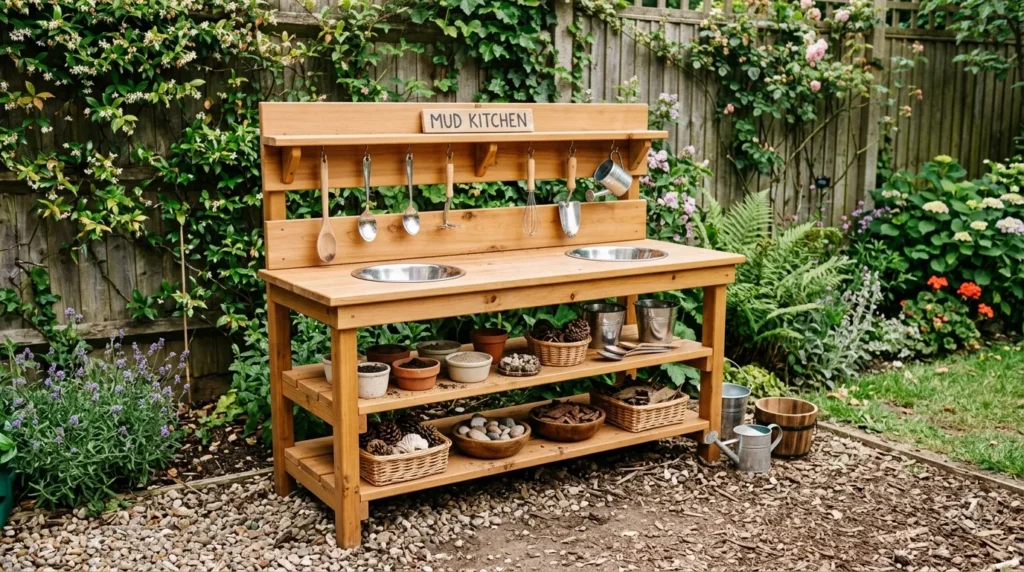
A sturdy base gives the mud kitchen structure, safety, and that charming real-kitchen feeling children love. You do not need custom carpentry to make it work, but the surface should be stable enough for stirring, pouring, leaning, and enthusiastic pretend cooking. Old potting benches, thrifted tables, wooden pallets, nightstands, storage benches, and low outdoor shelves can all become useful foundations. This idea works because children need a reliable worktop at their height. Sand rough edges, tighten screws, and seal wood if it will stay outside through changing weather in your area.
The finished base becomes the heart of the entire outdoor play space for kids. Add one main counter for mixing and one lower shelf for bowls, pans, or nature ingredients. If the table is too tall, shorten the legs or place a sturdy step mat nearby for older children only. Neutral wood, white paint, or soft sage green can make the setup look Pinterest-ready without feeling overdecorated. I’ve noticed that simple, durable bases get used more often because parents are not worried about every scratch, splash, or muddy handprint during daily play.
3. Sink Bowl
- Creates a realistic kitchen-style play feature
- Works with a stainless bowl, plastic tub, or roasting pan
- Helps contain water, mud, leaves, and rinsing play
- Adds visual structure without needing real plumbing
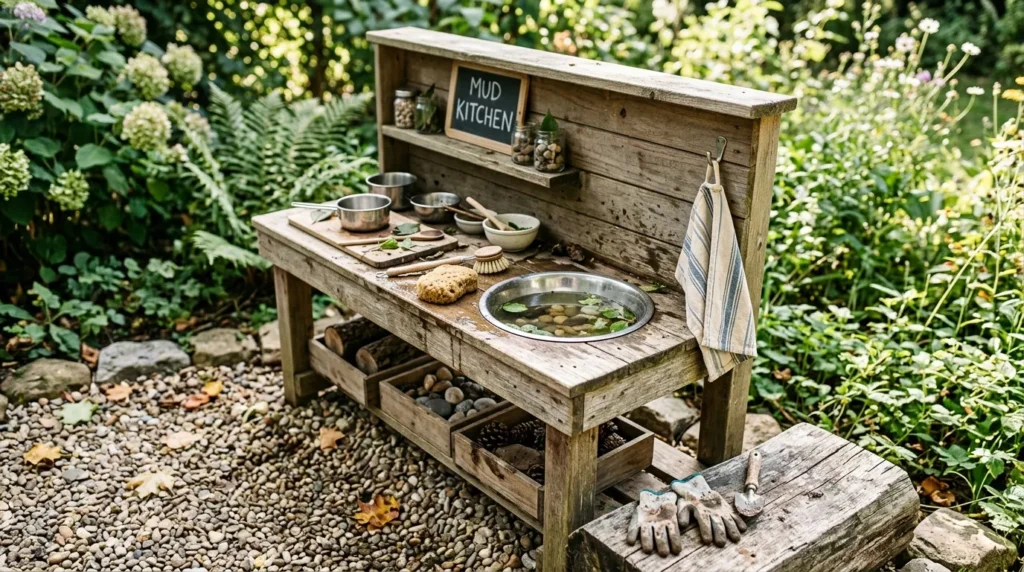
A sink bowl instantly makes a mud kitchen feel more realistic, even when there is no plumbing involved. Children love having a place to rinse leaves, wash stones, stir muddy soup, and pretend they are cleaning dishes. The best part is that a sink can be as simple as a stainless-steel mixing bowl, plastic basin, old roasting pan, or shallow metal tub. This works because it creates a clear center for water play while keeping most splashes in one spot. Choose a bowl with smooth edges and easy lifting for safety.
The visual upgrade is lovely because a sink bowl makes the kitchen look intentional instead of like random outdoor supplies. If you are building a wooden counter, trace the bowl rim and cut a hole so it drops in neatly. For a no-cut version, place the bowl on a tray or inside a crate to keep it stable. Add a small sponge, scrub brush, and towel hook for pretend cleanup. The sink gives children more ways to play, while parents get a simple way to contain wet materials during busy afternoons.
4. Water Station
- Adds pouring, rinsing, measuring, and mixing play
- Works without plumbing using a jug or dispenser
- Helps kids practice coordination and cause-and-effect learning
- Keeps water play more controlled and parent-friendly
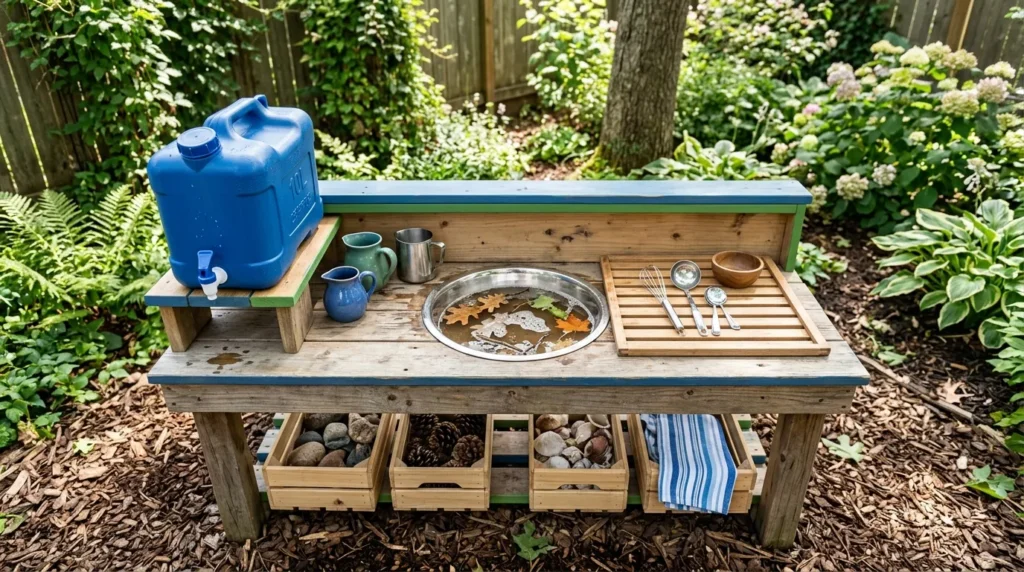
A simple water station turns dry outdoor play into a richer sensory experience for children. Water lets children pour, measure, splash, dilute, rinse, and observe how materials change. You do not need a hose connection or outdoor sink to make it useful. A camping jug, drink dispenser, small pitcher, pump bottle, or refillable container can provide enough water for meaningful play without flooding the yard. This idea works because controlled water access helps kids practice coordination and patience. It also makes mud play feel more interactive, active, and satisfying outdoors.
The difference shows up quickly because children begin experimenting with thickness, texture, and movement. They may add a little water to make crumbly soil stick, pour too much and discover soup, or rinse pebbles before using them as toppings. Place the water source on a stable shelf and use a gravel, mulch, or tray base underneath for drainage. Younger children usually do better with small refill amounts, while older kids can manage a larger dispenser. This keeps the station fun, practical, and easier for parents to say yes to often.
5. Tool Storage
- Keeps spoons, cups, pans, and scoops organized
- Helps children clean up without confusion
- Uses hooks, crates, baskets, shelves, and bins
- Makes the whole kitchen look more polished
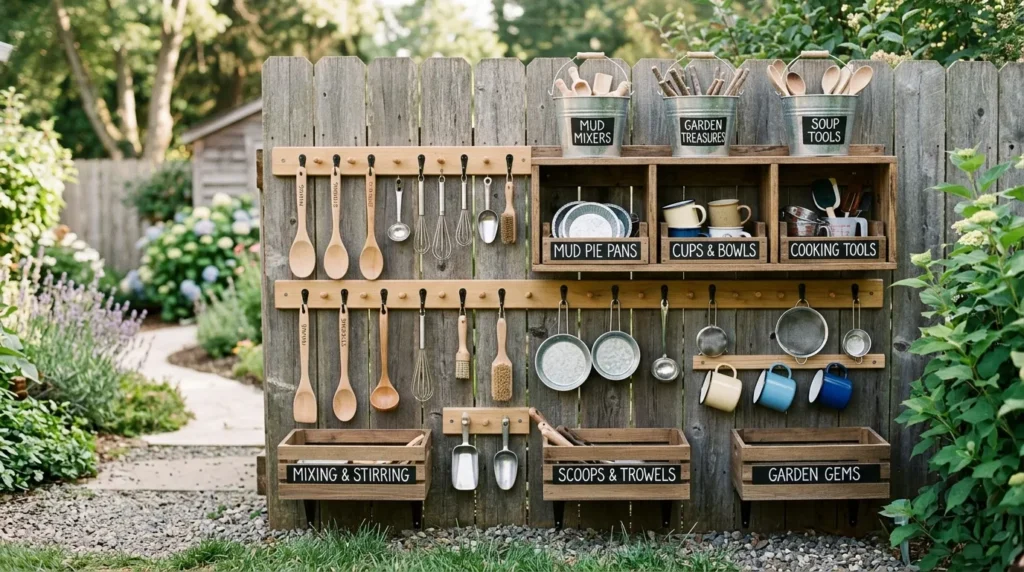
Tool storage makes a mud kitchen easier to use and much easier to reset after play. Without storage, spoons, cups, pans, and scoops scatter across the yard and the space quickly loses its charm. A simple storage system gives every item a clear home, which helps children build independence. Use hooks for ladles, open shelves for bowls, crates for pans, and baskets for loose nature finds. This works because children can see their choices and return tools without needing constant adult direction after every outdoor play session without confusion later.
The finished kitchen looks more polished when storage is part of the design instead of an afterthought. A fence panel, pallet board, peg rail, or mounted shelf can create vertical organization without taking up floor space. Use weather-friendly materials such as galvanized buckets, sealed wood, plastic bins with lids, and stainless hooks. Picture labels are helpful for younger kids who are not reading yet. In many homes, this one detail turns the mud kitchen from a messy pile of supplies into a beautiful, repeatable play station for children and parents.
6. Nature Ingredients
- Uses leaves, petals, bark, stones, herbs, and pinecones
- Adds color, texture, and seasonal beauty
- Encourages sorting, smelling, mixing, and pretend cooking
- Avoids unsafe berries, mushrooms, sprayed plants, and thorns
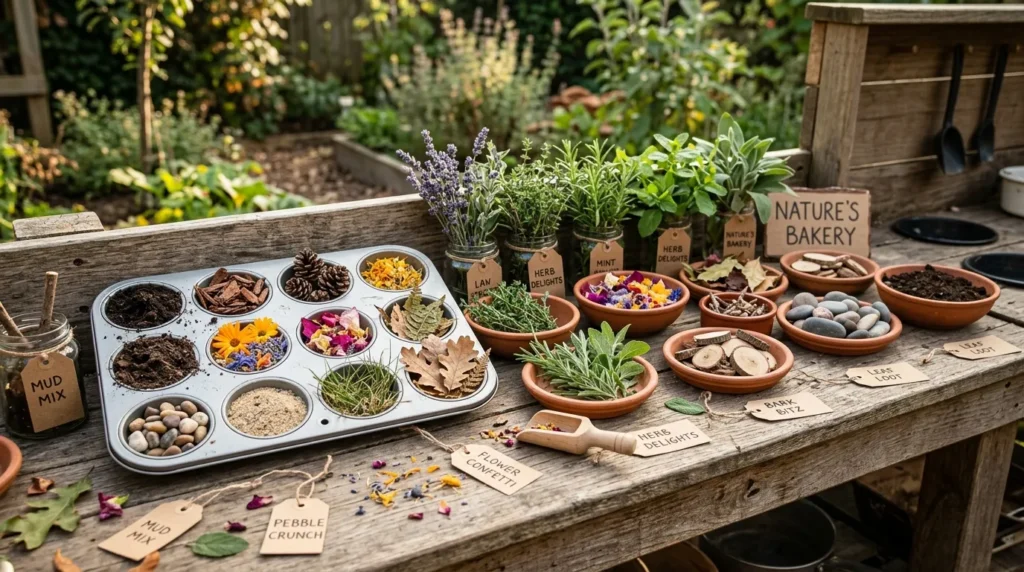
Nature ingredients make a mud kitchen feel alive, colorful, and connected to the seasons. Instead of relying on toy food, children can use safe outdoor materials like leaves, petals, grass, pinecones, bark, herbs, smooth stones, and seed pods. This idea works because children enjoy choosing, sorting, smelling, and mixing real textures. Always avoid unknown berries, mushrooms, thorny stems, sprayed plants, and anything from unsafe areas. A few simple containers can turn everyday yard finds into a beautiful pretend ingredient bar that feels fresh each time kids play outside in every season.
The transformation is both visual and practical because natural materials create endless recipe ideas without cluttering the house. Use muffin tins, terracotta saucers, wooden bowls, or metal trays to separate ingredients neatly. Spring might bring flower tea and herb soup, while fall might inspire acorn stew and leaf pies. That’s why many designers recommend nature-based play spaces for children who need creativity without constant new purchases. The ingredient bar also photographs beautifully for Pinterest because it adds layered color, texture, and seasonal charm to the backyard setup in a beautiful way.
7. Cooking Tools
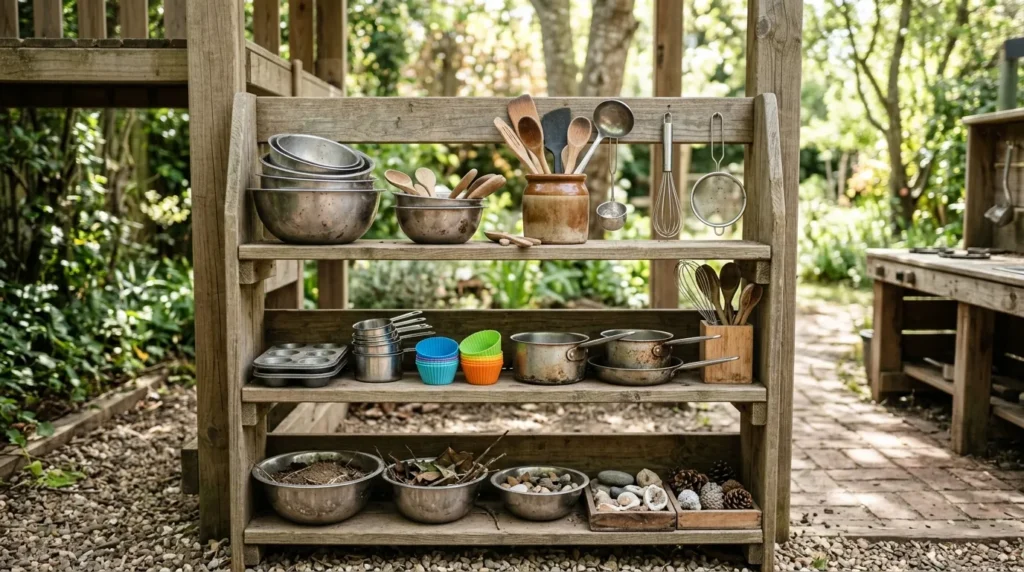
- Add realistic utensils children can safely handle
- Use wooden spoons, measuring cups, ladles, and muffin tins
- Avoid rust, sharp edges, loose handles, and breakable glass
- Duplicate popular tools for siblings and playdates
Real cooking tools make children feel trusted, capable, and deeply involved in their pretend world. Plastic toy utensils can be fun, but old kitchen items often hold attention longer because they feel authentic. Wooden spoons, metal measuring cups, muffin tins, ladles, small pots, silicone molds, and lightweight pans are perfect for mud kitchen play. This idea works because realistic tools support scooping, tapping, stirring, filling, counting, and serving. Check everything for sharp edges, rust, loose handles, and breakable parts before adding it to the outdoor station before outdoor play starts.
The kitchen becomes much more usable when tools are chosen for small hands and real movement. Keep heavier pans on low shelves, hang spoons at child height, and store smaller pieces in baskets or tins. Duplicate popular items, especially spoons and cups, if siblings or friends will play together. I’ve seen this work well in many homes because children naturally create restaurants, bakeries, and garden cafés when they have the right tools. The space feels more grown-up, but it still stays safe, washable, and easy to manage during daily play.
8. Sensory Zones
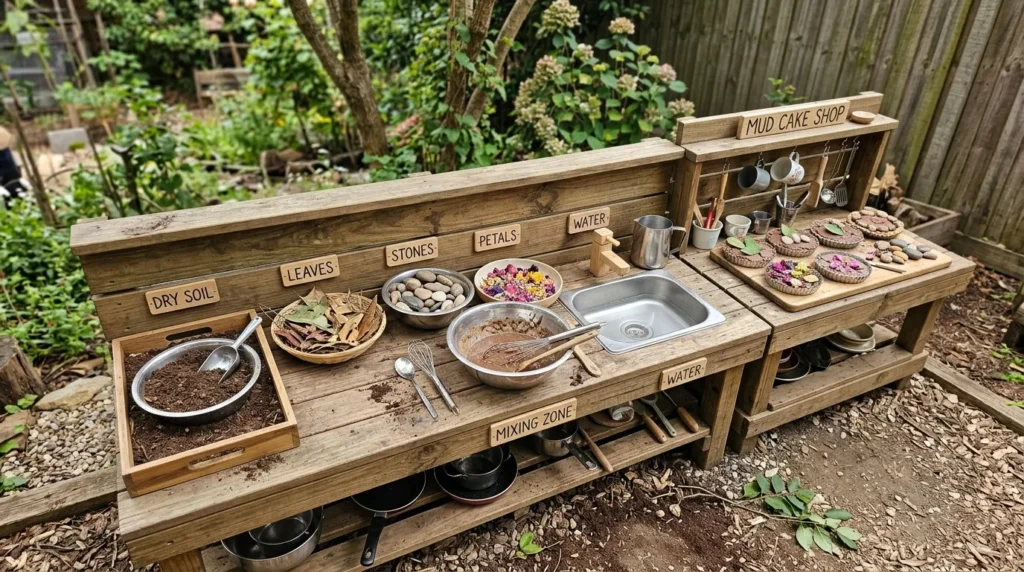
- Separates scooping, pouring, sorting, and decorating areas
- Helps children focus longer during play
- Makes cleanup easier because materials have clear places
- Adds structure without limiting creativity
Sensory zones help children explore mud kitchen play in a more organized and satisfying way. Instead of mixing everything into one chaotic pile, divide the space into simple areas for scooping, pouring, sorting, and decorating. This idea works because children often focus longer when materials are arranged with clear purpose. A tray of dry soil, a bowl of water, a basket of leaves, and a pan for finished creations can guide play without controlling it. The setup feels calm, but still leaves plenty of room for imagination during every play session.
The result is a play area that supports creativity, fine motor skills, and problem-solving at the same time. Children can compare wet and dry textures, sort stones by size, press petals into mud cakes, or pour water between containers. Use shallow trays, low bins, and stable bowls so every zone feels easy to reach. Sensory zones also help cleanup because each material has a return spot. Parents get a prettier, more manageable setup, while children get a richer outdoor experience that feels new every time they rearrange it freely after school.
9. Safety Setup
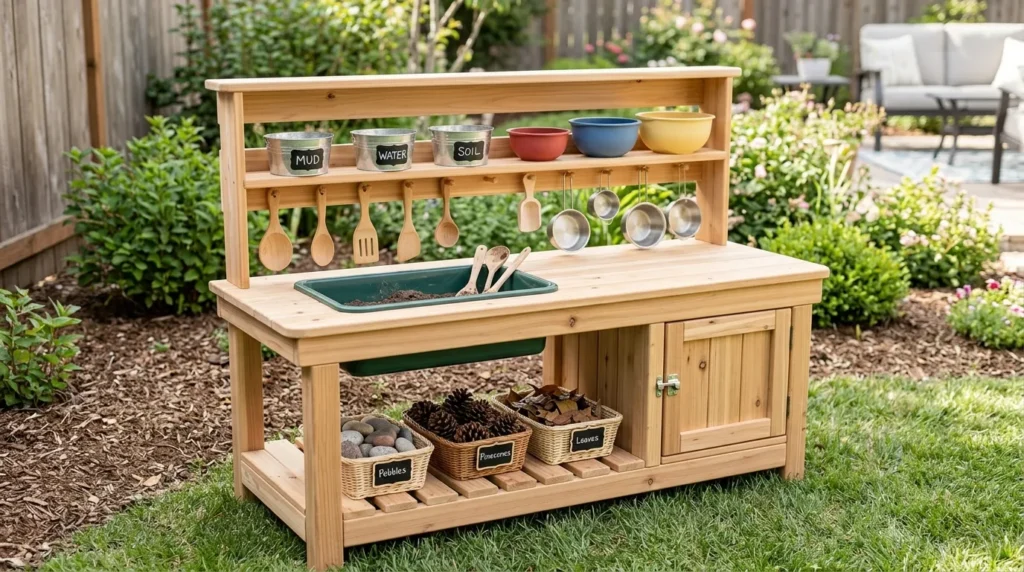
- Check for splinters, sharp edges, and unstable furniture
- Keep heavy items low and breakable pieces away
- Avoid chemicals, grills, pet waste, and unsafe plants
- Create simple rules children can remember easily
Safety planning keeps the mud kitchen fun without turning it into a worry for parents. Messy play should feel free and adventurous, but the setup still needs sturdy materials, safe boundaries, and age-appropriate tools. Check for splinters, loose nails, sharp edges, peeling paint, rusty pans, and unstable furniture before children play. This idea works because a safer kitchen encourages parents to allow longer, more relaxed outdoor sessions. Choose smooth utensils, shallow containers, non-toxic materials, and a surface that will not tip during energetic stirring, climbing, or reaching during outdoor play.
The safest setups are designed around how children actually move, reach, spill, and experiment. Place heavier items low, avoid breakable glass, and keep choking hazards away from toddlers. Make sure the play area is separate from chemicals, grills, pet waste, sharp garden tools, and unsafe plants. Add simple rules, such as mud stays in the kitchen and tools return to hooks. A thoughtful safety plan does not remove the fun; it protects the freedom. Children still get messy, creative play, while parents feel more confident nearby throughout the play session.
10. Cleanup Corner
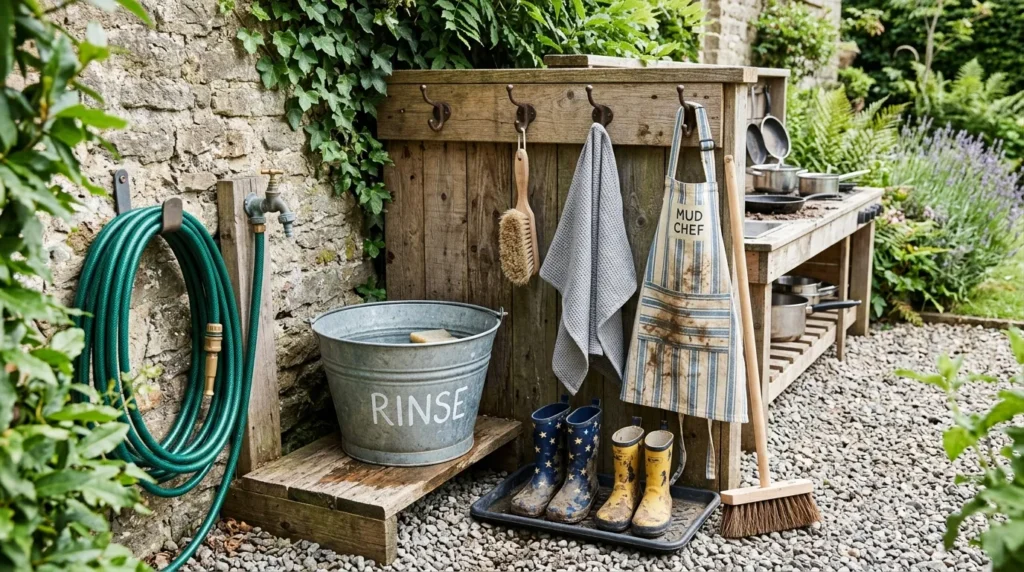
- Keeps mud, water, and tools easier to manage
- Uses a rinse bucket, towel hook, boot tray, and brush
- Helps children learn responsibility after play
- Makes messy outdoor play more realistic for families
A cleanup corner makes the difference between a mud kitchen parents tolerate and one they truly enjoy. The goal is not to prevent mess, because mud play is supposed to be hands-on, but to create an easy reset system. Keep a rinse bucket, towel hook, boot tray, hand brush, small broom, and washable apron near the station. This idea works because children are more likely to help when cleanup tools are close and the routine is simple. The reset becomes part of play, not a punishment or interruption each time.
The daily transformation is less tracked-in dirt, fewer scattered tools, and a calmer ending to outdoor time. Place the mud kitchen near a hose if possible, or use a refillable water container for rinsing hands and utensils. Mulch, pea gravel, or deck tiles underfoot help with drainage and reduce slippery puddles. Keep a laundry basket by the door for muddy clothes during bigger play sessions. Over time, children learn to rinse, hang, sweep, and return items, which builds responsibility while keeping the whole experience realistic for families at home each week.
11. Seasonal Refresh
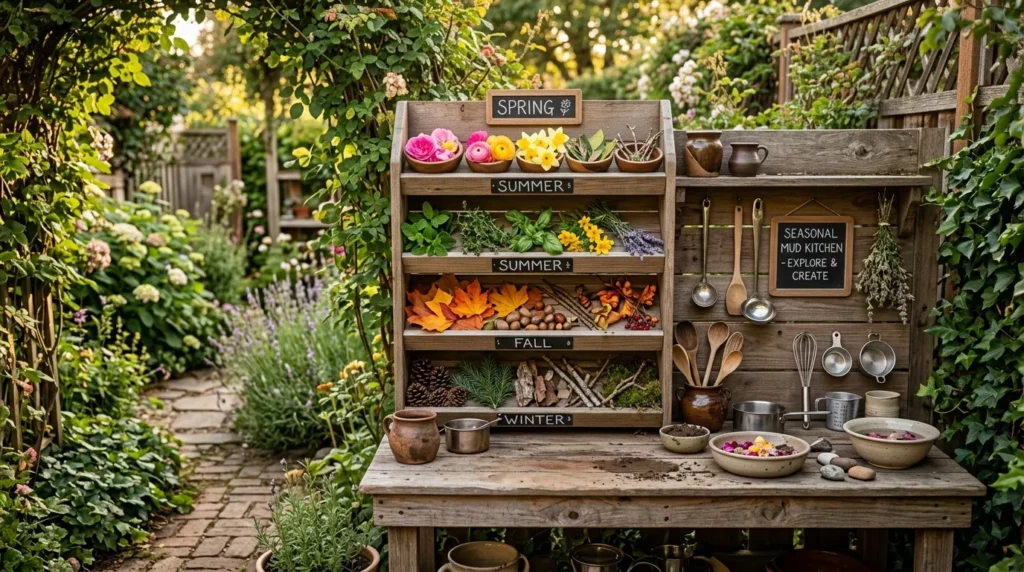
- Keeps the kitchen exciting throughout the year
- Uses spring petals, summer herbs, fall leaves, and winter pinecones
- Reduces the need to buy new outdoor toys
- Helps the setup grow with toddlers, preschoolers, and older kids
A seasonal refresh keeps the mud kitchen exciting long after the first week of play. Children love familiar spaces that change just enough to feel new, and the backyard naturally offers those changes throughout the year. Spring petals, summer herbs, fall leaves, winter pinecones, and rainy-day puddles can all inspire different kinds of play. This idea works because you are not constantly buying more things. Instead, you are rotating simple materials, colors, and themes that connect children to weather, seasons, and everyday nature right outside the home during each season.
The long-term value is what makes this project worth the effort for many families. A toddler may scoop and dump, a preschooler may run a café, and an older child may create potions, bakeries, or science experiments. Refresh the setup with new trays, labels, paint, or natural ingredients whenever it starts feeling stale. This Is How to Create a Mud Kitchen that grows with kids instead of being forgotten after a few uses. The space stays practical, beautiful, and meaningful through many stages of childhood at home for many years.