12 DIY Mud Kitchen Outdoor Play Ideas for Creative Backyard Fun
Backyard fun is no longer just about swings and slides. Creating a hands-on play space encourages imagination, creativity, and practical skills, especially when children interact with natural materials like mud, sand, and water. DIY mud kitchens have become a favorite for families seeking educational yet playful outdoor setups. They combine sensory play, motor skill development, and cooperative social activities, all in a backyard environment. By following simple, creative setups, parents can transform ordinary garden spaces into inspiring zones where kids can experiment, mix, and cook imaginary dishes while learning about textures, measurements, and teamwork.
In addition to educational benefits, these setups promote independent play. Kids can design their own “menus,” arrange utensils, and explore the tactile satisfaction of mud and water combinations. Parents can guide initial construction, but the magic happens when children adapt, rearrange, and create their own games. A well-thought-out mud kitchen blends creativity with safety, providing an engaging environment that motivates kids to spend more time outside. This hands-on approach nurtures problem-solving, observation skills, and artistic expression in a fun, manageable backyard scale.
1. Rustic Wooden Counter
- Adds a natural, timeless aesthetic to backyard play areas
- Encourages imaginative role-play like real cooking experiences
- Durable and weather-resistant with proper treatment
- Provides stable work surface for multiple children simultaneously
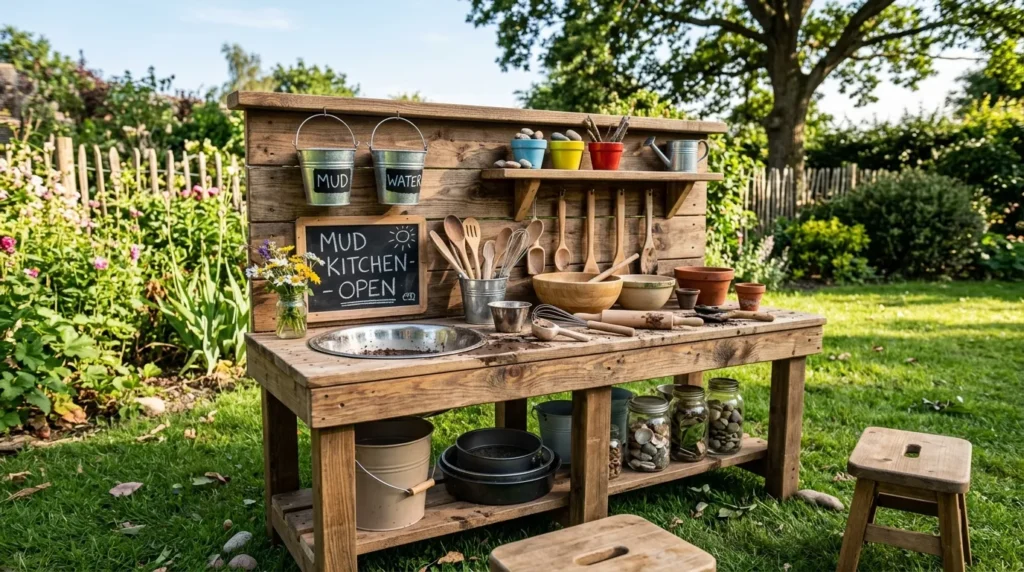
A rustic wooden counter instantly elevates the mud kitchen experience. Using reclaimed pallets or untreated timber can create a solid, eco-friendly base that blends with outdoor greenery. I’ve noticed that children respond well to natural textures, and the tactile sensation of raw wood paired with mud enhances sensory engagement. The counter height can be adjusted for toddlers or older kids, making it versatile for family spaces. Adding hooks or small shelves underneath allows storage of buckets, spoons, and old pots, keeping the area organized while maximizing usability.
Transforming your backyard with this feature offers both visual charm and functional benefits. Kids can engage in pretend cooking, baking mud pies, or experimenting with water mixing, all while standing comfortably. The rustic design naturally encourages outdoor exploration and creativity without expensive materials. Over time, the wood may develop a natural patina, enhancing the aesthetic appeal. Combining wood with natural greenery or small potted plants creates a cohesive, inviting atmosphere. This practical addition ensures the mud kitchen becomes the centerpiece of the backyard, drawing children repeatedly to interact and experiment.
2. Upcycled Sink Station
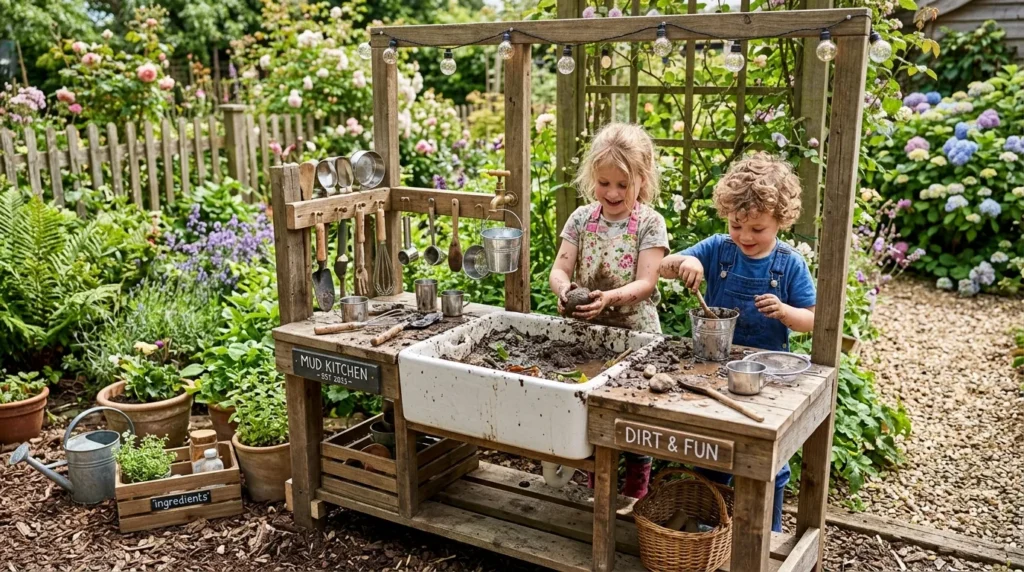
- Repurposes old sinks or basins to create functional water play areas
- Reduces costs and adds eco-friendly charm
- Supports sensory experiments with pouring, mixing, and measuring
- Easy to clean and maintain with detachable components
Transforming an old sink into a mud kitchen station is surprisingly simple and visually appealing. Many families have spare sinks or basins that can be mounted on a wooden frame, adding a realistic kitchen feel for kids. I’ve seen this work well in many homes because water features attract prolonged engagement. Children enjoy washing “ingredients,” pouring mud mixtures, and rinsing tools in a contained area. The tactile feedback of running water combined with mud encourages experimentation, promotes problem-solving, and enhances coordination skills naturally during play sessions.
Installing a sink station transforms an ordinary garden corner into an interactive hub. Parents can add small taps with manual or bucket-fed water flow to create control and encourage independent play. The setup supports creativity, allowing children to invent new recipes or washing routines. Its compact design fits even smaller backyards, and easy disassembly permits relocation or storage in adverse weather. Pairing the sink with small wooden shelves or hanging racks enhances functionality while keeping utensils accessible. Overall, this feature provides an engaging, safe, and low-maintenance water-mud play experience.
3. Potting Table Twist
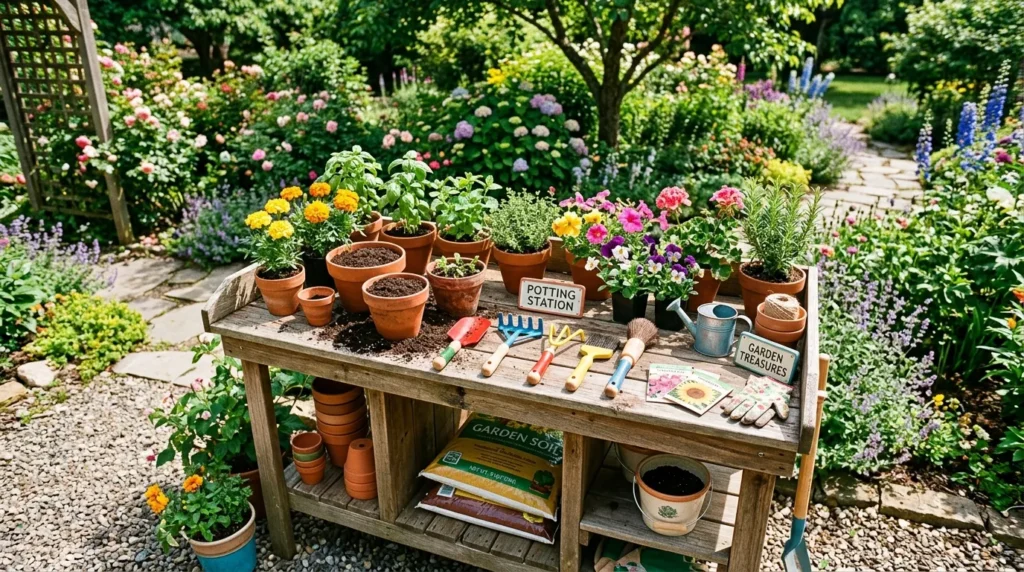
- Combines gardening and mud kitchen elements
- Promotes responsibility through planting and care
- Enhances sensory and observational skills
- Can incorporate herbs or flowers for a multi-sensory experience
Integrating a potting table into a mud kitchen encourages a seamless mix of gardening and imaginative play. Children can fill pots with soil, mud, or water, and practice planting seeds or flowers while “cooking” their mud creations. In my experience, this combination of activities improves attention span and instills a sense of accomplishment when plants grow. It provides a dynamic learning environment where children explore cause-and-effect relationships, texture differences, and the science of plants in a playful, hands-on setting.
This setup transforms outdoor play into a multi-purpose space. Kids can switch between creative mud recipes and practical planting tasks, all within the same area. Herbs such as basil or mint add scent and visual stimulation, making the experience even richer. Parents can guide initial planting, but the child-led engagement fosters independence. The potting table can double as a storage area for tools, buckets, or small watering cans, optimizing backyard organization. The result is a lively, interactive, and visually appealing environment that merges imagination with practical learning.
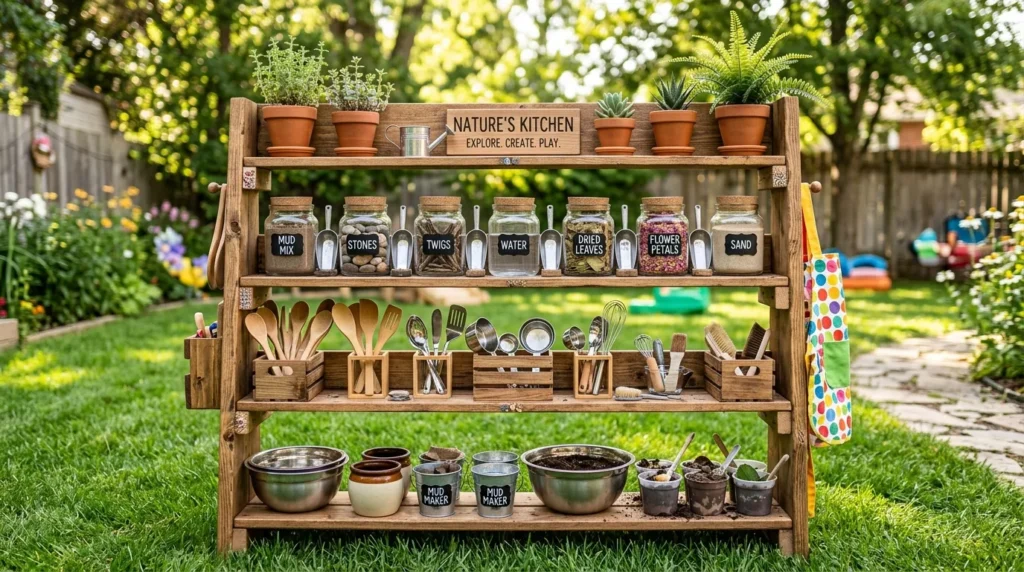
4. Tiered Shelf Station
- Organizes play tools, containers, and ingredients
- Allows children to easily access materials independently
- Adds visual dimension and structure to the mud kitchen
- Promotes tidy habits and reduces clutter
Using tiered shelves in a mud kitchen helps maximize vertical space while keeping items orderly. I’ve noticed that children appreciate being able to grab spoons, cups, and small containers without constantly asking for assistance. Shelving units made from wooden crates or inexpensive bookcases create an organized yet rustic look. Adding small labels or colorful markers encourages identification of items and builds early organizational skills. This design also allows parents to keep the area neat while still supporting child-led experimentation with mud, water, and natural materials.
The transformation is immediate in both usability and visual impact. A tiered shelf station gives children the freedom to move materials around, combine different containers, and explore height dynamics. It also improves workflow within the mud kitchen, enabling multiple children to play simultaneously without interference. The extra layers can be decorated with potted plants or small decor items, enhancing the aesthetic charm. This practical, accessible setup ensures that tools remain functional, visible, and easy to reach while inspiring independent and creative play sessions.
5. Clay Pizza Oven
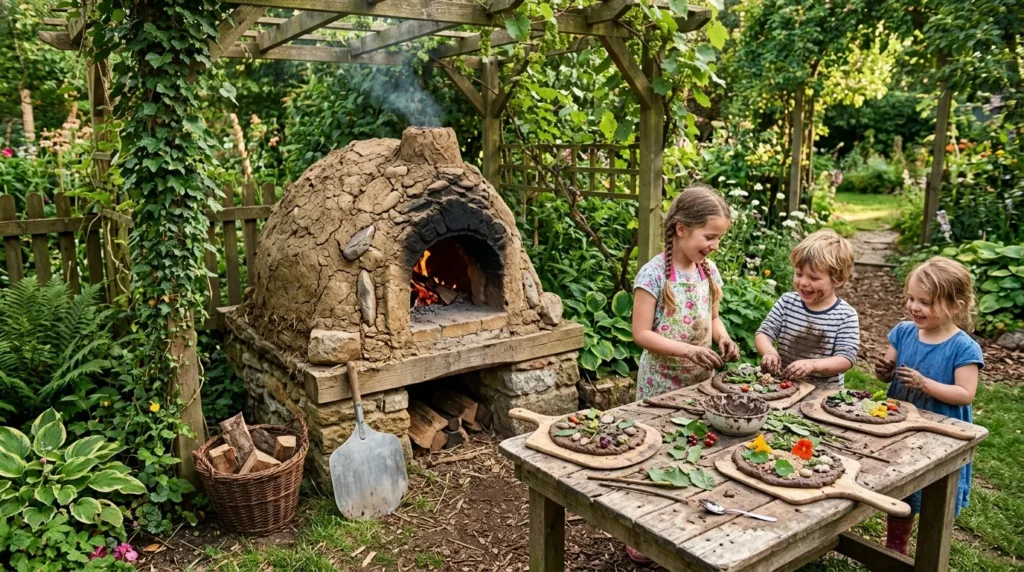
- Adds imaginative cooking element to mud kitchens
- Supports pretend play with measurable and realistic tasks
- Encourages social interaction and teamwork
- Provides visual focal point for creative outdoor setups
Building a clay or mud-based pizza oven introduces a playful culinary feature. Children can shape “pizzas,” add leaves or flowers as toppings, and practice coordination while role-playing as chefs. I’ve seen this idea become a central feature in many backyard setups because it sparks collaboration and storytelling. The process of designing the oven, adding mud bricks or clay layers, and experimenting with shapes provides both tactile stimulation and imaginative engagement. It’s also lightweight and can be recreated using recycled materials for a budget-friendly option.
This addition transforms ordinary play into an immersive culinary experience. Kids gain confidence while preparing pretend meals and engaging with friends or siblings. The oven can be used to store small tools or ingredients, adding functionality alongside creativity. By combining natural materials, children learn about textures, shapes, and basic construction principles. The visual appeal of a mini clay oven adds charm to any backyard, creating a playful, educational centerpiece that blends hands-on experimentation with imaginative cooking.
6. Chalkboard Recipe Wall
Bullet Points
- Encourages drawing and early writing skills
- Perfect for pretend café menus and recipes
- Reusable and easy to clean
- Adds interactive learning to outdoor play
Why It Works
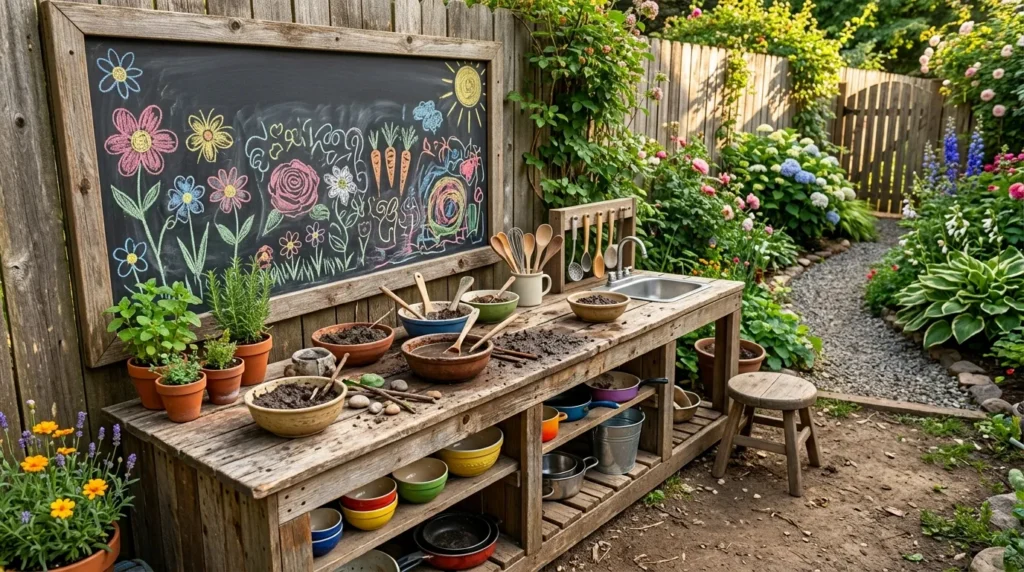
A chalkboard wall transforms a simple mud kitchen into a creative learning station where children can write recipes, draw ingredients, or create imaginary restaurant menus. I’ve noticed that kids stay engaged much longer when they can combine artistic expression with pretend cooking. It also helps develop early literacy, communication, and storytelling skills while making outdoor play more interactive.
Transformation & Usability
Mount a weatherproof chalkboard to the back panel or nearby fence. Store colorful chalk in a small bucket and let children create daily menus, grocery lists, or recipe ideas. The chalkboard encourages independent play while making the mud kitchen feel like a real outdoor café.
7. Hanging Utensil Rack
Bullet Points
- Keeps tools organized
- Encourages responsibility
- Maximizes vertical storage
- Creates a realistic kitchen setup
Why It Works
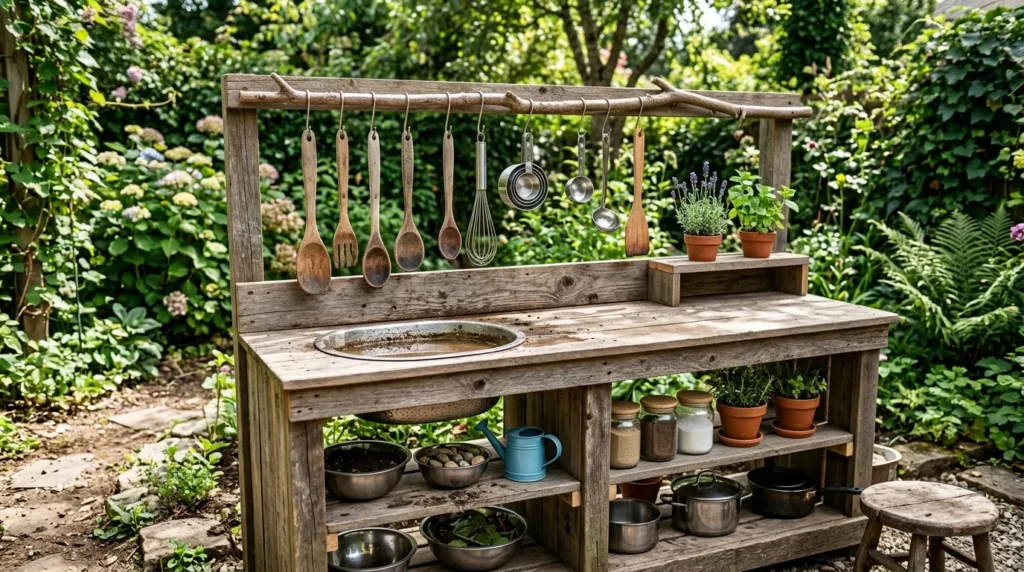
A hanging utensil rack makes outdoor play more realistic while keeping everything organized. Measuring cups, whisks, wooden spoons, strainers, and small pots remain within easy reach, allowing children to move naturally between activities. Organized storage also teaches responsibility by encouraging cleanup after play.
Transformation & Usability
Install wooden pegs or metal hooks above the counter and hang lightweight cooking tools. Add small baskets underneath for extra accessories while keeping the work surface clear and functional.
8. Nature Ingredient Bar
Bullet Points
- Encourages outdoor exploration
- Inspires imaginative recipes
- Uses free natural materials
- Supports sensory development
Why It Works
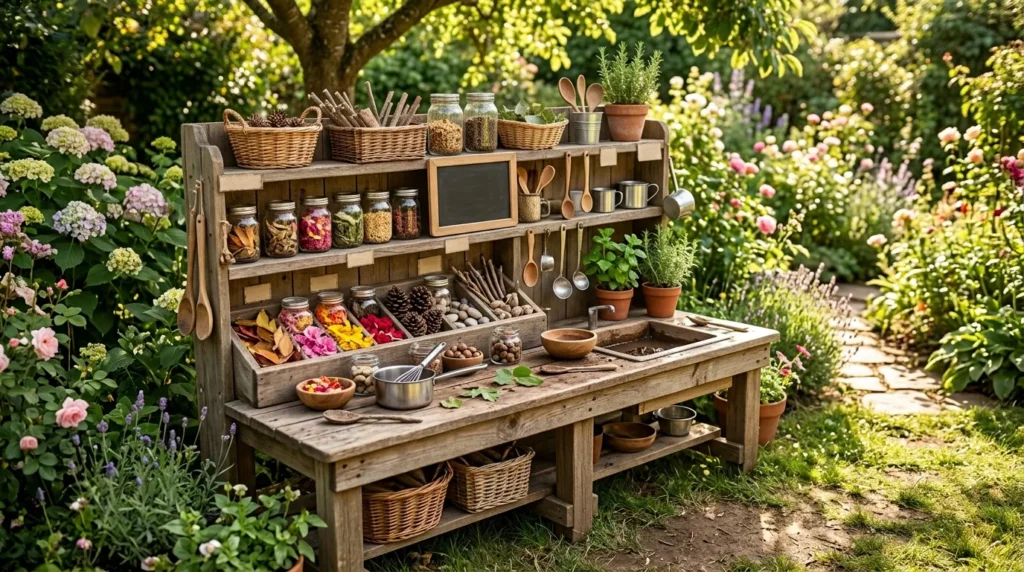
Children naturally love collecting leaves, flowers, pinecones, stones, and twigs. A dedicated ingredient bar encourages them to gather natural materials and use them in pretend cooking. I’ve found that this activity improves observation skills while helping children appreciate nature through creative play.
Transformation & Usability
Arrange small wooden bins or recycled jars filled with leaves, flower petals, pebbles, bark, acorns, and pinecones. Rotate materials with the seasons to keep the play experience fresh and exciting throughout the year.
9. Rainwater Collection Station
Bullet Points
- Eco-friendly outdoor feature
- Encourages sustainability
- Provides water for mud play
- Teaches environmental awareness
Why It Works
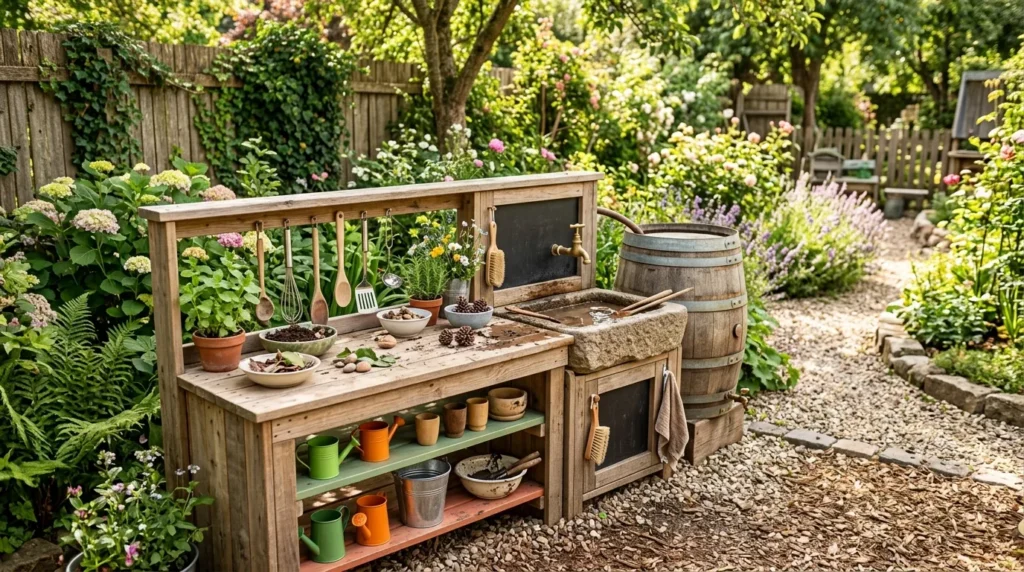
A simple rainwater collection station introduces children to sustainable living while providing a practical water source for mud play. Watching rainwater collect and using it for pretend cooking helps children understand conservation in a fun, hands-on way. It also reduces water waste during everyday outdoor activities.
Transformation & Usability
Use a decorative rain barrel connected to a small tap or bucket. Place watering cans and small containers nearby so children can easily fill basins or create mud mixtures while learning responsible water use.
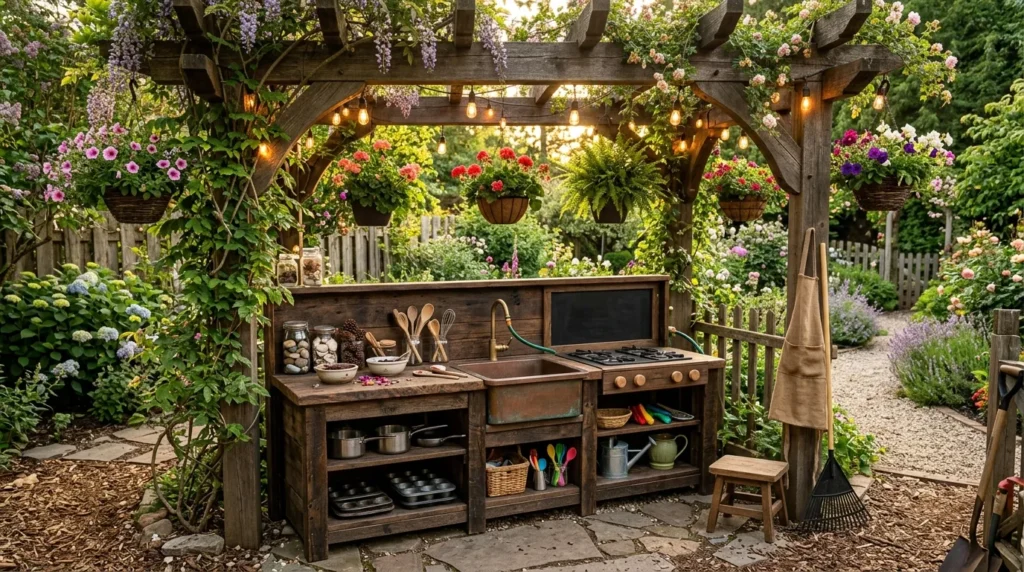
10. Covered Play Pergola
Bullet Points
- Provides shade during sunny days
- Protects the mud kitchen from weather
- Extends outdoor playtime
- Creates a beautiful backyard feature
Why It Works
Adding a pergola or canopy makes the mud kitchen usable throughout different seasons. Shade keeps children comfortable while protecting wooden structures from harsh sunlight and rain. I’ve noticed that covered play areas encourage longer outdoor sessions because they remain cooler and more comfortable during warmer months.
Transformation & Usability
Install a simple wooden pergola, fabric canopy, or shade sail above the mud kitchen. Decorate with string lights, hanging flower baskets, and climbing vines to create a magical outdoor play space that blends beautifully with the surrounding garden.
Conclusion
A DIY mud kitchen is much more than a backyard play project—it’s a creative learning space where children can build confidence, develop practical skills, and connect with nature through hands-on exploration. From rustic wooden counters and upcycled sink stations to chalkboard recipe walls, nature ingredient bars, and covered pergolas, each feature adds both educational value and imaginative fun to everyday outdoor play.
The best mud kitchens don’t have to be expensive or complicated. By using recycled materials, durable wooden elements, and thoughtful storage solutions, you can create a safe, organized, and inspiring play environment that grows with your child. Start with one or two simple ideas, then expand your mud kitchen over time to create a beautiful, Pinterest-worthy backyard space where creativity, learning, and unforgettable family memories come together.