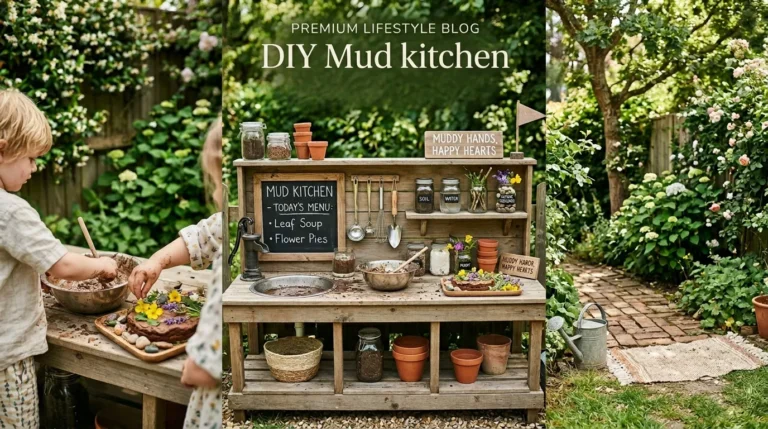
11 Make Outdoor Play More Fun With a DIY Mud Kitchen Setup
Introduction
Transforming your backyard into a DIY mud kitchen is one of the most creative ways to elevate outdoor play for children. Hands-on exploration with mud, water, and natural materials sparks imagination, improves sensory skills, and encourages problem-solving while fostering cooperative play. By combining functional structures with playful elements, families can create an engaging, safe, and educational space that evolves with kids’ interests. These setups are not just entertaining—they support practical learning, motor development, and creativity. With a few accessible materials, any backyard can be converted into a dynamic play and learning environment.
Beyond the immediate benefits, a well-designed mud kitchen encourages repeated engagement. Children enjoy mixing mud pies, experimenting with water flow, and role-playing imaginative culinary activities. Parents can provide minimal guidance, allowing kids to take ownership of their play area, enhancing independence and confidence. Incorporating multi-sensory elements such as herb boxes, textured counters, or interactive water features enriches the experience. This approach also promotes outdoor time, connecting children with nature and healthy tactile exploration. Overall, DIY mud kitchens provide a versatile and visually appealing solution to stimulate creativity, learning, and social interaction.
1. Rustic Wooden Counter
- Creates a sturdy surface for mixing mud and water
- Encourages imaginative role-play and cooking experiments
- Adds natural aesthetic to the backyard
- Allows multiple children to play simultaneously
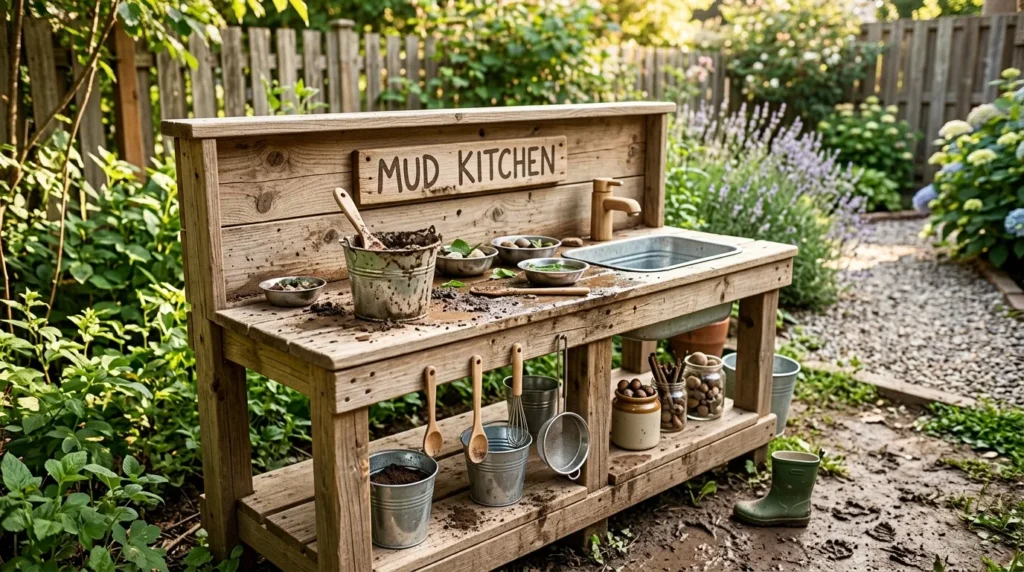
A rustic wooden counter serves as the foundational element for any DIY mud kitchen. I’ve noticed children naturally engage more when tactile materials are present, and wood offers a warm, durable surface for hands-on activities. Using reclaimed pallets or untreated timber creates an eco-friendly structure that blends seamlessly with outdoor greenery. Hooks or shelves underneath provide storage for utensils, mud cups, and containers. The counter becomes a focal point for creativity, allowing children to experiment with mud pies, water mixes, and imaginative recipes in a safe, comfortable setting.
Integrating this counter transforms the backyard into a functional and interactive play hub. Kids can craft mud recipes, pour water experiments, and develop hand-eye coordination while exploring textures. Adjusting the height for different ages ensures comfort and usability. Over time, natural wear adds charm and character to the wood. Pairing the counter with small planters or decorative elements enhances visual appeal and coherence in the backyard design. The rustic counter establishes a practical, inviting, and creative environment that encourages repeated play and imaginative learning.
2. Upcycled Sink Station
- Repurposes old sinks or basins for water play
- Promotes sensory exploration and coordination
- Eco-friendly and cost-effective
- Supports independent and cooperative activities
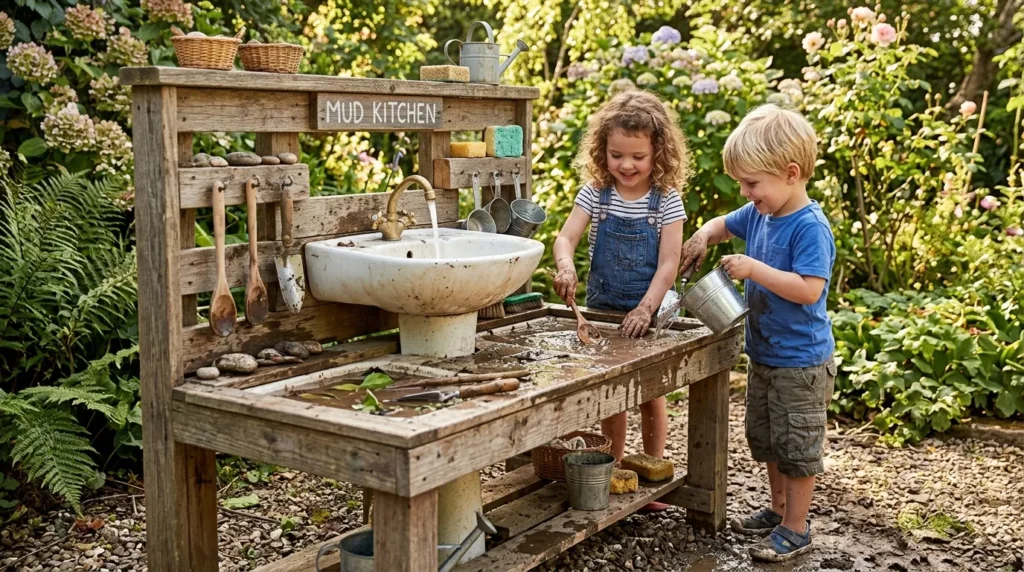
Converting an old sink into a mud kitchen station adds dynamic water play opportunities. I’ve observed that children are drawn to running water, and combining it with mud experiments enhances engagement and sensory development. A sturdy wooden frame can support a ceramic or metal sink, creating a realistic kitchen environment. Detachable basins make cleaning simple and allow flexibility in play setups. By pouring, mixing, and experimenting with mud and water, children develop motor skills, problem-solving abilities, and independent creativity, all within a contained, safe area that fosters learning through play.
The sink station elevates outdoor play into an interactive experience. Children can experiment with water flow, measure ingredients, and observe cause-and-effect interactions while collaborating or playing independently. Placing the station near counters or mud trays creates an organized workflow that supports multiple users simultaneously. The moving water visually stimulates and engages children, encouraging extended outdoor activity. With proper planning, the station remains practical, eco-friendly, and versatile, providing hours of sensory-rich engagement that complements other mud kitchen elements.
3. Potting Table Twist
- Combines gardening with tactile mud play
- Enhances observation and responsibility
- Adds sensory engagement through soil and plants
- Encourages creative multi-use activities
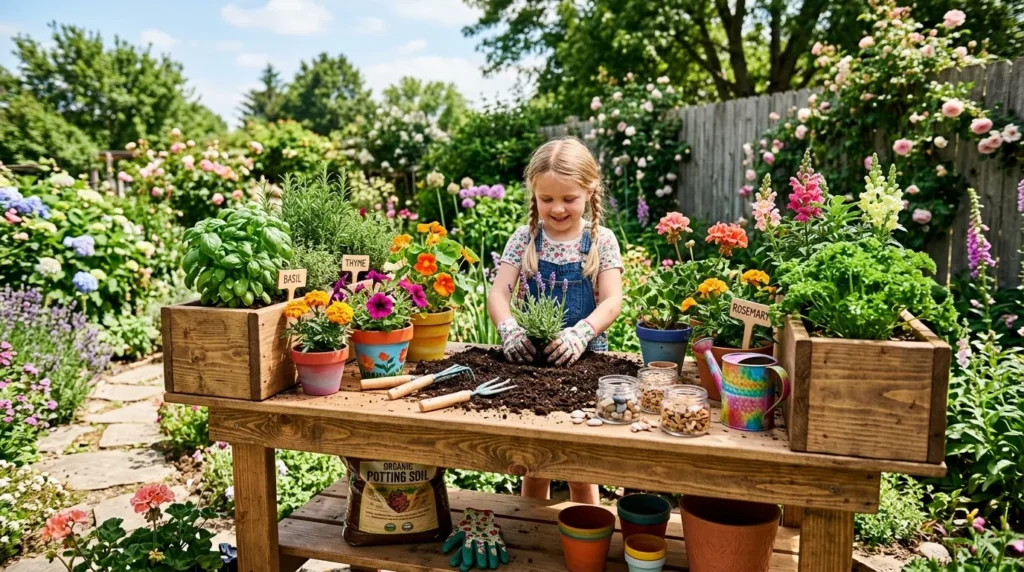
Integrating a potting table introduces a multi-dimensional sensory experience into a mud kitchen. Children can fill pots with soil, create mud recipes, or plant herbs and flowers while engaging in imaginative play. I’ve noticed this combination increases focus, patience, and problem-solving skills. A sturdy wooden table or raised planter ensures children can reach comfortably. Adding fragrant herbs or colorful flowers enhances tactile, visual, and olfactory stimulation, making the setup more immersive. By blending gardening and mud exploration, children engage in hands-on learning while cultivating creativity and curiosity.
The potting table transforms outdoor play into a multi-functional learning environment. Kids can alternate between making mud dishes and tending plants, fostering imagination and practical skills. Beneath-table storage allows easy organization of tools, containers, and soil, keeping the area clean. Parents can provide initial guidance, but children gain independence in experimenting with planting and mud play. This dual-purpose feature promotes sensory engagement, visual appeal, and sustained attention, turning a simple backyard into a dynamic outdoor learning and play space.
4. Tiered Shelf Station
- Maximizes vertical storage for utensils and containers
- Supports independent and organized play
- Encourages collaborative interaction among multiple children
- Adds aesthetic structure to the backyard
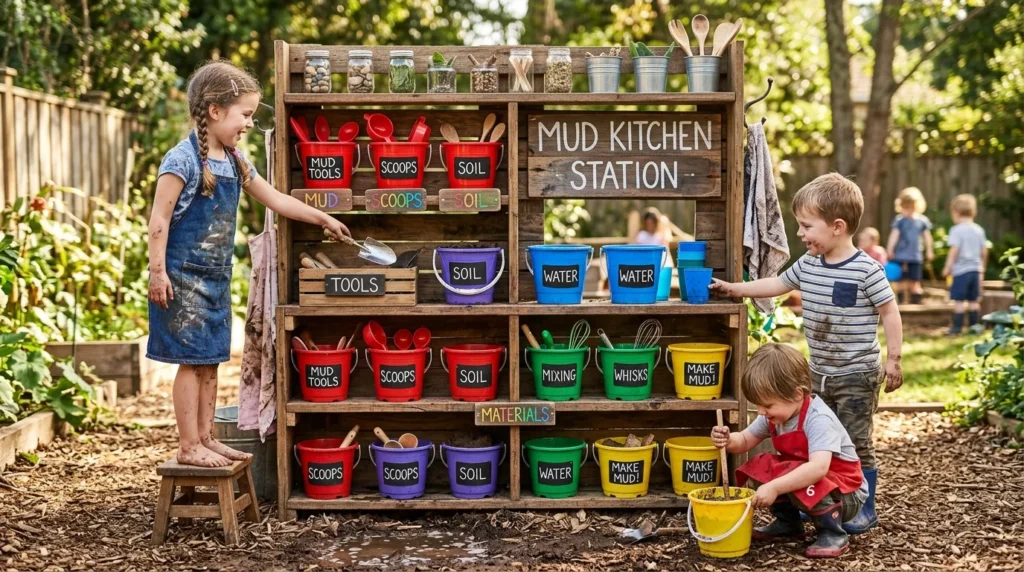
A tiered shelf station combines practicality with visual appeal. I’ve observed that children respond well to organized environments where materials are easy to access, which fosters autonomy. Wooden crates, small bookcases, or pallet shelves create a rustic and functional design, providing multiple levels of storage. Color-coding or labeling sections allows children to identify and return tools or containers independently. By structuring materials in tiers, multiple children can play without interference, while the visual layout contributes to the backyard’s charm and cohesion, enhancing both function and aesthetics.
Tiered shelving improves the usability and organization of mud kitchens. Children can experiment with containers, mud, and water, while remaining aware of their materials’ locations. Adding decorative elements such as potted plants or painted jars increases visual appeal. Vertical tiers allow simultaneous engagement for multiple children, encouraging cooperative and independent play. Easy access for supervision ensures safety without interrupting activities. The combination of functionality and aesthetics makes tiered shelves a critical feature for long-lasting, structured, and engaging outdoor play setups.
5. Clay Pizza Oven
- Introduces imaginative cooking and role-play
- Encourages teamwork and creativity
- Supports sensory and tactile learning
- Serves as a visually appealing focal point
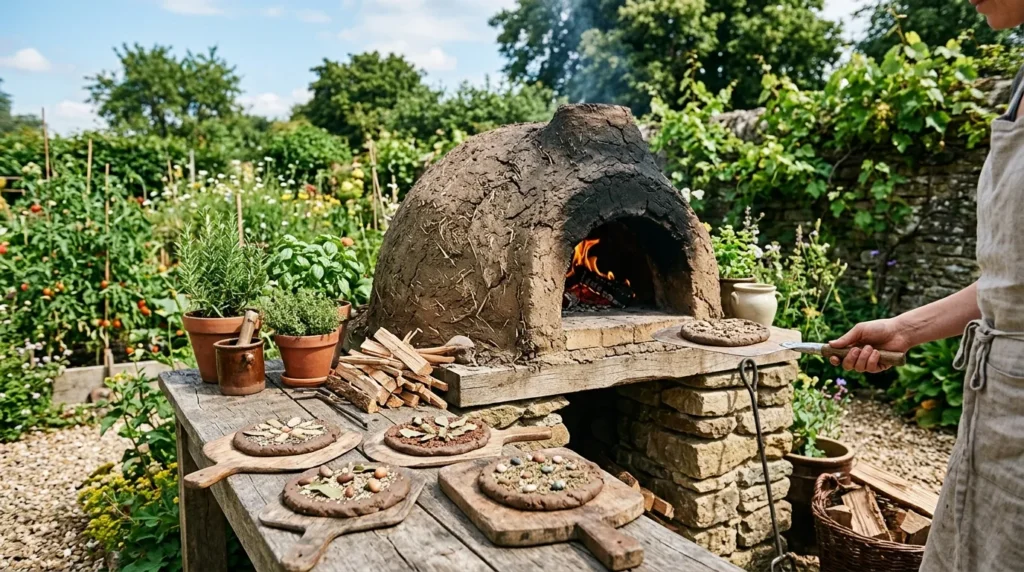
Building a clay or mud pizza oven adds a compelling centerpiece to any backyard mud kitchen. Children enjoy shaping mud pizzas, adding natural toppings like leaves or petals, and engaging in pretend cooking. I’ve noticed this feature fosters collaborative play, storytelling, and problem-solving, keeping kids engaged for longer periods. A simple DIY design using clay, bricks, or stones is safe, lightweight, and visually appealing. The textures and interactive nature of the oven enhance tactile exploration while making the mud kitchen an inviting, functional focal point that children naturally gravitate toward during outdoor play.
The pizza oven transforms backyard play into an immersive culinary environment. Children can practice coordination, measurement awareness, and imaginative thinking while pretending to cook and serve dishes. It may also double as storage for utensils or mud containers, adding practical functionality. Visually, earthy tones complement natural surroundings and other mud kitchen elements. Over time, this addition encourages extended creative engagement, social interaction, and hands-on learning. The oven becomes a signature feature, integrating sensory, imaginative, and practical benefits into a cohesive backyard setup.