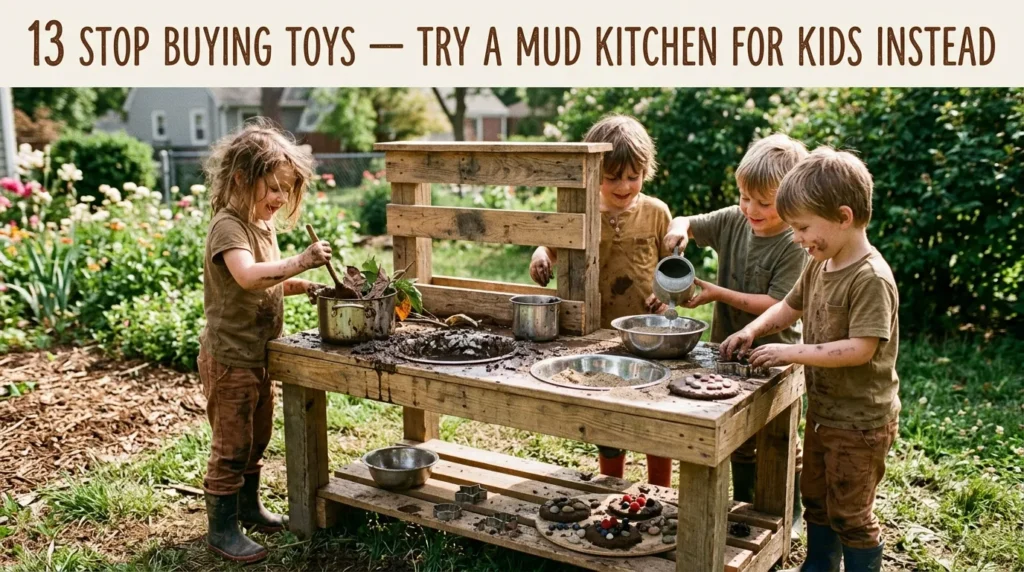
13 Stop Buying Toys — Try a Mud Kitchen for Kids Instead
A mud kitchen turns ordinary outdoor play into something kids can touch, mix, pour, build, and proudly call their own. For many USA families, toy bins fill up fast, yet children still drift toward sticks, water, rocks, dirt, and anything that feels real. That is why a simple backyard mud kitchen can be more useful than another plastic toy set. It encourages open-ended play, supports sensory development, and gives kids a screen-free activity that feels fresh every day, even when the setup is small, inexpensive, homemade, and easy to change.
This guide shares thirteen practical mud kitchen ideas that feel Pinterest-worthy without being complicated or costly. You will find layout tips, material suggestions, storage ideas, safety reminders, and styling details that help the space look charming while still working for real children. The goal is not perfection. The goal is a usable outdoor play zone where kids can scoop, stir, pretend, problem-solve, and explore nature with confidence. If you want fewer toy purchases and more meaningful play, this is the kind of project worth considering for everyday family life at home.
Outdoor Sensory Play
- Encourages touching, mixing, pouring, and exploring natural textures
- Helps children enjoy screen-free backyard activity
- Works with simple materials like dirt, water, bowls, and spoons
- Supports curiosity, coordination, and imaginative play
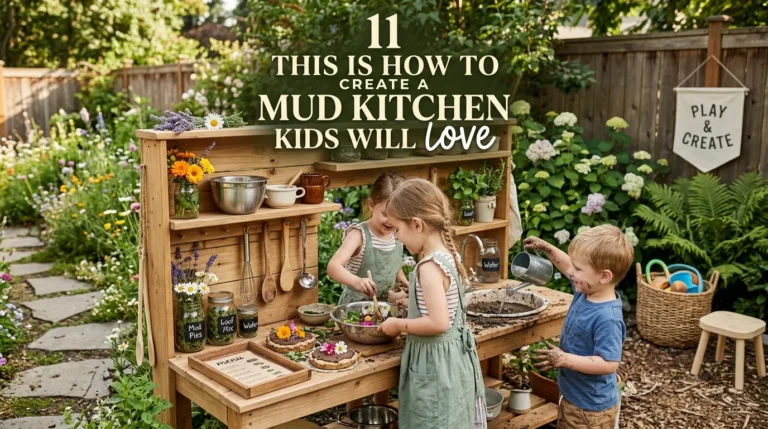
Outdoor sensory play gives children the kind of hands-on experience most boxed toys cannot repeat. A mud kitchen invites kids to feel cool soil, splash water, squeeze wet leaves, sort pebbles, and notice how textures change. This matters because sensory play helps children build body awareness, coordination, and curiosity through real materials. In my experience, children stay engaged longer when they control the mixing, pouring, and experimenting themselves. The setup can be as simple as a low table, a few bowls, and a safe patch of dirt near the patio.
The transformation is immediate because the backyard starts feeling like a miniature science lab and pretend café at the same time. Kids can make mud pies, leaf soup, pinecone stew, or flower potions using whatever nature provides that day. Parents in the USA often love this because it encourages outdoor time without needing a big budget or constant entertainment. Add a water dispenser, metal spoons, and washable containers, and the space becomes usable for toddlers, preschoolers, and early elementary kids with only minor changes as they grow throughout different ages and busy family seasons.
2. Real World Skills
- Builds practical habits through play
- Teaches pouring, scooping, sorting, wiping, and organizing
- Encourages responsibility without feeling like a chore
- Helps children understand cause and effect
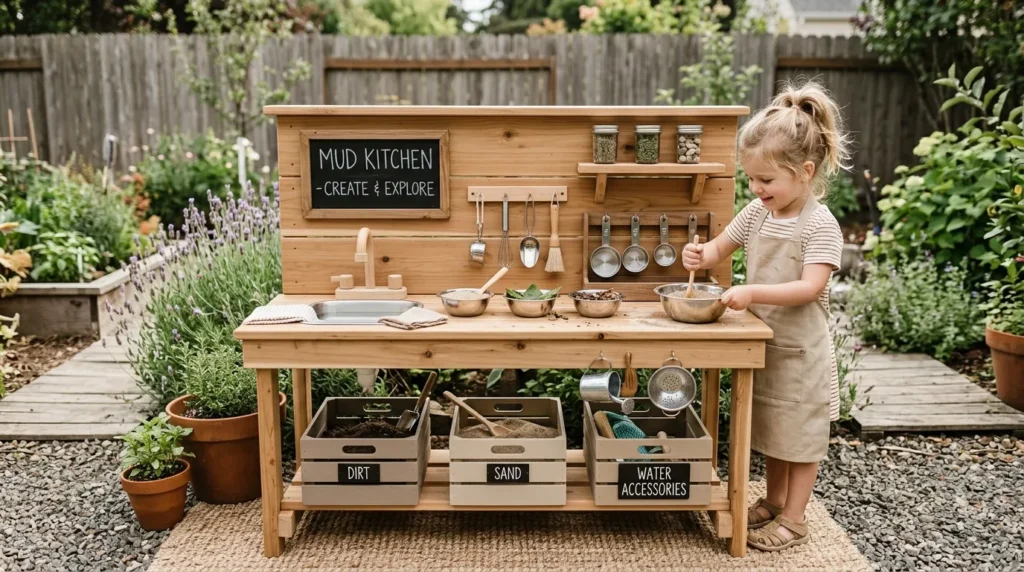
Real world skills grow naturally when children work with tools, containers, and messy materials. A mud kitchen teaches pouring, measuring, scooping, wiping, sorting, sharing, and cleaning in ways that feel like play instead of chores. Kids begin to understand cause and effect when dry dirt becomes thick mud or too much water turns soup runny. That practical learning is one reason many designers recommend outdoor play setups that mimic real household spaces. A child-sized counter, sink bowl, and shelf can quietly build confidence every day while keeping the activity playful, calm, and hands-on.
The result is a play area that supports independence while still feeling safe and familiar. Children practice decision-making when they choose ingredients, arrange dishes, or decide where each tool belongs after play. This can also make transitions easier because cleanup becomes part of the routine, not a sudden interruption. Use lightweight pans, sturdy spoons, recycled jars, and labeled bins so children can manage the space themselves. Over time, the mud kitchen becomes a gentle training ground for responsibility, patience, and practical problem-solving in daily outdoor play throughout the week.
3. Creative Mess Zone

- Keeps messy play in one clear backyard area
- Gives children freedom without losing boundaries
- Protects patios, flower beds, and furniture
- Makes outdoor play feel more relaxed for parents
A creative mess zone gives kids permission to explore without turning your whole yard upside down. Instead of saying no to every puddle, scoop, or dirt pile, you create one dedicated place where messy play belongs. This works beautifully because children need boundaries, but they also need freedom inside those boundaries. A simple mud kitchen tells them, “This is where mixing happens.” I’ve noticed that when kids have a clear messy area, they are often more respectful of patios, flower beds, and outdoor furniture nearby during ordinary afternoons, weekends, and relaxed summer mornings.
The best transformation is emotional as much as practical, because children feel trusted instead of constantly corrected. Place the mud kitchen on mulch, pea gravel, deck tiles, or a washable outdoor mat to define the zone visually. Add a bucket for dirty tools, a towel hook, and a rinse station so mess stays manageable. Parents get a neater yard, and kids get a richer play experience. The area can look charming too, especially with natural wood, galvanized tubs, terracotta pots, and simple garden-style accessories without making the backyard feel messy or unfinished.
4. Budget Friendly Setup

- Uses thrifted, recycled, or leftover materials
- Helps parents avoid expensive outdoor toy sets
- Looks charming with simple rustic styling
- Can be upgraded slowly over time
A budget friendly setup can look beautiful without requiring expensive outdoor toys or custom carpentry. Many families build mud kitchens from thrifted tables, old nightstands, wooden crates, pallets, or leftover lumber. The magic comes from arranging everyday materials in a way that feels intentional. Sanded wood, secondhand mixing bowls, dollar-store utensils, and recycled containers can become a complete play station. This is where a more creative approach feels especially practical, because the best pieces are often already around your home or garage before you buy anything new first whenever possible.
The finished space can feel surprisingly polished when you repeat simple materials and keep the layout tidy. For example, use one shelf for bowls, one hook row for utensils, and one bin for nature finds. A stainless-steel dog bowl can become a sink, while an old cake pan becomes a mud-pie tray. Paint is optional, but outdoor sealant helps wood last longer in changing USA weather. With a little planning, the setup looks Pinterest-ready while staying affordable, durable, and easy to refresh seasonally for spring, summer, fall, and backyard birthday play.
5. Nature Based Learning
- Turns the backyard into a playful learning space
- Supports observation, language, and early science skills
- Uses seasonal materials like leaves, petals, rocks, and seeds
- Encourages curiosity without formal lessons
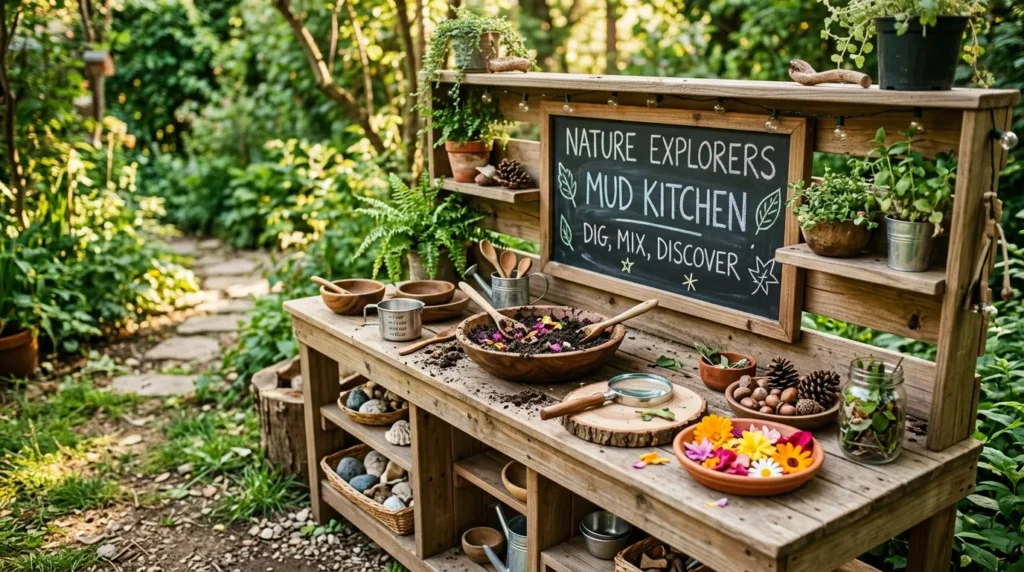
Nature based learning turns a mud kitchen into an outdoor classroom without making play feel forced. Children can explore seasons, weather, textures, colors, insects, plants, and simple science while pretending to cook. They notice that wet soil is heavier, leaves crumble when dry, and petals stain water with soft color. These discoveries build observation skills in a relaxed way. That’s why many early childhood educators value nature play, especially when it lets children ask questions, test ideas, and repeat activities without pressure or adult-led lessons that interrupt the fun.
The everyday results can be surprisingly meaningful because children start seeing the yard as a place full of materials and mysteries. In spring, they might collect petals and fresh grass; in fall, they may use acorns, leaves, and seed pods. Add a small magnifying glass, measuring cup, or weather-safe chalkboard to extend the learning. Parents can ask simple questions like, “What changed when you added water?” without taking over. The mud kitchen stays playful, but it quietly supports language, science thinking, and nature appreciation during ordinary, low-pressure outdoor moments at home.
6. Independent Play Corner
- Gives kids manageable choices during outdoor play
- Helps parents reduce constant activity planning
- Works well beside a patio, porch, or window
- Encourages confidence and self-directed play
An independent play corner helps children stay busy without needing constant adult direction. A good mud kitchen gives them choices they can manage: bowls to fill, spoons to stir, water to pour, and shelves to organize. This kind of setup works because open-ended materials do not have one correct answer. Children can repeat actions, invent stories, or change the rules as they play. I’ve seen this work well in many homes where parents want outdoor activities that feel engaging but do not require nonstop supervision during cooking, gardening, emails, or relaxed porch time.
The key is designing the corner so everything is easy to reach, safe to use, and simple to reset. Keep tools lightweight, avoid breakable glass, and choose containers children can carry without frustration. A child-height counter encourages longer play because kids do not have to ask for help every few minutes. Place the kitchen where you can see it from a porch, patio, or window when possible. This creates a balanced setup: kids feel independent, while parents still feel comfortable, calm, and connected without hovering over every scoop, spill, and idea.
7. Social Play Station

- Makes playdates, sibling play, and group activities easier
- Supports sharing, role play, and teamwork
- Allows children to create pretend cafés, bakeries, or restaurants
- Reduces conflict when duplicate tools are available
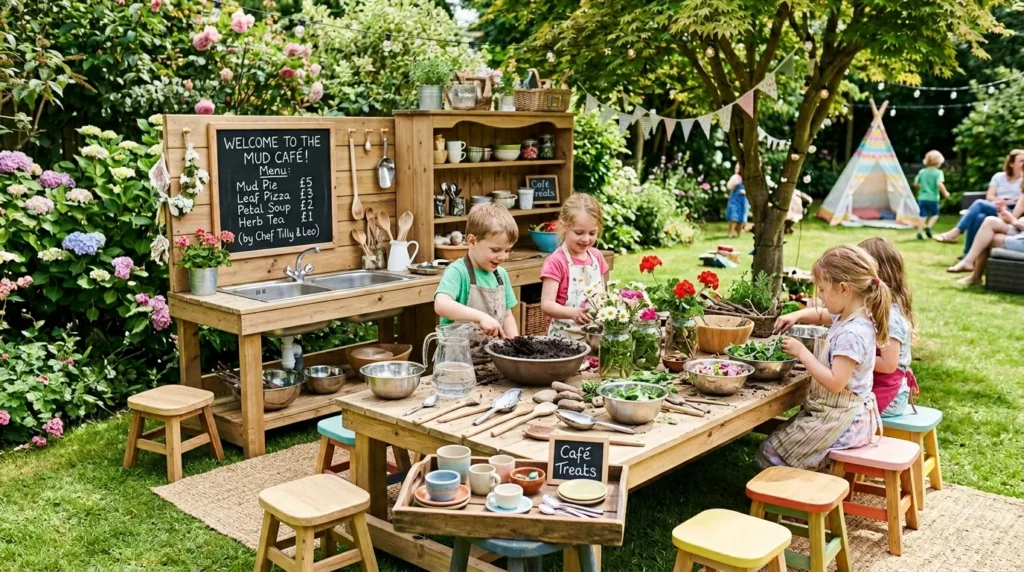
A social play station makes sharing and teamwork feel natural instead of forced. Mud kitchens are perfect for siblings, cousins, neighbors, and playdate groups because children can take different roles. One child gathers ingredients, another stirs, another serves, and another decorates pretend plates with flowers or leaves. This flexible structure supports conversation, cooperation, and problem-solving. Unlike many toys with limited parts, a mud kitchen expands with imagination. A few extra bowls or scoops can make the space easier for several children to enjoy together during relaxed weekend afternoons and backyard birthday gatherings.
The transformation is easy to see during playdates because kids often create their own restaurant, bakery, garden café, or potion shop. Add a small menu board, serving tray, and extra stools to make group play smoother. Keep duplicate tools available when possible, especially spoons, cups, and bowls, to reduce arguments. The space also encourages polite language as children pretend to order, serve, trade, and explain recipes. Over time, the mud kitchen becomes more than a play area; it becomes a shared storytelling space where friendships, language, and confidence can grow naturally.
8. Simple Storage Plan

- Keeps the mud kitchen tidy and easy to reset
- Uses crates, baskets, hooks, shelves, and bins
- Helps children clean up without confusion
- Makes the whole setup look more Pinterest-worthy
A simple storage plan keeps the mud kitchen inviting instead of chaotic. Outdoor play spaces can quickly become cluttered when bowls, buckets, rocks, sticks, and spoons have no clear home. Storage works best when it is visible, low, and child-friendly. Open crates, wire baskets, weatherproof bins, and labeled shelves help children see what they can use and where each item returns. In my experience, children are more willing to clean up when the system is obvious, simple, and not overly fussy for toddlers, preschoolers, and older kids alike in most homes.
The visual upgrade is big because organized tools make the whole kitchen look more intentional and Pinterest-worthy. Use hooks for utensils, a crate for metal pans, a basket for nature treasures, and a covered bin for items that should stay dry. Avoid storing too much at once, because fewer pieces usually lead to deeper play and easier cleanup. Rotate seasonal materials instead of piling everything together. This helps the mud kitchen stay fresh, manageable, and attractive through busy weekends, after-school play, and backyard gatherings without making parents reorganize everything after every play session.
9. Seasonal Play Ideas

- Keeps the setup fresh all year
- Uses natural materials from each season
- Encourages kids to return to the same space with new interest
- Makes the mud kitchen more beautiful for Pinterest-style content
Seasonal play ideas keep a mud kitchen exciting long after the first week. Children love familiar spaces that change just enough to feel new, and nature makes that easy. Spring can bring flower soup, summer can bring herb water, fall can bring leaf pies, and winter in milder areas can bring evergreen decorations or cold-weather texture play. This approach works because the kitchen does not depend on buying more toys. Instead, it uses what the season already offers in your backyard or neighborhood during each changing month with very little planning.
The result is a play setup that grows with the calendar and feels connected to real life. In summer, add a shade umbrella, ice cubes, and washable pitchers for cooling water play. In fall, offer pumpkins, cinnamon sticks for scent, and dry leaves for crunchy texture. In winter, use pinecones, bark, and sturdy scoops, especially in regions with less snow. Seasonal trays make the space look beautiful for Pinterest photos while giving kids fresh reasons to return, explore, and create new pretend recipes using simple materials that feel fresh and affordable.
10. Small Space Setup

- Works for patios, balconies, decks, and side yards
- Uses compact furniture and contained materials
- Helps renters create removable play zones
- Makes outdoor sensory play possible without a large backyard
A small space setup proves you do not need a large backyard to create meaningful outdoor play. Mud kitchens can work on patios, balconies, side yards, apartment courtyards, or compact decks when designed thoughtfully. The secret is choosing vertical storage, narrow counters, and contained materials. A folding table, planter box, or compact potting bench can become a charming mini kitchen. This works especially well for USA families living in townhomes, condos, or rentals where permanent structures may not be practical or allowed under most rental rules for young families.
The transformation feels freeing because parents realize outdoor play does not have to be huge to be valuable. Use a shallow storage bin for soil or sand, a small water jug with a push spout, and a tray underneath to catch spills. Choose lightweight pieces that can be moved or stored after play. Add hooks on a fence panel or railing-safe shelf if allowed. Even a three-foot corner can become a sensory-rich mud kitchen when the layout is neat, safe, and easy to reset after every short or extended play session.
11. Safety First Design

- Focuses on sturdy, age-appropriate materials
- Reduces risks from sharp edges, unstable surfaces, and unsafe plants
- Helps parents feel more relaxed during messy play
- Keeps the setup practical for daily use
Safety first design makes a mud kitchen more enjoyable for both kids and parents. Messy play should feel adventurous, but the materials still need to be age-appropriate, stable, and easy to supervise. Check for splinters, sharp edges, peeling paint, rusty metal, and loose screws before children use the space. Choose smooth utensils, sturdy containers, and a stable work surface that will not tip during enthusiastic stirring. That’s why many designers recommend simple, durable builds over decorative pieces that cannot handle real play or survive real outdoor play over time safely.
The safest transformation comes from thinking through how children actually move, not just how the kitchen looks. Place heavier items low, secure shelves when needed, and keep water shallow for younger kids. Avoid toxic plants, unknown berries, treated wood scraps, and small choking hazards for toddlers. Teach children what belongs in the kitchen and what stays out, such as chemicals, pet waste, or garden tools. With clear rules and thoughtful materials, the space can feel creative, beautiful, and reassuringly practical for everyday family use during daily family use in every season.
12. Easy Clean System
- Makes messy play easier for parents to manage
- Adds rinse buckets, towels, boot trays, and brushes
- Helps children learn cleanup routines
- Keeps mud from spreading into the house
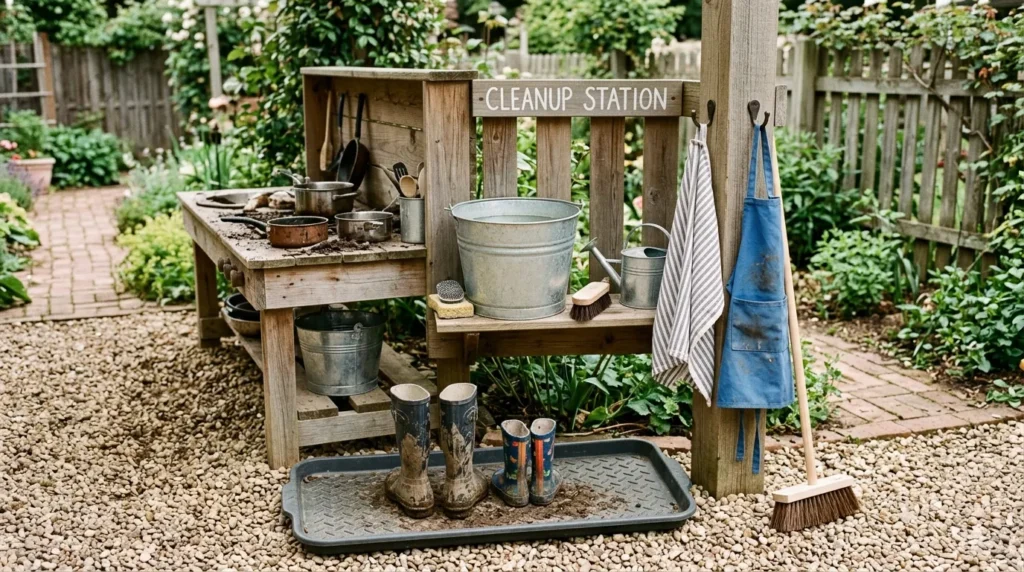
An easy clean system keeps mud play from becoming a parent headache. The best mud kitchens include cleanup tools from the start, not as an afterthought. A rinse bucket, towel hook, boot tray, hand brush, and washable apron can make the difference between stressful mess and manageable outdoor fun. This works because children learn that cleanup is part of the play cycle. When supplies are close by, everyone is more likely to reset the space before mud travels into the house or across the patio after play.
The daily result is a smoother routine after school, on weekends, or during summer break. Place the kitchen near a hose if possible, or use a refillable camping water container when a hose is not available. Keep a small broom and dustpan nearby for dried dirt. Use washable outdoor rugs, gravel, or mulch underfoot so puddles drain instead of spreading. A clear “wash, hang, return” routine helps children participate. Parents get less chaos, and kids learn practical habits without losing the joy of messy play even when everyone is tired or busy.
13. Long Term Value
- Grows with toddlers, preschoolers, and older kids
- Encourages creativity without constant new purchases
- Supports outdoor movement, sensory learning, and pretend play
- Adds lasting value to the backyard
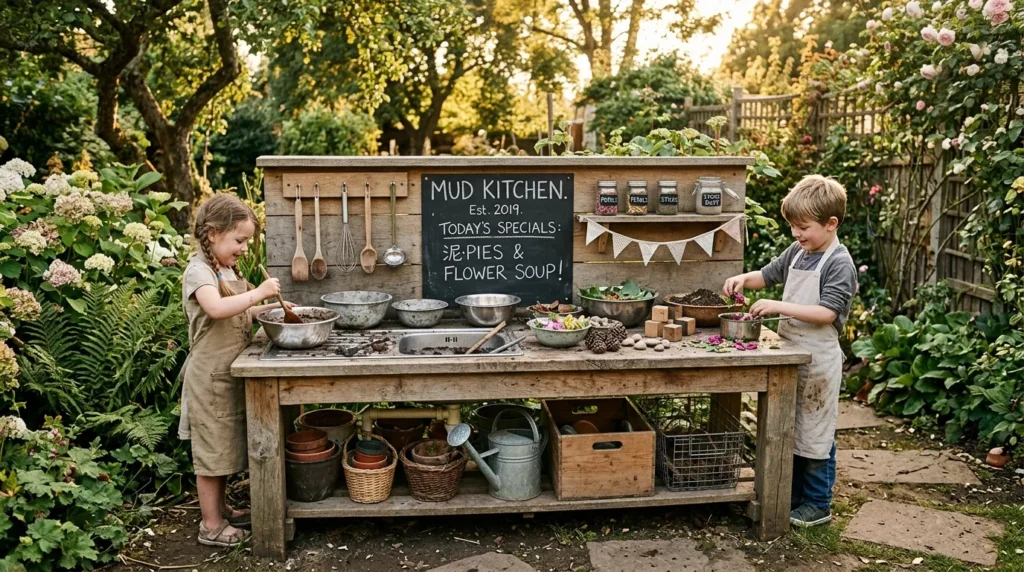
Long term value is the biggest reason a mud kitchen can outshine many trendy toys. Instead of being exciting for a week and forgotten in a closet, it changes with your child’s age, interests, and imagination. Toddlers may scoop and dump, preschoolers may create pretend meals, and older kids may invent cafés, science experiments, or nature potions. This flexibility makes the setup feel useful for years. It also encourages outdoor movement, creativity, language, sensory play, and practical independence in one durable backyard place that can keep evolving year after year.
The final transformation is a backyard that feels more alive, useful, and connected to childhood. A mud kitchen gives children a reason to step outside, notice nature, make decisions, and create something from simple materials. It does not need to be perfect, expensive, or large to be meaningful. Start with a sturdy surface, a few old bowls, water access, and natural ingredients. Then let the space evolve. For many families, choosing fewer toys becomes less of a phrase and more of a smarter play philosophy for modern families who want less clutter.