These RV Living Room Ideas Are Perfect for Tiny Spaces
Optimizing a tiny RV living room requires creativity, functionality, and a focus on maximizing space. In the USA, RV owners often struggle to balance comfort with practicality in small mobile interiors. Thoughtful furniture selection, clever storage, and visually expansive design techniques are essential. This guide provides actionable strategies that improve circulation, reduce clutter, and enhance usability. From modular seating and multi-purpose tables to reflective surfaces and built-in storage, these ideas help transform a compact RV living area into a functional, cozy, and visually appealing environment. Every suggestion is designed for ease of implementation and maximum impact.
1. Modular Seating
Bullet Points
- Rearrangeable sectional pieces for multiple functions.
- Hidden storage beneath cushions for essentials.
- Durable, travel-friendly fabrics.
- Flexible layouts for lounging, sleeping, or entertaining.
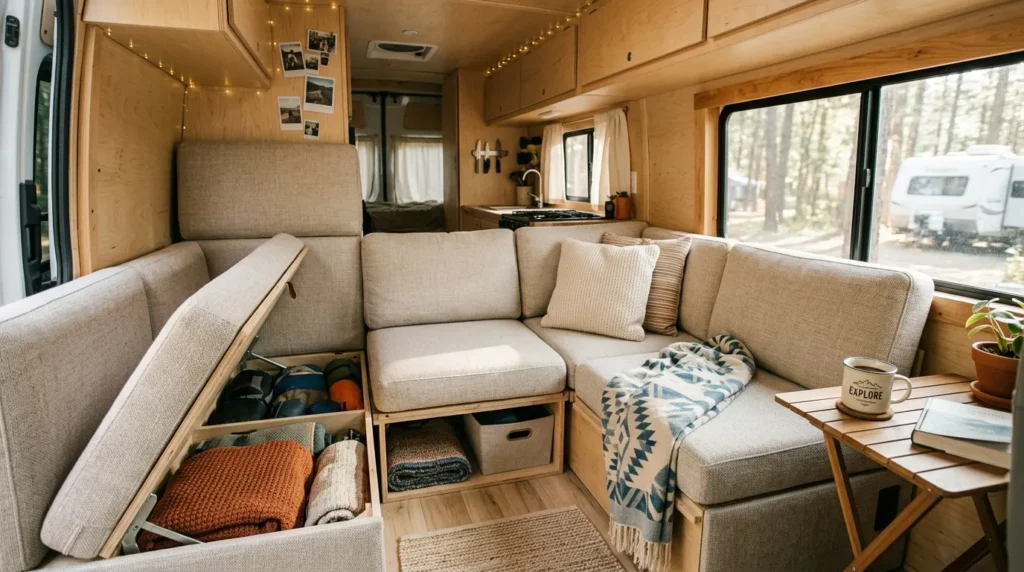
Modular seating is essential for making the most of small RV interiors. I’ve noticed that sofas with removable or foldable sections allow owners to adjust layouts for lounging, socializing, or sleeping. Many models include hidden storage under cushions, ideal for blankets, pillows, or travel essentials. Durable fabrics like microfiber, leather, or performance cloth withstand frequent use while remaining visually appealing. Modular seating helps define zones without crowding, maintaining an open feel. Its adaptability allows RV owners to reconfigure space quickly, making interiors functional, organized, and inviting even in compact dimensions.
The practicality of modular seating is significant. Sections can be rearranged for group gatherings or personal relaxation. Hidden compartments minimize clutter while keeping essentials accessible. Flexible layouts improve circulation and maintain visual balance in narrow interiors. High-quality fabrics enhance durability and usability, while design ensures aesthetic appeal. Modular seating maximizes square footage, providing comfort and function. In small RV living rooms, this strategy enhances versatility, organization, and style, creating a space that feels larger and more welcoming for both daily use and travel adventures.
2. Multi-Purpose Tables
Bullet Points
- Dining, work, or prep surfaces in one unit.
- Foldable panels or hidden compartments for extra function.
- Lightweight materials for mobility.
- Space-efficient design for compact interiors.
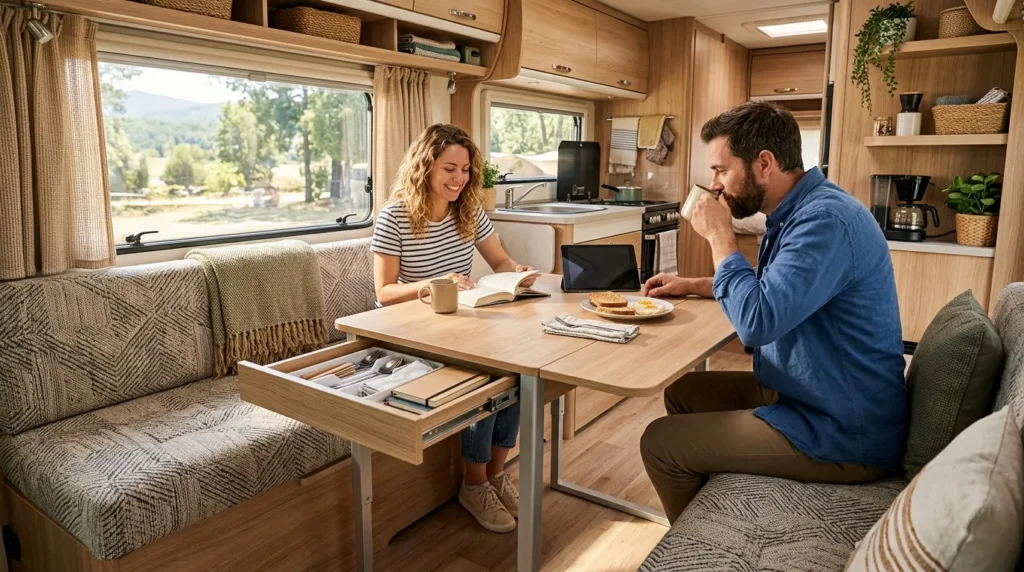
Multi-purpose tables are a must for tiny RV living rooms. I’ve seen compact tables that double as dining areas, workspaces, or storage platforms transform tight interiors into versatile, organized spaces. Foldable extensions or hidden compartments store utensils, electronics, or craft items while keeping surfaces tidy. Lightweight materials like aluminum, treated wood, or composite panels make repositioning simple without sacrificing durability. Multi-purpose tables maintain a clean appearance while enhancing usability. This approach allows RV interiors to stay organized, flexible, and visually appealing, giving small spaces maximum functionality without crowding the layout.
These tables enhance usability by enabling rapid transitions between dining, work, or leisure activities. Foldable or extendable surfaces free up floor space, improving circulation. Hidden compartments reduce clutter and keep essential items within reach. Proper positioning complements surrounding seating and traffic flow. Multi-purpose tables maximize limited space, supporting flexible layouts while maintaining a polished aesthetic. They are practical, high-impact solutions for tiny RV interiors, ensuring the area remains functional, cozy, and stylish for daily living or entertaining.
3. Fold-Down Surfaces
Bullet Points
- Wall-mounted desks or tables collapse when not in use.
- Perfect for temporary dining, work, or hobby areas.
- Lightweight, sturdy construction suitable for travel.
- Frees up floor space for better circulation.
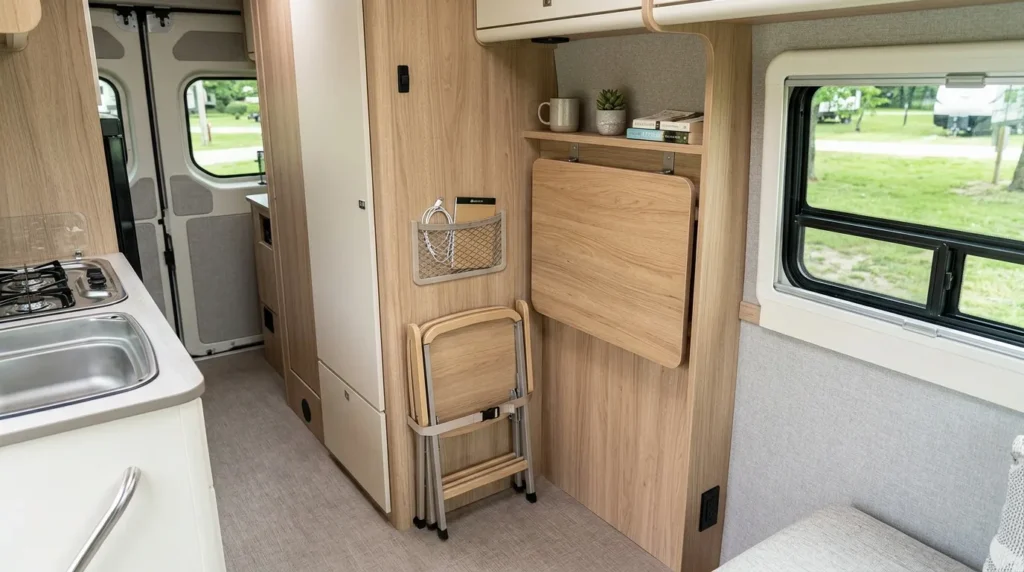
Fold-down surfaces offer immediate versatility for small RV interiors. Wall-mounted desks or tables provide functional zones for meals, work, or crafts, then fold neatly against the wall to save floor space. I’ve noticed this solution maintains a clean and open interior while improving functionality. Lightweight, durable materials such as aluminum or reinforced wood ensure stability during transit. Fold-down designs allow for quick reconfiguration of the living area to suit different needs. By integrating fold-down surfaces, RV owners can optimize compact spaces efficiently while maintaining visual appeal, organization, and usability.
Functionally, fold-down surfaces improve circulation and adaptability. They allow seamless transitions between dining, working, and leisure areas without permanently occupying floor space. Durable construction ensures long-term stability and usability. Strategic placement complements surrounding furniture while maintaining style and openness. Fold-down units reduce visual clutter, improve accessibility, and enhance overall functionality. This versatile solution allows RV living rooms to remain clean, practical, and visually appealing, maximizing every inch of the compact interior while supporting comfort and multi-purpose usability.
4. Built-In Storage

Bullet Points
- Drawers under benches, seating, or tables.
- Overhead cabinets and vertical shelving.
- Hooks and hanging organizers for essentials.
- Keeps surfaces tidy while maintaining open circulation.
Built-in storage is critical for tiny RV interiors. Under-seat drawers, overhead cabinets, and vertical shelving maximize usable space while keeping items organized and accessible. Hooks and hanging organizers provide storage for daily-use essentials like jackets, keys, or cooking utensils. I’ve noticed that built-in solutions reduce clutter and improve circulation, making interiors feel more open and visually appealing. Thoughtful design integrates storage seamlessly into furniture, maintaining cohesion. With built-in storage, RV interiors can remain functional, organized, and stylish, enhancing both usability and comfort for mobile living in compact spaces.
Built-in storage improves both organization and traffic flow. Bedding, electronics, or kitchenware can be stored efficiently and retrieved easily. Vertical storage preserves floor space while overhead cabinets make use of underutilized height. Integrated storage ensures safety during travel by securing items. Properly designed storage complements interior style, enhancing cohesion. This strategy allows every square inch to be functional, helping small RV living rooms feel comfortable, organized, and visually appealing while maintaining usability and accessibility for everyday tasks and travel.
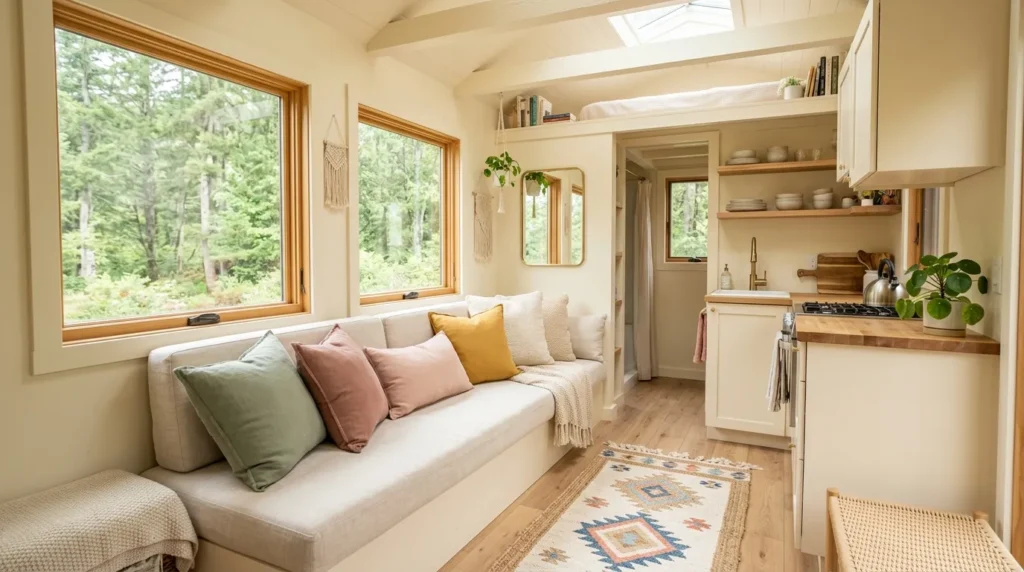
5. Light-Reflecting Colors
Bullet Points
- Soft neutrals like cream, beige, or pastel tones.
- Reflect natural and artificial light to brighten interiors.
- Pair with accent textiles or small décor elements.
- Makes tiny interiors feel airy and open.
Light-reflecting colors enhance the perception of space in compact RV interiors. Pale tones bounce light around the cabin, creating an open and airy feel. I’ve noticed that cream, soft gray, or pastel walls and furnishings instantly make small interiors appear larger. Neutral backgrounds allow accent pieces like pillows, rugs, or décor to add personality without overwhelming the space. Combining reflective surfaces with light hues further amplifies brightness and depth. Using light-reflecting colors is a high-impact yet inexpensive strategy to make tiny RV interiors feel visually expansive, cozy, and welcoming.
Functionally, light tones improve usability and visual clarity. Bright interiors allow better task visibility and enhance circulation. Neutral backdrops simplify styling and make small interiors more versatile. Paired with mirrors or metallic accents, light colors amplify the sense of space and openness. Light-reflecting palettes create a calm, welcoming atmosphere, supporting comfort and style simultaneously. This approach makes small RV living rooms feel airy, organized, and functional, enhancing both the aesthetic and practical use of compact mobile interiors.
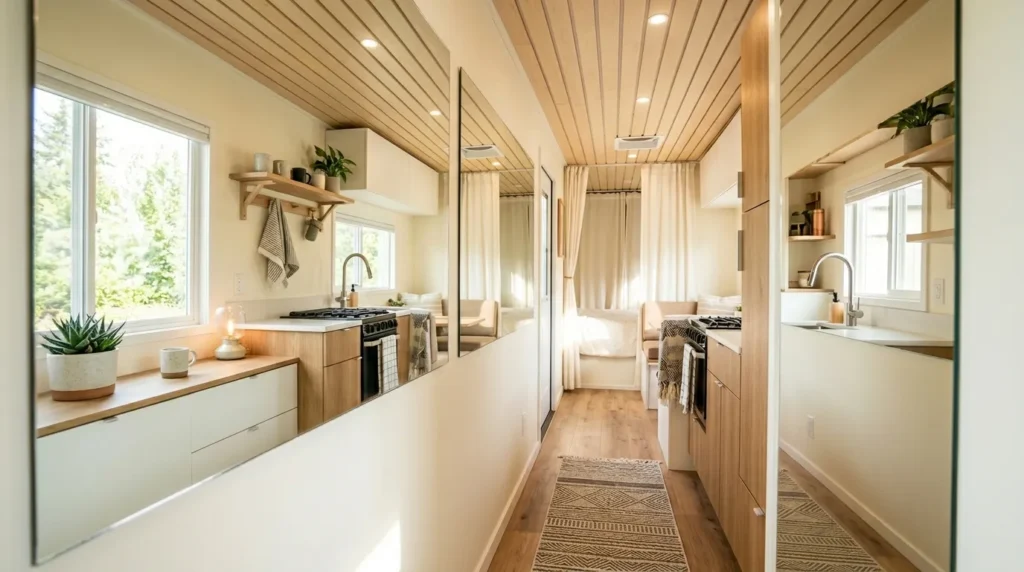
6. Mirrors for Depth
Bullet Points
- Expand perceived space by reflecting surroundings.
- Lightweight or frameless mirrors for travel safety.
- Place near windows or light sources for maximum effect.
- Add balance and style to compact layouts.
Mirrors create visual depth and openness in tiny RV interiors. I’ve noticed that frameless or lightweight mirrors make narrow spaces appear larger by reflecting light and surroundings. Positioning mirrors opposite windows or lamps enhances natural and artificial illumination. Mirrors also balance furniture proportions and break repetitive patterns, providing visual interest. They serve both practical and decorative functions, helping to maximize perceived space while improving brightness. In compact RV interiors, mirrors create a more welcoming, open, and comfortable environment while complementing furniture and décor elements effectively.
Practical benefits include improved circulation and spatial perception. Reflections increase light in darker corners and emphasize furniture or decor elements. Securely mounted mirrors are travel-safe while enhancing aesthetics. Strategic placement enhances symmetry, focal points, and balance. Incorporating mirrors makes small RV living areas feel larger, more open, and functional, optimizing usability in tight spaces while maintaining a visually polished and comfortable environment.