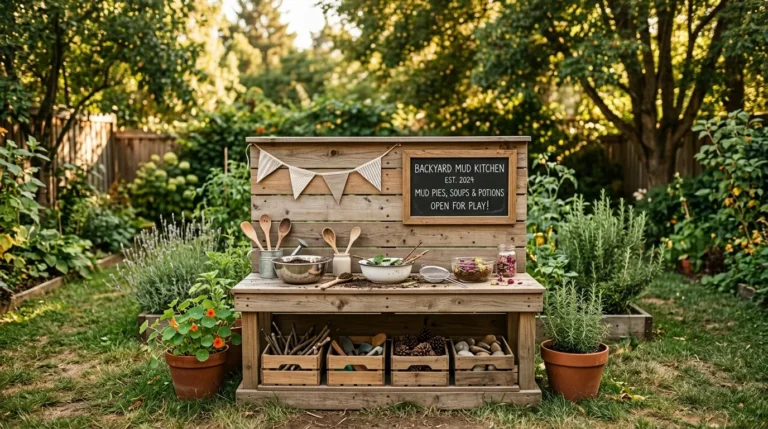
10 Simple Mud Kitchen Ideas for Kids That Make a Big Difference
Mud Kitchen Ideas
A backyard play space does not need to be expensive, oversized, or professionally built to feel magical for kids. Sometimes, the smallest outdoor setup becomes the place where children spend hours mixing leaves, scooping soil, serving pretend soup, and inventing their own little world. That is the beauty of a Simple Mud Kitchen. It gives kids freedom, movement, creativity, sensory play, and screen-free fun without needing a perfect backyard.
For many USA families, outdoor play areas are becoming more intentional. Parents want ideas that look cute, stay practical, and do not turn the yard into a messy disaster. A mud play station can be rustic, modern, budget-friendly, farmhouse-inspired, or totally minimal. The real difference comes from thoughtful details: storage, water access, safe materials, easy cleanup, and a layout kids can actually use.
Below are 10 practical ideas that make a big difference. Each one is easy to build, Pinterest-friendly, and designed to help children play longer, cleaner, and more creatively outdoors.
1. Wooden Crate Station
- Uses affordable wooden crates as the main structure
- Adds instant storage for bowls, cups, and garden tools
- Works well in small patios, decks, and compact yards
- Creates a rustic, natural look without heavy construction
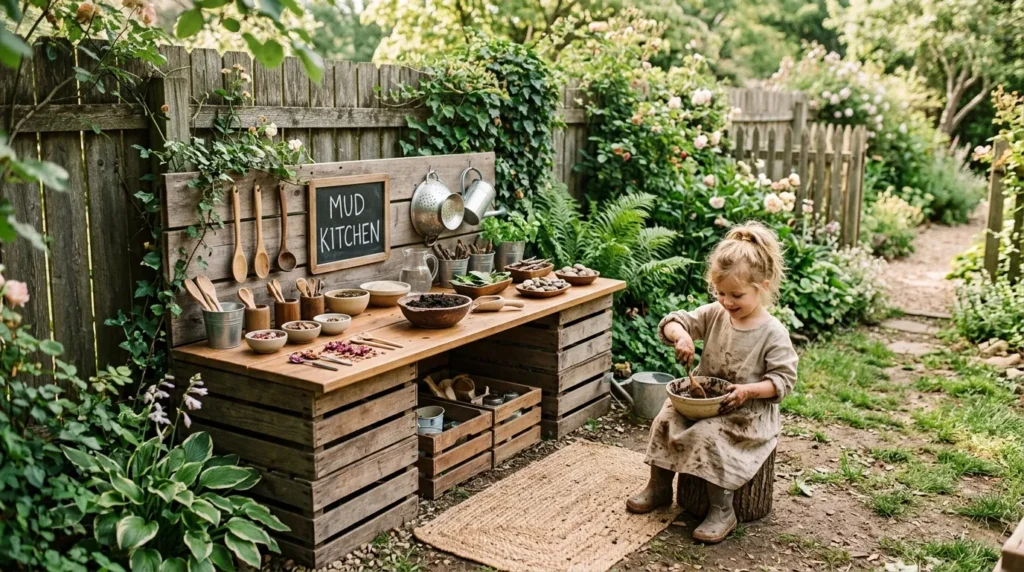
A wooden crate station is one of the easiest ways to create a charming outdoor play corner without spending much money. Crates already have structure, texture, and storage built in, so they instantly feel useful. You can stack two or three crates, secure them together, and place a flat wooden board across the top for a working surface. Kids get a mini counter for mixing mud, sorting leaves, and pretending to cook. Parents love this setup because it looks intentional, not messy or random.
This idea works especially well for families who want something flexible and lightweight. You can move the station closer to the garden, shift it near a fence, or tuck it away during bad weather. Add small baskets inside the crates for spoons, old measuring cups, pinecones, and shells. In my experience, kids use outdoor play areas more when everything is easy to reach. A crate setup keeps supplies visible, organized, and ready for creative play every afternoon.
2. Bucket Sink Corner
- Creates a pretend sink using a metal or plastic bucket
- Helps kids wash hands, tools, leaves, and pretend dishes
- Makes the play area feel more realistic and interactive
- Keeps water play contained in one simple spot
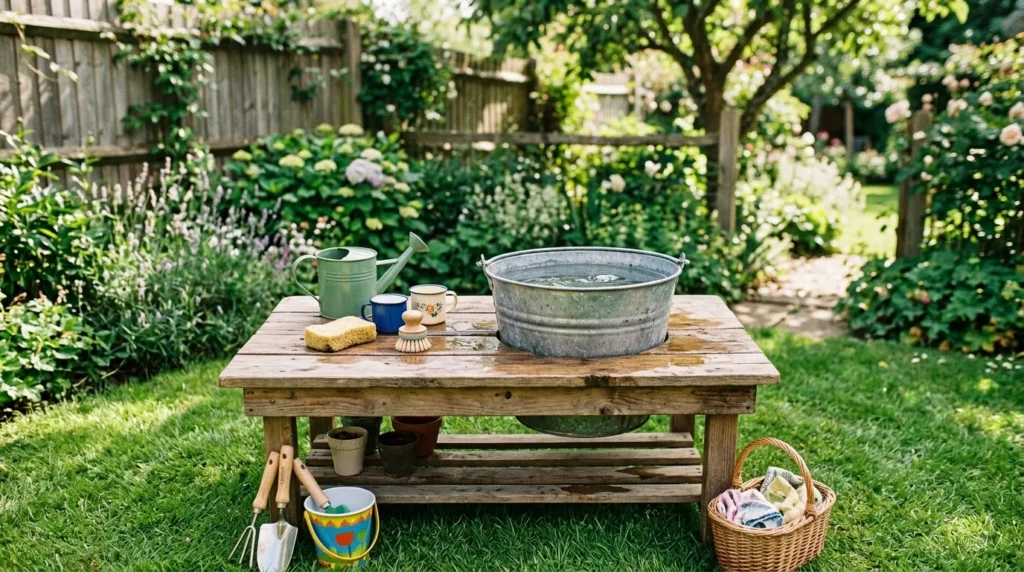
A bucket sink corner can completely change how children use their outdoor play setup. Instead of only digging and mixing, they now have a place to rinse, pour, splash, and clean. A sturdy bucket, old basin, or shallow tub can sit inside a wooden frame or on top of a low table. It does not need plumbing to feel exciting. Kids naturally love anything involving water, and this small feature gives them a realistic kitchen-style experience while staying simple.
The best part is how practical it becomes for parents. Water stays mostly in one area, tools can be rinsed before going back into storage, and kids learn little routines like washing pretend dishes after cooking. That’s why many designers recommend giving outdoor play stations one clear water zone. Add a small watering can, sponge, ladle, and cup nearby. The result feels playful, useful, and easy to reset after a muddy backyard afternoon.
3. Pallet Worktop
- Turns a recycled pallet into a strong outdoor counter
- Adds rustic charm with natural wood texture
- Gives kids enough space for mixing, scooping, and sorting
- Can be painted, sealed, or left unfinished for a farmhouse look
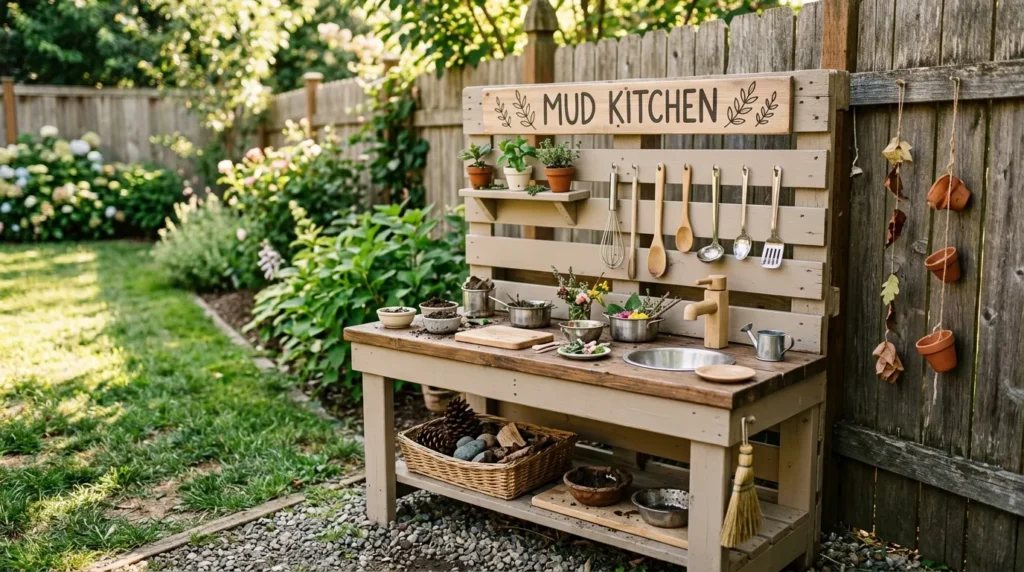
A pallet worktop gives kids a larger surface without requiring a complicated build. One sturdy pallet can become the back wall, while another board or plank can create the counter. This setup feels more like a real outdoor kitchen because it gives children a defined place to stand and play. The wooden texture also blends beautifully with grass, garden beds, fences, and backyard trees. For Pinterest-style yards, it creates that cozy handmade look parents love saving.
Before using a pallet, always sand rough edges and check that the wood is safe, clean, and not chemically treated. Add hooks to the back for hanging utensils, small pots, or a child-size apron. You can also paint the top in a soft neutral shade to match your patio or garden decor. I’ve noticed that children enjoy stations more when there is a proper “counter,” because it helps them organize their pretend recipes and play with purpose.
4. Chalkboard Menu
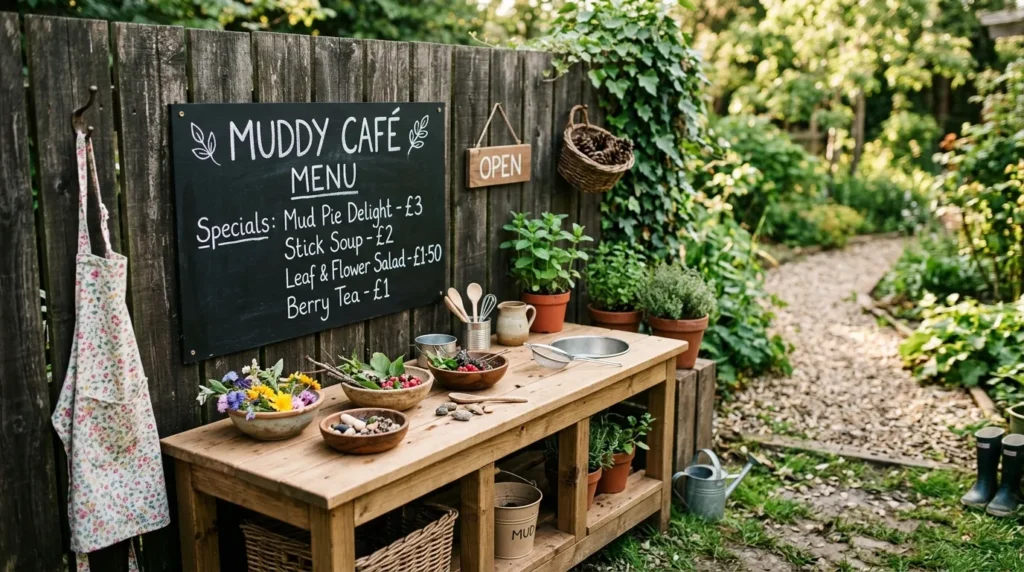
- Adds a creative pretend restaurant element
- Lets kids draw recipes, prices, names, and daily specials
- Makes the station more interactive and visually cute
- Works well on fences, pallets, or framed boards
A chalkboard menu makes the play area feel instantly more imaginative. Kids are not just mixing mud anymore; they are running a cafe, garden bakery, soup shop, or backyard restaurant. A small chalkboard can be attached to a fence, leaned against the station, or mounted on a pallet wall. It gives children a place to draw, write, scribble, and label their creations. Even younger kids who cannot write yet enjoy making marks and pretending they have a real menu.
This detail also adds a beautiful visual touch for parents who care about backyard aesthetics. A black chalkboard against natural wood looks classic, clean, and Pinterest-worthy. You can write simple prompts like “Today’s Specials,” “Mud Pie Menu,” or “Garden Soup.” Keep chalk in a small waterproof container nearby. The transformation is small but powerful because it turns outdoor play into storytelling, role play, and early literacy practice without feeling like a lesson.
5. Hanging Tool Rail
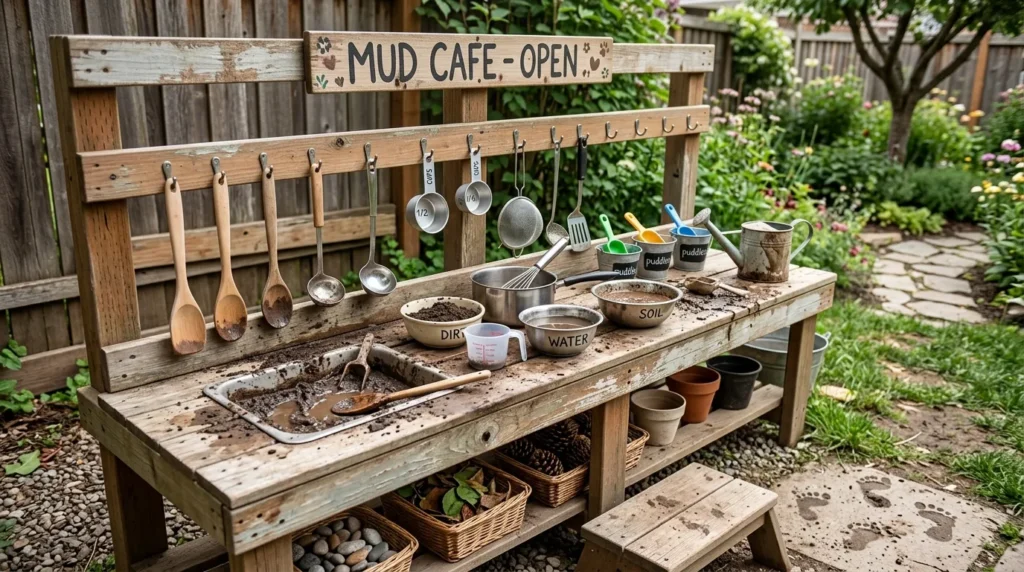
- Keeps spoons, cups, strainers, and scoops off the ground
- Makes cleanup faster and easier for parents
- Helps kids choose tools independently during play
- Adds a neat, styled look to the outdoor setup
A hanging tool rail is a small upgrade that makes a big difference in daily use. Instead of tossing spoons, cups, and scoops into a pile, kids can hang them neatly where they can see everything. A simple wooden rail, curtain rod, branch, or row of hooks can work. Attach it to a fence, pallet backboard, or side panel. This instantly gives the play space a more organized and realistic kitchen feeling without needing expensive accessories.
This idea is especially helpful when multiple children use the same outdoor setup. Everyone can grab what they need, return it easily, and keep the ground less cluttered. Use old kitchen utensils, thrifted ladles, small strainers, measuring cups, and metal spoons. I’ve seen this work well in many homes because it teaches responsibility in a playful way. The space feels cleaner, the tools last longer, and the whole play corner looks more polished from a distance.
6. Garden Ingredient Bins
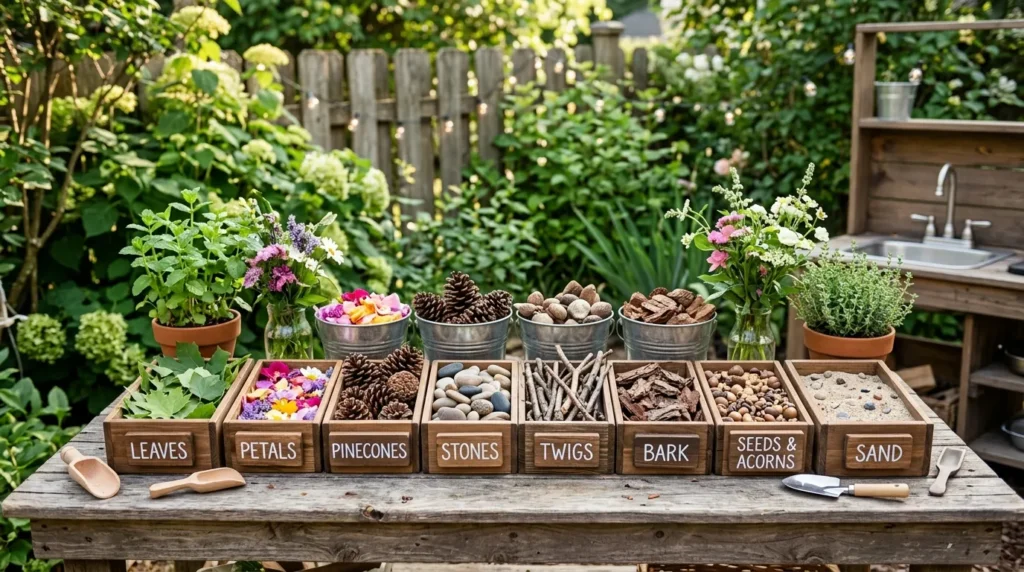
- Gives kids natural materials for pretend recipes
- Keeps leaves, pebbles, flowers, and sticks separated
- Encourages sensory play and creative sorting
- Makes the outdoor station feel fuller and more engaging
Garden ingredient bins help children turn ordinary backyard finds into exciting pretend food. Instead of everything being scattered around, small bins or baskets can hold leaves, petals, pinecones, stones, mulch, and twigs. Kids can scoop from each container like they are choosing ingredients from a pantry. This setup encourages sorting, texture exploration, color matching, and recipe-making. It also helps them notice nature more closely, which makes outdoor play feel calmer and more meaningful.
The bins do not have to be fancy. Small plastic tubs, wooden boxes, metal bowls, or old drawer organizers all work well. Label them with simple words or picture tags for younger kids. You can refresh the materials seasonally with acorns in fall, flowers in spring, and smooth stones in summer. This creates a play area that changes naturally through the year. It also keeps the kitchen zone cleaner because children know where each “ingredient” belongs after play.
7. Mini Prep Table
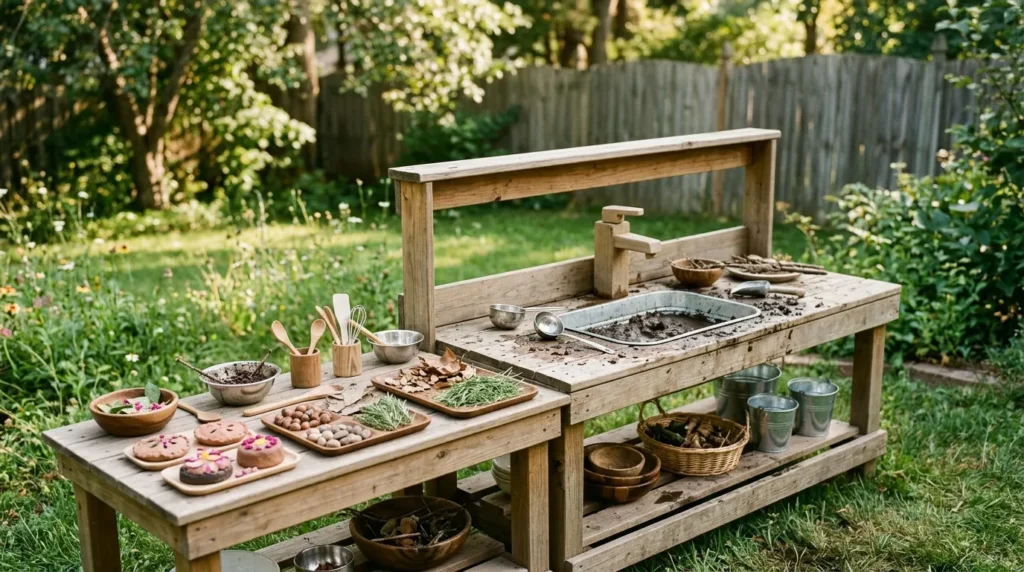
- Adds extra workspace for younger or multiple children
- Works well beside a larger mud play station
- Creates a separate area for mixing, decorating, or serving
- Can be made from a small bench, stool, or side table
A mini prep table gives children more room to spread out, especially when siblings or friends are playing together. One child can mix mud pies at the main counter while another decorates leaves, fills cups, or serves pretend meals nearby. A small bench, outdoor side table, or child-height stool can become the perfect prep surface. This keeps play moving smoothly and prevents kids from crowding around one tiny area, which often leads to spills and frustration.
The table should be low enough for children to use comfortably while standing. Add a tray on top if you want easier cleanup, or place a washable mat underneath during messy play. This idea also makes the setup feel more realistic because real kitchens have zones for washing, prepping, cooking, and serving. When kids have more defined work areas, their play becomes more detailed. They naturally invent roles, routines, and pretend tasks that last much longer.
8. Pebble Floor Base
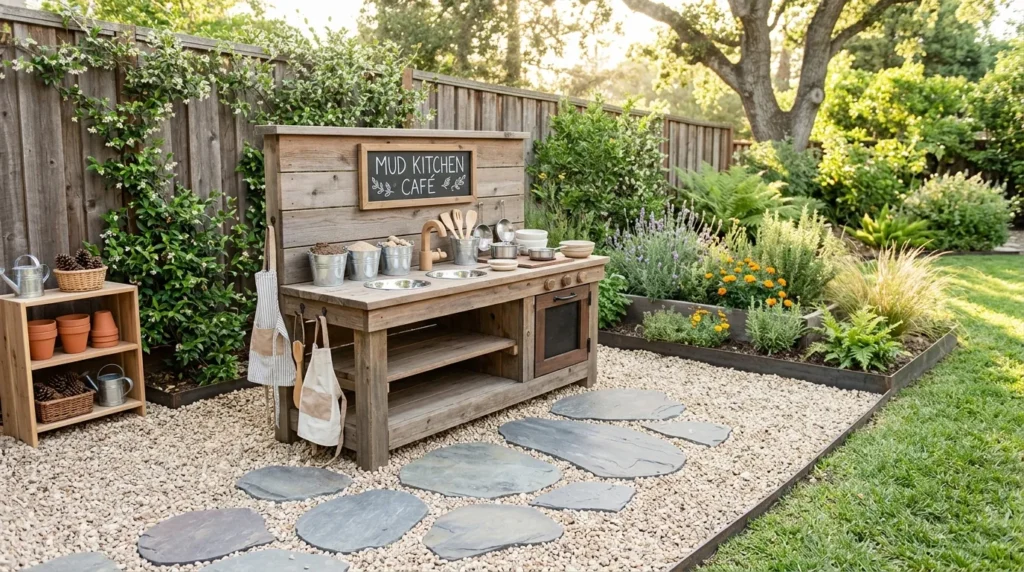
- Reduces muddy footprints around the play area
- Creates better drainage after water play
- Gives the corner a finished backyard look
- Works well with stepping stones or garden edging
A pebble floor base can make an outdoor play station feel cleaner and more designed. Instead of placing everything directly on grass or dirt, you can create a small gravel or pea stone area underneath. This helps with drainage, reduces slippery mud patches, and gives children a clear boundary for play. It also makes the station look more like a finished backyard feature instead of a temporary pile of toys near the fence.
Use smooth pea gravel, stepping stones, or rubber-friendly outdoor mats depending on your child’s age and comfort. Add garden edging around the area to keep the stones contained. Parents who want a neat backyard often appreciate this upgrade because it controls mess without removing the fun. A pebble base also pairs beautifully with wooden counters, metal buckets, and neutral outdoor decor. The final result feels practical, safe, and visually balanced for everyday backyard use.
9. Fence Backdrop Setup
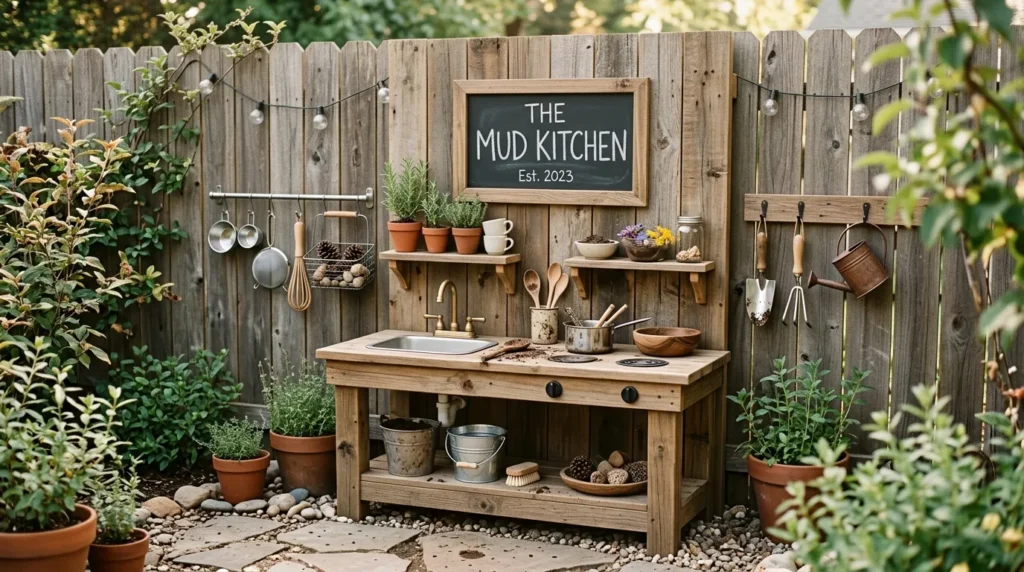
- Uses an existing fence as the main design wall
- Saves space in small yards and patios
- Gives room for shelves, hooks, signs, and chalkboards
- Makes the play corner feel complete and styled
A fence backdrop setup is perfect when you want the play space to feel finished without building a full structure. The fence becomes the wall of the outdoor kitchen, giving you a place to hang tools, signs, baskets, and a chalkboard. This layout saves ground space and works especially well in suburban backyards where the fence line is already available. It also creates a cozy corner effect that helps kids feel like they have their own little outdoor room.
You can style the backdrop with simple shelves, weather-safe hooks, hanging cups, and small planters. Neutral wood, black hooks, galvanized metal, and soft greenery make the area look polished without being too decorative. That’s why many designers recommend using vertical space in small play zones. It keeps the ground open, adds storage, and creates a strong visual focal point. Even a basic table looks more special when it sits against a thoughtful fence backdrop.
10. Serving Shelf
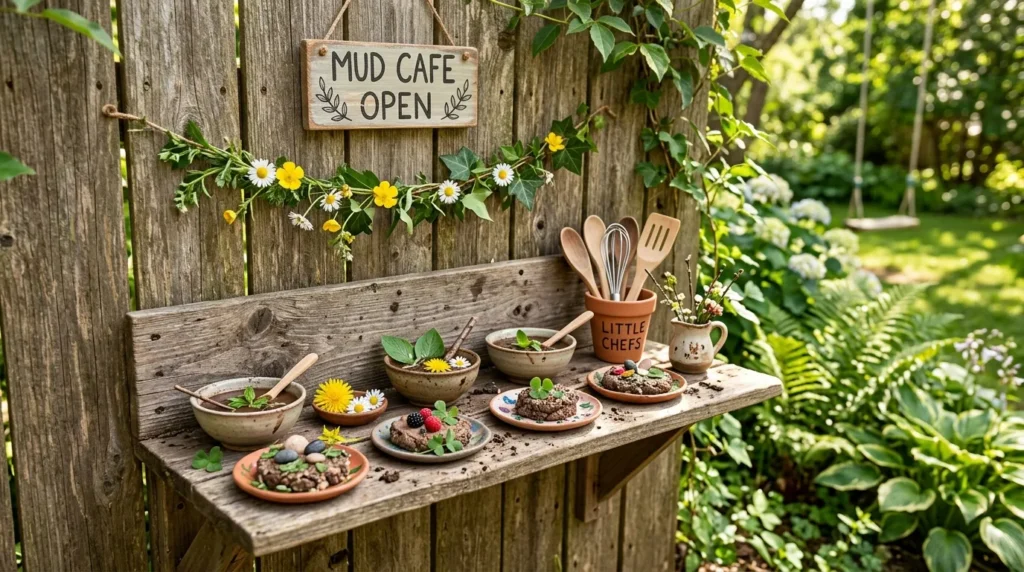
- Gives kids a place to display finished mud pies and pretend meals
- Adds a cafe-style detail to the outdoor kitchen area
- Encourages role play, sharing, and storytelling
- Can be made with a narrow board, crate top, or small shelf
A serving shelf adds a sweet finishing touch that makes the whole play area feel more complete. Kids love having a place to show off their finished creations, whether they made mud muffins, leaf soup, pebble pancakes, or flower cupcakes. A narrow wooden board attached to a fence or side panel works perfectly. It becomes a pretend cafe counter where children can serve parents, siblings, or stuffed animals during outdoor play.
This feature also helps keep the main worktop less crowded. Finished items can move to the shelf while new recipes are being mixed below. Add small plates, cupcake tins, or thrifted saucers to make the display more fun. The serving shelf is simple, but it supports social play in a big way. Children practice offering, describing, organizing, and sharing their creations. It turns a basic muddy corner into a tiny backyard restaurant full of confidence and imagination.