These 11 Cozy Decor Tips Will Make Your Space Feel So Much Better

Introduction
A home can look clean and still feel a little empty. Maybe your living room has furniture, but it does not feel warm. Maybe your bedroom looks fine, yet it does not feel restful. Maybe your kitchen, entryway, or bathroom feels practical but not inviting. That is where small styling choices can make a big difference.
These Decor Tips are for real USA homes, not picture-perfect rooms that nobody actually lives in. You will find cozy, practical, Pinterest-friendly ideas that work for apartments, family homes, rentals, small rooms, open layouts, and budget-conscious makeovers. The goal is not to buy everything new. The goal is to use lighting, texture, color, layout, storage, and personal details in smarter ways.
Think of this guide as a warm room-by-room refresh plan. Each idea is simple enough to try, but detailed enough to help your space feel softer, calmer, and more pulled together.
1. Warm Lighting
- Add table lamps, floor lamps, and accent lights.
- Choose warm white bulbs for a softer glow.
- Place lighting in corners to reduce harsh shadows.
- Use dimmers or smart bulbs for evening comfort.
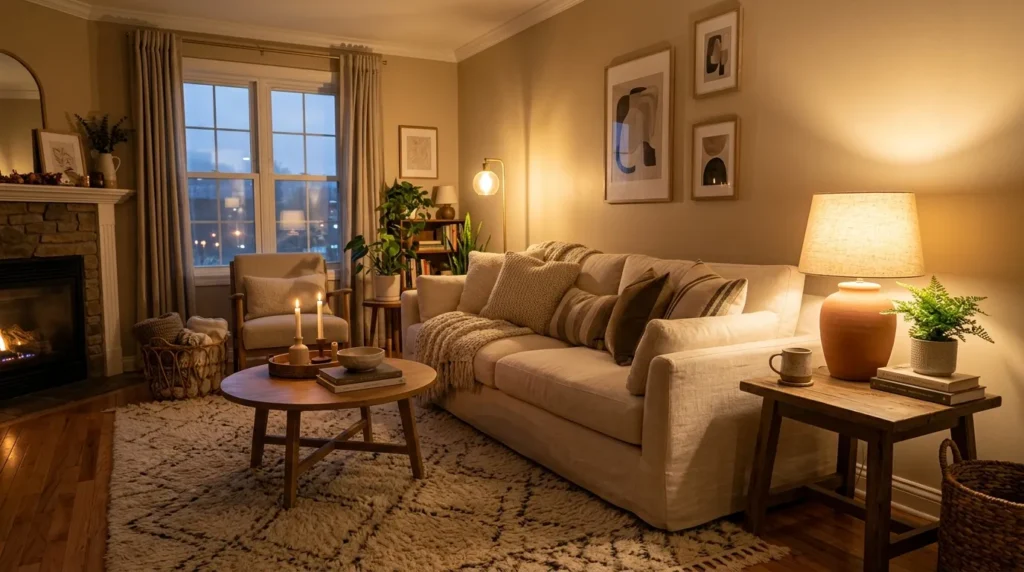
Lighting changes the mood of a room faster than almost any furniture purchase. A single ceiling fixture often makes a living room feel flat, even when the furniture is beautiful. Softer lamps, shaded sconces, dimmable bulbs, and small table lights create warmth because they spread glow at eye level. For most American homes, warm white bulbs between 2700K and 3000K feel relaxed without looking yellow. Use lighting in corners, beside seating, and near artwork so the whole room feels gently layered instead of bright only in the center. This simple shift makes evenings feel instantly more settled.
Once the light feels softer, the room usually starts feeling calmer and more expensive. Try one floor lamp beside the sofa, one table lamp on a console, and a small accent lamp near a shelf or cabinet. This creates a triangle of glow, which designers often use to make spaces feel balanced. In rentals, plug-in lamps and battery picture lights work well because they do not require wiring. The final result is a home that feels welcoming at night, easy to unwind in, and naturally prettier in photos. It also helps rooms feel warmer during long winter months.
2. Layered Textures
- Mix soft, woven, smooth, and natural materials.
- Use throws, pillows, rugs, baskets, and curtains.
- Add contrast without adding visual clutter.
- Choose touchable fabrics for a warmer feel.
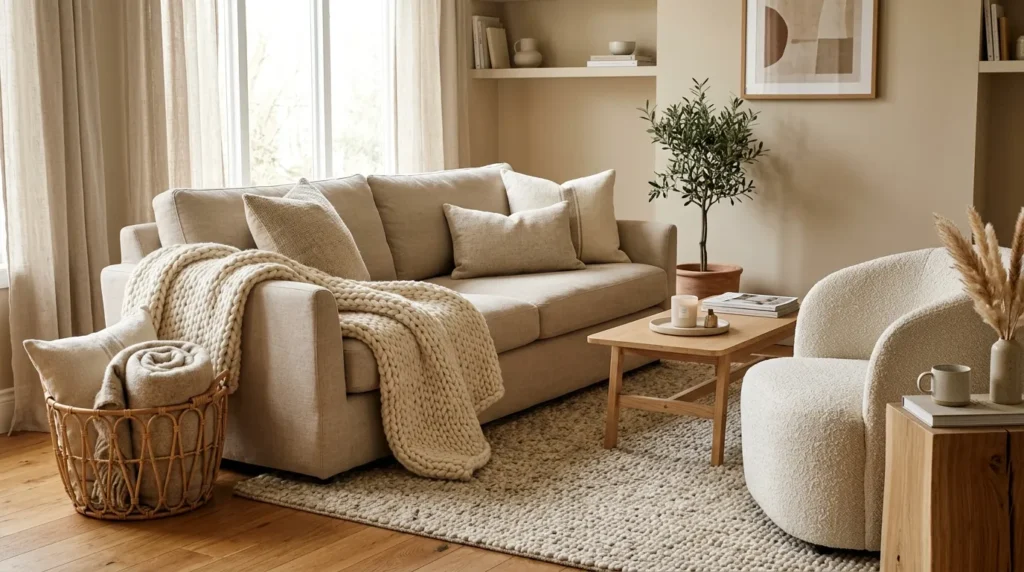
Texture is what makes a clean room feel lived-in instead of plain. When every surface is smooth, a space can look finished but still feel cold. Mix materials like linen curtains, chunky knit throws, cotton pillow covers, woven baskets, wood trays, boucle chairs, and soft wool-style rugs. The goal is not clutter; it is contrast. A neutral sofa becomes warmer with a nubby blanket, a leather chair softens beside a velvet pillow, and a simple bed feels richer when cotton, quilted, and knitted layers meet. These tactile layers invite people to relax.
Layering textures also helps a home feel cozy without relying on dark colors or heavy furniture. This is useful in small apartments, bright suburban homes, and open layouts where too many bold shades can feel busy. Start with two soft items, one woven item, and one natural surface in each main room. In my experience, that simple mix works better than buying random accessories. The space feels more touchable, more relaxed, and more personal, while still staying tidy enough for everyday life and easy cleaning. It gives every corner quiet depth.
3. Neutral Foundations
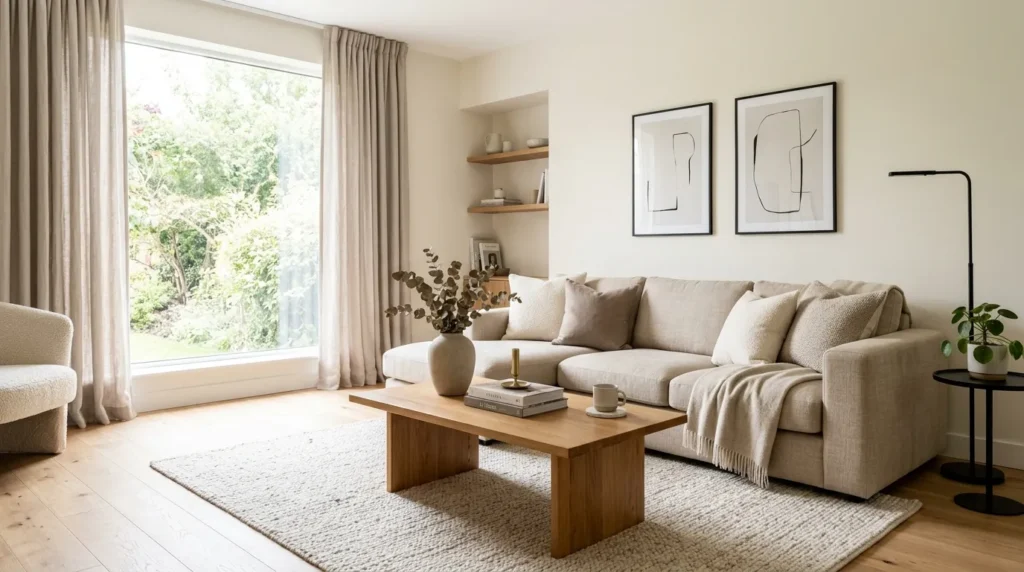
- Use warm whites, beige, taupe, cream, and greige.
- Keep larger pieces calm and flexible.
- Add color through smaller accents.
- Avoid cold tones if your room lacks sunlight.
A calm color base gives every room more breathing room. Soft whites, warm beiges, light taupes, greige tones, oatmeal, cream, and muted clay shades make furniture easier to style and seasonal accents easier to swap. Instead of choosing a cold gray that can feel flat, look for undertones that feel warm in natural light. Paint, curtains, rugs, and large upholstery pieces are usually the best places to keep things neutral because they take up the most visual space and set the mood for everything else. This base keeps updates affordable.
A neutral foundation does not mean the room has to look boring. It simply gives your home a flexible backdrop for wood, greenery, brass, black accents, patterned pillows, or artwork. If your space already has bold floors or dark cabinets, neutral fabrics can soften the contrast. If your home is new and builder-basic, warm neutrals can make it feel less empty. The biggest benefit is freedom: you can refresh the room with small, affordable changes instead of replacing expensive pieces whenever your style shifts. That flexibility matters in real homes.
4. Throw Pillow Mix
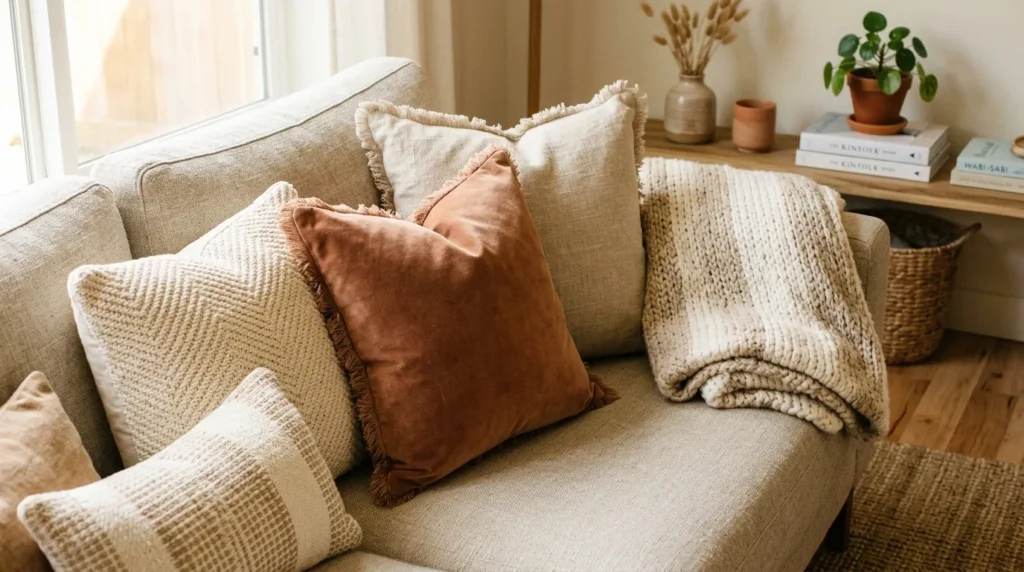
- Use different pillow sizes for depth.
- Mix one pattern with solid textured covers.
- Choose washable covers for easy care.
- Repeat colors from nearby decor pieces.
Pillows are small, but they can completely change the personality of a sofa or bed. The mistake many people make is buying identical pillows in the same size, fabric, and color. A cozier look usually comes from mixing two or three sizes, one subtle pattern, one solid texture, and one accent shade. For a sofa, try 22-inch pillows in the corners, 20-inch pillows layered in front, and one lumbar pillow for shape. This gives the seating area depth without making it feel crowded. It also photographs beautifully for Pinterest too.
The best pillow arrangement still needs to function in real life. Choose removable covers so they can be washed, swapped, and stored easily. Linen, cotton, velvet, faux shearling, and woven covers all create different moods, so pick textures that match the season and the way you live. Families with kids or pets may prefer darker performance fabrics or washable covers. I’ve noticed that a pillow mix feels most polished when one color connects back to the rug, artwork, curtains, or another piece nearby. That repetition makes the room feel intentional.
5. Reading Corner
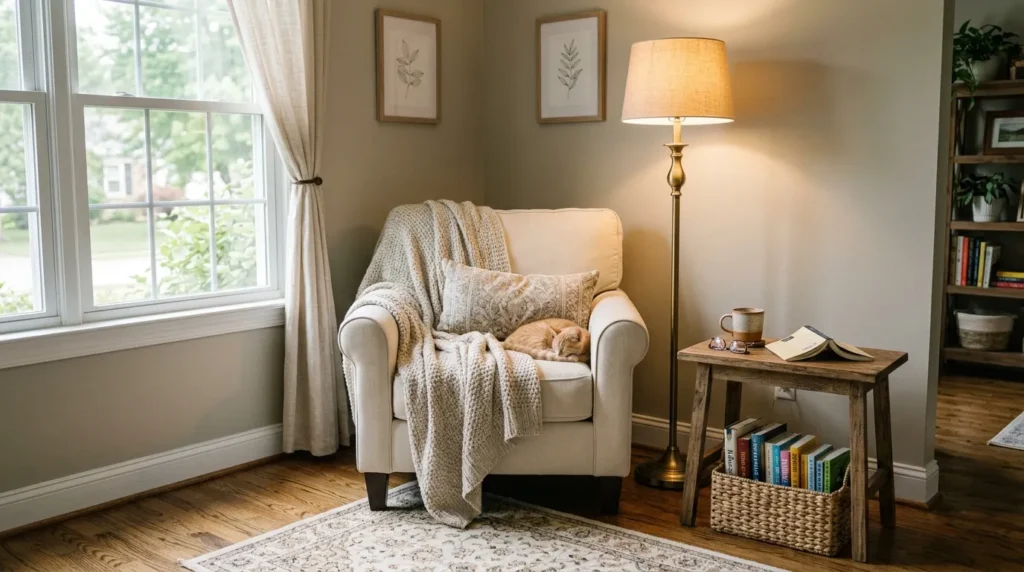
- Use a cozy chair, lamp, and small table.
- Add a throw blanket and footstool.
- Place a basket nearby for books or magazines.
- Use a rug to define the corner.
A reading corner can make even an unused spot feel intentional. You do not need a full library or a large spare room to create one. A comfortable chair, a small side table, a soft throw, a lamp, and a basket for books can turn an empty bedroom corner, landing, or living room nook into a quiet retreat. The key is comfort at human scale. Everything should be close enough to reach, including your drink, book, glasses, phone charger, or a small candle. A tiny footstool adds extra ease for comfort.
This kind of corner works because it gives the home a clear pause point. In busy American households, where living rooms often double as TV rooms, work zones, and family spaces, a dedicated seat can feel surprisingly restorative. Place the chair near natural light if possible, then add evening lighting for cloudy days or nighttime reading. A small rug under the chair can define the area. The result is not just a styled corner; it becomes a practical invitation to slow down. It can become your favorite daily ritual after work.
6. Entryway Warmth
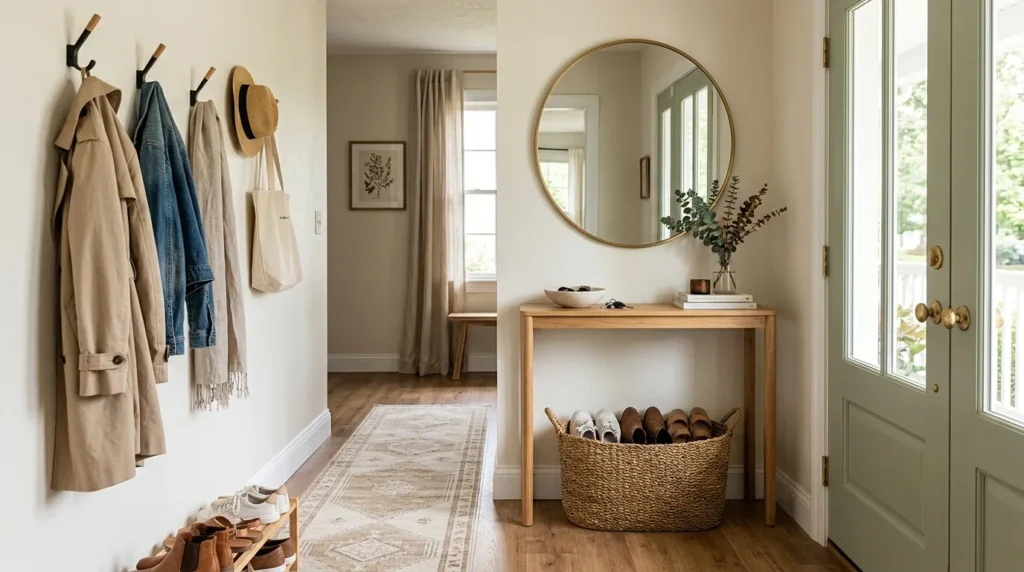
- Add hooks, baskets, and a slim console.
- Use a washable runner for softness.
- Keep keys, shoes, and bags organized.
- Add a mirror to brighten the entrance.
The entryway sets the emotional tone before anyone reaches the living room. Even a narrow hallway or small apartment door area can feel better with a few smart choices. Add a washable runner, a sturdy basket, wall hooks, a mirror, and one small surface for keys or mail. These pieces make the space look welcoming while solving daily problems. A warm wood bench or slim console also creates a landing zone, so shoes, bags, and packages stop spreading across the house. Guests notice this area immediately when arriving with ease.
A good entryway should feel pretty, but it also needs to handle real traffic. Choose durable materials like jute blends, indoor-outdoor rugs, metal hooks, sealed wood, and wipeable trays. If your area gets snow, rain, or mud, add a boot tray and closed storage for seasonal gear. That’s why many designers recommend decorating entryways around routines, not just looks. When the first few feet of the home feel organized, the rest of the space feels calmer, cleaner, and easier to maintain. It saves time every single day for everyone each morning.
7. Coffee Table Styling
- Use a tray to group small pieces.
- Add books, candles, bowls, or coasters.
- Vary height, shape, and texture.
- Leave empty space for daily use.
A coffee table looks best when it feels styled but not staged. Start with a tray to gather smaller objects, then add one stack of books, one natural item, and one practical piece you actually use. Good options include a ceramic bowl, wooden beads, a candle, a small vase, coasters, or a lidded box for remotes. The tray creates boundaries, which keeps the arrangement from spreading. It also makes cleaning simple because you can lift everything at once when needed. Use fewer pieces with better texture for balance every day.
The most useful styling rule is to vary height, shape, and texture. A low book stack, a taller vase, a round bowl, and a woven or wooden tray create movement without visual noise. Leave empty space for drinks, snacks, laptops, or family game nights, because a table that cannot be used becomes frustrating fast. I’ve seen this work well in many homes: fewer pieces, better materials, and one seasonal detail often look more elevated than a crowded display. The table should support daily living and comfort during busy weeks too.
8. Soft Area Rugs
- Choose a rug large enough for furniture.
- Use washable rugs for family-friendly rooms.
- Add texture with wool, cotton, jute, or low-pile fibers.
- Layer rugs carefully in open spaces.
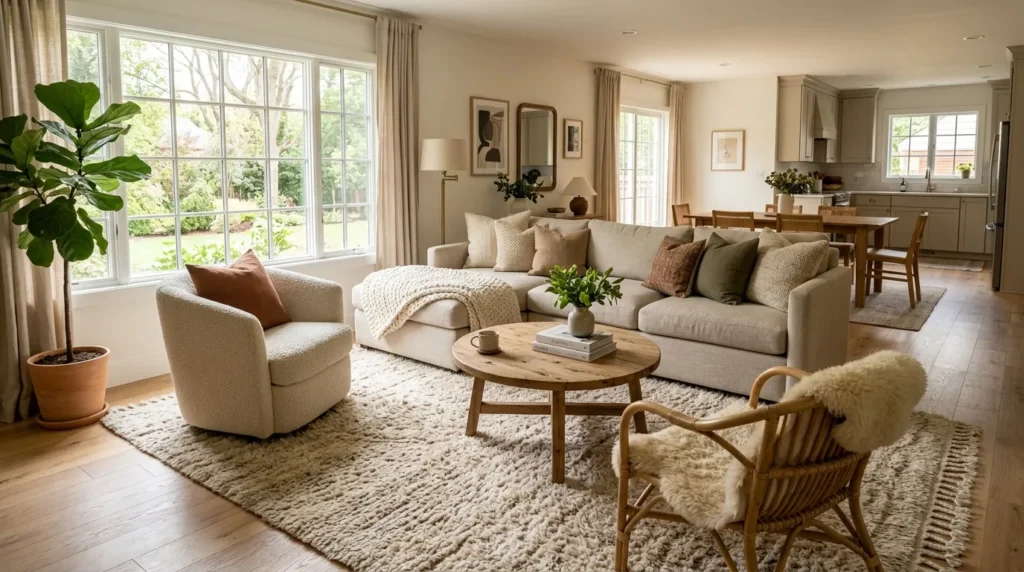
A rug can make a room feel finished almost instantly. It softens sound, adds warmth underfoot, anchors furniture, and gives the eye a clear center. In living rooms, the front legs of the sofa and chairs should usually sit on the rug, which helps the seating area feel connected. In bedrooms, a larger rug under the bed makes mornings more comfortable. Materials like wool, cotton, washable polyester, jute blends, and low-pile synthetics offer different benefits depending on pets, kids, and cleaning needs. Texture matters as much as color in cozy rooms.
Choosing the right size matters more than choosing the fanciest pattern. A rug that is too small can make furniture look scattered, while a properly scaled rug makes even budget pieces feel intentional. For many USA living rooms, 8×10 and 9×12 sizes work better than small accent rugs. In apartments, a washable rug can be a smart choice because it adds softness without stress. The right rug brings color, texture, and comfort together, turning separate furniture pieces into one inviting zone. It visually quiets hard flooring too in open homes.
9. Candlelight Moments

- Use real or flameless candles safely.
- Group different heights for visual interest.
- Choose soft scents instead of overpowering ones.
- Place candles on trays, mantels, and nightstands.
Candlelight adds softness that electric light cannot fully copy. Even an inexpensive room can feel intimate when small flames, warm jars, or realistic flameless candles are grouped with care. Use candles on mantels, coffee tables, bathroom counters, nightstands, and dining tables, but keep safety first. Flameless options are ideal for families, renters, dorms, and homes with pets. For real candles, choose stable holders, heat-safe surfaces, and scents that feel gentle instead of overpowering, such as vanilla, cedar, linen, amber, or fresh citrus. Keep scents soft and seasonal for comfort at night.
The visual impact comes from grouping candles in different heights and finishes. A glass jar candle, brass taper holder, and ceramic votive can create a collected look without requiring much space. In fall and winter, candlelight makes evenings feel warmer; in spring and summer, lighter scents keep things fresh. Keep matches, a lighter, or remote controls nearby in a decorative box. This small habit turns ordinary nights into a softer routine, especially when paired with a clean table, dim lamps, and a cozy blanket. It feels luxurious without spending much.
10. Wall Art Balance
- Use one large piece or a small gallery wall.
- Match art scale to the furniture below.
- Keep spacing clean and intentional.
- Mix personal pieces with stylish prints.
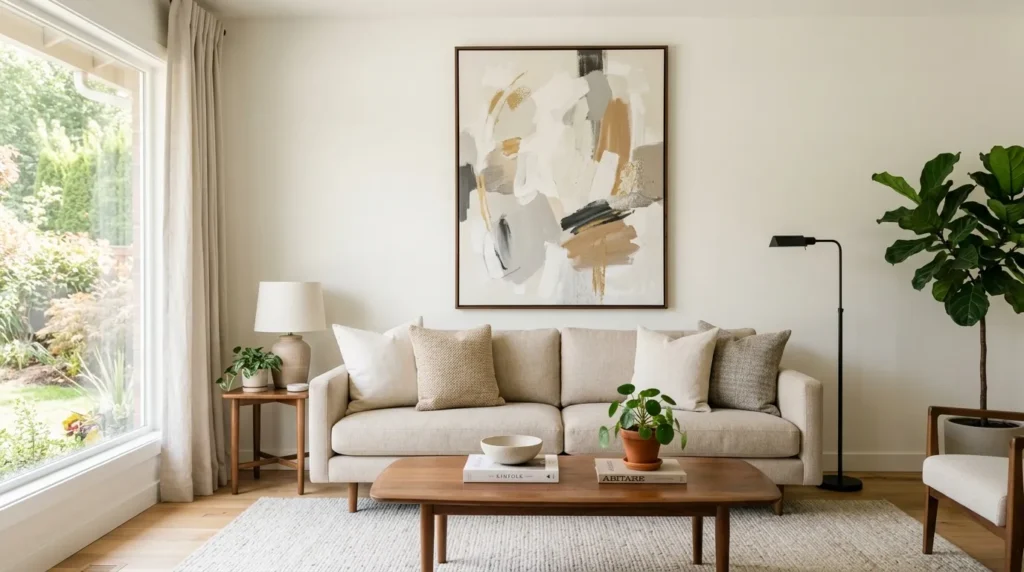
Wall art gives a room personality, but balance matters more than filling every blank spot. A single large piece can make a sofa wall look calm and confident, while a small gallery wall can add charm to hallways, dining nooks, or staircases. Choose artwork that connects to your color palette, but do not match everything too perfectly. Landscapes, abstracts, family photography, vintage prints, textile art, and framed sketches can all feel cozy when the scale and spacing are right. Art should breathe around furniture within the room and feels calmer.
Hang art at eye level and relate it to the furniture below it. Over a sofa, art should usually be about two-thirds the width of the seating piece, or a grouped arrangement should fill that visual space. Use matching frames for a cleaner look or mixed frames for a collected feel. I’ve noticed that rooms feel more finished when artwork reflects something personal, not just a trend. The goal is warmth, memory, and proportion, so the wall supports the room instead of overwhelming it. Empty space can be elegant too.
11. Bedroom Layers
- Layer sheets, quilts, duvets, and throws.
- Use breathable fabrics for comfort.
- Keep the palette calm and restful.
- Rotate blankets by season.
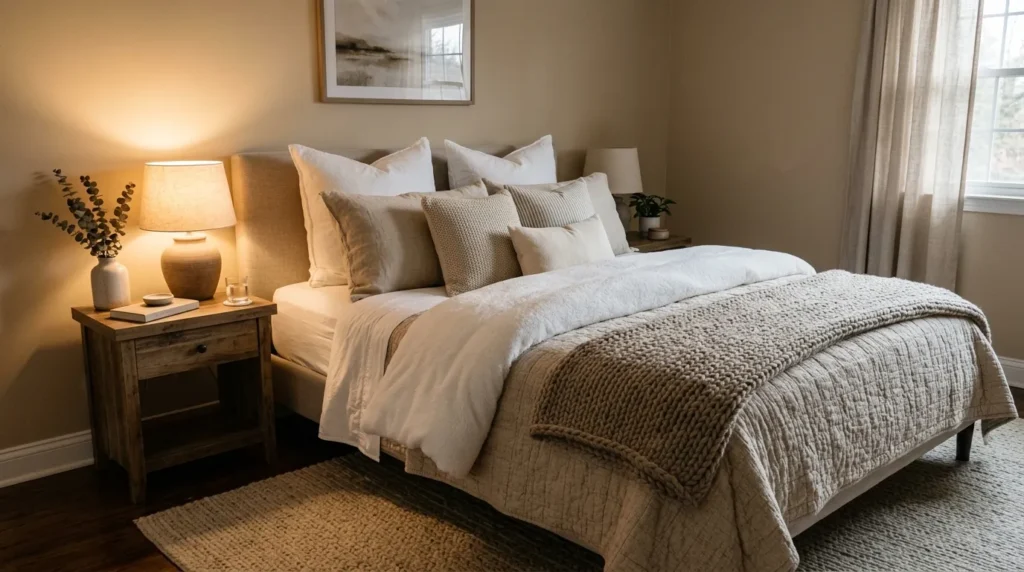
A bedroom feels coziest when the bed looks relaxed, full, and easy to use. Start with breathable sheets, then add a quilt, duvet, coverlet, or folded blanket depending on the season. In most USA homes, cotton percale, cotton sateen, linen blends, and lightweight quilts work well because they can be layered without overheating. Keep the colors calm, but vary texture so the bed does not look flat. A folded throw at the foot of the bed adds softness and makes the room feel finished. Good bedding also makes the entire room feel thoughtfully planned every single night.
The goal is to create a bed that looks inviting without becoming difficult to make every morning. Use two sleeping pillows, two larger shams, and one lumbar pillow if you want a styled but manageable setup. During winter, add a heavier knit or faux fur throw; during summer, switch to a lighter cotton blanket. This approach saves money because you can keep your main bedding and rotate only the top layer. The room feels fresh, comfortable, and restful without requiring a full redesign. It also gives the room that calm hotel-inspired feeling people love.
12. Countertop Calm
- Keep daily-use items grouped neatly.
- Use trays, boards, jars, and crocks.
- Store visual clutter in drawers or baskets.
- Add warmth with wood, stoneware, and linen.
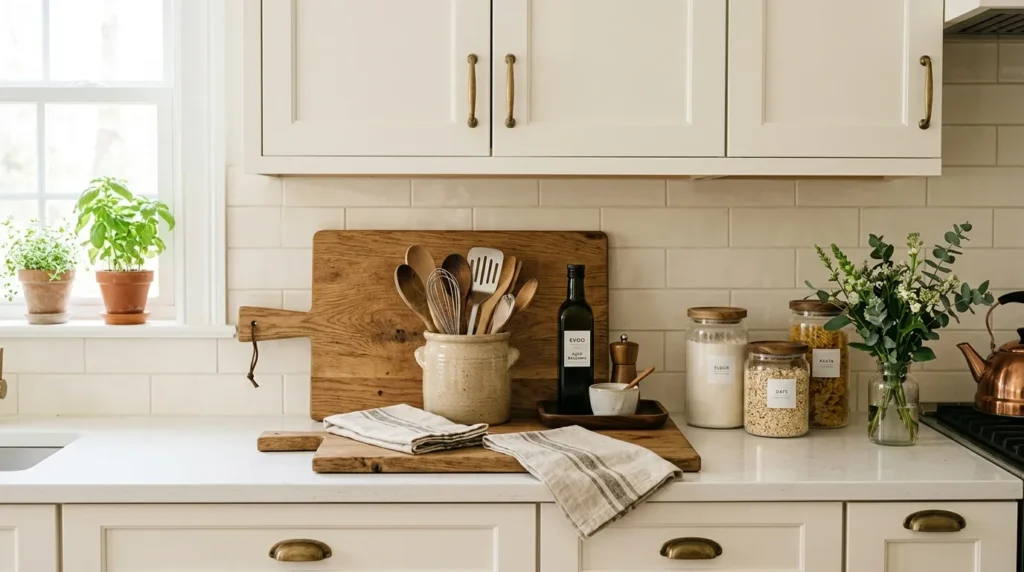
Kitchen counters look better when the useful items are styled with intention. Instead of clearing every surface until the kitchen feels sterile, group daily pieces into neat zones. A wooden board behind the stove, a small crock of utensils, a ceramic tray for oil and salt, and a vase of greenery can make the space warm while staying practical. Materials like stoneware, wood, linen towels, glass jars, and matte metal finishes bring softness to a room that is often full of hard surfaces. This is especially helpful in open kitchens connected to dining spaces.
The trick is to keep only what earns its spot. If you use the coffee maker every morning, let it stay, but pair it with a tray, mugs, or a small jar of spoons. If mail, keys, and chargers pile up, add a hidden basket or drawer organizer nearby. I’ve noticed that kitchens feel calmer when counters are treated like workstations, not storage shelves. This makes cooking easier, cleaning faster, and the whole home feel more polished from the moment you walk in. It also makes everyday items feel chosen rather than forgotten.
13. Bathroom Comfort
- Upgrade towels, bath mats, and soap dispensers.
- Use baskets and trays for storage.
- Add one calming scent or candle.
- Choose soft, spa-like colors.
A bathroom can feel more like a spa with a few thoughtful upgrades. You do not need marble tile or a luxury remodel to make the room feel better. Start with plush towels, a clean bath mat, a simple tray, a soap dispenser, and one calming scent. White, oatmeal, sage, soft gray, and warm beige usually work well because they feel fresh but not cold. Add texture through waffle towels, ribbed glass, wood stools, woven baskets, or a linen shower curtain. These small materials make daily routines feel more polished and peaceful.
Small bathroom details matter because the room is used every day. Roll extra towels in a basket, keep skincare on a tray, and move visual clutter into drawers or lidded containers. A small stool beside the tub can hold a candle, book, or folded towel, even if it is mostly decorative. That’s why many designers recommend upgrading touch points first, such as towels, hardware, lighting, and mirrors. These changes make morning routines smoother and evening showers feel calmer without a major renovation. The room starts feeling more intentional every time you use it.
14. Window Treatments
- Hang curtains higher and wider than the frame.
- Use linen-look panels for softness.
- Layer blackout curtains in bedrooms.
- Choose woven shades for natural texture.
Windows influence the whole mood of a room, yet they are often ignored. Bare windows can make a space feel unfinished, while the wrong curtains can make ceilings look lower. Hang curtain rods wider and higher than the frame to create the feeling of taller windows and a softer room. Linen-look panels, cotton drapes, woven shades, bamboo blinds, and light-filtering curtains all add warmth. For bedrooms, layered blackout curtains can improve sleep while still looking polished during the day. This trick also frames outdoor views in a softer, cleaner way.
The fabric choice should match the function of the room. Living rooms usually benefit from light-filtering panels that soften glare without blocking natural light. Bedrooms may need privacy and darkness, especially in busy neighborhoods or street-facing apartments. Dining rooms can handle a more tailored curtain if the furniture is formal. Choose panels long enough to kiss the floor or lightly break at the bottom. This one change often makes rooms feel taller, quieter, and more designed, even when the furniture stays exactly the same. Good window layers also make simple furniture look more complete.
15. Seasonal Swaps
- Change small pieces instead of full rooms.
- Use pillow covers, throws, stems, and candles.
- Store seasonal items in labeled bins.
- Match seasonal colors to your existing palette.
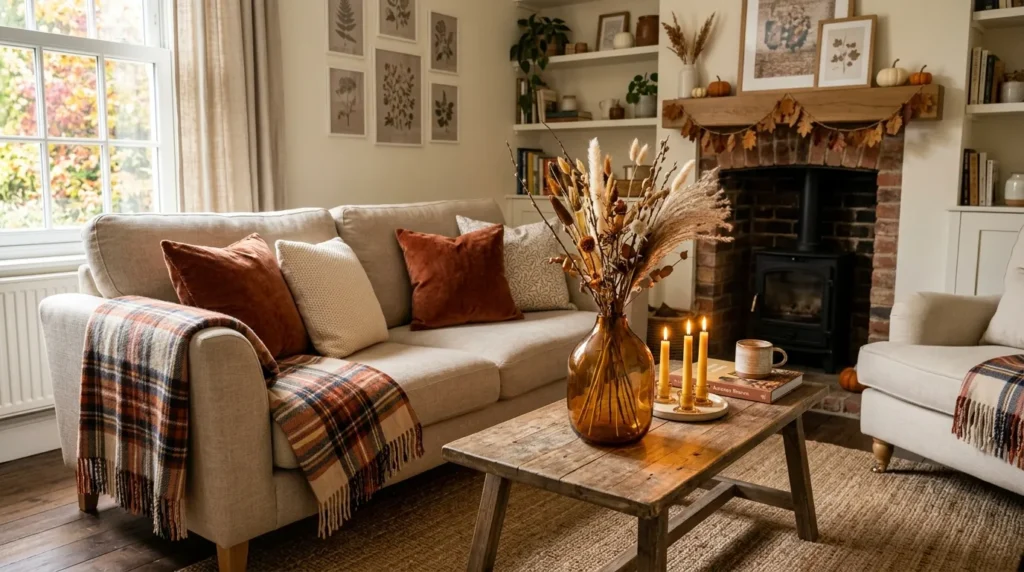
Seasonal decorating works best when it feels subtle, not overwhelming. Instead of packing the house with themed pieces, change small items that naturally shift the mood. In fall, use rust pillows, plaid throws, amber glass, dried stems, and warmer scents. In winter, bring in knit blankets, evergreen branches, brass candleholders, and layered lighting. Spring can feel fresh with lighter linens, soft florals, and clear glass. Summer works well with woven trays, airy curtains, coastal textures, and fresh greenery. Small seasonal layers often look better than oversized decorations everywhere at home.
The most practical way to decorate by season is to keep a small storage bin for each time of year. Focus on pillow covers, candleholders, stems, ribbons, table linens, and one or two statement pieces. This prevents overspending and keeps your home from feeling cluttered. In my experience, seasonal changes look more elevated when they blend with your existing palette instead of fighting it. The home feels updated, festive, and current, while still looking like your space rather than a store display. This is a smart way to enjoy change without creating storage problems.
16. Natural Greenery
- Use real or high-quality faux plants.
- Add tall greenery to empty corners.
- Place small stems on shelves and counters.
- Choose planters that match your room materials.
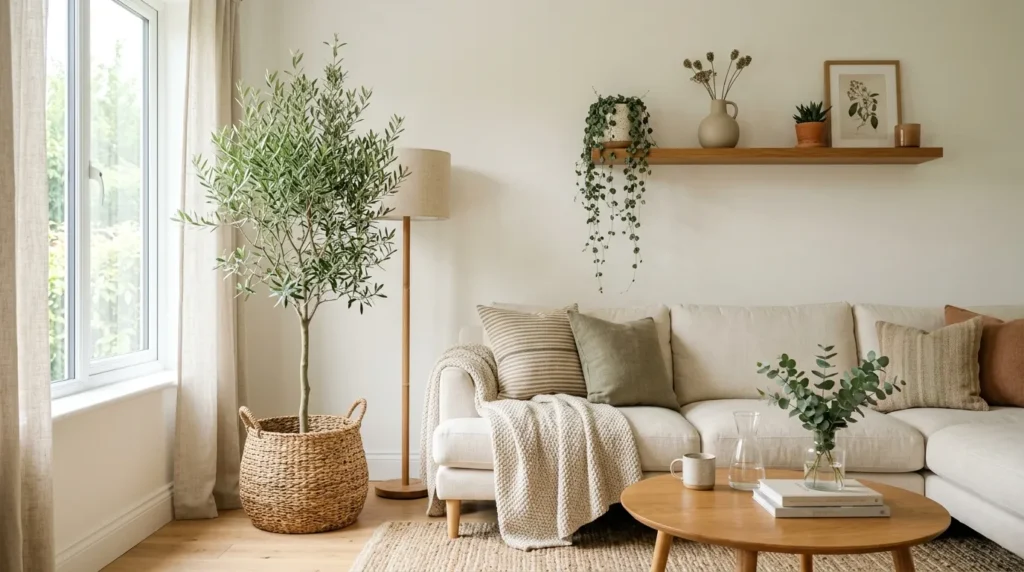
Greenery makes a room feel alive in a way accessories cannot. Even one plant can soften corners, add color, and make a room feel more cared for. Snake plants, pothos, ZZ plants, philodendrons, and faux olive trees are popular choices because they work in many American homes and do not demand constant attention. Use ceramic planters, woven baskets, stone pots, or simple terracotta to match the rest of your decor. If natural light is limited, high-quality faux stems can still create the look. The green layer also breaks up too many straight furniture lines.
Placement matters as much as the plant itself. Put taller greenery near empty corners, trailing plants on shelves, and small stems on nightstands or bathroom counters. A branch arrangement in a large vase can look dramatic on a dining table or entry console. Avoid scattering tiny plants everywhere because that can feel messy. Instead, choose fewer pieces with better scale. This creates balance, brings a natural layer into the room, and helps the home feel fresh even when the color palette is quiet. It is one of the easiest ways to add softness without pattern.
17. Hidden Storage
- Use lidded baskets and storage ottomans.
- Hide chargers, remotes, toys, and papers.
- Match storage to your daily habits.
- Choose materials that look decorative.
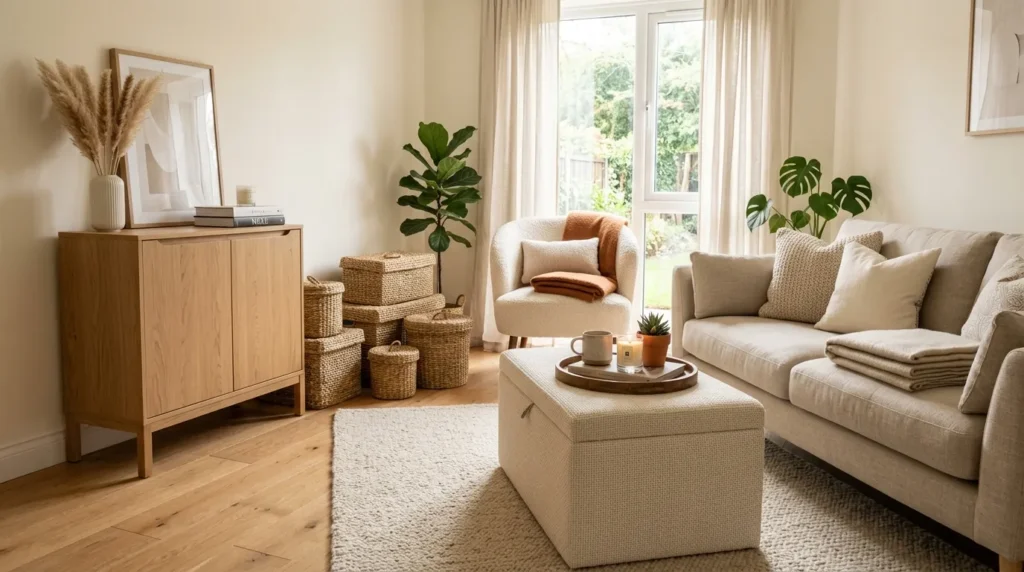
Clutter is one of the fastest ways to make a cozy room feel stressful. Hidden storage keeps comfort visible and mess under control. Use lidded baskets for blankets, storage ottomans for games, closed cabinets for electronics, under-bed bins for seasonal linens, and decorative boxes for chargers or remotes. Materials such as seagrass, rattan, canvas, wood, and fabric-covered bins can look attractive while still doing hard work. The best storage blends into the room instead of announcing itself. It supports real life without sacrificing the room’s relaxed style every day too.
A practical storage system should match your real habits. If shoes pile near the door, add a bench with cubbies. If toys spread across the living room, use baskets that kids can reach. If paperwork lands on the kitchen island, create one labeled tray and clear it weekly. I’ve seen this work well in many homes because it reduces visual noise without forcing people to live unrealistically. When storage is easy to use, the room stays peaceful longer and resets much faster. Peaceful rooms usually depend on smart systems more than strict rules.
18. Scented Atmosphere
- Use candles, diffusers, sprays, or simmer pots.
- Keep scents soft, clean, and natural.
- Match fragrance to the room’s purpose.
- Avoid overpowering competing scents.
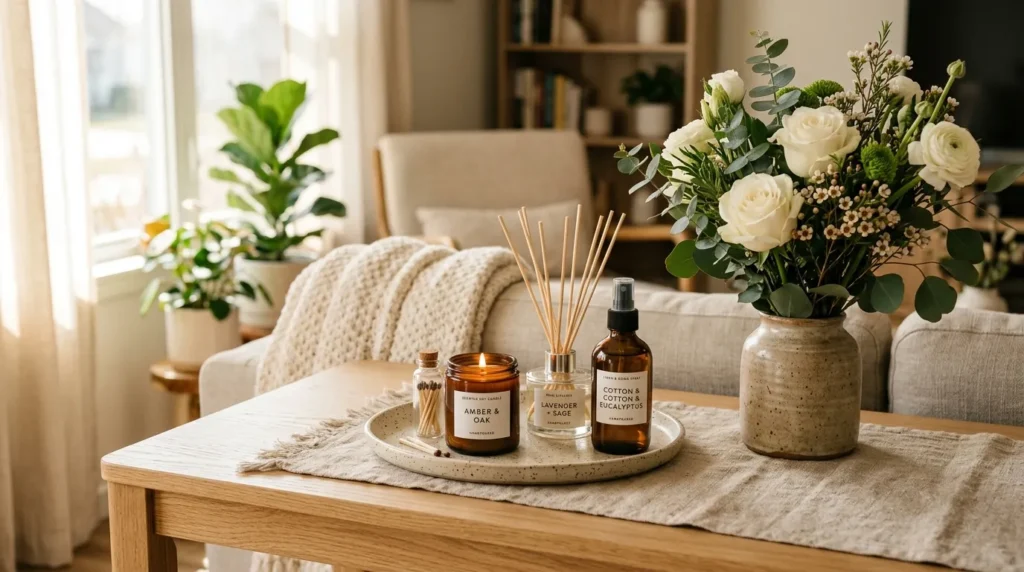
Scent shapes the feeling of home before people notice the furniture. A cozy room should smell clean, warm, and natural, not heavy or artificial. Use candles, reed diffusers, linen sprays, simmer pots, essential oil diffusers, or fresh flowers depending on your lifestyle. Popular home scents include cedar, vanilla, sandalwood, lavender, citrus, eucalyptus, clean cotton, and baked spice notes. The key is restraint. One gentle scent in a main area usually feels better than several competing fragrances across the house. A soft fragrance can make ordinary rooms feel newly refreshed at home.
Think of scent as part of the room’s design plan. A kitchen may feel best with citrus or herbs, while a bedroom may suit lavender, linen, or soft vanilla. Entryways can handle welcoming notes like amber, cedar, or bergamot. Keep scented items away from pet areas, baby spaces, and anyone with sensitivities. Open windows when possible, wash fabrics often, and clean trash zones before adding fragrance. A good scent should support cleanliness, not cover problems. When done well, it makes the home memorable. It adds a final invisible layer to your decorating plan.
19. Personal Details
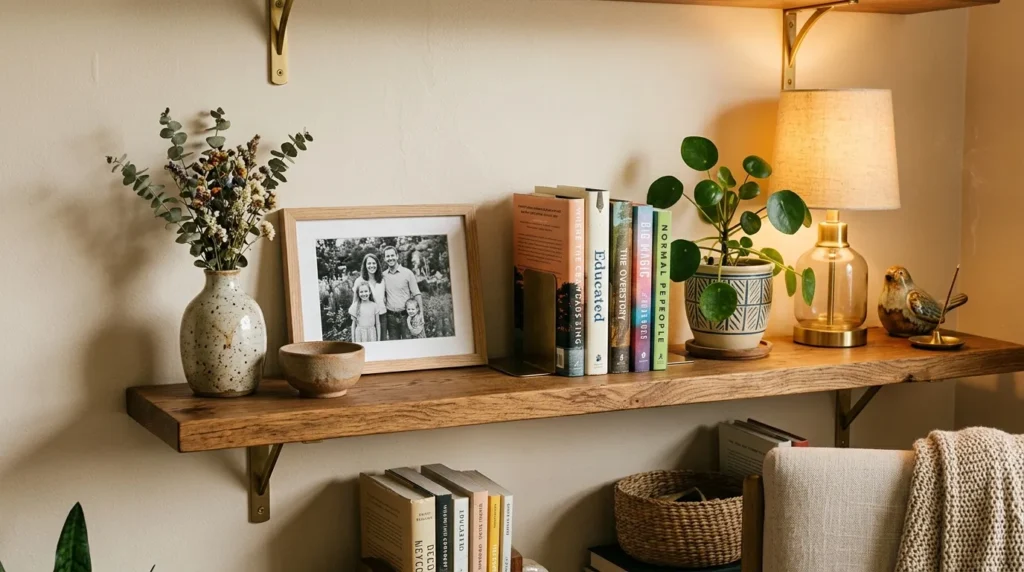
- Display meaningful photos, books, or keepsakes.
- Edit personal items so the room stays clean.
- Mix sentimental pieces with modern frames.
- Place special objects where people naturally pause.
Personal details are what keep a beautiful room from feeling generic. A framed family photo, inherited bowl, travel print, handmade pottery piece, favorite book stack, or meaningful textile can make the home feel connected to your life. The key is editing. Too many personal items can look crowded, but a few chosen pieces create warmth and depth. Place them where people naturally pause, such as shelves, bedside tables, entry consoles, desks, or coffee tables. These details tell a quiet story. They also help guests understand the personality behind the space.
A personal home does not need to look perfect. It needs to feel honest, comfortable, and cared for. Mix sentimental items with cleaner pieces so the room feels balanced instead of overly nostalgic. For example, place an old photograph in a modern frame, or set a handmade object beside a simple lamp. This is one of the most underrated Decor Tips because it adds emotional value, not just visual style. The room becomes more memorable because it reflects the people who actually live there. This kind of styling makes a home feel genuinely lived in.
20. Evening Reset

- Fold blankets and fluff pillows nightly.
- Clear cups, remotes, and random clutter.
- Use baskets for fast cleanup.
- Dim lamps to end the day calmly.
A cozy home is easier to enjoy when it resets at the end of the day. This does not mean deep cleaning every night. It means spending ten minutes returning the room to a calm baseline. Fold the throw blanket, fluff pillows, clear cups, wipe the coffee table, dim the lamps, and place everyday clutter in baskets or drawers. This small routine makes the next morning feel lighter and helps the home stay photo-ready without constant weekend cleaning. It also keeps small messes from becoming weekend projects during busy weeks.
The evening reset works because it protects the effort you put into styling. Beautiful rooms can quickly lose their comfort when surfaces fill with random items. Keep the routine simple enough that you can do it even when tired. A tray, basket, lidded box, and easy storage spot make the habit much easier. Over time, this routine changes how the home feels. It becomes less like a project and more like a peaceful place that supports your real life every day. That steady rhythm makes cozy styling easier to maintain long term.