13 Build a DIY Mud Kitchen for Outdoor Play Kids Will Love
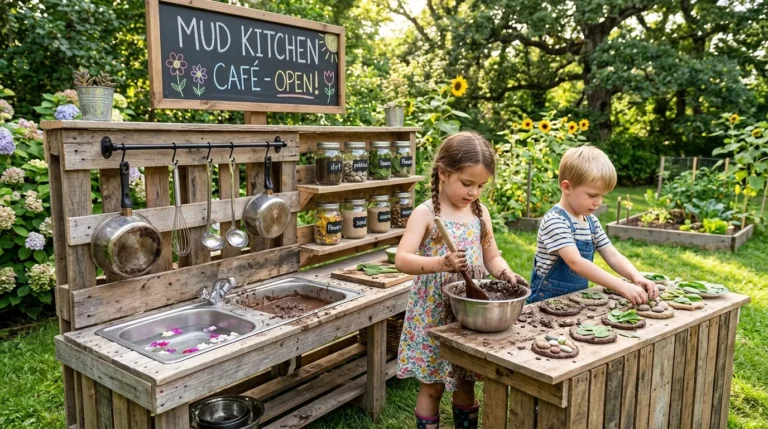
Creating a mud kitchen for your backyard is a fun and educational way to encourage outdoor play kids will genuinely enjoy. In the USA, parents increasingly seek hands-on activities that combine creativity, sensory learning, and safe physical exercise. A DIY mud kitchen provides a perfect environment for imagination, teamwork, and practical life skills. From designing the workspace to selecting durable materials, small planning steps can make a big difference. This guide covers practical, actionable ideas to build an engaging, safe, and visually appealing mud kitchen that sparks curiosity and encourages children to explore, create, and connect with nature outdoors.
1. Choose a Safe Location
Bullet Points
- Level ground for stability.
- Easy access to water sources.
- Away from traffic or hazardous areas.
- Visible from adult supervision spots.
Selecting the right location is the foundation for a successful DIY mud kitchen. I’ve noticed that children are more engaged when the area feels safe and accessible. Level ground prevents wobbling or tipping, and proximity to water sources simplifies messy play cleanup. Placing the kitchen away from driveways or hazards ensures safety while allowing children to explore freely. Ideally, it should be within sight of adults, balancing independence with supervision. A thoughtfully chosen spot sets the tone for enjoyable and secure outdoor activities, providing a stable base for constructing a durable and functional mud kitchen.
The location influences usability and longevity. Level, shaded areas protect materials and make play more comfortable during sunny days. Close proximity to the garden or water faucets allows easy mud mixing and cleaning, promoting continuous engagement. Placement within visual range ensures safety while encouraging creativity. Choosing the right site minimizes accidents and maximizes fun, helping children explore confidently. A well-located mud kitchen integrates seamlessly into your backyard while maintaining practical accessibility for both kids and supervising adults.
2. Select Durable Materials
Bullet Points
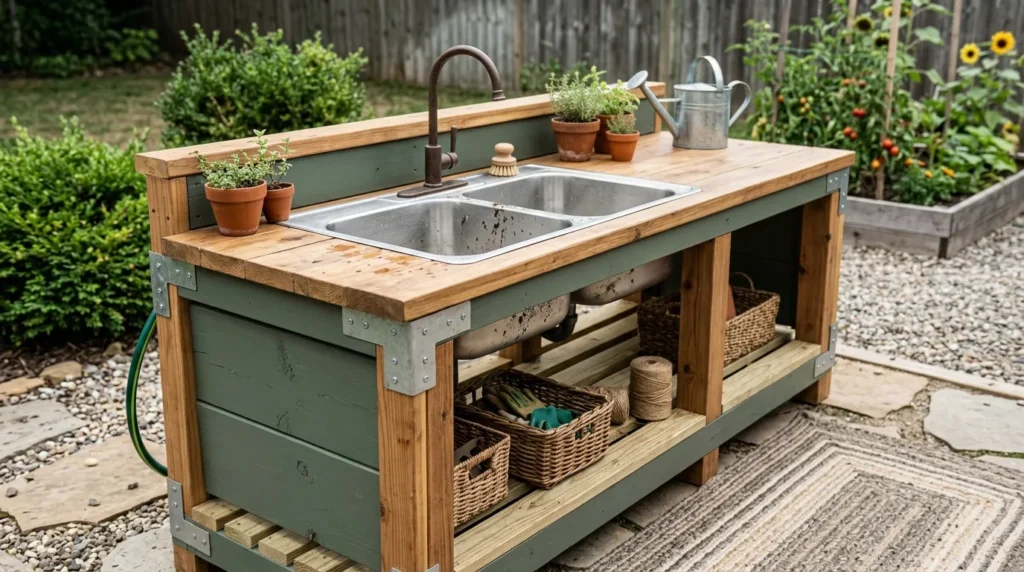
- Untreated or sealed wood for structure.
- Stainless steel or plastic tubs for sinks.
- Weatherproof paint or sealant for longevity.
- Heavy-duty screws and brackets for stability.
Using durable, child-friendly materials is essential for building a safe and lasting mud kitchen. I’ve seen that untreated or properly sealed wood forms a sturdy base that withstands outdoor conditions and frequent use. Stainless steel or high-quality plastic tubs are ideal for pretend sinks or water stations, ensuring easy cleaning and durability. Weatherproof paint or sealant prevents wood from rotting and adds visual appeal. Heavy-duty screws and brackets secure the structure against active play. By choosing materials thoughtfully, you create a safe, functional, and attractive DIY mud kitchen that can endure outdoor weather while providing an engaging play experience.
Durable materials enhance safety and usability. Wood surfaces resist splintering while supporting climbing or leaning during play. Stainless steel or reinforced plastic components withstand water and mud exposure without deforming. Proper sealing and treatment ensure the kitchen lasts multiple seasons, reducing maintenance. Heavy-duty hardware keeps structures stable, even with active children. Investing time in material selection ensures the mud kitchen remains safe, practical, and enjoyable. A strong, weather-resistant build transforms a simple backyard idea into a long-term, engaging outdoor play area.
3. Incorporate Multiple Workstations
Bullet Points
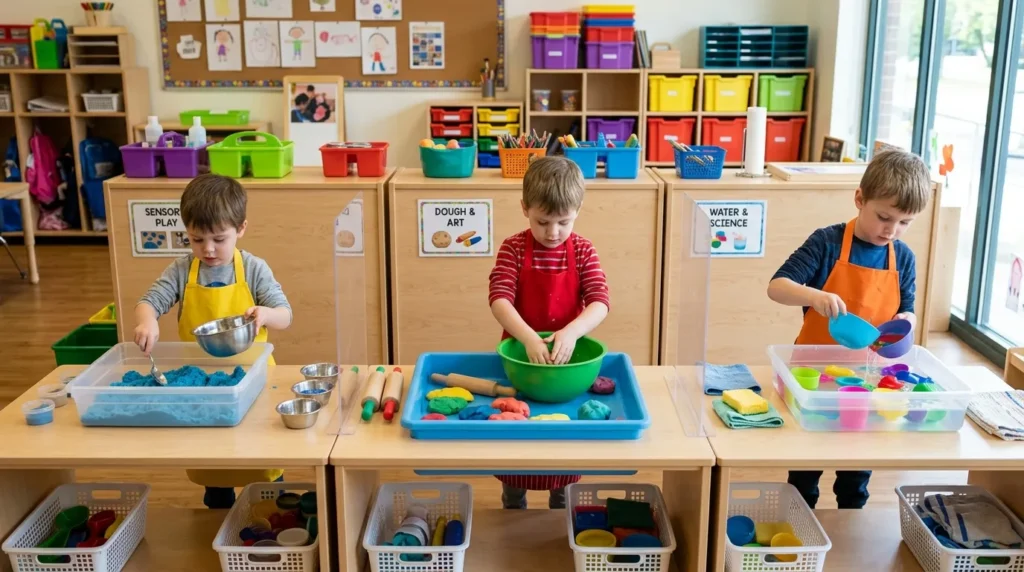
- Separate areas for mixing, washing, and serving.
- Different height levels to accommodate various ages.
- Clear divisions prevent overcrowding.
- Encourages parallel play and teamwork.
Designing multiple workstations improves the flow and versatility of a mud kitchen. I’ve noticed that children engage longer when they can move between areas for mixing, washing, or pretend serving. Providing surfaces at different heights accommodates toddlers and older children simultaneously, promoting inclusivity. Clear divisions between stations prevent overcrowding and reduce conflicts. Workstations support parallel play and cooperative activities, enhancing social skills and imaginative storytelling. A thoughtfully divided layout encourages exploration and creativity while maintaining order. Multiple functional zones increase engagement and provide a professional, visually organized appearance for an attractive backyard learning environment.
Multi-level and divided workstations improve usability and safety. Children can explore independently or collaboratively without interfering with one another. Different height levels accommodate varying ages, promoting inclusivity. Clear separation of tasks reduces mess overflow and maintains structure. Workstations foster creativity, problem-solving, and communication while encouraging messy play in a controlled manner. A well-planned arrangement enhances efficiency and aesthetics, giving children distinct activity zones. This approach turns a single DIY mud kitchen into a dynamic, interactive outdoor play hub that maximizes fun and functionality.
4. Include Water Features
Bullet Points
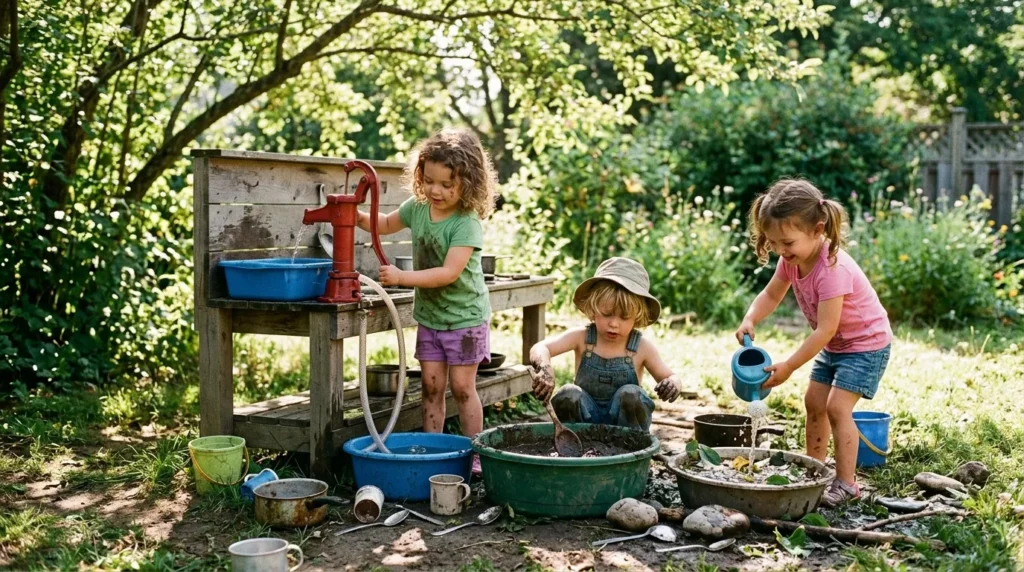
- Tubs or basins for washing and mixing.
- Small, safe water pumps for flowing streams.
- Encourage sensory play and experimentation.
- Easy-to-clean and refill designs.
Adding water features significantly increases engagement in a mud kitchen. I’ve seen that children are drawn to flowing water for mixing mud, washing utensils, or creating miniature streams. Small, safe water pumps can simulate natural flow without hazards. Even simple tubs or basins provide endless opportunities for experimentation, sensory exploration, and hands-on learning. Easy-to-clean designs with refillable containers reduce maintenance while encouraging daily use. Integrating water elements not only improves fun but also teaches children about cause-and-effect, fluid behavior, and coordination while keeping the setup safe and practical for outdoor play kids will love.
Water features enhance play and usability. Children learn about mixing, pouring, and measurement, enhancing fine motor skills. Flowing water promotes creativity, encourages cooperative play, and adds realism to pretend cooking. Refillable and easy-to-clean systems ensure continuous use without excessive maintenance. Well-designed water features complement mud stations, keeping activities organized and stimulating. They provide a sensory-rich environment that maintains engagement, offering both educational and recreational benefits. Incorporating water into a mud kitchen elevates the experience, making it dynamic, immersive, and highly enjoyable.
5. Add Storage Solutions
Bullet Points
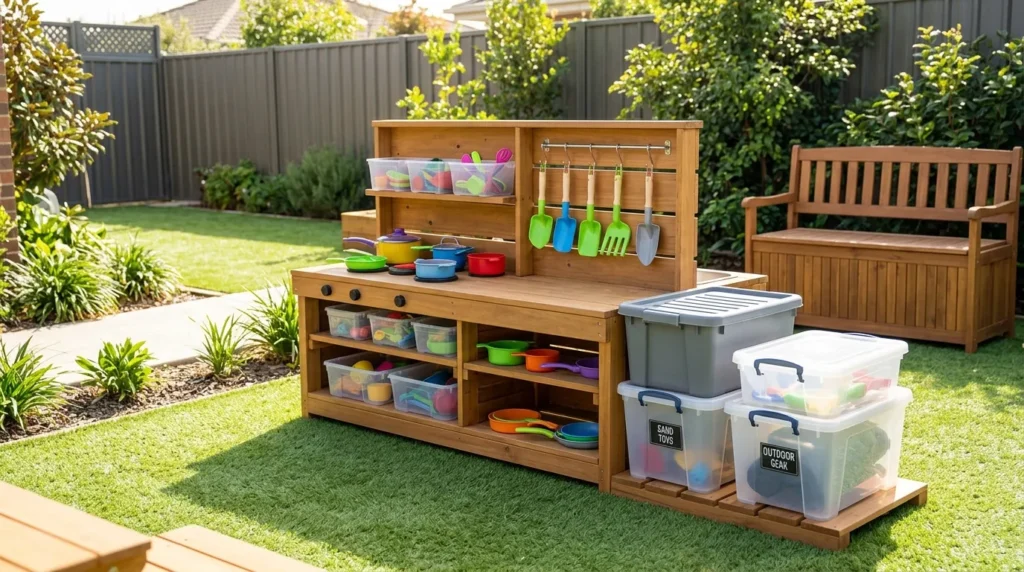
- Shelves or bins for utensils and pots.
- Hooks for hanging tools or aprons.
- Weatherproof containers for easy cleanup.
- Organizes play materials and reduces clutter.
Storage solutions make a DIY mud kitchen functional and orderly. I’ve noticed that accessible bins, shelves, and hooks allow children to store mud kitchen utensils, pots, and other play materials conveniently. Weatherproof containers protect tools from rain or sun exposure, extending usability. Organized storage encourages kids to tidy up after use, promoting responsibility and habit-building. Properly integrated storage ensures that the mud kitchen looks appealing while keeping the play area safe and manageable. Storage solutions are essential for long-term usability, helping maintain a clean, inviting space where outdoor play kids can explore freely.
Functionally, storage improves workflow and accessibility. Children can retrieve or return tools without interrupting play. Clearly defined spaces reduce frustration, prevent lost items, and maintain safety. Weather-resistant solutions prolong the lifespan of utensils and containers. Hooks and vertical storage make efficient use of compact outdoor space while keeping surfaces clear for active play. A well-planned storage system transforms a simple mud kitchen into a practical, visually appealing, and user-friendly play station. Children enjoy organized environments, leading to longer engagement and better learning experiences.