Where to Put the Toilet Paper Holder When Vanity Is Too Close
Deciding where to put the toilet paper holder when vanity is too close requires balancing daily accessibility with the structural limitations of a cramped bathroom layout. Most homeowners struggle with this specific spatial puzzle because standard installation guidelines assume ample wall space that simply isn’t available in modern, small-footprint bathrooms. You should prioritize placing the holder within a natural reach distance, typically 8 to 12 inches in front of the toilet seat edge and roughly 26 inches off the floor.
If the vanity occupies that prime real estate, you must look toward alternative mounting surfaces or freestanding solutions to maintain bathroom accessibility. This article explains how to navigate these tight constraints without sacrificing function or aesthetics.
Installing Holders on the Vanity Side Panel
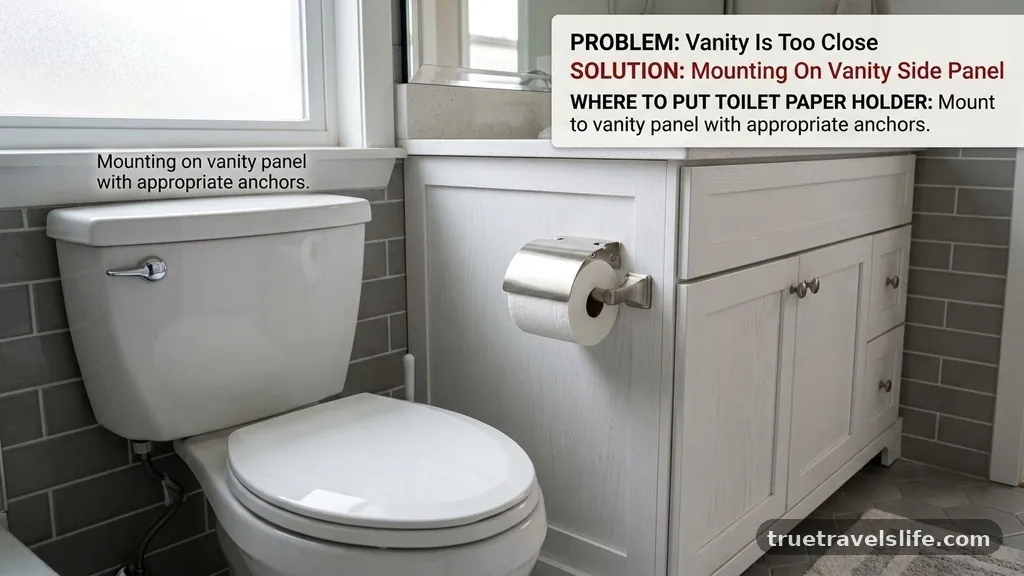
When the wall is inaccessible due to the proximity of your vanity, the cabinet side panel often becomes the most logical mounting surface. This location keeps the tissue within easy reach while utilizing the vanity structure itself.
Before you commit to drilling, check the interior of the cabinet to ensure you won’t strike plumbing pipes or electrical conduit. You should also verify that the screws won’t interfere with internal cabinet hinges or the smooth operation of drawers.
If you choose this route, use short, wood-appropriate screws that won’t poke through the other side of the vanity face. A pilot hole is essential to prevent the wood veneer or particle board from splitting during installation.
If the vanity is made of high-quality wood, use a template to ensure the holder is level and centered on the panel. This approach keeps your hardware off the walls and creates a cohesive, built-in look that works well in a minimalist bathroom design.
Utilizing Freestanding Toilet Paper Stands
A freestanding toilet paper stand is the most effective solution for those who want to avoid drilling into walls or expensive vanity cabinetry entirely. These units sit directly on the bathroom floor, allowing you to position them exactly where they feel most ergonomic for your specific reach distance.
They are particularly useful in rental properties or homes where you want to avoid permanent modifications. You can easily move the stand to clean the floor or adjust its position if you decide to rearrange the space.
When selecting a stand, look for a weighted base that prevents tipping during use. Some models include a small storage compartment for extra rolls, which is a significant advantage in bathrooms lacking cabinet space.
Keep the design simple and consistent with your existing bathroom hardware to ensure the piece looks intentional rather than like an afterthought. High-quality stainless steel or matte black finishes can elevate the look of a simple stand, turning a functional necessity into a deliberate design choice.
Implementing Recessed Toilet Paper Holders
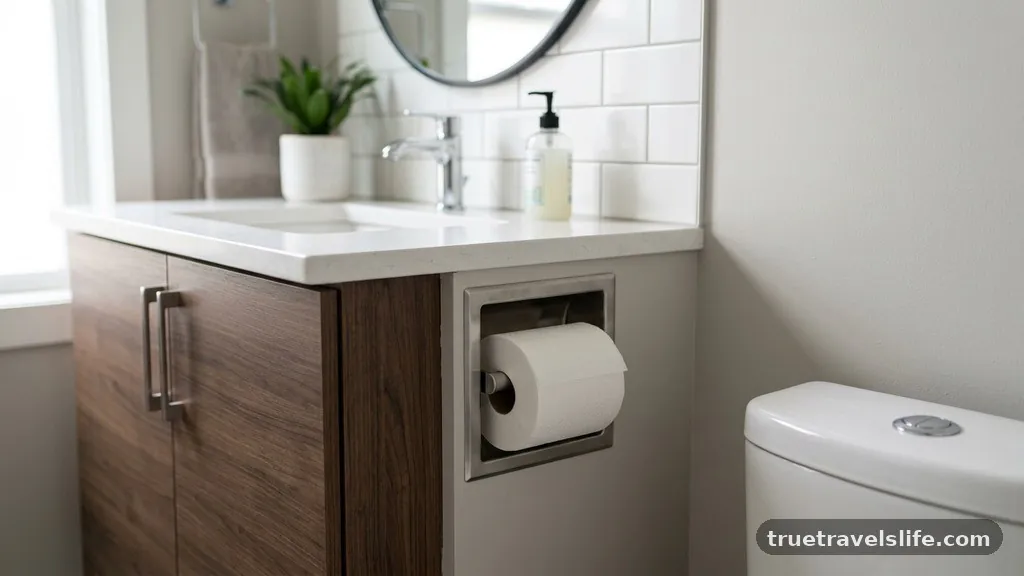
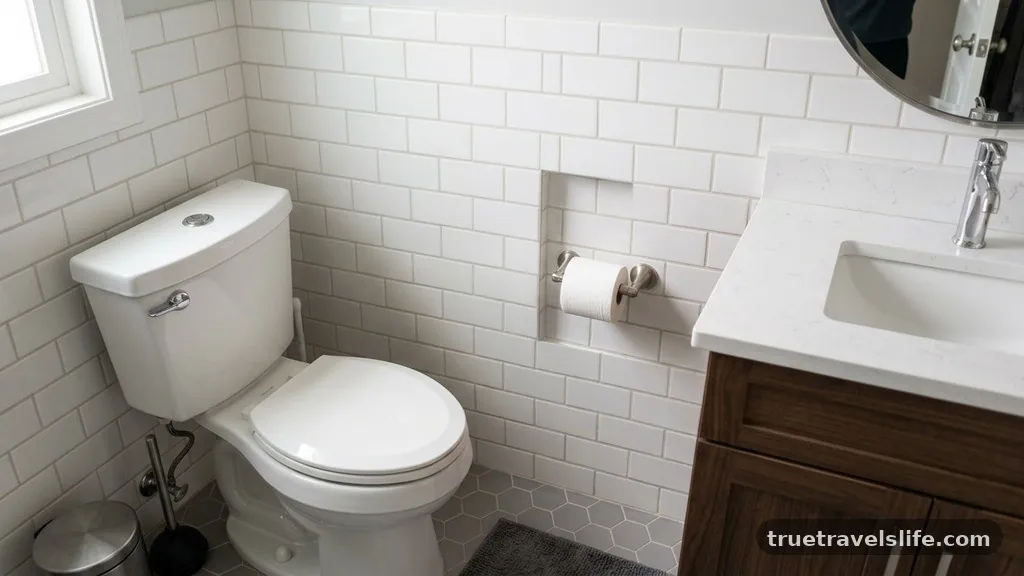
A recessed toilet paper holder is a sophisticated option for bathrooms where every inch of floor and wall space is at a premium. By cutting into the wall cavity, you push the entire mechanism behind the plane of the wall, effectively eliminating the protrusion that often interferes with vanity clearance.
This installation requires more effort than a standard surface mount, as you must cut into the drywall and secure the unit between wall studs. It is a permanent modification that offers a clean, flush appearance that is ideal for small bathroom renovations.
Before you begin cutting, use a stud finder to map out the exact location of the framing. You must ensure that you are not cutting into a load-bearing member or hidden utility lines.
If the vanity is so close that you cannot access the wall alongside the toilet, a recessed mount can sometimes be placed on the side wall or even the front of a custom-built partition. The result is a seamless, high-end finish that preserves the limited walking space in a cramped room.
Exploring Over-the-Tank Solutions
If floor space is non-existent and the vanity prevents side-wall mounting, the toilet tank itself offers a vertical surface that is often overlooked. Over-the-tank holders hook securely over the rim of the tank, placing the roll within reach without requiring any drilling or permanent hardware.
This is an excellent solution for tight bathrooms where the toilet is squeezed tightly between the vanity and the shower or wall. It keeps the tissue off the floor and prevents it from becoming damp or cluttered.
These holders generally come in two styles: those that hang over the tank edge and those that feature a decorative arm extending from the tank lid. Ensure the model you select doesn’t interfere with the toilet handle or the flushing mechanism.
Because these units are lightweight, they are easy to install and remove, making them a low-risk option for anyone unsure about permanent placement. Test the reach distance before purchasing, as some designs may place the roll slightly higher than the standard ergonomic mounting height.
Strategic Placement for ADA Compliance
Even if you aren’t building for specific accessibility requirements, following the principles of ADA compliance can help you determine the best location for your paper holder. The standard guidelines suggest placing the center of the roll at least 15 inches above the floor and no more than 48 inches high.
Furthermore, the holder should be positioned so it is not obstructed by other fixtures, such as vanity drawers or towel bars. When the vanity is too close, you must ensure that your chosen alternative doesn’t violate these basic ergonomic principles.
If you are forced to place the holder in a non-standard location, prioritize reachability over perfect alignment with the wall. A holder that is slightly lower or higher than standard is usually acceptable if it remains easy to grab without significant bending or overreaching.
Consider the physical range of motion for all members of the household when deciding on the final height. If you have limited space, a pivot arm holder can make changing rolls easier, especially when the unit is mounted in a tight corner near a vanity.
Securing Hardware without Permanent Damage
For those who want the convenience of a wall-mounted holder but cannot commit to drilling, adhesive mounting strips offer a viable alternative. Modern moisture-resistant adhesive strips are strong enough to support standard metal or plastic fixtures without damaging the drywall or tile.
This is perfect for when you need to place a holder on the side of a vanity or a tiled wall where drilling would be difficult or risky. Thoroughly clean the surface with rubbing alcohol before applying the adhesive to ensure a long-lasting bond.
Another option is a tension-mounted holder, which uses a spring-loaded mechanism to grip the space between two surfaces. This works best if you have a narrow gap between the vanity and the wall or between two walls.
While these are less common for toilet paper, they provide a clever, non-invasive way to add storage where traditional mounting is impossible. Always check the weight capacity of your chosen adhesive or tension system, especially if you plan to use heavy, decorative metal hardware.
Comparing Installation Methods
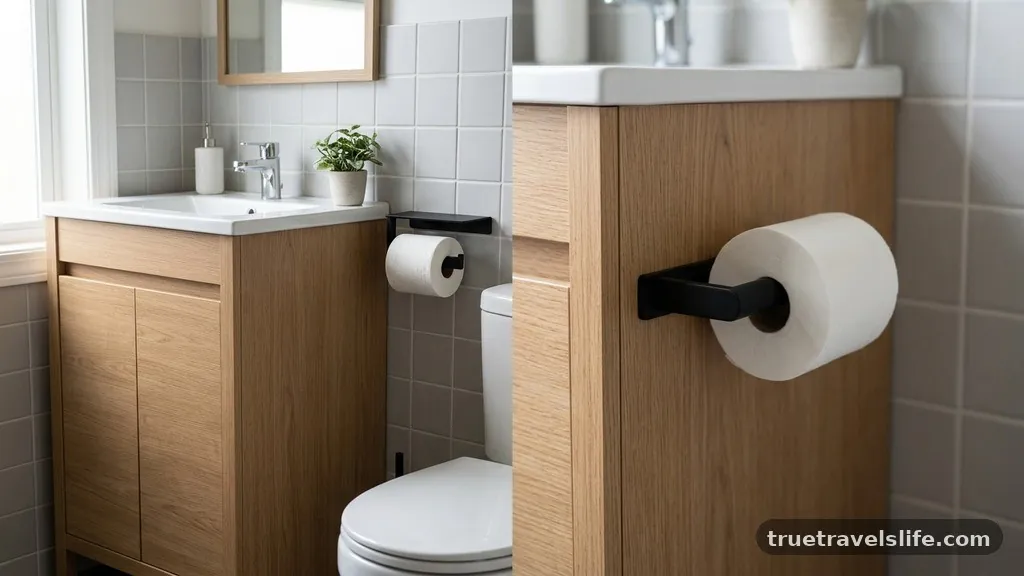
The method you choose for your bathroom should reflect your long-term plans for the space and the specific materials involved in your vanity and walls.
| Method | Best For | Installation Difficulty | Permanence |
|---|---|---|---|
| Wall-Mounted | Standard layouts with space | Moderate | High |
| Vanity-Mounted | Tight spaces near cabinets | Low to Moderate | High |
| Freestanding | Rentals/No-drill needs | None | Zero |
| Recessed | Small bathroom renovations | High | High |
| Adhesive | Temporary or tiled surfaces | Very Low | Low |
Managing Vanity Drawer Clearance
If you decide to mount the holder directly to the vanity, clearance for drawers is the most critical factor. Many vanity cabinets have a false front or a top drawer that occupies the space directly under the countertop.
You must ensure that the base of the holder does not impede the opening or closing of these drawers. Sometimes, moving the holder just two inches lower can make the difference between a functional setup and a constant point of frustration.
Use a piece of painter’s tape to mark the potential location of the holder on the vanity side. Open and close all adjacent drawers multiple times to see if your hand or the toilet paper roll itself will catch on the hardware.
If the drawers are too close, consider a vertical-style holder that takes up less horizontal space along the cabinet face. This narrow profile is often the key to fitting a holder in the tightest of gaps without sacrificing vanity utility.
Selecting the Right Materials
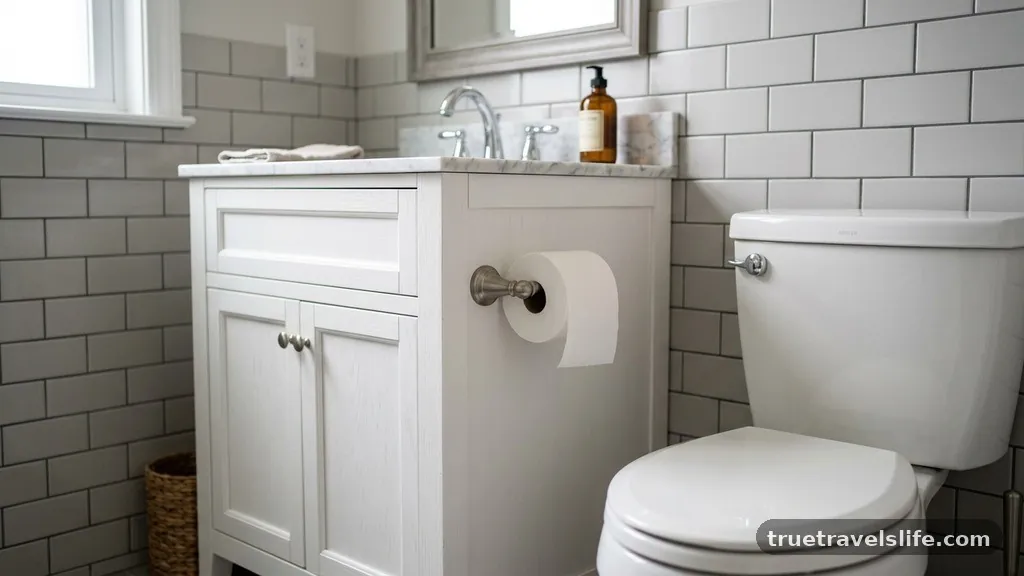
The bathroom is a high-moisture environment, and your choice of hardware material will dictate how well it stands up to daily use. Stainless steel, brass, and high-quality aluminum are the best choices for humid spaces.
If you are mounting to a vanity, ensure the finish of the holder complements the cabinet hardware, such as knobs and pulls. A cohesive look makes even an unconventional placement feel like a deliberate design decision.
Avoid cheap plastics that may discolor or become brittle over time, especially if the holder is near a heat source or high-traffic area. If you are using adhesive strips, ensure the base of the holder has a flat surface to maximize the bond area.
For freestanding units, look for materials that are easy to wipe down and resistant to rust. Your investment in durable materials will pay off in the long run, preventing the need for frequent replacements due to corrosion or wear.
Planning for Future Bathroom Renovations
If you are currently struggling with where to put the toilet paper holder when the vanity is too close, it might be time to consider a more permanent solution during your next renovation. When you eventually replace the vanity, you can select a model with a narrower footprint or an integrated toilet paper holder feature.
Some modern vanities are designed with a dedicated slot or cutout specifically to accommodate bathroom accessories. This eliminates the need for external hardware entirely and creates a much cleaner, more streamlined aesthetic.
When planning for such a renovation, communicate these spatial challenges to your contractor or designer early. They can suggest custom cabinetry modifications that hide the hardware while keeping it within easy reach of the toilet.
Integrating these elements during the planning phase is far more cost-effective than trying to retrofit them after the vanity is installed. By thinking ahead, you can create a bathroom that is both beautiful and highly functional, regardless of how small the space might be.
Final Thoughts on Spatial Optimization
Finding the right spot for your toilet paper holder in a compact bathroom is all about prioritizing ease of use without compromising the integrity of your fixtures. Whether you choose to mount the holder on the side of your vanity, opt for a freestanding stand, or invest in a recessed installation, the goal remains the same: ensuring the tissue is always within comfortable reach. By carefully measuring your available space and considering the mechanical constraints of your cabinets and walls, you can solve this common design dilemma with confidence.
If you’re still unsure about the best location, start with a temporary solution like a freestanding stand to test different positions before committing to a permanent drill-in mount. Once you find the spot that feels most natural for your daily routine, you can move forward with a more permanent, aesthetic solution.
Don’t let a tight vanity dictate the functionality of your space; with the right hardware and a bit of planning, you can make your bathroom work perfectly for your needs. Feel free to experiment with these different mounting styles to see what best fits your home’s unique layout.