Build a DIY Mud Kitchen for Outdoor Play Kids Will Love
DIY Mud Kitchen for Outdoor Play Kids
There is something special about giving kids a place where mess is not only allowed, but encouraged in the best possible way. A mud kitchen does exactly that. It turns a backyard, patio corner, or side yard into a playful little world where children can mix, scoop, pour, pretend, and create for hours. For many families in the USA, outdoor play spaces work best when they are simple, budget-friendly, and flexible enough to grow with different ages. That is one reason this kind of setup has become such a favorite.
What makes this project so appealing is that it combines imagination with hands-on activity. Kids are not just playing with toys. They are building pretend meals, experimenting with textures, and learning through open-ended play. In my experience, the most loved outdoor spaces are usually the ones that give children freedom to invent their own games instead of following one fixed activity. A mud kitchen encourages that naturally. It feels creative, sensory, and real all at once.
Another big advantage is that you do not need a huge yard or a fancy budget to make it work well. A basic setup with a sturdy surface, a few bowls, some old utensils, and a water source can already become a daily favorite. From there, you can add storage, shade, seating, or decorative touches that make it even more functional. This guide is designed to help you build a version that feels practical, attractive, and easy to maintain in real family life.
Part 1 covers the first five ideas that can help you shape a mud kitchen that is safe, charming, and fun to use. These ideas focus on layout, materials, play value, and everyday usability, so the finished space looks good and actually works well outside.
1. Sturdy Base
- Creates a safe and reliable surface for daily use.
- Helps the whole setup last through weather and active play.
- Makes the kitchen feel more permanent and intentional.
- Reduces wobbling, tipping, and frustration for younger kids.
- Gives you a strong starting point for future upgrades.
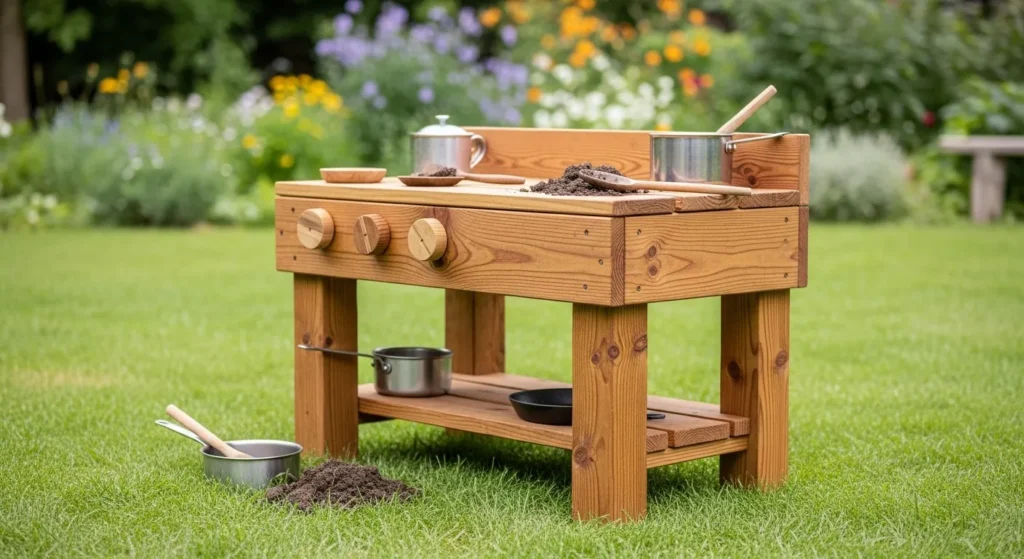
A sturdy base is the first thing that makes a mud kitchen feel successful rather than temporary. Kids lean on counters, drag bowls across surfaces, and sometimes turn play into full-body action, so the structure needs to stay solid through all of it. A wobbly setup may look cute for one afternoon, but it quickly becomes annoying and less safe in everyday use. That is why many parents start with a low wooden bench, a repurposed pallet build, or an old outdoor table. When the frame feels secure, everything else becomes easier to add and enjoy.
Pressure-treated wood, sealed cedar, or another outdoor-friendly material usually works best because it handles moisture better over time. If you are reusing older furniture, check the legs, screws, and top surface before calling it done. I’ve noticed that the best builds are often the simplest ones, as long as they feel strong and balanced. A level base also helps children focus on play instead of managing spills caused by uneven surfaces. This single step may not seem exciting, but it is the part that supports every future detail, from pretend cooking to messy water play.
2. Washable Surface
- Makes cleanup easier after muddy, wet, and messy play.
- Protects the build from stains and early wear.
- Helps parents feel more relaxed about creative outdoor mess.
- Keeps the station looking neat between play sessions.
- Adds practicality without changing the playful feel.
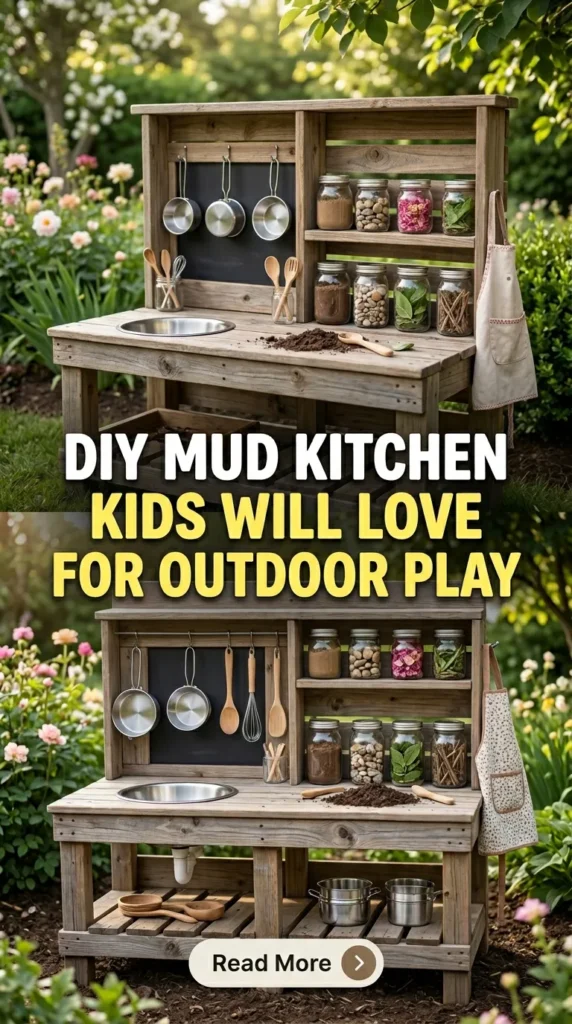
A washable work surface can make the difference between a mud kitchen that gets used often and one that feels like too much work to maintain. Children naturally bring water, dirt, leaves, and messy mixtures into every part of the setup, so the countertop needs to handle all of that without becoming damaged or hard to clean. Smooth sealed wood, outdoor paint, composite boards, or even a fitted metal tray on top can all help. The easier the surface is to wipe down, the easier it becomes to welcome spontaneous play without worrying about the cleanup every time.
This is also where practical design helps busy families the most. A surface that can be rinsed quickly with a hose or wiped with warm soapy water saves time and keeps the kitchen looking fresh. In my experience, parents tend to keep outdoor play stations longer when maintenance feels simple instead of tiring. A washable top also helps if the station is used for different activities throughout the week, like sensory bins, herb play, or water scooping. When the countertop is durable and easy to refresh, the whole space feels more usable and less stressful in everyday family life.
3. Sink Setup
- Adds real hands-on play value with water and pouring.
- Makes the kitchen feel more interactive and realistic.
- Encourages sensory learning and pretend cooking.
- Works well with simple household bowls or repurposed basins.
- Keeps kids engaged for longer periods outdoors.
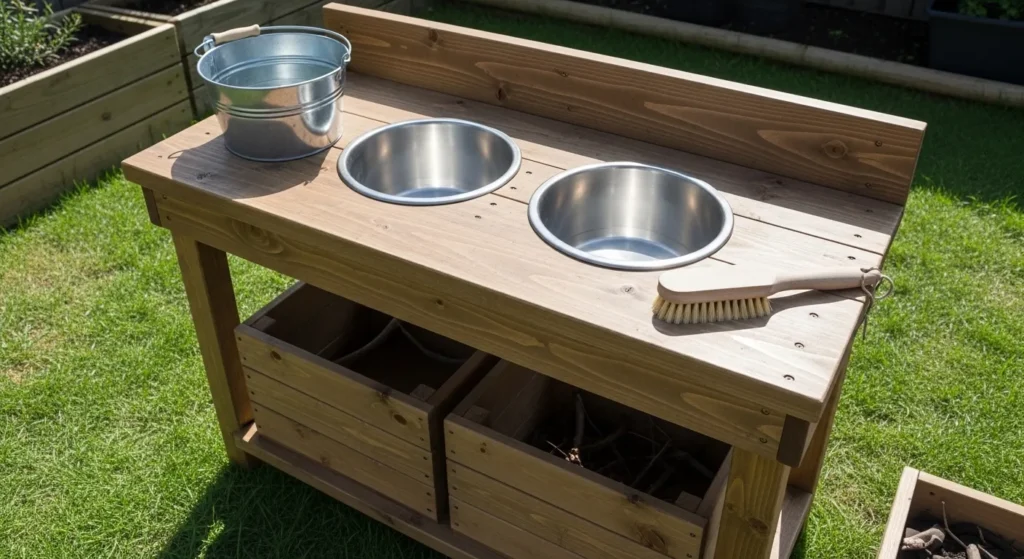
A sink setup is often the part children love most because it turns a simple play station into something that feels real. Whether you use a metal mixing bowl, a plastic bin, or a thrifted sink insert, that one feature instantly invites scooping, rinsing, stirring, and pouring. Kids can wash leaves, fill cups, make muddy soup, or clean pretend dishes for as long as their imagination keeps going. I’ve seen this work well in many backyards because water adds movement and variety. It gives children more to do and makes the play feel active rather than static.
The smartest version is usually the simplest one. You do not need plumbing or a complicated build to make a sink area fun. A removable bowl set into the counter is often enough, especially if it can be emptied and cleaned easily after use. Pair it with a water jug, bucket, or small dispenser so children can refill it without much help. That setup supports independent play while keeping the whole station manageable for adults. Once a sink is included, the kitchen starts to feel like a true outdoor zone instead of just a table with accessories.
4. Open Storage
- Keeps tools and play items easy for kids to reach.
- Makes cleanup faster and more realistic for little helpers.
- Encourages independence during outdoor play.
- Prevents clutter from taking over the work area.
- Helps the station stay attractive and organized.
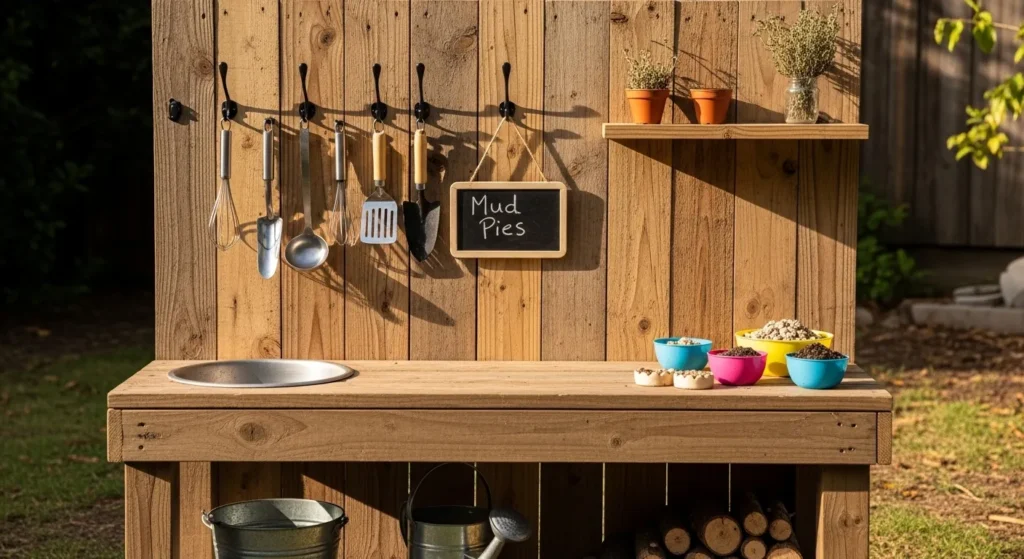
Open storage makes a mud kitchen more functional because children can see what they have and grab it without asking for help every few minutes. Buckets, baskets, hooks, shallow shelves, and small crates all work well for storing spoons, bowls, muffin tins, measuring cups, seed pods, and other play pieces. When supplies are visible and easy to reach, kids tend to move more naturally between tasks. They mix, rinse, collect, and organize on their own. That independence matters because it turns the space into something they can truly use, not just admire for a few minutes.
Good storage also helps the station stay cleaner and calmer, which makes parents more likely to keep it set up. I’ve noticed that outdoor play spaces work best when every item has an obvious home. A row of hooks for utensils, a crate for loose natural materials, and one shelf for bowls can already make a big difference. Children often enjoy tidying when the setup is simple and visual. Open storage also adds charm because it makes the kitchen look like a real little workspace. It feels inviting, playful, and organized without losing that handmade backyard character.
5. Natural Materials
- Strengthens sensory play with texture, shape, and variety.
- Keeps the play experience creative and low-cost.
- Helps children connect with outdoor surroundings.
- Adds a beautiful, earthy look to the setup.
- Reduces the need for too many store-bought accessories.
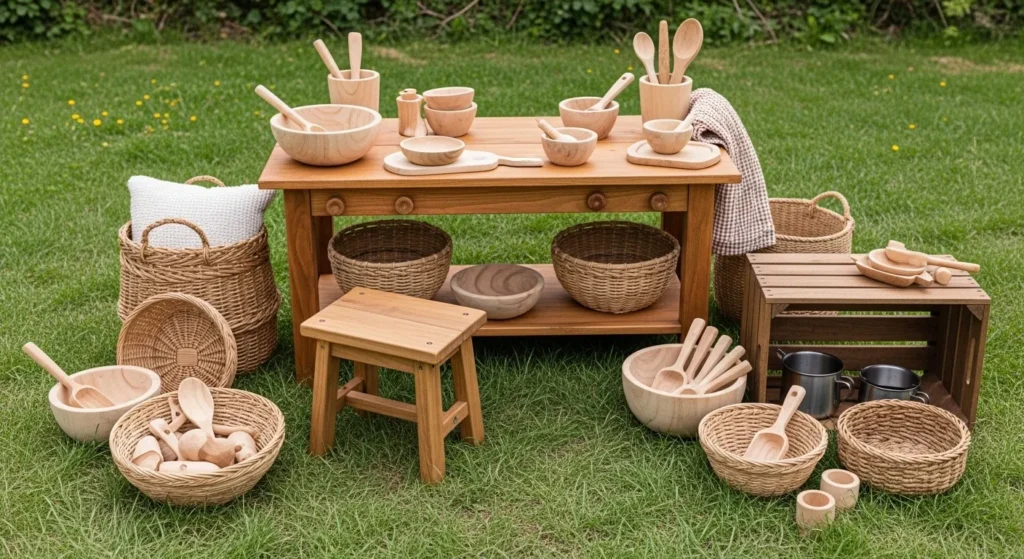
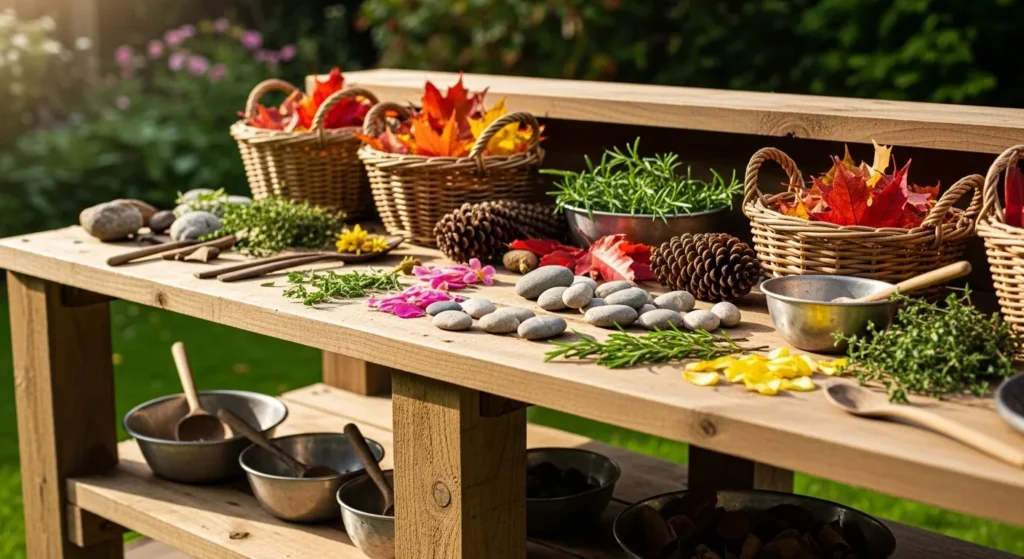
Natural materials are what make a mud kitchen feel rich, interesting, and endlessly reusable. Sticks, pebbles, leaves, flower petals, seed pods, herbs, pinecones, and safe garden clippings can all become ingredients in a child’s pretend world. Instead of relying only on plastic toys, this approach brings the outdoors directly into the play experience. Kids can sort, crush, mix, and decorate with whatever they collect, and that makes each play session feel different. In my experience, open-ended materials often keep children engaged longer because there is no single right way to use them.
This also helps the station look more grounded and beautiful in the yard. A basket of stones, a bucket of pinecones, and a few small planters of mint or rosemary can make the kitchen feel like part of the garden instead of a random toy corner. That is why many parents recommend using real textures and loose natural pieces whenever possible. They inspire creativity while keeping costs low. Just be sure everything is age-appropriate, non-toxic, and easy to supervise. With the right mix of natural elements, the entire setup feels more sensory, more thoughtful, and more fun.
6. Kid Height
- Makes the space more comfortable and safer to use.
- Supports longer, more independent play sessions.
- Helps children move naturally without strain.
- Improves confidence because everything feels reachable.
- Makes the kitchen more practical for everyday use.
Getting the height right is one of the most important details in any outdoor play build. If the counter is too tall, children cannot comfortably stir, pour, or pretend wash dishes. If it is too low, they may lose interest quickly because the setup feels awkward. A child-friendly height allows them to stand naturally, rest items on the counter, and play without constantly stretching. I’ve noticed that when the proportions fit the child, they stay engaged much longer. The space feels like it truly belongs to them, and that makes the whole experience more inviting.
A good rule is to measure from the child’s elbow area and use that as a guide for the work surface. If several age groups will use it, choosing a middle-ground height often works well enough. You can also add a stable outdoor step for older or younger siblings when needed. In my experience, comfort shapes behavior more than people expect. When children can easily reach the bowls, sink, hooks, and shelf space, they use the kitchen more independently and with less frustration. A well-sized station does not just look thoughtful. It actually improves how well the play space functions.
7. Weather Cover
- Protects the station from sun, light rain, and early wear.
- Helps supplies stay cleaner between uses.
- Makes the space more comfortable in hot weather.
- Extends how often the kitchen can be used outdoors.
- Adds a finished backyard look.
A weather cover can make a mud kitchen much more practical, especially in places where sun, sudden showers, or wind affect how often outdoor spaces get used. This does not have to mean a complicated roof structure. A simple patio umbrella, small pergola corner, canopy, or even placement near a covered fence line can give enough protection to make a difference. When children have a bit of shade, they tend to stay outside longer and play more comfortably. It also helps bowls, wood surfaces, and loose accessories last better through changing seasons.
This detail matters because outdoor play is easier to maintain when the setup is not constantly being damaged by the weather. I’ve seen this work well in many homes where parents wanted a mud kitchen to last more than one season without needing frequent repairs. A bit of cover reduces fading, puddling, and general wear, which keeps the area looking inviting. It also makes cleanup easier after rain because fewer items stay soaked. Even a modest shade solution can make the whole project feel more intentional, more usable, and much more family-friendly across the year.
8. Tool Hooks
- Keeps utensils visible and easy to grab.
- Helps children return items after play.
- Frees up counter space for mixing and pouring.
- Makes the setup look more like a real kitchen.
- Adds organization without needing bulky storage.
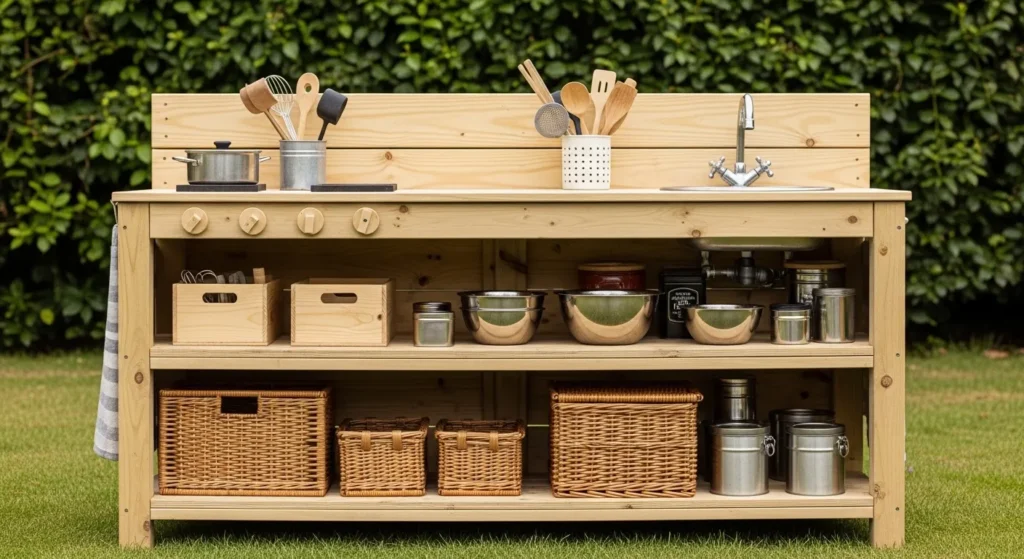
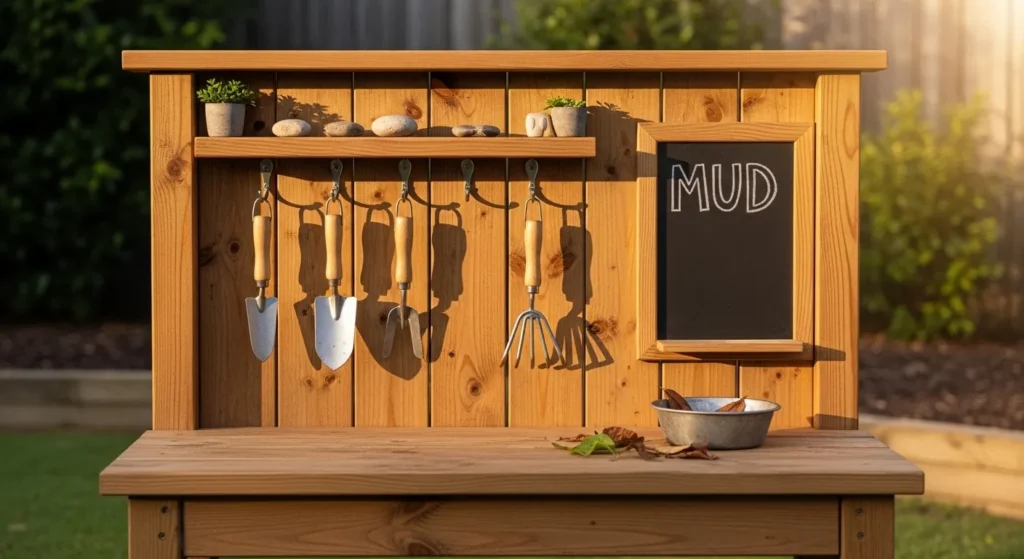
Tool hooks may seem like a small detail, but they can completely improve how a mud kitchen works. When spoons, whisks, ladles, strainers, and measuring cups are hanging in plain sight, children can quickly choose what they need and keep moving through play without interruptions. This matters more than many parents expect because kids enjoy spaces that feel easy to use on their own. I’ve noticed that when utensils are tossed into one bin, the station starts to look messy much faster. Hooks create order while also making the kitchen feel playful, charming, and realistic.
This idea also helps with cleanup because children can clearly see where things belong at the end of playtime. A simple row of outdoor-safe hooks attached to the back panel or side of the structure is usually enough. Try spacing them so small hands can easily hang items without frustration. In my experience, practical organization often encourages longer and calmer play because children are not constantly searching for tools. Tool hooks also add visual character to the build. They make the space feel thoughtfully designed while keeping the work surface open for muddy mixing, pouring, scooping, and pretend baking.
9. Water Access
- Supports longer play without constant adult help.
- Makes rinsing, pouring, and mixing easier.
- Encourages more active and sensory outdoor fun.
- Keeps the setup functional without complex plumbing.
- Helps children feel more independent while playing.
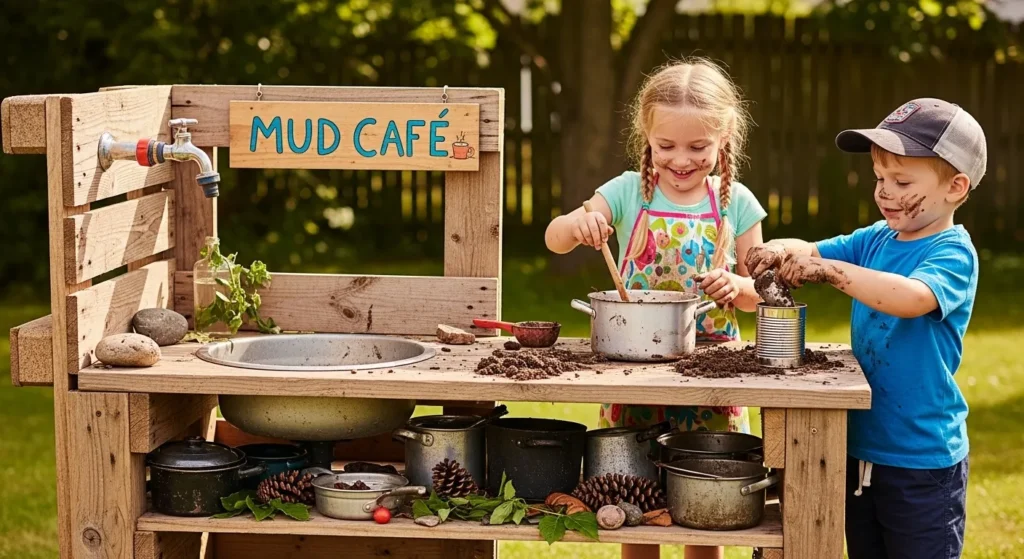
Easy water access can turn a good mud kitchen into a space kids truly want to use every day. Water changes the pace of play by adding movement, sound, and a more realistic cooking feel. Children can fill bowls, rinse leaves, wash pretend dishes, and create muddy mixtures that feel exciting every single time. That is why many parents recommend adding a simple refill system instead of relying on one pre-filled bowl alone. A dispenser, small outdoor container with a tap, watering can, or refill bucket can all help children interact more independently.
The best setup depends on how much maintenance you want. A basic jug with a spout often works beautifully because it is easy for adults to refill and simple for kids to use with a bit of guidance. I’ve seen this work well in many backyards where parents wanted more sensory play without creating a high-maintenance station. Placing the water source close to the sink area also keeps play smoother and reduces spills across the rest of the kitchen. Once water becomes easy to access, the whole setup feels more complete, more engaging, and much more fun to revisit.
10. Mixing Zone
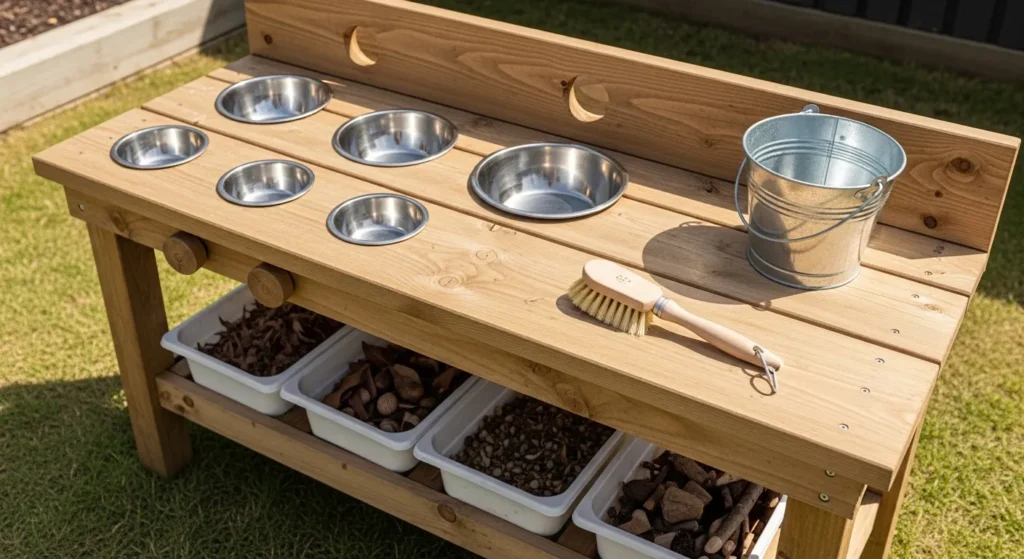
- Gives children a clear area for pretend recipes.
- Makes the kitchen feel more interactive and purposeful.
- Encourages scooping, stirring, pouring, and combining.
- Helps separate messy play from stored items.
- Supports both solo and sibling play.
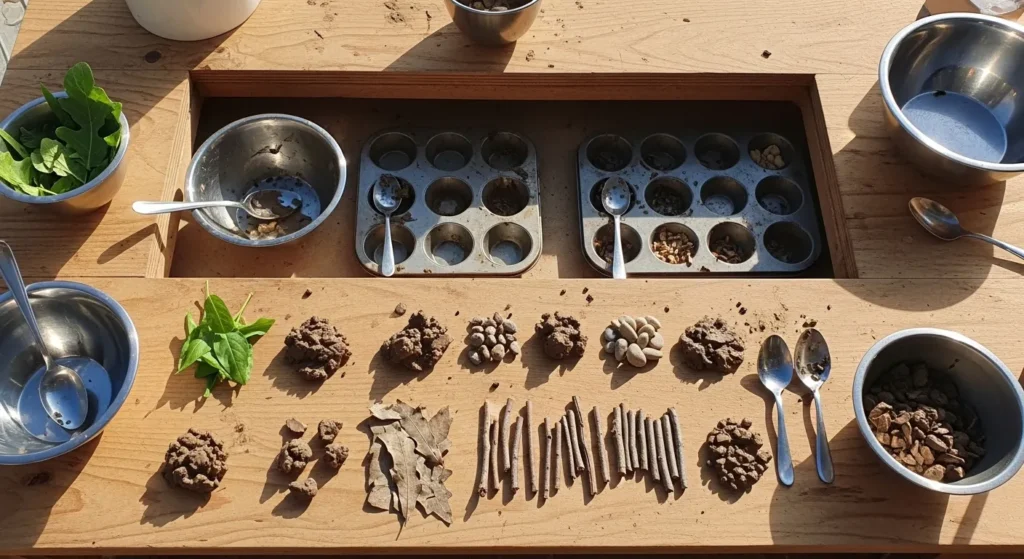
A mixing zone is where the real fun usually happens. This is the space where kids stir muddy soup, combine leaves with water, pour pebbles into bowls, and create the strange little recipes that keep them busy for long stretches of time. Giving that activity its own dedicated area helps the kitchen feel more functional and easier to use. It also reduces clutter because bowls, trays, and ingredients stay centered in one spot rather than spreading everywhere. In my experience, children play more confidently when the layout clearly suggests what each section of the station is meant for.
You do not need anything complicated to create this area well. A clear portion of the counter, a large tray, or a few stacked mixing bowls can be enough to define the zone. It helps to keep the surface open and avoid crowding it with too many decorative extras. I’ve noticed that a simple arrangement usually works better because children can spread out and change their ideas as they go. A dedicated mixing zone also helps when more than one child is playing, since one can collect ingredients while the other stirs. That balance makes the space easier to share.
11. Mud Pantry
- Adds imaginative storage for natural play ingredients.
- Keeps loose materials organized and easy to find.
- Makes the station feel richer and more complete.
- Encourages children to create new pretend recipes.
- Helps outdoor play stay varied without extra toy purchases.
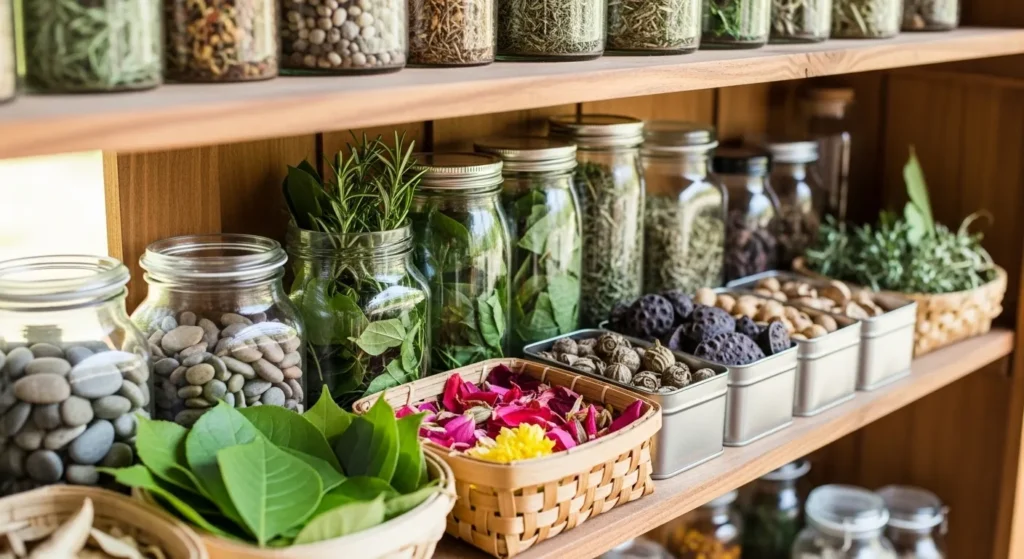
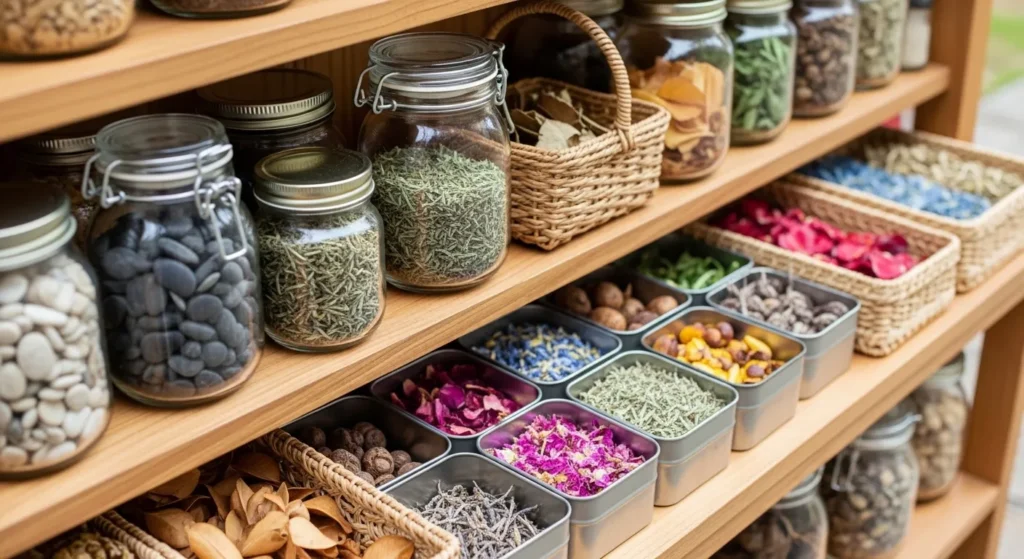
A mud pantry is a clever way to keep play materials organized while adding more creative value to the kitchen. This can be as simple as a few labeled containers, jars, baskets, or shallow bins filled with leaves, pebbles, petals, seed pods, bark pieces, herbs, and other safe outdoor finds. Children love having ingredients to choose from because it makes pretend cooking feel more real and more open-ended. Instead of repeating the same action, they begin inventing. One day they are making garden stew, and the next they are baking a pretend leaf pie.
What makes this idea so useful is that it blends storage with imagination. The materials stay tidy, but they also become part of the play story the moment children start selecting and mixing them. I’ve noticed that kids often stay engaged longer when ingredients are displayed clearly instead of hidden away. It gives them ideas before the play even begins. A mud pantry also helps parents refresh the space cheaply by rotating seasonal items from the yard. With just a few containers and a little routine, the kitchen starts to feel fuller, more interactive, and much more inspiring.
12. Simple Seating
- Adds comfort for longer outdoor sessions.
- Gives kids a place to pause, sort, or create.
- Makes the area feel like a complete play corner.
- Supports quieter moments between active play.
- Helps siblings use the space more easily together.
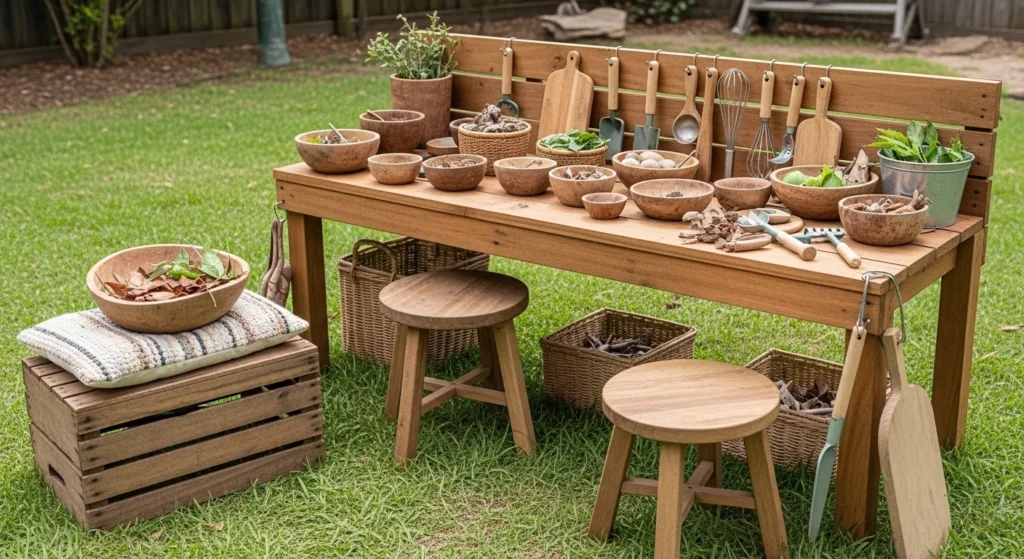
Simple seating can make a mud kitchen feel more inviting because it gives children a natural place to pause and settle into play. A small bench, weather-safe stool, low crate, or child-sized outdoor chair can all work well depending on the space. Not every child wants to stand the whole time, especially during activities like sorting petals, filling cups, or making pretend menus. Seating adds flexibility, which helps the area support different moods and ages. I’ve seen this work well in many homes where kids shifted between active muddy play and slower imaginative play.
It also helps shape the kitchen into a more complete outdoor zone rather than just a single activity station. A seat can be used for waiting turns, setting down a tray, or simply relaxing for a few minutes in the middle of play. Choose something sturdy, easy to wipe, and simple enough to move when needed. In my experience, multipurpose pieces work best because they can serve as seating one day and a supply stand the next. This kind of flexibility is especially useful in smaller patios or compact backyards where every item needs to earn its place.
13. Back Panel
- Creates a vertical area for hooks, shelves, and decor.
- Helps define the kitchen visually in the yard.
- Makes the build look more complete and intentional.
- Adds useful space without increasing the footprint.
- Supports better organization in small outdoor areas.
A back panel gives a mud kitchen structure, personality, and practical storage potential all at once. Even a simple board attached to the rear of the station can transform it from a table into something that feels like a real little workspace. It provides a place for hooks, mini shelves, hanging tools, signs, baskets, or even a chalkboard section. That vertical area matters because apartments and smaller yards alike benefit from using height instead of taking up more ground space. I’ve noticed that once a back panel is added, the whole setup looks much more finished.
This feature is especially helpful when you want the station to feel charming without becoming crowded. A few carefully placed details on the back panel can organize the space while still keeping the main work surface open. Pressure-treated wood or sealed boards usually hold up best outdoors, especially if the kitchen stays outside year-round. In my experience, this is one of the most rewarding upgrades because it changes both the look and the function of the build. It makes the station easier to personalize, easier to organize, and much more visually appealing in the backyard.
14. Easy Cleanup
- Makes the space easier to maintain over time.
- Helps parents feel less stressed about outdoor mess.
- Keeps the station fresh, safe, and ready to use.
- Encourages regular use instead of occasional setup.
- Supports a more realistic long-term backyard routine.
Easy cleanup is one of the most important parts of a successful mud kitchen because even the most charming setup loses appeal if it becomes exhausting to maintain. The best outdoor play spaces are the ones families can actually keep using week after week. That usually means choosing rinse-friendly materials, simple storage, removable bowls, and a layout that does not trap water or debris. I’ve noticed that parents enjoy these spaces much more when the cleanup takes minutes instead of turning into a full chore. A little planning here protects both the kitchen and the fun.
Think about cleanup while building, not after. Open-bottom crates, wipeable bins, a nearby hose, and easy-access containers all make the routine faster. It also helps to keep only the essentials outside and store delicate items indoors when needed. In my experience, children are more likely to help tidy when the process is simple and visual. A basket for utensils, a tub for bowls, and one shelf for loose ingredients can already make a big difference. When cleanup feels easy, the mud kitchen becomes a regular part of family life instead of a project that fades too quickly.