These 11 Modern Apartment Ideas Are Perfect for Small Spaces
Modern Apartment Ideas Are Perfect for Small Spaces
Small apartments can feel beautiful, open, and practical when every design choice has a purpose. Across the USA, many renters and apartment owners deal with compact living rooms, tight bedrooms, narrow kitchens, limited storage, and lease rules that make major renovations difficult. Still, a smaller home does not have to feel crowded or unfinished. With thoughtful furniture, lighter colors, smarter storage, better lighting, and a few visual tricks, you can make your apartment feel more spacious, stylish, and easy to live in every day.
A Modern Apartment works best when beauty and function support each other. That means choosing pieces that fit the room, keeping clutter under control, using wall height wisely, and making every corner feel intentional. Instead of filling the space with random decor, the goal is to create a clean flow that makes daily life easier. These ideas are especially helpful for studios, one-bedroom rentals, shared apartments, city lofts, and compact suburban spaces where one room often needs to serve several purposes.
This guide gives you practical, small-space decorating ideas that are easy to copy and simple to adjust for your budget. Each section focuses on one useful design move, along with materials, layout tips, and styling logic you can apply right away. Whether you want your living room to feel bigger, your bedroom to feel calmer, or your kitchen to look cleaner, these ideas will help your apartment feel more polished without making it complicated.
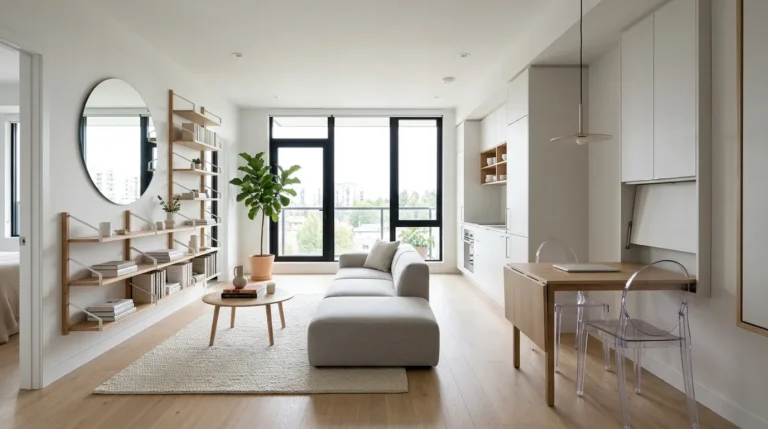
1. Clear Flow

- Keep the main walking paths open between the front door, sofa, kitchen, windows, bathroom, and bedroom area so the apartment feels easier to move through.
- Avoid placing bulky furniture in the middle of traffic zones because it can make even a decent-size room feel cramped and awkward.
- Use rugs, lamps, and furniture placement to define areas without adding heavy dividers that block light or visual space.
- Choose smaller coffee tables, open-leg chairs, and slim consoles when the room needs function without extra visual weight.
- Let natural light travel through the apartment by keeping tall furniture away from windows whenever possible.
Clear flow makes a small apartment feel larger because the room becomes easier to read. When furniture blocks the path from the entry to the sofa, kitchen, or bedroom, the entire space feels tighter than it really is. Start by walking through your apartment and noticing where you naturally move each day. Then shift anything that interrupts that path. A slim coffee table, floating sofa placement, or open-leg chair can improve movement without removing comfort. The goal is a layout that feels open, natural, and practical.
The transformation is immediate because open pathways reduce visual pressure. In my experience, small apartments feel more expensive when the layout looks intentional instead of squeezed into place. Keep window areas clear, leave breathing room around larger furniture, and avoid using oversized pieces where compact ones would work better. A rug can define the living zone, while a lamp can mark a reading corner. Your apartment will feel calmer, brighter, and easier to live in without adding more square footage.
2. Light Palette
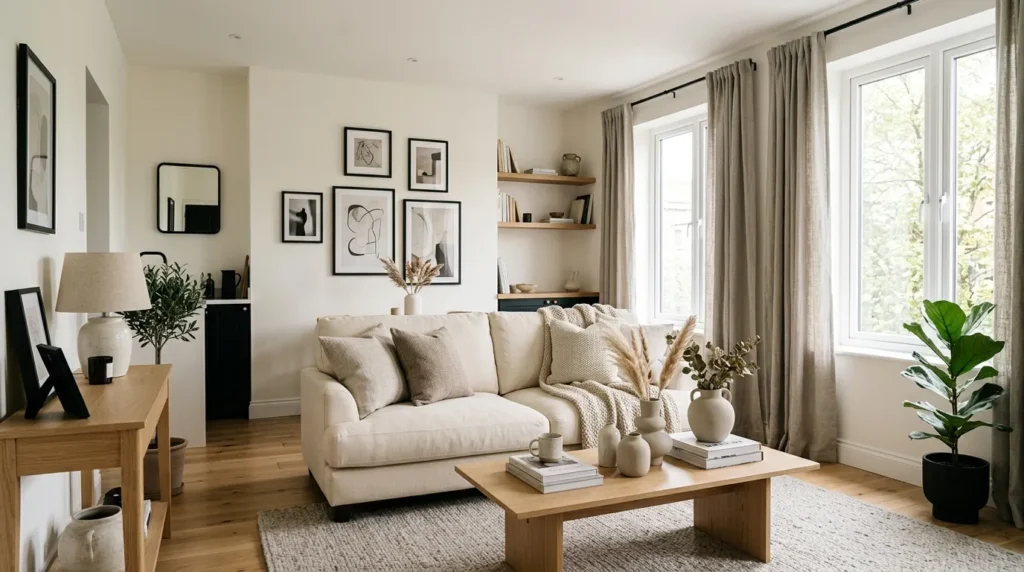
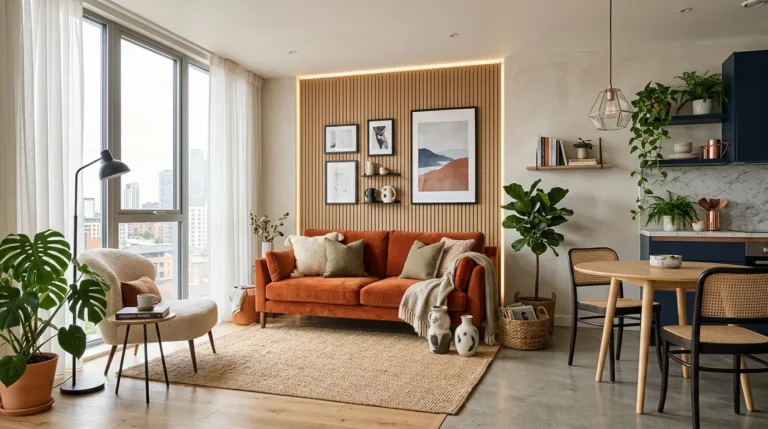
- Use warm white, ivory, cream, pale taupe, soft gray, oatmeal, and greige to reflect light and create an airy base.
- Keep larger pieces like sofas, rugs, curtains, bedding, and storage furniture in lighter shades for a more open visual effect.
- Add depth through texture instead of too many bold colors, using materials like linen, boucle, wool, rattan, ceramic, and pale oak.
- Use small darker accents through black frames, bronze lamps, walnut trays, or charcoal pillows to keep the space grounded.
- Choose washable fabrics and stain-resistant finishes so light colors remain practical for pets, guests, and everyday use.
A light palette can visually expand an apartment before you move a single wall. Soft colors reflect daylight and make rooms feel calmer, especially when the floor plan is compact. Instead of using only stark white, build warmth with ivory, cream, pale taupe, oatmeal, greige, and soft gray. These tones work beautifully on rugs, curtains, bedding, sofas, and storage pieces. The room feels connected because the larger surfaces are not competing with each other, which helps small spaces look smoother and more relaxed.
The key is preventing light colors from feeling flat. Add texture through linen curtains, boucle pillows, woven baskets, wool rugs, ceramic vases, and pale wood tables. That’s why many designers recommend texture when working with neutral rooms. It adds depth without cluttering the eye. Use small contrast details like black frames, brass lamps, or darker trays to create structure. The apartment will feel brighter, cleaner, and more spacious while still feeling warm enough for daily life.
3. Slim Furniture
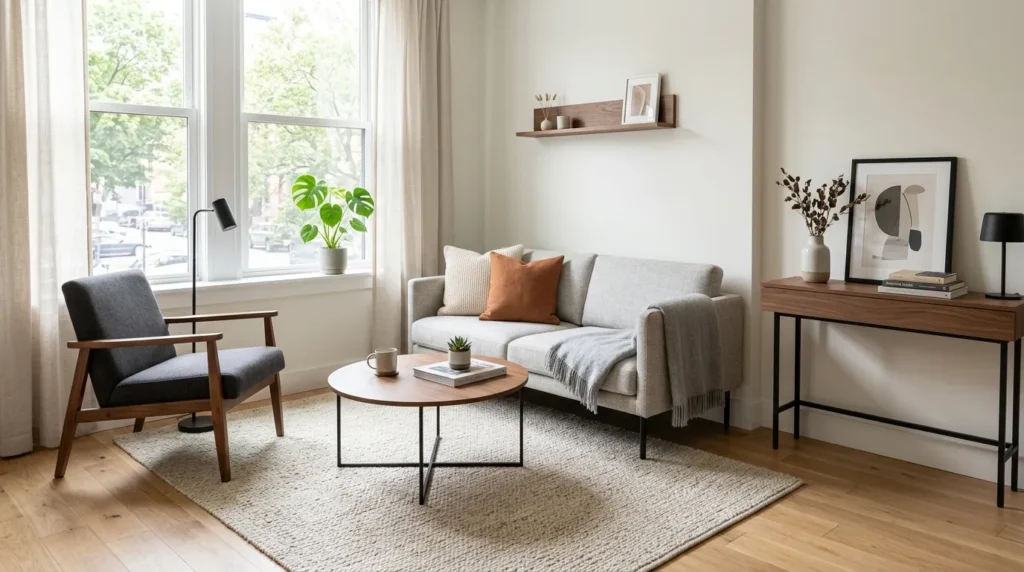
- Choose sofas, chairs, consoles, tables, and bed frames with clean lines, slim arms, visible legs, and balanced proportions.
- Avoid oversized sectionals, heavy rolled arms, thick bases, and bulky cabinets that can overpower compact rooms quickly.
- Look for multifunctional pieces, such as storage ottomans, nesting tables, sleeper sofas, and lift-top coffee tables.
- Use durable materials like performance linen, walnut veneer, powder-coated metal, oak, leather, and easy-clean upholstery.
- Measure doorways, elevators, wall lengths, and walking paths before buying large furniture for a small apartment.
Slim furniture helps a small apartment feel lighter because it reduces visual bulk. A sofa with narrow arms, a coffee table with thin legs, or a console with a shallow profile can still provide comfort and function without crowding the room. The goal is not to buy tiny furniture, but to choose pieces that match the scale of your home. Open-leg designs are especially useful because they keep more floor visible, which makes the room feel less packed and easier to move through.
This idea also improves daily usability. A compact dining table can fit near the kitchen, a narrow nightstand can work beside a small bed, and nesting tables can move when guests visit. I’ve noticed that apartments look more polished when the furniture is properly scaled rather than oversized. Choose performance fabric, smooth wood, matte metal, or leather accents for durability. When each piece fits the room, the apartment feels more organized, more comfortable, and much easier to style.
4. Vertical Storage
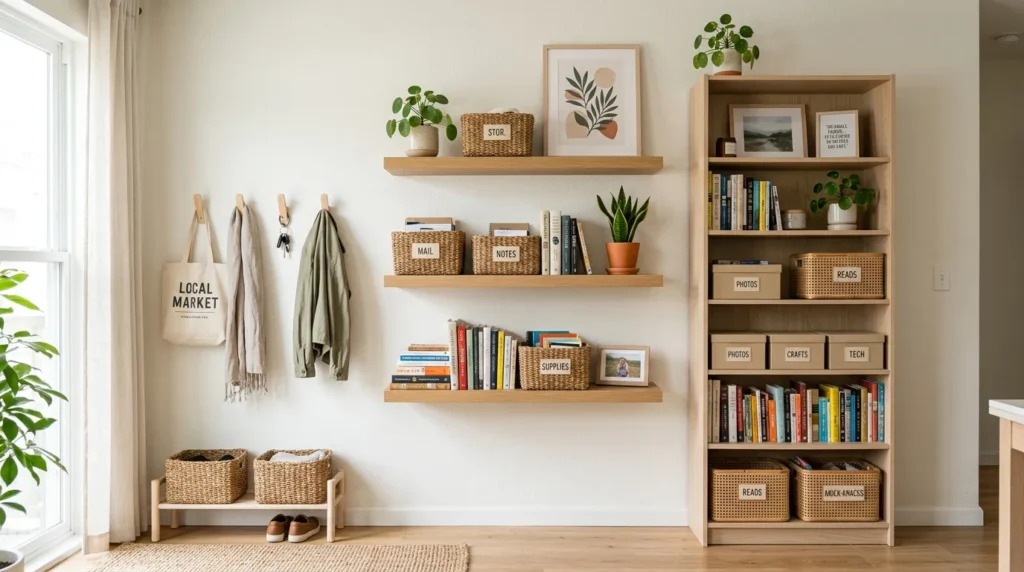
- Use floating shelves, tall bookcases, wall hooks, peg rails, mounted cabinets, and over-door organizers to take advantage of wall height.
- Keep the floor as open as possible by lifting storage upward in bedrooms, bathrooms, entries, kitchens, and work corners.
- Style shelves with a mix of useful items and decor so the storage feels intentional instead of crowded or temporary.
- Use matching baskets, labeled boxes, and containers to hide smaller items that can quickly make shelves look messy.
- Choose finishes like light wood, matte white, black metal, woven fiber, or clear acrylic for a clean small-space look.
Vertical storage is a small-space essential because walls are often underused. When floor space is limited, shelves, hooks, mounted cabinets, tall bookcases, and peg rails can add function without making the room feel crowded. This works especially well in entries, bathrooms, kitchens, and bedrooms where everyday items need to stay accessible. A floating shelf can hold books, a wall hook can organize bags, and a tall cabinet can store supplies while using less floor space than a wide piece.
The best vertical storage feels styled, not stuffed. In my experience, shelves look better when practical items are mixed with a few decorative pieces, such as framed art, plants, ceramics, or baskets. Leave empty space between objects so the wall still feels open. Use matching bins for smaller items and keep heavier objects lower for balance. Your apartment gains more storage while the floor remains clearer, making the entire space feel taller, lighter, and better organized.
5. Hidden Clutter
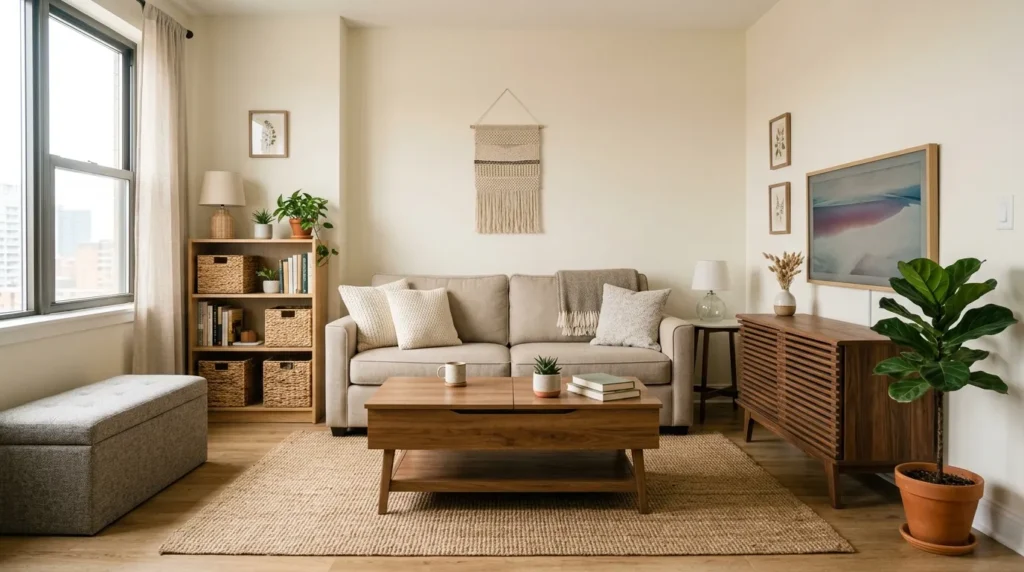
- Use closed storage furniture such as drawer nightstands, storage beds, closed media consoles, lift-top tables, and lidded baskets.
- Place hidden storage near clutter hotspots like the sofa, entryway, kitchen counter, bathroom sink, desk, and bedside area.
- Keep everyday items close to where you use them, but tucked away so surfaces stay calm and easy to clean.
- Use drawer dividers, under-bed bins, canvas boxes, felt organizers, and woven baskets for a more polished storage system.
- Reset visible surfaces daily so small items do not slowly take over the apartment during busy weeks.
Hidden clutter control is what makes a small apartment feel peaceful instead of cramped. Even stylish furniture can lose its impact when mail, chargers, shoes, remotes, skincare, blankets, and paperwork are scattered across visible surfaces. Choose storage ottomans, closed media cabinets, drawer nightstands, under-bed bins, and lift-top tables to keep everyday items close but hidden. This is especially helpful in rentals with small closets because your furniture starts doing more of the organizing work without adding extra cabinets everywhere.
The real improvement comes from storing items where clutter naturally happens. Keep a basket near the entry for shoes, a drawer near the sofa for remotes, and bins under the bed for seasonal items. I’ve seen this work well in many homes where open shelving became hard to maintain. Closed storage gives the eye more quiet space, which makes rooms feel bigger. Your apartment becomes easier to reset after work, before guests arrive, or during a quick weekend clean.
6. Tall Curtains
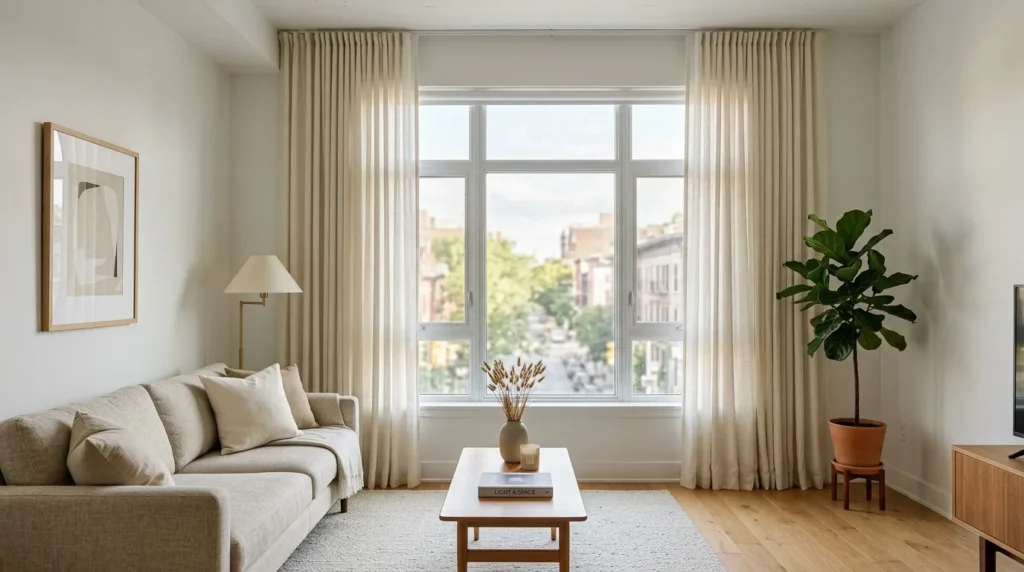
- Hang curtain rods close to the ceiling instead of directly above the window frame to create a taller visual line.
- Extend rods wider than the window so curtains frame the glass instead of blocking natural light during the day.
- Choose floor-length panels for a cleaner, more elevated look that helps the room feel polished and less temporary.
- Use linen, cotton, velvet, or light-filtering fabric depending on your privacy, light control, and bedroom needs.
- Stick with soft neutrals like ivory, oatmeal, beige, warm gray, or taupe when you want the room to feel airy.
Tall curtains can make a small apartment feel higher and more refined. Standard blinds often look unfinished on their own, especially in rentals with plain walls and simple trim. Hang curtain rods close to the ceiling and extend them beyond the window frame to create the illusion of larger windows. Floor-length panels create a long vertical line that pulls the eye upward. This simple change can make a basic living room, bedroom, or dining corner feel much more intentional.
The result is softer, brighter, and more custom-looking. That’s why many designers recommend treating window coverings like part of the architecture. Light-filtering linen panels can soften daylight, while blackout liners can improve sleep in bedrooms. Choose neutral shades if you want an airy look, or deeper tones if you want a moodier bedroom. Make sure the curtains lightly touch the floor for a polished finish. Your apartment will feel taller, warmer, and more complete without a renovation.
7. Reflective Details
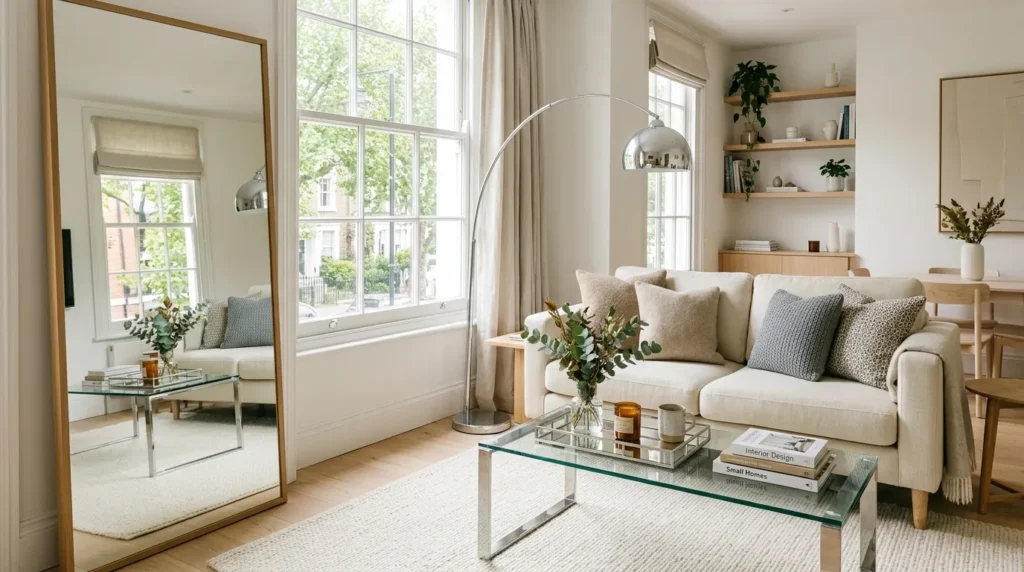
- Place mirrors across from or near windows so they reflect natural light and visually deepen the room.
- Use glass, acrylic, chrome, glossy ceramic, and mirrored trays to add function without heavy visual weight.
- Balance shiny surfaces with soft textures like linen, wool, boucle, wood, rattan, and cotton.
- Choose one or two reflective finishes and repeat them lightly through lamps, frames, trays, or side tables.
- Avoid overusing shiny pieces because too many reflective surfaces can make a small room feel busy or cold.
Reflective details make a small apartment feel brighter without adding bulk. A large mirror near a window can bounce daylight across the room, while a glass coffee table or acrylic side table keeps sightlines open. Chrome lamps, ribbed glass vases, mirrored trays, and glossy ceramic pieces add polish in small doses. These materials are useful because they give you surfaces and style without making the apartment feel visually heavy. The trick is choosing pieces that reflect light without overwhelming the space.
Balance is what keeps reflective details looking elegant. Pair a glass table with a soft rug, a chrome lamp with linen curtains, or a mirrored tray with a wooden console. In my experience, reflective accents work best when they are repeated lightly, not used everywhere. Choose one or two finishes, then echo them in small pieces around the room. The apartment will feel more open, brighter at different times of day, and more polished without losing warmth.
8. Compact Dining
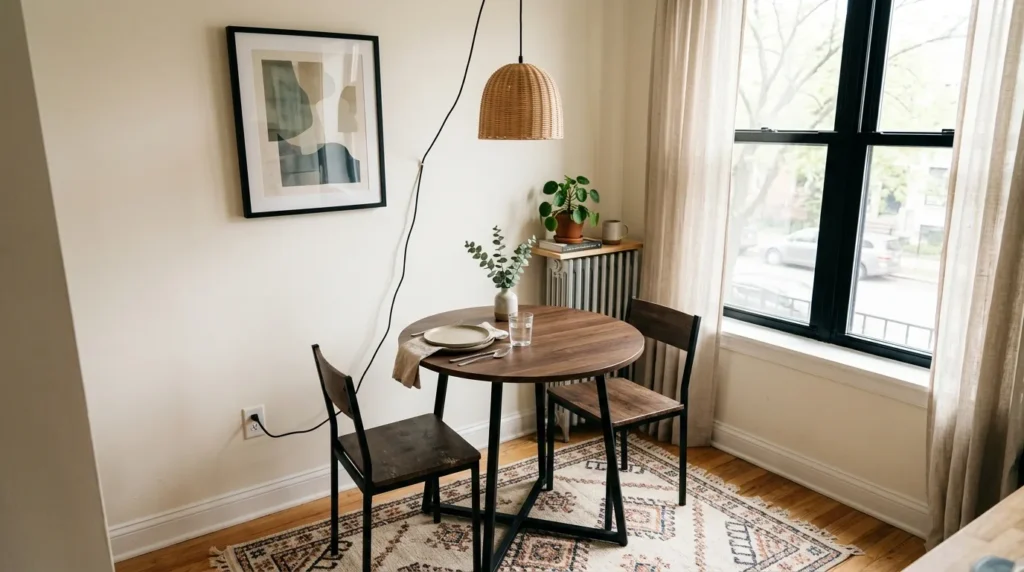
- Create a dining area with a round bistro table, wall-mounted counter, pedestal table, narrow rectangle table, or drop-leaf design.
- Choose chairs, benches, or stools that tuck fully under the table so the floor stays clear when meals are finished.
- Use a small rug, plug-in pendant, framed print, or simple vase to define the dining zone visually.
- Select easy-clean materials like laminate, wood veneer, metal, ceramic, washable cushions, and wipeable placemats.
- Keep the dining area near the kitchen when possible to make everyday meals, coffee breaks, and cleanup easier.
Compact dining gives a small apartment a complete feeling without requiring a separate room. A round bistro table near a window, a narrow counter along a wall, or a drop-leaf table near the kitchen can create a real place for meals. This matters because eating on the sofa every day can make the home feel less organized. Choose chairs that tuck in fully, stools that slide away, or a bench that fits underneath so the dining zone stays flexible.
The dining area becomes more inviting when it feels intentional. Add a small rug, plug-in pendant, framed print, or simple centerpiece to give the corner its own identity. I’ve noticed compact dining zones make open apartments feel more structured because one area clearly supports meals and conversation. Use materials like laminate, metal, wood veneer, ceramic, and washable cushions for easy cleanup. Your apartment gains charm, function, and a better daily rhythm without taking away valuable square footage.
9. Soft Zones
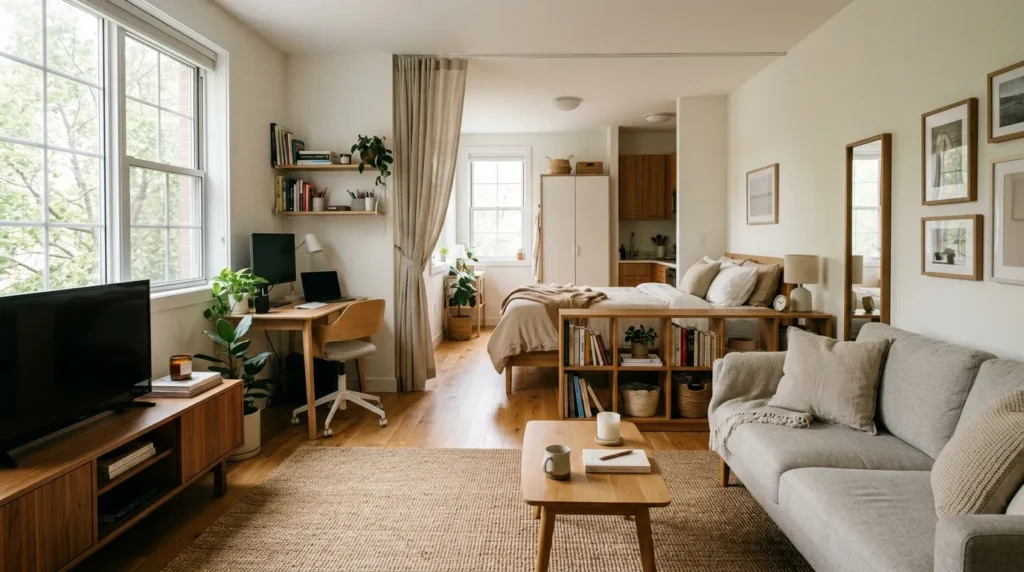
- Use rugs, lighting, curtains, furniture backs, and open shelving to define different areas without building walls.
- Create separate zones for lounging, sleeping, dining, working, and storage, especially in studios or open-plan apartments.
- Keep the zones connected through repeated colors, wood tones, metal finishes, or fabric textures.
- Avoid heavy dividers unless privacy is necessary because they can block light and make the apartment feel smaller.
- Use flexible pieces like folding screens, low bookcases, or curtain panels when you need gentle separation.
Soft zones make small apartments easier to understand and more comfortable to use. In studios and open layouts, everything can blur together if the bed, desk, sofa, and dining table all sit without structure. Use rugs, lighting, furniture placement, curtain panels, or open shelving to create gentle boundaries. A rug can anchor the living area, a lamp can define a reading spot, and a low bookcase can separate sleep from work without blocking the entire room.
The apartment feels bigger when each activity has a clear place. That’s why many designers recommend zoning instead of adding solid dividers in compact homes. Keep zones visually connected with repeated colors, wood tones, fabrics, or metal finishes so the space still flows. In my experience, soft boundaries reduce visual chaos and make daily routines smoother. You can relax, work, eat, and sleep in the same apartment without everything feeling mixed together, which makes even a studio feel more organized.
10. Lighted Corners
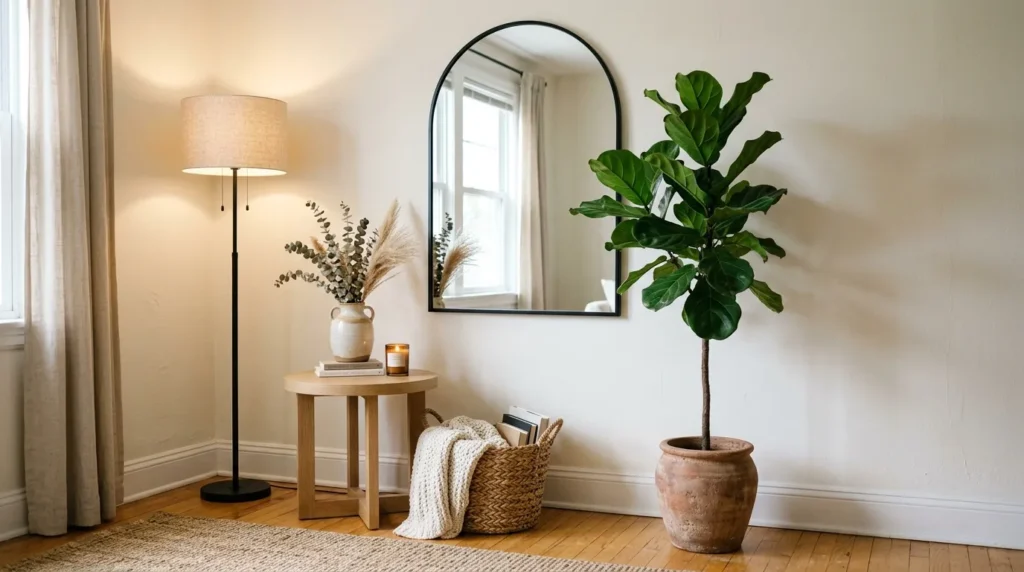
- Add lamps, mirrors, plants, or pale decor to corners that feel dark, empty, or visually heavy.
- Use tall floor lamps, uplights, or plug-in sconces to brighten corners without taking up much surface space.
- Place a chair, plant stand, slim shelf, or small table where an unused corner can serve a purpose.
- Choose materials like ceramic, pale wood, woven baskets, glass, brass, and light fabric to keep the corner bright.
- Avoid turning corners into visible storage piles because they can make the entire apartment feel smaller.
Lighted corners prevent a small apartment from feeling closed in at the edges. Dark unused corners can shrink the room visually, even when the center is nicely decorated. Add a slim floor lamp, tall plant, arched mirror, small chair, or pale side table to bring those areas to life. A corner does not need much furniture to feel useful. Sometimes one light source and one vertical element are enough to make the space feel brighter and more balanced.
The transformation is subtle but powerful. In my experience, a neglected corner beside a sofa, bed, or dining table often needs only a lamp and a plant to feel finished. Use warm bulbs for softness, and choose materials like ceramic, brass, pale wood, glass, or woven fiber to keep the look light. Avoid stacking boxes or extra supplies in visible corners because that creates visual weight. A brighter corner makes the whole apartment feel more spacious and complete.
11. Calm Bedroom
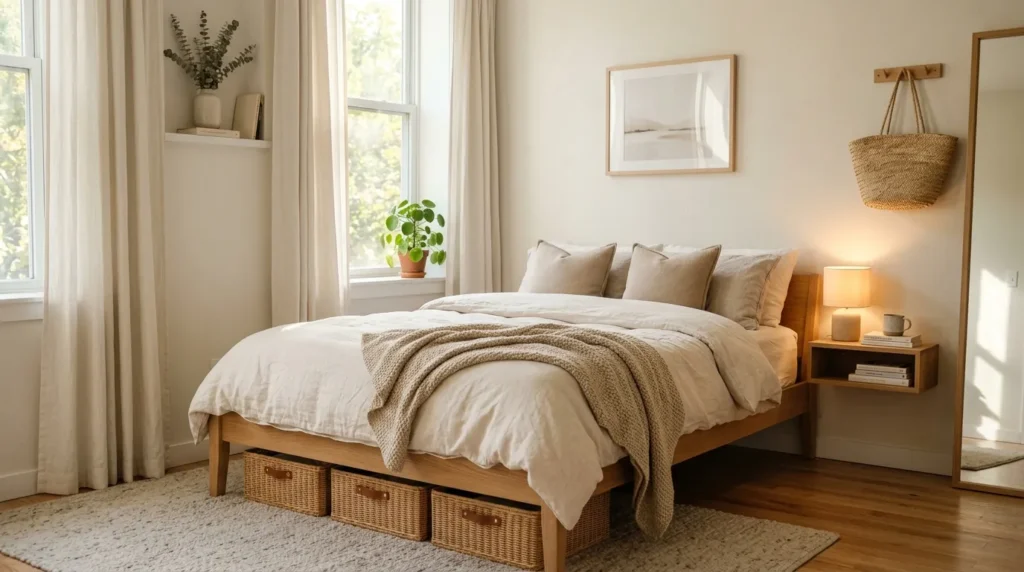
- Use breathable bedding, a low bed frame, simple nightstands, and high curtains to make the room feel more open.
- Choose soft colors like cream, warm white, mushroom, muted sage, pale gray, beige, or taupe for a restful mood.
- Keep bedside surfaces minimal with only a lamp, book, tray, water glass, or small personal item.
- Use under-bed bins, drawer organizers, baskets, or floating shelves to reduce visible bedroom clutter.
- Add blackout curtains, warm bedside lamps, and a soft rug to make the room feel restful and finished.
A calm bedroom can make apartment living feel more spacious and restful. Start with the bed because it is usually the largest piece in the room. Choose breathable cotton, linen, or bamboo sheets, a smooth duvet, structured pillows, and one textured throw. A low-profile frame can make the ceiling feel higher, while light bedding keeps the room visually soft. Avoid oversized headboards, bulky nightstands, and heavy dark furniture if the bedroom already feels tight.
The room becomes more useful when storage and lighting are handled carefully. Use under-bed bins, drawer organizers, floating shelves, or baskets inside the closet to reduce visible clutter. I’ve noticed bedrooms look more expensive when nightstands stay simple and cords are hidden. Add blackout curtains if streetlights or early sunlight interrupt sleep, and use warm bulbs for evening comfort. This creates a peaceful retreat that feels clean, open, and easy to reset every morning before the day begins.
Image Descriptions / Prompts
1. Clear Flow
Bright small apartment living room with open walking paths, light sofa, slim coffee table, neutral rug, clear entryway view, large window, pale wood accents, soft natural daylight, minimal decor, realistic wide-angle interior photography, airy and practical layout.
2. Light Palette
Small apartment interior with warm white walls, cream sofa, pale taupe rug, greige curtains, light oak table, black frame accents, ceramic vases, soft daylight, cohesive neutral palette, realistic home photography, bright open and peaceful mood.
3. Slim Furniture
Compact apartment living room with slim sofa, open-leg chair, narrow console, thin coffee table, walnut veneer, matte black metal, light rug, natural window light, clean-lined furniture, realistic interior photography, spacious and modern small-space mood.
4. Vertical Storage
Small apartment wall with floating shelves, tall bookcase, wall hooks, woven baskets, labeled boxes, small plants, framed art, pale wood finishes, bright daylight, realistic organized interior photography, vertical storage solution with clean functional style.
5. Hidden Clutter
Organized small apartment living room with storage ottoman, closed media console, lift-top table, lidded baskets, neutral sofa, clear surfaces, warm daylight, woven textures, realistic interior photography, clutter-free and calm small-space design.
6. Tall Curtains
Small rental apartment with floor-length linen curtains hung near ceiling, wide window, ivory fabric panels, neutral sofa, pale rug, soft sunlight, vertical visual lines, realistic interior photography, taller brighter and polished apartment mood.
7. Reflective Details
Compact apartment with large mirror near window, glass coffee table, chrome lamp, mirrored tray, cream sofa, soft wool rug, pale wood accents, natural daylight, realistic interior photography, bright reflective details with airy spacious mood.
8. Compact Dining
Small apartment dining nook with round bistro table, two tuck-in chairs, plug-in pendant light, framed print, washable rug, wood veneer and metal finishes, soft window light, realistic interior photography, cozy functional eating corner.
9. Soft Zones
Open studio apartment with rug-defined living area, compact work corner, low bookcase divider, curtain panel near bed, neutral palette, warm wood tones, soft daylight, realistic wide-angle interior photography, organized multifunctional small-space layout.
10. Lighted Corners
Small apartment corner with slim floor lamp, arched mirror, tall leafy plant, pale side table, woven basket, ceramic vase, warm light, neutral wall, realistic interior photography, bright finished corner with cozy spacious mood.
11. Calm Bedroom
Small apartment bedroom with cream bedding, low bed frame, structured pillows, textured throw, high curtains, warm bedside lamps, under-bed storage baskets, pale neutral palette, realistic morning light, calm open and restful sleeping space.