11 Easy Mud Kitchen Ideas That Look Amazing in Real Backyards
Backyard play does not need to be expensive, complicated, or perfectly styled to feel magical. A mud kitchen gives kids a place to scoop, stir, pour, pretend, sort, splash, and create using the simplest outdoor materials. For families across the USA, especially those with small patios, suburban yards, rental spaces, or garden corners, a mud kitchen can turn an unused outdoor area into a hands-on play zone that feels charming and useful.
The best Easy Mud Kitchen Ideas are not about building something huge. They are about creating a safe, inviting setup with a work surface, a few containers, natural textures, and open-ended materials kids can use again and again. These ideas focus on real backyards, practical materials, and Pinterest-worthy details that still make sense for everyday family life.
1. Pallet Sink Station
- Uses affordable reclaimed wood for a rustic outdoor look
- Works well with metal bowls, old pans, and garden buckets
- Adds a real “kitchen” feeling without plumbing
- Great for small yards, fence corners, and garden edges
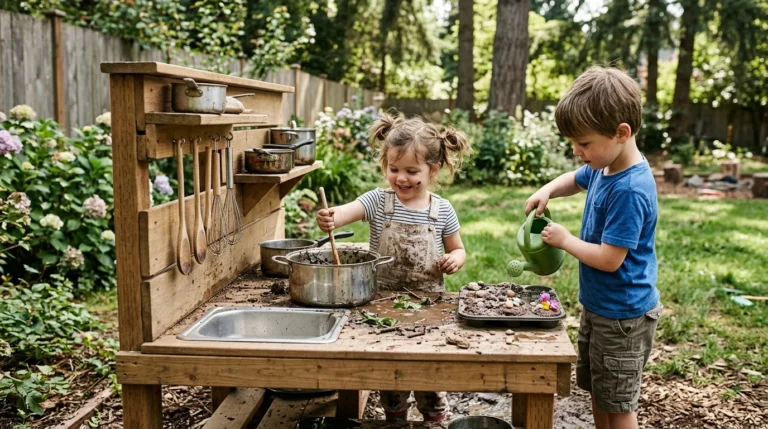
A pallet sink station instantly makes outdoor play feel more imaginative because it gives kids a real workspace for pouring, mixing, and pretending. Start with a sturdy wooden pallet or reclaimed boards, then add a stainless-steel mixing bowl as a pretend sink. Sand rough edges carefully, seal the wood for outdoor use, and place the station against a fence for support. In my experience, kids use this setup longer when the “sink” is removable, because they can dump muddy water, rinse it, and start fresh without adult frustration.
The finished look feels charming in a real backyard because it blends naturally with grass, mulch, garden beds, and wooden fencing. Add hooks for spoons, a lower shelf for buckets, and a small crate for pinecones, leaves, and pebbles. The setup does not need running water; a nearby watering can works perfectly. This idea gives children independence while keeping the mess outdoors. It also looks beautiful in photos, especially when styled with galvanized bowls, terracotta pots, and a few simple child-safe utensils.
2. Tiny Patio Corner
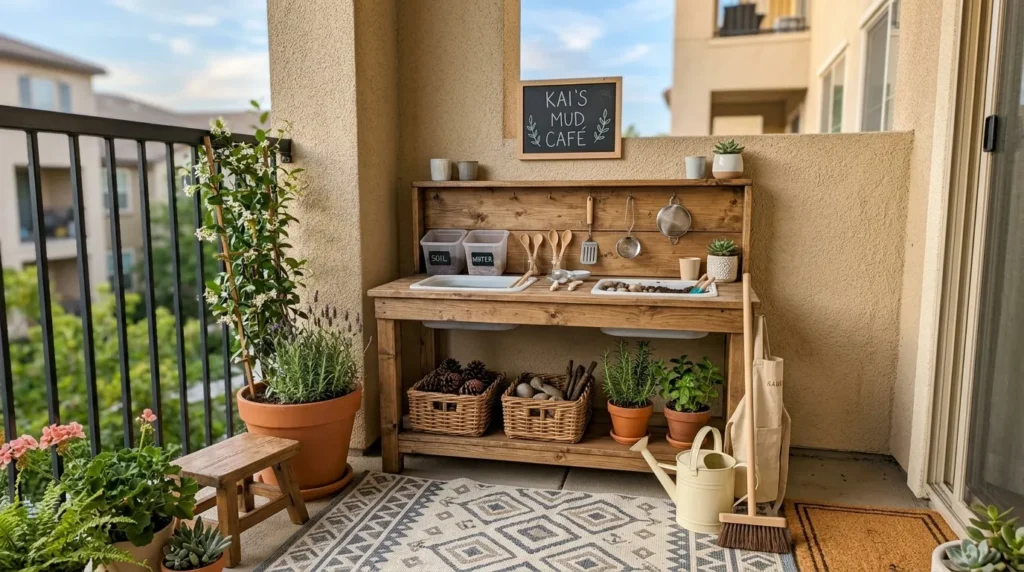
- Perfect for apartments, townhomes, and small outdoor spaces
- Uses compact bins, baskets, and a narrow table
- Keeps play organized without taking over the patio
- Easy to move, clean, and store between seasons
A tiny patio corner can become a full pretend kitchen when the layout is planned with care. Choose a narrow outdoor table, small storage bench, or child-height shelf, then add two shallow bins for mud, water, leaves, or sensory play. This works beautifully for families who do not have a large yard but still want outdoor creativity. Keep the station near a wall or railing, use washable mats underneath, and store tools in labeled baskets so the area feels intentional instead of cluttered after playtime.
The transformation is especially helpful for renters because nothing has to be permanent. A compact setup can be moved for cleaning, covered during rain, or tucked away during winter. Add a small watering can, plastic measuring cups, wooden spoons, and a basket of smooth stones for texture. The result feels cozy and manageable, not overwhelming. Kids still get the joy of mixing and pretending, while parents get a play area that fits real-life patios, balconies, and smaller American backyard spaces.
3. Rustic Potting Bench
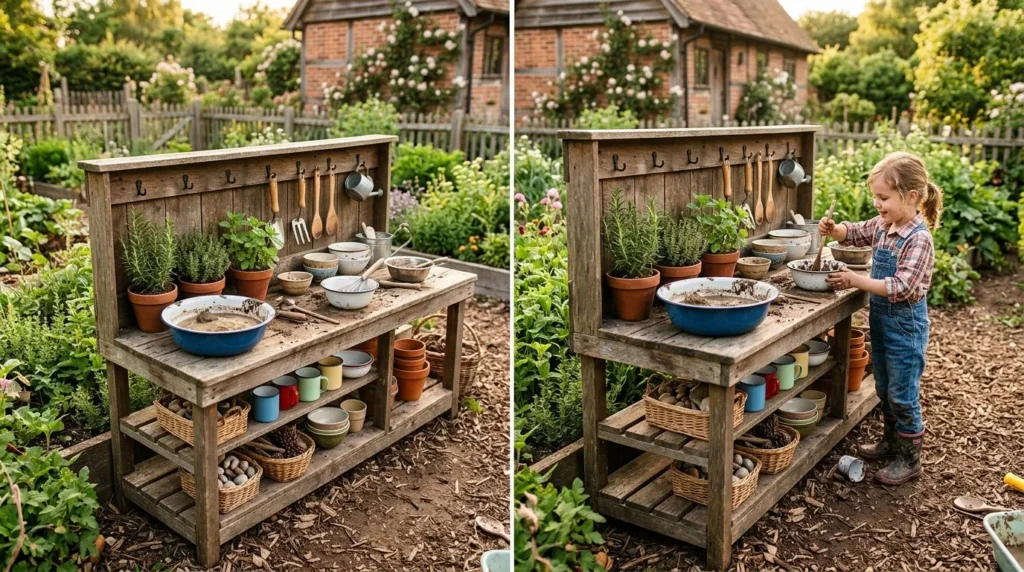
- Turns an old potting bench into a kid-friendly workspace
- Adds shelves, hooks, and storage without extra building
- Works with terracotta pots, garden tools, and metal bowls
- Ideal for families who love natural backyard style
A rustic potting bench makes an excellent mud kitchen because it already has the right height, shelves, and outdoor durability. If the bench is too tall, place a stable step platform nearby or adjust the work surface for younger children. Sand any rough wood, secure wobbly legs, and remove sharp hooks before adding play items. A potting bench feels especially natural near a garden bed, because kids can pretend to cook with petals, herbs, soil, and water while staying close to the outdoor setting.
This idea works well when you want the mud kitchen to look like part of the backyard design instead of a bright plastic toy zone. Terracotta pots, enamel bowls, wooden spoons, and small baskets make the space feel warm and earthy. That’s why many backyard designers recommend reusing garden furniture for children’s play areas. The result is practical and beautiful: storage above, mixing space in the middle, and baskets below. It supports messy creativity while still looking lovely beside flowers, raised beds, or a fence.
4. Rolling Cart Setup
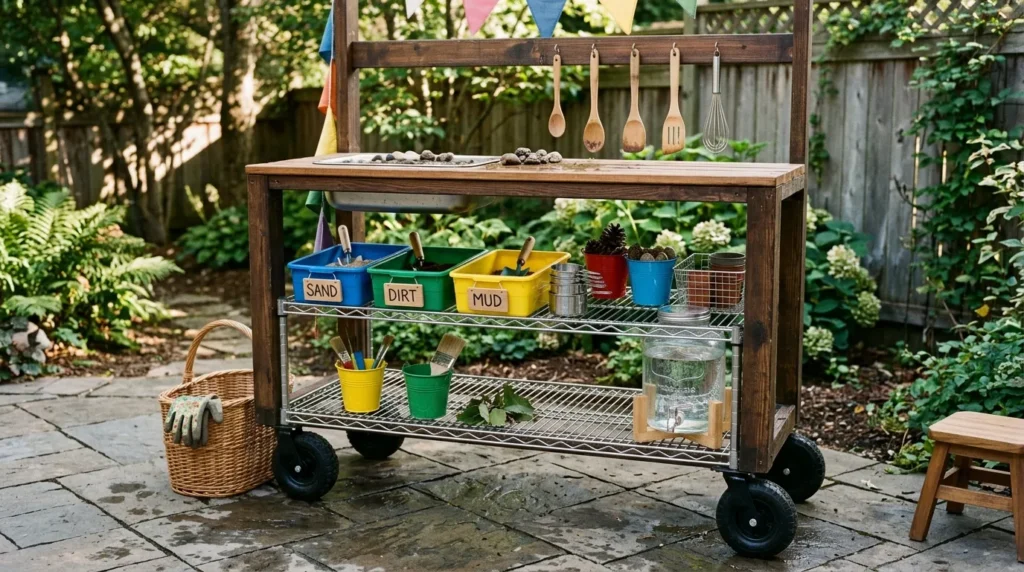
- Moves easily between shade, patio, and grass
- Works well for families who need flexible outdoor play
- Uses baskets, bins, and removable containers
- Great for renters or homes with changing backyard layouts
A rolling cart setup is perfect when you want a mud kitchen without committing to a permanent build. Choose a sturdy outdoor cart with locking wheels, then organize it with small bins, bowls, utensils, and nature supplies. The top shelf can hold mixing bowls, the middle shelf can store scoops and cups, and the bottom shelf can hold mud-safe containers. This works especially well for families who need to move play into shade during hot afternoons or roll everything away before mowing the lawn.
The biggest advantage is flexibility. You can set the cart on a patio for water play, move it near the garden for nature collecting, or park it beside a sandbox for pretend baking. Add washable labels, hooks for utensils, and a lidded bin for muddy tools. The result feels organized but still fun, which is important for busy households. This is one of those backyard play ideas that looks simple but solves real problems around storage, cleanup, weather, and limited outdoor space.
5. Fence Line Kitchen
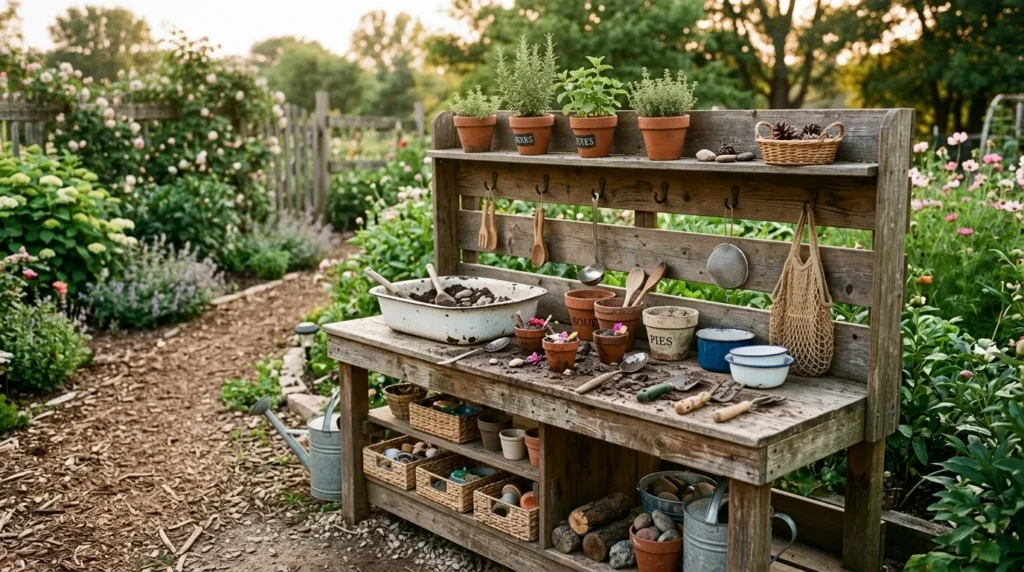
- Uses vertical space instead of taking up yard space
- Adds hooks, shelves, hanging cups, and simple storage
- Works beautifully along privacy fences and side yards
- Keeps tools visible and easy for children to reach
A fence line kitchen is smart because it turns an unused vertical surface into a playful backyard feature. Mount a narrow counter, shelf, or reclaimed board along the fence, then add hooks for utensils, cups, and small pans. This setup works especially well in side yards, narrow lawns, or back corners where floor space is limited. Make sure everything is attached securely and placed at child-friendly height. Sand the wood, use outdoor-safe screws, and avoid sharp metal pieces where little hands reach often.
The finished design can look surprisingly polished with very simple materials. Hang enamel mugs, small colanders, measuring spoons, and a chalkboard sign to create a real pretend cooking zone. Add a crate below for mud supplies and a bucket for water. I’ve noticed kids love vertical setups because everything is easy to see and choose. The result is practical, compact, and visually cute, especially when the fence is painted, stained, or surrounded by climbing plants, mulch, or a small garden path.
6. Garden Crate Counter
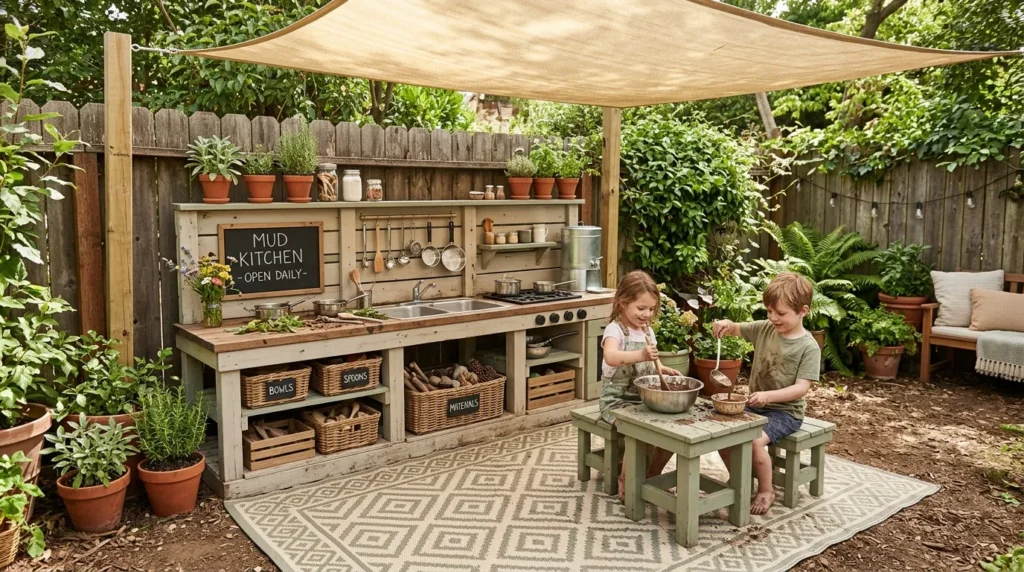
- Uses wooden crates for affordable storage and structure
- Easy to customize for different yard sizes
- Works with baskets, bowls, jars, and nature collections
- Creates a layered, handmade backyard look
A garden crate counter is one of the easiest ways to build a mud kitchen without advanced tools. Stack sturdy wooden crates horizontally and vertically to create a work surface, shelves, and cubbies. Secure the crates together for safety, then add a weatherproof board across the top if you need a smoother counter. This idea works because the crates naturally hold bowls, buckets, jars, and pretend ingredients. Choose untreated or outdoor-safe wood, sand rough edges, and keep the structure low enough for children to reach comfortably.
The final setup feels handmade and cozy, which is perfect for backyards with gardens, playhouses, or natural play areas. Use one crate for utensils, one for stones and pinecones, and another for empty pots or muffin tins. You can stain the crates, leave them natural, or paint them in soft outdoor colors. The result is budget-friendly, flexible, and attractive in real family yards. It gives children plenty of storage and work space while keeping the overall look warm, rustic, and easy to change later.
7. Covered Play Nook
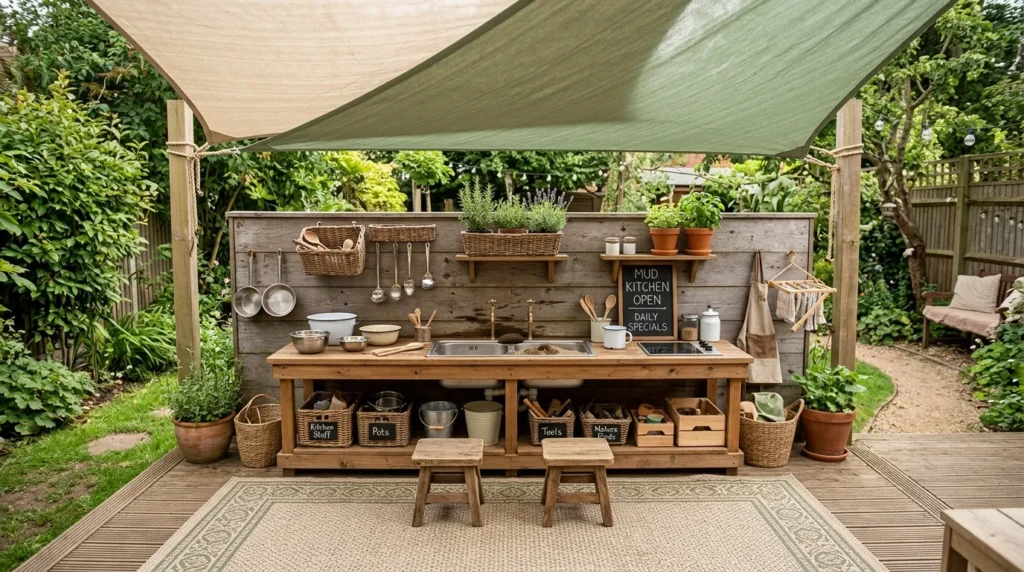
- Adds shade and weather protection for longer play
- Works with pergolas, canopies, umbrellas, or covered patios
- Keeps supplies from overheating or getting soaked
- Ideal for sunny states, rainy seasons, and year-round use
A covered play nook makes a mud kitchen more usable because kids can stay comfortable during hot sun, light rain, or windy afternoons. Place the setup under a pergola, patio roof, shade sail, or large outdoor umbrella. This protects the work surface, keeps tools from fading, and helps prevent water bins from getting too warm in summer. Families in sunny states like Texas, Arizona, Florida, and California often benefit from shade because outdoor play can become uncomfortable quickly without it.
The transformation feels cozy and intentional, almost like a tiny outdoor café for kids. Add a washable outdoor rug, a low shelf, and a few baskets to define the space. Keep muddy items on one side and cleaner pretend dishes on the other so cleanup feels easier. The result is a backyard zone that looks styled but still functions for everyday play. It also encourages longer creative sessions because children can focus on mixing, scooping, and pretending without squinting in harsh sun or stopping because of weather.
8. Water Pump Station
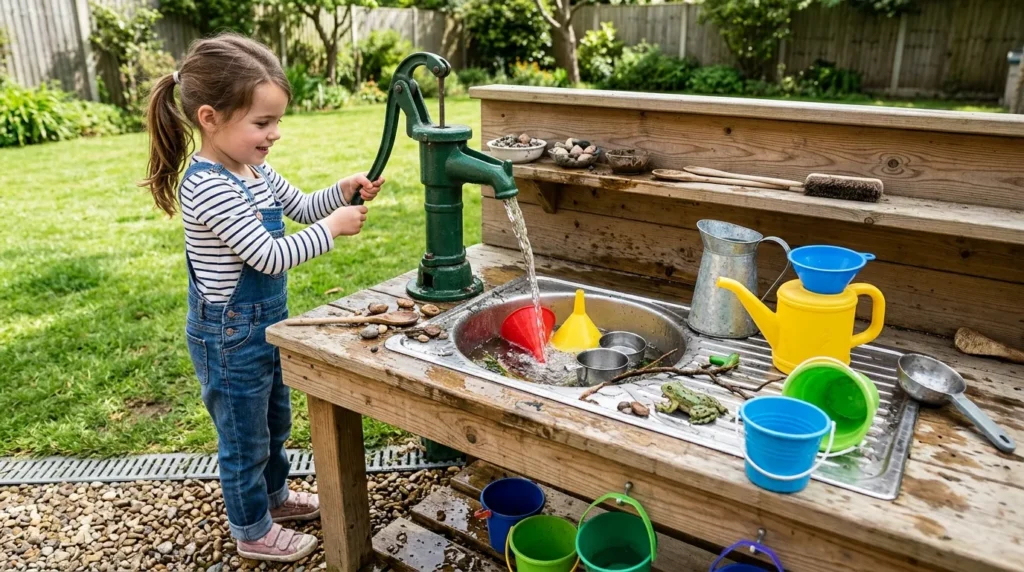
- Adds interactive pouring and washing play
- Works with hand pumps, water jugs, or gravity dispensers
- Helps kids practice filling, rinsing, and measuring
- Best placed near grass, gravel, or a washable surface
A water pump station makes pretend cooking more exciting because it gives children a real action to repeat: filling, pouring, rinsing, and measuring. You can use a simple hand pump, camping water jug, drink dispenser, or bucket with a spout instead of full plumbing. Place it beside a mud counter or sink bowl so kids can control small amounts of water. This setup teaches practical coordination while keeping the design low-cost and manageable for parents who do not want complicated outdoor installation.
The key is controlling the water flow so the play stays fun instead of turning the whole yard into a flood zone. Use a gravel patch, mulch area, or washable patio surface underneath. Add measuring cups, funnels, and small pitchers for more play options. The result feels wonderfully hands-on and keeps kids engaged for long stretches. It also makes the kitchen feel more realistic, because washing dishes, making “soup,” and mixing mud pies become part of one complete outdoor routine.
9. Chalkboard Menu Wall
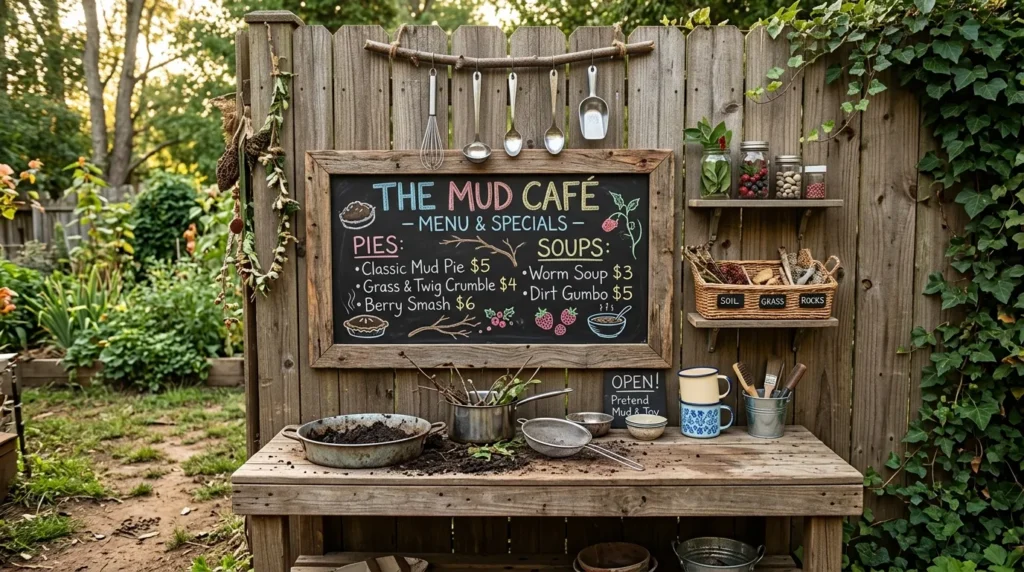
- Adds pretend restaurant and café play
- Works with chalk paint, outdoor boards, or framed panels
- Gives the kitchen a cute Pinterest-style focal point
- Encourages writing, drawing, naming, and imaginative stories
A chalkboard menu wall adds personality because it turns the mud kitchen into a pretend café, bakery, garden shop, or backyard restaurant. Attach a weather-safe chalkboard to a fence, wall, or wooden backing near the work surface. Children can draw menus, name their mud pies, count pretend prices, or write silly recipes. This works beautifully because it adds literacy and storytelling to sensory play. Use outdoor chalkboard paint or a sealed board, and place chalk in a small covered container nearby.
The visual upgrade is big, even if the project is simple. A chalkboard instantly makes the space feel styled and purposeful, especially when paired with hanging utensils, baskets, and small shelves. Parents can write prompts like “leaf soup,” “pinecone muffins,” or “flower tea” to inspire play. The result is practical, educational, and adorable in photos. It also changes with the seasons, so kids can create summer lemonade menus, fall bakery signs, spring garden recipes, or winter pretend cocoa specials.
10. Sensory Herb Bar
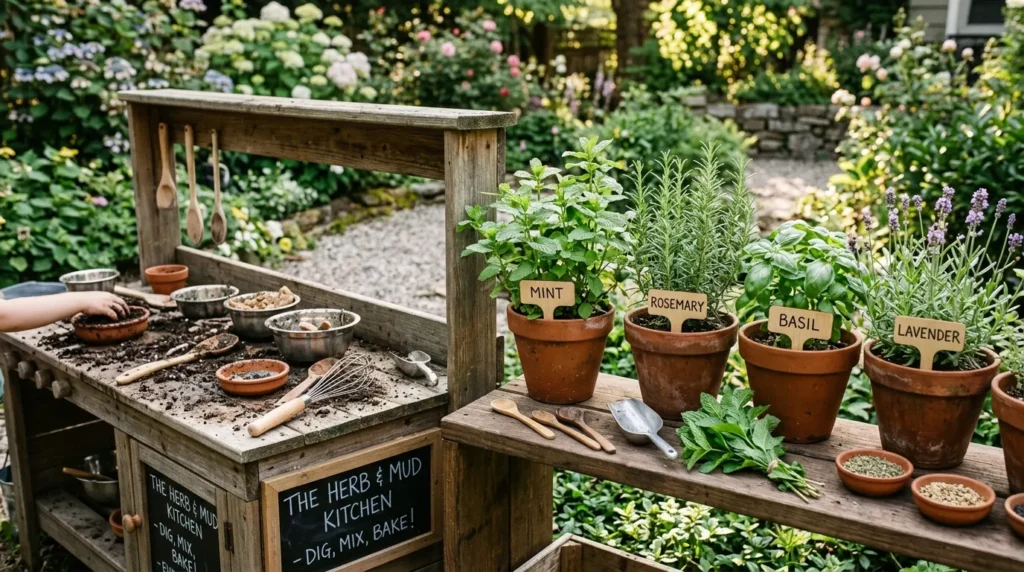
- Adds scent, texture, and garden learning
- Works with mint, rosemary, basil, lavender, and thyme
- Encourages gentle picking, smelling, sorting, and mixing
- Great for garden beds, planters, and outdoor learning spaces
A sensory herb bar brings the mud kitchen to life because it adds real scent, texture, and nature-based learning. Place child-safe herbs in pots near the kitchen so kids can smell, pick, sort, and mix small pieces into pretend recipes. Mint, rosemary, basil, thyme, and lavender are popular options, but always choose plants your family is comfortable handling. This idea works well because it connects pretend cooking with real garden exploration, making outdoor play feel richer than simply mixing dirt and water.
The finished setup feels beautiful and useful, especially when herbs are arranged in terracotta pots, wooden planters, or a small raised bed. Label each plant with simple markers so children begin recognizing names and smells. In my experience, kids return to herb stations often because scent makes the play feel more memorable. The result is educational without feeling like a lesson. It adds color, fragrance, and soft greenery to the mud kitchen while giving children safe natural materials for sensory play.
11. Mini Market Kitchen
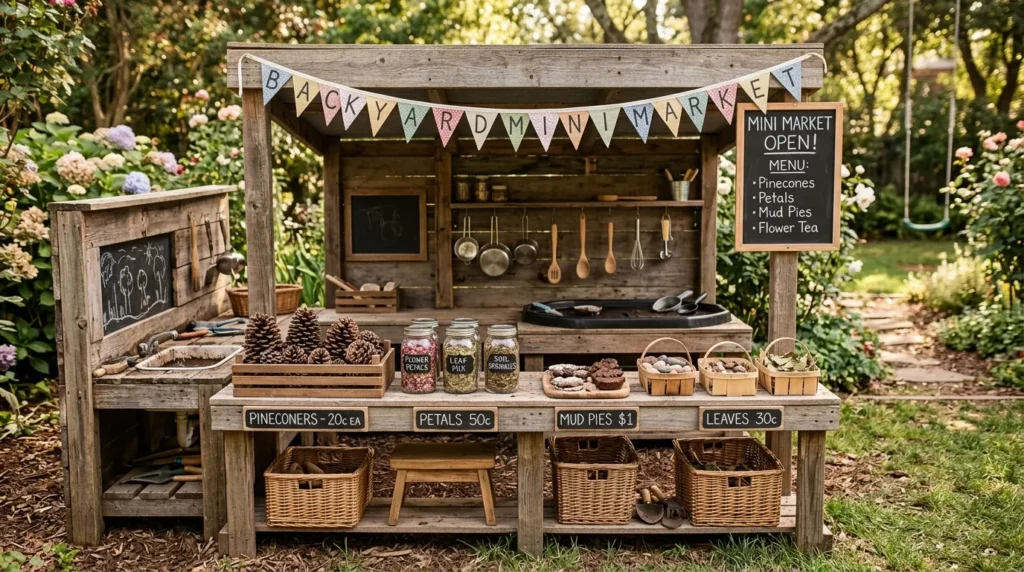
- Combines mud kitchen play with pretend shop play
- Works with crates, baskets, signs, jars, and play money
- Encourages sorting, counting, naming, and role play
- Perfect for siblings, playdates, and backyard parties
A mini market kitchen expands the idea from cooking to serving, selling, sorting, and storytelling. Add crates for pretend produce, baskets for pinecones or stones, jars for flower petals, and a small sign that says “market,” “bakery,” or “garden café.” Kids can mix mud pies, arrange nature ingredients, and pretend to sell their creations to siblings or friends. This works especially well for playdates because it gives each child a role, whether they want to cook, shop, serve, or organize.
The transformation makes the backyard feel like a tiny imaginative world rather than a single activity station. Add a small counter for “orders,” chalk labels for pretend prices, and reusable cups or trays for serving. This is one of the most playful Easy Mud Kitchen Ideas because it grows with children’s imagination and works for many ages. The result is social, creative, and visually charming. It also encourages language, counting, cooperation, and pretend problem-solving while still feeling like simple backyard fun.