11 Make Outdoor Play More Fun With a Mud Kitchen for Kids
A backyard mud kitchen can completely change the way kids experience ordinary outdoor time. Instead of another toy that gets exciting for two days and then disappears into a bin, a mud kitchen gives children something open-ended, sensory, creative, and deeply connected to nature. USA families are looking for more backyard activities that feel simple, affordable, and screen-free, and this kind of setup checks all those boxes. It lets kids scoop, pour, stir, build, imagine, and problem-solve with materials that already exist around the home, patio, garage, or garden shed.
The best part is that a mud kitchen does not need to be fancy to feel magical. A small table, a few bowls, old spoons, water access, and a patch of soil can become a pretend café, bakery, science lab, or garden restaurant. This guide shares eleven practical ideas to Make Outdoor Play More meaningful, beautiful, and useful with a mud kitchen for kids. You will find setup tips, material ideas, storage guidance, safety suggestions, and Pinterest-friendly styling details that help the space work for real family life, not just a photo.
1. Backyard Mud Station
- Creates a dedicated space for messy outdoor play
- Helps keep mud, water, and tools in one area
- Works with a table, potting bench, or old shelf
- Makes the backyard feel more useful and exciting
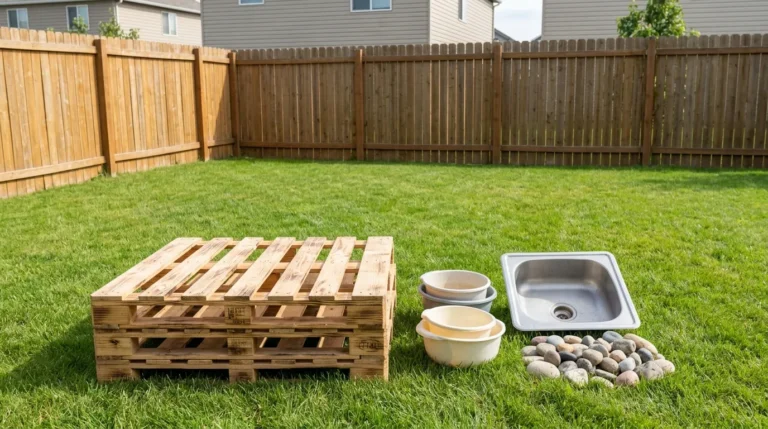
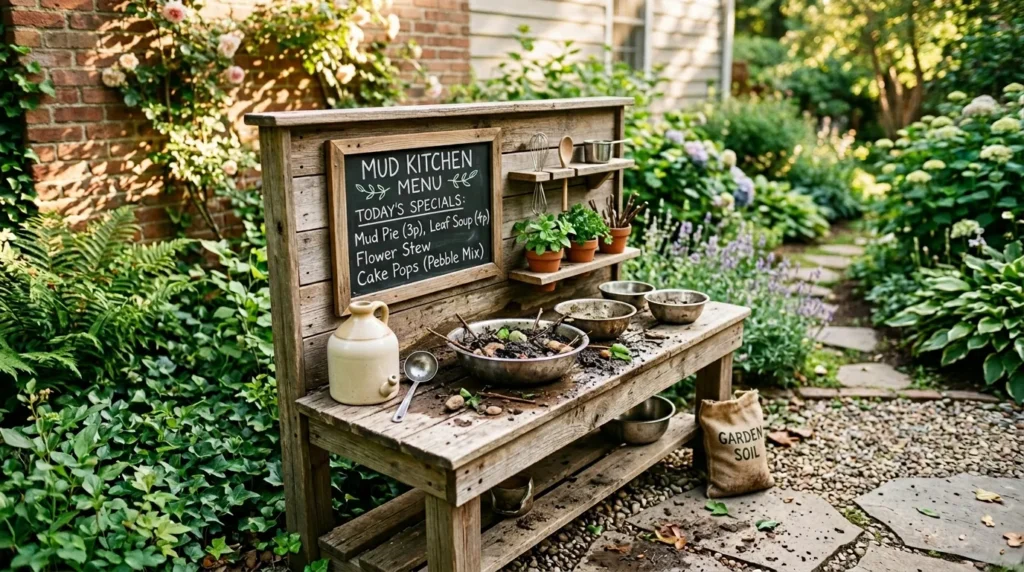
A backyard mud station gives children a clear place to create, experiment, and get messy with purpose. Instead of spreading dirt across the yard, kids learn that this one area is their outdoor kitchen, workbench, and imagination zone. This idea works because children naturally love mixing real materials, especially when the setup feels like a miniature version of grown-up spaces. Use a sturdy wooden table, an old potting bench, or a low shelf with a bowl sink. Keep it close enough for supervision but far enough from doors to control tracked-in mud.
The transformation is simple but powerful because the yard starts feeling like a destination instead of empty space. Add a few metal bowls, spoons, measuring cups, and a water jug so children can make pretend soups, pies, and garden recipes. A small chalkboard menu gives the station a sweet café feeling without costing much. In my experience, kids return to a mud station again and again when the materials are visible, reachable, and easy to reset. That consistency makes outdoor play feel richer, calmer, and more independent throughout the week.
2. Natural Sensory Play
- Uses soil, water, leaves, stones, bark, and petals
- Supports touch, smell, movement, and observation
- Encourages early science learning through play
- Looks beautiful with baskets, trays, and natural textures
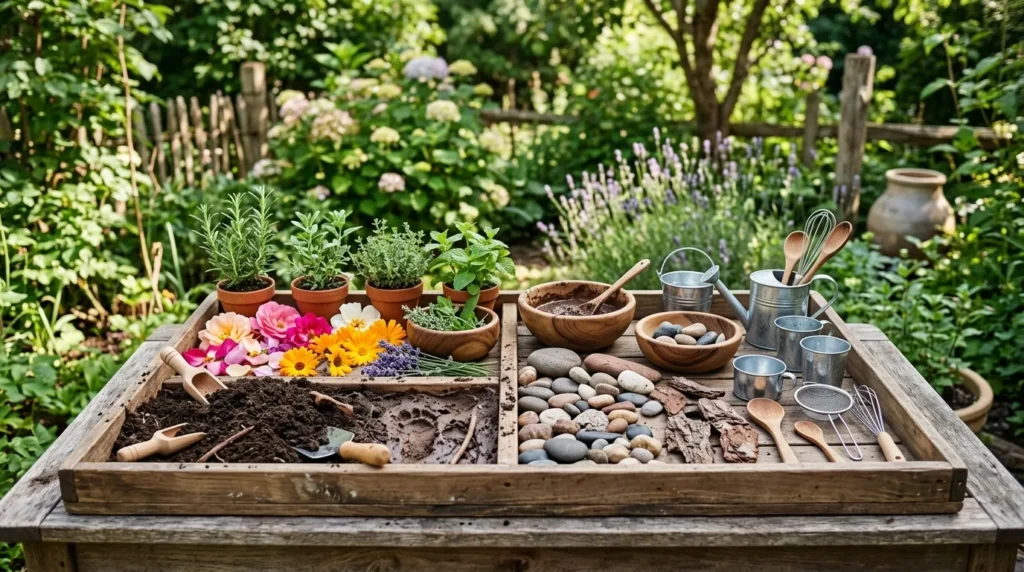
Natural sensory play helps children learn through textures, temperatures, smells, and movement. A mud kitchen offers soil, water, leaves, stones, bark, petals, and herbs in a way that feels exciting but still manageable. This works especially well because sensory play does not need a complicated lesson plan. Children discover that dry dirt crumbles, wet mud sticks, leaves float, and stones sink. Those tiny observations build early science thinking while keeping the mood playful. Choose safe, non-toxic natural materials and place them in trays or baskets so kids can explore freely.
The result is a richer outdoor routine that feels different from plastic toys or indoor crafts. Children can mash flower petals into colored water, sprinkle sand into mud cakes, or sort rocks by size before adding them to pretend stew. This kind of play supports fine motor strength, language, focus, and creativity all at once. For a Pinterest-friendly look, use wooden bowls, galvanized trays, and small woven baskets to display materials neatly. The setup feels charming for adults while still giving kids the freedom to touch, test, spill, and start over.
3. Pretend Cooking Area
- Turns simple materials into pretend meals and recipes
- Encourages role play, language, and social skills
- Uses old pots, muffin tins, ladles, and spoons
- Makes children feel trusted with realistic tools
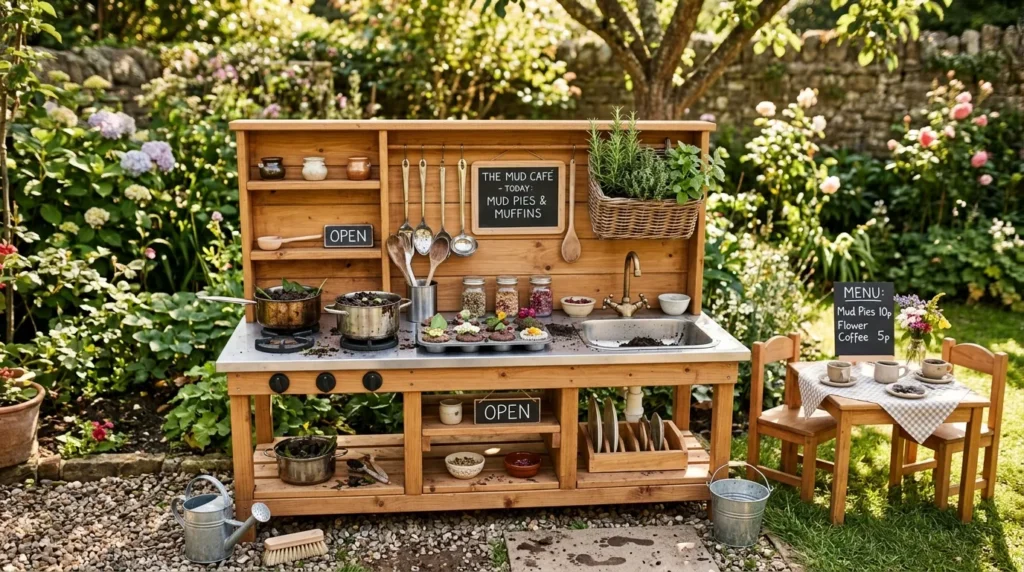
A pretend cooking area turns everyday backyard materials into a restaurant, bakery, or family dinner scene. Children love copying real-life routines, and a mud kitchen gives them the tools to stir, serve, season, and decorate imaginary meals. This idea works because pretend play lets kids practice language, social skills, sequencing, and creativity without pressure. Use old pots, muffin tins, wooden spoons, ladles, and measuring cups to make the setup feel authentic. Avoid breakable glass and choose items that can handle dirt, water, drops, and enthusiastic stirring during long, energetic play sessions.
The play becomes more meaningful when the area includes small details that make children feel capable. A menu board, serving tray, herb basket, and tiny table can turn mud pies into a full pretend café. Kids may take orders, invent recipes, or proudly serve leaf soup to parents and siblings. I’ve noticed that realistic tools often hold attention longer than bright toy versions because children feel trusted with something useful. Keep everything child-sized, washable, and easy to reach so the cooking area stays fun instead of frustrating for busy backyard afternoons.
4. Water Pouring Zone
- Adds movement, sound, and variety to mud play
- Helps children practice pouring and coordination
- Works with a jug, pitcher, pump bottle, or dispenser
- Keeps water play more controlled and manageable
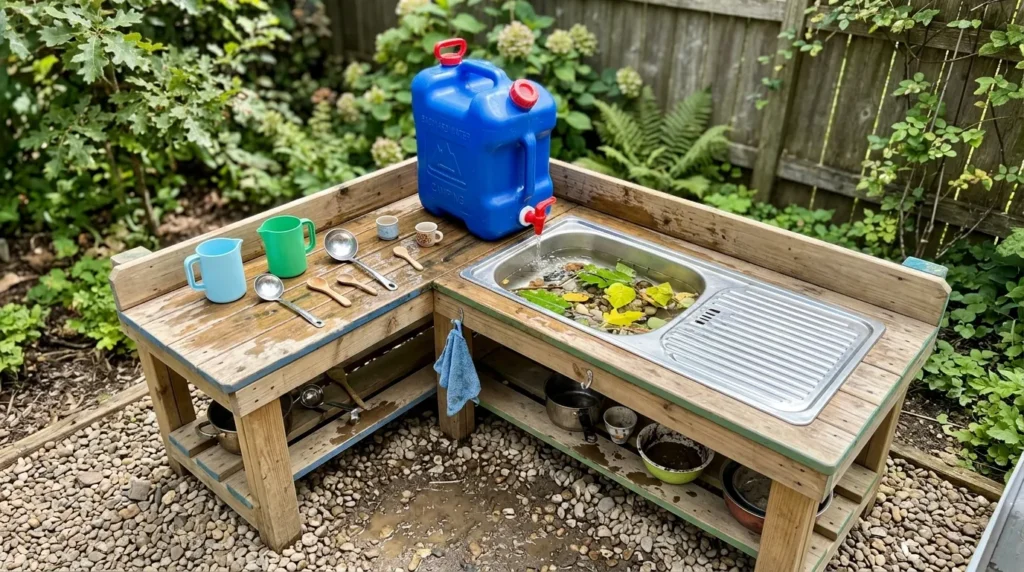
A water pouring zone makes the mud kitchen more exciting because water changes everything children touch. Dry soil becomes thick mud, petals swirl like tea, and pebbles rinse clean in seconds. This idea works because pouring builds coordination, grip strength, patience, and cause-and-effect understanding. A large open bucket can get messy fast, so use a water dispenser, camping jug, small pitcher, or pump bottle for better control. Place the water source on a stable surface and keep the amount limited for younger children who are still learning boundaries with outdoor play.
The finished zone feels practical for parents and irresistible for kids. Add a shallow sink bowl, a drain tray, and a gravel or mulch base so extra water does not turn the whole yard into a puddle. Children can wash leaves, fill cups, rinse tools, or test which objects float. That’s why many designers recommend including water access, even in small mud kitchens. It adds movement, sound, and variety without needing more toys. When cleanup is built into the layout, water play becomes easier to allow regularly at home.
5. Rustic Storage Wall
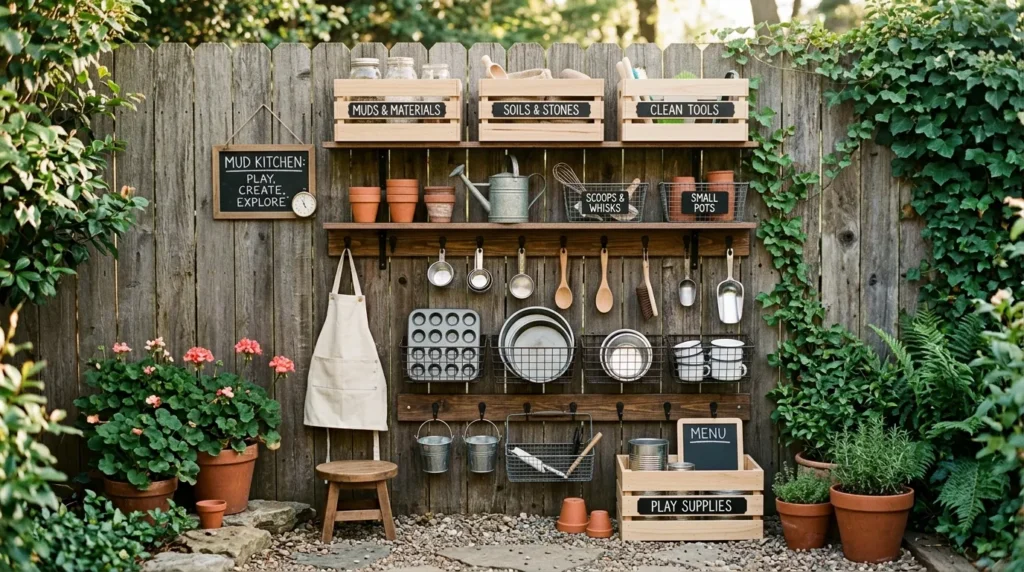
- Keeps tools organized and easy for kids to reach
- Uses hooks, crates, baskets, shelves, and rails
- Makes cleanup simple after messy play
- Adds a polished Pinterest-style backyard look
A rustic storage wall keeps the mud kitchen tidy, useful, and beautiful at the same time. Outdoor play areas can look messy quickly when tools are scattered, but a simple wall system gives everything a home. This idea works because children can see exactly what is available and return items without needing adult help. Use hooks for spoons and ladles, open shelves for bowls, and crates for nature finds. A fence panel, pallet board, or mounted rail can create vertical storage without taking up much floor space near the station.
The visual difference is huge because organized supplies make the whole setup feel intentional and Pinterest-ready. Group similar items together, such as metal pans on one shelf and scoops in one basket. Labels with simple words or pictures can help younger children participate in cleanup. Choose weather-friendly materials like sealed wood, plastic bins, galvanized containers, or outdoor baskets that dry quickly. The storage wall also makes it easier to rotate tools seasonally, so the mud kitchen feels fresh without becoming overcrowded or hard to manage after every play session outside.
6. Garden Ingredient Bar

- Uses safe natural items as pretend cooking ingredients
- Adds color, texture, and seasonal variety
- Encourages sorting, naming, smelling, and comparing
- Creates a beautiful outdoor market-style setup
A garden ingredient bar makes mud kitchen play feel colorful, creative, and connected to the seasons. Instead of giving children random piles of materials, arrange safe natural items like leaves, grass, petals, herbs, pinecones, bark, and smooth stones in small containers. This idea works because kids love choosing ingredients just like real cooks do. It encourages sorting, naming, comparing, smelling, and designing pretend recipes. Always avoid unknown berries, treated plants, thorny stems, and anything sprayed with chemicals, especially when younger children are involved in outdoor sensory play near garden beds.
The transformation is beautiful because the mud kitchen starts looking like a tiny outdoor market. Use muffin tins, seed trays, terracotta saucers, or wooden bowls to separate each ingredient. In spring, offer flower petals and fresh herbs; in fall, bring in acorns, leaves, and mini pumpkins. Children can decorate mud cakes, brew pretend tea, or create nature potions with more intention. This setup also photographs well for Pinterest because the colors, textures, and natural materials create an inviting scene without needing expensive props or complicated styling for everyday family play.
7. Mini Café Setup
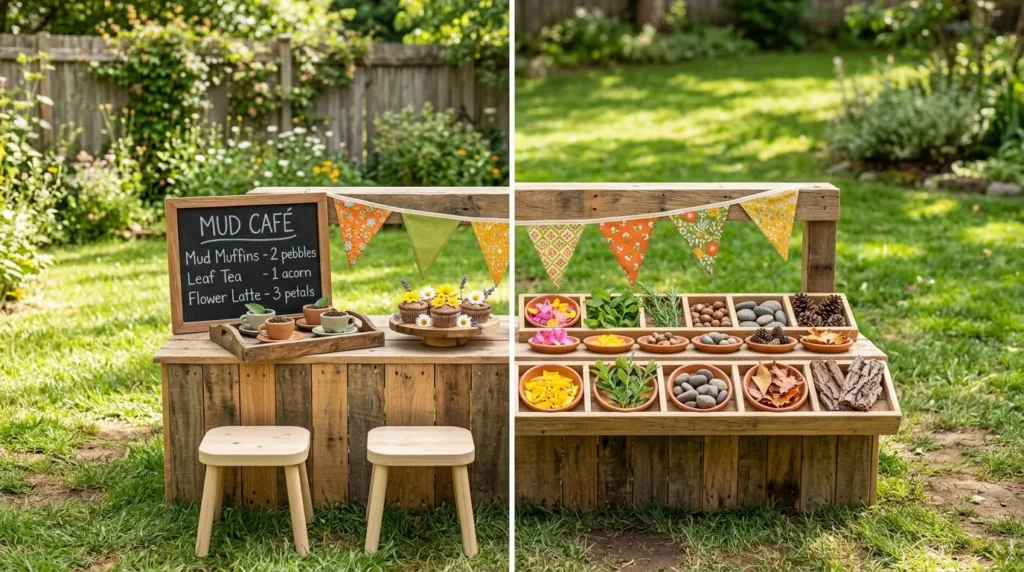
- Turns the mud kitchen into a pretend restaurant
- Encourages social play, sharing, and conversation
- Works well for siblings, cousins, and playdates
- Looks charming with stools, trays, and a chalkboard menu
A mini café setup adds structure to imaginative play without limiting creativity. Children can take orders, prepare pretend drinks, serve mud muffins, and decorate plates with leaves or petals. This idea works because role play helps kids practice conversation, turn-taking, counting, and confidence in a relaxed outdoor setting. Start with a small counter, two stools, a serving tray, and a chalkboard menu. Add cups, saucers, spoons, and pretend price tags if older children enjoy a little extra detail during backyard playdates with neighborhood friends, cousins, or siblings nearby during play.
The whole corner becomes more social when kids can invite siblings, cousins, or neighbors into the game. One child may become the chef, another the server, and another the customer waiting for pinecone cupcakes. I’ve seen this work well in many homes because the café idea gives children a familiar storyline while still allowing endless variation. Keep duplicate utensils nearby to reduce conflict during group play. A small umbrella, bunting, or outdoor rug can make the café feel charming while still staying durable enough for real mud play outdoors.
8. Compact Patio Kitchen
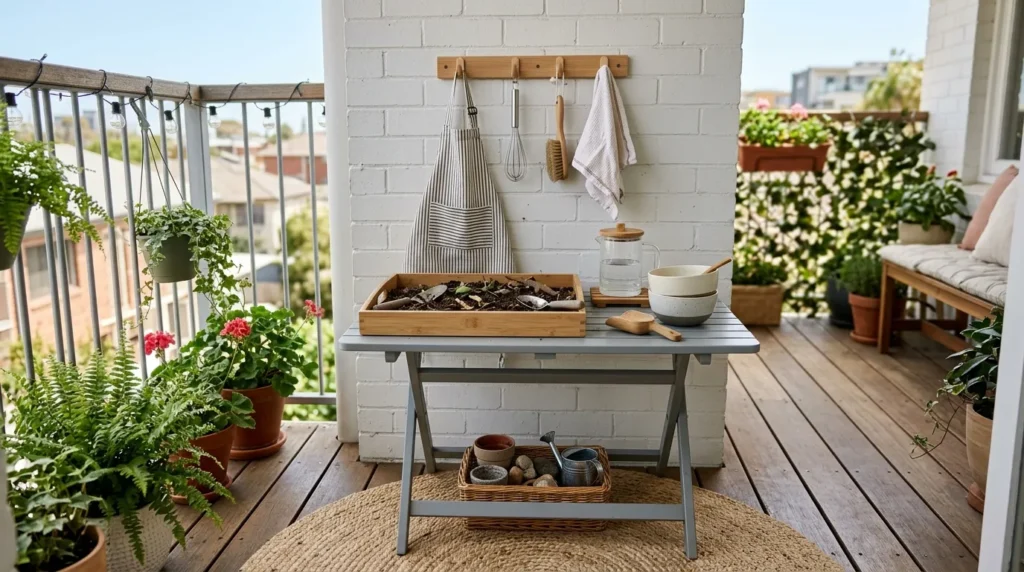
- Works for small yards, patios, balconies, and rentals
- Uses contained soil, small tools, and portable furniture
- Helps families create outdoor play without permanent builds
- Keeps the setup tidy and easy to store
A compact patio kitchen proves families do not need a huge backyard to create meaningful outdoor play. Many USA homes, townhouses, apartments, and rentals have limited yard space, but a small mud kitchen can still work beautifully. This idea works best when materials stay contained and furniture has a narrow footprint. Use a folding table, potting bench, planter box, or storage bin with a lid. Keep soil in a shallow tray, water in a small jug, and tools in a basket that can be tucked away afterward neatly indoors later.
The transformation feels especially helpful for renters because the setup can be temporary, tidy, and easy to move. Place a washable mat, boot tray, or plastic under-bed bin underneath to catch spills. Choose lightweight bowls, small scoops, and stackable containers to avoid clutter. A vertical hook rack on a removable fence panel can hold utensils without permanent installation. Even a three-foot corner can become a charming sensory station when the layout is thoughtful. The goal is to create outdoor richness, not a large structure that overwhelms the outdoor space completely.
9. Weather Friendly Materials
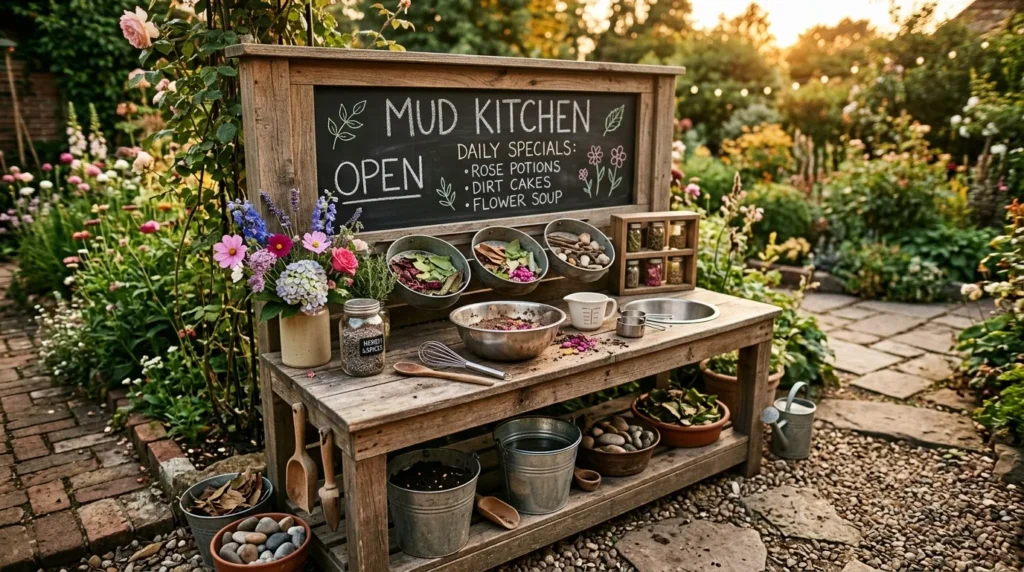
- Helps the mud kitchen last through changing seasons
- Uses sealed wood, metal bowls, tubs, and outdoor-safe paint
- Reduces repairs, rust, and weather damage
- Keeps the setup safe, sturdy, and attractive
Weather friendly materials help the mud kitchen last through sun, rain, wind, and everyday rough play. A beautiful setup is only useful if it can survive real outdoor conditions, especially in regions with humid summers, cold winters, or strong afternoon sun. This idea works because durable materials reduce maintenance and frustration. Choose sealed wood, stainless steel bowls, galvanized tubs, plastic bins with lids, outdoor-safe paint, and washable textiles. Avoid flimsy cardboard, untreated particleboard, rusty metal, and fabrics that stay wet for too long after rain or sprinkler play outside afterward.
The result is a mud kitchen that looks good and stays functional across seasons. Sand rough edges, add outdoor sealant to wood, and drill small drainage holes in containers that collect water. Store delicate items in a covered bin when not in use. Neutral colors, natural wood, and metal accents create a classic backyard look that blends with most American patios and garden styles. When materials are chosen carefully, parents spend less time repairing the setup and more time letting children enjoy it in a safe, relaxed everyday family way.
10. Easy Cleanup Routine
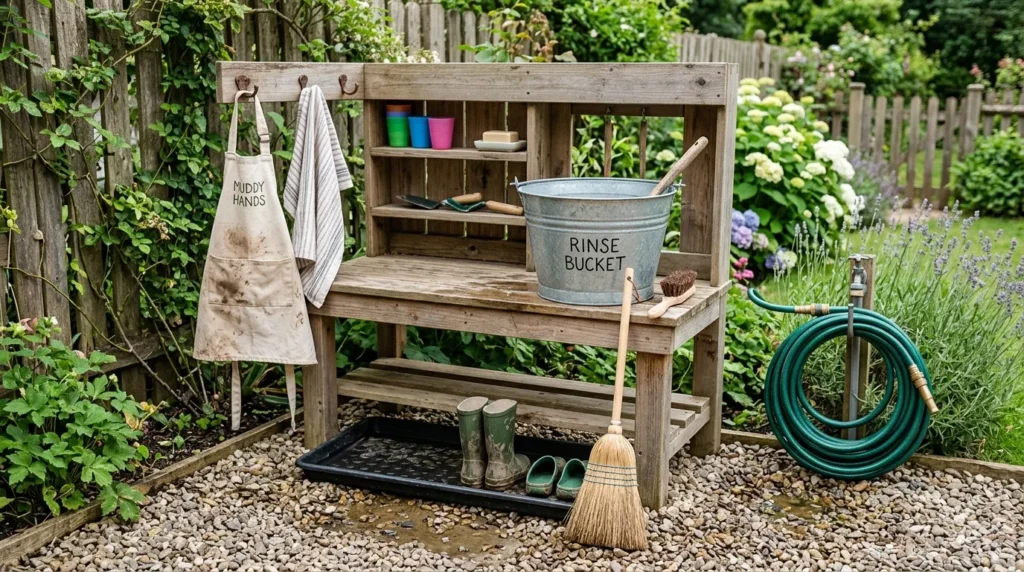
- Keeps mud from spreading into the house
- Uses rinse buckets, towel hooks, boot trays, and brushes
- Teaches children responsibility after play
- Makes messy outdoor play easier for parents to allow
An easy cleanup routine makes messy play much less stressful for parents. The goal is not to remove all mess, because mud kitchens are supposed to be hands-on, but to create a simple reset system. This idea works because children are more cooperative when cleanup steps are clear, close, and predictable. Keep a rinse bucket, towel hook, boot tray, small broom, hand brush, and washable aprons nearby. A rule like rinse tools, hang towels, and park boots gives children a pattern they can remember after every muddy play session outside.
The daily difference is noticeable because mud stays outside instead of following everyone into the kitchen or living room. Place the play area near a hose if possible, or use a refillable water container when outdoor plumbing is not available. Mulch, pea gravel, or deck tiles under the station help with drainage and reduce slippery spots. Parents can also keep a laundry basket by the door for muddy clothes. Over time, cleanup becomes part of the play rhythm, helping children build responsibility while keeping the whole experience enjoyable and realistic.
11. Growing Play Value
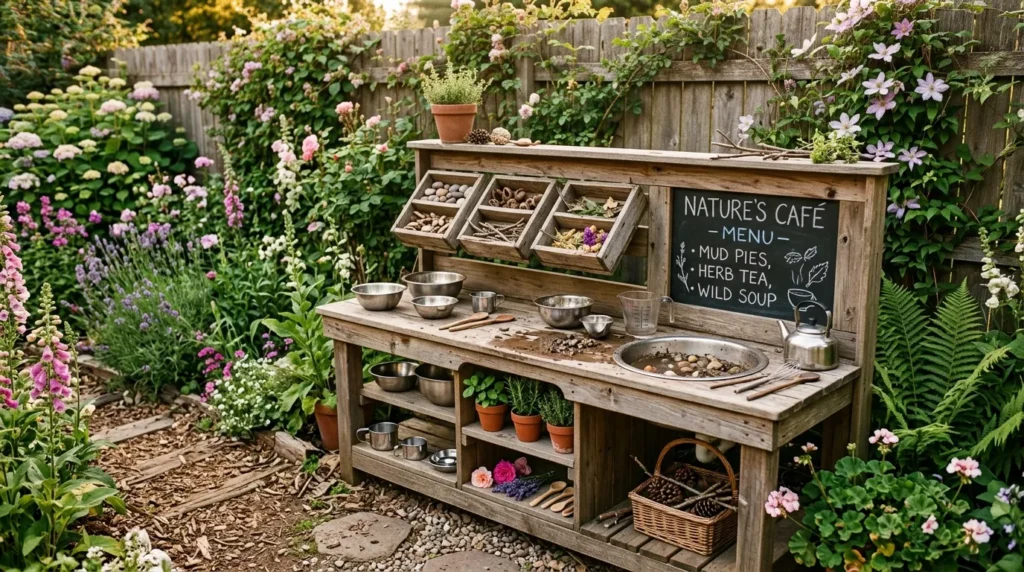
- Supports toddlers, preschoolers, and older kids
- Changes with seasons, interests, and play styles
- Reduces the need for constant new toy purchases
- Creates long-term backyard value for families
Growing play value is what makes a mud kitchen feel smarter than many single-purpose toys. Toddlers may scoop and dump, preschoolers may create pretend meals, and older children may build cafés, potion labs, or nature experiments. This idea works because the same space can evolve without needing constant new purchases. Add measuring tools for older kids, simple picture labels for younger ones, and seasonal ingredients for everyone. The kitchen stays relevant because the child changes the story each time they step outside for fresh air and natural backyard movement daily.
The long-term transformation is a backyard that supports creativity, movement, sensory learning, and family memories for years. Instead of storing another forgotten toy, parents create a flexible play zone that grows with siblings and seasons. Refreshing the setup can be as simple as adding fresh herbs, repainting a sign, or rotating containers. Use fewer outdoor toys only if it truly fits your family mindset, because the deeper value is intentional play. A mud kitchen gives children more freedom, more imagination, and more reason to go outside.