10 Affordable Mud Kitchen Ideas for Kids That Look Great
Affordable Mud Kitchen
The best part is that a kids’ outdoor kitchen does not have to look messy or thrown together. With a little planning, it can become a charming feature in the yard, patio, garden corner, or side fence area. You can use wood pallets, old crates, thrifted furniture, metal bowls, buckets, hooks, and child-safe kitchen tools to create something that feels playful and beautiful at the same time.
An Affordable Mud Kitchen works well because it does not need perfection. Kids care more about texture, water, dirt, leaves, sticks, and pretend recipes than polished materials. Parents, however, usually want something sturdy, safe, and nice enough to blend with the outdoor space. That balance is what makes these ideas helpful. Each one focuses on low-cost materials, practical setup, and a Pinterest-friendly look that feels intentional.
In my experience, the prettiest backyard play spaces are often the ones built from simple pieces. A wooden shelf, a bowl sink, a few hooks, and a small work surface can become a full pretend café, bakery, garden lab, or mud pie station. These ideas are designed for real families, real yards, and real budgets.
1. Pallet Prep Station
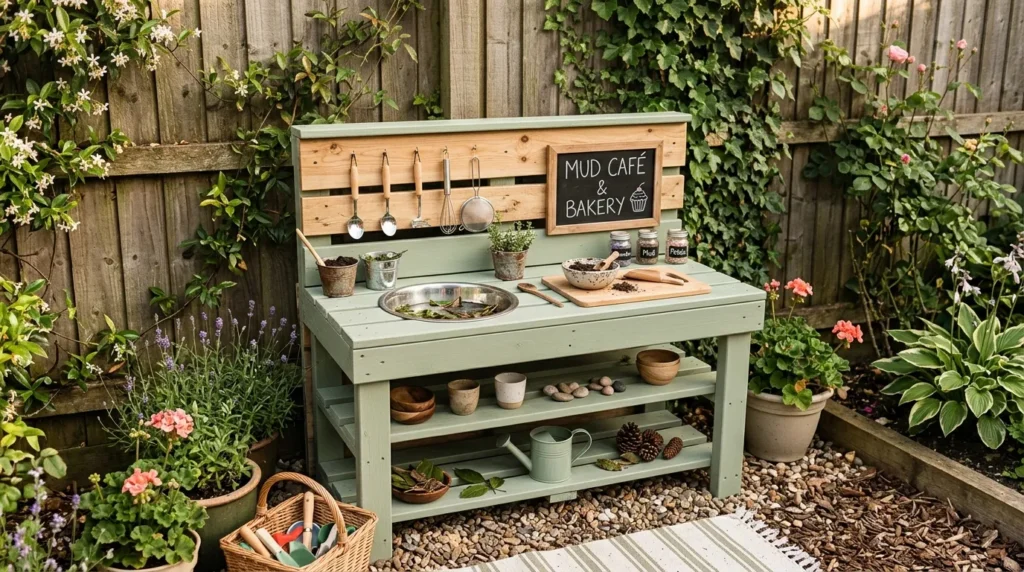
- Reuses a wooden pallet as the main kitchen frame, which keeps the cost low and the build simple.
- Creates vertical storage for spoons, cups, pans, and small garden tools without taking up much yard space.
- Works well against a fence, garage wall, garden shed, or patio corner for a tidy backyard layout.
- Looks better when painted in soft outdoor colors like sage green, warm white, tan, or muted blue.
A pallet kitchen is one of the easiest ways to turn scrap wood into a real play zone. The upright pallet creates a natural backsplash, while the bottom section can hold a simple counter made from plywood, deck boards, or leftover lumber. Kids get a clear space for mixing mud pies, arranging leaves, and pretending to cook. Parents like this setup because it feels structured instead of messy, especially when it is placed against a fence or shed wall.
You can make the station more useful by adding hooks, small baskets, and a removable metal bowl for pretend washing. Sand the pallet carefully, seal the wood, and check for loose nails before letting kids play. A small shelf across the front gives children room to line up cups, pinecones, flowers, and spoons. This idea works beautifully for small backyards because it adds vertical function without needing a large footprint or expensive materials.
2. Crate Cooking Corner
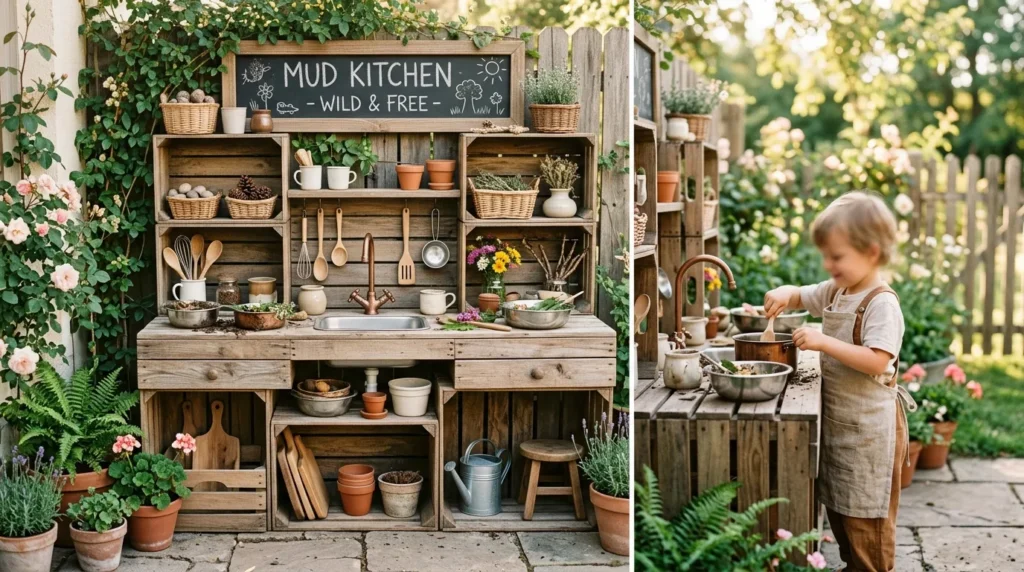
- Uses wooden crates as shelves, counters, or storage cubbies for a charming handmade look.
- Makes it easy to organize pretend food, bowls, scoops, measuring cups, and mud tools.
- Can be stacked, painted, or arranged sideways to fit small patios and compact yards.
- Adds a farmhouse-style feel that looks great in Pinterest photos and family backyard spaces.
Wooden crates can turn an empty corner into a sweet little outdoor kitchen without a complicated build. You can stack two or three crates to create open shelves, then place a simple board across the top for a counter. This setup feels flexible because it can grow with your child. Younger kids may only need a low surface, while older children can use taller crate storage for more detailed pretend play.
Crates also make cleanup easier because every item has a visible place to go. You can keep cups in one crate, pans in another, and natural play items like shells, rocks, or pinecones in a third. I’ve noticed this setup works especially well for families who want a mud kitchen that can be moved or rearranged. Add a small outdoor rug nearby, and the whole corner instantly feels more styled and intentional.
3. Sink Bowl Setup
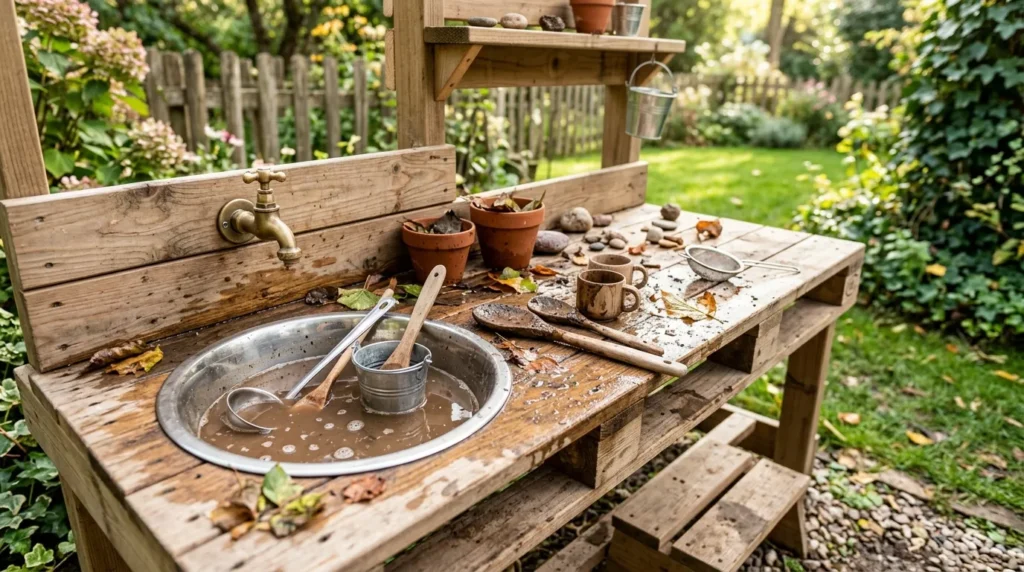
- Turns a metal mixing bowl or thrifted basin into a realistic pretend sink for water play.
- Gives kids a clear place to rinse leaves, mix dirt, and wash their mud kitchen tools.
- Makes the kitchen feel more complete without requiring plumbing or expensive fixtures.
- Looks polished when the bowl is fitted into a wooden counter or crate-style base.
A simple bowl sink can make a homemade mud kitchen feel surprisingly real. Kids love having a “washing station” where they can rinse rocks, stir muddy water, and pretend to clean dishes after cooking. You do not need running water for this idea. A removable stainless steel bowl, enamel basin, or plastic tub is enough. It gives the kitchen a clear purpose and makes messy play feel more organized.
To build it, trace the bowl on a wooden surface and cut a slightly smaller opening so the rim rests securely on top. If cutting wood is not possible, simply place the bowl on the counter and use it as a removable sink. That’s why many designers recommend using lightweight, easy-to-clean materials for children’s outdoor play areas. When playtime ends, you can dump the water, rinse the bowl, and store it upside down.
4. Rolling Cart Kitchen
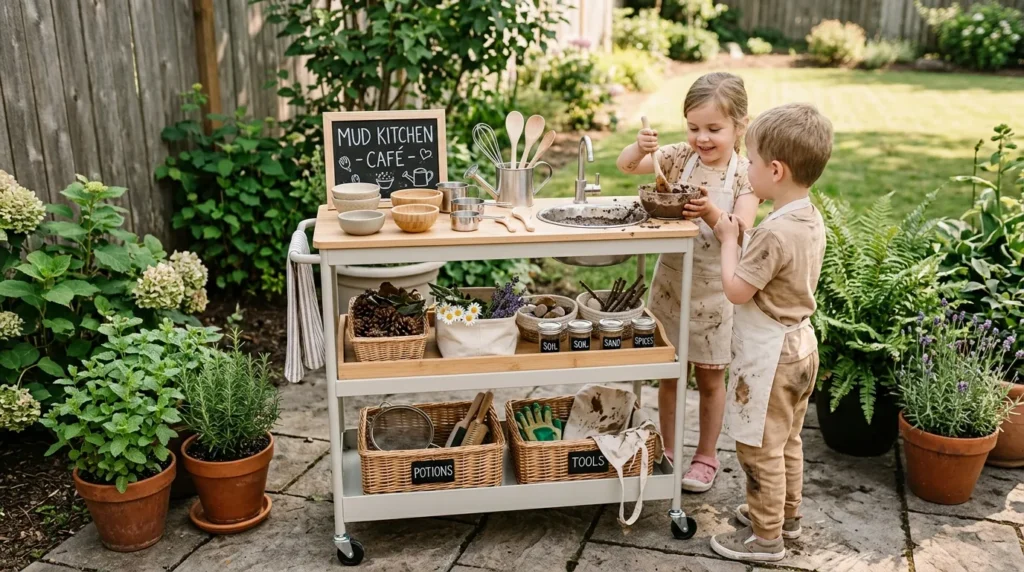
- Uses a thrifted bar cart, utility cart, or old outdoor serving cart as a mobile play kitchen.
- Perfect for renters or families who do not want a permanent backyard structure.
- Allows parents to move the play station between patio, driveway, porch, or garden areas.
- Looks stylish with baskets, small containers, hooks, and neutral outdoor accessories.
A rolling cart kitchen is perfect when you want flexibility without building anything permanent. Many families have a small patio, shared yard, or rented outdoor space where a fixed wooden kitchen may not make sense. A sturdy rolling cart gives kids shelves, a counter, and storage in one piece. It can hold bowls, cups, spoons, dirt containers, and small water buckets while still being easy to move.
Choose a cart with locking wheels if possible, and avoid lightweight pieces that may tip during play. Metal utility carts work well because they handle water and dirt better than indoor furniture. You can add small bins on the lower shelf and a tray on top for mixing. This idea is also great for seasonal storage because the whole kitchen can be rolled into the garage, shed, or covered porch when not in use.
5. Fence Line Kitchen
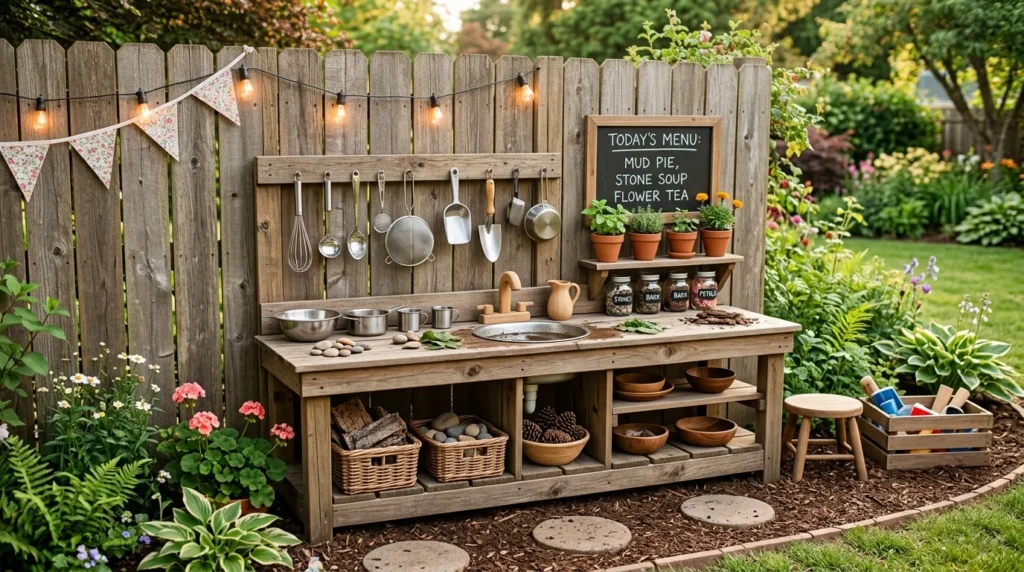
- Uses an existing fence as the backdrop, saving space and reducing the need for extra framing.
- Keeps the mud kitchen tucked neatly along the edge of the yard instead of in the center.
- Allows hooks, shelves, chalkboards, and utensils to be mounted vertically for easy access.
- Creates a clean visual layout that blends well with gardens, playhouses, and outdoor seating.
A fence line setup can make a kids’ mud kitchen look neat instead of scattered. By placing the play area along a fence, you create a natural wall for hanging utensils, small buckets, chalkboards, and signs. This saves ground space and helps the kitchen feel like part of the backyard design. It also makes supervision easier because the play area stays in one clear zone.
For the base, use a narrow bench, pallet counter, small table, or repurposed outdoor cabinet. Add hooks at child height so kids can hang spoons, strainers, and small pans after playing. I’ve seen this work well in many homes where parents want the backyard to stay attractive. A fence line kitchen looks especially pretty when surrounded by mulch, stepping stones, potted herbs, or a small flower border.
6. Cinder Block Base
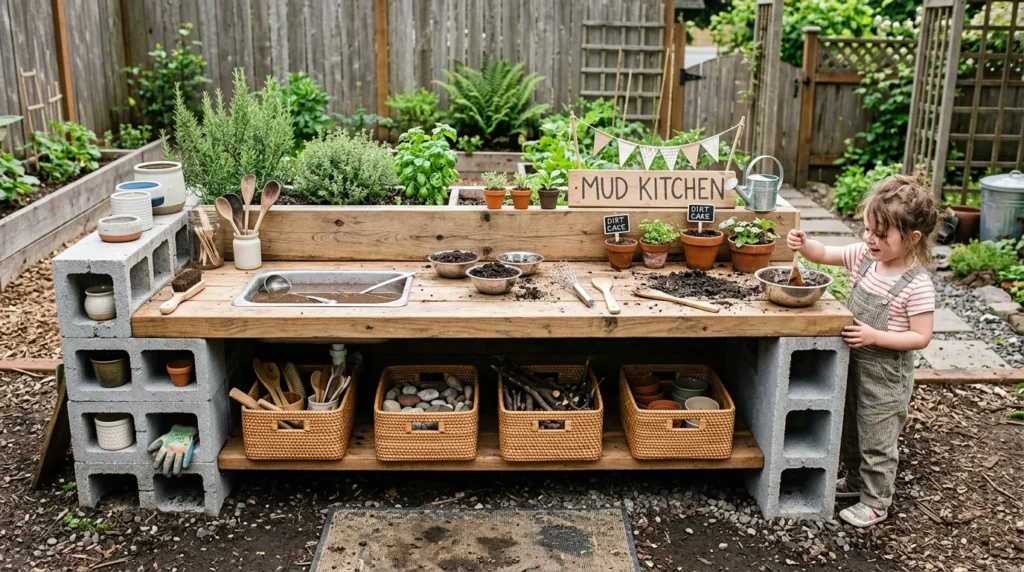
- Uses affordable cinder blocks and wooden boards to create a strong, low-cost kitchen frame.
- Requires very little building skill because the blocks can be stacked without complex tools.
- Handles outdoor weather well when placed on level ground, gravel, mulch, or patio pavers.
- Gives the kitchen an earthy, modern look when paired with natural wood and simple decor.
Cinder blocks are a smart choice when you want something sturdy but still budget-friendly. They can support a wooden counter, hold shelves, and create little cubbies for tools or pretend ingredients. This type of outdoor play kitchen works well for families who do not want to cut or build a full wooden frame. You can stack the blocks, slide boards through the openings, and create a solid workspace in one afternoon.
The look can be softened with wood stain, baskets, and child-safe accessories. Place the blocks on flat ground and make sure the structure feels stable before play begins. For younger kids, keep the counter low enough for easy reaching. A cinder block setup is especially useful in areas with changing weather because the base holds up better than many lightweight furniture pieces and can be rearranged whenever needed.
7. Old Dresser Kitchen
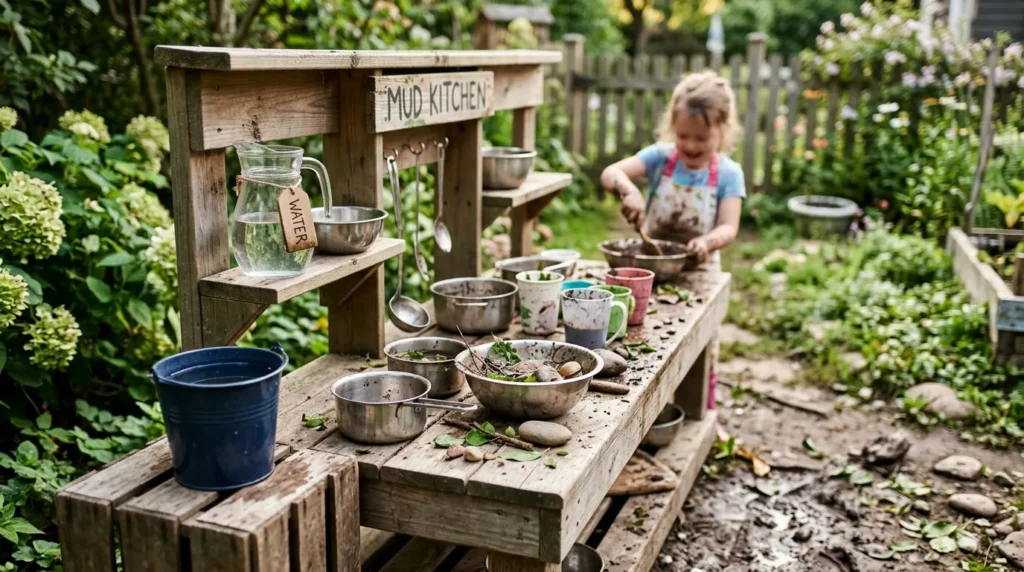
- Repurposes a damaged or secondhand dresser into a charming outdoor pretend kitchen.
- Provides built-in drawers for storing cups, spoons, pans, aprons, and sensory play items.
- Can be painted to match the backyard style, from cottage white to bright playful colors.
- Gives an old piece of furniture a second life instead of sending it to the landfill.
An old dresser can become one of the most beautiful mud kitchen bases with the right prep. The flat top makes a natural counter, while the drawers provide storage that many basic outdoor kitchens do not have. You can remove one drawer and place a bowl inside the opening for a pretend sink, or keep all the drawers for tools and play supplies. This option feels more finished than many quick DIY setups.
Before using a dresser outdoors, choose one made from real wood if possible and seal it with exterior paint or outdoor-safe varnish. Avoid peeling finishes, sharp hardware, or unstable legs. Add simple knobs, hooks, and a small backsplash board to complete the kitchen look. This idea is great for parents who want a play area that feels cute, styled, and practical while still staying affordable.
8. Bucket Water Station
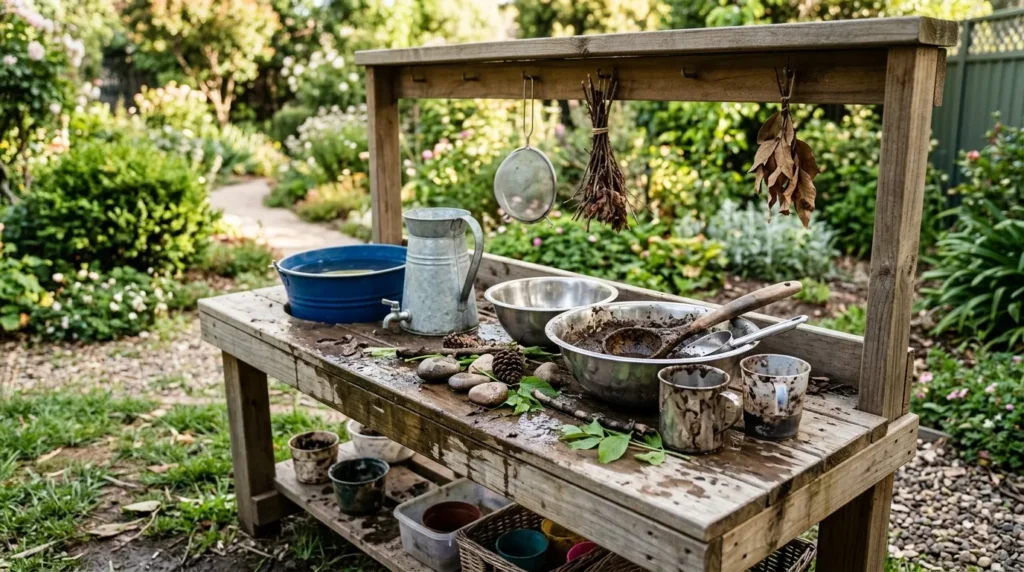
- Adds a simple water source using buckets, jugs, or a refillable drink dispenser.
- Encourages pouring, rinsing, measuring, and sensory play without needing outdoor plumbing.
- Helps kids control how much water they use during pretend cooking and mud mixing.
- Works with almost any backyard kitchen setup, from pallets to crates to small tables.
Water is what turns a basic dirt table into a full sensory play experience. A bucket station gives kids access to water in a controlled and simple way. They can scoop, pour, rinse, and mix without constantly asking an adult to turn on the hose. This makes play smoother and helps the kitchen feel more independent, especially for older preschoolers and elementary-age children.
Use a small bucket with a ladle, a camping water jug, or a drink dispenser with a push tap. Keep the water amount limited to reduce waste and avoid turning the whole yard into a swamp. Place the station on one side of the kitchen so the counter stays usable for mixing and pretend cooking. This is one of the easiest upgrades for an Affordable Mud Kitchen because it improves play immediately without adding much cost.
9. Porch Step Kitchen
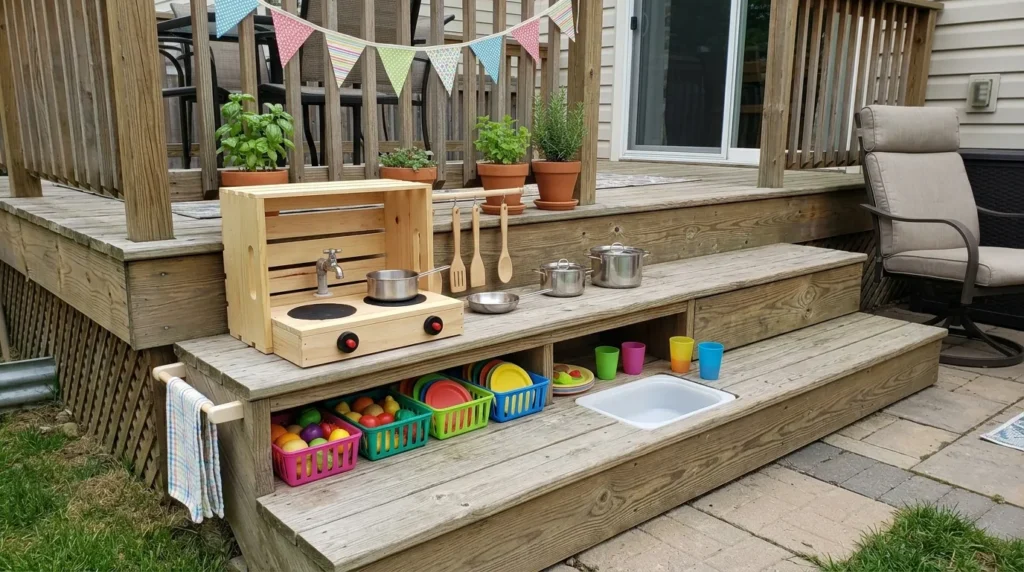
- Uses porch steps, deck edges, or patio levels as natural shelves and work surfaces.
- Works well for homes with small yards, townhomes, duplexes, or limited outdoor play space.
- Needs fewer materials because the existing structure provides height and layout.
- Creates a cozy play corner near the house where parents can supervise easily.
A porch step kitchen is a clever solution when the yard is small but the imagination is big. Instead of building a full station, you can use the different levels of steps as counters, shelves, and pretend serving areas. Kids can place bowls on one step, pans on another, and natural ingredients on the ground nearby. It feels simple, but children often love spaces that are close to real home activity.
To keep it safe, choose a side area where foot traffic is low and the steps are not slippery. Add a small bin of tools, a removable bowl, and a waterproof mat if needed. This setup is especially helpful for families who want a temporary play area that can be cleaned up quickly. When everything is stored in one basket, the porch can return to normal after playtime without much effort.
10. Garden Bench Kitchen
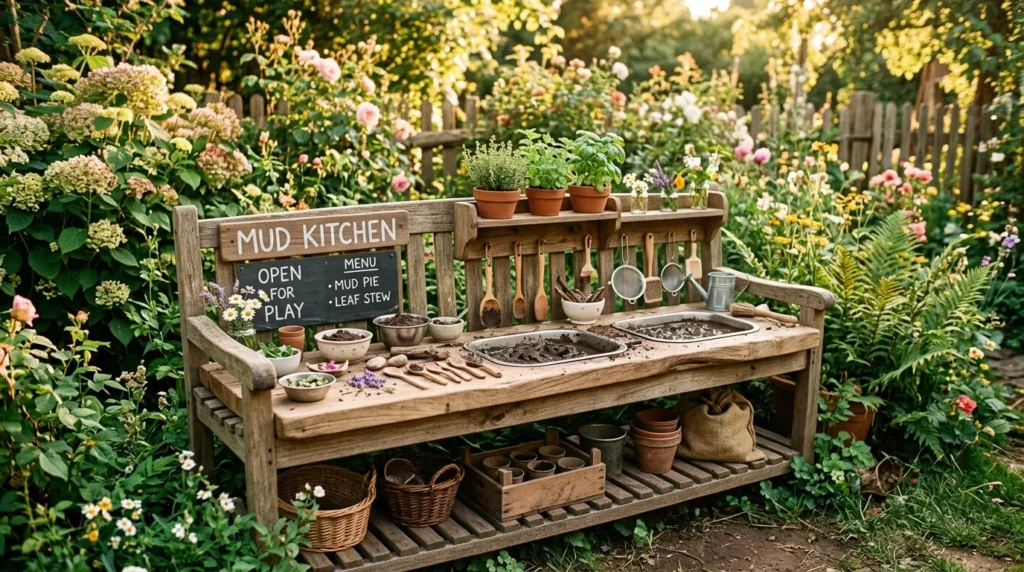
- Turns a low bench, potting bench, or simple outdoor table into a practical kids’ kitchen.
- Blends naturally with garden spaces, raised beds, flower pots, and backyard greenery.
- Gives children a wide work surface for mixing, sorting, pouring, and pretend serving.
- Looks polished with baskets, hooks, potted herbs, and small wooden signs.
A garden bench kitchen feels natural because it already belongs outdoors. Many potting benches have shelves, hooks, and surfaces that are perfect for pretend cooking. Children can use the top as a counter and the lower shelf for bowls, pans, and nature collections. This setup works especially well in yards where the mud kitchen will sit near plants, mulch, or raised garden beds.