11 Affordable DIY Mud Kitchen Outdoor Play Ideas That Look Amazing
Creating a dedicated play space outdoors can spark imagination and give children a hands-on, sensory-rich experience. DIY mud kitchens have become a favorite for parents looking to combine creativity, learning, and active play in one setup. They are inexpensive, customizable, and perfect for backyard environments. By crafting your own mud kitchen, kids can explore textures, practice fine motor skills, and engage in cooperative play. In this guide, I’ve compiled 11 practical and affordable ideas that transform simple outdoor areas into immersive play zones. These concepts are realistic, visually appealing, and suitable for a variety of backyard sizes.
1. Pallet Base Station

- Reuses old wooden pallets to create a sturdy kitchen structure
- Provides natural textures and rustic charm to the play area
- Easy to assemble and modify with shelves or hooks
- Encourages sustainable, eco-friendly DIY play setups
A pallet base station works perfectly as a foundation for any DIY mud kitchen. The wooden texture adds warmth and tactile interest for children, while the slatted design allows for drainage if water is used during play. By choosing weathered or untreated pallets, you maintain safety and durability, keeping outdoor play safe and long-lasting. This structure is both visually appealing and functional, forming a versatile platform for counters, basins, and storage areas. It also encourages kids to interact with natural materials, making their sensory experience more engaging and authentic.
Once the pallet is set up, it becomes the core of your mud kitchen. You can attach hooks for utensils, small crates for storage, and even a chalkboard for menu ideas. The design is modular, allowing future expansion or relocation in the yard. Children can experiment with arranging elements, practicing organization, and engaging in imaginative cooking scenarios. That versatility ensures the kitchen remains useful as kids grow. The combination of sustainability, practicality, and tactile appeal makes the pallet base a simple yet transformative starting point for outdoor play spaces.
2. Portable Basin Setup

- Uses removable basins for water or mud mixing
- Lightweight and easy to store when not in use
- Allows multiple children to play simultaneously
- Reduces mess by keeping liquids contained
A portable basin setup adds flexibility to any mud kitchen. Using plastic or metal basins that are shallow and wide creates a controlled space for mixing mud, sand, or water. The mobility allows you to relocate the kitchen easily or even take it indoors during cooler months. Basins encourage tactile play, sensory exploration, and experimentation with textures and consistencies. Because they are contained, children can focus on their projects without excessive spillage, while still enjoying the sensory benefits of messy play. This approach is cost-effective, safe, and visually clean in the backyard.
In practice, these basins can be placed on a table, pallet, or even on the ground with a stable tray underneath to catch overflow. Kids can combine dirt, water, leaves, and other natural elements to create mud pies, potions, or “cooked” meals. By adding small utensils, scoops, and sieves, you enhance the play experience, giving children a sense of responsibility and creativity. Portable basins also make cleaning and rotating materials simpler, which encourages parents to maintain the play space regularly without stress.
3. Upcycled Furniture Kitchen

- Converts old drawers, tables, or cabinets into mud kitchens
- Gives a real “kitchen feel” without expensive materials
- Easy customization with paint, chalkboard panels, or shelves
- Adds charm and familiarity for imaginative cooking
Transforming old furniture into a mud kitchen is both creative and practical. A small cabinet or dresser becomes a counter with built-in storage for utensils, bowls, and mud ingredients. Drawers can hold tools or sensory materials, while tabletops serve as mixing areas. Painting the furniture with weather-resistant colors or chalkboard paint enhances the visual appeal and allows kids to label sections creatively. This method also reduces waste by repurposing materials that would otherwise be discarded, aligning with eco-conscious practices and sustainable outdoor play.
With an upcycled kitchen, children feel like they are using real cooking spaces, which deepens imaginative play. They can pretend to prepare meals, manage “orders,” and clean up after cooking scenarios, practicing social interaction and responsibility. Adding small hooks or baskets increases storage options, keeping the play area organized and visually inviting. This idea combines sustainability, hands-on creativity, and aesthetic charm, making it an attractive addition to backyards of all sizes.
4. Tiered Shelf Design

- Maximizes vertical space for utensils and containers
- Encourages organized play and sorting skills
- Lightweight materials allow easy repositioning
- Creates a visually layered, attractive layout
A tiered shelf design elevates the mud kitchen experience by adding multiple levels for mixing, storing, and displaying materials. Wooden crates, metal shelving, or even stacked pallets can create a functional and decorative arrangement. Children can easily reach different heights, placing mud ingredients or toys in designated spots. This approach is especially useful in small backyards, as it allows more items to be accessible without occupying extra floor space. The visual hierarchy also makes the setup look purposeful and Pinterest-ready, appealing to parents who value aesthetics alongside functionality.
In use, tiered shelves encourage kids to practice organization and multi-step play. They can move materials between levels, prepare “dishes,” and clean up systematically. This structure supports cooperative play as multiple children can use different shelves at once. Combining storage with play surfaces ensures a clutter-free environment, making the kitchen more inviting and easier to maintain. Additionally, parents can use the shelves for display when the kitchen is not in use, maintaining an attractive backyard focal point.
5. Hanging Utensil Rack

- Utilizes hooks or a rod to hang spoons, scoops, and small pots
- Keeps tools visible and accessible for children
- Encourages tidy habits and independent play
- Adds a vertical design element to enhance the kitchen’s look
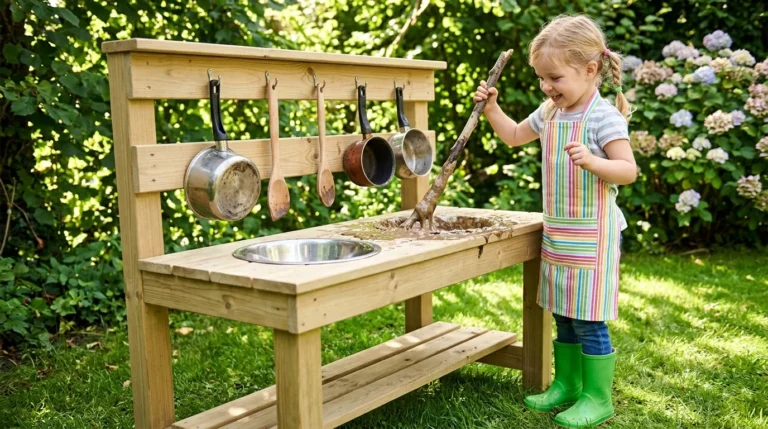
A hanging utensil rack is a simple upgrade that organizes mud kitchen tools efficiently. By installing a rod or series of hooks above the counter or on the side of the kitchen, children can easily grab and return utensils. This keeps the workspace clear and promotes responsibility while also adding a visually appealing vertical element. Metal hooks, S-hooks, or even a DIY wooden dowel solution can accommodate a variety of utensils, making the space versatile and interactive. I’ve noticed that when children have organized access to tools, they tend to engage longer and more creatively in play sessions.
The rack transforms the play area into a functional mini-kitchen, enhancing usability and aesthetics. Kids can sort utensils by type or size, develop fine motor skills, and practice coordination as they reach for items. Parents also benefit from reduced mess and faster cleanup. This design encourages children to view the mud kitchen as a structured space, fostering extended imaginative play and creating a polished, visually attractive corner of the yard. The hanging elements draw the eye and provide an additional sensory and organizational dimension to the setup.