12 DIY Mud Kitchen Outdoor Play Ideas You’ll Want to Copy Right Away
Introduction
Creating a DIY mud kitchen is one of the most engaging ways to elevate outdoor play for children. Hands-on interaction with mud, water, and natural elements encourages creativity, fine motor development, and problem-solving skills while fostering cooperative play. These affordable setups allow families to convert ordinary backyard spaces into immersive, sensory-rich zones that kids return to repeatedly. With simple materials, a thoughtful layout, and multi-sensory design, children gain a safe, organized, and educational environment that blends pretend cooking, water play, and imaginative experimentation for hours of fun.
Beyond entertainment, DIY mud kitchens support extended outdoor engagement and practical learning. Children mix mud pies, experiment with water flow, and explore textures while developing coordination, observational skills, and confidence. Functional stations like counters, shelves, and water features help organize activities for multiple children, avoiding conflict while promoting independent or collaborative play. Incorporating herbs, sand, and visually stimulating elements keeps children engaged while fostering curiosity. Overall, these creative ideas transform backyards into dynamic learning environments that encourage imaginative exploration, sensory engagement, and lasting outdoor enjoyment.
1. Rustic Wooden Counter
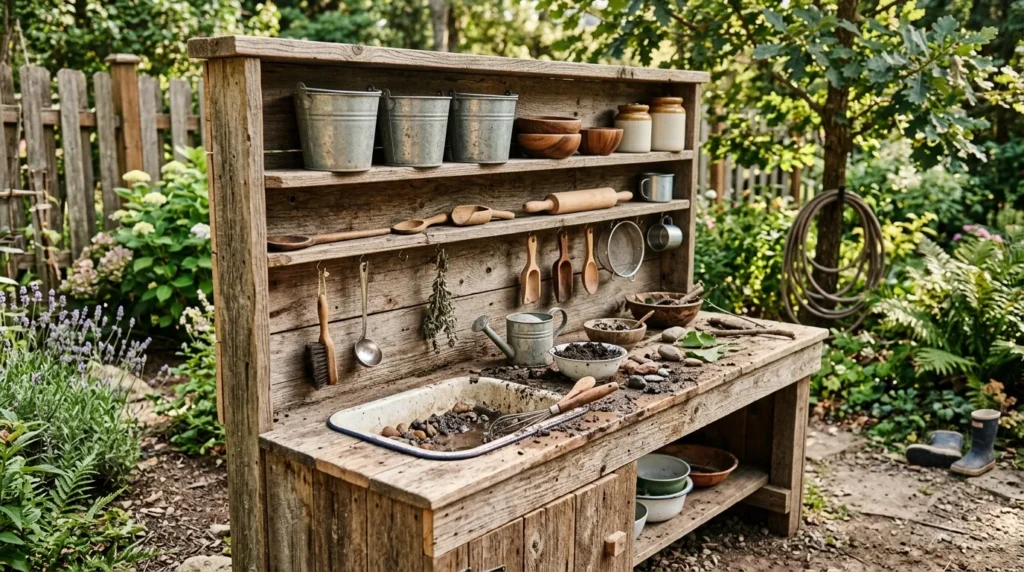
- Sturdy surface for mixing mud, sand, and water
- Encourages imaginative cooking and role-play
- Natural, backyard-friendly aesthetic
- Supports multiple children simultaneously
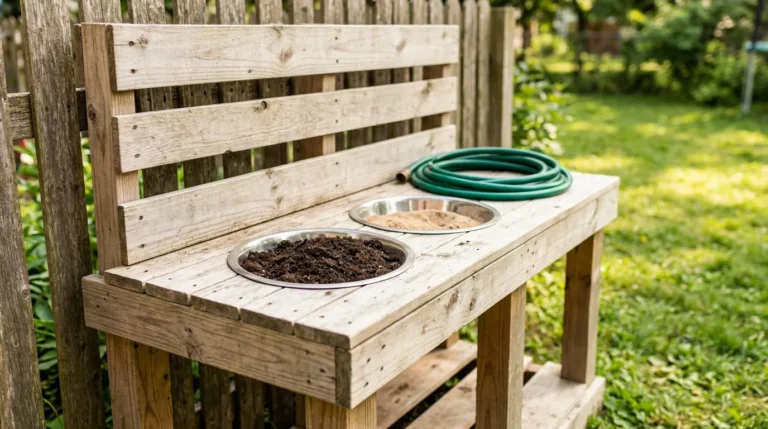
A rustic wooden counter provides a strong foundation for a DIY mud kitchen. I’ve noticed children naturally gravitate toward tactile surfaces, and wood offers warmth, stability, and safety for hands-on play. Using reclaimed pallets or untreated timber makes the counter eco-friendly, cost-effective, and visually appealing. Hooks or shelves underneath store utensils, mud cups, and containers for organized play. The counter allows both collaborative and independent activities, stimulating creativity, role-play, and sensory exploration. Its rustic design blends seamlessly with garden surroundings, making it a central hub that draws children into imaginative outdoor engagement.
Adding a wooden counter transforms a backyard into an interactive, functional playground. Children can mix mud recipes, pour water experiments, and practice hand-eye coordination while experimenting creatively. Adjustable height ensures accessibility for toddlers and older children. Natural wear over time enhances charm and authenticity. Pairing the counter with small planters or decorative elements elevates visual appeal and backyard cohesion. This combination of functionality, creativity, and aesthetic charm positions the counter as the central feature of a DIY mud kitchen, encouraging extended imaginative play and outdoor learning.
2. Upcycled Sink Station
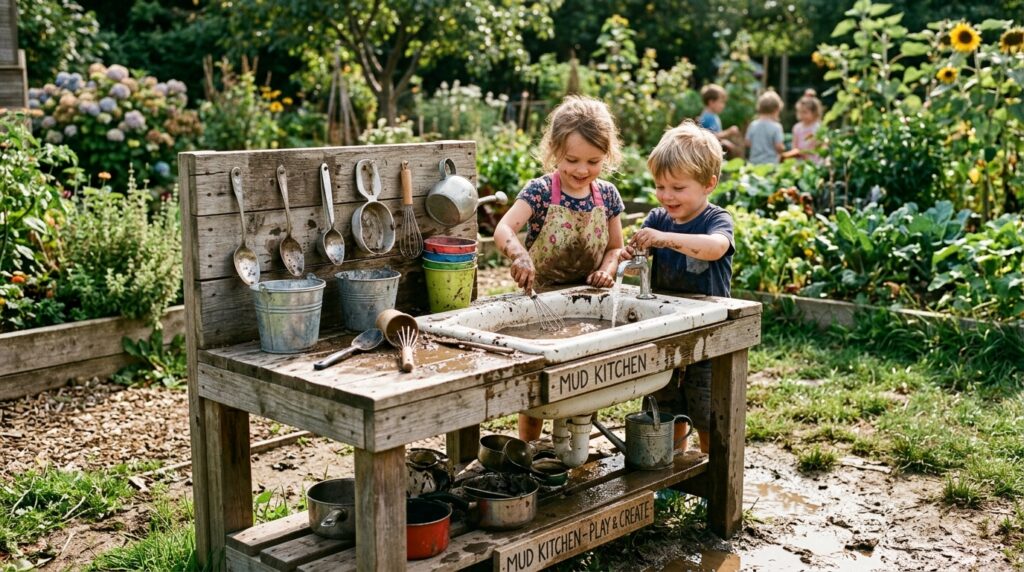
- Repurposes old sinks or basins for water play
- Promotes sensory exploration and coordination
- Eco-friendly, affordable, and versatile
- Supports both independent and collaborative play
Repurposing an old sink creates a dynamic water feature in a DIY mud kitchen. I’ve seen this approach hold children’s attention for long periods, as pouring, mixing, and splashing provide continuous sensory stimulation. A sturdy wooden or metal frame supports a ceramic or metal basin, providing a realistic kitchen experience. Detachable basins simplify cleaning and allow flexible play options. Children can experiment with water flow, mud mixing, and imaginative “recipes,” building coordination, problem-solving skills, and independent creativity in a safe, contained area that fosters learning through play.
The sink station elevates outdoor play into an interactive and engaging experience. Children can pour and mix while exploring cause-and-effect relationships, and collaborate or play independently. Placing it near counters or mud trays creates a functional workflow and accessible layout. The dynamic visual and auditory stimulation of flowing water keeps children engaged and encourages repeated interaction. Proper planning ensures safety, versatility, and functionality, making the sink station a key feature in a DIY mud kitchen that complements other stations and encourages hands-on, imaginative learning.
3. Potting Table Twist
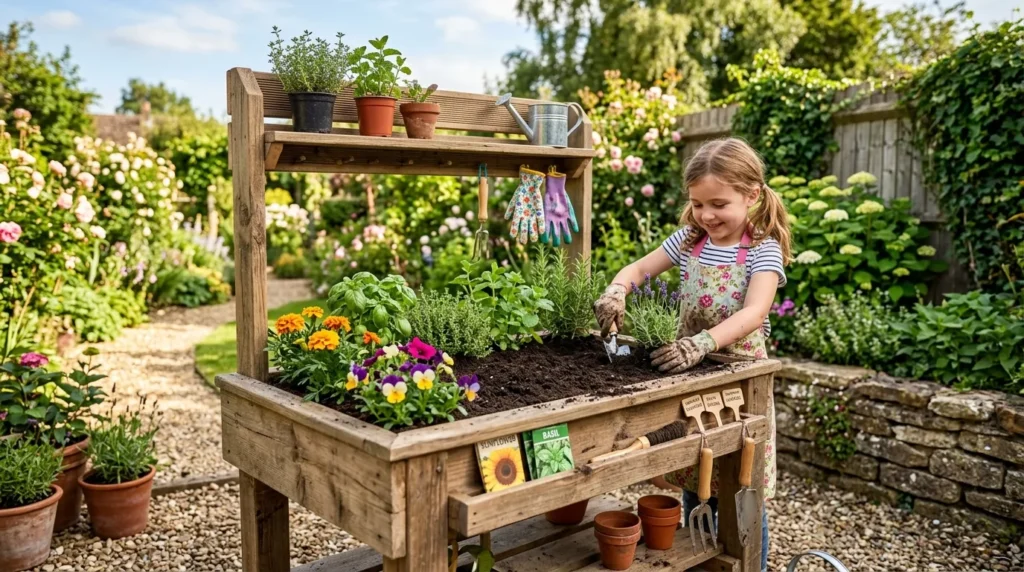
- Combines gardening with mud experimentation
- Encourages observation, responsibility, and problem-solving
- Adds sensory engagement with soil and plants
- Supports multi-purpose, creative outdoor play
A potting table introduces multi-sensory learning to a mud kitchen. Children can fill pots with soil, craft mud recipes, or plant herbs while engaging in imaginative culinary play. I’ve noticed that combining gardening with tactile experimentation enhances focus, patience, and creative thinking. Using a sturdy wooden table or raised planter ensures ergonomic access and child-friendly height. Fragrant herbs or colorful flowers add visual, tactile, and olfactory stimulation, making the setup immersive. Connecting mud exploration with plant care encourages experimentation, coordination, and environmental awareness, creating a backyard space rich in educational and sensory experiences.
The potting table transforms outdoor play into a multi-functional, interactive learning zone. Children alternate between mud creations and plant care, fostering creativity, responsibility, and observational skills. Under-table storage helps keep tools, containers, and soil organized. Parents can guide planting initially, but children gradually gain independence and problem-solving experience. Combining tactile play with greenery enhances engagement and visual appeal. Overall, the potting table enriches a DIY mud kitchen by supporting long-term, imaginative, and educational outdoor activities that children can enjoy repeatedly.
4. Tiered Shelf Station
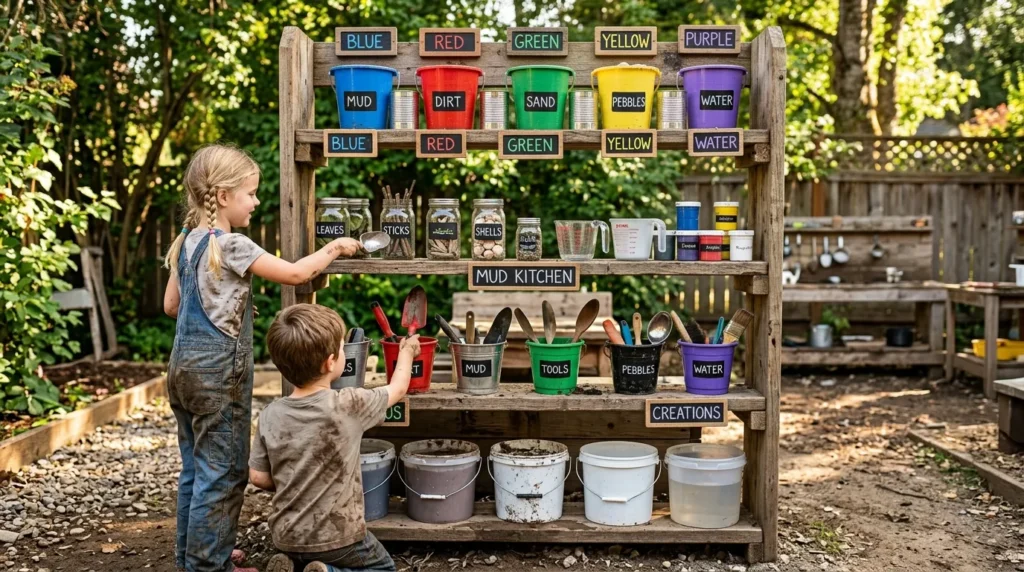
- Maximizes vertical storage for tools and materials
- Encourages organized, independent play
- Supports multiple children at once
- Adds structure and aesthetic appeal
A tiered shelf station optimizes both space and organization. I’ve noticed that children engage better when items are easily accessible, fostering independence and responsibility. Wooden crates, small bookcases, or pallet shelves provide vertical storage while contributing to a rustic backyard aesthetic. Labeling or color-coding sections helps children identify and return tools and containers efficiently. This structure allows multiple children to play simultaneously without interfering with each other’s activities. The visual organization also enhances backyard charm, creating a well-structured, inviting space that encourages engagement and repeated use.
Vertical shelving improves functionality in a backyard mud kitchen. Children experiment with mud, water, and containers while keeping tools organized. Decorative elements, like small potted plants or painted jars, enhance aesthetics. Multiple tiers allow simultaneous participation, encouraging cooperative and independent play. Supervision remains simple without interrupting children’s creativity. Combining organization, usability, and visual appeal, tiered shelves are a crucial addition to DIY mud kitchens, supporting learning, sensory engagement, and structured, imaginative outdoor play for hours of hands-on fun.
5. Clay Pizza Oven
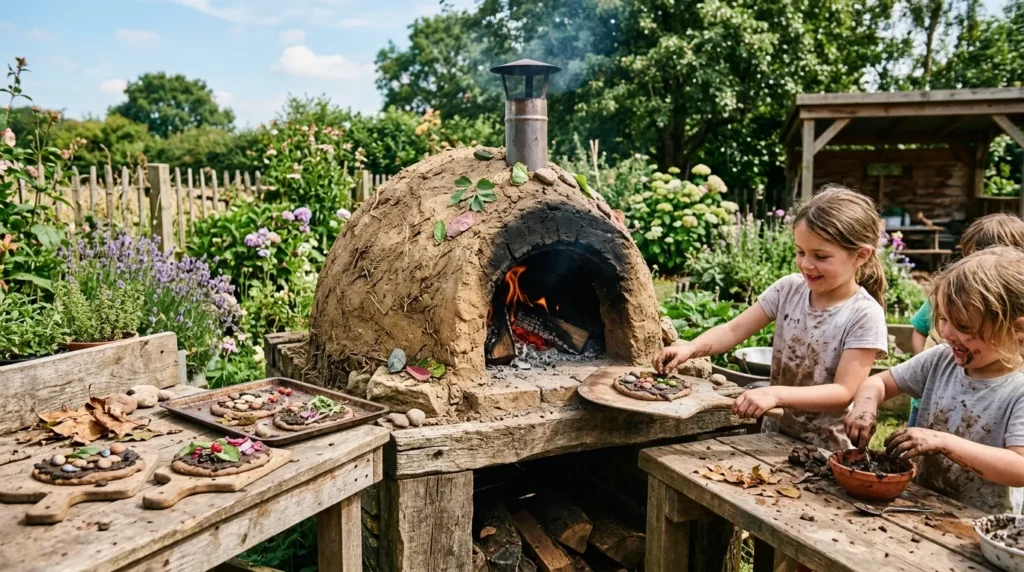
- Introduces imaginative cooking and role-play
- Encourages collaborative and sensory learning
- Provides tactile engagement and creative stimulation
- Acts as a visually appealing backyard centerpiece
A clay or mud pizza oven creates an interactive centerpiece in a DIY mud kitchen. Children enjoy forming mud “pizzas,” adding leaves or petals as toppings, and pretending to cook. I’ve noticed this feature encourages collaborative play, storytelling, and problem-solving, keeping children engaged for long periods. Constructed with clay, bricks, or stones, the oven is lightweight, safe, and visually appealing. Its textured, interactive surface promotes tactile exploration while establishing a focal point for the mud kitchen. Children are naturally drawn to this element, inspiring imaginative play and sustained outdoor engagement.
The pizza oven transforms backyard activities into immersive culinary exploration. Children practice coordination, measurement, and social skills while role-playing as chefs. It can double as storage for utensils or small containers, increasing functionality. Earthy tones complement garden surroundings, visually enhancing the space. Over time, this feature encourages repeated creative engagement, teamwork, and tactile learning. Integrating the oven adds both functionality and visual charm, establishing it as a central element that enhances usability, engagement, and outdoor play experiences in a DIY mud kitchen.