10 Drainage Around House Smart Ideas
Primary Keyword: drainage around house smart ideas
Category: Home Improvement / Outdoor Living
Introduction
Proper drainage is one of the most important yet often overlooked aspects of home maintenance. While homeowners frequently focus on landscaping, curb appeal, and outdoor living spaces, water management plays a critical role in protecting a home’s foundation, preventing erosion, and maintaining the health of the surrounding landscape. Even small drainage problems can eventually lead to costly repairs if left unaddressed.
Standing water, soggy lawns, basement moisture, foundation cracks, and landscape damage are often signs that water isn’t moving away from the home efficiently. The good news is that many drainage issues can be improved with practical solutions that not only protect your property but also enhance its appearance. In fact, some of the best drainage systems blend seamlessly into the landscape and become attractive design features.
I’ve noticed that homeowners often assume drainage improvements require major excavation or expensive professional projects. While some situations may require expert help, many smart drainage strategies can significantly improve water flow with thoughtful planning and proper installation. The key is identifying where water collects and directing it safely away from the house.
In this guide, you’ll discover practical and visually appealing drainage ideas that help manage runoff, protect your foundation, and improve your outdoor spaces. Whether you’re dealing with minor puddles or recurring water problems, these solutions can help create a healthier and more functional landscape.
Table of Contents
1. French Drain System
Move excess water efficiently underground.
2. Decorative River Rock Channels
Combine drainage with attractive landscaping.
3. Rain Garden Zones
Turn runoff into a beautiful garden feature.
4. Extended Downspouts
Redirect roof water away from foundations.
5. Dry Creek Beds
Create natural-looking water pathways.
6. Permeable Paver Surfaces
Allow water to soak naturally into the ground.
7. Graded Landscape Slopes
Encourage proper water movement.
8. Gravel Border Drainage
Improve drainage around foundations.
9. Catch Basin Collection
Control heavy water accumulation.
10. Smart Gutter Upgrades
Prevent overflow and water damage.
1. French Drain System
Quick Benefits
- Controls excess water
- Protects foundations
- Reduces standing water
- Long-term solution
- Hidden from view
Why It Works
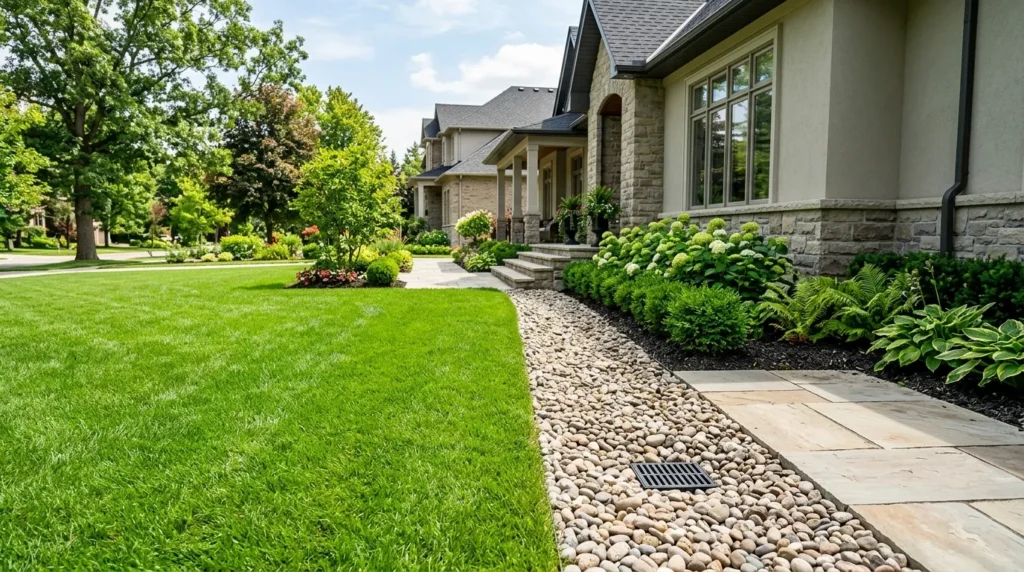
French drains remain one of the most effective drainage solutions for residential properties. By collecting groundwater and redirecting it through a perforated pipe surrounded by gravel, this system helps move water away from problem areas before it can cause damage.
One thing that works especially well is installing French drains in locations where water consistently pools after rainfall. Once properly installed, the system operates quietly in the background while significantly improving drainage performance.
How To Style It
Conceal the drain beneath decorative gravel, mulch, or landscaping. Surround the area with shrubs and ornamental grasses that complement the yard design.
Use edging materials to create a finished appearance while maintaining easy maintenance access.
2. Decorative River Rock Channels
Quick Benefits
- Attractive appearance
- Excellent drainage
- Low maintenance
- Prevents erosion
- Enhances landscaping
Why It Works
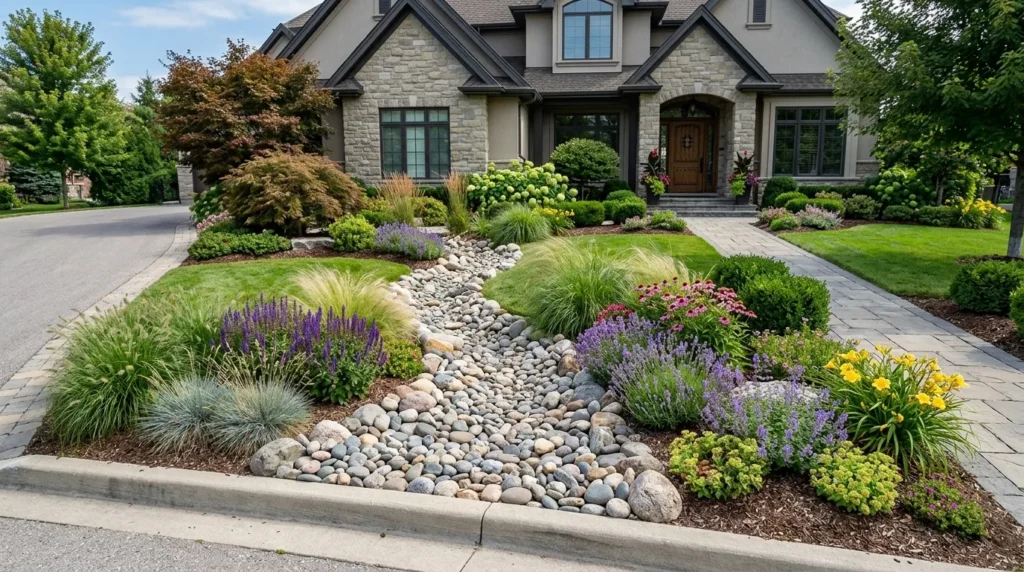
River rock channels guide water naturally while adding texture and visual interest to the landscape. The rocks slow water movement, reduce erosion, and help direct runoff toward designated drainage areas.
Unlike purely functional drainage systems, river rock channels become attractive landscape features that contribute to overall curb appeal.
How To Style It
Use varying rock sizes for a natural appearance. Border the channel with native plants, flowering perennials, or ornamental grasses.
Coordinate rock colors with the home’s exterior and surrounding hardscape materials.
3. Rain Garden Zones
Quick Benefits
- Eco-friendly solution
- Supports pollinators
- Reduces runoff
- Adds beauty
- Improves drainage naturally
Why It Works
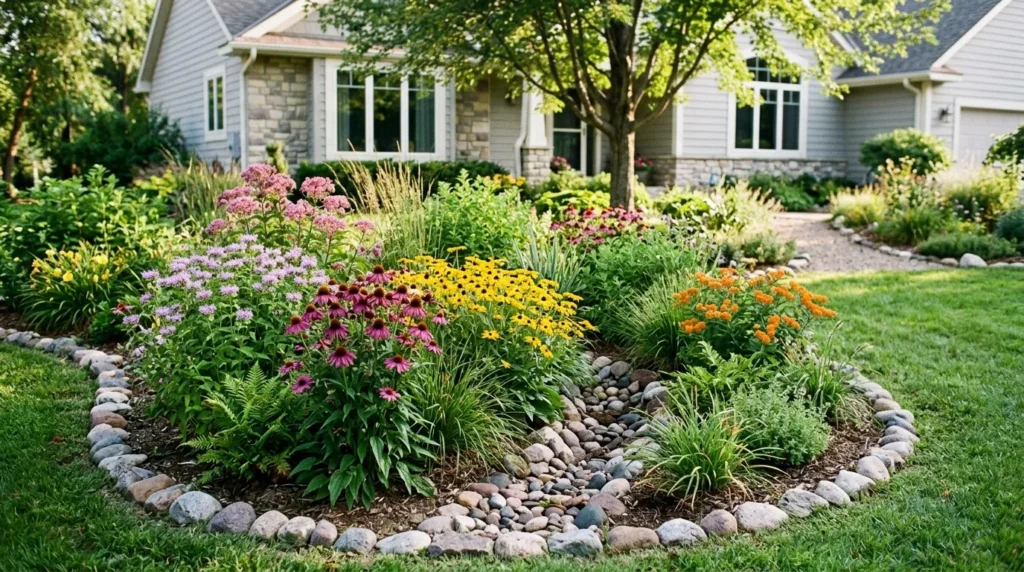
Rain gardens are shallow landscaped areas specifically designed to absorb runoff from roofs, driveways, and lawns. These gardens help filter water while reducing pressure on drainage systems.
That’s why many landscape designers recommend rain gardens as both functional and environmentally responsible additions to residential properties.
How To Style It
Plant moisture-tolerant flowers, grasses, and native plants that thrive in changing water conditions. Incorporate decorative stone edging and mulch for a polished appearance.
Choose colorful blooms to create seasonal interest.
4. Extended Downspouts
Quick Benefits
- Easy upgrade
- Affordable solution
- Protects foundation
- Improves drainage
- Quick installation
Why It Works
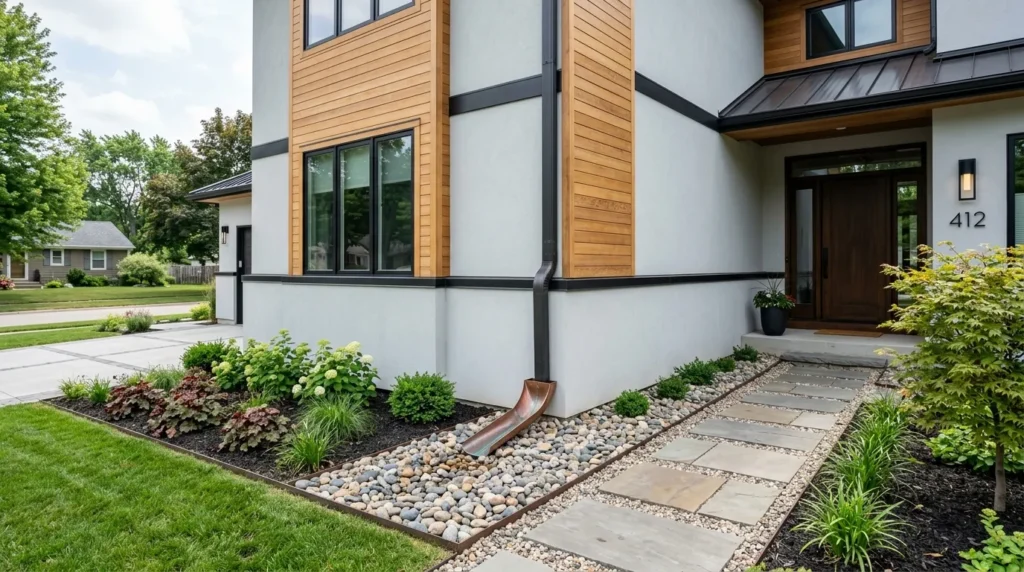
Many drainage problems begin when roof runoff is discharged too close to the home’s foundation. Extending downspouts directs water farther away, reducing the risk of foundation issues and soil erosion.
I’ve seen this simple improvement solve surprisingly significant drainage problems for many homeowners.
How To Style It
Use decorative splash blocks, buried drain pipes, or attractive gravel beds at discharge points.
Blend extensions into the landscaping for a cleaner appearance.
5. Dry Creek Beds
Quick Benefits
- Natural appearance
- Controls runoff
- Adds landscape interest
- Low maintenance
- Prevents erosion
Why It Works
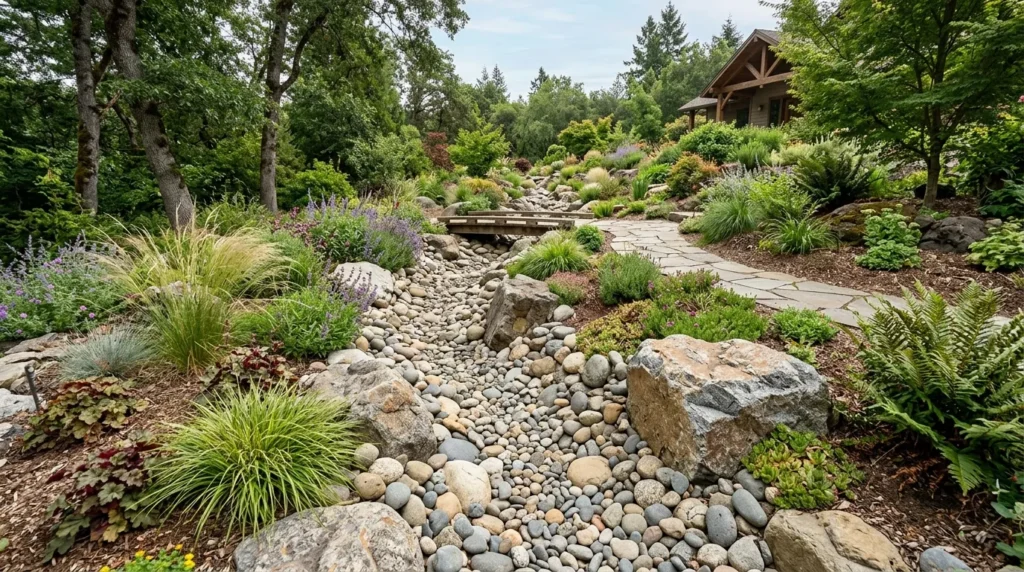
Dry creek beds mimic natural waterways and provide a designated route for excess water. They help manage runoff during heavy rains while serving as attractive landscape features during dry weather.
The combination of rocks, plants, and natural curves creates movement and visual appeal throughout the yard.
How To Style It
Use river rock, boulders, and native plants to create an authentic look. Incorporate curves and varying widths to mimic natural streams.
Add landscape lighting for evening interest.
6. Permeable Paver Surfaces
Quick Benefits
- Reduces runoff
- Modern appearance
- Durable surface
- Environmentally friendly
- Improves drainage
Why It Works
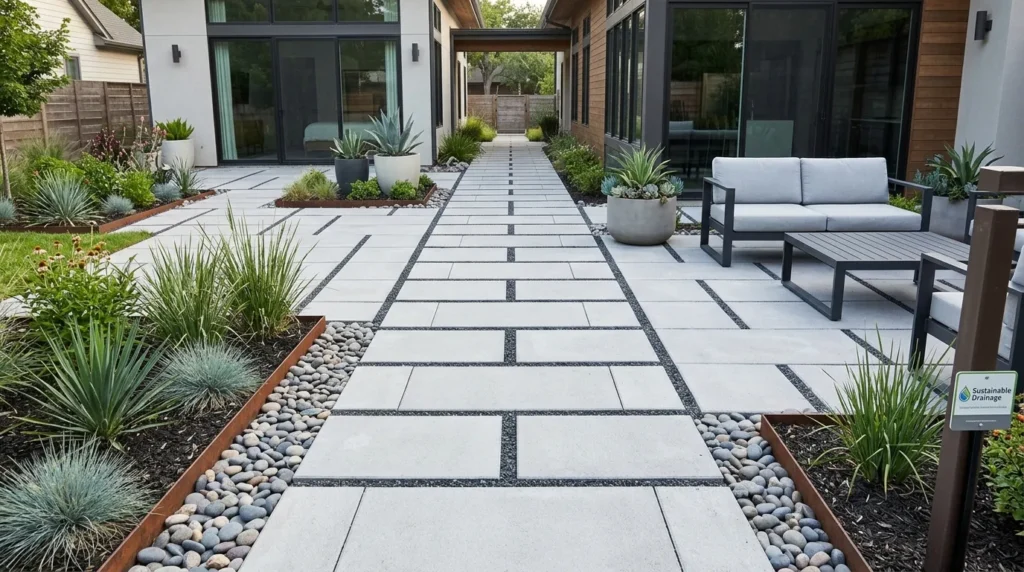
Permeable pavers allow water to pass through joints and into the soil below rather than creating surface runoff. This helps reduce puddles while supporting natural groundwater absorption.
Many homeowners appreciate the combination of functionality and attractive hardscape design.
How To Style It
Use permeable pavers for patios, walkways, and driveways. Pair them with clean landscaping and decorative gravel accents.
Choose colors that complement the home’s architecture.
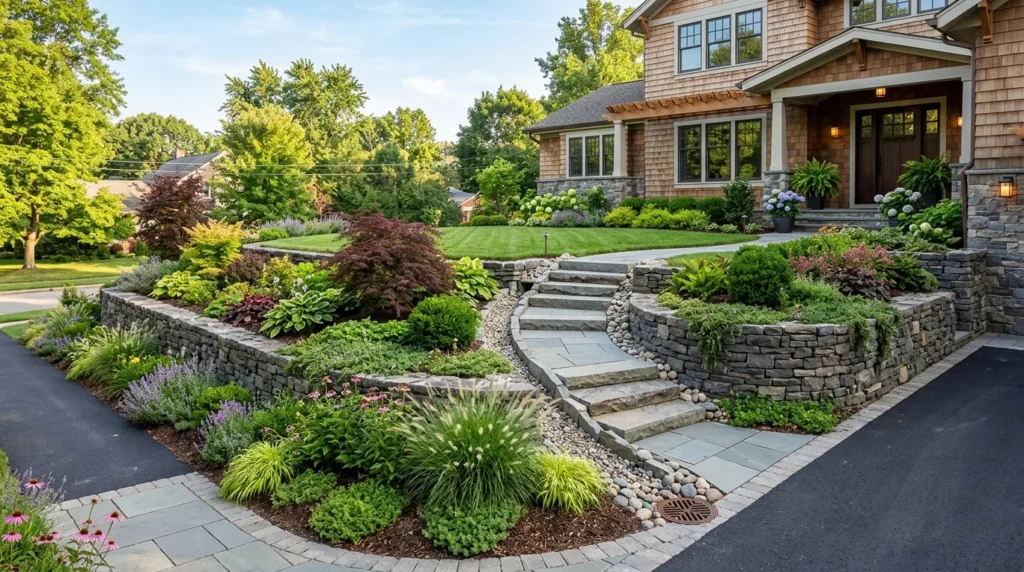
7. Graded Landscape Slopes
Quick Benefits
- Improves water flow
- Protects structures
- Long-lasting solution
- Supports healthy landscaping
- Enhances functionality
Why It Works
Proper grading is one of the most important factors in effective drainage. Water naturally follows gravity, so creating gentle slopes away from the house helps prevent pooling and foundation damage.
A mistake many homeowners make is focusing only on drainage systems while ignoring grading issues.
How To Style It
Use terraced landscaping, retaining walls, and layered plantings to make slopes visually appealing.
Blend grading improvements into the overall landscape design.
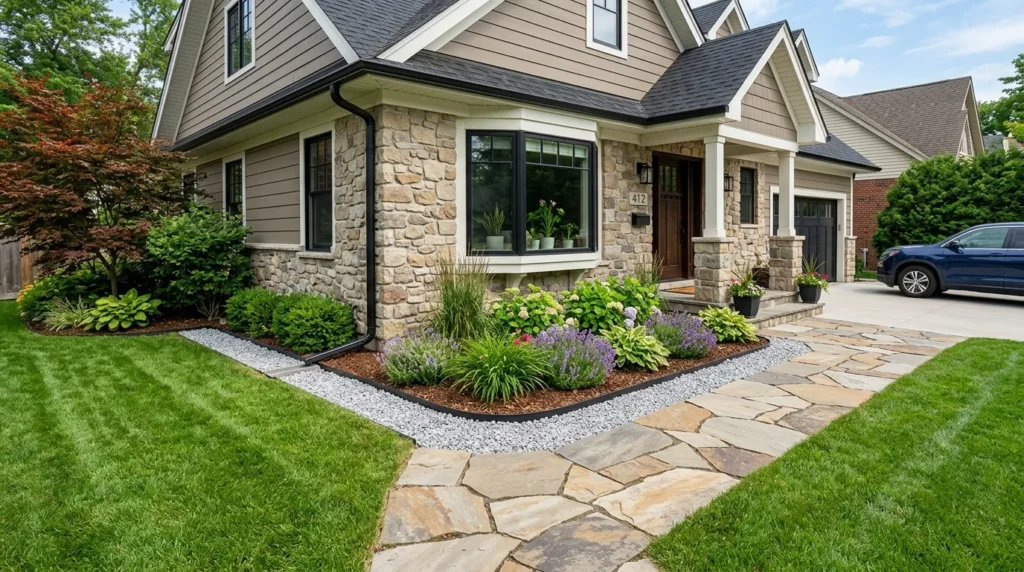
8. Gravel Border Drainage
Quick Benefits
- Affordable solution
- Improves foundation drainage
- Easy installation
- Attractive appearance
- Low maintenance
Why It Works
Gravel borders around foundations improve drainage by reducing water retention near the home. The gravel allows moisture to move through the surface more efficiently than dense soil or mulch.
The added texture also creates a neat and intentional appearance around the perimeter of the house.
How To Style It
Choose decorative gravel colors that coordinate with siding, stonework, or landscaping features.
Maintain clean edging for a professional look.
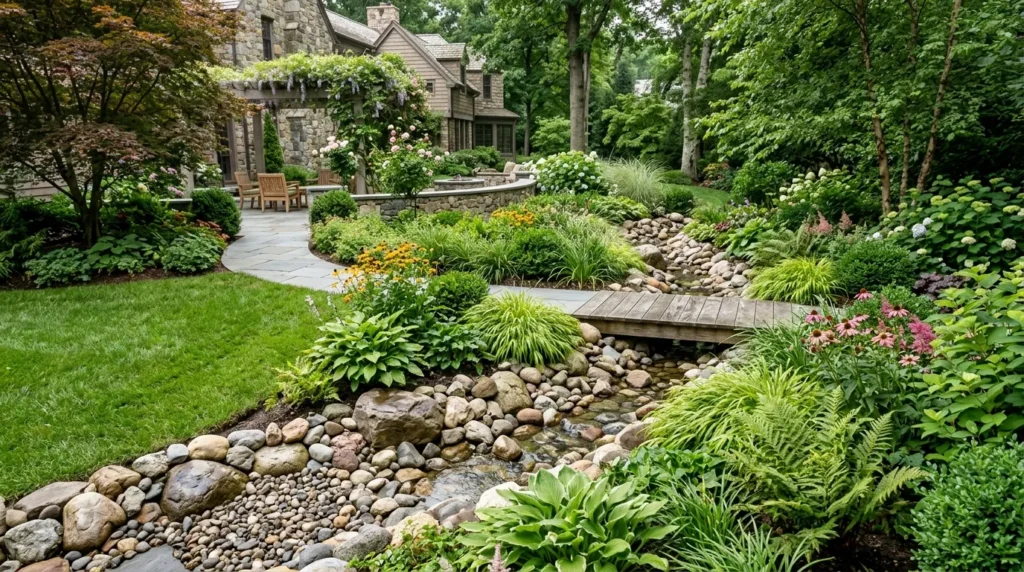
9. Catch Basin Collection
Quick Benefits
- Handles heavy runoff
- Reduces flooding
- Supports larger systems
- Long-term reliability
- Improves water management
Why It Works
Catch basins collect and redirect large volumes of water before they become problematic. They are especially useful in low spots where water naturally accumulates after storms.
Properly installed basins help keep lawns, pathways, and foundations protected during periods of heavy rainfall.
How To Style It
Conceal catch basins within landscaped areas or integrate them into decorative hardscape designs.
Use surrounding plants and stonework to soften their appearance.
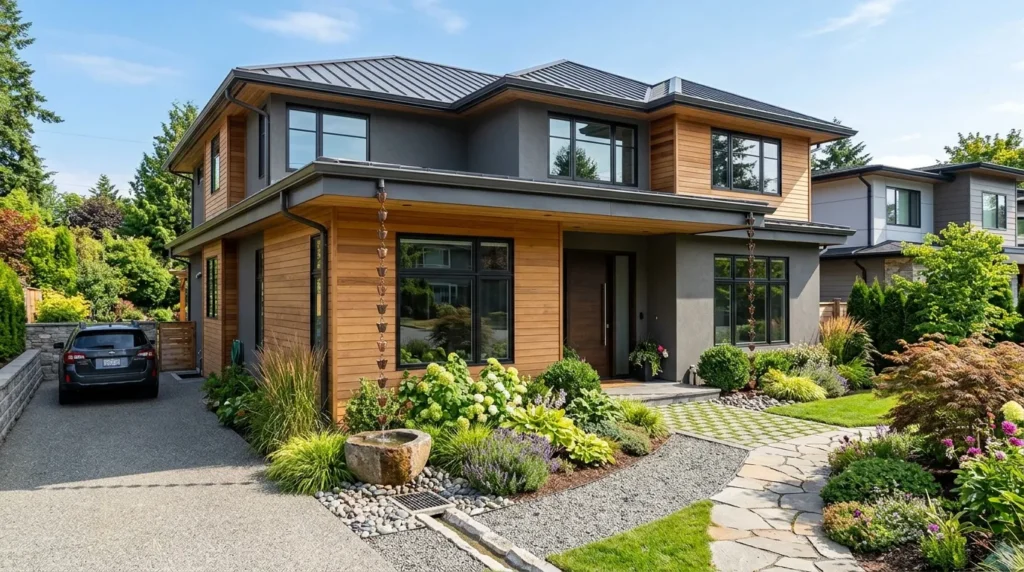
10. Smart Gutter Upgrades
Quick Benefits
- Improves water control
- Protects landscaping
- Reduces maintenance
- Prevents overflow
- Extends gutter life
Why It Works
Gutters play a major role in managing roof runoff. Upgrading gutter systems with guards, larger downspouts, and improved drainage connections can dramatically improve overall water management.
That’s why many drainage experts recommend evaluating gutter performance before investing in larger drainage projects.
How To Style It
Choose gutter colors that blend with rooflines and exterior finishes. Keep gutters clean and incorporate decorative rain chains for added visual interest.
Combine gutter upgrades with other drainage improvements for maximum effectiveness.
Frequently Asked Questions
What is the best drainage solution around a house?
The best solution depends on the property’s conditions. Common options include French drains, proper grading, extended downspouts, and rain gardens.
How far should water drain away from a house?
Ideally, water should be directed at least 5 to 10 feet away from the foundation to reduce the risk of moisture problems.
Are French drains worth the investment?
Yes. French drains are highly effective for managing groundwater and preventing standing water around homes.
Can landscaping improve drainage?
Absolutely. Rain gardens, dry creek beds, grading adjustments, and strategic plantings can significantly improve drainage performance.
What causes water pooling near foundations?
Common causes include improper grading, clogged gutters, short downspouts, compacted soil, and inadequate drainage systems.
Do permeable pavers help with drainage?
Yes. Permeable pavers allow water to soak into the ground rather than running across the surface, reducing runoff and puddling.
Conclusion
Effective drainage is essential for protecting your home, preserving your landscape, and preventing costly repairs. The good news is that drainage improvements don’t have to sacrifice curb appeal. Many of the most effective solutions also enhance the beauty and functionality of outdoor spaces.
Whether you choose a French drain, decorative river rock channel, rain garden, or permeable hardscape, the goal is the same: move water safely away from your home while creating a landscape that remains attractive and usable throughout the year.
Start by identifying problem areas and addressing the most significant issues first. Even small improvements such as extending downspouts or improving grading can make a noticeable difference. With thoughtful planning, you can create a landscape that manages water effectively while enhancing the overall appearance of your property.
Related Articles
- Front Yard Landscaping Ideas
- Backyard Drainage Solutions
- Rain Garden Design Inspiration
- Modern Walkway Ideas
- Low Maintenance Landscaping Tips