10 Whole House Mood Board Ideas
Primary Keyword: whole house mood board ideas
Category: Home Decor
Introduction
Designing an entire home can feel overwhelming, especially when you’re trying to create a cohesive look across multiple rooms. One of the biggest mistakes homeowners make is decorating each space independently without considering how everything works together. That’s where a whole house mood board becomes incredibly valuable. It helps establish a clear design direction, ensures consistency, and prevents costly decorating mistakes.
A mood board acts as a visual roadmap for your home’s style. By combining colors, materials, furniture inspiration, textures, and decorative elements in one place, you can see how every design decision contributes to the overall aesthetic. Whether you’re building a new home, renovating, or simply refreshing your interiors, a well-planned mood board provides clarity and confidence throughout the decorating process.
I’ve noticed that homeowners who create a complete home vision before shopping often achieve more polished and timeless results. Instead of chasing trends room by room, they develop a cohesive atmosphere that feels intentional and connected. This approach not only improves visual flow but also makes future decorating decisions much easier.
In this guide, you’ll discover inspiring whole house mood board ideas that can help shape your design vision. From modern organic spaces to cozy farmhouse interiors, these concepts provide practical inspiration for creating a beautiful and harmonious home from front door to backyard.
Table of Contents
1. Modern Organic Retreat
Blend natural materials with clean contemporary styling.
2. Warm Neutral Haven
Create a calming and timeless environment.
3. Modern Farmhouse Blend
Mix rustic charm with updated finishes.
4. Coastal Casual Living
Bring relaxed seaside inspiration indoors.
5. European Cottage Charm
Combine vintage elegance and cozy comfort.
6. Earth Tone Sanctuary
Use nature-inspired colors throughout the home.
7. Scandinavian Simplicity
Focus on function, light, and minimalism.
8. Rustic Modern Balance
Pair organic textures with sleek details.
9. Transitional Family Home
Blend traditional and contemporary influences.
10. Luxury Layered Living
Create a sophisticated designer-inspired look.
1. Modern Organic Retreat
Quick Benefits
- Timeless design
- Natural materials
- Relaxing atmosphere
- Highly versatile
- Pinterest-worthy aesthetic
Why It Works
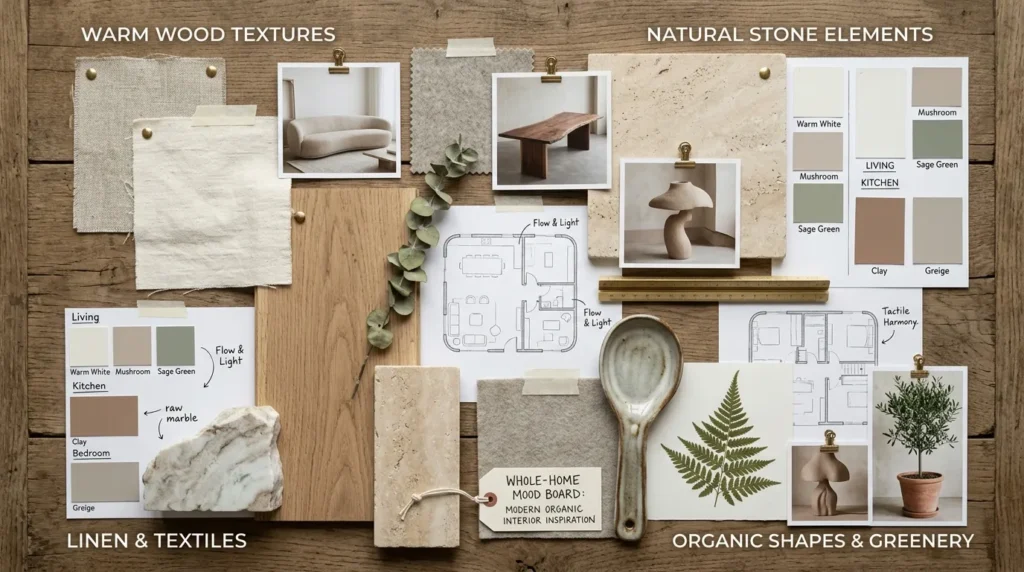
Modern organic design continues to gain popularity because it balances clean contemporary styling with warmth and comfort. The combination of natural wood, stone, linen, and soft neutral colors creates a home that feels sophisticated without appearing cold or sterile.
One thing that works especially well is repeating natural textures throughout every room. This consistency helps create visual flow while allowing each space to maintain its own purpose and personality.
How To Style It
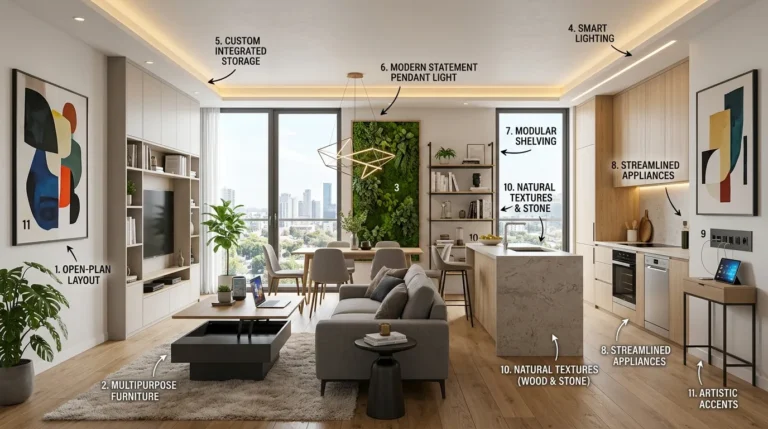
Build the mood board around warm wood tones, textured fabrics, stone surfaces, and earthy accents. Include images of organic-shaped furniture, woven lighting, and natural greenery.
Use soft beige, cream, taupe, and muted brown tones as the primary color palette to establish cohesion throughout the home.
2. Warm Neutral Haven
Quick Benefits
- Creates calm atmosphere
- Easy to decorate
- Timeless appeal
- Supports various styles
- Enhances natural light
Why It Works
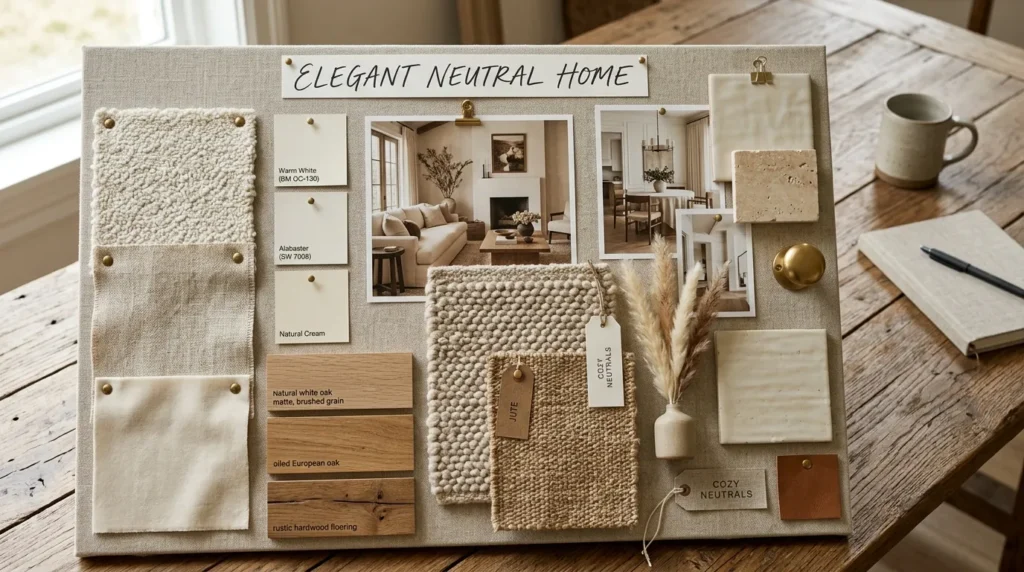
Warm neutral interiors provide flexibility and longevity. Unlike bold trends that may feel dated over time, neutral palettes create a welcoming foundation that can evolve with changing tastes.
That’s why many designers recommend using warm neutrals throughout an entire home. They create visual continuity while allowing textures and architectural details to stand out.
How To Style It
Include cream upholstery, warm white walls, light oak finishes, textured rugs, and soft linen fabrics on the mood board.
Layer subtle color variations rather than relying on stark contrasts to create depth and interest.
3. Modern Farmhouse Blend
Quick Benefits
- Comfortable and inviting
- Family-friendly
- Timeless style
- Easy to personalize
- Wide appeal
Why It Works
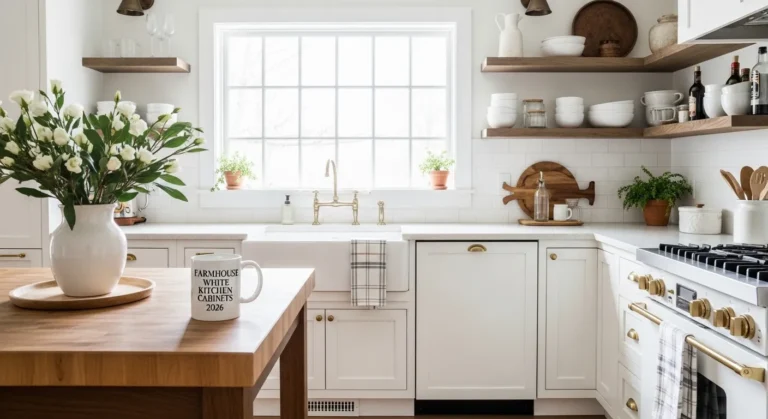
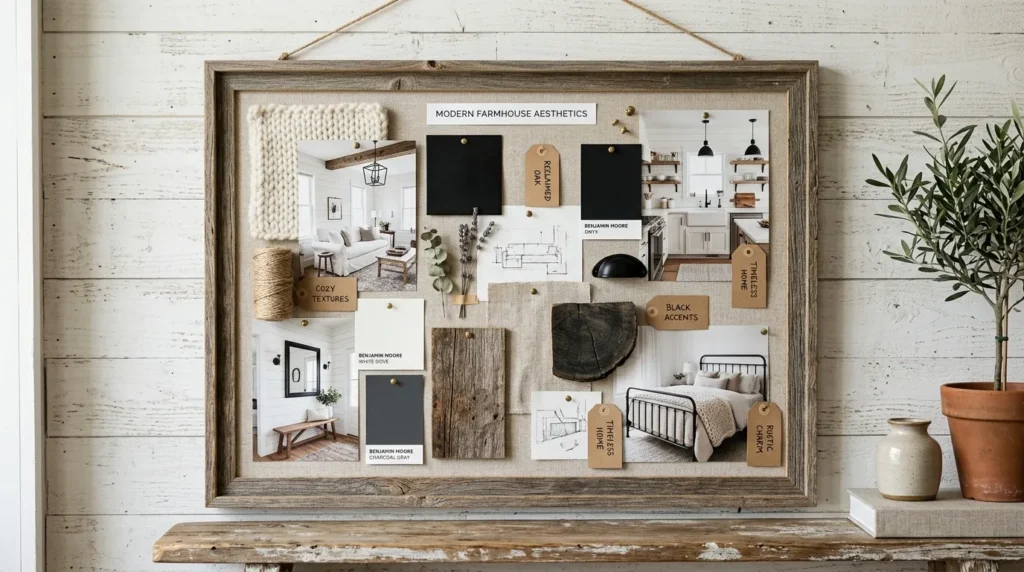
Modern farmhouse design combines rustic warmth with contemporary simplicity. The result is a home that feels both familiar and fresh, making it one of the most popular whole-house design directions.
I’ve seen this approach work beautifully because it balances practical living with attractive aesthetics. It feels welcoming without sacrificing style.
How To Style It
Feature black accents, natural wood finishes, white walls, vintage-inspired lighting, and cozy textiles. Incorporate both rustic and modern furnishings for balance.
Focus on quality materials and simple silhouettes that won’t feel dated.
4. Coastal Casual Living
Quick Benefits
- Relaxing atmosphere
- Bright interiors
- Timeless color palette
- Open and airy feel
- Vacation-inspired comfort
Why It Works
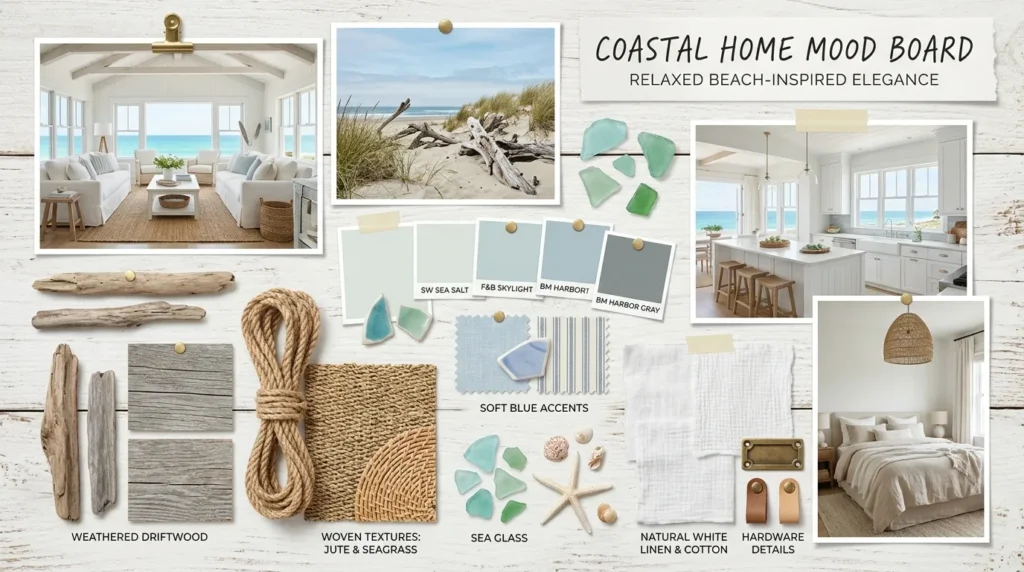
Coastal-inspired homes create a sense of calm that many homeowners crave. Soft blues, sandy neutrals, natural textures, and abundant light contribute to an atmosphere that feels refreshing and comfortable.
The style works particularly well for open-concept homes where visual flow is important.
How To Style It
Build the mood board using driftwood tones, woven materials, white fabrics, and soft coastal colors. Include airy spaces filled with natural light and casual furnishings.
Avoid overly themed nautical decor to keep the look sophisticated.
5. European Cottage Charm
Quick Benefits
- Rich character
- Cozy atmosphere
- Timeless elegance
- Vintage appeal
- Unique personality
Why It Works
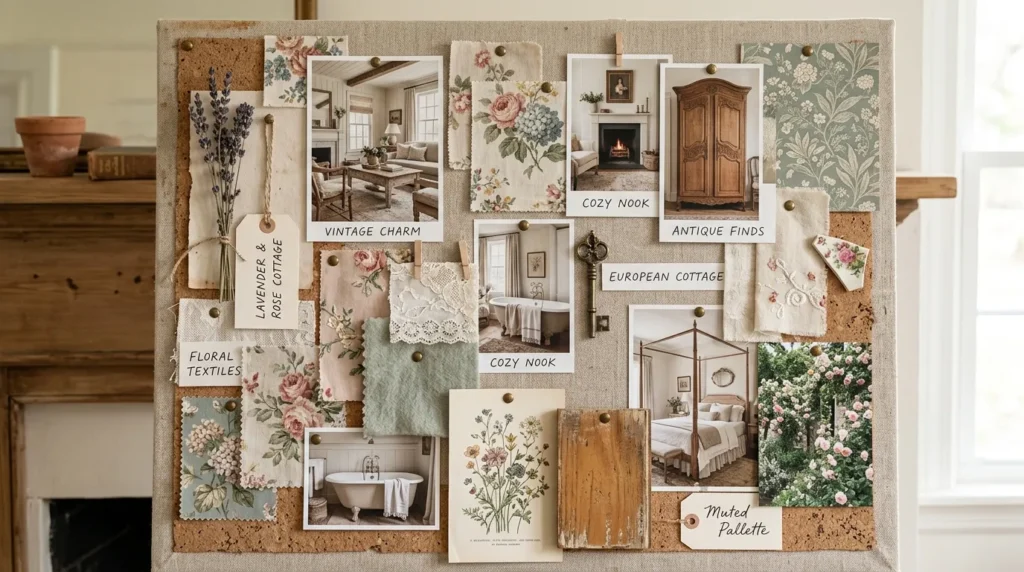
European cottage design combines vintage details, soft colors, and layered textures to create spaces that feel collected over time. The style prioritizes comfort and authenticity while embracing imperfections that add charm.
Many homeowners appreciate how this aesthetic feels personal rather than overly polished.
How To Style It
Include antique-inspired furniture, floral patterns, warm wood finishes, soft textiles, and vintage accessories. Focus on muted color palettes and handcrafted details.
Layer decorative elements thoughtfully to avoid clutter.
6. Earth Tone Sanctuary
Quick Benefits
- Nature-inspired palette
- Warm atmosphere
- Trend-resistant
- Relaxing environment
- Supports wellness
Why It Works
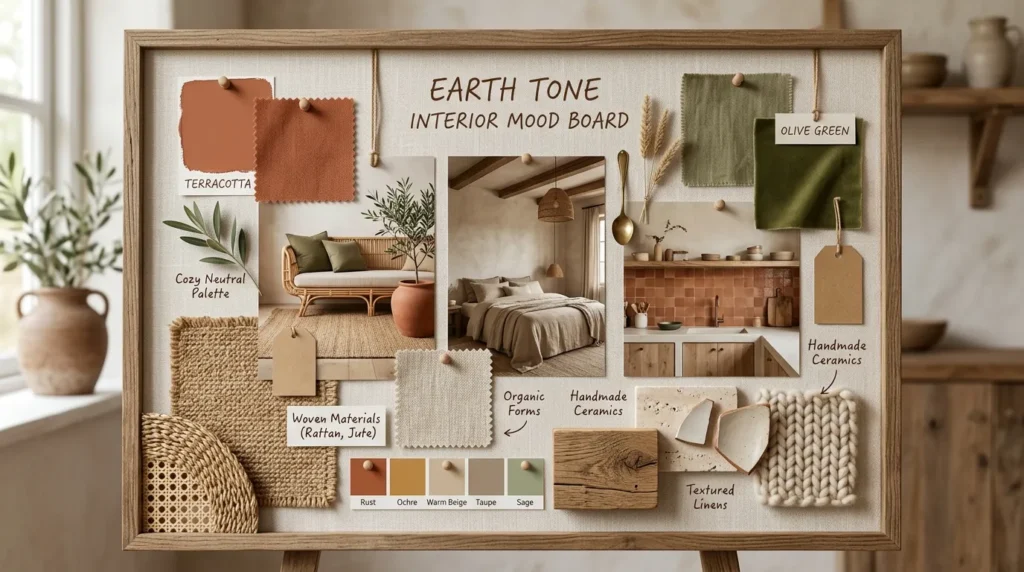
Earth tones create an immediate sense of comfort and connection to nature. Colors inspired by clay, stone, sand, and forests feel grounding and timeless.
I’ve noticed that earth-tone interiors often remain appealing long after trend-driven designs lose popularity.
How To Style It
Feature terracotta, olive green, warm brown, beige, and cream tones throughout the mood board. Add natural materials such as wood, stone, linen, and woven textures.
Use layered neutrals to maintain balance.
7. Scandinavian Simplicity
Quick Benefits
- Clean aesthetic
- Functional design
- Bright interiors
- Easy maintenance
- Timeless appeal
Why It Works
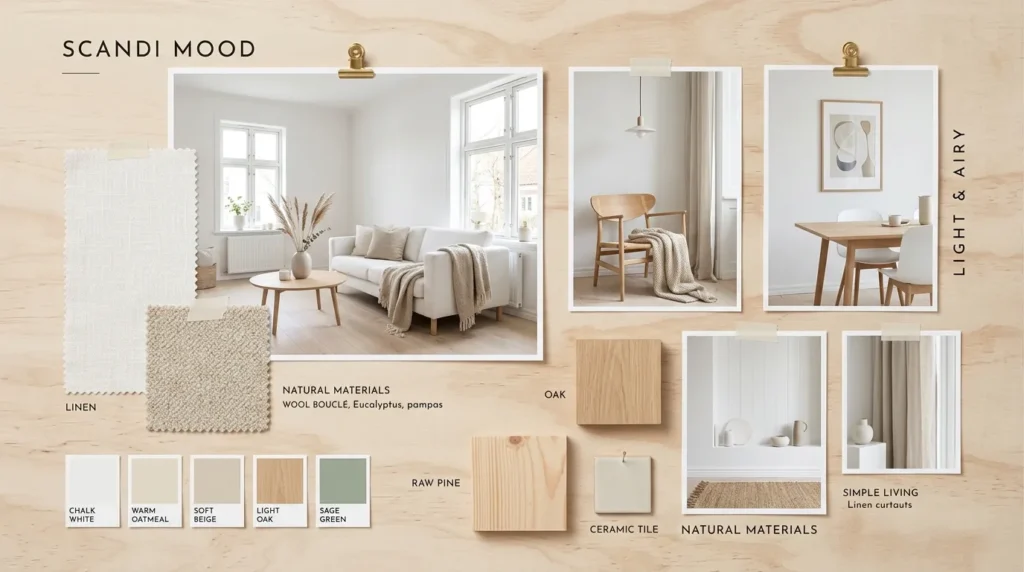
Scandinavian design focuses on simplicity, practicality, and comfort. The restrained palette and thoughtful use of materials create spaces that feel organized and peaceful.
This style works particularly well for homeowners seeking a clutter-free environment.
How To Style It
Include light wood tones, white walls, simple furnishings, soft textiles, and functional decor. Prioritize quality over quantity.
Maintain open space and visual breathing room throughout the home.
8. Rustic Modern Balance
Quick Benefits
- Strong visual contrast
- Warm yet sophisticated
- Highly versatile
- Timeless materials
- Designer-inspired look
Why It Works
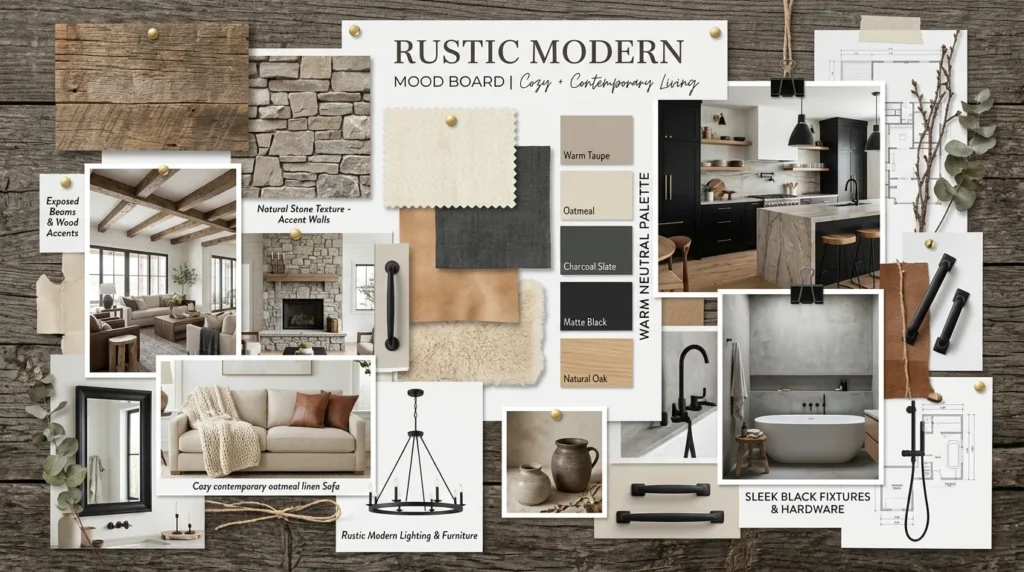
Rustic modern interiors combine raw natural materials with clean contemporary lines. The contrast between organic textures and sleek finishes creates depth and visual interest.
That’s why many designers use this approach to create homes that feel both comfortable and refined.
How To Style It
Combine wood beams, stone accents, black fixtures, modern furniture, and neutral textiles. Keep color palettes simple while allowing textures to provide richness.
Use statement lighting to reinforce the design direction.
9. Transitional Family Home
Quick Benefits
- Broad appeal
- Flexible design
- Family-friendly
- Easy to update
- Balanced aesthetic
Why It Works
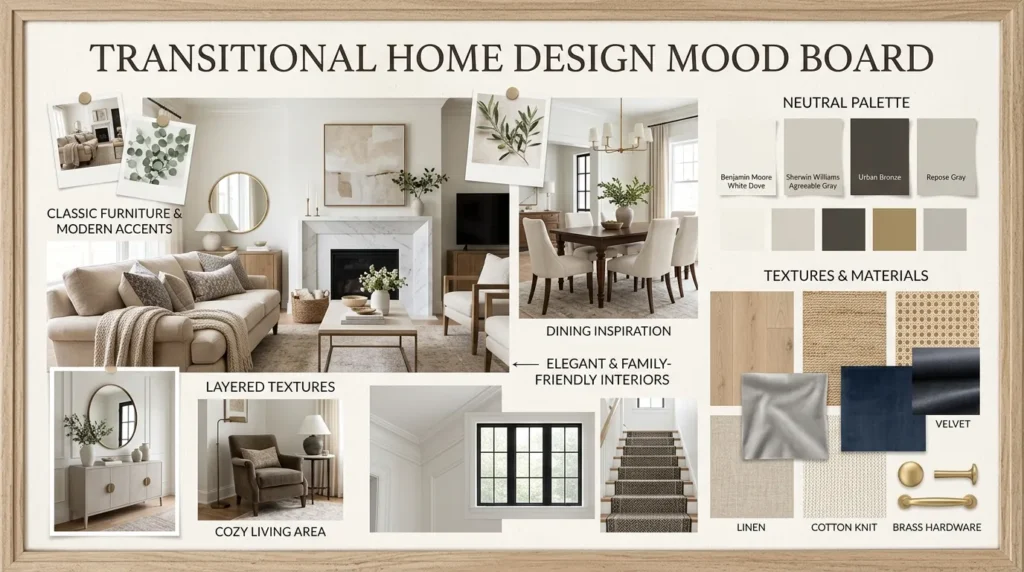
Transitional design bridges traditional and contemporary styles. The result is a balanced interior that feels timeless and adaptable to changing preferences.
A mistake many homeowners make is leaning too heavily into one style. Transitional interiors avoid extremes and create lasting appeal.
How To Style It
Mix classic furniture shapes with updated finishes and modern accessories. Use neutral palettes with subtle accents for warmth.
Focus on comfort and practicality while maintaining elegance.
10. Luxury Layered Living
Quick Benefits
- Sophisticated appearance
- High-end feel
- Rich textures
- Timeless elegance
- Strong visual impact
Why It Works
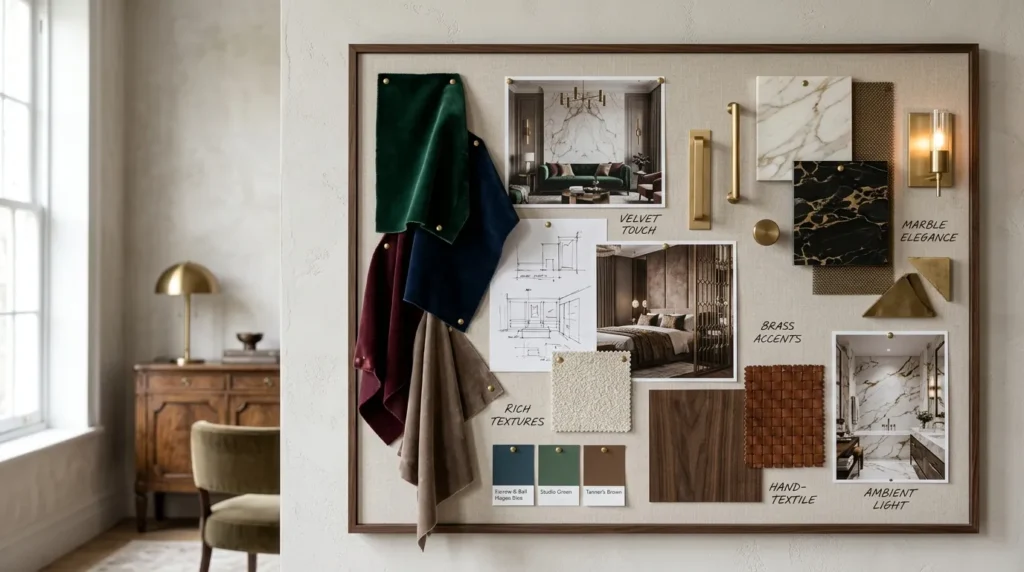
Luxury interiors often succeed because they focus on quality materials, layered textures, and thoughtful details rather than excessive decoration. This approach creates homes that feel refined and comfortable simultaneously.
The key is balancing elegance with livability.
How To Style It
Include velvet fabrics, natural stone, warm metals, custom lighting, and high-quality furnishings on the mood board. Layer textures throughout every room to create depth.
Choose a cohesive palette that supports the overall vision.
Frequently Asked Questions
What is a whole house mood board?
A whole house mood board is a visual collection of colors, materials, furniture, textures, and design inspiration that guides decorating decisions throughout an entire home.
Why should I create a mood board before decorating?
A mood board helps establish consistency, prevents costly mistakes, and ensures all rooms work together cohesively.
What should be included in a mood board?
Include paint colors, flooring, furniture inspiration, fabrics, lighting, finishes, decorative accessories, and room images that represent your desired style.
Can different rooms have different styles?
Yes, but they should share common elements such as colors, materials, or textures to maintain visual flow throughout the home.
How many colors should a whole house palette include?
Most designers recommend a primary neutral palette supported by two to four accent colors used consistently throughout the home.
Are digital mood boards better than physical boards?
Both options work well. Digital boards offer flexibility and organization, while physical boards allow you to see actual material samples together.
Conclusion
Creating a whole house mood board is one of the smartest steps you can take before decorating or renovating. It provides a clear design direction, helps maintain consistency, and ensures every room contributes to a cohesive overall vision. Whether you’re drawn to modern organic spaces, cozy farmhouse interiors, or sophisticated luxury designs, a thoughtfully curated mood board can make the decorating process more enjoyable and successful.
The best mood boards focus on more than just colors. They capture the atmosphere, materials, textures, and lifestyle you want your home to reflect. By identifying these elements early, you’ll make more confident design decisions and create spaces that feel connected from room to room.
Start by gathering inspiration that genuinely resonates with you, then look for recurring themes. Over time, your mood board will evolve into a practical roadmap that guides every decorating choice and helps bring your dream home to life.
Related Articles
- Modern Organic Living Room Ideas
- Cozy Home Decorating Tips
- Neutral Home Design Inspiration
- Modern Farmhouse Decorating Ideas
- Luxury Living Room Design Trends