Freestanding vs Wall-Mounted Toilet Paper Holders for Tight Bathroom Layouts
Choosing between freestanding vs wall-mounted toilet paper holders for tight bathroom layouts often comes down to the specific constraints of your plumbing and floor space. While wall-mounted models offer a clean, minimalist aesthetic, they require permanent installation and precise placement to ensure comfort. Freestanding versions provide a mobile alternative that avoids drilling into tile or drywall, making them ideal for renters or those with limited wall access.
Understanding how these two options function in cramped quarters will help you maximize your available square footage while maintaining accessibility. This article explores the trade-offs in functionality, aesthetics, and maintenance to help you decide which configuration best serves your needs.
When evaluating freestanding vs wall-mounted toilet paper holders for tight bathroom layouts, the primary differentiator is how they occupy space. Wall-mounted holders utilize vertical surface area, which is typically underutilized in small rooms, whereas freestanding holders occupy valuable floor real estate. If your bathroom footprint is less than 30 square feet, a wall-mounted unit usually wins by default to keep the floor clear.
However, if your walls are made of glass, mirror, or delicate stone, the wall-mounted option becomes a logistical challenge. In these cases, a slim-profile floor stand is the most practical solution for maintaining reach without damaging wall finishes.
Assessing Floor Space Constraints
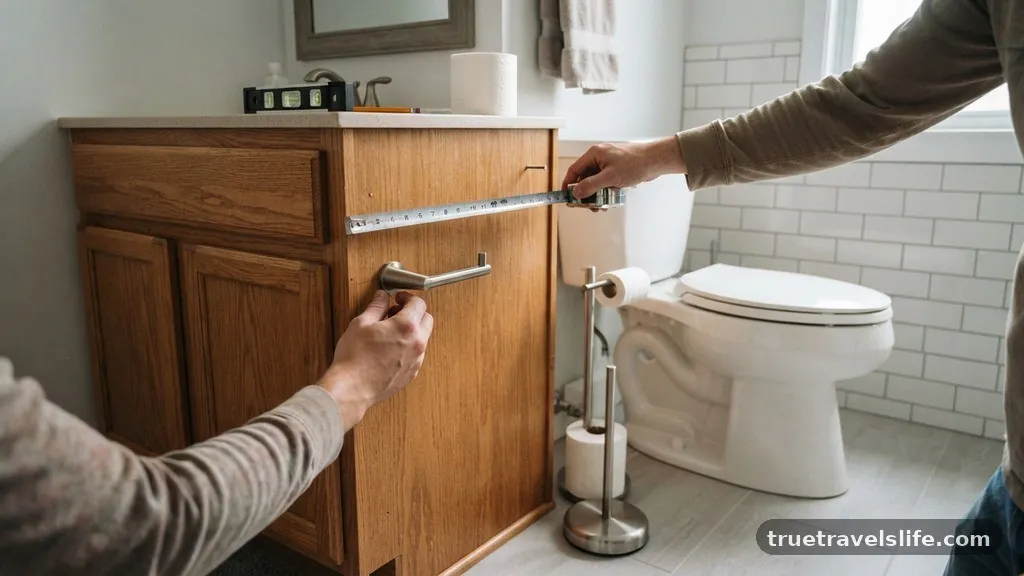
Floor space is the most precious commodity in any compact bathroom. A freestanding paper holder typically requires a footprint of at least 6 to 8 inches in diameter. If your toilet is positioned right next to a vanity cabinet, you may not have enough clearance for a base.
Wall-mounted holders eliminate this issue entirely, as they protrude only a few inches from the wall surface. You should measure the distance between your toilet and the nearest wall or vanity before purchasing any floor-based hardware. If the gap is less than 6 inches, a wall-mounted holder is almost certainly the only viable path forward.
The Impact of Wall Material and Construction
Wall mounting is not always as simple as picking a spot and drilling. Older homes often feature plaster or lath walls that crack easily, while modern luxury bathrooms may feature floor-to-ceiling tile that is difficult to penetrate. Installing a wall-mounted holder into tile requires specialized drill bits and careful measurement to avoid cracking the ceramic or porcelain.
Conversely, a freestanding holder can be placed anywhere on the floor without any structural intervention. If you are a renter, you likely cannot drill into your bathroom walls, making the freestanding model your only realistic choice.
Comparing Installation Complexity and Permanence
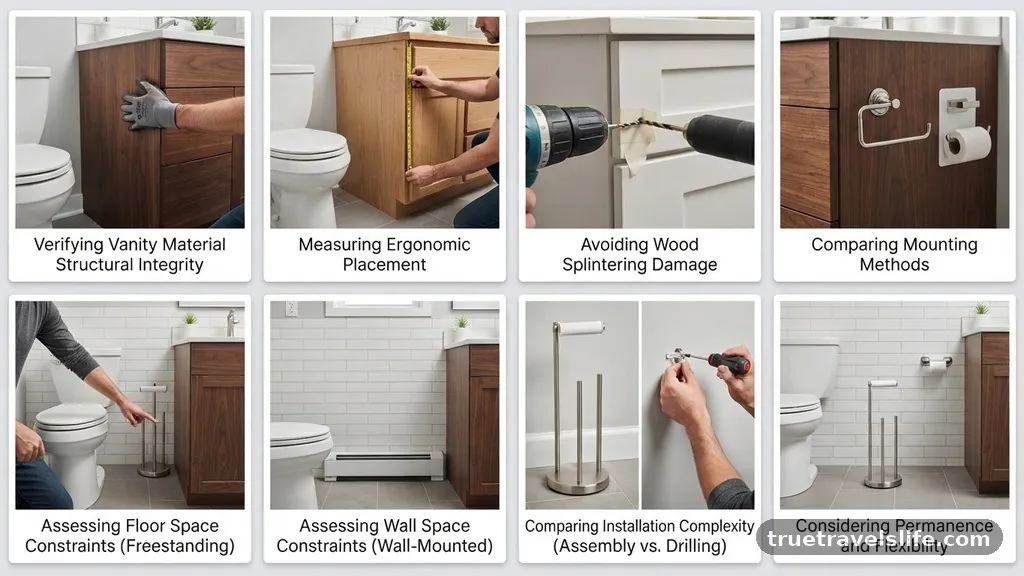
The installation process for these two types of hardware varies significantly in effort and permanence. Wall-mounted holders require a drill, wall anchors, and a level to ensure the unit sits straight. Once you drill the mounting holes, those marks are permanent unless you patch and paint the wall.
Freestanding holders require zero installation effort, as they are essentially “plug and play” items. You simply assemble the base and the vertical rod, then place it where you need it most. This allows you to test different positions, such as moving the holder closer or further from the toilet to improve ergonomics.
| Feature | Wall-Mounted Holder | Freestanding Holder |
|---|---|---|
| Installation | Drill and Anchors Required | None (Assembly Only) |
| Floor Space | Zero Impact | Requires 6-10 inch base |
| Stability | High (Fixed to wall) | Moderate (Depends on base weight) |
| Flexibility | Permanent Location | Mobile/Adjustable |
Ergonomics and Reach in Small Bathrooms
Proper placement of a toilet paper holder is essential for accessibility. The Americans with Disabilities Act (ADA) provides official accessibility standards that suggest placing the center of the roll 7 to 9 inches in front of the toilet bowl. In a very tight bathroom, a wall-mounted unit might be forced into an awkward position behind or too far to the side of the toilet.
A freestanding holder allows you to bring the roll exactly where you need it, which is a major advantage for comfort. You can adjust the position daily if you find that the current placement is causing strain or is difficult to reach.
Aesthetic Considerations for Compact Spaces
Visual clutter makes a small room feel even smaller, so your choice of hardware has a significant impact on room perception. Wall-mounted holders look integrated and intentional, contributing to a streamlined, modern aesthetic. They keep the floor clear, which makes the room appear larger because your eye can follow the floor line uninterrupted.
Freestanding holders, especially those that include extra storage for backup rolls, can look bulky. If you choose a freestanding model, look for slim, minimalist designs with a weighted base to ensure they don’t look like an afterthought.
Managing Extra Storage Requirements
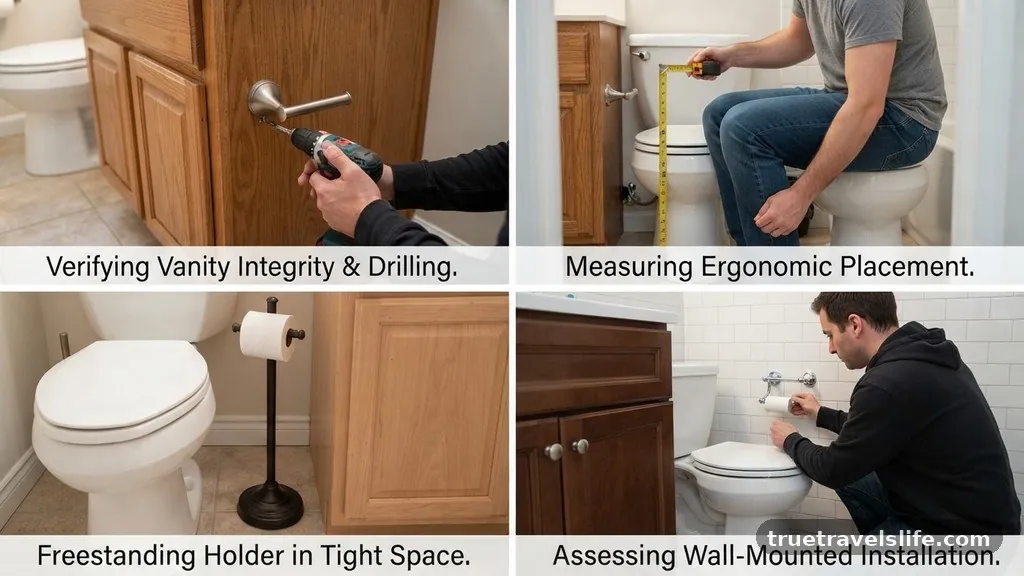
Many bathrooms lack space for a separate cabinet to store extra rolls of paper. Freestanding units often come with a vertical storage column that holds 2 or 3 additional rolls, solving this problem in one package. This is a massive benefit for tiny bathrooms where there is no room for a shelf or a basket.
Wall-mounted holders provide only the functional roll, leaving you to find another place for your backup supply. If your bathroom has zero storage, a freestanding holder with a built-in reserve is a highly efficient, dual-purpose tool.
Stability and Durability Factors
Stability is a common complaint with cheaper freestanding toilet paper holders. If the base is too light, the unit will wobble or tip over every time you pull a sheet of paper. You should look for models with a heavy weighted base or a non-slip rubber pad to ensure it stays put.
Wall-mounted holders are inherently more stable because they are anchored to the structure of the house. If you have children or pets, the stability of a wall-mounted unit is generally safer and more reliable over time.
Maintenance and Cleaning Efficiency
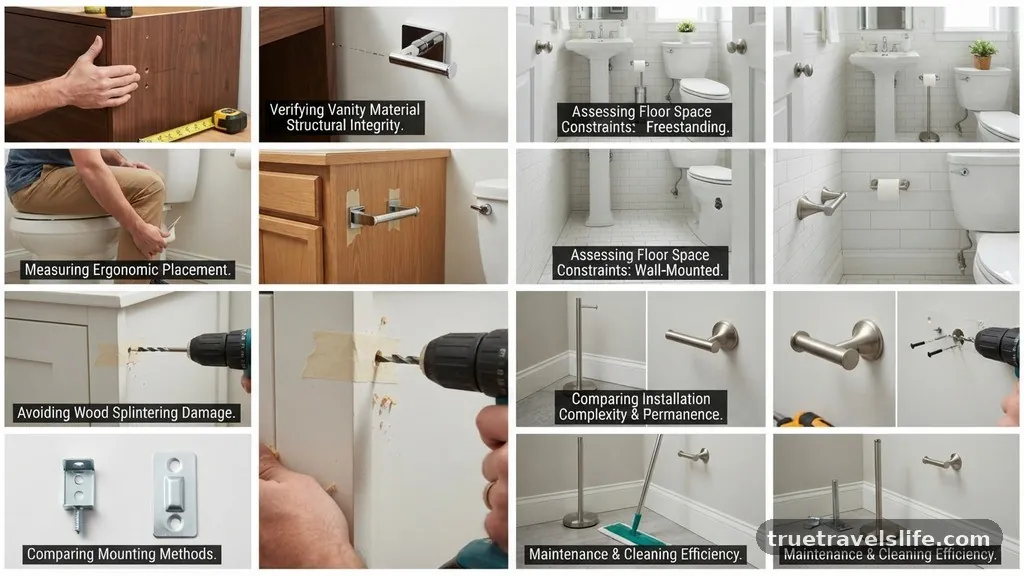
Cleaning a small bathroom is much easier when there are fewer obstacles on the floor. A wall-mounted holder allows you to mop or vacuum the floor underneath the toilet and around the vanity without moving anything. Freestanding holders require you to lift or move the entire stand every time you clean the floor.
Over time, this can lead to scratching or scuffing on your bathroom floor tiles or hardwood. If you prioritize a low-maintenance cleaning routine, the wall-mounted option is the clear winner for efficiency.
Material Choices and Long-Term Value
Whether you choose a wall-mounted or freestanding model, the material quality will dictate how long the item lasts in a damp environment. Bathrooms are high-humidity zones that can cause cheap metals to rust or corrode within months. Always look for stainless steel or high-quality brass finishes that are specifically rated for bathroom use.
While a quality wall-mounted holder is a permanent upgrade to your home, a freestanding holder is a piece of furniture that you can take with you if you move. Both offer value, but in different ways depending on your living situation.
Troubleshooting Common Layout Issues
If your bathroom is so small that a standard wall-mounted holder hits the door or the toilet bowl, consider a recessed wall-mounted holder. This type of hardware sits inside the wall cavity, meaning it has zero projection and won’t interfere with your movement. If you lack the wall depth for a recessed unit, a freestanding model with a rotating base might be the solution.
Some freestanding models feature a slim “hook” design that tucks into the corner of the room. These specialized designs are often the secret to making a cramped layout functional and comfortable for daily use.
Frequently Asked Questions
What is the best way to determine the height of a freestanding holder?
The ideal height for a toilet paper holder is usually between 24 and 30 inches from the floor. This aligns the roll with your hand position while seated. When choosing a freestanding model, measure your toilet seat height and ensure the holder is within this range to avoid reaching too low or too high.
Can I install a wall-mounted holder on a vanity side panel?
Yes, mounting a holder to the side of a wooden vanity is a common way to save space. This is often easier than drilling into tile, as you only need a wood screw to secure the bracket. Ensure the vanity side is sturdy and that the holder does not interfere with the vanity drawer or door operation.
What if my bathroom has no wall space at all?
In bathrooms with no wall space, such as those with full-wall mirrors or windows, a freestanding holder is your only option. Look for models with a vertical storage rack to maximize the utility of the floor space you are sacrificing. You can also look for tension-rod style holders that wedge between the floor and the ceiling if you need a non-drilling wall solution.
How do I prevent a freestanding holder from rusting?
Rust is usually a result of moisture sitting on the metal surface. Wipe your holder down with a dry cloth after showering to remove condensation, and ensure the base is not sitting in water. Choosing high-grade 304 stainless steel is the best way to prevent rust from forming in the first place.
Is it possible to switch from a freestanding to a wall-mounted unit later?
You can certainly switch, though it requires patching and painting the wall if you decide to go back or move the wall-mounted unit. If you are currently in a rental, stick with the freestanding holder to avoid the hassle of wall repair when you move out. If you own your home, a wall-mounted unit is a permanent, value-adding upgrade that cleans up your floor space.
Deciding between freestanding vs wall-mounted toilet paper holders for tight bathroom layouts ultimately depends on your willingness to perform wall modifications and your specific spatial constraints. If you value a clean, unobstructed floor and have the tools to install hardware into your wall, a wall-mounted holder is the superior choice for long-term satisfaction. However, for those living in rentals or dealing with challenging wall materials like glass or tile, a high-quality, weighted freestanding holder offers excellent flexibility without the need for tools.
By carefully measuring your available space and considering the storage needs of your household, you can select the right configuration to make your bathroom feel more organized and functional. We invite you to assess your own floor layout today to see which style best complements your space.