This Is How to Make Your Space Feel Cozy and Comfortable
Creating a home that feels cozy and comfortable is more than just adding furniture—it’s about crafting an environment that nurtures both the body and mind. Many homeowners in the USA struggle with balancing aesthetics and functionality, leaving spaces that feel either too sterile or overcrowded. That’s why these practical strategies matter—they transform real living areas into warm, inviting retreats. In this guide, you’ll find actionable ideas for lighting, textures, furniture placement, and decor that instantly enhance your home’s atmosphere. Each tip is designed to feel natural, usable, and visually inspiring.
1. Layered Lighting
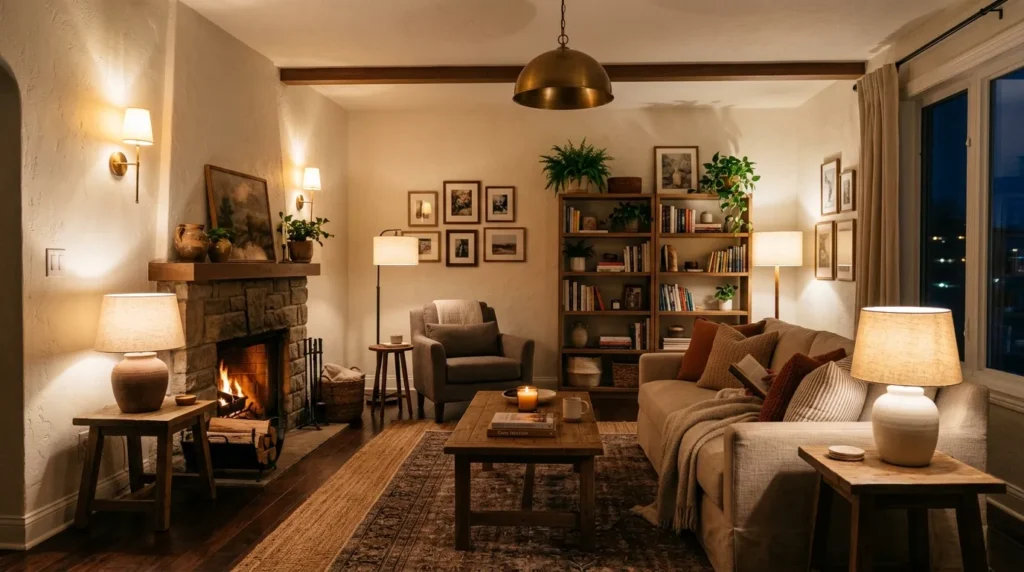
- Combines ambient, task, and accent lighting
- Creates warmth and depth in any room
- Highlights textures, furniture, and decor pieces
- Adjustable lighting enhances mood and usability
Layered lighting is a foundational approach to creating a welcoming environment. By combining overhead fixtures with table lamps, floor lamps, and wall sconces, rooms feel more dynamic and inviting. Unlike a single source of light that can cast harsh shadows, multiple layers illuminate the space evenly while highlighting textures and architectural details. In my experience, layered lighting makes spaces feel professionally designed without requiring significant investment. It also allows homeowners to adjust lighting for daily activities, from reading in the evening to entertaining friends, ensuring both function and style coexist naturally.
When implemented thoughtfully, layered lighting transforms a room from flat to dimensional. Accent lights emphasize artwork or shelves, while task lighting provides focused illumination for work or reading areas. Using dimmers lets you control ambiance, creating cozy moods for quiet evenings or bright settings for lively gatherings. Pairing warm bulbs with layered fixtures softens the atmosphere and enhances comfort. Strategically placing lights can also visually expand smaller spaces, improving both aesthetics and practicality, making every corner feel intentionally designed and inviting.
2. Textured Throws
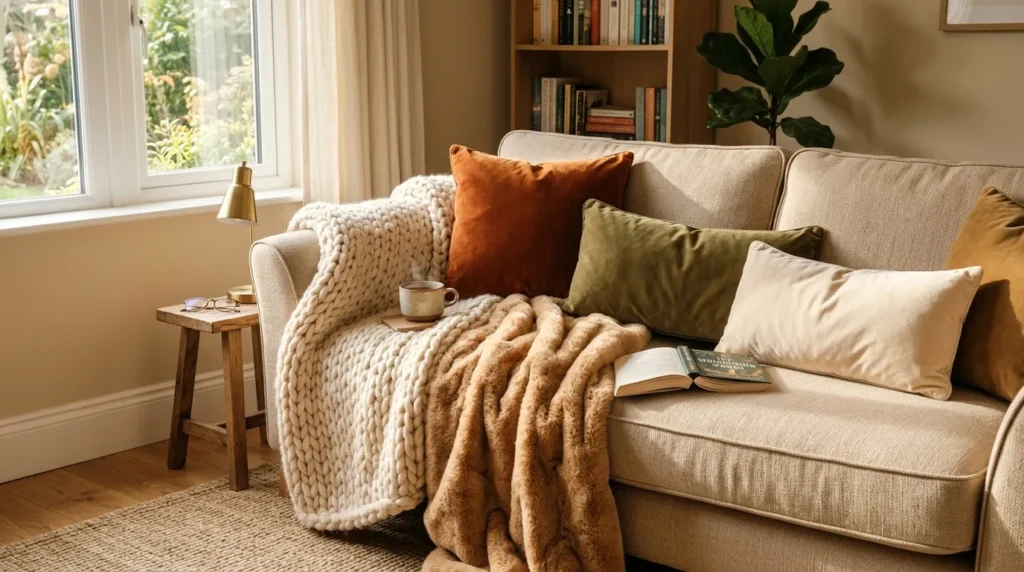
- Adds tactile warmth with wool, cashmere, or faux fur
- Enhances visual depth on sofas and beds
- Creates cozy reading or relaxation corners
- Complements seasonal decor updates
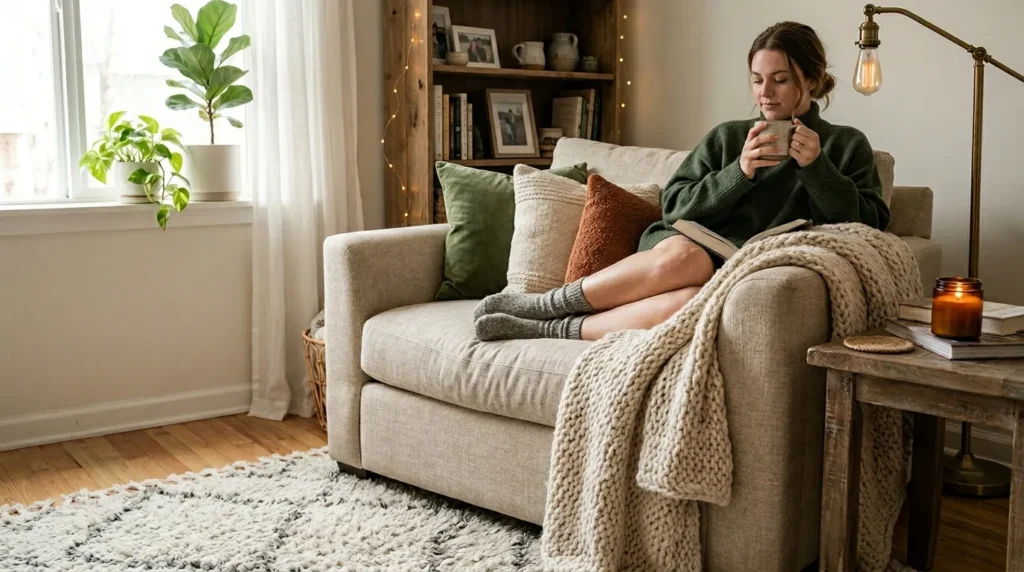
Textured throws are an easy way to bring softness and comfort into any home. Draping chunky knit blankets or faux fur throws over furniture introduces layers that are both visually appealing and inviting to touch. This technique works because textures naturally draw the eye and encourage interaction, making a space feel more lived-in and approachable. I’ve noticed that even neutral-toned throws can dramatically improve the perception of warmth in a room, adding depth without overwhelming existing decor. Choosing materials like wool or cashmere also elevates the sense of luxury and comfort.
Beyond aesthetics, throws enhance functionality by creating dedicated cozy zones. A well-placed blanket on a sofa or reading chair encourages relaxation and encourages daily use of the space. Mixing textures, such as pairing velvet cushions with a knit throw, adds variety and interest while maintaining harmony. Seasonal flexibility is another advantage—lighter cotton throws in summer, heavier knits in winter—allowing the room to feel fresh year-round while keeping comfort at the forefront of design.
3. Natural Rugs
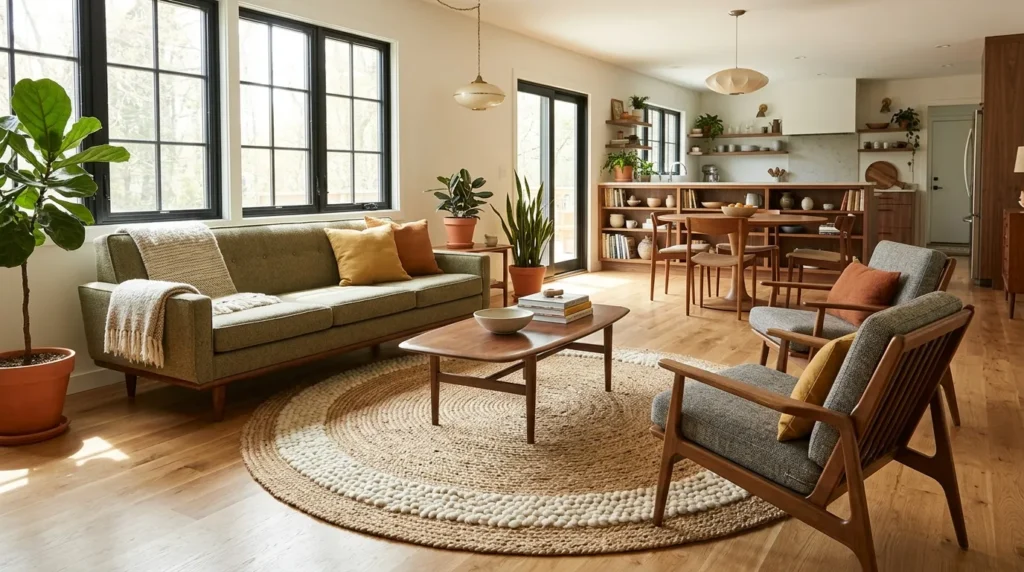
- Grounds spaces with organic textures
- Provides warmth and comfort underfoot
- Defines areas in open-plan layouts
- Complements both neutral and colorful interiors
Natural fiber rugs, such as jute, sisal, or wool, are excellent for creating a cozy yet grounded look. Their earthy textures and tones add warmth while providing tactile contrast against hardwood or tile floors. That’s why many designers recommend them—they blend seamlessly with various decor styles while enhancing both visual and sensory comfort. Rugs also prevent rooms from feeling cold or unfinished, giving the impression of a well-thought-out, inviting home environment.
In practical terms, rugs help organize and define living spaces. Layering rugs or placing smaller accent rugs over larger neutral bases can delineate seating areas or entryways. Materials like wool and jute are durable, low-maintenance, and versatile for family homes. Pairing a natural rug with textured throws, cushions, or wooden furniture creates a cohesive aesthetic, while also softening high-traffic areas. This combination ensures spaces are not only beautiful but also functional, tactile, and comfortable.
4. Statement Pillows
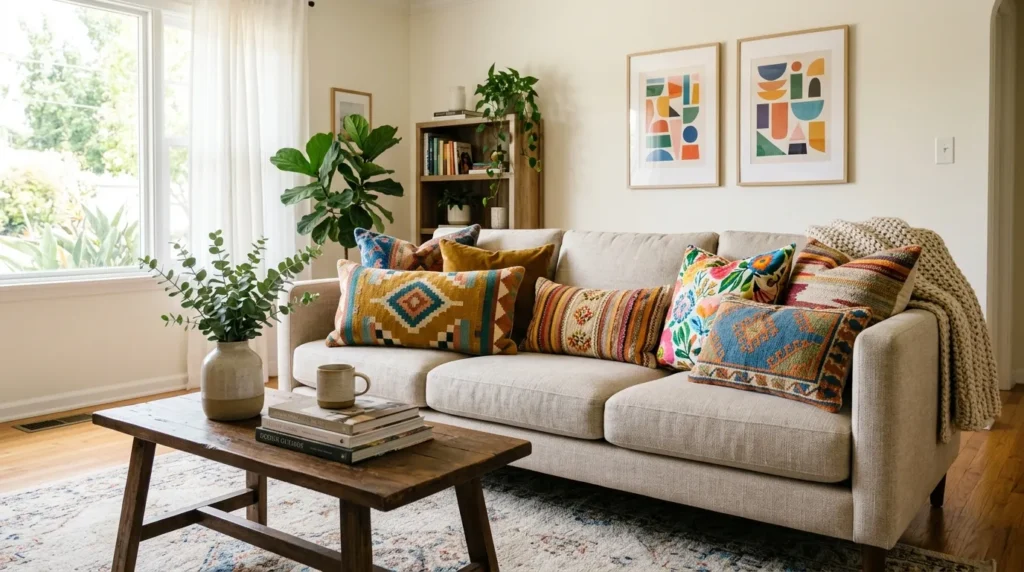
- Adds visual interest and texture
- Introduces pops of color in neutral rooms
- Provides extra comfort on sofas and beds
- Easily swapped for seasonal updates
Statement pillows can transform furniture and elevate the feel of a space instantly. Bold patterns, vibrant colors, or unique textures draw attention, giving a sofa or bed a designer-inspired look without major changes. I’ve seen this approach make even minimalistic rooms feel curated and approachable. Using a combination of different shapes, like square and lumbar pillows, enhances depth and encourages visual balance. Statement pillows are an effective and low-commitment way to refresh decor and reflect personal style.
Functionally, pillows improve usability by offering extra support for lounging or reading. Mixing fabrics, such as linen with velvet, creates a tactile layer that’s both comfortable and visually appealing. Rotating pillows seasonally allows for subtle updates aligned with trends or holiday decor. Additionally, coordinating pillow colors with rugs, throws, or art pieces ties the room together, creating a cohesive environment that feels intentionally designed, cozy, and welcoming to all who enter.
5. Ambient Candles
- Provides soft, flickering light
- Adds subtle scents for sensory comfort
- Enhances intimacy and relaxation
- Works in living rooms, bedrooms, and bathrooms
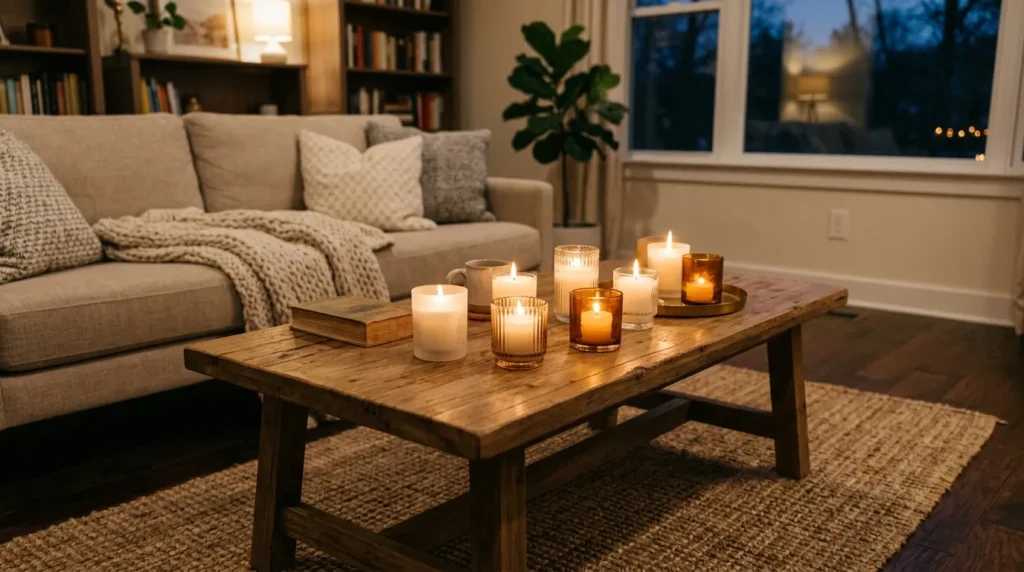
Candles are a simple yet powerful tool for creating a cozy atmosphere. The gentle flicker of candlelight adds warmth that overhead lighting cannot replicate, while the placement of scented or unscented candles enhances both aesthetic and olfactory appeal. I’ve noticed that grouping candles in varying heights creates visual layers that complement decor, from coffee tables to bathroom vanities. Using decorative holders or jars also makes them design elements even when not lit, contributing to a space’s personality.
Beyond ambiance, candles encourage moments of pause and relaxation. Placing them in living areas or bedrooms transforms ordinary routines into intentional experiences. Scented candles with vanilla, amber, or sandalwood notes further enhance comfort, while clusters create focal points that elevate interior styling. Combining candlelight with layered textures—throws, rugs, or cushions—amplifies the warmth and tactile appeal, making the space feel inviting, lived-in, and cozy.
6. Greenery Accents
- Introduces natural color and life
- Improves visual freshness and air quality
- Works in pots, baskets, or statement plants
- Complements a variety of decor styles
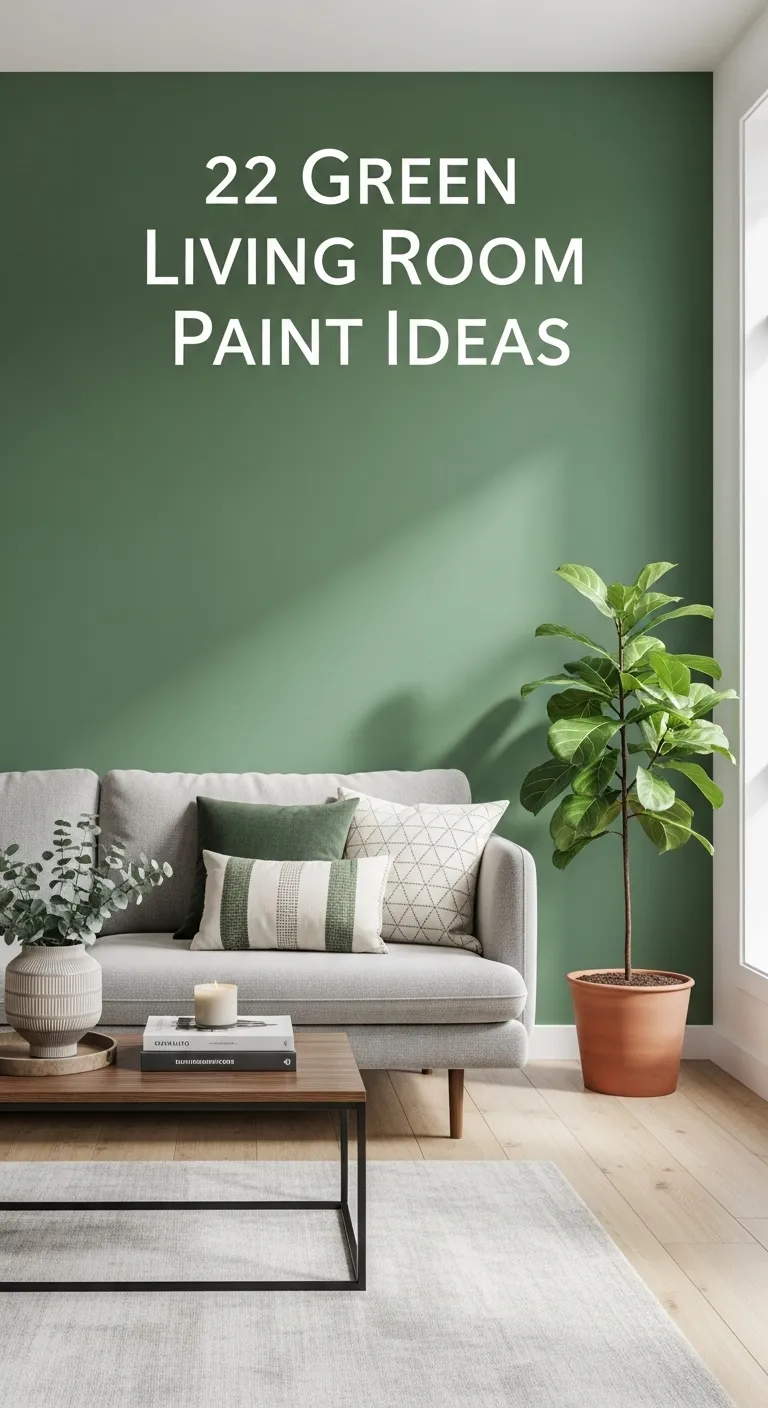
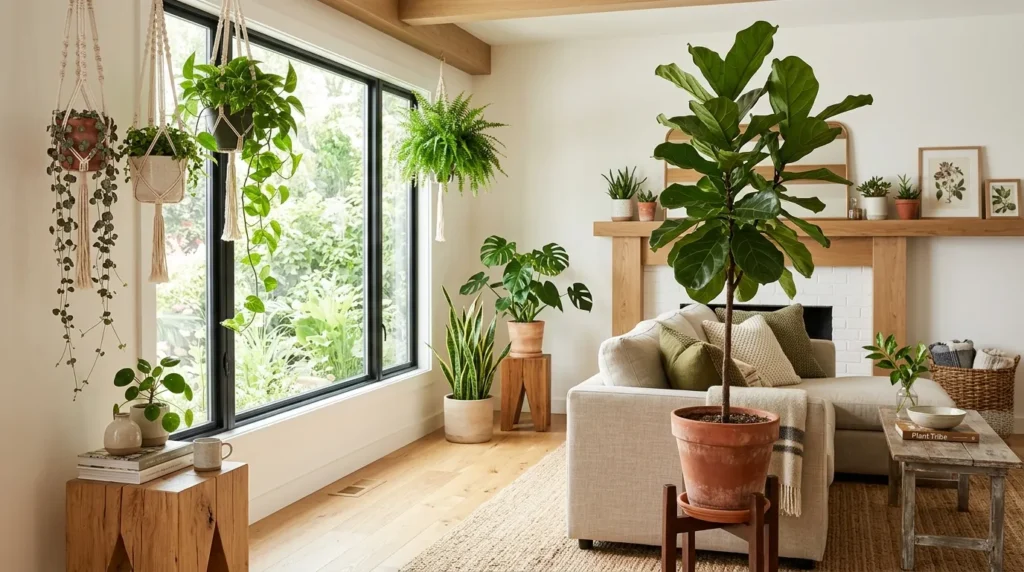
Adding greenery is an instant way to enhance a home’s comfort and aesthetic appeal. Plants provide organic color, shape, and texture that soften hard lines in furniture or architectural features. I’ve seen low-maintenance options like pothos, snake plants, or fiddle-leaf figs transform corners of living rooms and bedrooms into inviting focal points. Greenery creates a psychological sense of calm and contributes to a more balanced, natural interior environment.
Practical use of plants also improves space usability by defining zones or filling awkward corners. Grouping plants of varied sizes and textures creates depth, while hanging or tabletop arrangements free up floor space. Paired with neutral furniture, wood elements, and soft textiles, greenery adds a layered, lived-in feel. Additionally, selecting appropriate containers—ceramic, woven, or metallic—complements the room’s style, enhancing both visual cohesion and tactile appeal.
7. Cozy Window Treatments
- Adds texture and softness to walls
- Controls natural light for mood and comfort
- Enhances privacy and insulation
- Works with layered curtains or shades
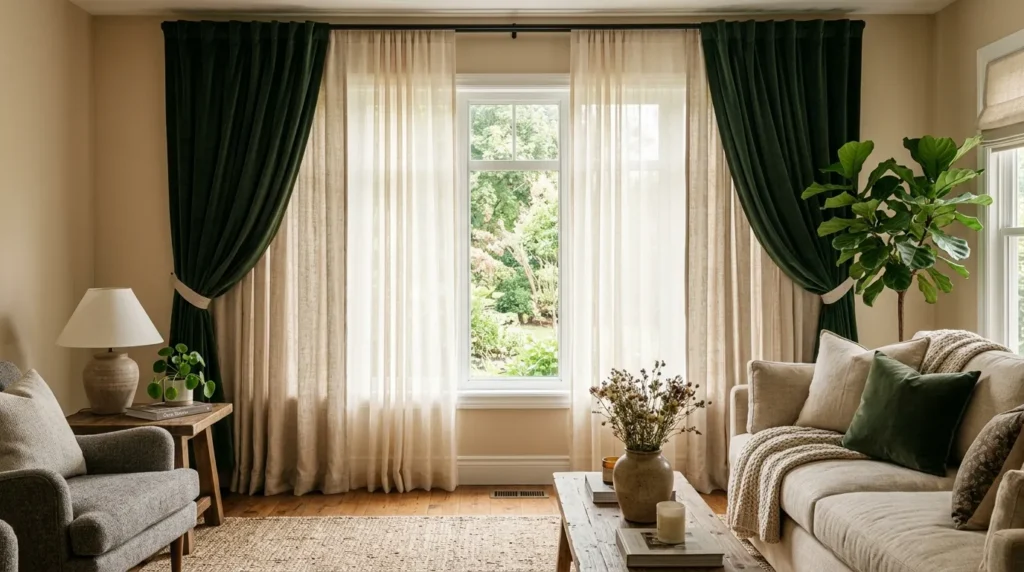
Window treatments are a subtle but impactful way to make a home feel warm and comfortable. Heavy, textured curtains or layered sheers soften sunlight while adding a decorative frame to windows. In my experience, well-chosen fabrics like linen, velvet, or cotton create depth and movement, making rooms feel more intimate and complete. They also provide functional benefits such as privacy, light control, and thermal insulation during colder months, which contributes to overall comfort and energy efficiency.
Beyond practicality, drapes or shades transform the ambiance of spaces. Layering heavier curtains with sheer panels allows flexibility in filtering sunlight and maintaining privacy without sacrificing natural light. In living rooms, bedrooms, or dining areas, window treatments define the room’s style while complementing furniture, rugs, and decorative accents. Soft, flowing fabrics invite touch and visually enhance warmth, giving every room a finished, thoughtfully styled appearance that supports relaxation and coziness.
8. Warm Wood Elements
- Adds natural texture and earthy tones
- Introduces visual warmth in modern spaces
- Works in furniture, shelving, and accent pieces
- Complements neutral and colorful interiors
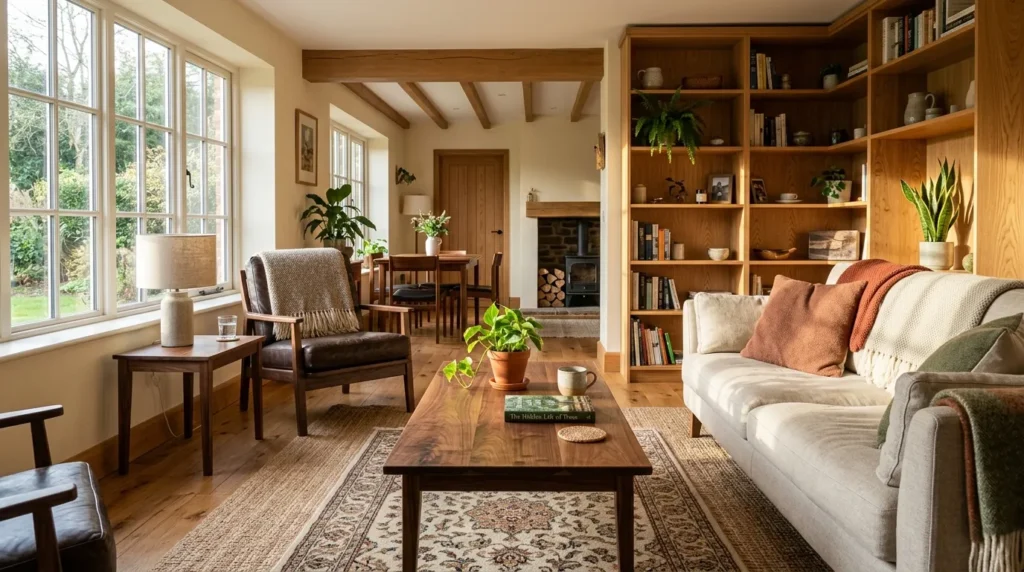
Wood elements immediately make interiors feel grounded and inviting. From coffee tables to shelving and chair legs, natural woods add tactile richness and visual warmth that contrasts with hard surfaces or neutral tones. That’s why designers often recommend incorporating wood—its organic texture balances modern minimalism or bright interiors. I’ve seen small wooden accents completely change the mood of a room, creating harmony and coziness in both living and dining areas.
Practically, wooden pieces are durable and versatile, supporting daily use while remaining stylish. Combining light and dark wood tones adds subtle contrast, while finishes like matte, polished, or distressed allow adaptability to rustic, contemporary, or eclectic spaces. Wood works well alongside textiles, rugs, and greenery, tying together multiple elements while improving both comfort and visual appeal. It’s a simple yet effective way to make rooms feel warm, layered, and intentionally designed.
9. Layered Rugs
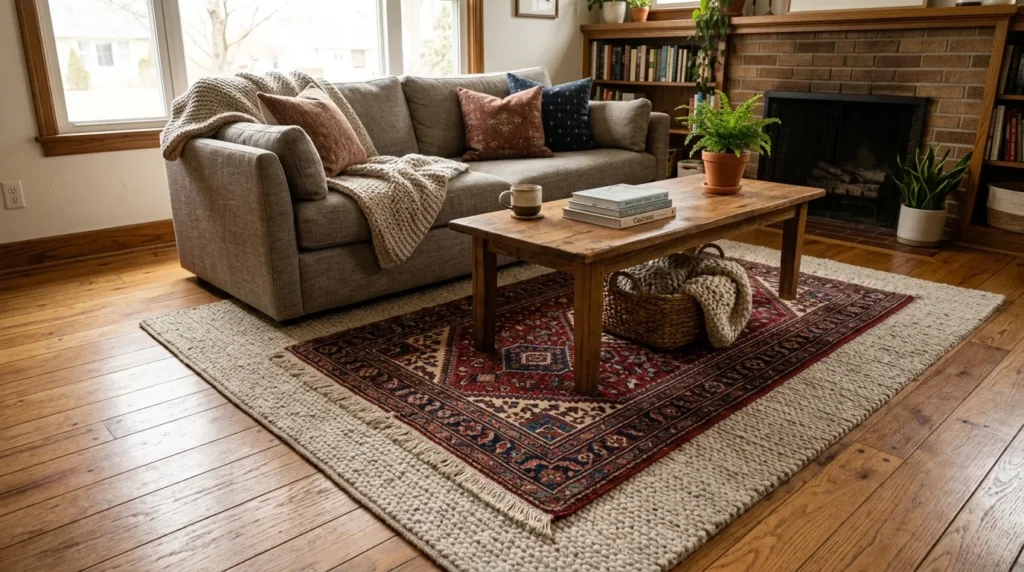
- Adds depth and dimension to floors
- Defines zones in open-plan layouts
- Enhances comfort underfoot
- Complements patterned and neutral furniture
Layering rugs is a practical approach to enhancing both comfort and style. A small patterned rug placed over a larger neutral base adds visual interest and separates functional areas, particularly in open-concept living spaces. This method works because it creates texture and pattern contrast without overwhelming a room. I’ve noticed that layered rugs give a designer-finished look with minimal effort, making everyday spaces feel more curated and cozy.
From a usability perspective, layered rugs anchor furniture arrangements and guide movement through rooms. Mixing textures like jute with wool or cotton with shag enhances tactile comfort while visually breaking up hard floors. Smaller rugs can be swapped seasonally, offering versatility and freshness. Combined with throws, cushions, and wood accents, layered rugs complete the cozy aesthetic, providing warmth, depth, and a sense of thoughtful styling.
10. Soft Wall Art
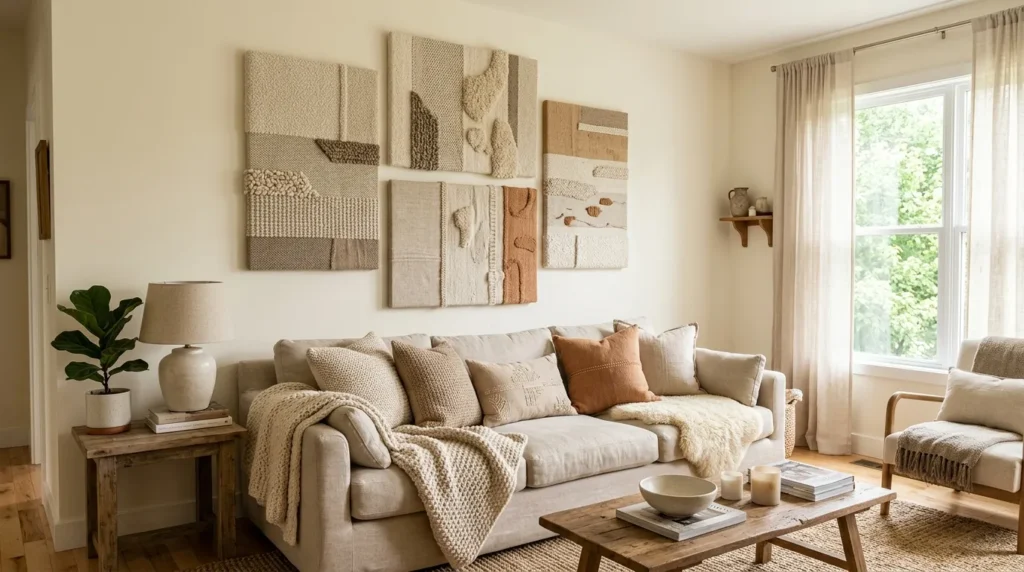
- Adds texture, color, and personality
- Breaks up plain walls without clutter
- Works with fabric, canvas, or framed prints
- Complements furniture and decor layers
Soft wall art, such as fabric panels or textile prints, introduces warmth and dimension without overwhelming a space. Unlike rigid or metallic pieces, soft art adds tactile interest and subtly enhances the room’s cozy atmosphere. I’ve noticed that placing art above sofas, beds, or sideboards completes the visual flow, making rooms feel intentional and welcoming. Soft art also allows flexibility with color palettes, patterns, or seasonal updates, giving homeowners an approachable way to refresh interiors.
Functionally, wall art guides the eye, anchors furniture, and adds a focal point. Layering smaller pieces or selecting oversized panels creates drama without sacrificing intimacy. Materials like cotton, linen, or wool blends increase tactile appeal and help soften room acoustics. Combined with rugs, lighting, and textiles, soft wall art elevates the overall design, making interiors feel curated, inviting, and visually harmonious.
11. Ambient Mirrors
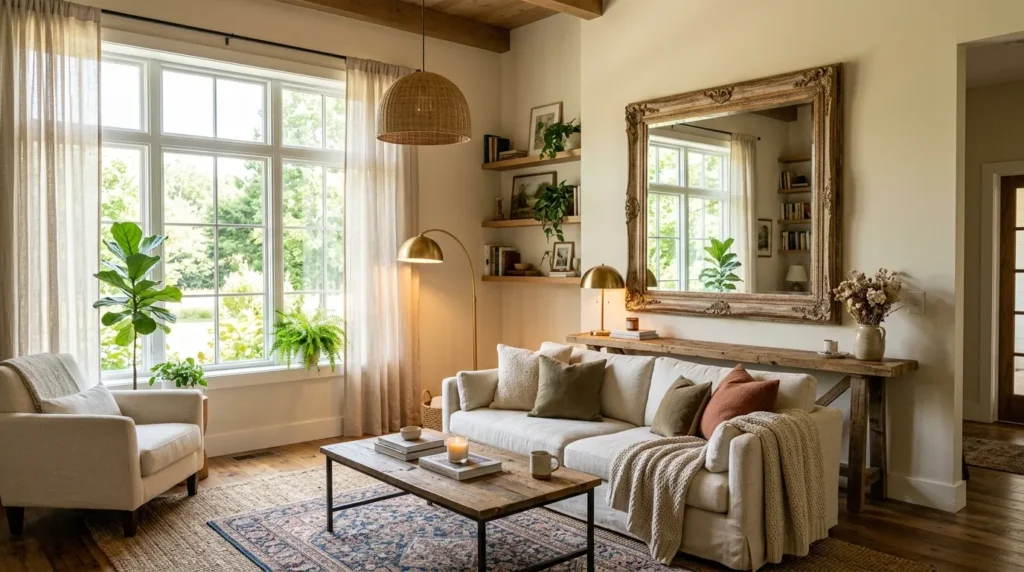
- Reflects light to expand perceived space
- Adds decorative depth and dimension
- Works in hallways, living rooms, and bedrooms
- Complements layered lighting and furniture
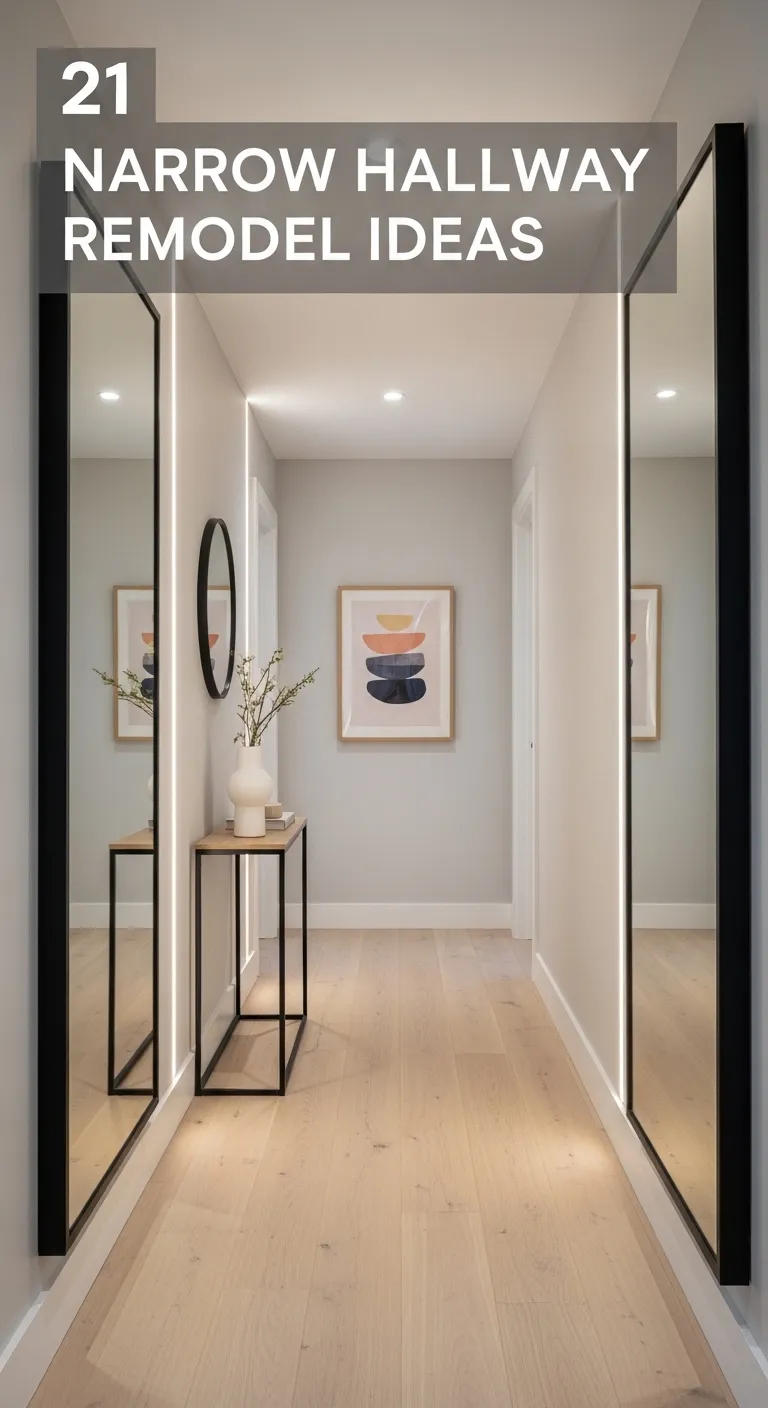
Mirrors enhance both the functionality and visual appeal of a space. By reflecting natural or artificial light, they brighten rooms and create a perception of larger, more open areas. I’ve seen homes transformed instantly by well-placed mirrors opposite windows or light sources, while also highlighting furniture and decor. Mirrors with wooden or metallic frames can act as standalone decorative pieces, enhancing style while maintaining utility.
Beyond size perception, mirrors establish focal points and balance within rooms. Large statement mirrors or clusters can define hallways, living areas, or bedrooms, adding elegance without clutter. Selecting frames that complement existing furniture and lighting ensures cohesion, while beveled or soft-edged glass avoids harsh reflections. Using mirrors strategically enhances comfort, brightness, and visual harmony, making the space feel intentionally designed and cozy.