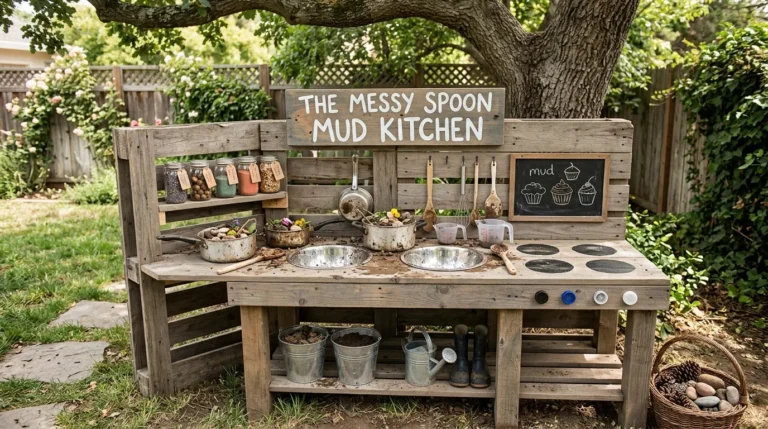
10 Your Backyard Needs This Mud Kitchen for Kids Setup
Introduction
A backyard mud kitchen is one of the easiest ways to turn ordinary outdoor space into a creative play zone kids actually use. It does not need to be expensive, oversized, or professionally built. With a few practical materials, you can create a setup where children mix mud pies, wash stones, collect leaves, serve pretend meals, and enjoy open-ended play outside.
For USA families, this kind of play space works especially well because it fits many backyard styles. It can sit beside a fence, on a patio, near a garden bed, under a shade tree, or even along a small porch. The best setup is not only fun for kids. It should also be safe, sturdy, easy to clean, and nice enough to blend with the rest of the yard.
This guide focuses on the kind of outdoor play station Your Backyard Needs if you want more screen-free play, more sensory learning, and a prettier kids’ corner that does not look messy all the time. Each idea includes real materials, layout tips, and visual styling details so you can build something practical, charming, and Pinterest-worthy.
1. Mud Pie Counter
- Creates a clear work surface for mixing, scooping, sorting, and pretend cooking.
- Works with leftover wood, a small table, a potting bench, or a sealed plywood top.
- Helps keep messy play in one dedicated backyard zone.
- Looks polished when styled with bowls, trays, baskets, and simple outdoor tools.
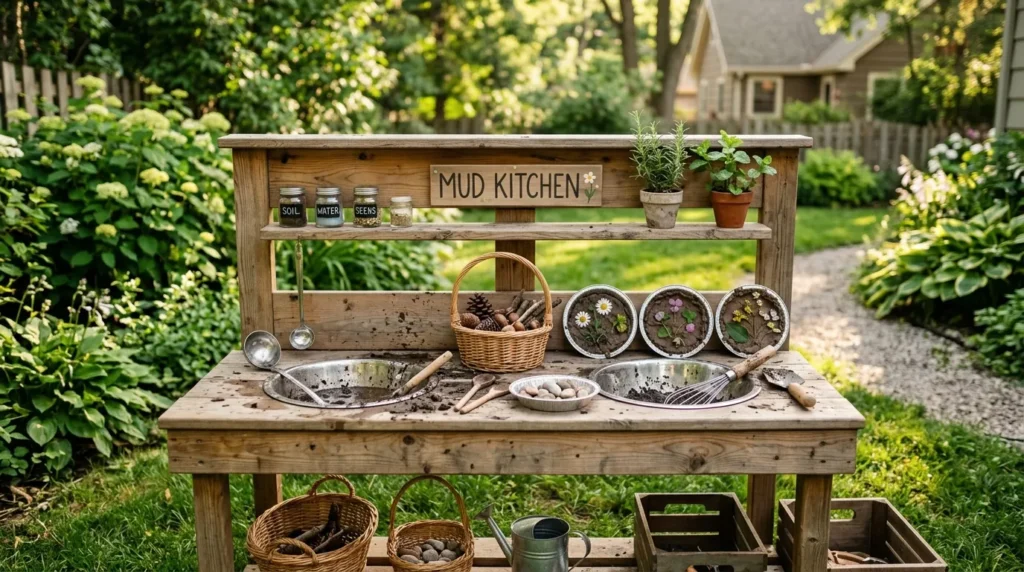
A strong mud pie counter gives children one clear place to create instead of spreading dirt across every outdoor surface. The counter can be made from a small wooden table, leftover deck boards, a potting bench, or a sealed plywood top attached to simple legs. What matters most is height, stability, and enough surface space for bowls, leaves, water, and pretend ingredients. In my experience, kids use a mud kitchen longer when the main work area feels open, sturdy, and easy to reach for steady messy projects during busy afternoons.
Style the counter like a tiny outdoor café by adding a shallow tray, a few metal bowls, and a small basket of spoons. Keep the surface smooth enough to wipe down but not so precious that every splash feels stressful. A natural wood finish looks beautiful in most backyards, while soft paint can help it match a playhouse or fence. This setup improves daily play because children can mix, serve, sort, and clean up in one organized spot without needing constant adult direction after school or during weekend backyard time.
2. Bowl Sink Station
- Adds realistic washing, rinsing, and water play without plumbing.
- Uses a stainless steel bowl, enamel basin, plastic tub, or thrifted mixing bowl.
- Makes the mud kitchen feel more complete and useful.
- Keeps water play controlled and easier to clean after outdoor playtime.
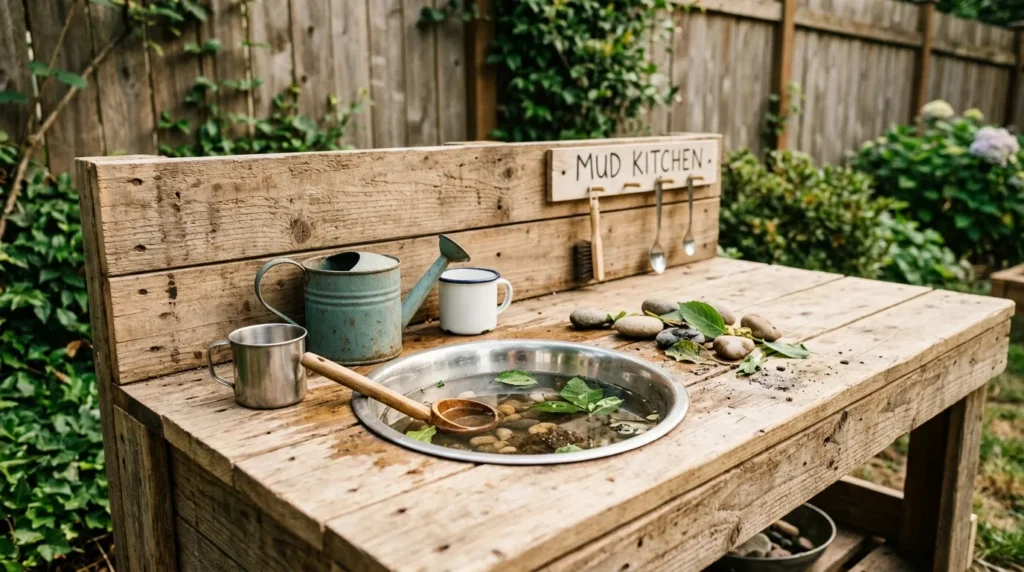
A bowl sink instantly makes a backyard play kitchen feel more realistic and complete. Children love having a spot to rinse rocks, wash leaves, stir muddy water, and pretend to clean dishes after cooking. You do not need plumbing or a working faucet for this to feel exciting. A stainless steel mixing bowl, enamel basin, or plastic tub works well because it can be removed and emptied after play. That simple removable design keeps the setup cleaner and easier for parents to maintain while still giving kids that satisfying real-kitchen feeling.
To create the look, place the bowl into a cutout in the counter or set it neatly on top if cutting wood is not an option. Add a small cup, ladle, or watering can nearby so children can control how much water they use. I’ve noticed removable sinks work better than fixed ones for busy families because they are easy to dump, rinse, and store upside down. This feature adds sensory value, but it also gives the kitchen a polished, thoughtful look in the yard even after repeated muddy, splashy play sessions.
3. Hanging Tool Wall
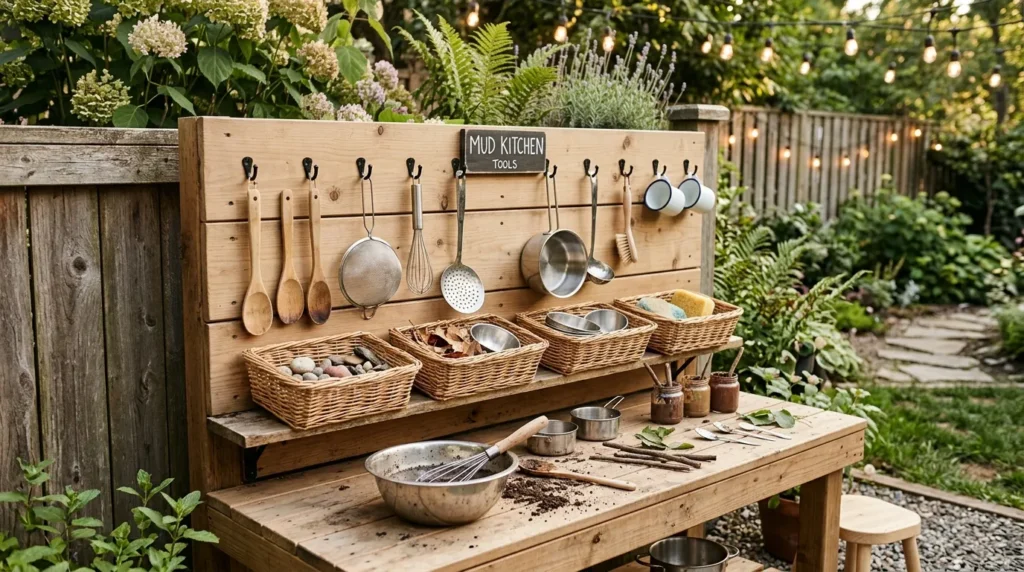
- Keeps spoons, pans, strainers, and cups visible and easy to reach.
- Saves counter space by using vertical storage.
- Works on a fence, pallet board, peg rail, or wooden back panel.
- Makes cleanup easier because every tool has a clear place.
A hanging tool wall keeps the whole mud kitchen looking organized while making play feel more grown-up. Use a fence, pallet backboard, peg rail, or simple wooden board as the vertical storage area. Add child-height hooks for spoons, strainers, small pans, cups, and measuring tools. Kids enjoy choosing their own tools, and parents appreciate that everything has a place after play. This idea also saves counter space, which matters when the kitchen is small or shared by more than one child without making the setup feel crowded or overwhelming outdoors.
For a clean Pinterest-style look, choose a limited set of materials and repeat them. Silver metal utensils, wooden spoons, black hooks, and neutral baskets create a tidy visual rhythm. Avoid hanging too many pieces because clutter can make the station harder to use and less attractive. That’s why many designers recommend vertical storage for children’s outdoor zones. It improves function without making the footprint larger. When tools are visible, kids play more independently, and cleanup becomes a quick matching game at the end without adults needing to reorganize every single piece.
4. Nature Ingredient Shelf
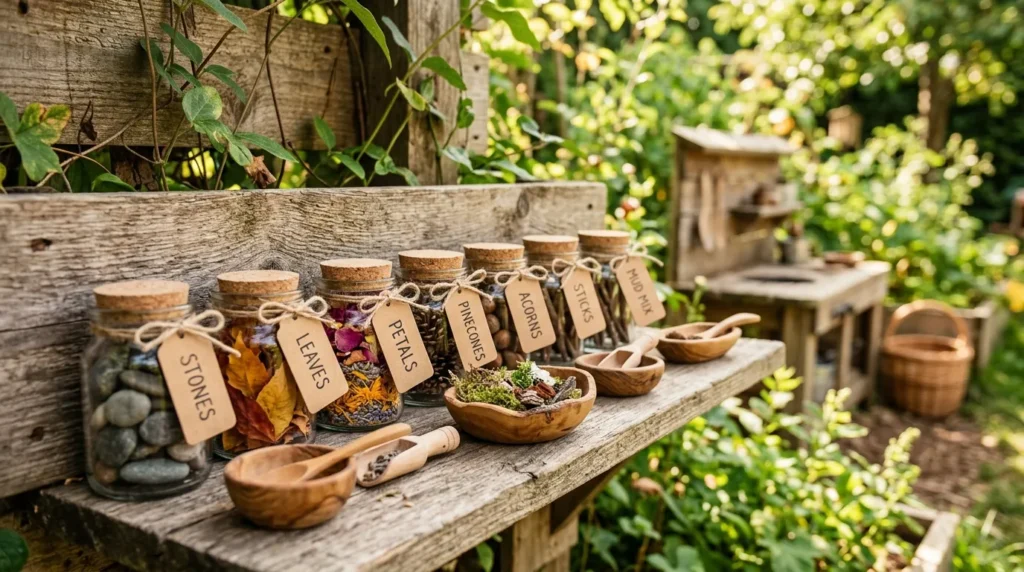
- Gives kids a place to collect leaves, stones, pinecones, flowers, and sticks.
- Turns natural backyard items into pretend pantry ingredients.
- Adds color, texture, and seasonal interest to the play area.
- Encourages sorting, naming, observing, and creative outdoor play.
A nature ingredient shelf gives children a beautiful place to collect and display outdoor treasures. Instead of treating leaves, stones, petals, acorns, and pinecones as random mess, the shelf turns them into pretend pantry items. A small crate, narrow board, or repurposed spice rack can hold jars, cups, and baskets for sorting. This setup encourages observation, creativity, and gentle nature play. It also keeps the mud kitchen visually interesting because the colors and textures change with the season while making the backyard feel purposeful, inviting, and fun for everyone all year.
Use clear plastic jars, small wooden bowls, or open baskets so children can see what they have collected. Labeling is optional, but a few simple tags like petals, stones, leaves, or sticks can add charm and support early reading. Keep glass out of the play area unless children are older and supervised. The shelf works best near the counter but slightly above the splash zone. It adds storage, beauty, and purpose, helping the kitchen feel like a mini garden workshop instead of a pile of outdoor toys for daily creative play across different ages.
5. Simple Water Station
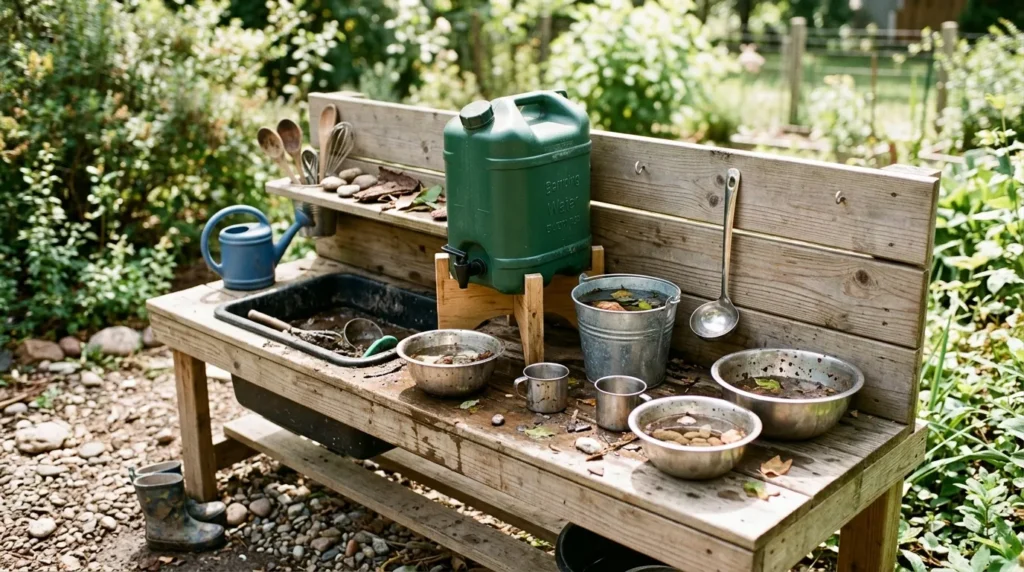
- Adds pouring, measuring, rinsing, and mixing play.
- Uses a bucket, drink dispenser, camping jug, or watering can.
- Helps limit water waste while still making play exciting.
- Works with almost any mud kitchen style or backyard layout.
A water station is the feature that makes mud kitchen play feel alive. Children can scoop, pour, measure, rinse, and mix without asking an adult to turn on the hose every few minutes. A small bucket, camping jug, drink dispenser, or watering can is enough to create the effect. The key is giving kids a limited amount of water so the play stays fun but manageable. This is especially helpful for parents who want creativity without turning the entire lawn into a swamp after rain, parties, or weekend playdates too.
Place the water station on one side of the kitchen so the main counter stays open for mixing and serving. Add a ladle, scoop, or measuring cup to support controlled pouring. Empty the container after play to avoid standing water, bugs, and soggy ground. I’ve seen this work well in many homes because it gives children independence while keeping the setup simple. It also teaches them to refill, share, and use water thoughtfully, which adds a small practical lesson to everyday outdoor play without adding complicated materials or permanent plumbing.
6. Shaded Play Nook
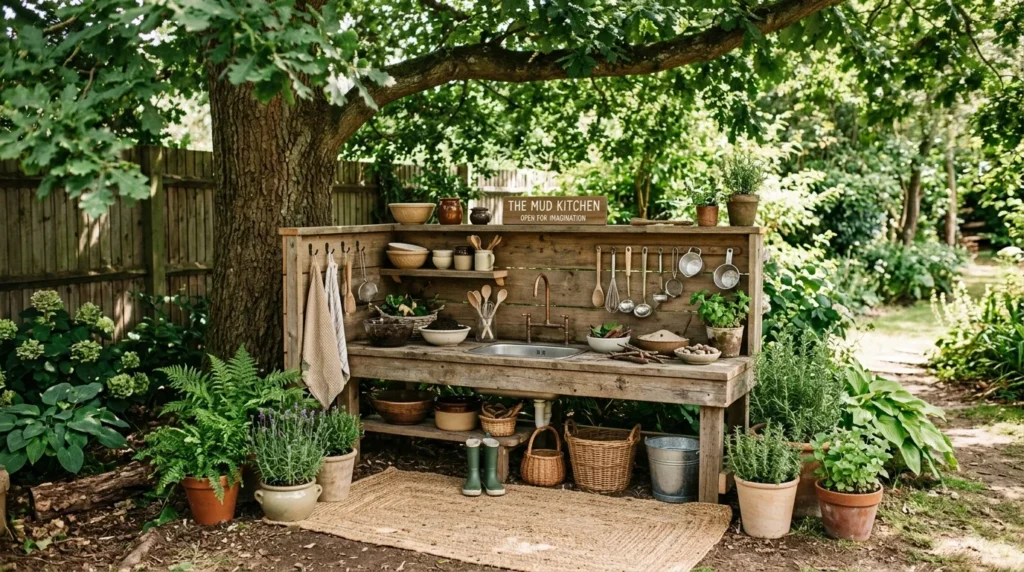
- Makes outdoor play more comfortable during warm weather.
- Works under a tree, patio cover, umbrella, canopy, or shade sail.
- Helps protect wood, tools, bowls, and play supplies from harsh sun.
- Creates a cozy mud kitchen corner that feels intentional and inviting.
A shaded play nook makes the mud kitchen more comfortable during warm afternoons and long summer play sessions. Many USA backyards get strong sun, so shade can make the difference between five minutes of play and an hour of focused creativity. You can place the kitchen under a tree, near a covered patio, or beside a fence that casts afternoon shade. A small canopy, outdoor umbrella, or fabric shade sail can also help if the yard has no natural cover during playdates, weekends, and relaxed after-school afternoons comfortably and safely.
The shaded area should still feel open enough for supervision and airflow. Avoid placing fabric too low, and make sure anything overhead is secure before children play nearby. Add a small outdoor rug, mulch patch, or stepping stones under the station to define the area. This transforms the kitchen from a random toy corner into a cozy outdoor room. It also protects wooden surfaces from harsh sun, keeps metal bowls cooler, and makes the whole setup more inviting during spring, summer, and early fall while helping parents feel better about longer outdoor play.
7. Serving Window Spot
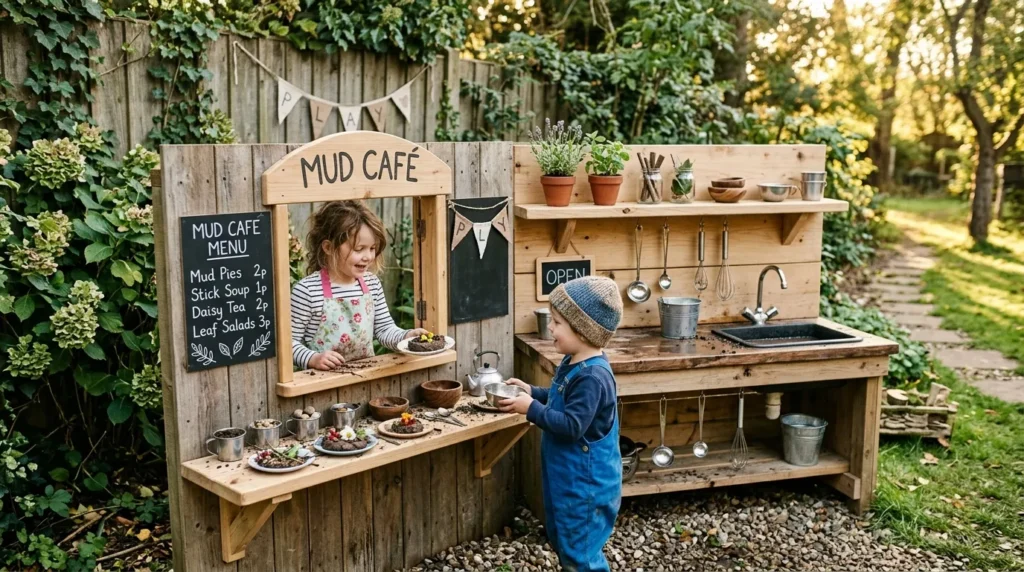
- Adds pretend café, bakery, or restaurant-style play.
- Encourages social play between siblings, friends, and parents.
- Can be made with a simple shelf, fence ledge, or pallet opening.
- Creates a cute focal point that looks great in backyard photos.
A mini serving window adds a playful café feeling without requiring a large structure. You can create it with a small shelf on a fence, a pallet opening, or a narrow ledge attached to the side of the kitchen. Children can pass mud pies, leaf soup, pretend lemonade, or pebble cupcakes through the space. This simple feature encourages social play because one child can cook while another orders, serves, or delivers. It makes the mud kitchen feel more interactive and imaginative, especially when siblings or neighborhood friends join in together.
Keep the serving ledge wide enough for bowls but not so deep that it becomes unstable. A sanded board, crate top, or leftover shelf can work well when secured properly. Add a small chalkboard menu nearby for pretend specials, prices, or recipe names. In my experience, children love any feature that makes play feel like a real job. A serving window also looks adorable in photos because it creates a clear focal point and gives the kitchen a finished, storybook-style detail without needing a full playhouse or expensive custom build.
8. Garden Herb Corner
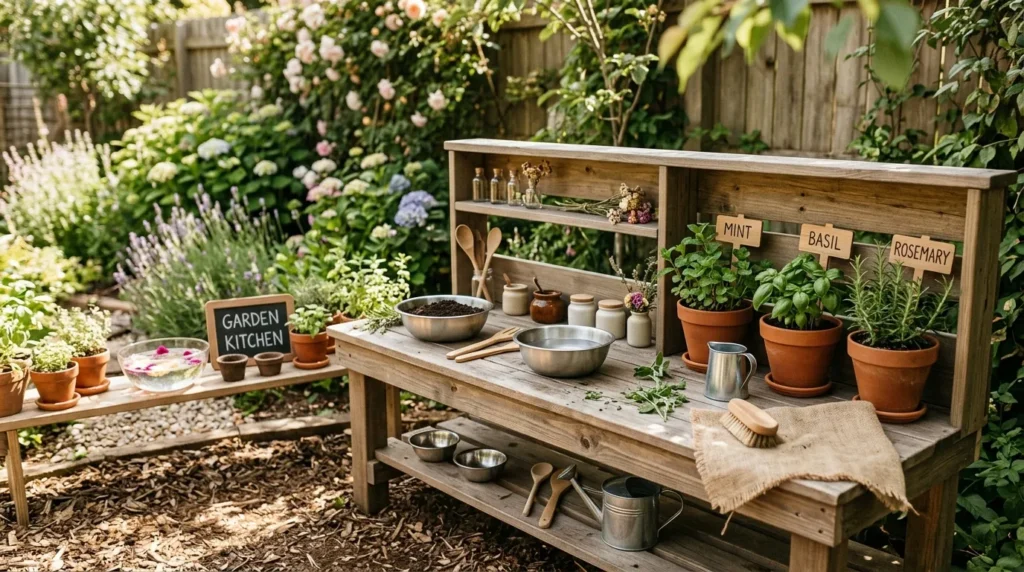
- Adds scent, color, and real garden texture to the mud kitchen.
- Uses kid-friendly pots of mint, basil, rosemary, lavender, or thyme.
- Helps children connect pretend cooking with outdoor nature.
- Makes the setup feel softer, fresher, and more styled.
A garden herb corner brings scent, color, and real-life learning into the mud kitchen setup. Small pots of mint, basil, rosemary, thyme, or lavender can sit near the counter where children can smell, touch, and observe them. They do not need to cook with the herbs for the idea to work. The plants simply make the play area feel more connected to nature. They also soften the look of wood, metal, dirt, and buckets with fresh green texture while making the setup smell fresh and garden-like every day outside.
Choose hardy herbs that can handle outdoor conditions in your region and place them where children will not knock them over easily. Use plastic or lightweight pots for younger kids, and avoid anything sharp, fragile, or toxic. A few labeled plant markers can make the corner feel like a tiny learning garden. This idea works especially well beside a potting bench or fence line kitchen. It adds sensory detail, helps children notice smells and textures, and makes the whole station look more styled and intentional throughout the warmer months of outdoor play.
9. Storage Bench Base
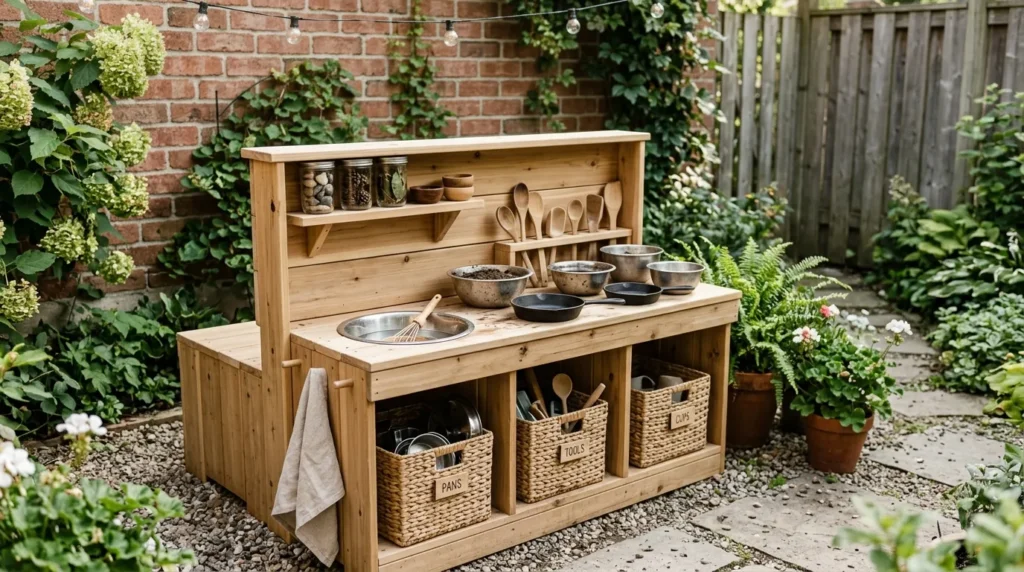
- Gives kids a place to sit, sort, and store play supplies.
- Keeps bowls, pans, buckets, and scoops from spreading across the yard.
- Works with deck boxes, low benches, crates, or repurposed wooden seats.
- Helps parents reset the backyard quickly after messy play.
A tidy storage bench solves one of the biggest problems with outdoor play: where everything goes afterward. Instead of leaving cups, pans, scoops, and buckets scattered around the yard, use a small bench with storage below or beside it. Children can sit, sort supplies, or place finished pretend meals on top. The storage space keeps tools protected from weather and makes the kitchen easier to reset. This is a practical upgrade for parents who want the backyard to stay neat after playdates, weekends, and quick weekday play sessions too outdoors.
Look for a low outdoor bench, small deck box, or repurposed wooden seat with baskets underneath. Keep heavier items low and lighter tools higher so children can access supplies safely. If the bench has a lid, make sure little fingers will not get pinched. Add labels or picture tags to help younger kids return items to the right place. This feature improves the mud kitchen’s daily usability because cleanup becomes part of the routine instead of a separate chore for adults every time children finish cooking and mixing independently.
10. Cleanup Corner
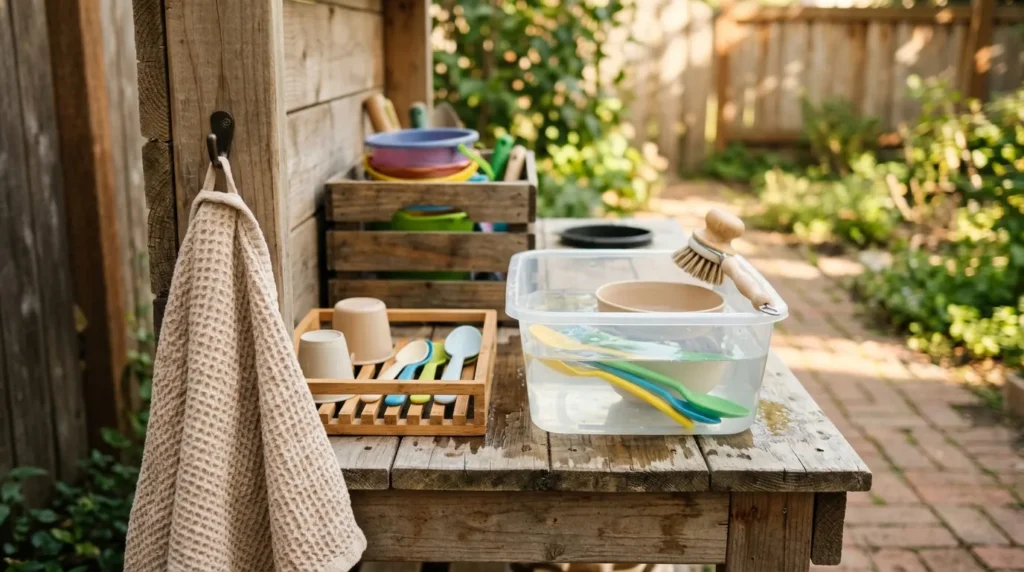
- Teaches kids to rinse, hang, sort, and reset tools after play.
- Uses simple items like a dish tub, towel hook, brush, and drying tray.
- Helps keep the backyard cleaner without stopping messy play.
- Makes the mud kitchen feel complete and easier to maintain.
A cozy cleanup corner helps children finish play with a simple, predictable routine. Mud kitchens are meant to get messy, but that does not mean the end result has to feel chaotic. Add a small brush, towel hook, rinse bucket, and drying tray near the station. Children can scrape bowls, hang tools, rinse spoons, and place items back before going inside. This teaches responsibility in a light, age-appropriate way while keeping the backyard setup easier to manage, even after the play session has been wonderfully messy outside every single day.
The cleanup area should be simple enough that kids can use it without frustration. A plastic dish tub, wooden crate, and towel hook are usually enough. Place the rinse bucket away from walkways so spills do not create slippery spots. This final detail makes the whole kitchen feel more complete because it supports the full cycle of play: gather, mix, serve, wash, and reset. For parents, it reduces clutter. For kids, it turns cleanup into another small part of the pretend kitchen experience after every muddy recipe, garden experiment, and water pour.