12 Mud Kitchen Ideas for Kids You’ll Want to Copy Right Away
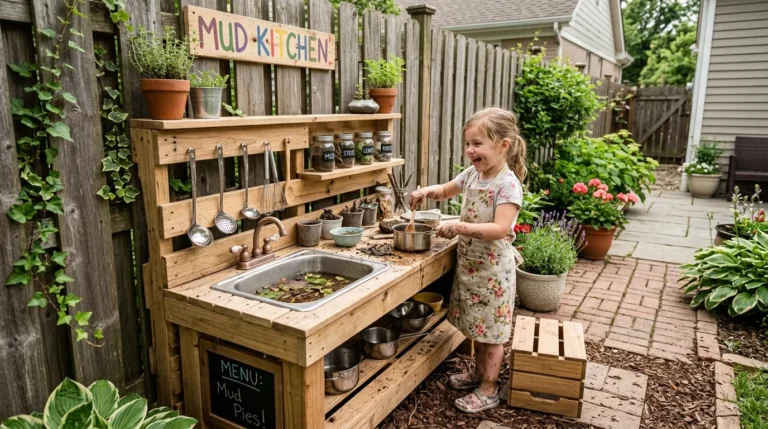
A backyard mud kitchen can turn ordinary outdoor play into something creative, calming, and wonderfully hands-on. Kids do not need a perfect playroom or another loud toy to stay busy; they often need real materials, fresh air, water, dirt, and the freedom to imagine. For USA families trying to create more screen-free moments at home, this kind of outdoor setup feels practical, affordable, and beautiful. It gives children a place to scoop, stir, pour, decorate, pretend, experiment, and proudly make something from nature.
The best part is that a mud kitchen can fit almost any home style, from a large suburban backyard to a small patio, side yard, or rental-friendly outdoor corner. You can build one with thrifted furniture, leftover wood, old kitchen tools, baskets, bowls, and safe natural materials from the garden. This guide shares twelve Pinterest-friendly ideas that look amazing but still work for real children and real family routines. Each section includes practical styling tips, material suggestions, and layout advice to help you create a play space kids will use again and again.
1. Rustic Workbench
- Creates a warm, natural focal point for backyard play
- Works with pallets, potting benches, thrifted tables, or scrap wood
- Adds a charming handmade look without needing expensive materials
- Blends beautifully with garden beds, patios, fences, and outdoor toys
- Gives children a sturdy counter for stirring, scooping, and pretend cooking
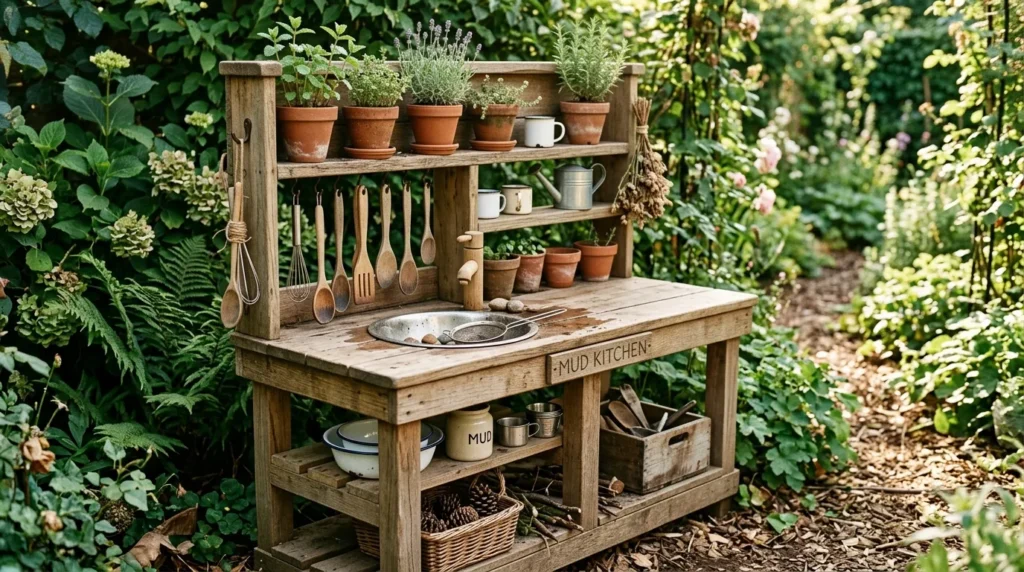
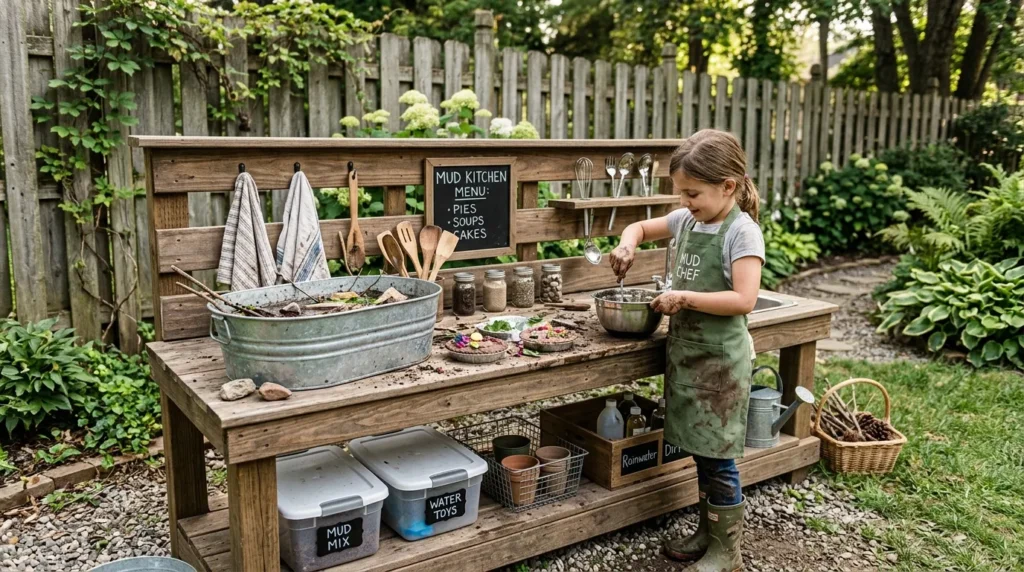
A rustic workbench gives the entire outdoor play space a cozy, handmade feeling. Natural wood works beautifully because it blends with grass, soil, garden beds, and fence lines instead of looking like another bright plastic toy. You can use a thrifted table, old potting bench, pallet frame, or leftover lumber to create the base. This idea works best when the counter is low enough for children to reach comfortably. Sand the edges, tighten screws, and add outdoor sealant so the surface can handle water, dirt, sun, and enthusiastic stirring.
The transformation is instant because one sturdy surface makes the play area feel organized instead of random. Add a metal bowl sink, wooden spoons, old pans, and a few hooks for utensils to create a realistic kitchen feeling. In my experience, children stay engaged longer when the station looks like something they can truly use. Keep the design simple, with open shelves below for bowls and baskets. The rustic look is forgiving too, because scratches, water stains, and muddy marks only make the setup feel more lived-in and loved.
2. Water Play Sink
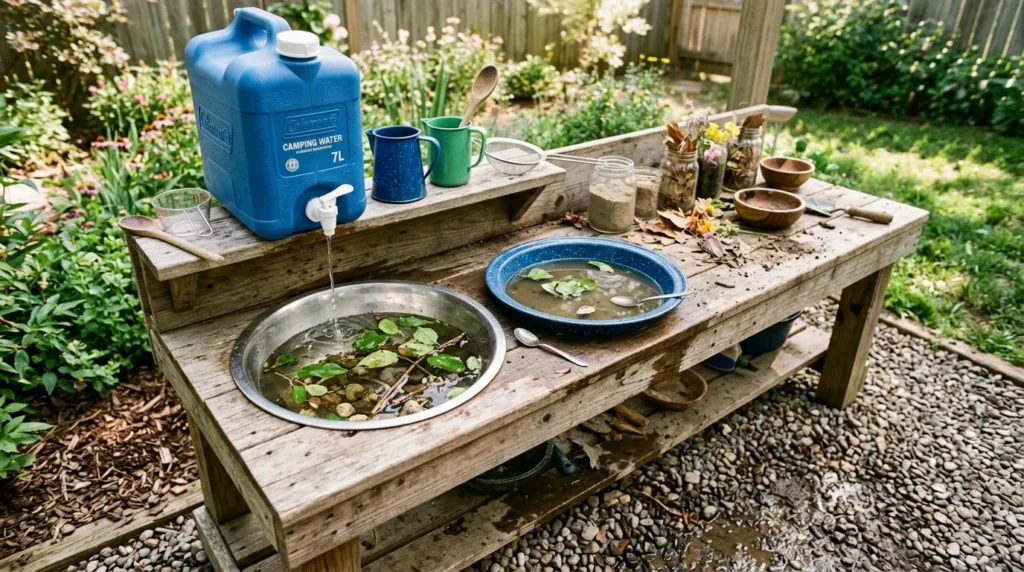
- Adds pouring, rinsing, washing, and mixing to outdoor play
- Works without plumbing using a bowl, basin, jug, or dispenser
- Helps children explore texture, movement, and cause-and-effect learning
- Makes the station feel more realistic and interactive
- Keeps wet materials more contained when the layout is planned well
A water play sink makes a mud kitchen feel exciting the moment children start using it. Water changes everything: dry soil turns sticky, petals float, stones rinse clean, and pretend soup suddenly feels real. You do not need plumbing for this idea to work. A stainless-steel mixing bowl, plastic basin, old roasting pan, or shallow tub can become the sink. Add a camping jug, drink dispenser, or small pitcher nearby for controlled water access. This setup supports coordination, grip strength, patience, and simple science learning through natural play.
The best results come from making water easy to use but not completely unlimited. Place the sink bowl inside a stable counter, crate, or tray so it does not slide during play. Underneath, use mulch, pea gravel, deck tiles, or an outdoor mat to help with drainage and reduce slippery puddles. Younger children usually do better with small refill amounts, while older kids can manage a larger dispenser. Parents get a setup that feels manageable, and kids get the joy of pouring, rinsing, experimenting, and making muddy recipes.
3. Nature Ingredient Bar
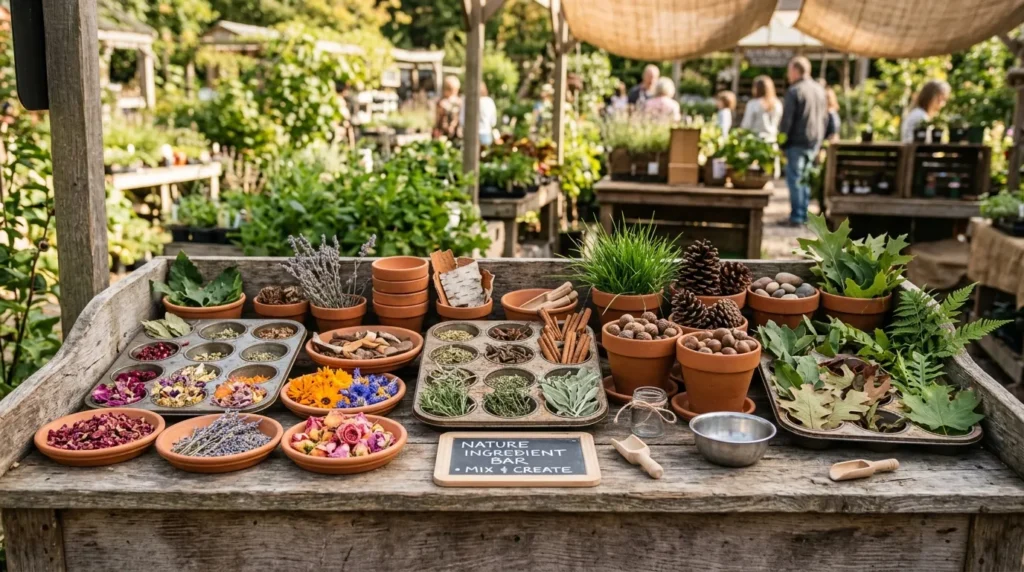
- Adds color, texture, scent, and seasonal variety
- Uses safe items like petals, herbs, leaves, bark, and pinecones
- Encourages sorting, naming, smelling, mixing, and decorating
- Looks beautiful in trays, muffin tins, bowls, and terracotta saucers
- Helps children connect backyard play with real nature
A nature ingredient bar turns simple outdoor materials into something children can choose, arrange, and proudly use. Instead of giving kids one pile of dirt, separate safe natural items into small containers. Flower petals, grass, herbs, leaves, pinecones, bark, acorns, and smooth stones can become pretend toppings, soup ingredients, bakery decorations, or potion supplies. This idea works because children love having choices, especially when the materials look colorful and inviting. Always avoid unknown berries, mushrooms, sprayed plants, thorny stems, and anything collected from unsafe areas.
The visual upgrade is beautiful because nature already provides texture and color. Use muffin tins for tiny ingredients, terracotta saucers for leaves, wooden bowls for stones, and metal trays for larger pieces. Spring might bring petals and mint, summer might bring herbs and grass, and fall might bring acorns, seed pods, and crunchy leaves. That’s why many designers recommend nature-based play spaces for families who want less clutter and more meaningful outdoor activity. Children get fresh inspiration each season without parents needing to constantly buy new supplies.
4. Mini Café Counter

- Encourages role play, conversation, confidence, and sharing
- Looks charming with stools, trays, cups, and a chalkboard menu
- Works beautifully for siblings, cousins, neighbors, and playdates
- Helps children create pretend restaurants, bakeries, and garden cafés
- Adds a polished Pinterest-style theme without complicated building
A mini café counter gives children a familiar play theme they can understand right away. Kids love pretending to take orders, serve drinks, bake mud muffins, and decorate pretend plates with leaves or flowers. This idea works because restaurant play supports language, turn-taking, counting, confidence, and social skills without feeling like a lesson. You only need a small counter, one or two stools, a serving tray, cups, spoons, and a chalkboard menu. The setup feels special, but it can still be made from simple thrifted or recycled materials.
The transformation is especially noticeable during playdates because every child can choose a role. One child may become the chef, another the server, and another the customer ordering pinecone cupcakes. Keep duplicate spoons, bowls, and cups nearby to reduce conflict when several kids are playing together. A small bunting banner, striped towel, or wooden “café” sign adds charm without making the space fragile. I’ve seen this work well in many homes because the café theme gives children structure while still leaving plenty of room for imagination.
5. Toddler Safe Setup
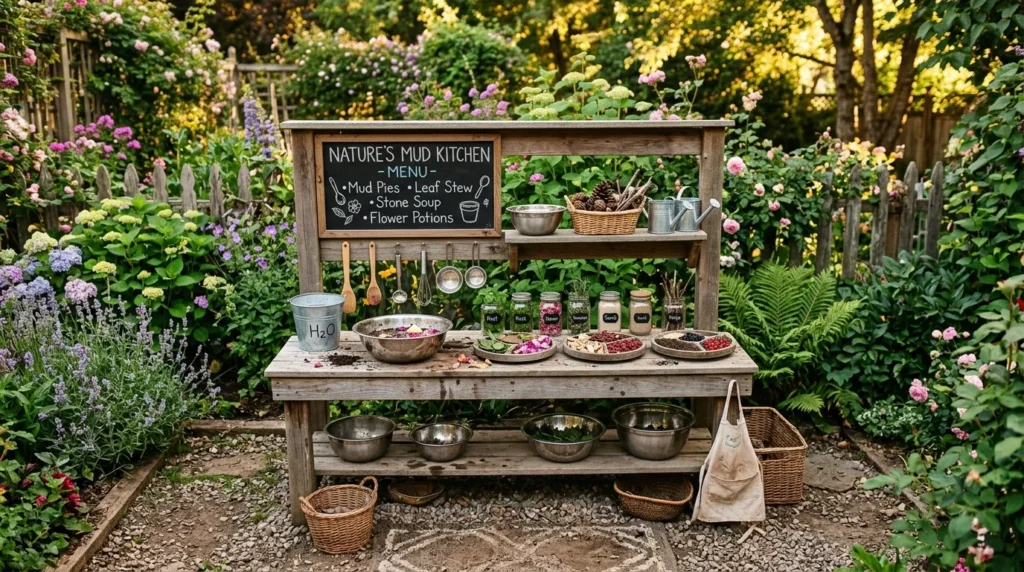
- Keeps materials low, sturdy, smooth, and easy to supervise
- Avoids sharp edges, glass, choking hazards, and unstable furniture
- Uses shallow bowls, large tools, washable items, and simple routines
- Helps younger children explore freely with safer boundaries
- Gives parents more confidence during messy outdoor play
A toddler safe setup lets younger children enjoy muddy play without making parents feel constantly nervous. Toddlers love scooping, dumping, splashing, and repeating simple movements, so the station should support those actions safely. Choose a low, stable table or bench that will not tip if a child leans on it. Use shallow bowls, large spoons, chunky cups, and lightweight pans. Avoid breakable glass, tiny stones, sharp metal, rusty tools, loose screws, and wobbly shelves. This idea works because safer boundaries allow more freedom and less correction.
The space becomes more usable when everything is visible, reachable, and simple. Keep water shallow, place heavier items on lower shelves, and choose a ground surface that drains well. For toddlers, fewer tools are usually better because too many pieces can feel overwhelming and create more cleanup. Add picture labels, a small rinse bucket, and a towel hook so routines begin early. In my experience, toddlers return to simple stations again and again because repetition feels satisfying. A safe setup gives them confidence while keeping outdoor play realistic for parents.
6. Small Patio Corner

- Works for apartments, townhomes, rentals, decks, and side yards
- Uses compact furniture, contained soil, and portable storage
- Keeps outdoor sensory play possible without a large backyard
- Looks tidy with trays, bins, baskets, and vertical hooks
- Helps families create a removable play zone with minimal mess
A small patio corner proves you do not need a huge backyard to create a magical outdoor play space. Many USA families live in homes with limited outdoor areas, but a compact setup can still give children rich sensory play. Use a folding table, planter box, storage bench, or narrow potting shelf as the main counter. Keep soil in a shallow tray, water in a small jug, and tools in one basket. This idea works because contained materials make the activity easier to manage in smaller spaces.
The finished corner can look tidy, intentional, and renter-friendly with the right layout. Place a washable mat, boot tray, or plastic under-bed bin underneath to catch loose dirt and drips. Use stackable bowls, lightweight cups, and hooks on a removable panel for utensils. If storage is limited, keep supplies in a lidded bin that can slide under a bench after play. Even a three-foot patio area can feel inviting when the colors, materials, and tools are carefully chosen. The goal is richness, not size.
7. Storage Wall
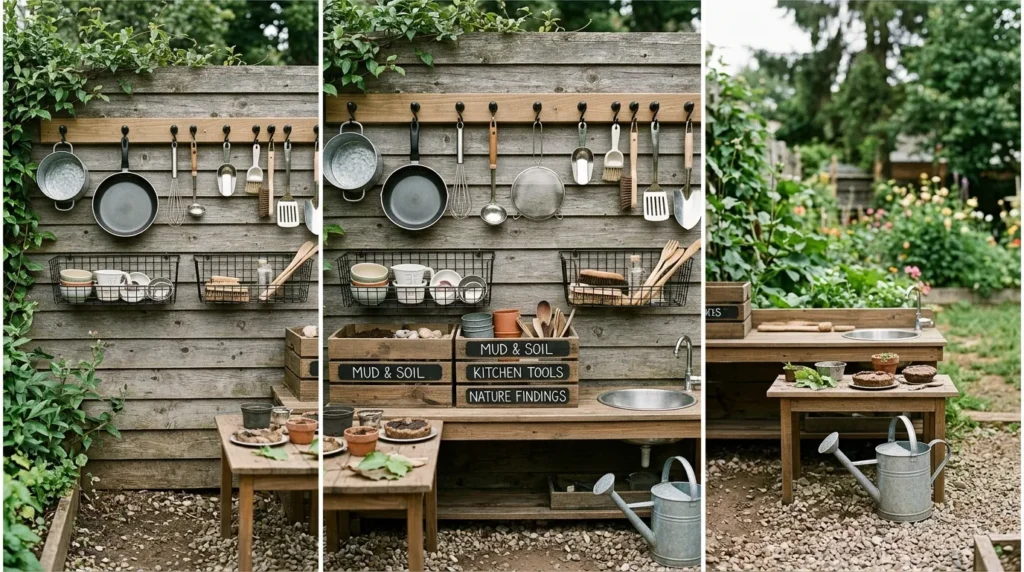
- Keeps tools organized, visible, and easy for children to reach
- Uses hooks, shelves, baskets, crates, rails, and labeled bins
- Makes cleanup faster after messy play sessions
- Adds height and visual structure to the outdoor station
- Helps the setup look Pinterest-worthy instead of cluttered
A storage wall can make the difference between a charming mud kitchen and a messy pile of outdoor supplies. Children play better when they can see their tools and understand where everything belongs. Use a fence panel, pallet board, peg rail, or small shelving unit behind the station. Hooks can hold ladles and spoons, baskets can hold nature finds, and crates can store pans or bowls. This idea works because vertical storage saves floor space while giving the whole setup a cleaner, more finished look.
The transformation is practical for parents and empowering for kids. Instead of asking where every spoon went, children can return tools to hooks, slide bowls onto shelves, and place loose items into baskets. Picture labels are helpful for preschoolers, while simple word labels work for older kids. Choose weather-friendly materials such as galvanized buckets, stainless hooks, sealed wood, and plastic bins with lids. I’ve noticed that organized stations are easier to keep fresh because parents can rotate items seasonally without overwhelming the space or losing the visual charm.
8. Seasonal Play Trays
- Keeps the kitchen fresh through spring, summer, fall, and winter
- Uses natural materials from each season instead of extra toys
- Encourages children to notice weather, colors, textures, and changes
- Looks beautiful for Pinterest-style backyard photos
- Makes the same play station feel new throughout the year
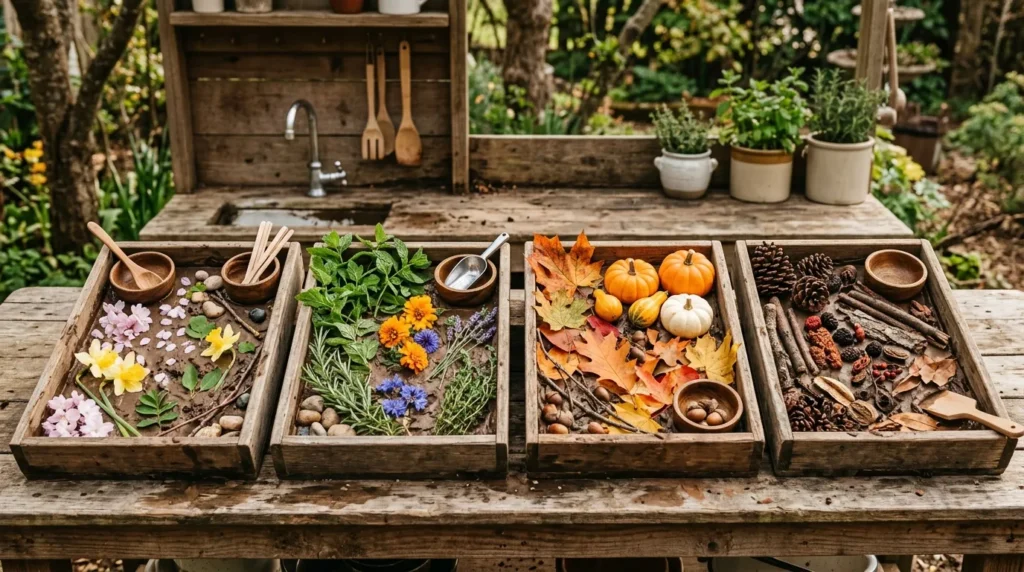
Seasonal play trays keep outdoor play exciting without adding more clutter to the home. Children love familiar spaces that change just enough to feel new, and nature makes those changes easy. Use trays to present seasonal materials in a simple, beautiful way. Spring trays might include petals, mint, and fresh grass. Summer trays might include ice cubes, herbs, and water tools. Fall trays can feature acorns, leaves, seed pods, and mini pumpkins. Winter trays may include pinecones, bark, evergreen sprigs, and sturdy scoops.
The result is a play station that feels alive all year. Children begin noticing what is happening outside, which supports observation, language, and nature connection in a relaxed way. A tray of orange leaves feels completely different from a tray of pink petals or green herbs, even though the station itself stays the same. This approach also helps parents avoid constantly buying new outdoor toys. With one rotating tray, the setup feels refreshed, visually styled, and ready for pretend soups, pies, potions, and seasonal backyard play.
9. Mud Pie Bakery
- Gives children a focused pretend play theme
- Uses muffin tins, cake pans, petals, leaves, and trays
- Encourages decorating, counting, arranging, and creative presentation
- Looks adorable with a chalkboard bakery sign
- Works well for solo play, siblings, and backyard playdates
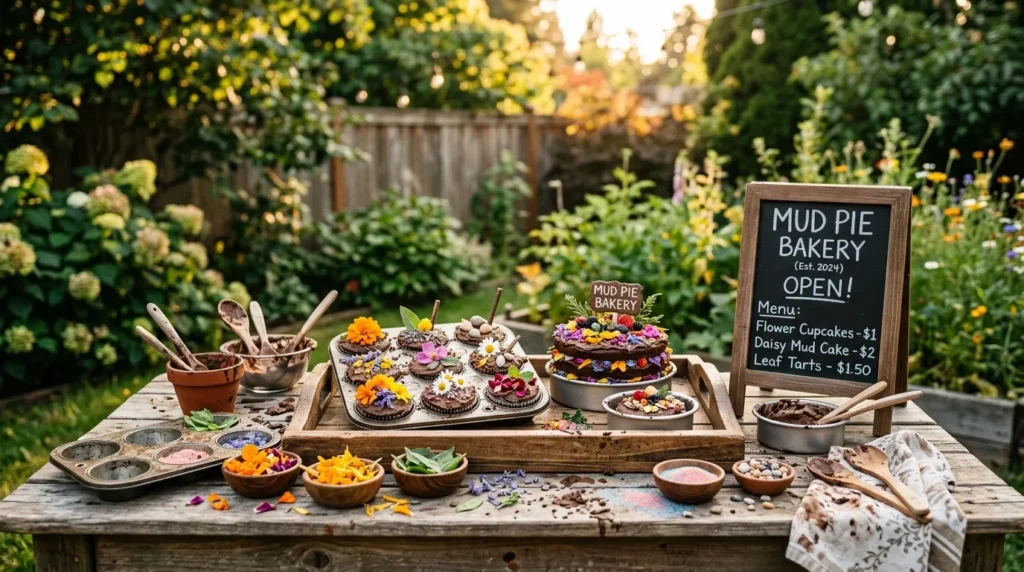
A mud pie bakery is one of the most charming ways to give the play space a clear theme. Children can press mud into muffin tins, smooth it into cake pans, sprinkle petals on top, and line up their creations on a serving tray. This idea works because it combines sensory play with pretend baking, counting, pattern-making, and presentation. Old cupcake pans, silicone molds, cake tins, spoons, and small plates are perfect materials. Choose items that can handle wet soil, repeated washing, and enthusiastic little bakers.
The bakery setup becomes even sweeter with a tiny display shelf or chalkboard sign. Children may create flower cupcakes, leaf cookies, pebble pies, or pinecone cakes depending on the season. Older kids can make pretend prices, menus, or recipe cards, while younger children may simply enjoy filling and dumping pans. Keep a tray for finished creations so the counter does not become too crowded. This is one of those play ideas that looks adorable in the backyard but still supports real developmental skills through hands-on, open-ended play.
10. Garden Potion Lab
- Adds a magical sensory element with petals, herbs, and water
- Encourages mixing, smelling, observing, pouring, and describing
- Works well for spring parties, summer afternoons, and quiet play
- Uses plastic jars, bowls, pitchers, spoons, and natural ingredients
- Creates a colorful setup without needing complicated supplies
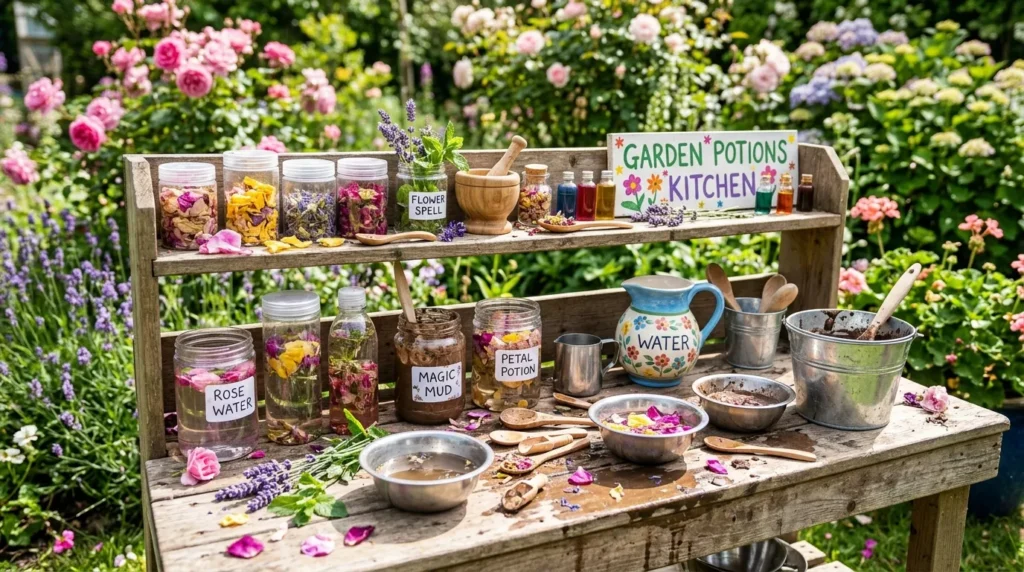
A garden potion lab brings a little magic into outdoor play while staying simple and nature-focused. Children can mix petals, herbs, water, grass, leaves, and small scoops of soil to create pretend perfumes, teas, soups, or colorful potions. This idea works because it encourages observation, sensory language, and experimentation. Kids notice colors changing in water, herbs releasing scent, and textures shifting as they stir. Use plastic jars, metal bowls, small pitchers, wooden spoons, and trays instead of breakable glass so the setup stays safe.
The finished station feels whimsical without becoming difficult to manage. Set out mint, lavender, rosemary, flower petals, and safe leaves in separate containers, then let children combine them freely. A tray underneath helps catch spills, while a towel nearby keeps cleanup simple. This idea works beautifully for spring afternoons, summer playdates, and backyard birthday activities because it feels special with very little preparation. The colors and scents make the space feel fresh, while the open-ended format allows children to invent new recipes every time they play outside.
11. Cleanup Station
- Keeps mud, water, and tools from spreading everywhere
- Uses a rinse bucket, towel hook, brush, broom, and boot tray
- Helps children learn responsibility after messy play
- Makes parents more likely to allow outdoor sensory play often
- Turns cleanup into a simple routine instead of a battle
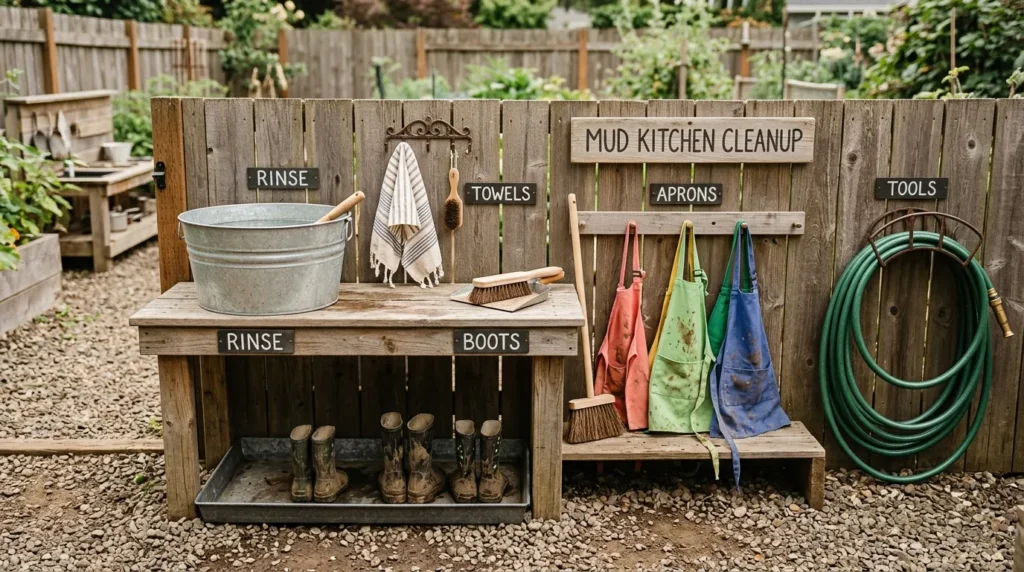
A cleanup station makes muddy play easier to allow on regular days. The goal is not to stop mess, because mess is part of the experience, but to create a reset system that protects the house and patio. Keep a rinse bucket, towel hook, boot tray, hand brush, small broom, washable apron, and laundry basket nearby. This idea works because children are more cooperative when the cleanup steps are visible and predictable. A simple routine like rinse, hang, sweep, and return can become part of play.
The everyday difference is less stress for parents and more independence for children. Place the station near a hose if possible, or use a refillable water container when plumbing is not close. Mulch, pea gravel, or outdoor tiles underfoot help with drainage and reduce slippery mud patches. Keep muddy shoes outside and have a clear place for wet clothes after bigger play sessions. Over time, children learn that creative freedom comes with simple responsibility. That balance makes the entire outdoor setup easier to enjoy throughout the week.
12. Growing Play Value
- Grows with toddlers, preschoolers, and older children
- Supports sensory play, pretend play, language, and outdoor learning
- Reduces the need for constant new toy purchases
- Changes easily with seasons, themes, tools, and child interests
- Adds long-term value to the backyard or patio
Growing play value is what makes a mud kitchen such a smart project for families. Unlike toys with one fixed purpose, this space changes with your child’s age and imagination. Toddlers may scoop and dump, preschoolers may run a pretend café, and older kids may create bakeries, restaurants, science labs, or potion stations. This flexibility works because the materials are open-ended. A sturdy counter, water source, tool wall, and rotating nature tray can support years of play without needing constant upgrades or expensive outdoor equipment.
The final transformation is a backyard that feels more useful, creative, and connected to childhood. Children get fresh air, movement, problem-solving, sensory exploration, and pretend play in one flexible space. Parents get a setup that can be refreshed with simple changes, like a new sign, different bowls, seasonal trays, or updated storage. For families collecting practical Mud Kitchen Ideas, the best approach is not perfection. It is creating a durable, beautiful, easy-to-reset play station that children can return to again and again through every season.