11 Simple DIY Mud Kitchen Outdoor Play Ideas That Make a Big Difference
Introduction
A mud kitchen does not need to be expensive, fancy, or built like a professional backyard playhouse to make children excited. Most of the best setups start with simple materials, a sturdy surface, a few bowls, water, dirt, leaves, and enough space for kids to use their imagination freely. That is why DIY mud kitchens are becoming such a favorite for families across the USA. They offer creative outdoor play without needing batteries, screens, or constant adult direction.
The right Kitchen Outdoor setup gives kids a place to scoop, stir, wash, pour, stack, sort, and pretend. It also gives parents a clear zone where messy play can happen without spreading across the whole yard. A well-planned mud kitchen supports sensory play, early problem-solving, nature learning, and independent play. Even better, many ideas can be built from wood scraps, old furniture, thrifted kitchen tools, buckets, crates, and garden materials you may already have at home.
This guide focuses on simple ideas that make a big difference before you build. Each idea is practical, easy to adjust, and useful for real backyards, whether you have a small patio, a fenced suburban yard, a deck corner, or a wide lawn. You will find smart layout tips, material ideas, styling notes, and small upgrades that help the play area look good while staying easy to clean.
1. Simple Wood Counter
- Build one sturdy counter first, because it becomes the main work area where children can mix mud pies, sort leaves, line up bowls, and create pretend meals without tools scattered everywhere.
- Use cedar, pine, old fence boards, sealed plywood, or a reclaimed tabletop, but always sand the surface well so little hands do not catch splinters during fast play.
- Keep the height child-friendly, usually around waist level, so kids can stand comfortably, reach tools easily, and play longer without leaning too far over the surface.
- Add a small back ledge or raised strip along the rear edge to stop bowls, spoons, and nature finds from sliding behind the station while children are busy mixing.
- Choose a warm wood stain or soft outdoor paint color if the mud kitchen sits near your patio, porch, or garden seating area and needs to look tidy.
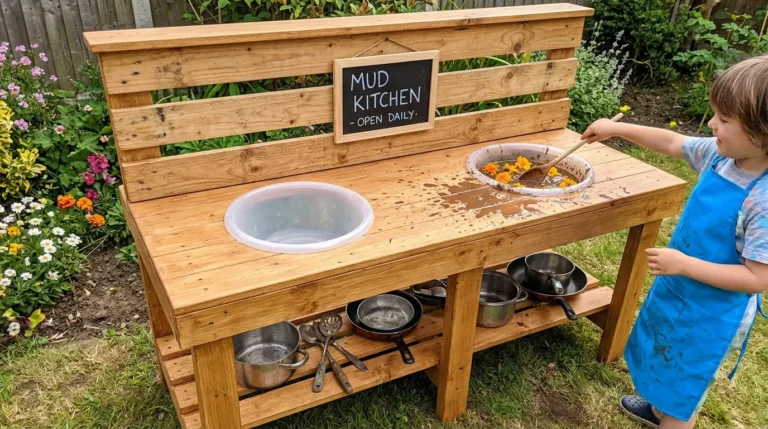
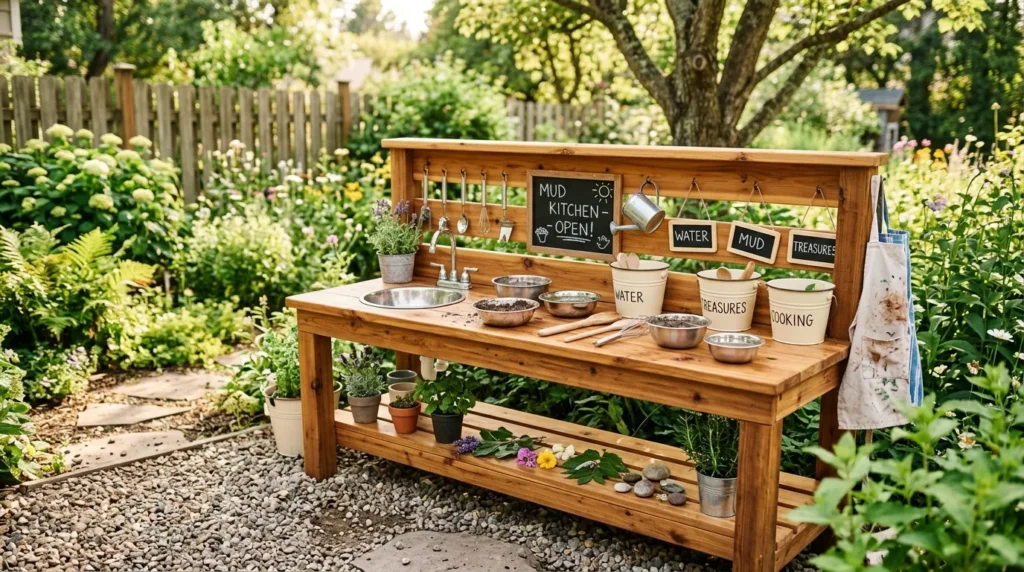
A mud kitchen works best when it feels easy to use, not complicated to maintain. A simple wood counter gives children one steady surface for stirring dirt, arranging leaves, pressing mud pies, and lining up little bowls like a backyard café. You can build it from cedar boards, fence pickets, or a sealed scrap tabletop supported by two sturdy side frames. Keep the height close to your child’s waist so they can play comfortably. In my experience, the right counter height matters more than decorative details because it keeps kids engaged longer.
The transformation is immediate because one flat surface creates order in the middle of messy play. A counter gives bowls, pans, cups, and nature finds a clear home, which helps the area look intentional from the patio. Seal the wood, sand every corner, and add a small back lip so tools do not slide behind the station. For a clean Pinterest look, pair warm wood with cream buckets, metal bowls, and a few soft green plants nearby. It stays practical, looks charming, and works for small patios too when space is tight.
2. Removable Bowl Sink
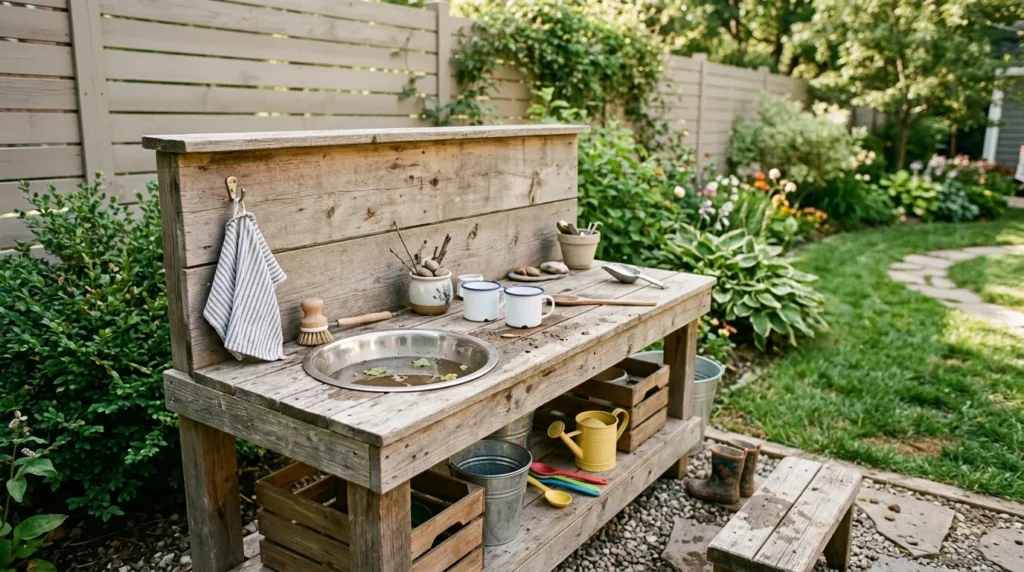
- Cut a round opening into the counter and drop in a stainless mixing bowl, enamel basin, or durable plastic tub so kids get the feeling of a real working sink.
- Choose a removable bowl instead of fixed plumbing, because it is cheaper, easier to clean, safer for beginners, and much simpler to empty after muddy water play.
- Match the bowl depth to your child’s age, using a shallow basin for toddlers and a deeper bowl for older children who enjoy washing stones, cups, and leaves.
- Keep a small brush, towel, and cup nearby so the sink becomes part of the play routine instead of just a decorative hole in the counter.
- Place the sink over gravel, mulch, or a washable mat so small spills drain better and do not create a slippery mud patch under the play station.
A removable sink bowl is the easiest way to make pretend cooking feel real. Instead of running plumbing outside, cut a round opening into the counter and drop in a stainless mixing bowl, enamel basin, or sturdy plastic tub. Children can rinse leaves, wash rocks, stir muddy soup, and empty the bowl when play is finished. This keeps water contained while still giving them the fun of a working sink. Choose a bowl with a smooth rim, because rough edges can scratch small hands during fast play outdoors. without adding permanent plumbing or complicated maintenance.
The best part is that cleanup becomes simple for parents and satisfying for kids. When the bowl lifts out, you can dump muddy water into a garden bed, rinse the basin, and reset the station in minutes. A deeper bowl works well for splashing, while a shallow one suits toddlers who need easier reach. Add a small towel hook nearby and keep a scrub brush in a cup. This tiny detail makes the play space feel finished without adding complicated parts that can break outside after rain. in changing weather.
3. Hanging Tool Rail
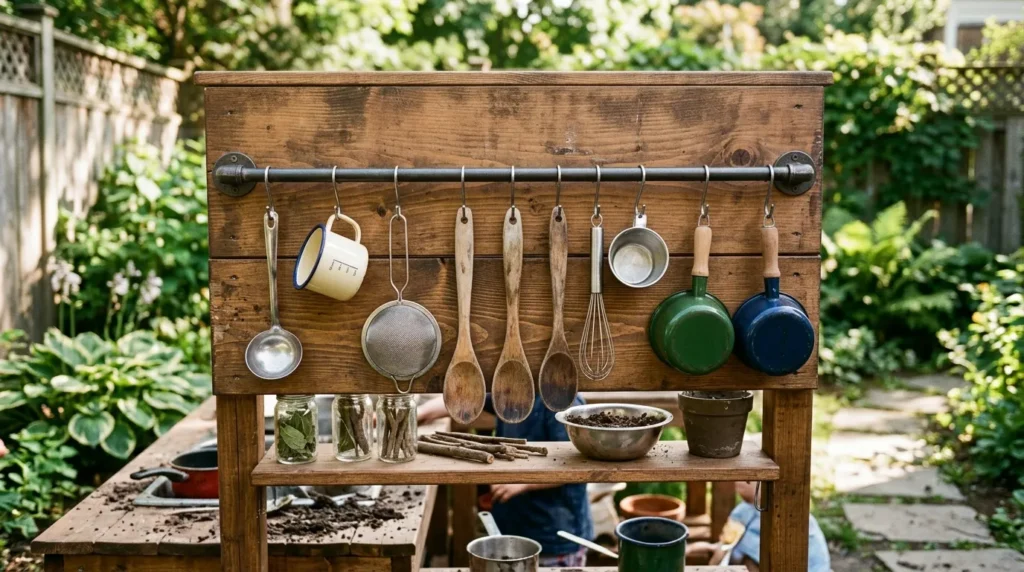
- Add a towel bar, wooden dowel, peg rail, or slim curtain rod above the counter so spoons, cups, ladles, and strainers stay visible and easy to grab.
- Use S hooks for lightweight utensils, but skip sharp peelers, heavy pans, glass jars, or anything that could fall and hurt small children during active play.
- Mount the rail low enough for children to reach safely, yet high enough that tools do not sit directly in mud or water while the station is being used.
- Group similar tools together, such as spoons on one side and cups on the other, so the rail looks neat and helps children clean up independently.
- Attach the rail to a stained wood board if you want a warmer, more finished backdrop that looks good in backyard photos and Pinterest saves.
Hanging tools make a mud kitchen look organized before anyone even starts playing. A short rail with S hooks can hold spoons, ladles, cups, strainers, brushes, and small pans where children can see every option. You can use a towel bar, wooden dowel, curtain rod, or simple peg rail mounted to a fence panel or backboard. That’s why many designers recommend vertical storage in small outdoor spaces. It saves surface area, reduces clutter, and gives the whole play station a neat handmade workshop feeling without extra building costs. for parents and kids.
This idea also teaches children where things belong after play. When each tool has a hook, cleanup feels like matching instead of a chore, which helps kids join the reset routine. Use lightweight utensils from thrift stores, dollar bins, or old kitchen drawers, but avoid sharp peelers, heavy metal pans, or breakable glass. Keep the rail low enough for safe reaching and high enough to stay above the mud. A stained backboard behind the rail adds warmth and makes photos look more polished from every angle. when the area is photographed.
4. Nature Ingredient Bins
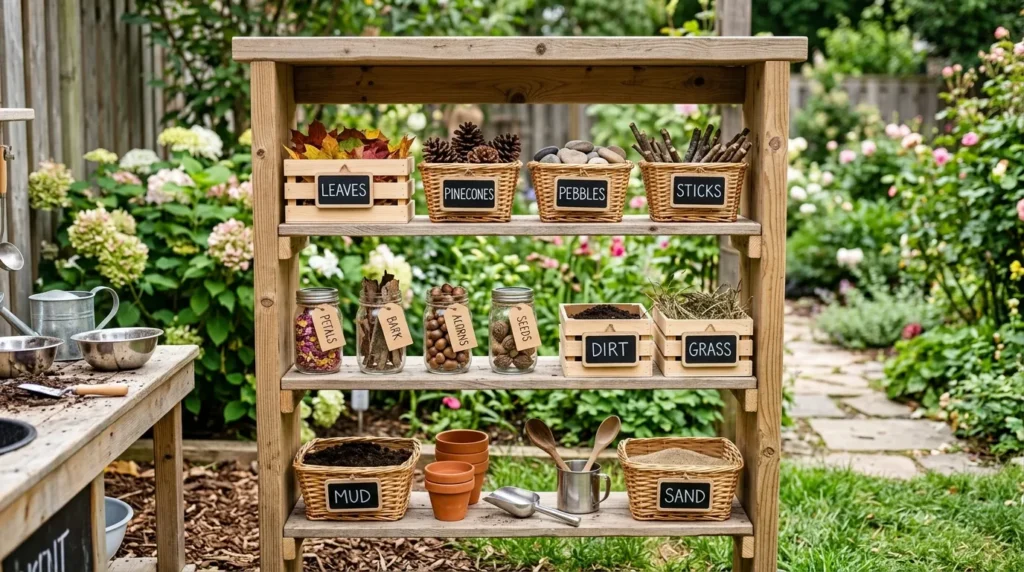
- Set out small crates, baskets, pails, or divided trays for leaves, sticks, pebbles, seed pods, pinecones, petals, and bark so children can build pretend recipes naturally.
- Use labels with words or simple pictures to help younger kids identify materials, practice early reading, and understand where each outdoor ingredient belongs after play.
- Rotate the contents with the season, using spring petals, summer herbs, fall acorns, and winter pinecones to keep the station feeling fresh all year.
- Keep heavier bins on lower shelves so the setup stays stable, especially when children pull baskets out quickly or play with friends at the same time.
- Avoid tiny objects for toddlers, and always check natural materials for sharp pieces, insects, thorns, or anything unsafe before adding them to the play area.
Nature ingredient bins turn leaves, pinecones, pebbles, flowers, and bark into pretend pantry supplies. Use small crates, baskets, metal pails, or divided trays so children can sort materials before they start cooking. This gives messy play a calm structure and encourages kids to notice textures, colors, and sizes in the yard. I’ve noticed that children create more detailed pretend recipes when ingredients are separated instead of scattered everywhere. It also keeps the play zone from swallowing the entire lawn by giving loose items a home after play. at the end of the day.
The result is a play area that feels richer without costing much. Label bins with simple words like leaves, rocks, sticks, and petals, or use picture tags for younger children. Place heavier bins low and lighter baskets on shelves so the station stays stable. Rotate the contents with the seasons, using acorns in fall, flower petals in spring, and smooth stones in summer. This keeps the mud kitchen feeling new, even when the main structure stays the same all year in the backyard for family play. through every season. outside.
5. Water Pour Station
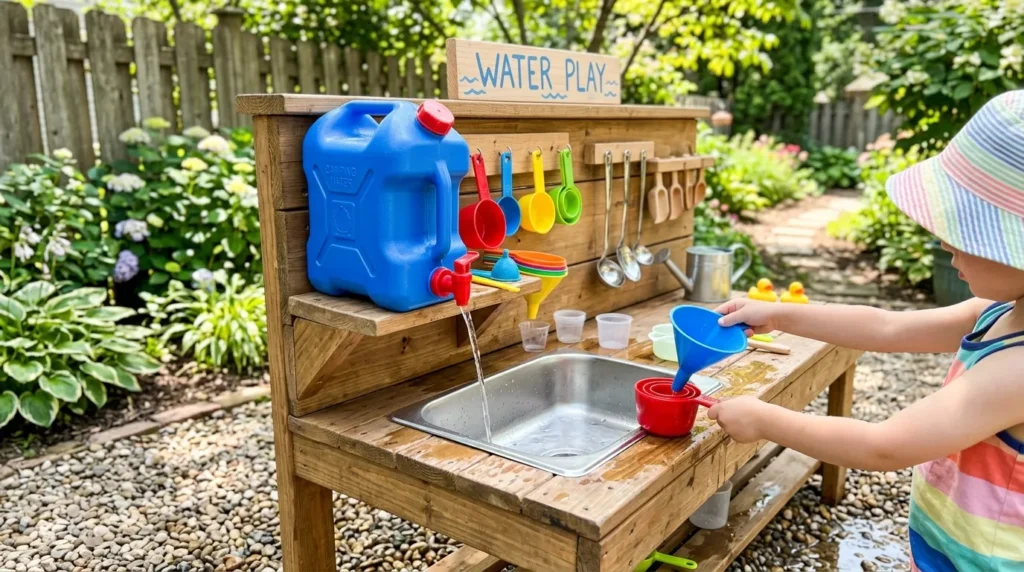
- Use a camping jug, drink dispenser, small bucket with a spigot, or refillable water container so children can pour and mix without needing constant hose access.
- Place the water source above a bowl, tray, or tub so drips land in a controlled area instead of flooding the floor or nearby grass.
- Limit water by filling the container before play, which teaches children to think about how much they need for washing, mixing, and pretend cooking.
- Add funnels, measuring cups, ladles, and small pitchers so water play becomes more creative, hands-on, and useful for early measuring skills.
- Empty standing water after every session, especially in warm or humid states, because leftover water can attract mosquitoes and make the play area smell unpleasant.
Controlled water access can change the entire rhythm of outdoor play. A water pour station gives children enough water to mix, rinse, and experiment without turning the whole yard into a puddle. Use a camping jug, beverage dispenser, bucket with a spigot, or small watering can set on a sturdy shelf. Place it above a basin or tub so drips land where they should. For families in dry states, this setup helps kids enjoy water play while still keeping the amount reasonable and easy to manage. during hot afternoons. together.
The setup works best when water has a clear purpose and a stopping point. Fill the container before play, then let children decide how to use that limited amount for mud pies, soups, and washing stones. Add one tub for clean water and one for muddy mixing so the area stays easier to reset. A small funnel, measuring cup, and ladle make pouring more interesting. After play, empty standing water to avoid mosquitoes and rinse the container before storing it in shade or a shed nearby. between outdoor sessions. outside.
6. Stepping Stone Floor
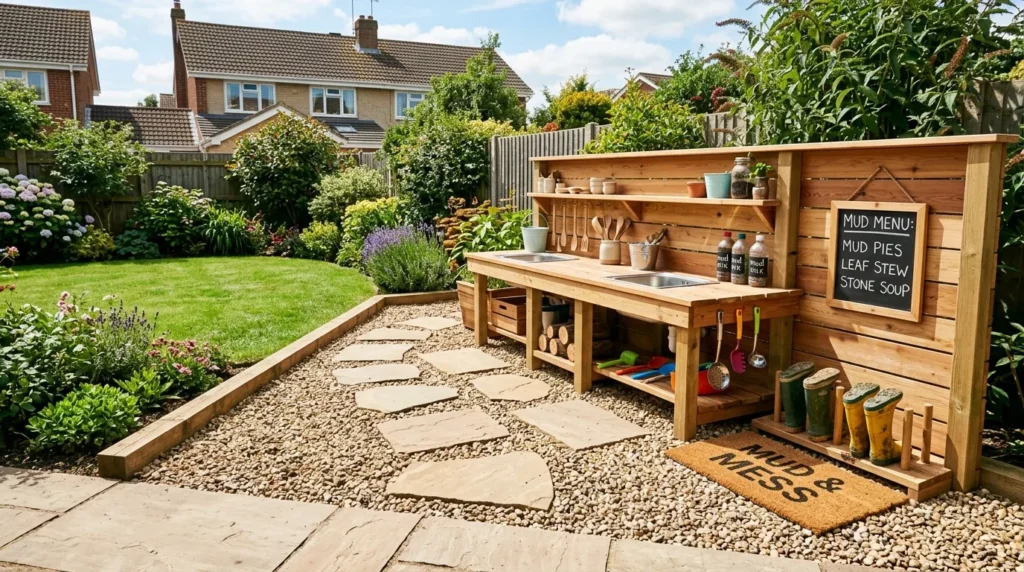
- Create a clear floor zone with stepping stones, pavers, pea gravel, flat flagstones, or rubber outdoor tiles so the mud kitchen feels like a planned backyard area.
- Add landscape fabric underneath gravel to slow weeds and keep the surface easier to maintain through rain, sprinkler runoff, and regular messy play.
- Use smooth, stable stones instead of uneven rocks, because children will be carrying bowls, cups, water, and tools while moving around the station.
- Frame the floor with timber, brick, garden edging, or stone borders so loose gravel stays in place and the play zone looks neat from the patio.
- Choose lighter stone in very sunny yards, because dark surfaces can get hot under summer sun and may feel uncomfortable through thin shoes.
A defined floor makes a mud kitchen feel like a real backyard zone. Instead of placing the station directly on grass, create a small base with stepping stones, pea gravel, pavers, or flat flagstones. This helps with drainage, reduces slippery mud patches, and gives children a clear boundary for where messy play belongs. It also protects high-traffic grass from becoming bare. Choose smooth, stable materials that feel comfortable under shoes, especially if kids will move quickly between the counter, water area, and storage shelves during play. without slipping around. safely.
This small upgrade can make the whole yard look tidier from the house. A stone or gravel base frames the station visually, especially when paired with timber edging or brick borders. Lay landscape fabric under gravel to slow weeds, and check stones often for sharp pieces after storms. If your yard gets strong afternoon sun, lighter stone usually stays more comfortable than dark rock. Add a washable outdoor mat at the edge so kids can wipe shoes before walking onto the porch or inside afterward. with less tracked dirt. inside.
7. Mini Garden Shelf
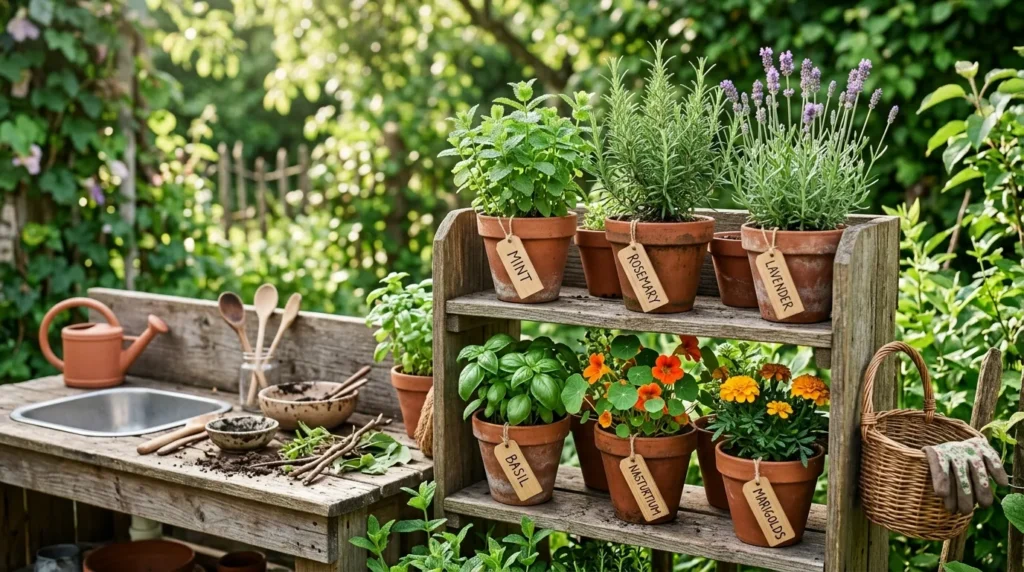
- Add a narrow shelf, crate ledge, or low plant stand beside the mud kitchen for herbs, child-safe flowers, seed pods, and small garden tools.
- Use hardy plants like mint, basil, rosemary, pansies, and lavender because they add scent, texture, and color without needing constant attention.
- Keep plants close enough for children to touch and smell, but not directly in the splash zone where water and mud will damage delicate leaves.
- Use terracotta pots for a classic garden feel, painted cans for a playful look, or metal buckets for a rustic farmhouse-style backyard corner.
- Add simple plant labels so children can learn names, practice reading, and understand which leaves they are allowed to pick during pretend cooking.
A small garden shelf brings the mud kitchen closer to nature. Add a narrow shelf, crate ledge, or low plant stand beside the counter for herbs, child-safe flowers, seed pods, and little pots. Mint, basil, rosemary, pansies, and lavender can add scent, color, and texture to pretend recipes. Keep plants within reach but not directly in the main splash zone. In my experience, a few living plants make children slow down, observe more closely, and treat the play corner with extra care each week. during gentle outdoor play. together. today.
The shelf also makes the setup look softer and more styled. Terracotta pots create a classic garden feeling, while painted cans or metal buckets make it feel playful and handmade. Add simple plant markers so children can learn names and choose leaves with permission. Keep delicate plants higher and sturdy herbs lower. This idea works well for patios and small yards because it uses vertical space instead of spreading into the lawn. It turns a basic mud station into a mini garden classroom for everyday play. in warm weather. outside.
8. Recycled Door Backdrop
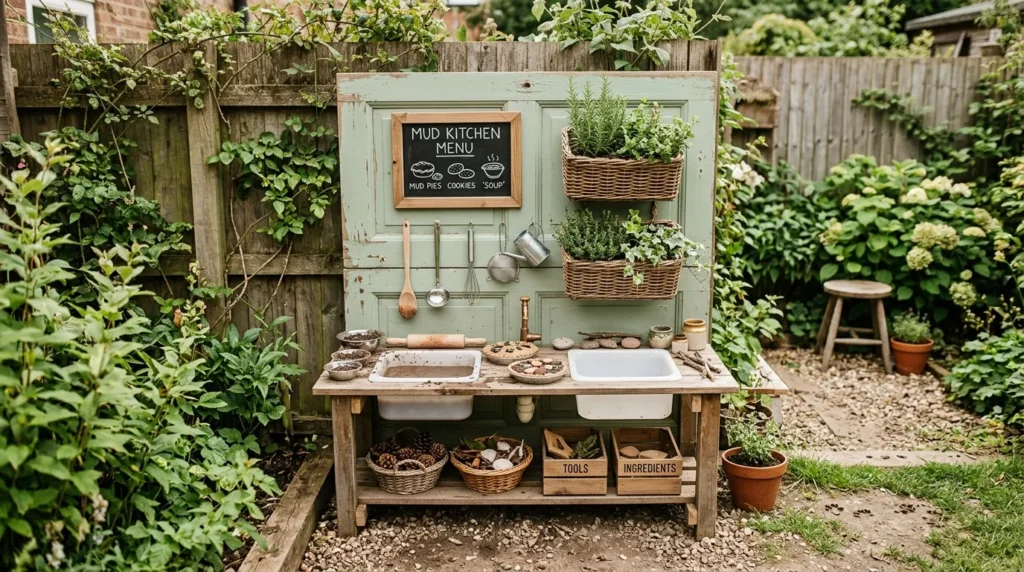
- Use an old wooden door, cabinet panel, fence panel, or leftover plywood board as a backdrop to create height and structure behind the play station.
- Paint it in sage green, soft blue, white, beige, clay, or warm gray so the mud kitchen blends naturally with the yard and garden.
- Secure the backdrop firmly to posts, a fence, or a stable frame because tall pieces must never wobble, lean, or tip during active play.
- Add hooks, shelves, a small chalkboard, baskets, or a pretend café sign to the backdrop so the counter surface stays less crowded.
- Avoid old doors with broken glass, rusty hardware, peeling unsafe paint, or sharp edges, especially if young children will use the space daily.
An old door can give a mud kitchen instant character and structure. Instead of building a full wall, use a reclaimed wooden door, cabinet panel, or fence section as the backdrop behind the counter. It creates height, supports hooks and shelves, and makes the play area feel like a tiny outdoor room. Secure it firmly to posts, a fence, or a stable frame so it cannot tip. A painted door in soft blue, sage, white, or warm beige can become the prettiest part of the build. in a small yard.
The backdrop also helps organize the whole design. You can attach a chalkboard, utensil rail, small shelf, clock face, pretend café sign, or hanging baskets without crowding the counter. Sand old paint carefully and avoid doors with broken glass, loose panels, or unsafe hardware. If the door will stay outside, seal it well and lift the bottom slightly off wet ground. With one recycled piece, the mud kitchen gains color, storage, and a photo-ready background that makes the space feel thoughtfully designed for children. without needing many new supplies. overall.
9. Washable Mud Zone
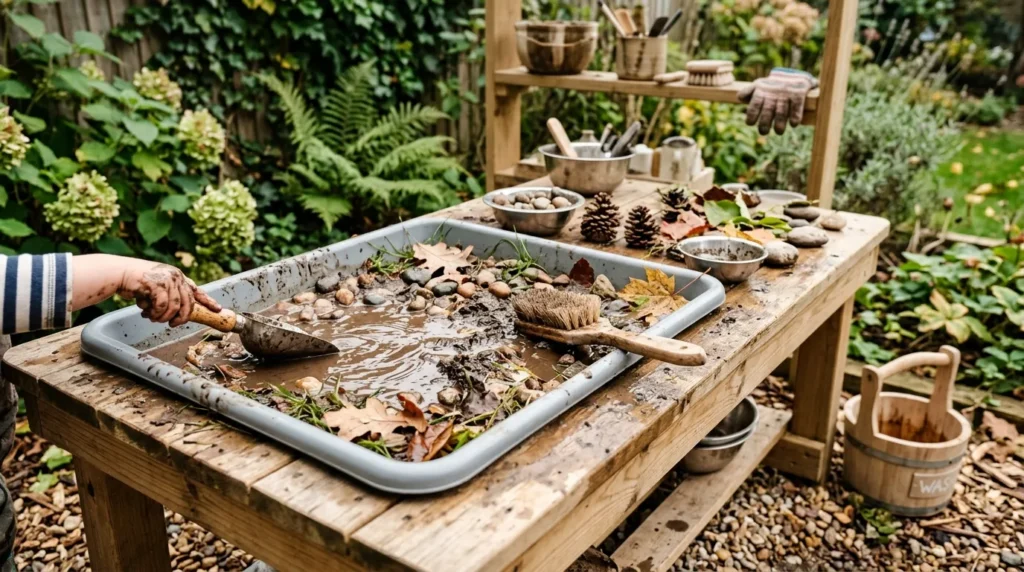
- Set one tub, boot tray, cement mixing pan, enamel basin, or shallow storage box as the official messy mixing spot for mud, water, leaves, and stones.
- Keep this zone separate from the main counter so children can still use part of the surface for bowls, tools, pretend menus, and finished creations.
- Choose a washable container that can be lifted, rinsed, and dried quickly, especially if the mud kitchen sits on a patio, deck, or porch.
- Use a shallow tray for toddlers and a deeper tub for older children who enjoy bigger mixing projects, stone washing, and mud pie making.
- Add a scoop, spoon, scrub brush, and small towel so children can help manage the mess instead of waiting for an adult to clean everything.
A washable mud zone keeps the fun from spreading farther than you want. Set one tray, tub, or low wooden box as the official mixing area for dirt, water, leaves, and pebbles. This gives children permission to get messy while protecting the rest of the counter. Use a plastic boot tray, cement mixing tub, enamel basin, or shallow storage bin, depending on your child’s age and the space available. The boundary is simple, but it makes cleanup much easier after active play in busy homes. after every session. outside. today.
This idea is especially helpful for patios, decks, and smaller suburban yards. When the mess stays in one washable container, parents can rinse it out, dry it, and tuck it away between play sessions. Add a scoop, spoon, and small brush so kids can manage their own mixing station. For toddlers, keep the tub shallow and place it on the ground. For older kids, set it into the counter. A clear mud zone makes the station easier to share, reset, and enjoy often. without much stress. later. afterward together safely.
10. Canopy Shade Corner
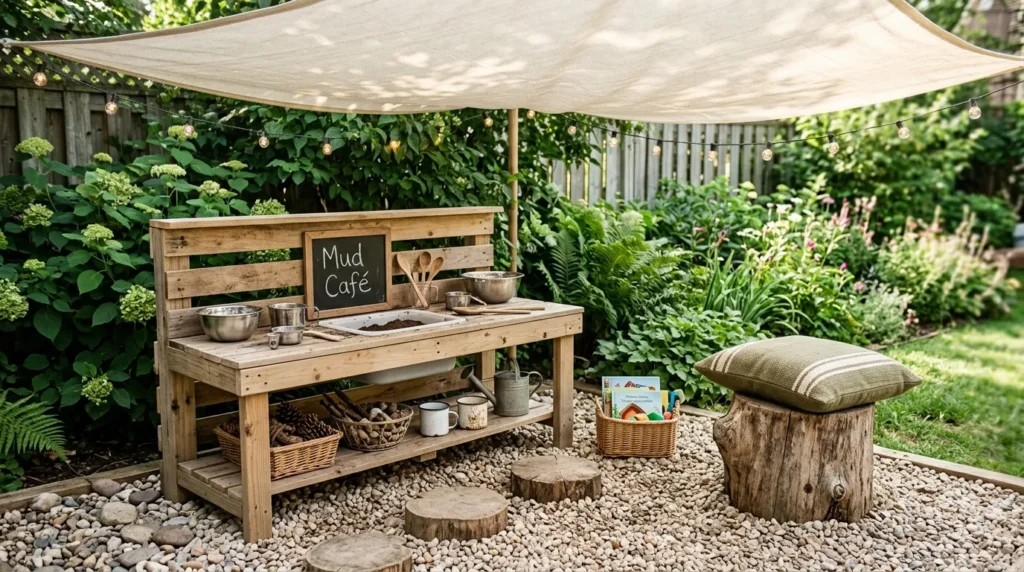
- Add a shade sail, small canopy, patio umbrella, pergola panel, or canvas cloth so children can play longer without standing in harsh direct sun.
- Angle fabric slightly so rainwater runs off instead of pooling in the center, which can stretch the material or pull on the support points.
- Use neutral canvas for a calm natural look, striped fabric for a playful summer style, or soft green material to blend with garden surroundings.
- Keep shade fabric away from grills, fire pits, sharp branches, and anything that could damage the fabric or create a safety problem.
- Add a small stool, stump seat, or outdoor cushion nearby so children have a place to rest between mixing, washing, and pretend serving.
Shade can turn a cute mud kitchen into a space kids actually use. A small canopy, patio umbrella, shade sail, or canvas cloth helps protect the play area during warm afternoons, especially in sunny parts of the USA. It keeps the counter cooler, softens the light, and gives the setup a cozy outdoor room feeling. Make sure the shade is secured properly, angled for rain runoff, and placed high enough for adults to reach the station comfortably when helping with cleanup after play. without bending over awkwardly. outside. too safely.
The visual difference can be just as useful as the comfort. Neutral canvas creates a calm natural look, while striped fabric gives the corner a cheerful summer style. Add a stump seat, small bench, or outdoor cushion nearby so children have a place to pause between recipes. Keep fabric away from grills, fire pits, and sharp branches. When shade is planned well, the mud kitchen feels less like a toy left outside and more like a designed backyard play nook for the family. during weekend play. outside. each afternoon safely.
11. Cleanup Basket Station
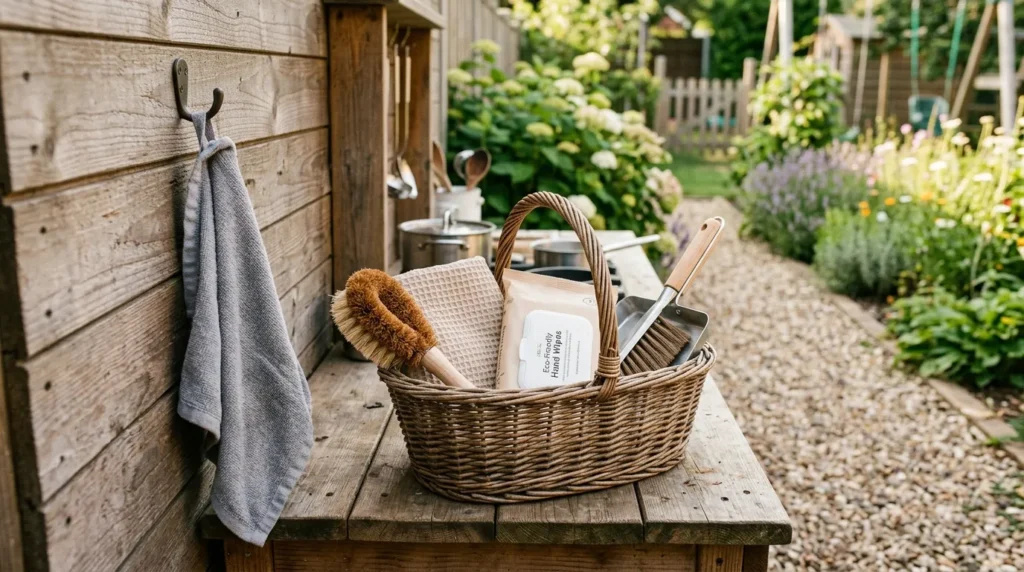
- Keep one basket, plastic caddy, or weatherproof crate near the mud kitchen with towels, a scrub brush, hand wipes, extra chalk, and a small dustpan.
- Place the basket near the path back to the house so children clean hands, wipe shoes, and return tools before running inside after play.
- Choose a washable plastic caddy for heavy use, galvanized metal for farmhouse style, or a woven basket if the area is covered and protected.
- Add a hook for damp towels and a small bin for dirty utensils waiting to be rinsed so cleanup does not pile up on the counter.
- Make cleanup part of the play routine by giving kids simple jobs like hanging spoons, emptying bowls, brushing off stones, and wiping the surface.
A cleanup basket is the detail parents appreciate after the first muddy afternoon. Keep one handled basket, plastic caddy, or weatherproof crate stocked with a towel, scrub brush, hand wipes, extra chalk, and a small dustpan. Place it near the exit path, not buried behind the station, so cleanup happens before kids run inside. This simple habit protects floors, shoes, and patio furniture. It also teaches children that outdoor play includes putting things back, rinsing tools, and leaving the space ready for tomorrow. before the next backyard adventure. outside. too.
The station feels more usable when the reset tools are part of the design. Choose a basket that matches the mud kitchen style, such as woven for a natural look, galvanized metal for farmhouse charm, or washable plastic for heavy use. Add a hook for damp towels and a small bin for dirty utensils waiting to be rinsed. In my experience, parents are more likely to keep backyard play areas open when cleanup takes five minutes instead of twenty after every session in real life. during real family routines. daily.
Image
1. Simple Wood Counter
Image Description: Child-height wooden mud kitchen counter in a sunny backyard, warm cedar boards, smooth sealed surface, metal bowls, wooden spoons, cream buckets, soft green plants nearby, gravel base, natural textures, cozy handmade outdoor play setup, angled Pinterest-style photo.
2. Removable Bowl Sink
Image Description: DIY mud kitchen with removable stainless bowl sink set into a wood counter, small towel hook, scrub brush, enamel cups, soft afternoon light, neutral backyard fence, tidy play station layout, rustic textures, practical family-friendly outdoor design.
3. Hanging Tool Rail
Image Description: Mud kitchen tool rail with hanging ladles, cups, strainers, wooden spoons, and small pans on S hooks, stained wood backboard, clean vertical storage, warm natural light, rustic backyard play area, organized Pinterest-style close-up image.
4. Nature Ingredient Bins
Image Description: Outdoor mud kitchen pantry with small crates and baskets filled with leaves, pinecones, pebbles, petals, bark, and sticks, handwritten labels, natural wood shelves, soft garden background, earthy colors, child-friendly sensory play layout, front-facing Pinterest image.
5. Water Pour Station
Image Description: Backyard water pour station with camping jug, small spigot, measuring cups, funnels, ladles, removable basin, wood mud kitchen counter, bright summer daylight, gravel floor, clean sensory play setup, practical and playful Pinterest-style composition.
6. Stepping Stone Floor
Image Description: Defined mud kitchen play zone with flat stepping stones, pea gravel, timber edging, wood counter, outdoor mat, green lawn border, sunny suburban backyard, clean drainage-friendly layout, natural materials, wide Pinterest-style photo from patio view.
7. Mini Garden Shelf
Image Description: Small garden shelf beside mud kitchen with terracotta pots, mint, basil, rosemary, lavender, child-safe flowers, plant labels, wood counter, soft morning light, fresh green textures, calm nature play mood, close-up Pinterest-style garden image.
8. Recycled Door Backdrop
Image Description: Mud kitchen with recycled painted door backdrop in soft sage green, hooks, small chalkboard, hanging baskets, wooden counter, rustic fence setting, warm beige and wood tones, charming outdoor room feel, vertical Pinterest-style backyard photo.
9. Washable Mud Zone
Image Description: Washable mud mixing zone with shallow tray, scoop, scrub brush, stones, leaves, muddy water, wood play counter, neutral outdoor setting, easy-clean sensory station, soft natural lighting, practical small backyard layout, close Pinterest-style image.
10. Canopy Shade Corner
Image Description: Shaded mud kitchen corner under neutral canvas canopy, wooden play station, small stump seat, outdoor cushion, gravel floor, soft filtered sunlight, green garden background, cozy summer play nook, warm textures, wide Pinterest-style backyard image.
11. Cleanup Basket Station
Image Description: Mud kitchen cleanup station with handled basket, small towel, scrub brush, hand wipes, dustpan, hanging damp towel hook, wood counter nearby, tidy backyard path, soft afternoon light, practical family play setup, clean Pinterest-style close-up.