
18-Inch vs 21-Inch Vanity Depth: How Much Walkway Do You Gain?
Choosing between an 18-inch vs 21-inch vanity depth involves a direct trade-off between storage capacity and available floor space. In a tight bathroom, every inch counts toward keeping the room functional and accessible. You gain exactly 3 inches of additional walkway space by choosing the shallower 18-inch model over the industry standard 21-inch version.
While this may sound minor, it often makes the difference between a cramped, awkward room and one that feels comfortable to navigate. Understanding how these dimensions affect your layout is critical before finalizing your bathroom renovation or cabinet selection.
Calculating the Walkway Impact
When you swap a standard 21-inch cabinet for a slimmer 18-inch unit, you immediately increase the clearance between the vanity and the opposite wall, tub, or shower. This 3-inch gain is significant in small bathrooms where the National Kitchen and Bath Association recommends a minimum of 30 inches of clearance in front of a fixture. If your current layout leaves you with only 27 inches of space, upgrading to an 18-inch deep vanity brings you up to code.
Why Those 3 Inches Matter
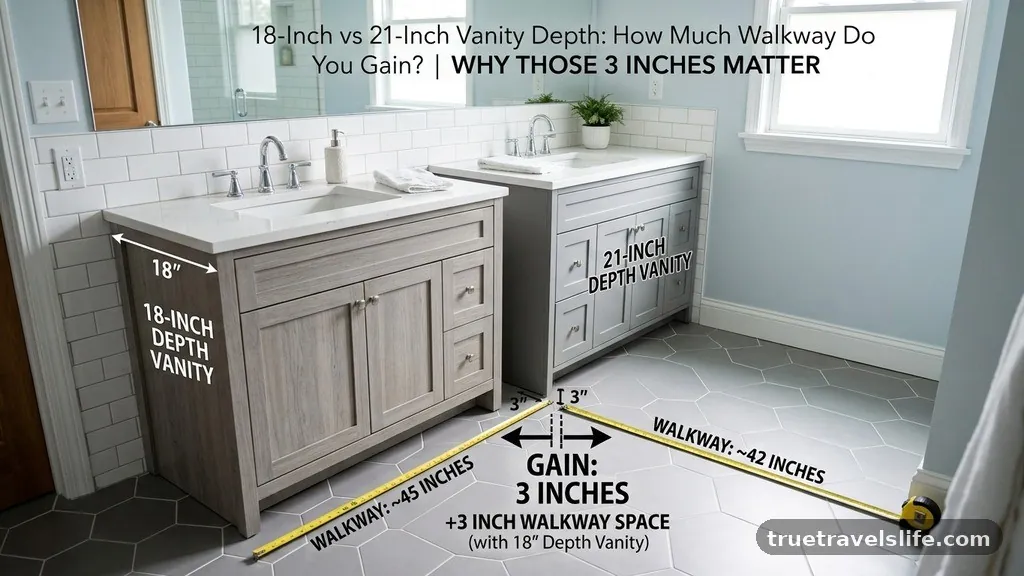
- Increased clearance for opening shower or closet doors.
- Better traffic flow in shared bathrooms.
- Reduced visual bulk, which makes small rooms feel larger.
- Easier access to bathroom accessories located on the opposite wall.
Comparing Dimensions and Functionality
Standard bathroom vanities typically measure 21 inches deep to accommodate full-sized sinks and standard plumbing fixtures. Moving to an 18-inch depth often requires specific planning regarding your sink choice and internal storage configuration. A shallower cabinet may not fit every drop-in sink, so you should verify the basin dimensions before purchasing your vanity top.
| Feature | 18-Inch Vanity | 21-Inch Vanity |
|---|---|---|
| Walkway Gain | +3 Inches | Baseline |
| Storage Capacity | Moderate | High (Standard) |
| Sink Compatibility | Limited (Requires shallow bowls) | High (Universal) |
| Best Application | Small/Powder rooms | Main/Primary bathrooms |
Design Constraints and Trade-offs
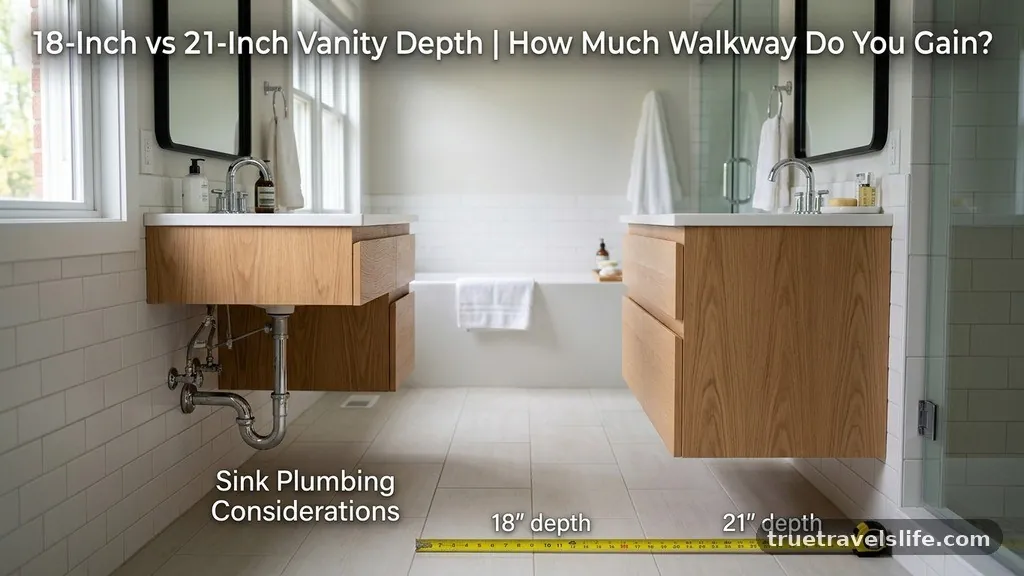
Choosing a shallower vanity often forces you to compromise on internal storage. You will lose 3 inches of drawer depth, which can limit the types of toiletries or hair tools you store inside. If you opt for a floating vanity, the 18-inch depth can actually improve the aesthetic by exposing more floor tile, creating an illusion of expanded square footage.
Sink and Plumbing Considerations
Selecting the Right Basin
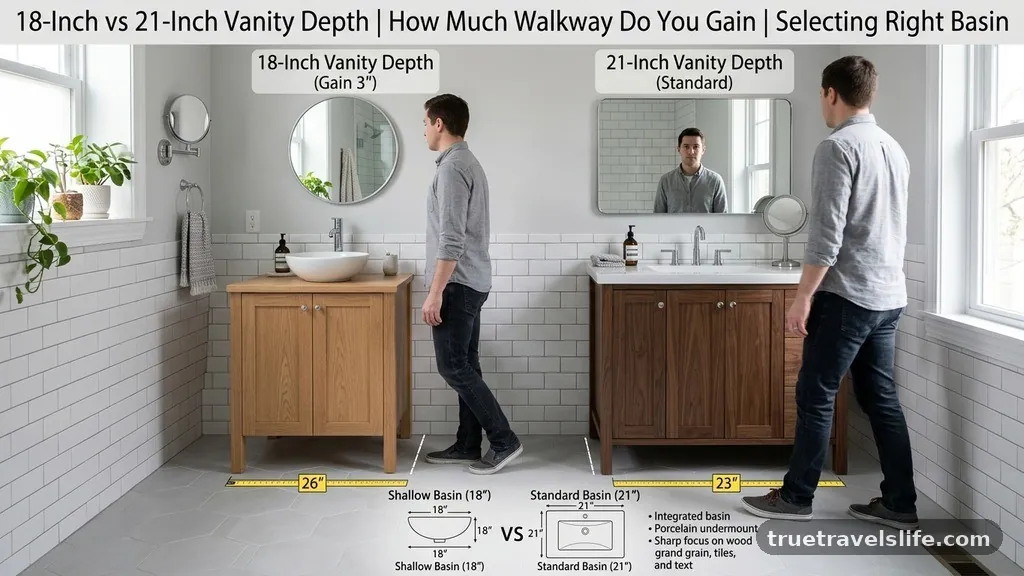
Many 18-inch units require a specialized, smaller-diameter sink to ensure the countertop doesn’t feel crowded. You should also check if your existing plumbing rough-in aligns with the back of the shallower cabinet. In some cases, moving from a 21-inch to an 18-inch vanity requires shifting the P-trap or supply lines to ensure they fit within the tighter footprint.
Final Thoughts on Vanity Selection
Deciding between an 18-inch vs 21-inch vanity depth depends entirely on your specific room dimensions and storage needs. If your priority is maximizing walking space in a tiny half-bath, the 3-inch gain provided by an 18-inch unit is an excellent trade-off. However, if you are planning a primary bathroom where storage is a premium, sticking with the 21-inch standard is usually the safer choice.
Always measure your total floor space from the wall to the nearest obstruction, such as a toilet or shower edge, before ordering your cabinetry. If you find yourself consistently bumping into the vanity, that extra room gained by downsizing to an 18-inch model will provide immediate comfort. Feel free to reach out if you need help measuring your specific layout for these common vanity sizes.