10 Mediterranean Garden Style Tuscan Retaining Warmth
Stepping out into your backyard should instantly transport you to a place of rest, yet so many outdoor spaces in our neighborhoods feel cold, clinical, or entirely disconnected from the natural landscape. While we spend months cozying up our living rooms and styling our kitchens, our backyards are frequently left as flat patches of grass bordered by standard wooden fencing. If you are tired of staring at a high-maintenance, uninspiring lawn that lacks soul and visual interest, you are not alone. Finding a landscape design that balances heat tolerance, low-water utility, and a romantic, visually inspiring aesthetic is a common hurdle. However, it is also one of the most rewarding home projects you can undertake. The right layout underfoot and all around you completely anchors your home’s exterior, turning a plain yard into a luxurious, sun-drenched private villa. In my experience, focusing on organic textures, warm stone pathways, and drought-tolerant plantings is the absolute fastest way to elevate your outdoor lifestyle. This comprehensive guide breaks down 10 stunning Mediterranean garden style Tuscan designs that landscape experts rely on to create gorgeous, sensory-rich escapes that balance real-world durability with effortless, high-end warmth.
Table of Contents
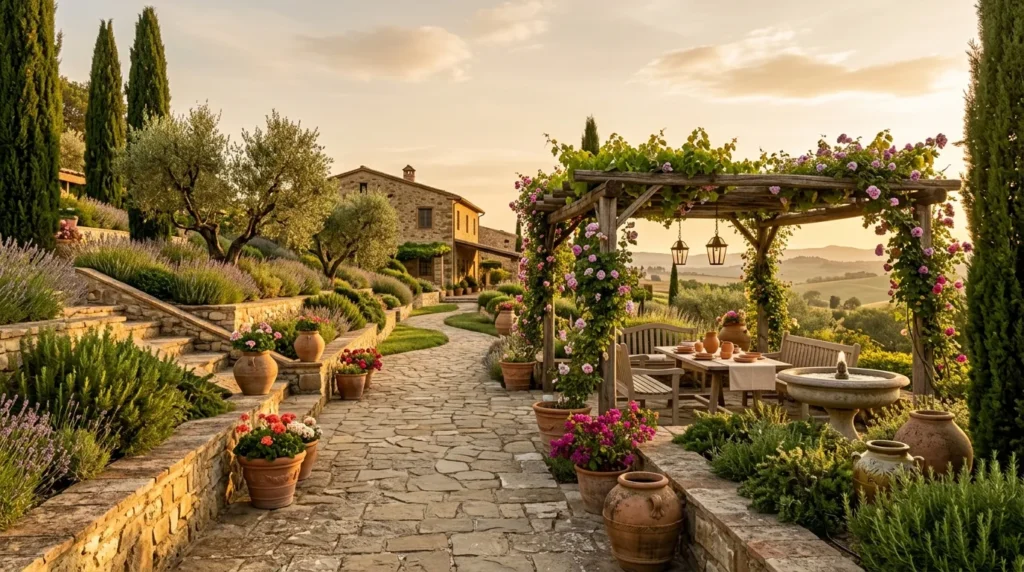
- Sun-Bleached Gravel Paths Discover how soft pea gravel and crushed limestone pathways introduce a relaxed, low-maintenance foundation underfoot.
- Distressed Terracotta Urns Embrace the romantic, sun-drenched rustic charm of hand-molded clay planters layered organically throughout your borders.
- Rustic Stone Walling How rough-hewn limestone and dry-stack fieldstone walls create beautiful structural levels and cozy terraced flowerbeds.
- Shaded Pergola Sanctuaries Turn raw, heavy timber beams into a climbing-vine shelter that offers relief from the sun and a perfect dining zone.
- Silvery Olive Groves Introduce the iconic, shimmering foliage of drought-resistant olive trees to establish beautiful, airy height and shade.
- Weathered Bistro Seating Create an intimate, inviting destination nestled among your plantings using delicate, vintage-inspired wrought iron furniture.
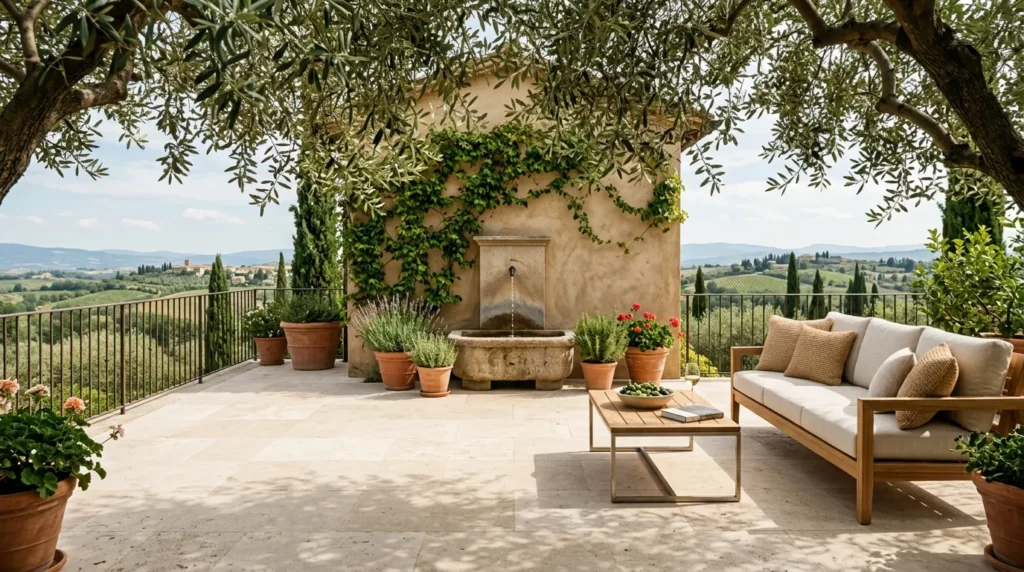
- Soothing Stone Fountains How simple, trickling water features built from cast stone introduce relaxing acoustics and mask neighborhood noise.
- Fragrant Lavender Borders Line your pathways with dense, aromatic purple blooms that attract pollinators while thriving in dry summer heat.
- Climbing Jasmine Trellises Train sweet-scented vines to scale your walls, softening hard boundaries with lush greenery and romantic fragrance.
- Low-Water Stone Groundcovers Ditch the high-maintenance grass lawn in favor of drought-tolerant creeping herbs nestled among wide stone flagstones.
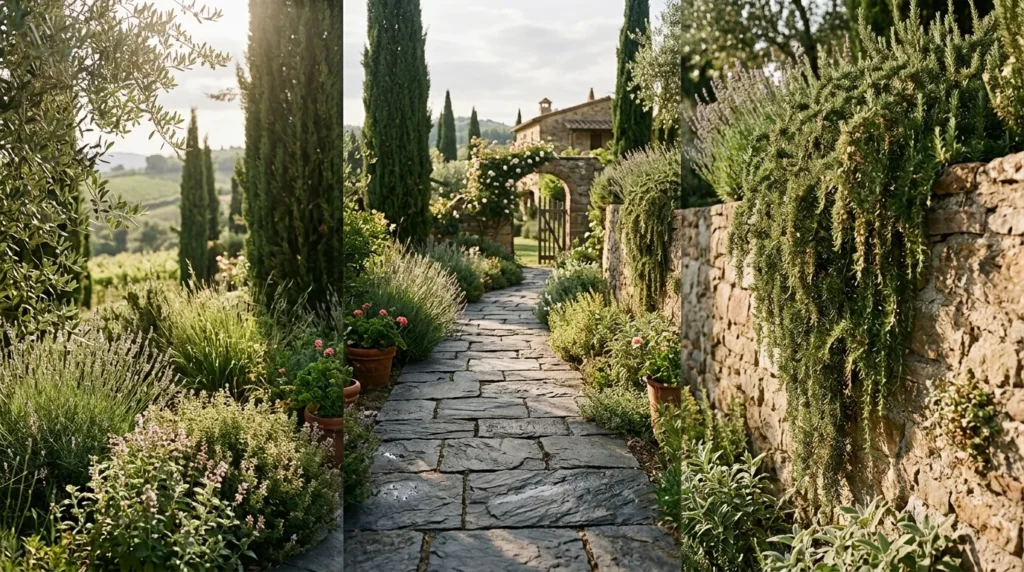
1. Sun-Bleached Gravel Paths
Quick Benefits
- Extremely low-water and low-maintenance alternative to grass lawns
- Provides a highly tactile, crunching sensory experience underfoot
- Naturally allows rainwater to drain directly back into the dry soil
- Reflects harsh summer sunlight to keep the ground surface cooler
- Creates an instant, relaxed European countryside atmosphere easily
Why It Works
A mistake many homeowners make is laying down massive expanses of green grass that require endless mowing, chemical fertilizers, and thousands of gallons of water every single summer. Transitioning to a soft, sun-bleached gravel pathway system solves this maintenance nightmare while injecting beautiful, authentic old-world character into your home’s exterior. The light-colored stones act as a gorgeous visual contrast against deep green foliage and terracotta pots. This material acts as a highly forgiving surface that naturally accommodates sloping terrain, making your backyard feel like a historic, rambling estate pathway rather than a rigid suburban yard.
How To Style It
To bring this striking look to life in your own landscape, I always suggest opting for a local crushed limestone or warm-toned pea gravel in shades of cream, buff, and pale gold. Lay down a sturdy weed barrier fabric beneath a three-inch layer of gravel to keep maintenance to an absolute minimum. Frame your paths with rough-cut stone borders to keep the gravel contained. One thing that works especially well is planting low-growing, creeping thyme or wild rosemary directly along the edges, allowing the herbs to spill over the stones and release their fragrance when brushed against.
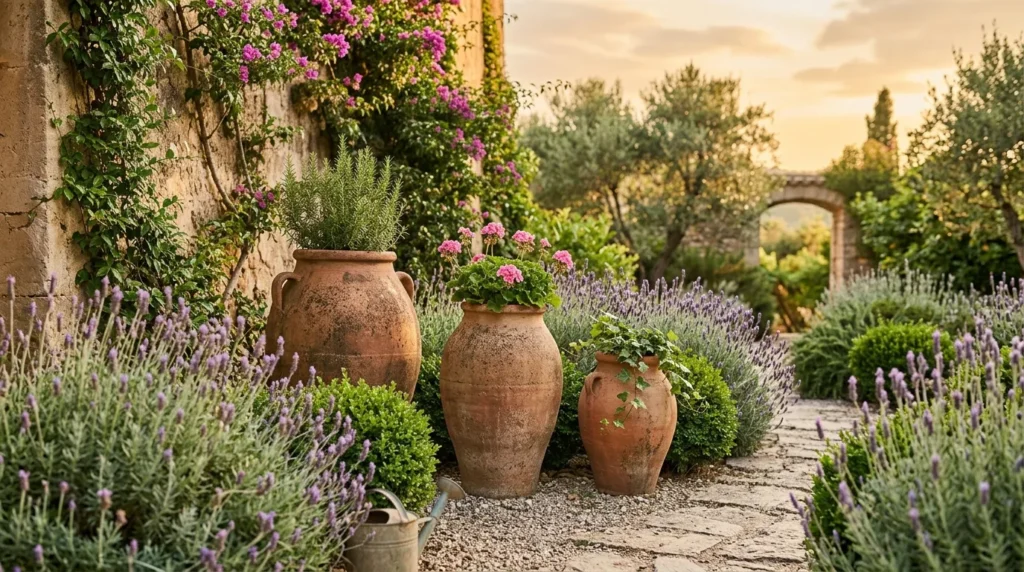
2. Distressed Terracotta Urns
Quick Benefits
- Introduces instant, warm clay color to cool garden corners
- Highly breathable clay material promotes healthy plant root growth
- Allows you to easily change up your seasonal floral displays
- Adds dramatic, sculptural height when nestled among low shrubs
- Develops a gorgeous, natural mineral patina over time outside
Why It Works
Many backyards suffer from looking a bit flat and monotonous because all the plantings sit at exactly the same height in the ground. Incorporating oversized, distressed terracotta urns is the ultimate design antidote, introducing instant soul, height, and unmistakable architectural weight into your modern outdoor space. The classic baked-clay construction offers a beautiful, warm orange-brown texture that contrasts beautifully with silvery-green foliage. It is a design choice that tells a story of historic craftsmanship and brings a relaxed, Mediterranean lifestyle feel to your patio.
How To Style It
Choose three large, hand-molded terracotta pots in slightly varying heights and cluster them together in a prominent corner of your garden or patio. Plant the largest vessel with a hardy dwarf citrus tree or a structural rosemary bush, and leave the smallest urn empty to emphasize its beautiful, sculptural shape. I always suggest allowing natural mineral deposits and moss to accumulate on the outer clay surfaces over time. This simple trick gives the planters an authentic, lived-in antique look that feels completely integrated with the surrounding landscape.
3. Rustic Stone Walling
Quick Benefits
- Resolves sloped yard issues by creating functional flat terraces
- Adds incredible structural weight and permanent architectural interest
- Offers built-in, low-elevation casual seating along planting beds
- Perfectly retains soil moisture in warm, dry summer climates
- Creates microclimates that protect delicate herbs from strong winds
Why It Works
One thing that works especially well for creating a high-end, layered landscape is introducing dry-stack rustic stone walls to define different zones in your yard. Standard wooden retaining walls look clinical and commercial, whereas rough-hewn limestone or fieldstone walls bring historic Tuscan structure to your property. These walls add beautiful vertical dimensions to your land, transforming a boring flat lawn into an exciting series of terraced planting beds that mimic the ancient olive orchards and vineyards of Italy.
How To Style It
Select regional, rough-cut building stones in warm cream, tan, or soft golden hues to build a low, double-sided dry-stack retaining wall. Keep the height between one and two feet so it double-duties as a natural bench for guests during outdoor gatherings. Plant trailing rosemary, cascading petunias, or silver falls dichondra directly into the top soil pockets of the wall, allowing the green tendrils to spill over the rough-cut stone faces for an organic, established look.
4. Shaded Pergola Sanctuaries
Quick Benefits
- Provides vital, cool shade during intense mid-day summer heat
- Defines a dedicated zone for outdoor dining and entertaining
- Serves as a sturdy structural support for climbing romantic vines
- Increases your home’s usable living space and long-term value
- Frames beautiful views of the rest of your landscaped garden
Why It Works
Sitting in a backyard that is completely exposed to the baking afternoon sun is rarely enjoyable, which is why so many outdoor spaces sit unused for most of the year. Constructing a heavy timber pergola provides the perfect balance of open-air freedom and cooling shelter. The open slatted roof allows warm air to rise and escape while filtering harsh sunlight into soft, dappled shade. This structure creates an inviting, cozy outdoor room that naturally coaxes your family outside to enjoy morning espresso or candlelit dinners.
How To Style It
Construct your pergola using thick, rough-sawn cedar or Douglas fir beams, staining the wood in a rich, warm brown tone to complement your home’s trim. Plant fast-growing climbing wisteria, grapevines, or fragrant jasmine at the base of each wooden post, training the green vines to climb up and weave across the overhead slats. I’ve seen this idea transform plain concrete patios into absolute paradises, especially when you hang a simple iron chandelier or string warm bistro lights across the wooden beams.
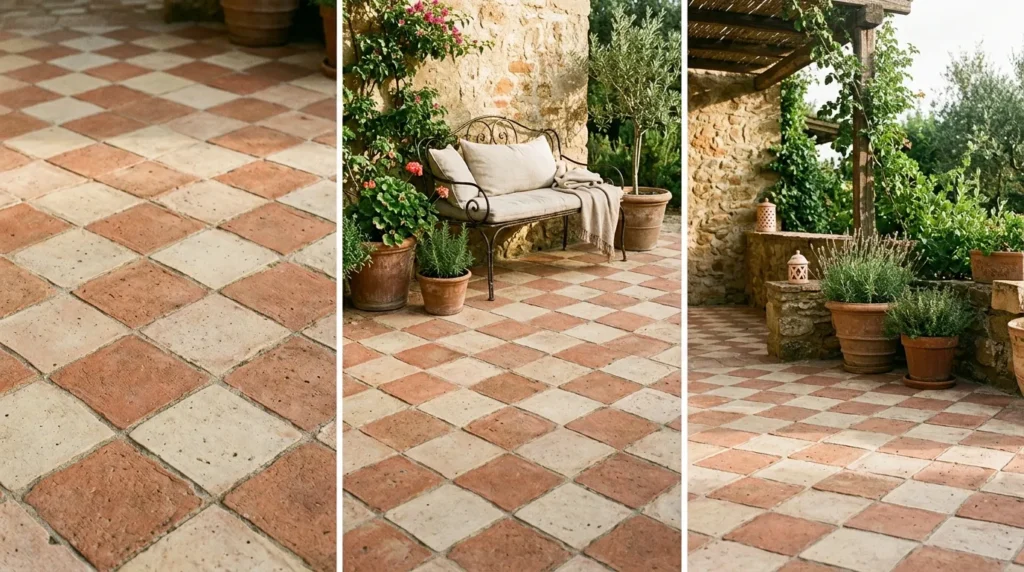
5. Classic Herringbone Layout
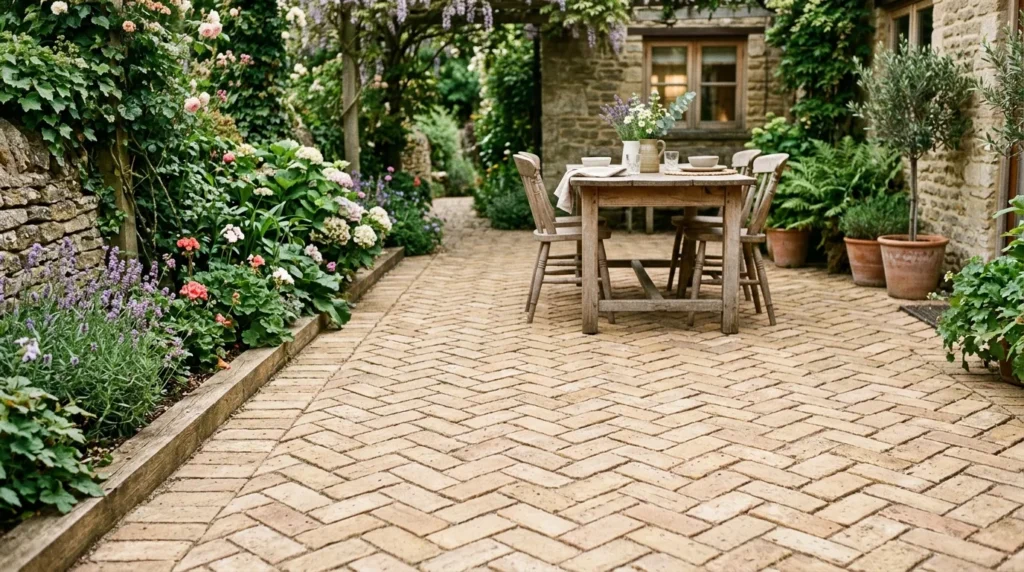
Quick Benefits
- Adds elegant, upscale detail to simple brick patio spaces
- Draws the eye forward to make narrow courtyard spaces feel longer
- Highly durable and resistant to shifting under heavy outdoor furniture
- Provides a gorgeous, detailed texture using warm, natural clay tones
- Elevated look that pairs beautifully with soft, organic plantings
Why It Works
The classic herringbone brick layout is a timeless design trick that landscape architects have relied on for centuries to add instant luxury and movement to a flat patio floor. By placing simple rectangular clay pavers at a precise 90-degree angle to one another, you create a dynamic, zigzag pattern that naturally guides your steps through the garden. This layout option is incredibly popular because it can be executed using budget-friendly paving materials, yet the finished product looks entirely custom, expensive, and tailored to your home’s unique layout.
How To Style It
Select warm, tumbled clay bricks in soft terra-cotta, dusty rose, or sandy buff shades. Install them in a tight herringbone configuration across your main dining patio, using a polymeric sand in a warm linen shade to seal the joints. Frame the patio border with larger, rectangular stone blocks laid in a clean running bond. This beautiful combination of historic pattern and warm, earthy materials feels incredibly premium, intentional, and inviting to anyone who steps outside to enjoy the afternoon sun.
6. Silvery Olive Groves
Quick Benefits
- Offers beautiful, delicate, light-filtering foliage all year long
- Extremely drought-resistant once established in your soil
- Silvery-blue leaves bring a cooling color contrast to warm stone
- Creates a beautiful, airy privacy screen from neighboring homes
- Perfect focal tree for central garden beds or large planters
Why It Works
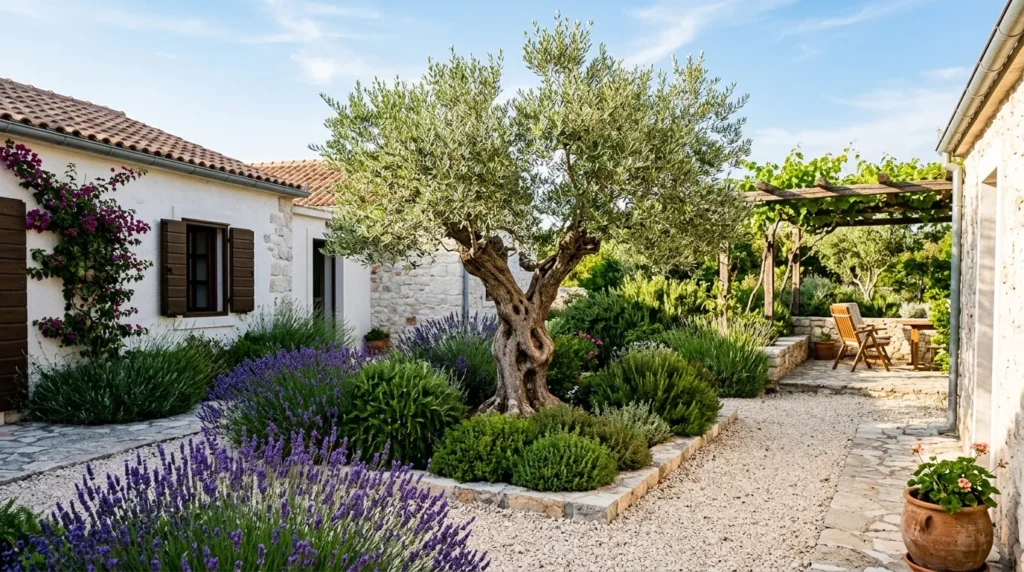
If you are tired of standard backyard trees that shed massive leaves and require constant watering, a classic olive tree is the ultimate landscape solution. Renowned for its gnarled, sculptural trunk and shimmering, narrow leaves, the olive tree brings the iconic, wind-swept romanticism of the Tuscan hills directly to your backyard. Unlike dense privacy trees that block out all natural light, the airy canopy of an olive tree filters the sun into soft, dancing patterns on the ground below, maintaining a bright and breezy atmosphere.
How To Style It
Plant a single, specimen olive tree with a beautifully twisted trunk in a central island planting bed surrounded by warm pea gravel. Underplant the base of the tree with mounded green boxwoods, purple lavender, and low-growing white carpet roses to create a classic, highly textured Mediterranean plant palette. In my experience, highlighting the architectural branching of the olive tree with a low-voltage uplight at night creates a magical, dramatic focal point that you can enjoy from your living room window.
7. Monochromatic Matte Charcoal
Quick Benefits
- Deep, moody stone accents look incredibly modern and chic
- Provides stunning contrast against bright lime-green foliage
- Easily hides soil stains, wet spots, and fallen leaf debris
- Creates a highly sophisticated, contemporary villa atmosphere
- Retains daytime warmth to radiating cozy heat in the evening
Why It Works
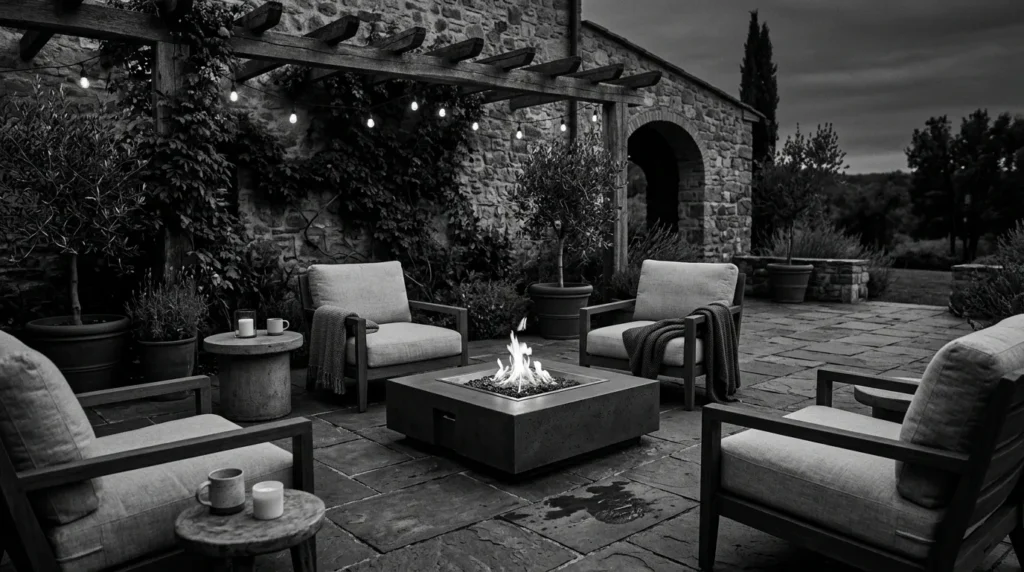
There is something undeniably sophisticated about a moody, dark color palette when designing a modern Mediterranean garden. While light stonework is beautiful, incorporating deep monochromatic charcoal pavers or dark slate steps creates an intimate, modern sanctuary feel. The dark, matte-finished stone acts as a dramatic, grounding backdrop that makes the vibrant greens and silvery blues of your plantings stand out with incredible clarity, turning your simple backyard borders into rich, living works of art.
How To Style It
Choose dark slate or charcoal concrete pavers in a clean, modern large-format square layout for your main lounge deck, using a dark grey grout to keep the surface looking solid and cohesive. Contrast these dark, moody stones with bright white plaster retaining walls, a minimalist fire pit, and warm cedar wood fencing. I’ve seen this design idea transform countless plain suburban yards into luxurious, resort-style spaces that feel exactly like a private modern estate in Southern Europe.
8. Fragrant Lavender Borders
Quick Benefits
- Floods your outdoor living space with incredibly relaxing aroma
- Attracts butterflies, honeybees, and beneficial pollinators daily
- Thrives in hot, dry, sunny spots where other flowers wither
- Beautiful, year-round soft grey-green foliage structure
- Provides endless supply of stems for fresh or dried bouquets
Why It Works
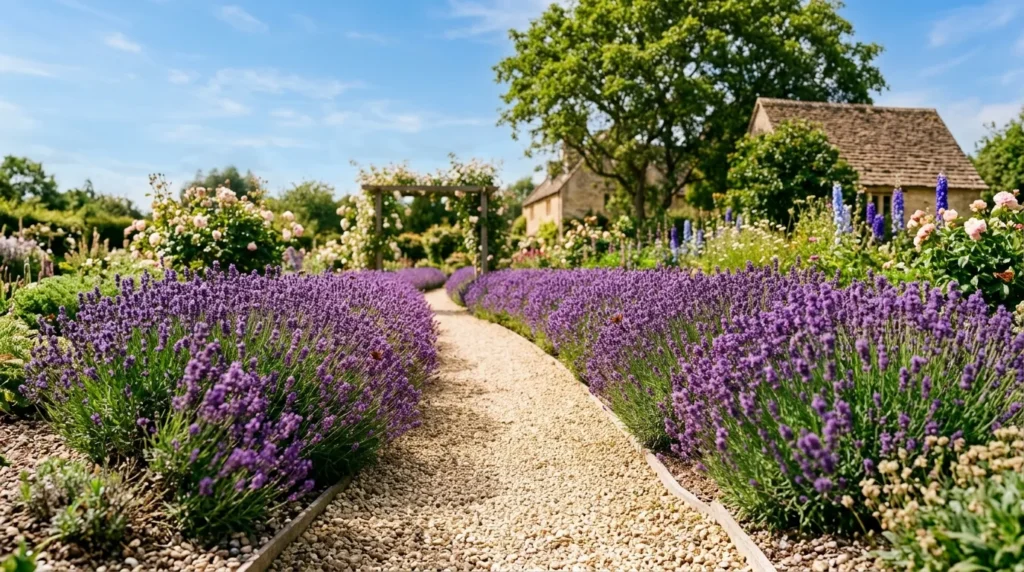
For those who believe a great garden should engage all the senses, fragrant lavender borders are a complete design dream come true. Native to the rocky, sun-drenched cliffs of the Mediterranean, lavender is perfectly adapted to thriving in poor, dry soil with very little water. When planted in dense rows along your pathways and patios, the vibrant purple flower spikes move gently in the breeze, releasing their sweet, calming oils every time you walk past. It creates an incredibly romantic, sensory-rich experience that immediately washes away daily stress.
How To Style It
Select a hardy, fragrant variety like ‘Grosso’ or ‘Munstead’ lavender, and plant them in a dense line spaced about 18 inches apart along both sides of your main gravel pathway. Ensure your soil drains rapidly by mixing in plenty of coarse sand or gravel before planting, as lavender absolutely hates wet roots. Pair these vibrant purple mounds with soft, billowy ornamental grasses and yellow-flowered yarrow to create a beautiful, low-water tapestry that looks stunning from spring through late autumn.
9. Soothing Stone Fountains
Quick Benefits
- Introduces the relaxing, calming sound of running water
- Effectively masks unwanted neighborhood traffic or pet noise
- Provides a vital cooling drink for local songbirds and butterflies
- Serves as a gorgeous, classic architectural garden focal point
- Extremely easy to run using simple, low-energy solar pumps
Why It Works
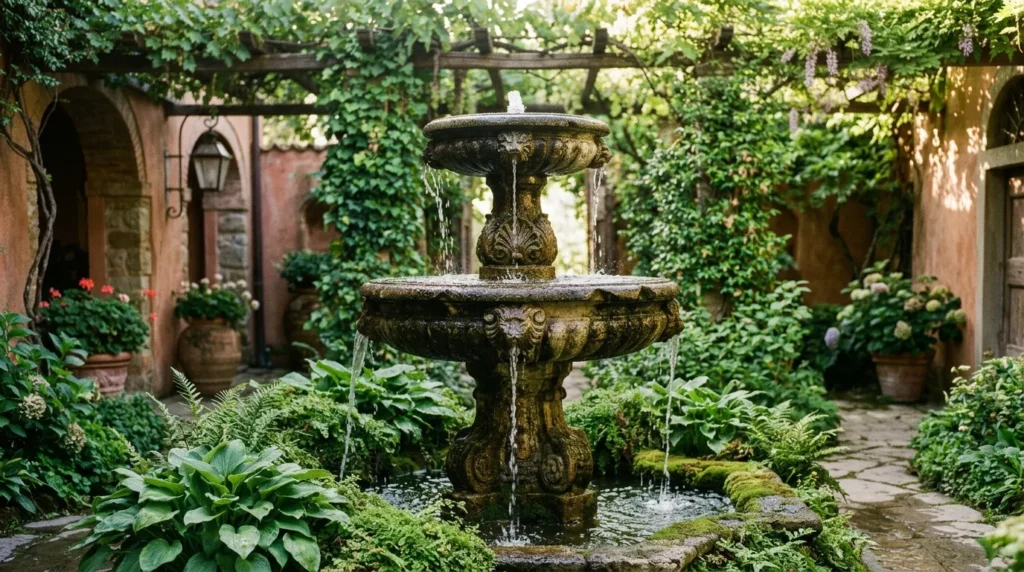
Many backyards are beautiful to look at but still feel a bit empty because they lack sensory depth and soothing acoustics. Adding a classic stone fountain is a brilliant landscape trick that instantly alters the mood of your outdoor space, turning a standard patio into a peaceful, private sanctuary. The gentle trickle of water cascading over natural stone has an incredible psychological cooling effect on hot summer afternoons, making your garden feel like an inviting, shaded courtyard oasis hidden away from the busy world.
How To Style It
Choose a simple, two-tier cast stone fountain finished in an antiqued, weathered grey or warm sand patina to match your garden’s stonework. Position the fountain in a central visual axis of your yard, such as the end of a main gravel path or directly opposite your favorite patio seating area. Surround the base of the water feature with lush, green hostas, sweet woodruff, and damp-loving mosses to create a cool, shaded grotto effect that feels as if it has existed on your property for generations.
10. Warm White Oak
Quick Benefits
- Delivers the cozy warmth of real hardwood to your deck
- Ultra-durable hardwood timber resists rot and insect damage
- Weathers over time to a gorgeous, silvery-grey antique finish
- Long, clean board lines help stretch tight courtyard dimensions
- Smooth surface feels comfortable and splinter-free under bare feet
Why It Works
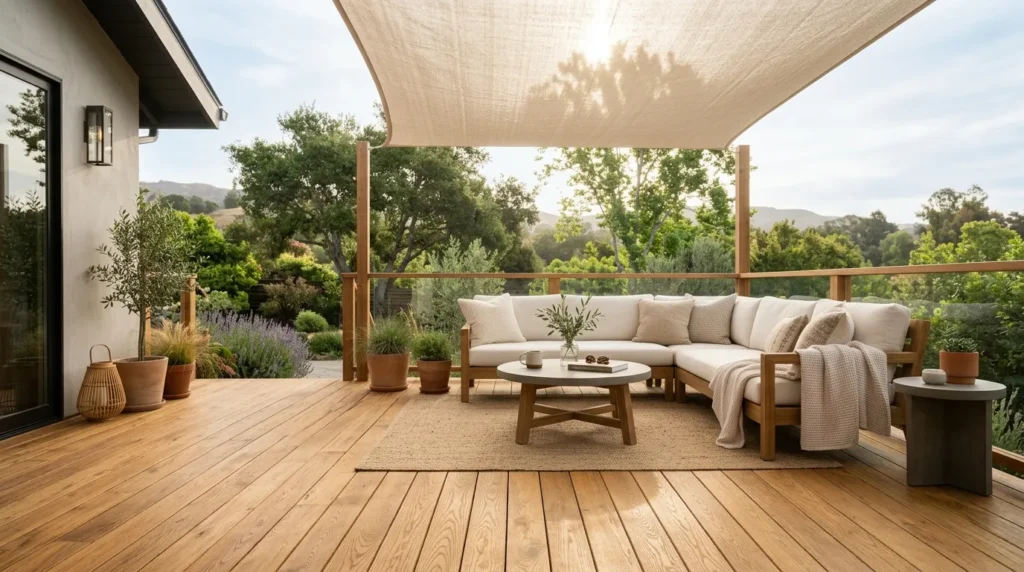
If you’re anything like me, you absolutely love the cozy, inviting warmth that real wood flooring brings to a home. However, building a standard outdoor deck using cheap pressure-treated wood often leads to warping, constant staining maintenance, and a commercial look. Utilizing a high-quality hardwood like Ipe or natural teak deck boards in a warm white oak shade allows you to enjoy the gorgeous grain patterns and rich golden tones of real wood. It is the ultimate way to bring living-room comfort and luxury style right outside to your patio.
How To Style It
Select premium timber boards pre-finished in a warm, natural oak oil that highlights the organic wood grain. Install the deck boards in a clean pattern running parallel to your home’s back door to naturally draw the eye out into the landscape. Pair these cozy wood decks with large terracotta planters, comfortable linen-cushioned outdoor lounge sofas, and a simple linen sail shade overhead to create a beautiful, modern Tuscan lounging zone you will never want to leave.
FAQ Section
What are the best low-water plants for a Mediterranean garden style Tuscan look?
To achieve a classic Tuscan garden feel while keeping water use extremely low, focus on hardy, drought-tolerant plants native to Mediterranean climates. Excellent choices include rosemary, lavender, sage, and thyme. For larger focal plants, choose silver-foliaged olive trees, tall Italian cypresses, climbing bougainvillea, and structural agaves. Once established, these beautiful plants require very little water and thrive in hot, dry conditions.
How do I prepare my soil for a low-water Tuscan garden?
Tuscan and Mediterranean plants absolutely require excellent soil drainage to survive. If you have heavy clay soil, it will trap moisture and cause plant roots to rot. I always recommend digging in plenty of organic compost, coarse sand, and fine pea gravel to break up clay and improve drainage. Creating raised planting beds or mounded terraces is also an exceptional way to ensure your low-water plants stay dry and healthy.
Can I create a Mediterranean garden style Tuscan look in a cold climate?
Yes, you can absolutely recreate this romantic style in colder regions by choosing cold-hardy plant substitutes. Instead of sensitive olive trees, plant cold-hardy ‘Blue Ice’ Arizona cypress or Russian olive trees. Use hardy varieties of English lavender, and plant your sensitive herbs or citrus trees in large terracotta pots that you can easily move indoors or into a garage during freezing winter months.
What is the best gravel size and color for Tuscan pathways?
For comfortable walking pathways, the absolute best choice is a 1/4-inch to 3/8-inch sized pea gravel or crushed limestone. Avoid large stones as they shift too much underfoot. For an authentic Tuscan look, choose warm, sun-bleached colors like cream, buff, golden tan, or soft light beige. Avoid stark white gravel, which can create a harsh glare in the summer sun, and dark grey, which looks too industrial.
How do I prevent weeds from growing in my gravel garden paths?
To keep your gravel pathways completely low-maintenance and weed-free, always install a heavy-duty, commercial-grade landscape fabric directly over the soil before pouring your gravel layer. Keep the gravel depth to a solid three inches to prevent light from reaching any stray seeds. If a few stubborn weeds do sprout in the gravel over time, simply pour boiling water over them or use a natural vinegar spray to kill them easily.
Related Articles
- Cozy Patio Styling
- Modern Farmhouse Decor
- Neutral Home Styling
- Space-Saving Garden Storage
- DIY Accent Wall Ideas