10 Rustic Kitchen Ideas Farmhouse Design
A rustic farmhouse kitchen has a way of making everyday life feel a little warmer. Natural wood, vintage-inspired details, practical storage, and comfortable gathering spaces create the relaxed atmosphere that makes this style so appealing. Unlike highly polished kitchen trends that can feel formal, farmhouse design embraces texture, character, and the occasional imperfect detail.
The beauty of a rustic kitchen is that it does not require an old farmhouse to work. A suburban kitchen, country home, or modern open-concept space can all incorporate farmhouse elements. The trick is choosing details that feel connected rather than filling the room with too many rustic accessories.
Warm oak cabinetry can soften a bright white kitchen. Reclaimed wood can give an island more personality. An apron-front sink can add traditional character, while vintage-style lighting creates a welcoming glow after sunset. These details can work alongside modern appliances and contemporary conveniences without making the kitchen feel stuck in the past.
I’ve noticed that the most successful farmhouse kitchens usually balance old and new. Natural materials bring warmth, while clean cabinet lines and practical layouts keep the room comfortable for modern living. That balance also makes farmhouse design easier to personalize.
In this guide, you’ll find ten rustic farmhouse kitchen ideas that focus on both appearance and everyday function. Each idea includes practical styling suggestions, material combinations, layout considerations, and ways to create a cozy kitchen that feels collected over time.
Whether you’re planning a full kitchen renovation or simply looking for a few changes that make your existing space feel more inviting, these ideas can help you create a farmhouse-inspired kitchen with timeless character.
Table of Contents
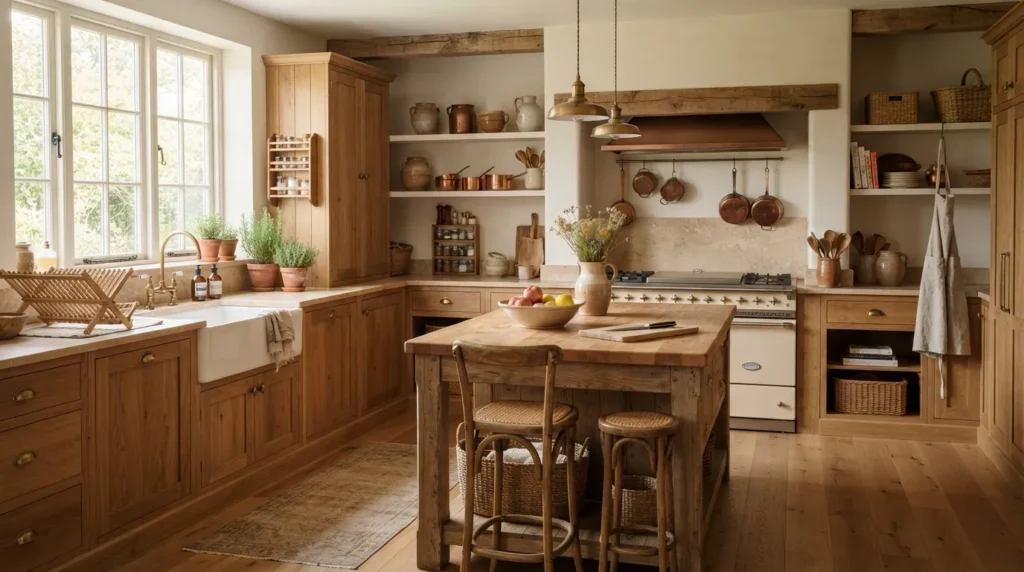
1. Natural Wood Cabinets
Warm wood cabinetry adds texture and authentic rustic character.
2. White and Wood Contrast
Bright cabinetry paired with natural wood creates balanced farmhouse warmth.
3. Large Farmhouse Island
A generous island provides preparation space and a natural gathering point.
4. Reclaimed Wood Details
Weathered wood introduces texture and a lived-in country feeling.
5. Apron Front Sink
A classic farmhouse sink creates an instantly recognizable focal point.
6. Rustic Open Shelving
Wood shelves provide practical storage while displaying everyday kitchen pieces.
7. Natural Stone Counters
Earthy countertop materials complement wood and other rustic finishes.
8. Exposed Ceiling Beams
Wooden beams add architectural character and emphasize the rustic aesthetic.
9. Vintage Lighting
Old-fashioned-inspired fixtures bring warmth and personality to the kitchen.
10. Vintage Farmhouse Accents
Collected details make the space feel personal rather than overly coordinated.
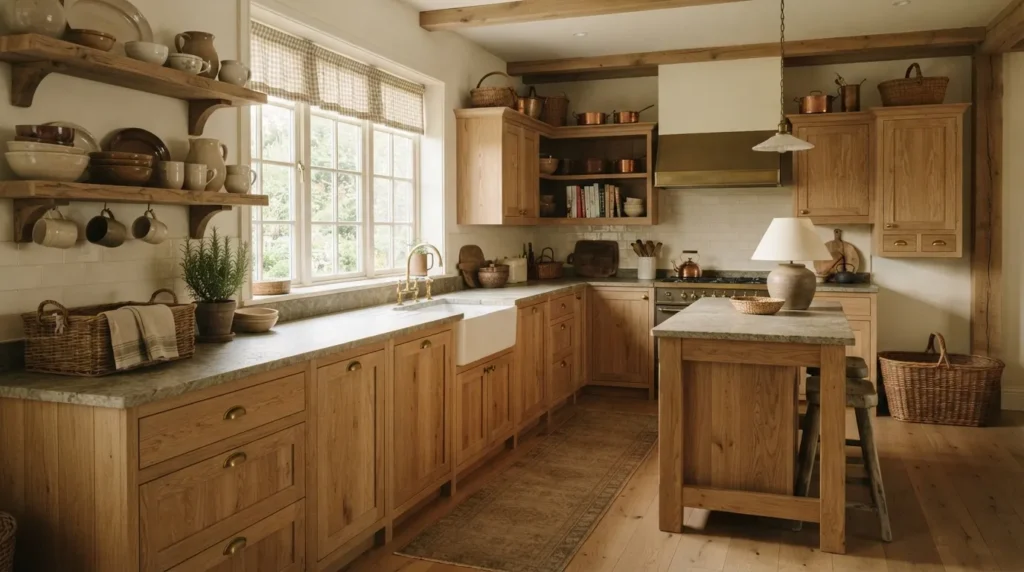
1. Natural Wood Cabinets
Quick Benefits
- Adds natural warmth
- Highlights authentic wood grain
- Works with many neutral colors
- Creates a welcoming atmosphere
- Fits rustic and transitional kitchens
Why It Works
Natural wood cabinetry is one of the easiest ways to bring genuine rustic character into a kitchen. Instead of relying on decorative accessories to create warmth, the cabinets themselves become an important part of the room’s visual texture.
Oak, pine, walnut, and other wood species each create a different effect. Light oak feels fresh and relaxed, while deeper walnut introduces a richer and more traditional appearance. Reclaimed or distressed wood can add even more character when you want a strongly rustic direction.
Wood also works well in kitchens that receive plenty of natural light. Sunlight brings out the grain and variation in the material, making the cabinetry feel more dimensional.
A mistake many homeowners make is matching every wood element exactly. A kitchen can feel more natural when cabinet wood, flooring, shelves, and furniture have related but slightly different tones.
How To Style It
Pair warm wood cabinets with cream or soft white walls to create contrast without making the room feel stark. A simple stone or quartz countertop can provide a clean surface against the textured cabinetry.
Choose hardware in aged brass, bronze, iron, or matte black depending on the mood you want. Black hardware creates stronger contrast, while brass and bronze feel more traditional.
Add a few open shelves for displaying pottery or wooden cutting boards. Keep the countertop styling simple so the wood grain remains one of the main visual features.
For flooring, natural wood or stone-look materials can reinforce the earthy palette. A neutral runner can add comfort without competing with the cabinetry.
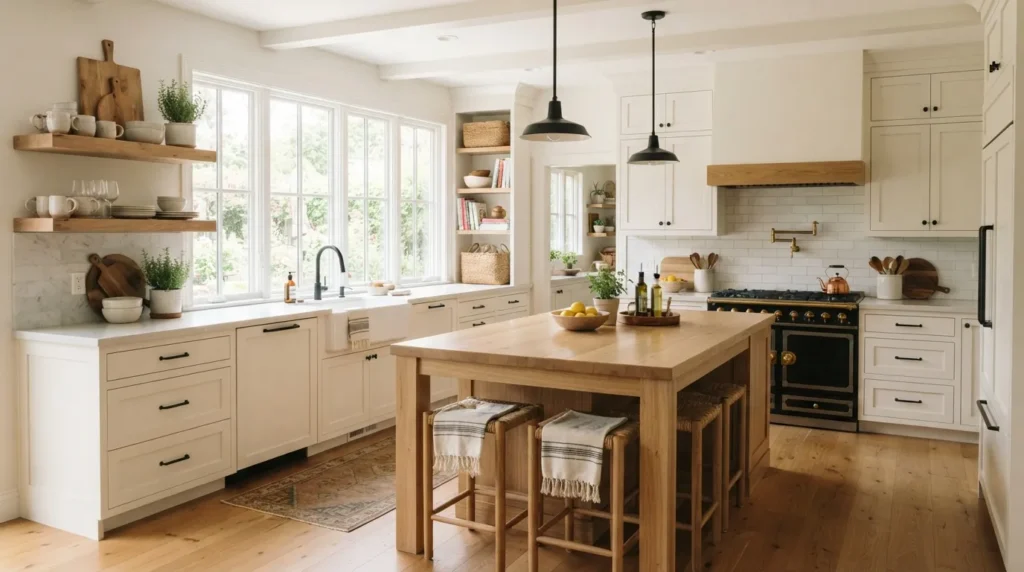
2. White and Wood Contrast
Quick Benefits
- Keeps the kitchen bright
- Adds warmth to white cabinetry
- Creates visual balance
- Works in small and large kitchens
- Blends rustic and modern styles
Why It Works
White and natural wood create one of the most approachable combinations for a farmhouse kitchen. White cabinetry keeps the room feeling bright and clean, while wood accents add the warmth that prevents the space from appearing too formal.
This combination is especially useful when you love farmhouse design but prefer a lighter interior. Instead of covering the entire kitchen in rustic materials, you can use wood selectively on an island, shelves, ceiling beams, or furniture.
The contrast also gives the eye different textures to explore. Smooth painted cabinets feel crisp, while wood grain introduces natural variation.
This style works particularly well in open-concept homes because the neutral palette connects easily with adjoining living and dining areas.
How To Style It
Use white or cream cabinetry throughout the perimeter and introduce natural wood through the island. A wood island top can create an especially warm focal point, while a stone countertop provides a more practical surface.
Add wood floating shelves beside a range hood or near the sink. Keep their styling functional with bowls, mugs, cutting boards, and a few pieces of pottery.
For hardware, black pulls create a crisp farmhouse contrast. Aged brass gives the kitchen a softer vintage direction.
Choose warm lighting rather than very cool bulbs. The warmer glow helps the white cabinetry and wood elements feel connected during the evening.
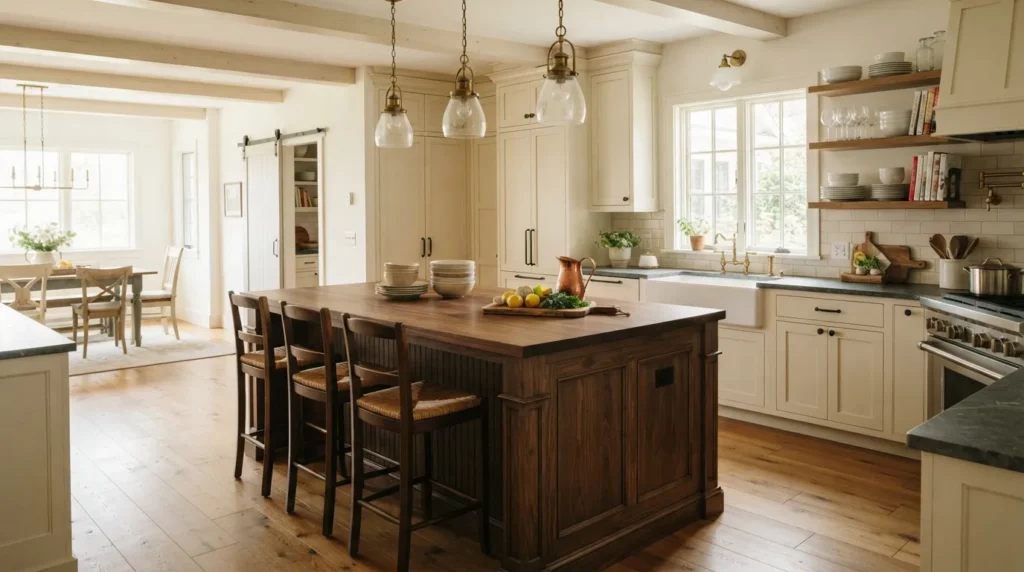
3. Large Farmhouse Island
Quick Benefits
- Provides valuable preparation space
- Creates a natural gathering area
- Adds visual weight to large kitchens
- Offers additional storage
- Supports casual family meals
Why It Works
A large island can become the heart of a farmhouse kitchen. Beyond providing additional workspace, it creates a place where people naturally gather while meals are prepared, homework is completed, or conversations continue.
Farmhouse islands often look particularly appealing when they have furniture-inspired details. Paneled sides, turned legs, open shelving, butcher-block surfaces, and contrasting paint can give the island a more handcrafted appearance.
The island also provides an opportunity to introduce a different material without changing the entire kitchen. A wood island against painted cabinets, for example, can instantly make the room feel warmer.
However, size matters. An oversized island can interfere with circulation if the surrounding walkways are too narrow. The goal is generous workspace without sacrificing comfortable movement.
How To Style It
Choose an island size that fits the room’s actual dimensions rather than simply choosing the largest possible option. Leave comfortable clearance around major work areas and appliance doors.
Use the island for both storage and seating when space allows. Deep drawers are useful for cookware, while open shelves can hold baskets or frequently used serving pieces.
For seating, choose wooden stools, woven counter stools, or simple upholstered designs. Pendant lights above the island can reinforce the farmhouse character while providing focused illumination.
A large wooden bowl, cutting board, or ceramic vessel makes a simple centerpiece without taking away useful preparation space.
4. Reclaimed Wood Details
Quick Benefits
- Adds authentic rustic texture
- Introduces natural variation
- Creates a lived-in appearance
- Works as an accent material
- Adds personality without a full renovation
Why It Works
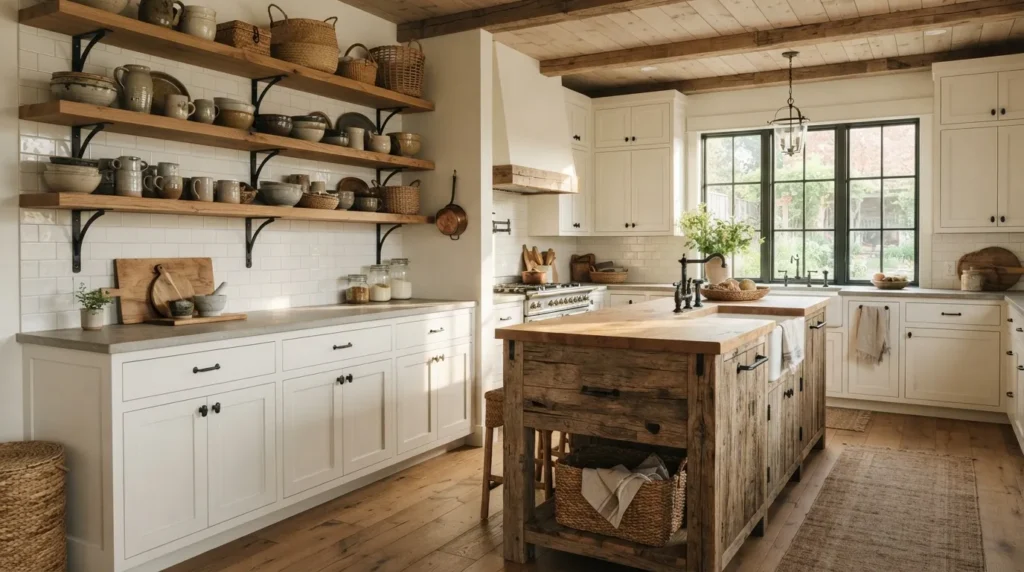
Reclaimed wood can give a kitchen the feeling that it has developed character over many years. Knots, weathering, color variation, and visible grain create texture that manufactured materials often struggle to reproduce.
You don’t need to cover an entire wall to benefit from this material. A reclaimed wood range hood, island panel, ceiling accent, or pair of shelves can provide enough rustic character.
The most appealing applications usually treat reclaimed wood as a feature rather than covering every available surface. Too much distressed material can make the kitchen feel themed instead of naturally rustic.
The beauty of reclaimed wood is its ability to connect with other natural materials. It looks comfortable beside stone, ceramic, iron, linen, and woven textures.
How To Style It
Use reclaimed wood on an island face if you want a strong focal point. For a smaller update, install reclaimed wood shelves against a neutral backsplash.
Pair weathered wood with simple cabinetry in white, cream, sage, or soft gray. This keeps the rustic material visually grounded.
Use black iron brackets for a more traditional country appearance or concealed supports for a cleaner modern farmhouse look.
Balance the rough texture with smooth surfaces elsewhere. Quartz countertops, simple ceramic tile, and clean cabinet fronts can keep the room from becoming visually heavy.
5. Apron Front Sink
Quick Benefits
- Creates a recognizable farmhouse feature
- Provides a generous washing area
- Complements traditional cabinetry
- Works with modern kitchen layouts
- Adds visual character around the sink
Why It Works
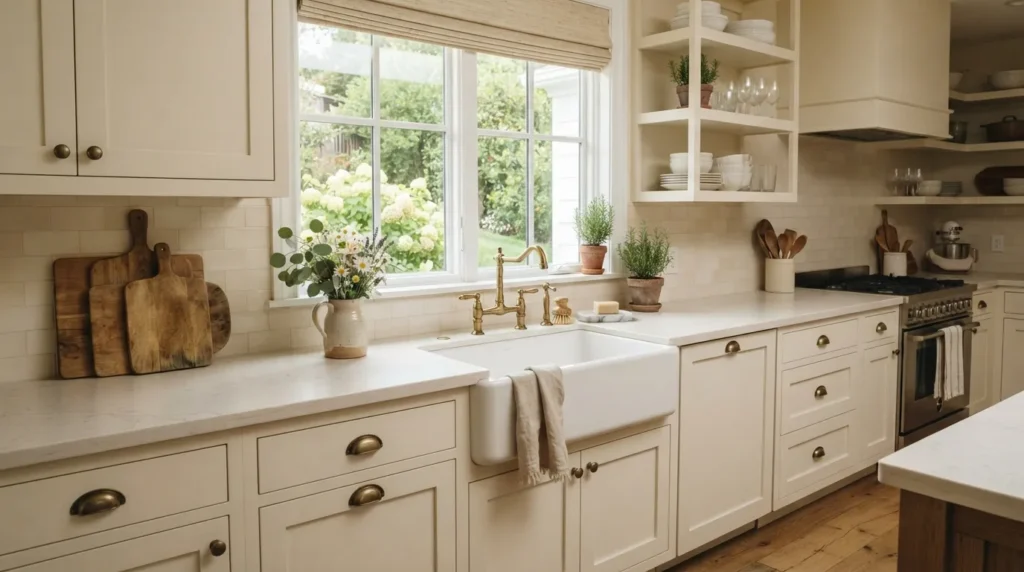
An apron-front sink remains one of the defining details associated with farmhouse kitchens. Its exposed front creates a distinctive transition between the countertop and cabinetry, making the sink area feel more intentional.
Traditional white fireclay-style sinks create a classic appearance, while stainless steel or darker finishes can give the same silhouette a more contemporary direction.
The sink is also one of the hardest-working parts of the kitchen, so choosing a style that fits your actual cooking and cleaning routine matters more than selecting one purely for appearance.
Positioning is equally important. A sink near a window can create a pleasant work area with natural light, while placement within a large island can improve interaction with the rest of the room.
How To Style It
Pair a farmhouse sink with a bridge-style faucet, pull-down faucet, or simple vintage-inspired fixture. Match the faucet finish with at least one other hardware element in the kitchen.
White sinks work beautifully with cream cabinets, natural wood, and warm stone. For stronger contrast, a stainless or dark sink can complement black hardware and darker countertops.
Keep the area around the sink relatively uncluttered. A ceramic soap dispenser, wooden brush, and small potted herb can provide useful details without overwhelming the workspace.
A simple window treatment above the sink can reinforce the farmhouse feeling while allowing plenty of daylight into the room.
6. Rustic Open Shelving
Quick Benefits
- Adds accessible storage
- Creates display space
- Introduces natural wood texture
- Makes everyday dishes decorative
- Works well in small kitchens
Why It Works
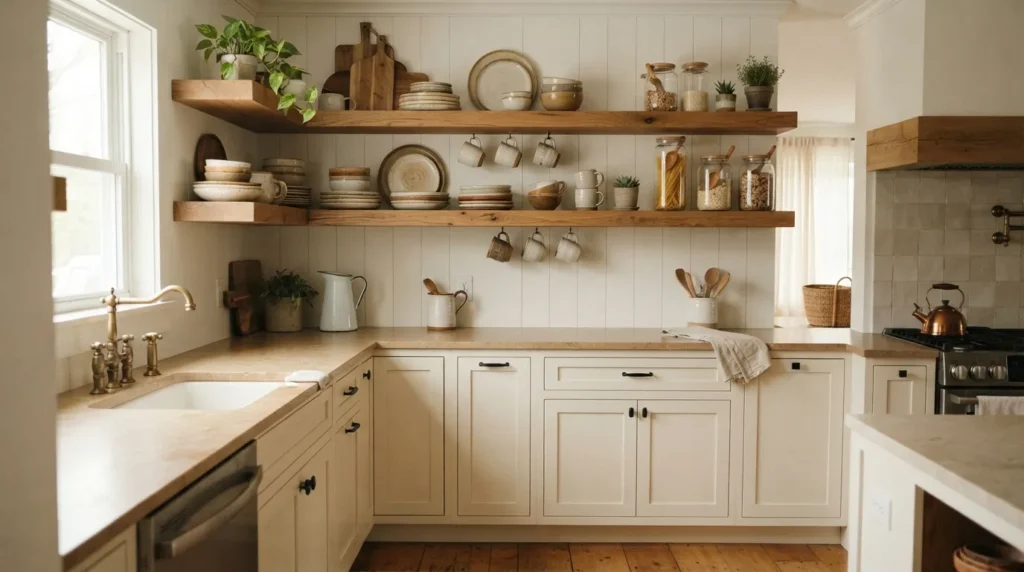
Open shelving is particularly effective in farmhouse kitchens because it combines storage with personality. Instead of hiding every dish behind cabinet doors, you can display pieces that contribute to the overall design.
Wood shelves add warmth, especially when paired with painted cabinets. They can also visually break up a long wall of cabinetry and create a lighter appearance.
The key is keeping the shelves useful. A farmhouse kitchen looks more natural when open shelves hold things that are actually used rather than becoming crowded displays.
Shelves can also be helpful in smaller kitchens where upper cabinets make the room feel visually enclosed. A carefully placed pair of shelves can provide storage while preserving an open feeling.
How To Style It
Choose thick wood shelves with a natural or lightly finished surface. Install them near the coffee station, sink, range, or a less frequently used wall.
Arrange plates vertically, stack bowls, and place mugs within easy reach. Add one or two decorative pieces such as a ceramic vase or small plant.
Leave some empty space between groups of objects. This prevents the shelves from looking crowded.
Repeat the wood tone elsewhere in the room through cutting boards, stools, or an island. This small connection makes the shelves feel integrated into the kitchen.
7. Natural Stone Counters
Quick Benefits
- Adds earthy texture
- Complements rustic materials
- Creates visual depth
- Works with wood cabinetry
- Supports traditional farmhouse styling
Why It Works
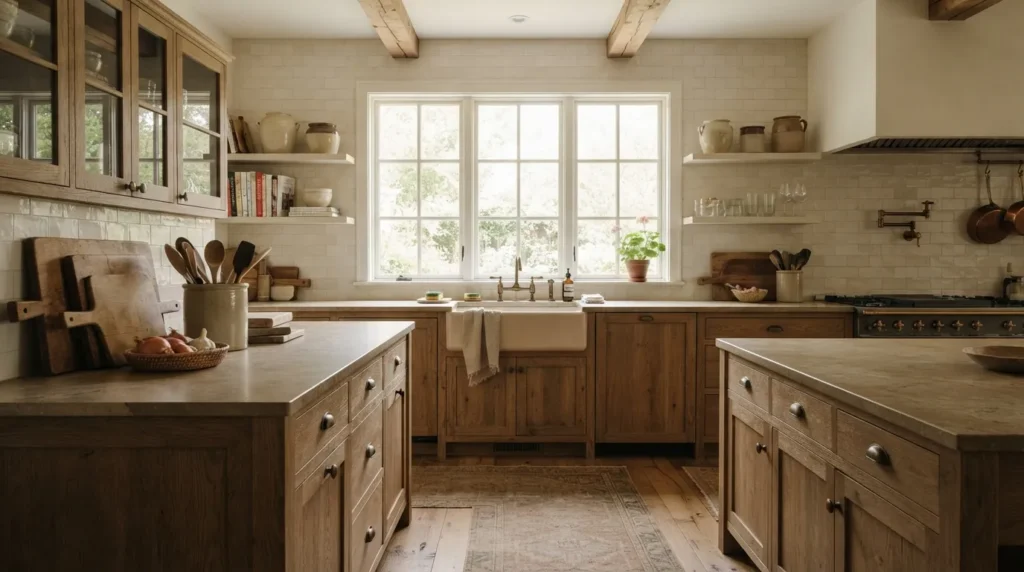
Natural stone countertops can reinforce the earthy character of a rustic kitchen. Materials with subtle variation create a visual connection to the natural wood, ceramic, and iron elements often found in farmhouse interiors.
Soapstone, granite, and other stone surfaces can each create different impressions. Darker stone adds contrast, while lighter surfaces maintain a brighter atmosphere.
The goal is not necessarily to choose the most dramatic stone available. A surface with restrained movement can often create a more timeless result, especially when the cabinetry already contains visible wood grain.
Stone also gives the kitchen a sense of permanence. When paired with durable cabinetry and quality hardware, the overall design feels substantial rather than temporary.
How To Style It
Pair a dark stone counter with white, cream, or light gray cabinetry for contrast. Warm wood cabinets can work beautifully with lighter stone surfaces.
Choose a backsplash that relates to the countertop without copying every detail. Handmade-look ceramic tile can add a slightly imperfect texture that complements rustic materials.
Wooden cutting boards, ceramic crocks, woven baskets, and iron fixtures reinforce the natural palette.
Keep the countertop decor practical. Farmhouse kitchens feel most authentic when beautiful objects are also useful in everyday cooking.
8. Exposed Ceiling Beams
Quick Benefits
- Adds architectural character
- Emphasizes ceiling height
- Introduces natural wood texture
- Creates a strong farmhouse focal point
- Works in open-concept kitchens
Why It Works
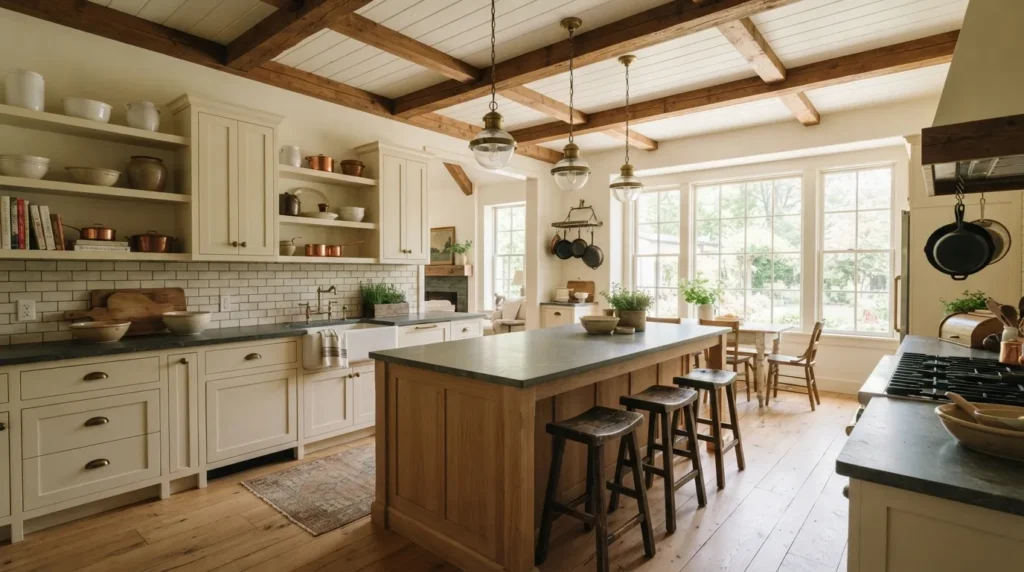
Exposed ceiling beams can transform the architecture of a kitchen without changing the cabinetry or countertops. Their strong horizontal lines naturally draw attention upward and can make the room feel more connected to traditional farmhouse structures.
Dark beams create contrast against a white ceiling, while lighter beams create a softer natural appearance.
They are particularly effective in kitchens with vaulted or high ceilings. In these spaces, the beams help visually anchor the room and prevent the upper portion from feeling empty.
If your kitchen has a standard ceiling, a smaller number of carefully positioned beams can still add character. The design works best when it feels architectural rather than purely decorative.
How To Style It
Keep the surrounding ceiling light if you want the beams to stand out. White or warm cream ceilings create a strong contrast with medium or dark wood.
Repeat the beam’s wood tone in one or two other elements, such as open shelves or stools. Too many matching wood features can make the room feel overly coordinated.
Use simple pendant fixtures that hang below the beams rather than competing with them. In an open-concept kitchen, this helps establish a clear visual center.
Balance the strong ceiling detail with quieter cabinetry and countertops.
9. Vintage Lighting
Quick Benefits
- Creates warm evening ambiance
- Adds farmhouse personality
- Provides task lighting
- Highlights the kitchen island
- Complements traditional materials
Why It Works
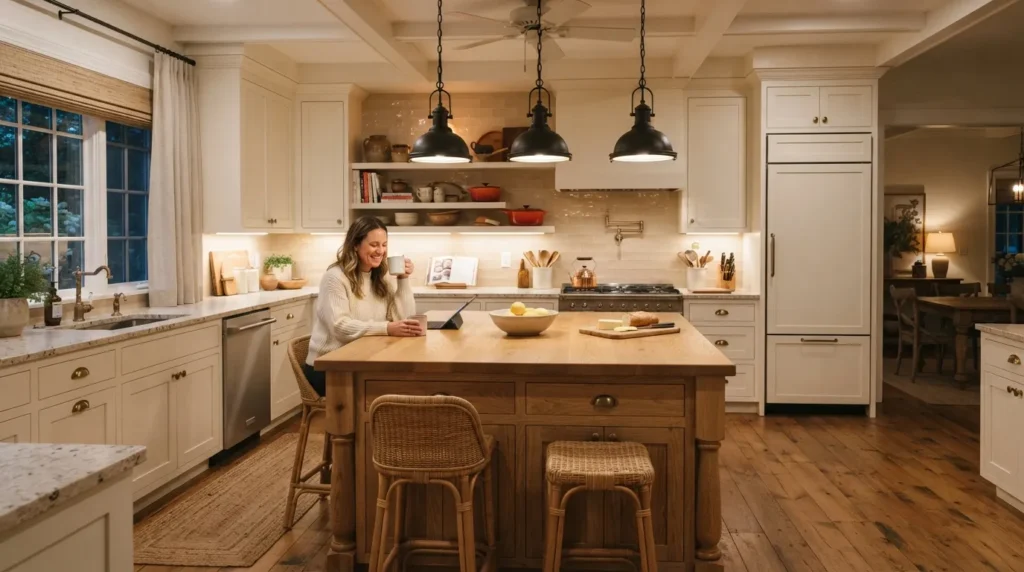
Lighting can change the personality of a kitchen more dramatically than many homeowners expect. Vintage-inspired fixtures bring softness and character while providing practical illumination for cooking and gathering.
Lantern pendants, aged metal fixtures, glass shades, and simple industrial lights can all work within a farmhouse kitchen. The best choice depends on whether your design leans traditional, rustic, or modern farmhouse.
Lighting is also an opportunity to introduce a contrasting material. A black metal pendant can add structure to a soft neutral kitchen, while aged brass can warm up white and wood finishes.
Layering is important. One ceiling fixture rarely provides enough illumination for all kitchen activities.
How To Style It
Hang pendant lights above the island at a height that provides useful task lighting without obstructing conversation or sightlines.
Use under-cabinet lighting to illuminate preparation surfaces. Add general ceiling lighting for overall brightness and decorative fixtures for warmth.
Choose fixtures with shapes that complement the architecture. Lantern-style lights reinforce a traditional farmhouse look, while simple globe or metal pendants can move the kitchen toward modern farmhouse style.
Use warm-toned bulbs to create a comfortable atmosphere during evening meals and gatherings.
10. Vintage Farmhouse Accents
Quick Benefits
- Adds personality
- Creates a collected appearance
- Makes the kitchen feel lived-in
- Provides easy decorating opportunities
- Works with modern appliances
Why It Works
The smallest details can make the difference between a kitchen that simply uses farmhouse materials and one that genuinely feels personal.
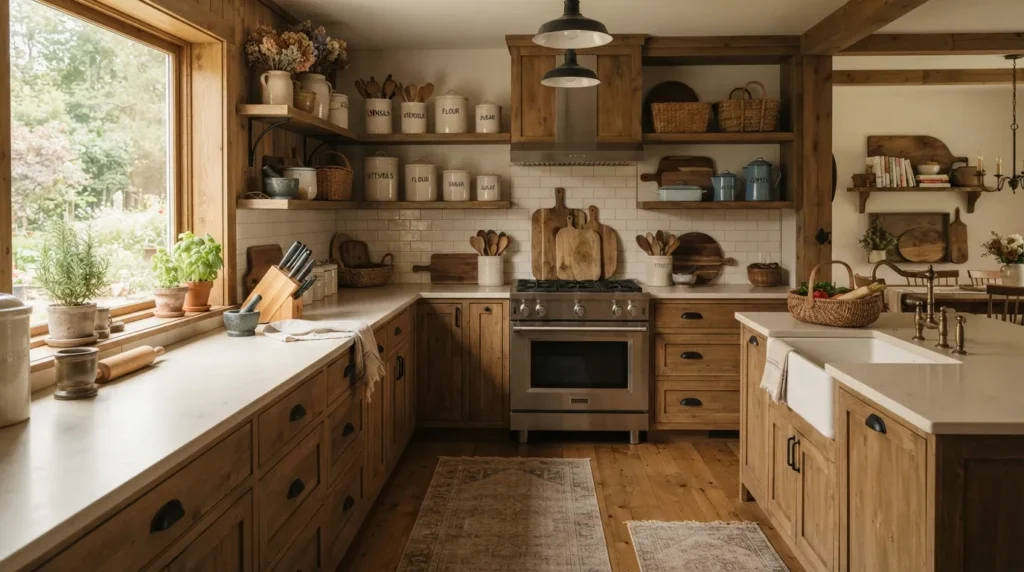
Vintage-inspired accents such as old-style pottery, wooden bread boards, enamel containers, woven baskets, antique-looking scales, and ceramic crocks can introduce character without requiring a major renovation.
The goal is not to make everything look old. In fact, combining vintage details with modern appliances and clean cabinetry often creates a more believable farmhouse kitchen.
A few meaningful objects can tell a visual story. They make the space feel like a kitchen that has evolved through everyday life rather than one decorated all at once.
How To Style It
Start with functional pieces. Display a stack of wooden cutting boards near the prep area, keep pottery on an open shelf, or place woven baskets above cabinets or on lower shelving.
Choose a restrained color palette of cream, warm wood, black, muted green, soft blue, or earthy brown.
Avoid filling every surface with signs and decorative objects. Leave room for practical kitchen activities.
Mix smooth modern finishes with aged-looking pieces. A contemporary range beside vintage pottery can create exactly the relaxed contrast that makes modern farmhouse interiors so appealing.
How to Create a Rustic Farmhouse Kitchen
Creating a rustic farmhouse kitchen does not require every classic farmhouse element at once. In fact, using too many can make the room feel overly themed.
Begin with your largest surfaces: cabinets, countertops, flooring, and walls. These establish the foundation. Natural wood and warm neutrals create an easy rustic starting point, while white cabinetry gives you a brighter modern direction.
Then add one or two architectural features. Exposed beams, a wood island, a farmhouse sink, or a reclaimed wood accent wall can provide enough character to establish the style.
After that, focus on smaller details. Hardware, lighting, open shelving, pottery, baskets, and textiles can reinforce the aesthetic without dominating the room.
I’ve found that contrast is what keeps rustic kitchens interesting. Smooth quartz beside rough wood, modern appliances beside vintage pottery, or crisp white cabinetry beside dark beams creates visual balance.
Best Rustic Farmhouse Color Palettes
Color plays a major role in how rustic a kitchen feels.
Warm White and Oak: Bright, relaxed, and timeless.
Cream and Walnut: Richer and more traditional.
White and Black: Crisp farmhouse contrast with a modern edge.
Sage Green and Natural Wood: Soft, earthy, and welcoming.
Warm Gray and Oak: A sophisticated neutral combination.
Cream and Muted Blue: Traditional farmhouse character with a gentle coastal influence.
The most cohesive kitchens usually repeat a few colors throughout the room rather than introducing a new shade with every accessory.
Rustic Kitchen Materials That Work Together
A farmhouse kitchen becomes more convincing when the materials feel naturally connected.
Wood
Use wood for cabinets, beams, shelves, stools, islands, and cutting boards. Different wood tones can work together when they share similar warmth.
Stone
Stone countertops and flooring introduce earthy texture and help balance wood-heavy rooms.
Ceramic
Handmade-look tile, pottery, crocks, and ceramic dishes add subtle irregularity that suits rustic interiors.
Metal
Black iron, aged brass, bronze, and galvanized-style finishes can add structure and vintage character.
Woven Materials
Baskets, linen, jute, and rattan provide softness and texture while keeping the kitchen comfortable.
The goal is not to use every material. Choose a few and repeat them naturally throughout the room.
Rustic Farmhouse Ideas for Small Kitchens
A small kitchen can still have plenty of farmhouse personality. In fact, the style works particularly well in compact rooms because natural materials and warm colors make the space feel inviting.
Choose light cabinets or warm white walls to maintain visual brightness. Add one wood feature, such as floating shelves or a small butcher-block island.
Open shelving can provide useful storage without the visual weight of full upper cabinetry. Use the shelves for everyday dishes so the items serve both a practical and decorative role.
A compact farmhouse sink can become a focal point, while a vintage-inspired pendant can add personality without taking up valuable counter space.
Avoid overcrowding the room with decorative accessories. In a small kitchen, each item needs enough breathing room to remain visually effective.
Modern Appliances in Rustic Kitchens
A rustic kitchen does not require vintage appliances.
Modern stainless steel appliances can work beautifully with farmhouse cabinetry because they provide a clean contemporary contrast. Panel-ready appliances can create a more seamless appearance when you want cabinetry to dominate visually.
The key is integrating appliances into the overall material palette. Stainless steel works well with black hardware, natural wood, white cabinets, and stone surfaces.
For a softer appearance, consider appliances with warmer or darker finishes when they coordinate with the rest of the room.
Function remains important. A beautiful farmhouse kitchen still needs an efficient refrigerator, range, dishwasher, and ventilation system that support the way the household cooks.
Common Rustic Kitchen Design Mistakes
One common mistake is using too many distressed finishes. Rustic does not mean every surface has to look weathered.
Another is relying heavily on farmhouse signs and decorative wording. A few personal pieces can add charm, but architecture, materials, and lighting create a much stronger foundation.
Matching every wood tone can also make the kitchen feel manufactured. Slight variation often creates a more natural appearance.
Finally, don’t sacrifice functionality for style. Keep frequently used cookware near the cooking area, provide sufficient preparation space, and make sure seating does not interfere with kitchen circulation.
The best farmhouse kitchens feel beautiful because they work beautifully.
Frequently Asked Questions
What makes a kitchen look rustic farmhouse?
Rustic farmhouse kitchens typically combine natural wood, warm neutral colors, practical cabinetry, vintage-inspired details, simple hardware, and comfortable gathering areas. Features such as apron-front sinks, open shelving, exposed beams, reclaimed wood, and farmhouse-style lighting can reinforce the aesthetic. The overall look works best when rustic materials are balanced with practical modern features.
What colors work best in a farmhouse kitchen?
Warm white, cream, natural wood, sage green, muted blue, soft gray, black, and earthy brown are all useful farmhouse colors. A simple palette often looks more authentic than a room filled with contrasting shades. Combining one light neutral with natural wood and a darker accent creates an easy starting point.
How can I make a modern kitchen look more farmhouse?
Add natural wood, vintage-inspired lighting, open shelves, traditional hardware, ceramic accessories, or a farmhouse-style sink. You do not need to replace the entire kitchen. Even one or two strong material changes can soften a contemporary space and give it farmhouse character while allowing modern appliances and clean cabinetry to remain.
Are white cabinets good for a rustic kitchen?
Yes. White cabinets create a bright foundation that pairs beautifully with rustic materials such as reclaimed wood, natural stone, exposed beams, and woven accessories. Choose warm white or cream when you want a softer appearance. Natural wood accents can prevent white cabinetry from feeling too formal or sterile.
What countertops look best in a farmhouse kitchen?
Natural stone, soapstone, butcher block, quartz with subtle movement, and other earthy-looking surfaces can complement farmhouse cabinetry. The best option depends on the cabinet color and overall palette. Wood cabinets often pair beautifully with lighter stone, while white cabinets can handle darker counters for stronger contrast.
How do I decorate farmhouse kitchen shelves?
Start with useful items such as plates, bowls, mugs, cutting boards, and serving pieces. Add a few decorative elements such as pottery, greenery, or a small vintage-style object. Mix heights and textures while leaving some empty space. This keeps the shelves functional and visually relaxed rather than crowded.
Can rustic farmhouse kitchens have modern appliances?
Absolutely. Modern appliances can create useful contrast against wood cabinetry, vintage-inspired lighting, and traditional farmhouse details. Stainless steel appliances are particularly versatile. The important consideration is maintaining a cohesive palette and practical layout rather than trying to make every element look vintage.
Related Articles
- 10 Modern Farmhouse Kitchen Ideas for a Cozy Home
- 10 White Kitchen Cabinet Ideas for a Timeless Look
- 10 Rustic Kitchen Island Ideas with Natural Wood
- 10 Farmhouse Kitchen Decor Ideas for Everyday Style
- 10 Kitchen Backsplash Ideas for Warm Farmhouse Design
Conclusion
Rustic farmhouse kitchens are appealing because they combine beauty with the comfort of everyday living. Natural wood, warm neutrals, open shelving, vintage lighting, farmhouse sinks, and stone surfaces create a welcoming foundation without requiring the room to look overly decorated.
The strongest designs also understand the importance of balance. Rustic materials bring texture and character, while modern appliances, efficient storage, practical countertops, and thoughtful lighting make the kitchen comfortable to use.
You can also bring farmhouse style into your kitchen gradually. Start with one meaningful change, such as replacing a light fixture, adding wood shelving, updating cabinet hardware, or introducing a natural wood island. From there, build the room around materials and colors that already work with your home.
If you are planning a larger renovation, focus first on the layout and major surfaces. Once those elements are working well, smaller details such as pottery, baskets, textiles, and vintage-inspired accessories can add the personality that makes the space feel complete.
The goal is not to create a kitchen that looks like a showroom. It is to create a warm, functional room where people naturally want to gather, cook, share meals, and spend time together. Start with natural materials, keep the palette comfortable, and let a few thoughtfully chosen farmhouse details give your kitchen its own story.