How to Squeeze a Trash Can Between Toilet and Vanity in a Tight Bath
Squeezing a trash can between toilet and vanity in a tight bath often feels like a puzzle with no solution. When floor space is at a premium, finding a home for everyday waste requires more than just luck; it demands precise measurements and a clear understanding of your layout. By prioritizing slim profiles and wall-mounted alternatives, you can maintain functionality without sacrificing comfort.
This process involves checking clearance codes and selecting the right hardware to ensure your bathroom remains organized. Mastering the art of fitting a bin into these awkward gaps will transform your daily routine, turning a cramped area into a model of efficiency.
Measuring Your Available Gap
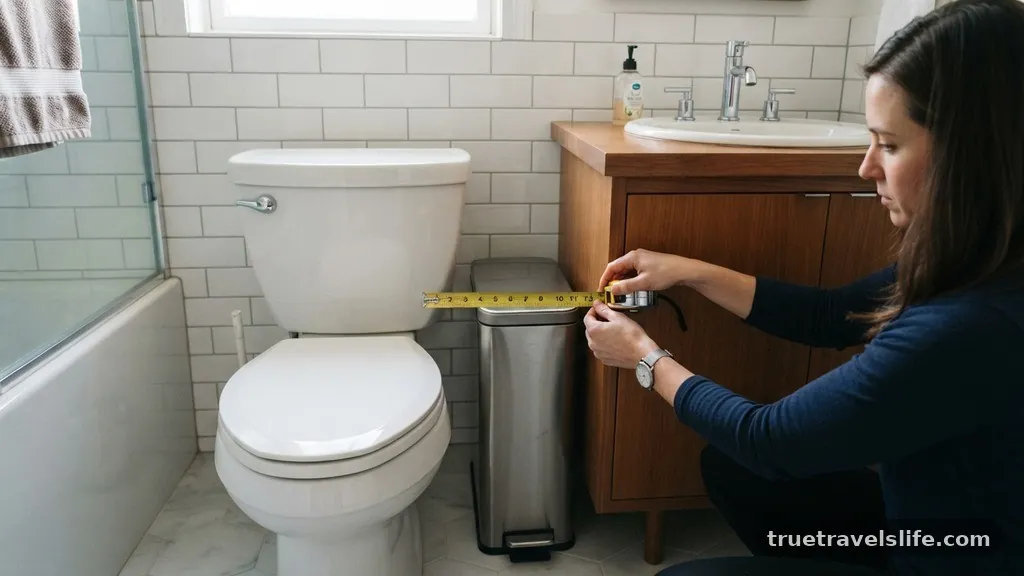
Before buying any product, you must determine exactly how much room you have. Grab a tape measure and check the width of the gap between the edge of your vanity and the side of the toilet bowl.
Do not measure just at the floor level, as pipes and toilet bases often widen as they meet the tile. Measure at the widest point of the toilet to ensure the bin won’t be constantly pushed or squeezed.
If you have less than six inches of clearance, standard round bins are likely out of the question. You need to look for specific “slim” or “rectangular” models designed for tight spots.
Write down your dimensions and keep them in your phone notes. You will need these figures constantly while browsing online or walking through home improvement stores.
Understanding Building Codes and Clearance
Safety and comfort are just as important as aesthetics in a small bathroom. According to the International Residential Code, you should generally maintain at least 15 inches from the center of the toilet to any side wall or vanity.
While this is a guideline for new construction, it serves as a reality check for your existing layout. If your gap is already smaller than this, you are working in a non-standard zone.
Adding a trash can into an already tight space might make the area feel cluttered or difficult to clean. If the bin sits too close to the toilet, it could block access to the flush handle or create a hygiene issue.
Always prioritize ease of movement over the convenience of a larger bin. If the gap is too narrow to hold anything comfortably, consider mounting a waste receptacle elsewhere.
Selecting the Right Trash Can Shape
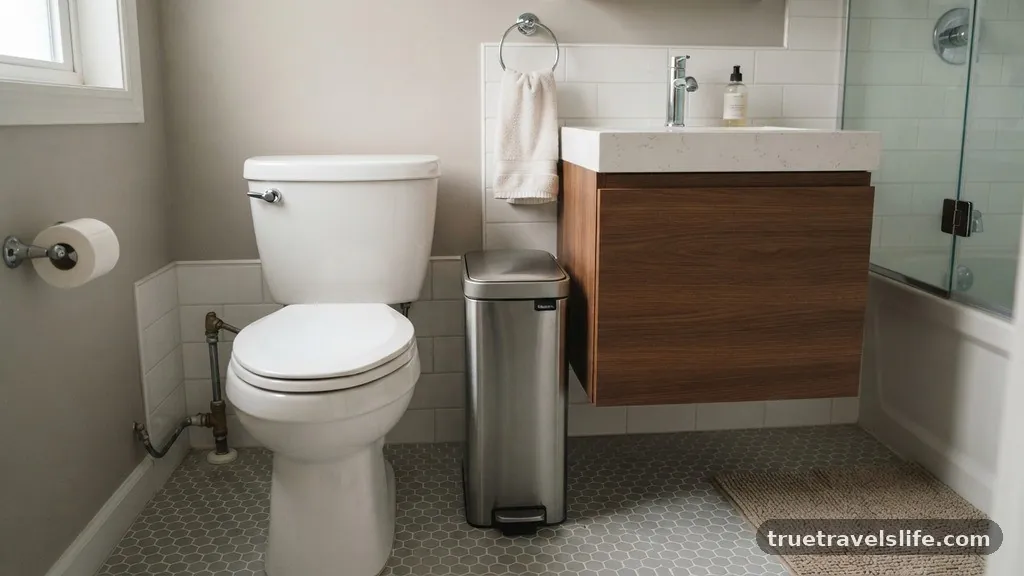
The shape of your waste bin is the most critical factor for success. Round buckets are inefficient in narrow corridors because they waste space at the corners.
Rectangular or semi-circular bins hug the vanity wall much better, leaving more room for your feet. A flat-backed design is particularly effective because it sits flush against the cabinet.
Consider the orientation of the bin’s opening as well. Some models are designed with a lid that flips up, which requires vertical clearance.
If your vanity has an overhanging countertop, a tall lid might hit the underside of the vanity. Look for bins with side-swing lids or open-top buckets to avoid these mechanical collisions.
Evaluating Capacity Versus Footprint
It is tempting to buy the largest bin that fits, but capacity is often a trap in small bathrooms. A large bucket in a tiny gap makes the space look smaller and creates a “crammed” aesthetic.
Focus on a bin that holds enough for a day or two of waste rather than a week’s worth. Most bathroom waste is light, consisting of tissues, cotton swabs, and product packaging.
You can often find slim bins that utilize height to compensate for their narrow width. A tall, thin bin can hold as much as a wider, shorter one while maintaining a smaller footprint.
This vertical design is the secret to squeezing a trash can between toilet and vanity in a tight bath effectively. Check the height against your vanity to ensure it stays tucked neatly out of sight.
Choosing the Right Lid Mechanism
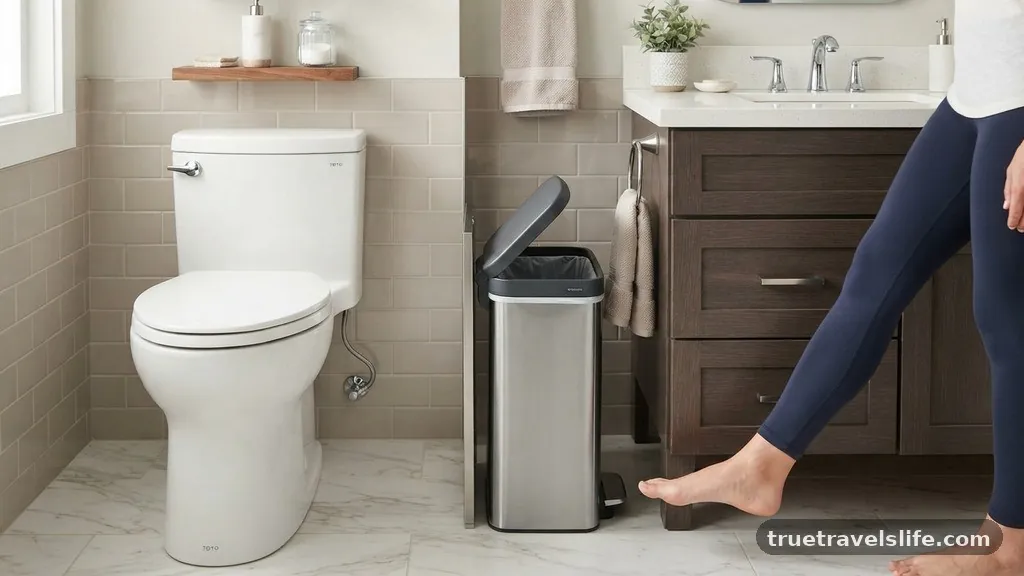
The way a trash can opens determines how usable it is in a cramped corner. A traditional step-pedal trash can requires space for the mechanism to operate.
If the pedal is on the front, you might have to twist your body awkwardly to reach it. Side-pedal models are often better for narrow gaps because you can operate them from the front.
If the gap is extremely tight, skip the pedal entirely. Look for swing-top lids or simple open-top buckets that allow you to drop trash in without a mechanical trigger.
These designs are less prone to breaking and are much easier to clean in a high-moisture environment. A lidless design also prevents the “lid-clash” problem where the top hits the toilet bowl every time you open it.
Comparing Common Bin Types
When you start shopping, you will notice distinct categories of bathroom bins. Some are designed for aesthetics, while others focus purely on utility. The following table highlights common options for tight bathroom spaces.
| Bin Type | Best For | Space Efficiency |
|---|---|---|
| Slim Rectangular | Narrow gaps | High |
| Wall-Mounted | Zero floor space | Very High |
| Swing-Top | Easy access | Medium |
| Open-Top | Smallest gaps | Very High |
Materials and Maintenance
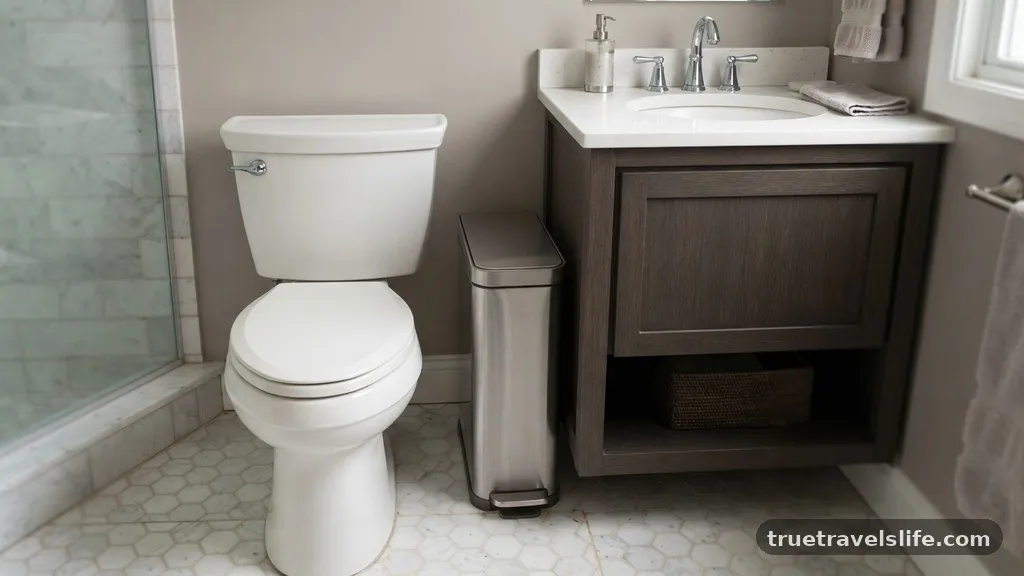
Bathrooms are humid environments, so your choice of material matters. Stainless steel looks sleek but can show water spots and rust if not properly finished.
Plastic is lightweight and easy to wipe down, which is ideal for a small space that collects dust. Matte finishes are generally better than glossy ones for hiding fingerprints.
Ensure the bin has a removable inner bucket. This feature allows you to empty the waste without moving the entire outer shell.
It also makes cleaning the bin much faster when a spill occurs. A hidden bag rim is another feature to look for, as it keeps the plastic liner tucked away for a cleaner, more minimalist look.
Alternative Storage Locations
Sometimes, the best way to deal with a tight space is to stop trying to force a floor-standing bin into it. If the gap between the toilet and vanity is genuinely too small, look at the vanity itself.
Many people install a small bin on the inside of the cabinet door. This keeps the waste completely hidden and leaves your floor clear.
Another option is a wall-mounted waste bin. These attach to the side of the vanity or the wall behind the toilet.
They are completely off the floor, which makes cleaning the tile much easier. If you have a pedestal sink, a hanging bin might be your only viable solution for keeping the floor clear.
Essential Features to Look For
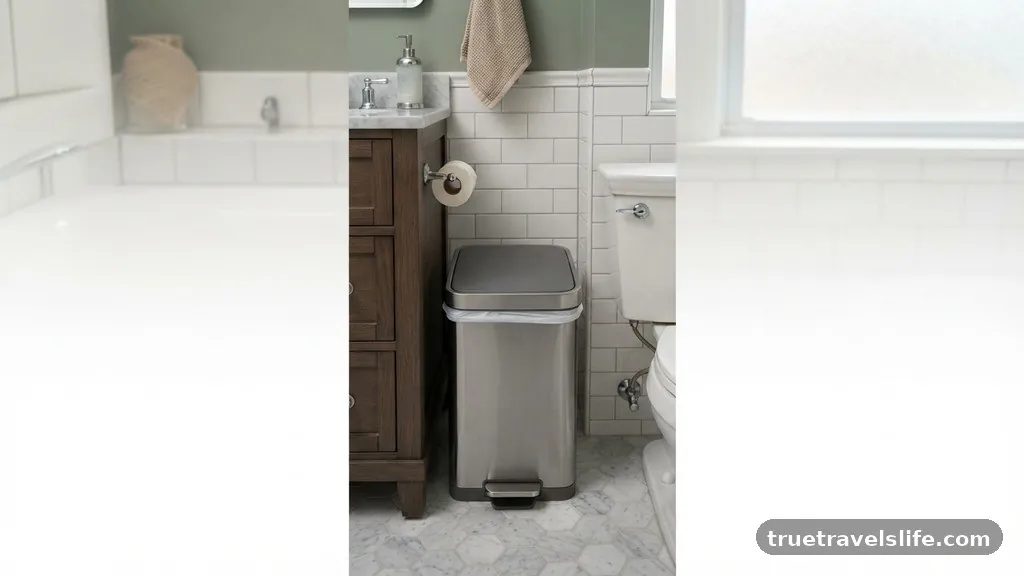
When you are ready to buy, prioritize features that solve specific small-space problems. Look for a bin with a non-slip base so it stays in place when you bump into it.
A soft-close lid is a luxury, but it prevents the loud “bang” that echoes in a small bathroom. You should also check the weight of the bin; a heavy base prevents the unit from tipping over when you drop something into it.
Consider the color and finish carefully. A white bin against a white vanity will disappear, making the space feel larger.
A dark or metallic bin will act as a visual anchor, drawing attention to the gap. If you want the bin to be invisible, match it to the color of your vanity or the wall.
Common Mistakes to Avoid
Many people choose a bin that is too wide, forcing them to wedge it into place. This eventually scratches the vanity finish or damages the toilet porcelain.
Always leave at least a half-inch of “breathing room” around the bin. If you cannot fit your hand into the gap to retrieve the bin for emptying, it is too tight.
Another mistake is ignoring the airflow. A bin that is completely sealed in a tight gap can trap odors.
If you choose a bin with a lid, ensure it is easy to open and that you empty it frequently. In a small, humid room, frequent maintenance is the only way to keep the area smelling fresh.
Frequently Asked Questions
Is it better to have a lid on a bathroom trash can?
A lid is generally preferred for hygiene and aesthetics. In a tight space, however, make sure the lid design doesn’t require extra clearance to open.
How do I stop the bin from sliding on tile?
Use small adhesive rubber feet or a piece of shelf liner under the bin. This prevents it from sliding every time you open the vanity door or bump the toilet.
Can I mount a bin on the side of my vanity?
Yes, many adhesive or screw-in bin holders are designed for cabinet sides. This is an excellent way to reclaim floor space in a very small bathroom.
What if my gap is less than four inches wide?
At that width, a standard trash can won’t fit. You should use a wall-mounted bin or store the trash can inside the vanity cabinet under the sink.
How often should I clean the bin in a small bathroom?
Because the bin is in a tight, often humid area, wipe it down weekly. Use a disinfectant wipe to prevent odors from building up in the confined space.
Conclusion
Squeezing a trash can between toilet and vanity in a tight bath is a challenge that rewards careful planning and the right product choice. By measuring your space accurately and opting for slim, rectangular, or even wall-mounted designs, you can keep your bathroom tidy without cluttering the floor. Remember that the best solution is the one that allows for both easy access and simple maintenance.
If you cannot find a floor-standing unit that fits without crowding the room, do not hesitate to move the waste receptacle to the inside of a cabinet door. Start by checking your dimensions today, and you will find that even the smallest bathroom can be perfectly organized.