Can You Mount a Toilet Paper Holder Directly on the Side of a Wood Vanity?
Deciding whether you can mount a toilet paper holder directly on the side of a wood vanity is a common dilemma for homeowners looking to save wall space in small bathrooms. The short answer is yes, you absolutely can attach a dispenser to the side of most cabinets, provided you verify the material and use the correct hardware.
This DIY project is highly effective for maximizing small floor plans and improving reachability in tight quarters. By choosing the right spot and using proper installation techniques, you can avoid damaging your cabinetry while creating a functional, integrated look that keeps your bathroom essentials within easy reach.
Verifying Vanity Material and Structural Integrity
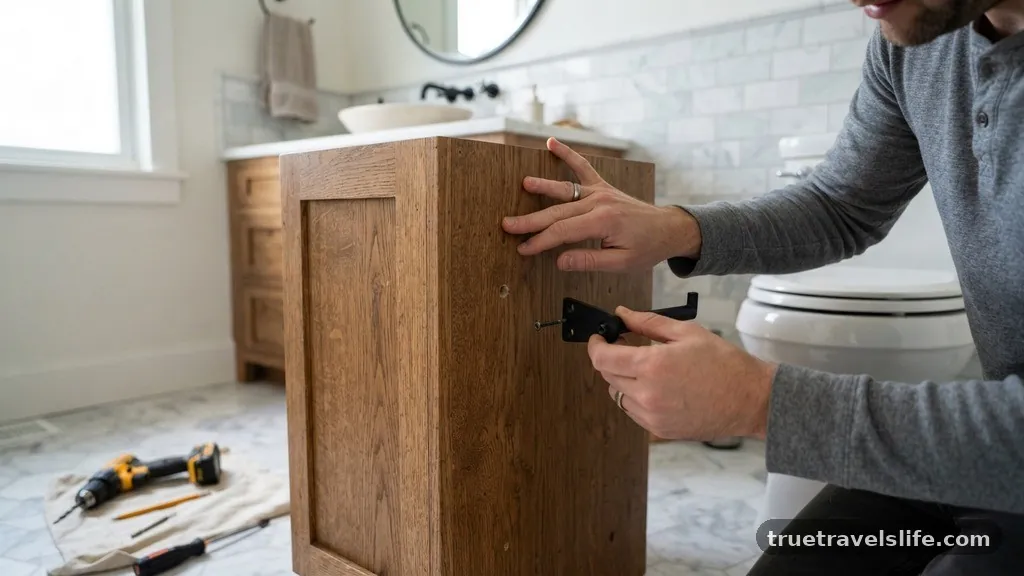
Before you pick up a drill, you must determine what your vanity is actually made of. Most modern bathroom vanities are not solid wood throughout, as manufacturers frequently use engineered materials to keep costs down.
You are likely dealing with particle board or MDF covered in a thin cabinet veneer. Solid wood is rare in budget-friendly units, so treat your cabinet as if it is a softer, more brittle material until proven otherwise.
If you are unsure about the composition, look at the interior of the cabinet side panel. If you see a uniform, sawdust-like texture behind the veneer, you have particle board.
This material is prone to crumbling if you overtighten screws or use the wrong type of fastener. Solid wood, by contrast, will show a visible grain pattern that continues through the thickness of the board.
The structural integrity of the side panel is just as important as the material itself. Check the thickness of the panel, as most are between 1/2 inch and 3/4 inch thick.
You need to ensure that your chosen fastener length does not exceed this thickness. If your screw is too long, it will poke through the interior of your vanity, creating a sharp hazard for your stored toiletries or towels.
Selecting the Right Bathroom Hardware
The style of your toilet paper dispenser plays a significant role in how well it will function when mounted to a side panel. A pivoting arm holder is often the best choice for a vanity mount because it keeps the footprint small and the mechanics contained. Avoid heavy, ornate fixtures that put excessive leverage on the mounting bracket, as these can pull away from softer wood surfaces over time.
Consider the weight of the hardware before purchasing. Brushed nickel, chrome, or even lightweight aluminum options are usually sufficient for this application.
Heavy cast iron pieces might look beautiful, but they can exert too much pressure on a thin particle board panel. The goal is to keep the fixture as close to the vanity side as possible to minimize the torque applied to the screws.
If you are worried about weight, look for models that use a two-point mounting bracket system rather than a single-post design. A two-point mount distributes the weight across a larger surface area of the wood. This simple change significantly reduces the risk of the holder wobbling or stripping the pilot hole over months of daily use.
Measuring for Ergonomic Placement
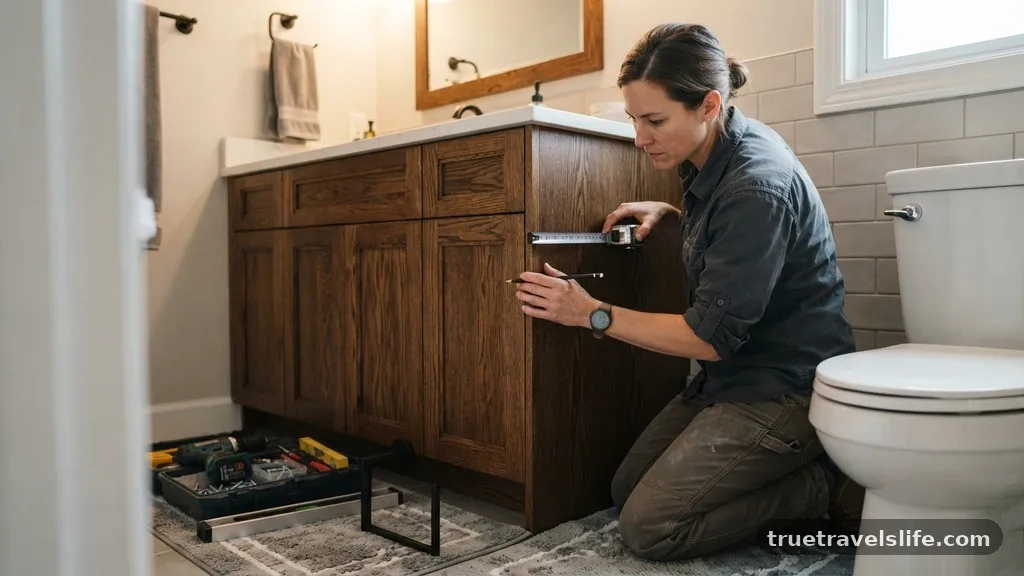
Ergonomic placement is the difference between a functional bathroom and a frustrating one. You should aim to mount the toilet paper holder at a height that is comfortable for the average user, typically between 24 and 30 inches from the floor. Measure this height while sitting on the toilet to ensure the reach is natural and doesn’t require awkward twisting of the wrist or back.
Check your vanity depth before finalizing the horizontal position. You want the holder to be far enough forward that you don’t have to reach behind the vanity, but back far enough that it doesn’t interfere with the cabinet door clearance. If you mount it too close to the front edge, you risk hitting the holder every time you walk past the vanity.
Use a piece of blue painter’s tape to mark the wall where you intend to mount the hardware. Sit down and simulate the motion of grabbing the paper to verify the location feels right.
Once you are satisfied with the position, use a pencil to mark the exact spots for your mounting screws. This preparation prevents the “measure twice, cut once” regret that often haunts DIY beginners.
Tools Needed for a Successful Installation
Having the right tools on hand makes the difference between a clean install and a damaged cabinet. You will need a power drill, a set of drill bits, a screwdriver, and a level to ensure the hardware sits straight. A small piece of masking tape is also essential for marking your drilling depth, which helps prevent you from boring through the entire side panel.
If you are working with a delicate cabinet veneer, you might want to use a center punch to create a small dimple before drilling. This keeps the drill bit from wandering and scratching the surface of your vanity. You should also have a small container of wood filler on standby, just in case you need to patch a pilot hole that ends up slightly off-center.
For those who are nervous about drilling, consider using a depth stop collar on your drill bit. This simple accessory prevents the bit from going deeper than you intend. For more guidance on tool safety and standard measurements for bathroom installations, you can consult the American Dental Association’s guidelines on accessibility and ergonomics as a reference for comfortable reach ranges.
Avoiding Wood Splintering and Damage
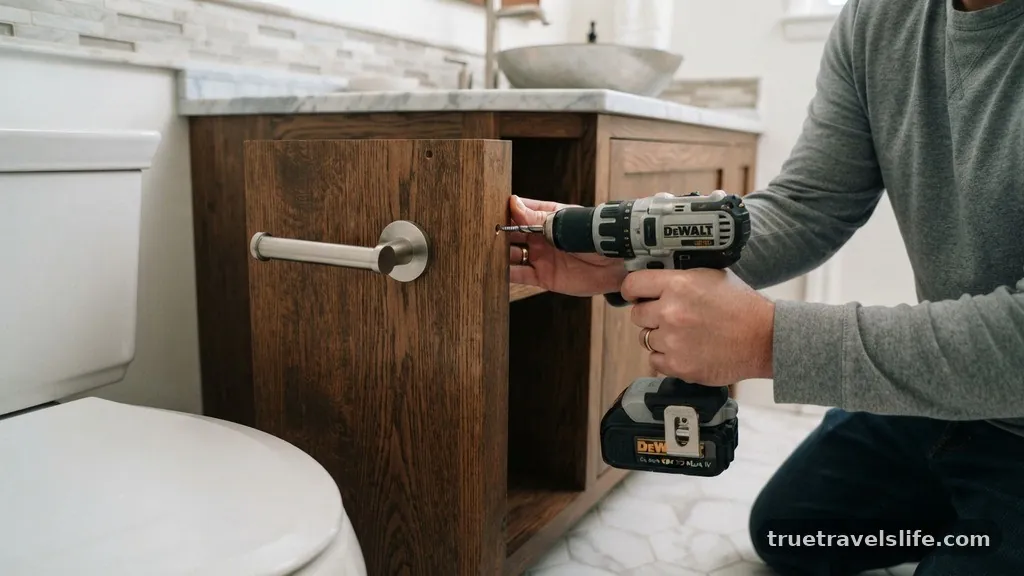
Wood splintering is a common issue when drilling into cabinet veneer, especially with particle board. To prevent this, place a piece of masking tape over the area where you intend to drill. The tape holds the fibers of the veneer together as the bit passes through, resulting in a cleaner edge.
Another technique to avoid damage is to use a sharp, high-quality drill bit. A dull bit will tear the material rather than cutting it, which can cause the veneer to bulge or peel away from the core. You should also drill in reverse for the first few seconds if you notice the veneer starting to snag, which can help score the surface before you begin the full bore.
Once the hole is drilled, clean away the dust before installing the mounting bracket. If the hole looks slightly loose, do not force a larger screw into it.
Instead, use a smaller amount of wood glue or a toothpick coated in glue to tighten the fit. This ensures the screw has something to bite into without causing the surrounding material to crack.
The Role of Pilot Holes
You should never drive a screw directly into a cabinet side panel without drilling a pilot hole first. The wood or particle board will likely split under the pressure of the screw threads if you don’t provide a path for them. A pilot hole should be slightly smaller than the shank of the screw, ensuring the threads have enough material to grip without putting excessive force on the panel.
Choose a drill bit that is roughly the same diameter as the solid core of the screw. You can test this by holding the bit up against the screw; the threads should extend beyond the width of the bit, but the main shaft should fit snugly. If the hole is too large, the screw will spin freely and never tighten.
If you find that the screws provided with your hardware are too long, you have two options. You can either purchase shorter screws at your local hardware store or use a small spacer behind the mounting bracket. Shorter screws are usually the cleaner solution, as they maintain the aesthetic integrity of your bathroom hardware.
Comparing Mounting Methods
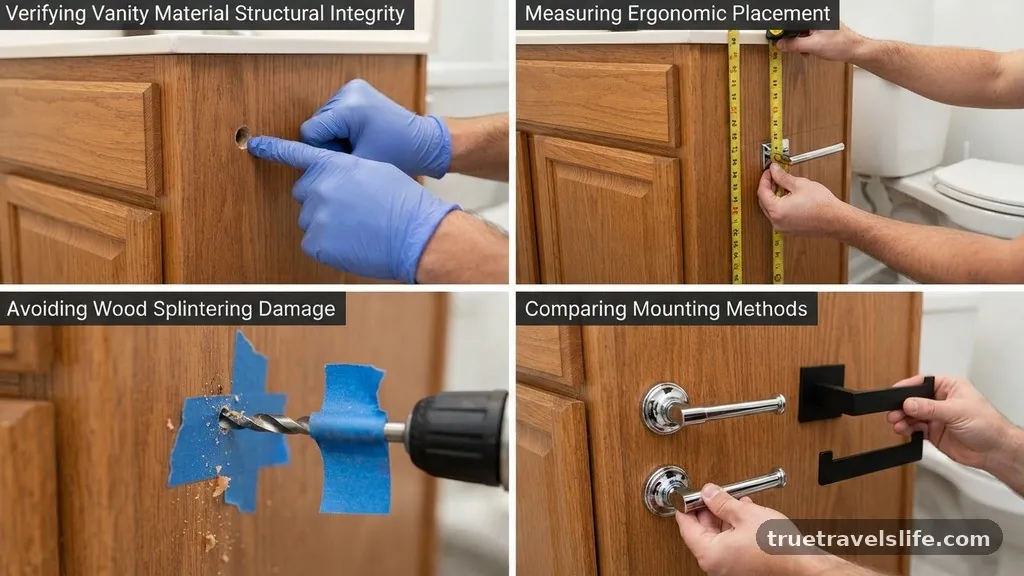
When deciding how to attach your hardware, you have to choose between mechanical fasteners and adhesives. Mechanical fasteners are significantly more reliable for long-term use, especially in a humid environment like a bathroom. While adhesives are tempting because they don’t require drilling, they often fail when exposed to the temperature fluctuations of a bathroom.
| Mounting Method | Durability | Ease of Removal | Risk of Damage |
|---|---|---|---|
| Wood Screws | High | Low | Moderate |
| Adhesive Tapes | Low | High | Low |
| Toggle Bolts | Very High | Low | High |
| Suction Cups | Very Low | Very High | None |
The table above illustrates the trade-offs between common mounting methods. Wood screws provide a firm hold that won’t give way under the daily pull of a toilet paper roll. Adhesive mounting, while popular for temporary setups, often fails once the bathroom becomes steamy, causing the holder to fall and potentially damage your floor.
Dealing with Particle Board and MDF
Working with particle board requires a delicate touch because it lacks the long, interlocking fibers of solid wood. If you strip a hole in particle board, it will not hold a screw again. This is why using the correct drill bit size for your pilot hole is non-negotiable.
If you happen to strip a hole, do not try to drill another one immediately next to it. The material is already compromised, and you risk creating a large, ugly hole that spans both spots. Instead, fill the stripped hole with a mixture of wood glue and sawdust, let it cure completely, and then drill a new hole in the center of the patch.
If you are concerned about the strength of the side panel, consider installing a small piece of plywood on the inside of the vanity. This acts as a backer plate, giving your screws something solid to bite into. This is a common trick for professional installers when they are forced to mount heavy items on weak cabinet walls.
Troubleshooting Common Installation Issues
Even with the best preparation, things can go wrong. If your holder feels loose after installation, don’t just tighten the screws further, as this will likely strip the hole.
Instead, remove the bracket and check if the screws are fully seated in the wood. If they are loose, you may need to use a slightly thicker screw or a wall anchor designed for thin panels.
Another common issue is the holder hitting the cabinet door. If you find that the door won’t open fully, you have two choices. You can either move the holder slightly further back or install a hinge restrictor on the cabinet door to prevent it from swinging all the way open.
If you notice the veneer starting to lift around the screw head, use a tiny amount of super glue to press it back down. Wipe away any excess immediately with a damp cloth to prevent the glue from drying on the surface. This keeps the repair nearly invisible while preventing further peeling of the cabinet finish.
FAQ: Mounting Holders on Vanities
Is it better to mount on the vanity or the wall?
Mounting on the wall is generally preferred if you have the space, as it avoids any risk to your cabinetry. However, if your vanity is right next to the toilet, mounting on the side panel is a perfectly acceptable and space-saving alternative.
Can I use double-sided mounting tape instead of screws?
You can, but it is not recommended for long-term use. The humidity in a bathroom will eventually weaken the adhesive, leading to the holder falling off and potentially damaging the cabinet finish or the floor.
How do I know if my vanity is solid wood?
Check the interior of the cabinet side panel. If the surface looks uniform and lacks a consistent grain pattern, it is likely particle board or MDF. Solid wood will show a continuous, natural grain structure.
What if I drill through the side of the cabinet?
If your screw pokes through the interior, simply back it out and replace it with a shorter screw. You can cover the hole on the inside with a small piece of wood filler or a decorative cap if it is in a visible area.
Does this damage the resale value of my home?
Generally, no. A well-installed toilet paper holder is considered a functional upgrade in a small bathroom. Ensure the installation is clean and professional to maintain the overall appearance of the vanity.
Conclusion
Deciding if you can mount a toilet paper holder directly on the side of a wood vanity is a practical way to improve your bathroom’s layout. By taking the time to identify your cabinet material and using the correct hardware, you can create a sturdy, ergonomic, and aesthetically pleasing result. Always remember to use pilot holes to protect the veneer and ensure your screw length is appropriate for the thickness of the panel.
Whether you have a solid wood unit or a particle board cabinet, this project is well within the capabilities of most DIY enthusiasts. With a little patience and careful measuring, you will have a functional, custom-looking bathroom setup that serves you for years to come. Feel free to start your installation today and enjoy the added convenience.