11 Modern Apartment Ideas That Look Clean and Expensive
Modern Apartment Ideas That Look Clean and Expensive
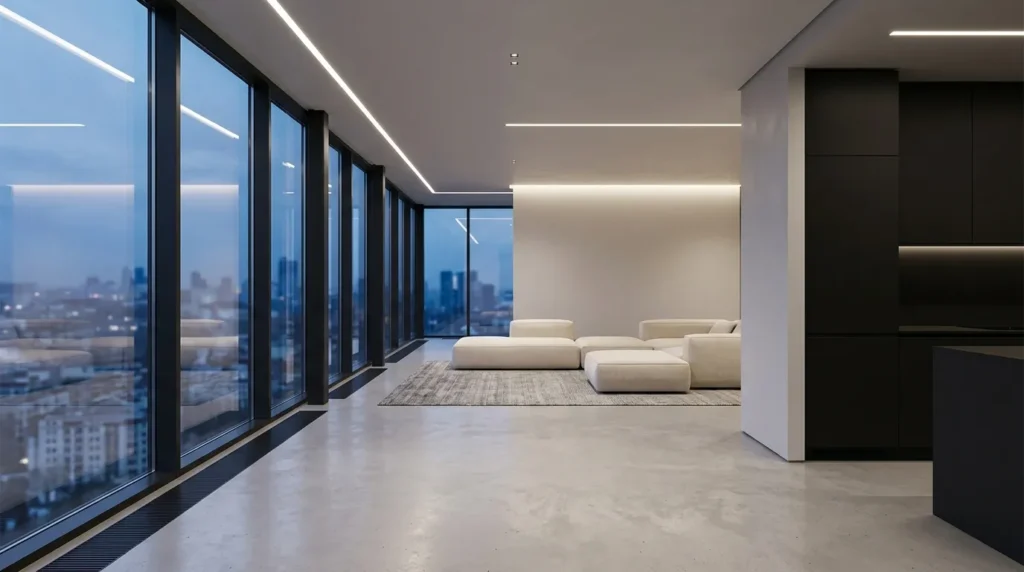
A clean, expensive-looking apartment is often built from restraint, not oversized spending. In many USA rentals, you may be working with builder-grade finishes, basic blinds, limited closets, and rooms that need to serve more than one purpose. That does not mean your home has to feel plain or unfinished. The right design choices can make a small space look polished, brighter, and more intentional. This guide focuses on realistic upgrades that create that high-end feeling without requiring renovation, custom furniture, or a luxury decorating budget or stressful weekend projects anymore.
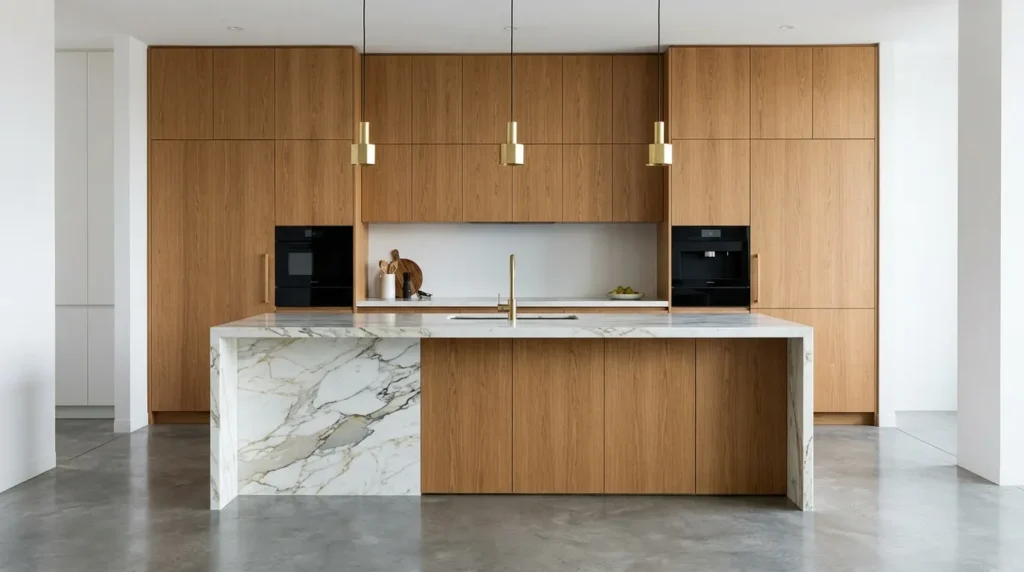
The best spaces look elevated because every detail feels chosen. A tonal color palette, a better curtain height, a sculptural lamp, or one oversized artwork can change the mood faster than buying more decor. This is especially important in apartments, where visual clutter can make rooms feel smaller and cheaper. You will learn how to use materials, scale, light, storage, and texture in a way that feels practical for real life, whether you live in a downtown studio, suburban one-bedroom, or shared city rental with pets, guests, and busy schedules.
These ideas are written for people who want a Modern Apartment that feels clean, expensive, and still comfortable enough for everyday living. Nothing here depends on ripping out flooring or replacing cabinets. Instead, the focus is on smart styling decisions that make ordinary rooms feel more curated. You can use one idea for a quick refresh, combine several for a weekend makeover, or save the full list for a gradual room-by-room update that keeps your home functional while making it feel much more refined without losing warmth, storage, or comfort.
1. Warm Neutrals
- Use cream, oatmeal, taupe, ivory, mushroom, and beige as the main color family so the room feels soft, bright, and cohesive instead of flat or overly plain.
- Choose larger pieces in neutral shades first, including the sofa, curtains, rug, bedding, and storage furniture, because these pieces control the overall mood of the apartment.
- Add depth with natural materials like pale oak, linen, boucle, wool, rattan, ceramic, and brushed brass instead of relying on too many bold accent colors.
- Keep dark contrast controlled through black frames, dark wood trays, or slim metal lamps so the space still feels structured and polished.
- Use washable fabrics, textured rugs, and durable pillow covers if you want the light look to stay practical for pets, guests, and everyday USA apartment living.
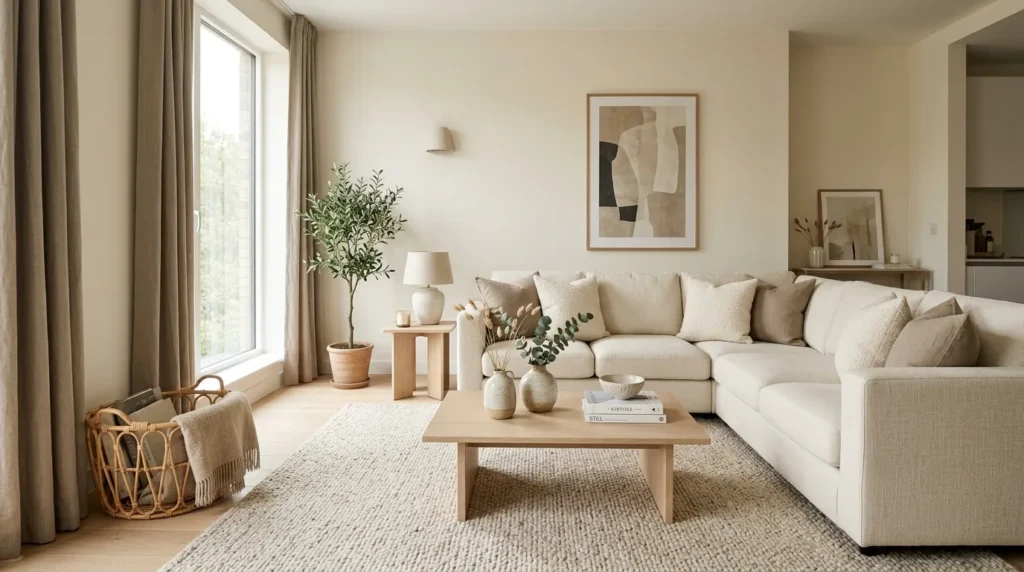
Warm neutrals are one of the easiest ways to make an apartment look expensive without making it feel cold. Instead of decorating only with bright white or flat gray, layer cream, oatmeal, taupe, mushroom, sand, and soft beige. These colors reflect light while adding enough warmth to feel inviting. The room looks cleaner because the eye is not jumping between too many competing colors. Use larger neutral pieces first, such as the sofa, curtains, rug, and bedding, then add smaller contrast through wood, black metal, or brass for subtle structure.
The transformation feels calm, grown-up, and easier to maintain. A warm neutral scheme lets budget furniture from different stores look connected because the colors share the same family. In my experience, the most expensive-looking rooms use texture to create depth, not loud patterns everywhere. Try linen curtains, boucle pillows, a wool rug, ceramic vases, rattan baskets, and pale oak furniture. This keeps the apartment soft and practical while still looking styled. It also gives you room to add seasonal accents without redesigning the entire space every time the weather changes.
2. Statement Lighting
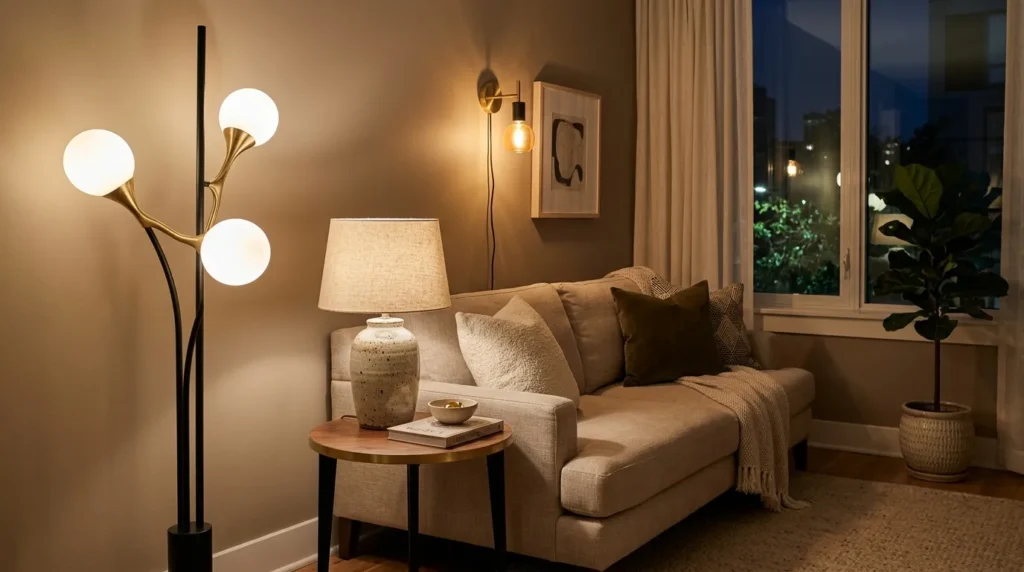
- Replace harsh single-source lighting with layered lamps, plug-in sconces, and accent lights so the apartment feels warm, relaxed, and more thoughtfully designed at night.
- Choose lighting that looks decorative even when turned off, such as ceramic table lamps, sculptural floor lamps, paper lanterns, glass globes, or brass sconces.
- Use warm bulbs and dimmable smart plugs to control brightness without rewiring, which is ideal for rentals where permanent electrical work is not allowed.
- Place lighting near real activity zones, including the sofa, bedside table, reading chair, entry console, dining corner, and desk area.
- Keep lamp finishes consistent with your decor, such as matte black, antique brass, chrome, smoked glass, rattan, or soft white ceramic.
Statement lighting can make a basic rental feel custom in one afternoon. A sculptural floor lamp, shaded table lamp, plug-in wall sconce, or oversized paper lantern adds shape, height, and atmosphere without changing the wiring. Many apartments come with harsh ceiling lights, so layered lamps help soften the room and make the finishes look richer. Choose warm bulbs, dimmable smart plugs, and lamps that look good even when they are turned off. The right lighting makes furniture, art, and textures feel more expensive immediately. This works beautifully with compact layouts and older rentals too.
A polished room usually has light coming from more than one level. Place one lamp near the sofa, another near the bed or console, and a smaller accent light near shelves or artwork. That’s why many designers recommend mixing task lighting, ambient lighting, and decorative lighting instead of relying on one overhead fixture. Materials like brass, smoked glass, ceramic, rattan, paper, and matte black metal all create different moods. At night, your apartment will feel warmer, softer, and far more intentional for relaxing or hosting without making the room feel crowded or overly decorated.
3. Hidden Storage
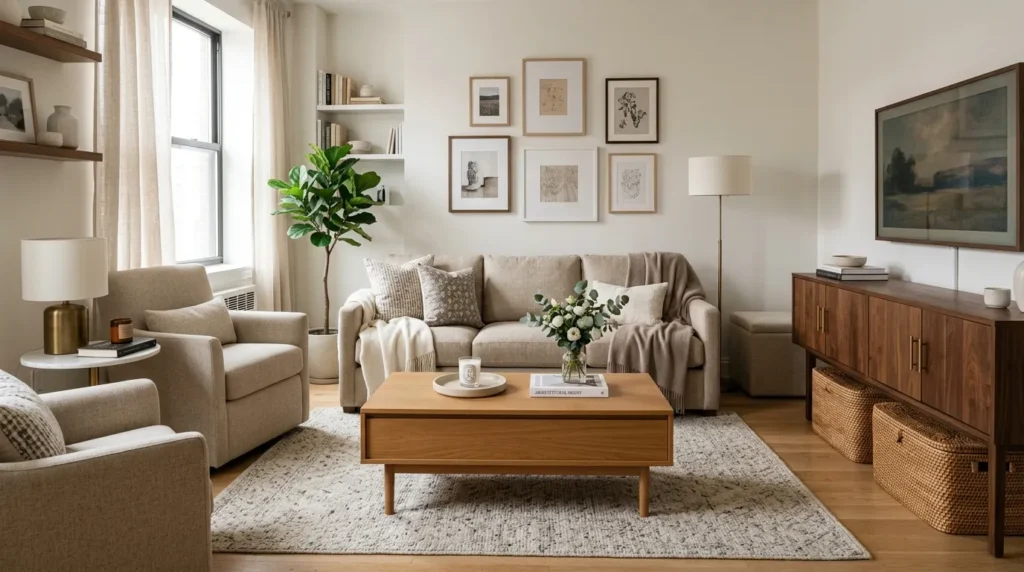
- Use hidden storage in the places where clutter naturally collects, such as the entryway, living room, bedroom, bathroom vanity, and small work-from-home corner.
- Choose furniture that stores while still looking polished, including storage ottomans, lift-top coffee tables, closed media consoles, drawer nightstands, and under-bed bins.
- Keep everyday items out of sight but close to where you use them, so your home stays clean without becoming inconvenient or overly staged.
- Use matching baskets, felt boxes, canvas bins, drawer dividers, and lidded containers to make organization feel intentional instead of temporary.
- Prioritize closed storage over too many open shelves if your goal is a clean, expensive, low-clutter apartment look.
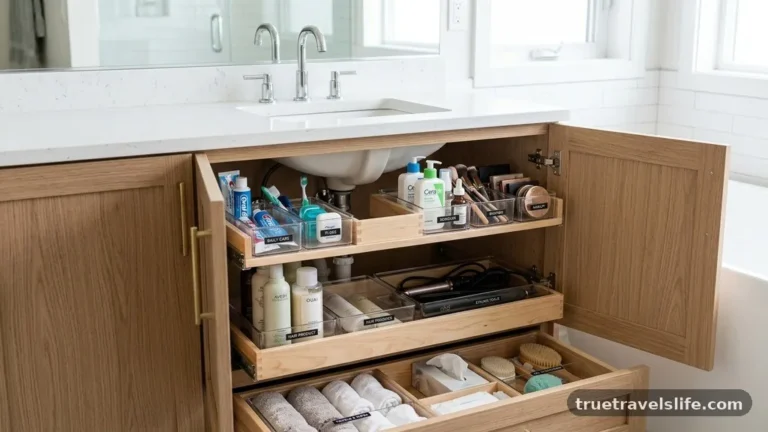
Hidden storage keeps an apartment looking clean long after the decorating is finished. Even beautiful furniture can lose impact when remotes, chargers, shoes, mail, and folded blankets sit everywhere. Choose pieces that quietly store daily items, such as a lift-top coffee table, storage ottoman, closed media console, drawer nightstand, or bed frame with built-in compartments. These solutions are especially helpful in rentals with limited closets. The room feels more expensive because the surfaces stay calm, and every everyday item has a place to disappear while still keeping daily essentials easy to reach.
The best storage works where clutter naturally happens. Put a basket near the entry for shoes, a tray near the sofa for remotes, drawer dividers beside the bed, and lidded bins under the bathroom sink. I’ve noticed that closed storage makes small apartments feel larger because fewer objects compete for attention. Choose woven baskets, matte cabinets, felt boxes, canvas bins, or wood organizers that match your decor. Your home becomes easier to reset, and the clean look lasts through busy weekdays, guests, and quick morning routines without turning organization into a complicated weekend project.
4. Clean Lines
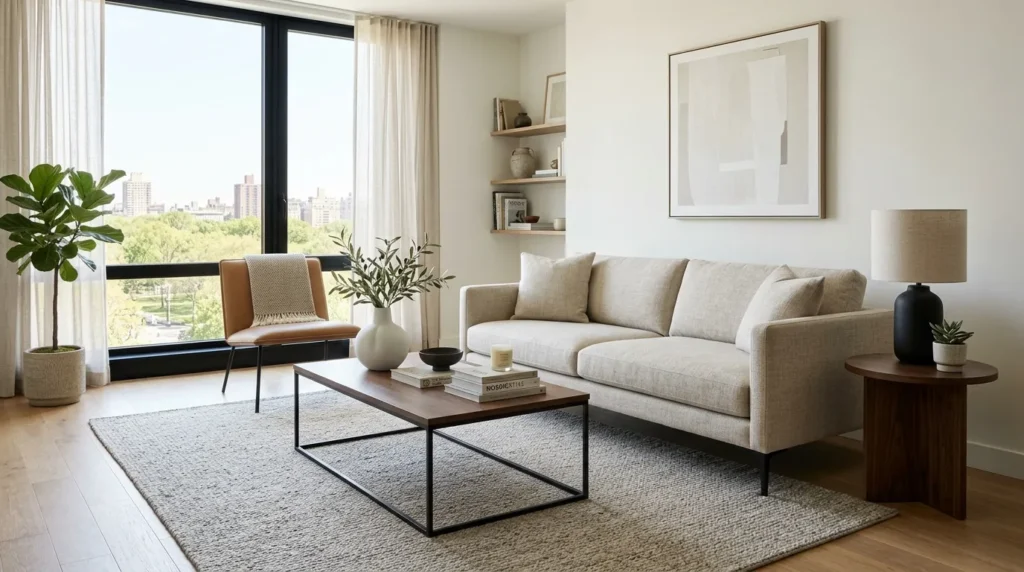
- Choose furniture with simple shapes, slim legs, smooth surfaces, and tailored upholstery so the apartment feels lighter, calmer, and more expensive.
- Avoid bulky rolled arms, oversized bases, heavy carved details, and furniture that visually blocks the room or makes the layout feel crowded.
- Let clean-lined pieces become the foundation, then add personality through texture, lighting, artwork, plants, and a few carefully chosen decor objects.
- Use materials like walnut veneer, performance linen, powder-coated metal, leather, oak, and matte ceramic for a polished but practical finish.
- Keep scale in mind before buying furniture, especially in apartments with narrow doors, elevators, small living rooms, or tight bedroom corners.
Clean-lined furniture creates an expensive look because the room feels edited and easy to understand. Instead of bulky arms, carved details, heavy bases, and oversized silhouettes, choose pieces with straight edges, slim legs, smooth upholstery, and simple shapes. A tailored sofa, narrow console, low coffee table, or open-frame chair can make the apartment feel lighter without removing comfort. This style works well in small spaces because it reduces visual noise. The cleaner the furniture lines, the more important scale, proportion, and texture become, especially when the room already has limited breathing space.
The result is a room that feels calm rather than crowded. Clean lines also make it easier to mix affordable and higher-quality pieces because the overall shape language stays consistent. In my experience, apartments look more elevated when the largest furniture pieces are simple, while smaller accents bring personality. Try a linen sofa, walnut side table, black metal lamp, smooth ceramic bowl, and rectangular rug with soft texture. The apartment will feel intentional, balanced, and easier to update over time without replacing everything at once as your taste, budget, and needs slowly change.
5. Oversized Artwork
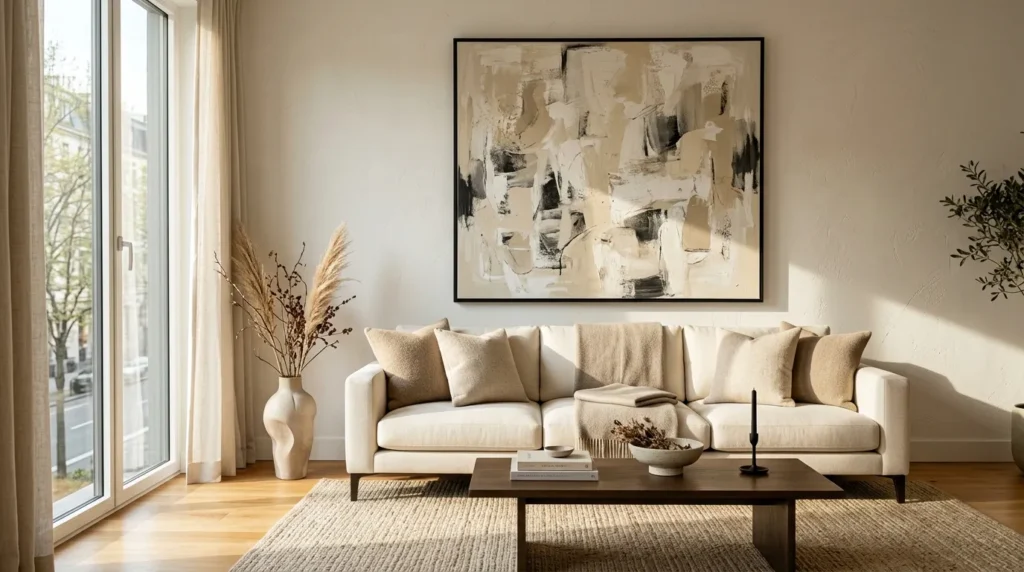
- Hang one large piece above the sofa, bed, console, or dining nook to create a focal point that feels confident and designer-inspired.
- Choose artwork that supports your color palette, such as neutral abstracts, black-and-white photography, muted landscapes, line drawings, or textured canvas prints.
- Use scale carefully; artwork should usually feel wide enough to connect with the furniture below it instead of looking small and floating.
- Keep surrounding decor minimal so the artwork has enough breathing room and the wall does not become visually crowded.
- Try renter-friendly hanging strips, lightweight frames, large canvas prints, or leaning artwork if your lease limits drilling into walls.
Oversized artwork makes a plain apartment wall look designed instead of forgotten. One large piece above a sofa, bed, console, or dining nook can create a stronger statement than several tiny frames spread across the wall. Choose art that supports your color palette, such as abstract neutrals, soft landscapes, black-and-white photography, or textured canvas prints. Scale is what makes the room feel expensive. When art is large enough, it anchors the furniture and gives the entire wall a more finished, gallery-inspired presence without needing multiple shelves, decals, or busy accessories.
A large focal point also helps reduce clutter because you do not need dozens of small decorative items. For balance, choose artwork that is roughly two-thirds the width of the furniture below it, then keep surrounding accessories minimal. I’ve seen this work well in many homes because it instantly makes basic rentals feel more personal. Use lightweight frames, canvas pieces, or removable hanging systems if you cannot drill. The room gains polish, personality, and visual confidence without needing paint, wallpaper, or expensive architectural details, and it keeps the wall from feeling visually scattered.
6. Layered Textures
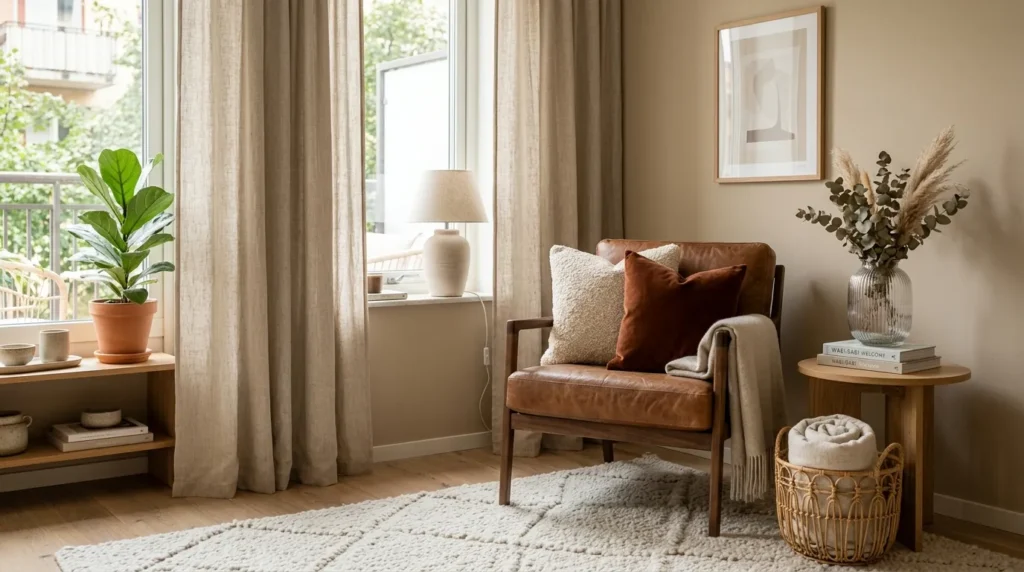
- Mix soft, smooth, woven, ribbed, and matte materials so a clean apartment still feels warm, comfortable, and visually rich.
- Use texture through rugs, pillows, curtains, throws, baskets, ceramics, upholstered chairs, woven shades, and natural wood furniture.
- Keep the color palette controlled while allowing surfaces to vary, because texture creates depth without making the space look busy.
- Choose durable textures for high-use areas, such as washable cotton, performance upholstery, tight-weave rugs, leather, and easy-clean pillow covers.
- Avoid using too many shiny or flat surfaces together, because they can make the apartment feel cold instead of expensive.
Layered textures are what keep a clean apartment from feeling flat or unfinished. If every surface is smooth, plain, and similar, the room can look sterile even when the color palette is beautiful. Add depth with linen curtains, wool rugs, boucle pillows, velvet cushions, ribbed glass, woven baskets, leather accents, and ceramic decor. These materials create richness without needing loud colors. The secret is keeping textures varied but coordinated, so the space feels soft, expensive, and comfortable rather than busy or overly decorated, even when the furniture pieces themselves are very simple.
Texture changes how a room feels in real life, not just how it looks in photos. A jute rug can ground a seating area, a knit throw can soften a leather chair, and linen panels can make hard windows feel more graceful. That’s why many designers recommend texture when clients want a high-end look without buying all-new furniture. Choose washable fabrics in high-use areas, tighter weaves for pets, and darker textures where spills happen. The apartment becomes warmer, more dimensional, and easier to enjoy every day while still supporting movie nights, guests, pets, and routines.
7. Custom Windows
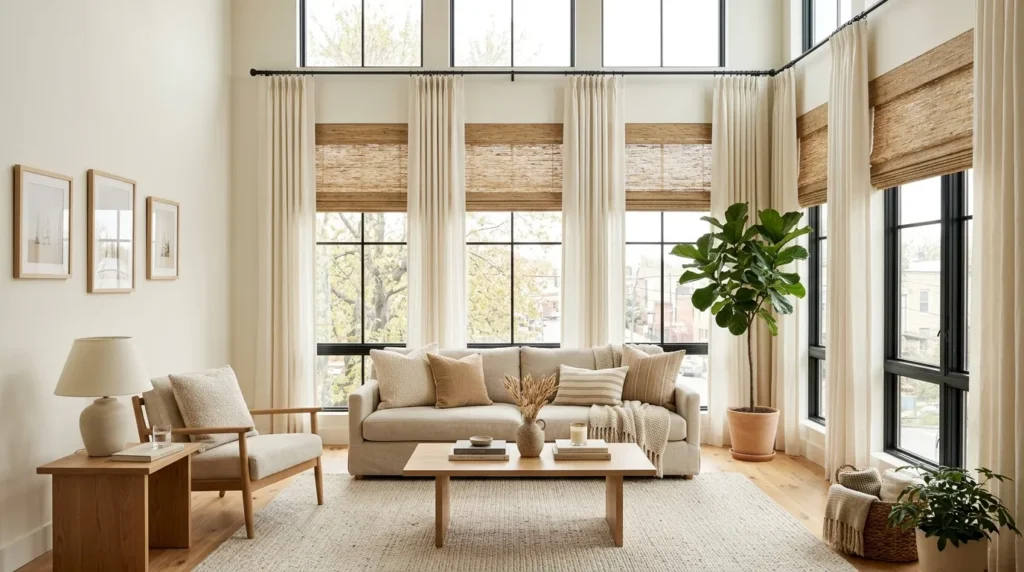
- Hang curtain rods close to the ceiling and extend them wider than the window frame so the windows look taller, brighter, and more architectural.
- Use full-length panels instead of short curtains, because long vertical lines create a more polished and expensive-looking finish.
- Choose fabric based on function: linen for softness, cotton for simplicity, velvet for drama, and light-filtering panels for daytime brightness.
- Layer woven shades underneath if you need more privacy, texture, or light control without making the room feel visually heavy.
- Use blackout liners in bedrooms if streetlights, parking lot lights, or early morning sun affect sleep, especially in city apartments.
Custom-looking windows can make an apartment feel taller, brighter, and more expensive. Standard blinds often look unfinished on their own, especially in rentals with plain white walls and basic trim. Hang curtain rods close to the ceiling and extend them wider than the window frame so the panels do not block daylight. Floor-length curtains create a long vertical line that visually stretches the room. Linen, cotton, velvet, or light-filtering fabric can all work, depending on your privacy needs and the mood you want for morning light, evening privacy, and daily comfort.
The upgrade feels subtle, but it changes the whole room. Light neutral curtains in ivory, oatmeal, warm gray, or beige make the space softer, while darker panels can create drama in a bedroom or dining nook. In my experience, curtains look more expensive when they lightly touch the floor and are full enough to gather naturally. Add woven shades underneath for texture and privacy, or blackout liners for better sleep. This renter-friendly change makes windows feel intentional instead of like temporary apartment fixtures while still keeping the room soft, polished, and livable.
8. Glass Details
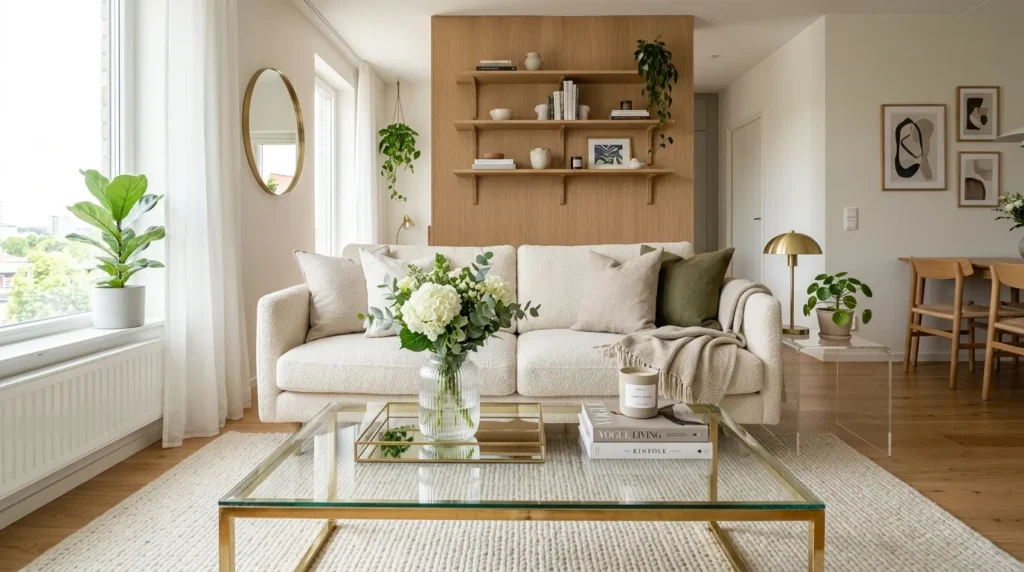
- Add glass, acrylic, mirror, chrome, or glossy ceramic details when you want the room to feel lighter without sacrificing useful surfaces.
- Use a glass coffee table or acrylic side table in compact living rooms because transparent furniture keeps sightlines open.
- Balance reflective pieces with warm textures like wool, linen, oak, rattan, boucle, or leather so the apartment does not feel cold.
- Choose one or two reflective finishes and repeat them lightly through lamps, trays, frames, vases, or small accent tables.
- Keep glass surfaces styled simply with one tray, one vase, or one book stack so the effect stays clean and expensive.
Glass details add polish because they create function without heavy visual weight. A glass coffee table, clear acrylic chair, mirrored tray, ribbed glass vase, or glossy ceramic lamp can reflect light and make a room feel more open. This is especially useful in compact apartments where bulky wood pieces can quickly crowd the layout. The trick is balance. Pair reflective pieces with warm materials like wool, linen, oak, rattan, or boucle so the room feels elevated rather than cold or overly shiny while maintaining the clean look people often want.
A few reflective accents can make ordinary furniture look more refined. Place a mirrored tray on a console, use a glass table near a compact sofa, or add chrome and clear glass through lamps and frames. I’ve noticed these details work best when repeated carefully, not everywhere. Choose one or two finishes and let them echo throughout the space. The result is a cleaner, brighter apartment with more visual depth. It feels polished and airy while still remaining comfortable for everyday living without sacrificing warmth, personality, or useful surfaces daily.
9. Minimal Styling
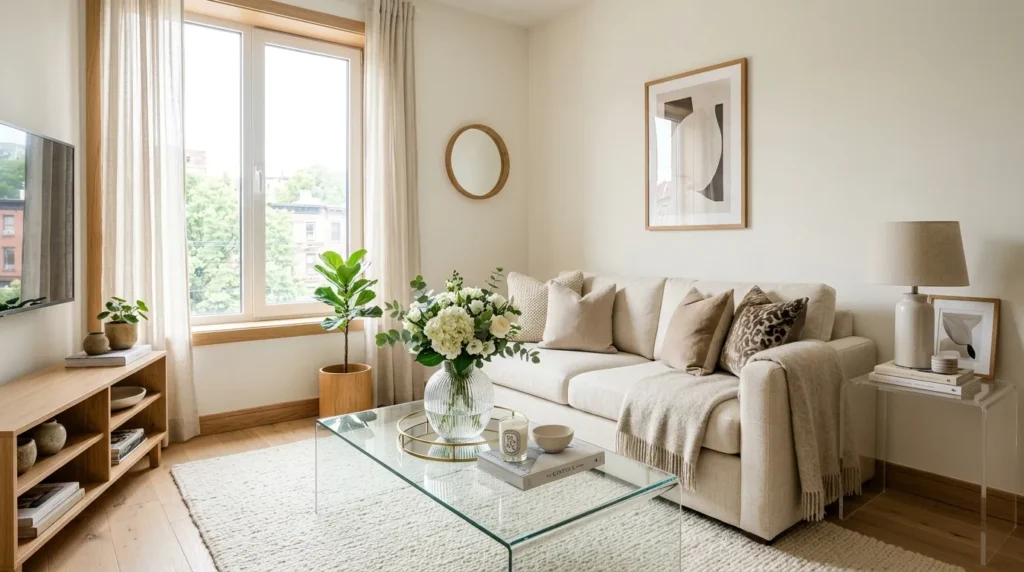
- Style fewer items with stronger intention so the apartment feels curated, not empty, crowded, or overly decorated.
- Use trays, bowls, books, candles, vases, and small sculptures to create controlled moments on tables, shelves, consoles, and nightstands.
- Leave negative space around decor pieces because breathing room makes each object look more important and expensive.
- Decorate in small groups of varied height, such as one tall lamp, one medium vase, and one low decorative bowl.
- Keep only pieces you use, love, or find visually meaningful, then store seasonal or extra decor away to avoid clutter.
Minimal styling looks expensive when it feels intentional, not empty. The goal is not to remove personality, but to choose fewer objects with more impact. Instead of filling every surface, style one tray, one vase, one lamp, or one sculptural bowl where it matters. Keep coffee tables, consoles, nightstands, and shelves edited so the furniture can breathe. This makes the apartment look cleaner because the eye can appreciate shape, color, and texture without being distracted by too many small items, which is especially helpful in smaller open-plan homes daily too.
The most useful method is to decorate in small groups. Try one tall object, one medium object, and one low object on a console, or group books with a candle and ceramic dish on a coffee table. That’s why many designers recommend negative space as part of the design. It gives special pieces room to stand out. Keep only what you use or truly love, then store the rest. Your apartment will feel calmer, more curated, and much easier to clean without making the space feel bare or impersonal anymore.
10. Elevated Kitchen
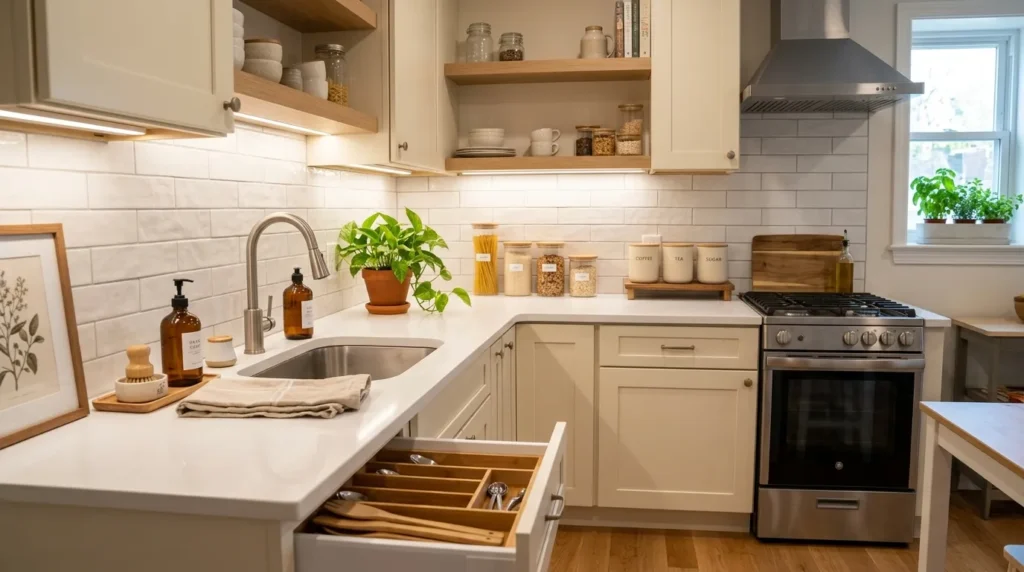
- Clear the counters first, because even a beautiful kitchen can look messy when too many appliances, bottles, bags, and utensils are visible.
- Use refillable soap bottles, matching spice jars, ceramic canisters, glass containers, and bamboo drawer dividers to make practical items look intentional.
- Add under-cabinet lighting, a small framed print, or a fresh plant to soften hard surfaces and make the kitchen feel more styled.
- Try renter-friendly upgrades like peel-and-stick backsplash tile, removable contact paper, washable runners, or modern cabinet pulls if your lease allows changes.
- Repeat finishes from the living area, such as black metal, warm wood, brass, or white ceramic, so the kitchen feels connected to the rest of the home.
An elevated kitchen can make the entire apartment feel cleaner because it is often visible from the living area. Start by clearing counters and keeping out only what you use daily, such as a coffee maker, cutting board, or utensil crock. Replace mismatched bottles with refillable dispensers, group spices in simple containers, and use trays to organize small items. Materials like glass jars, bamboo dividers, stainless steel, ceramic canisters, and washable runners make the kitchen feel more thoughtful without changing cabinets or appliances while keeping everything ready for real weeknight cooking.
The transformation comes from making practical items look deliberate. If the backsplash feels dated, try removable peel-and-stick tile. If cabinets look plain, switch to modern pulls if your lease allows it. I’ve seen this work well in many homes because kitchens feel expensive when counters are clear and finishes are repeated. Add under-cabinet lighting, a small framed print, or a fresh plant for softness. The space becomes easier to cook in, easier to clean, and more connected to the rest of the apartment, even if the actual footprint is very small.
11. Soft Bedroom
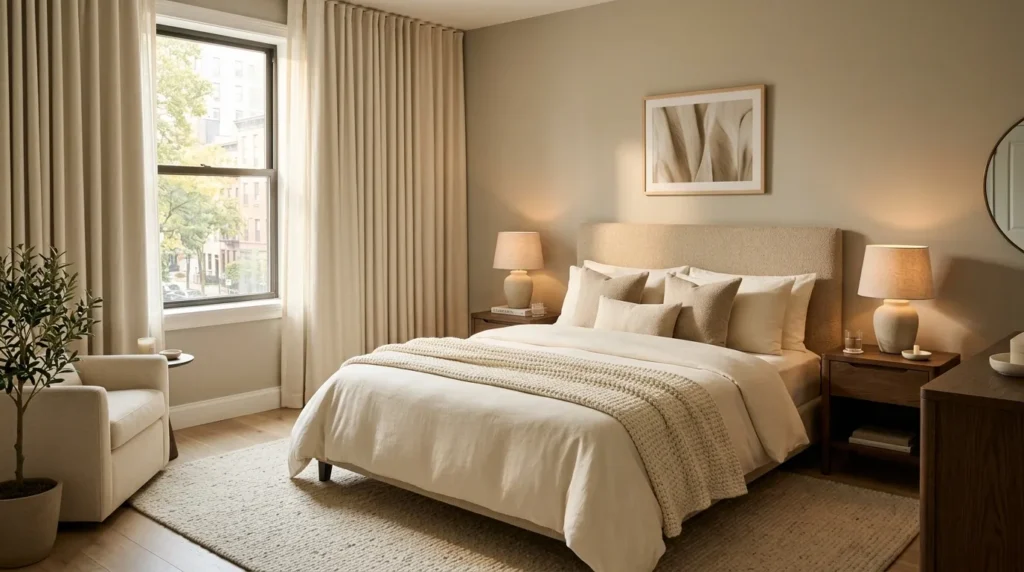
- Build the bed with breathable sheets, a smooth duvet, structured pillows, and one textured throw so it looks finished without feeling overdone.
- Choose restful shades like cream, warm white, mushroom, muted green, soft taupe, warm gray, or charcoal for a calm bedroom mood.
- Use matching lamps or nightstands to create symmetry, which often makes even simple rental bedrooms feel more polished.
- Keep bedside clutter controlled with drawers, trays, under-bed bins, baskets, or floating nightstands if floor space is tight.
- Add blackout curtains, a soft rug, and warm bedside lighting to make the bedroom feel comfortable, private, and quietly expensive.
A soft bedroom creates the final layer of quiet luxury in an apartment. Start with breathable sheets, a smooth duvet, structured pillows, and one textured throw instead of an overloaded pile of bedding. Choose calming shades like cream, warm white, mushroom, muted green, taupe, or soft charcoal. A low headboard, matching lamps, and simple nightstands add symmetry without making the room feel stiff. The bed becomes the focal point, and the whole room feels more peaceful, polished, and easy to reset without making the space feel formal or overdecorated daily.
The best bedroom upgrades support both style and rest. Use blackout curtains if streetlights are bright, under-bed bins if closets are small, and drawer organizers for bedside clutter. In my experience, a bedroom looks expensive when the bedding is layered but not fussy. Keep cords hidden, limit nightstand items, and add one soft rug under or beside the bed. This creates a room that feels hotel-inspired but still personal. It becomes a calm retreat you can actually maintain every morning, even when your schedule gets busy and rushed daily too.