These 14 ideas How to Create a Modern Apartment Look Easily
Creating a polished apartment does not have to mean buying everything new or copying a showroom. Most renters and apartment owners in the USA are working with real-life limits, including small rooms, basic finishes, shared walls, awkward corners, and lease rules that restrict permanent changes. The good news is that a clean, updated look usually comes from smarter choices, not bigger spending. With the right layout, colors, lighting, storage, and texture, even a simple rental can feel calm, stylish, and much more intentional.
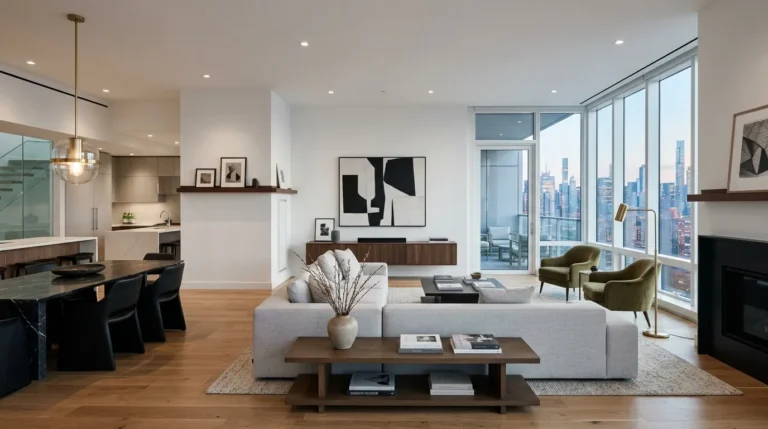
The easiest way to create a Modern Apartment look is to focus on what people notice first: open space, balanced colors, soft lighting, useful furniture, and clean surfaces. These details shape how your home feels before anyone studies the decor. A room can look expensive when the sofa fits properly, curtains hang high, storage hides clutter, and materials repeat naturally. This guide gives you practical ideas that work for studios, one-bedroom apartments, city lofts, and compact suburban rentals without requiring construction or complicated design skills.
Each section below is built around one simple idea you can apply at home. You will find styling logic, real-life tips, furniture guidance, and material suggestions that make the apartment easier to use and better to look at. The goal is not perfection. It is a home that feels fresh, personal, and easy to maintain. Use these ideas gradually, starting with the areas that bother you most, and your apartment will begin to feel cleaner, brighter, and more pulled together.
1. Neutral Base
- Use warm white, ivory, beige, taupe, greige, oatmeal, and soft gray to create a calm foundation.
- Keep larger pieces neutral first, including the sofa, rug, curtains, bedding, and storage furniture.
- Add depth through wood, linen, wool, rattan, ceramic, leather, and boucle instead of too many bold colors.
- Use small dark accents, such as black frames or bronze lamps, to keep the room structured.
- Choose washable fabrics and stain-resistant materials if you have pets, kids, or frequent guests.
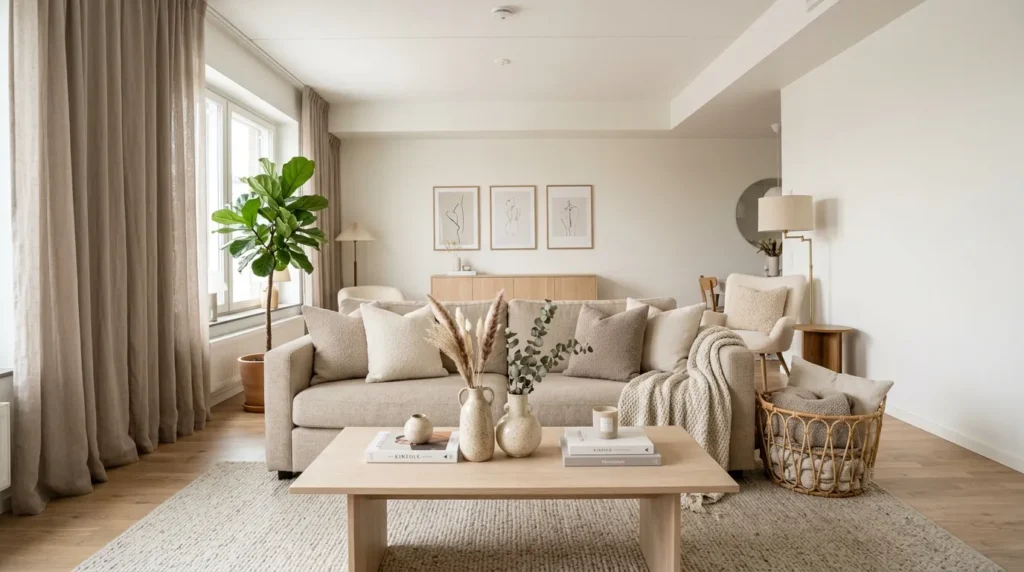
A neutral base makes apartment styling easier because it gives every room a calm starting point. Instead of choosing random colors for every corner, build the space with warm white, ivory, taupe, greige, oatmeal, and soft beige. These shades reflect light while still feeling comfortable and lived in. Start with larger pieces like the sofa, curtains, rug, bedding, and storage furniture because they control the mood most. Then add small contrast through black frames, brass lamps, wood trays, or ceramic decor for structure.
The transformation feels clean without looking empty. In my experience, neutral apartments look more expensive when texture does the work that bright color usually does. Try linen curtains, a wool rug, boucle pillows, rattan baskets, and smooth ceramic vases to add depth. This approach also makes future updates easier because you can change pillows, throws, or artwork without replacing everything. A warm neutral foundation supports daily life, photographs beautifully, and keeps the apartment feeling relaxed through every season.
2. Open Layout
- Create clear walking paths from the entry to the sofa, kitchen, windows, bedroom, and bathroom.
- Avoid oversized furniture that blocks movement or visually cuts the room into tight sections.
- Use rugs, lighting, and furniture placement to define zones without adding bulky dividers.
- Keep window areas open so natural light can travel farther into the apartment.
- Arrange furniture around how you actually live, not only around the walls.
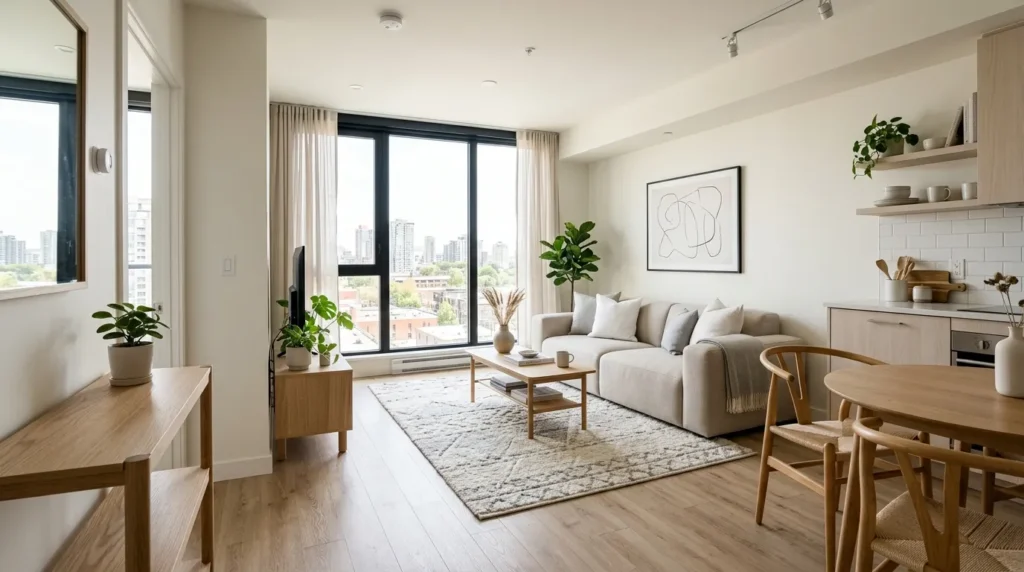
An open layout makes an apartment feel easier to breathe in, even when the square footage is limited. Start by looking at how you move through the room each day. If a coffee table blocks your path, a chair crowds the entry, or a sofa cuts off the window, the space will feel smaller than it is. Move furniture away from traffic zones and create clear paths between the entry, kitchen, sofa, and bedroom. This simple shift immediately improves comfort and flow.
The best layouts feel intentional without being stiff. Use a rug to define the living area, a small table to mark a dining corner, and a lamp to create a reading zone. I’ve noticed apartments feel more polished when furniture has breathing room around it. Avoid pushing every piece against the wall if floating one item creates better balance. The apartment will feel larger, calmer, and more useful because each area has a purpose without feeling boxed in.
3. Slim Furniture
- Choose sofas, chairs, tables, and consoles with slim arms, clean legs, and simple shapes.
- Avoid bulky rolled arms, oversized bases, and heavy furniture that overwhelms compact rooms.
- Use open-leg furniture so more floor remains visible and the room feels lighter.
- Try narrow consoles, round side tables, low beds, and compact dining pieces for better flow.
- Select durable materials like performance fabric, metal, walnut veneer, oak, and leather.
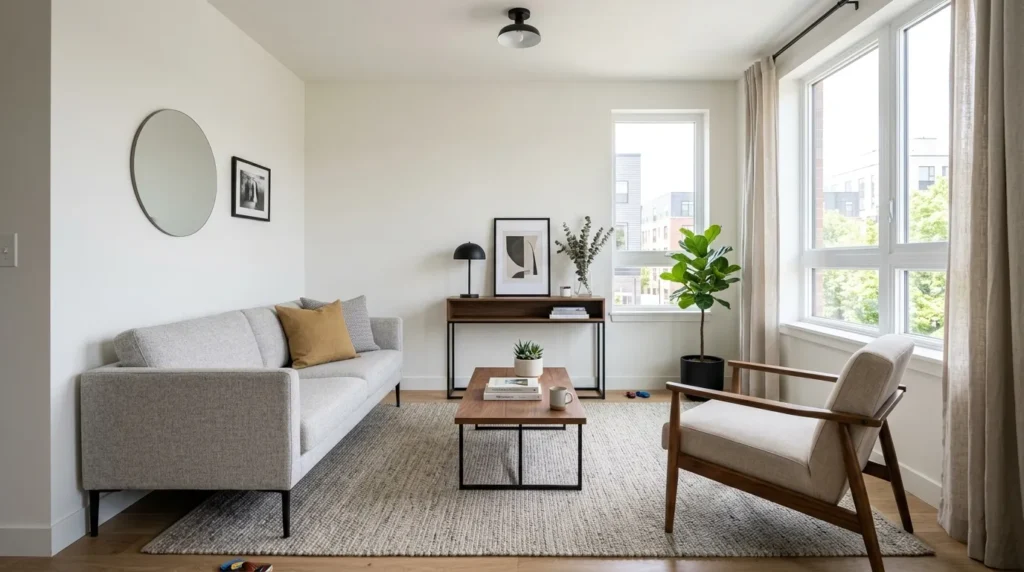
Slim furniture helps a smaller apartment look cleaner because it reduces visual weight. Bulky sofas, thick tables, and heavy storage pieces can make a room feel crowded even when there is enough walking space. Choose furniture with narrow arms, visible legs, low profiles, and simple silhouettes. A slim console, open-leg chair, thin coffee table, or compact dining table can still feel comfortable and practical. The goal is not tiny furniture, but pieces that fit the room’s scale.
This change makes the apartment feel lighter and more current. That’s why many designers recommend measuring before buying, especially in rentals with narrow doors, elevators, or awkward corners. Materials like walnut veneer, powder-coated metal, performance linen, smooth leather, and light oak create a sleek finish without feeling fragile. When furniture fits properly, the room becomes easier to clean, style, and move through. It also leaves more space for lighting, plants, and storage that support daily routines.
4. Hidden Storage
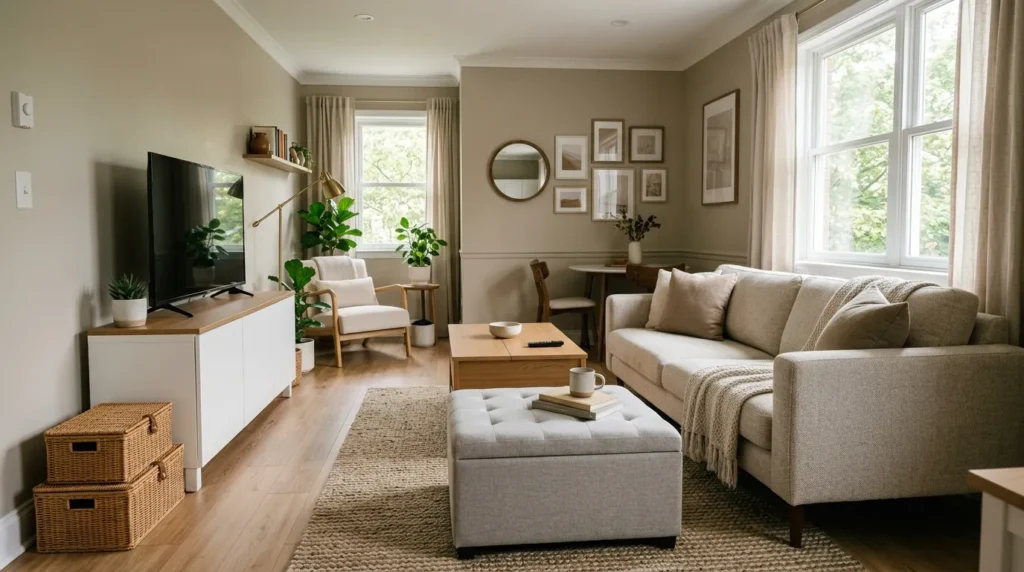
- Use storage ottomans, closed media cabinets, drawer nightstands, under-bed bins, and lift-top tables.
- Place storage near clutter hotspots, such as the entry, sofa, bed, kitchen, and bathroom.
- Keep everyday items accessible but hidden so surfaces stay calm and easy to reset.
- Use matching bins, baskets, drawer dividers, and lidded boxes for a more polished look.
- Choose closed storage when open shelves start looking busy or hard to maintain.
Hidden storage is one of the simplest ways to make an apartment look more expensive. Even beautiful rooms lose their clean feeling when shoes, chargers, mail, remotes, skincare, and blankets are scattered everywhere. Choose furniture that quietly stores daily items, such as a storage ottoman, closed media console, lift-top coffee table, drawer nightstand, or bed with built-in storage. These pieces are especially useful in apartments with small closets because they add function without making the room look crowded.
The real benefit is that your home becomes easier to reset. In my experience, storage works best when it sits close to where clutter happens. Keep a basket near the entry, a tray near the sofa, dividers near the bed, and bins under the bathroom sink. Use woven baskets, canvas boxes, felt organizers, or matte cabinets that match your decor. Clearer surfaces make the apartment feel larger, calmer, and more manageable during busy weekdays or before guests arrive.
5. Layered Lighting
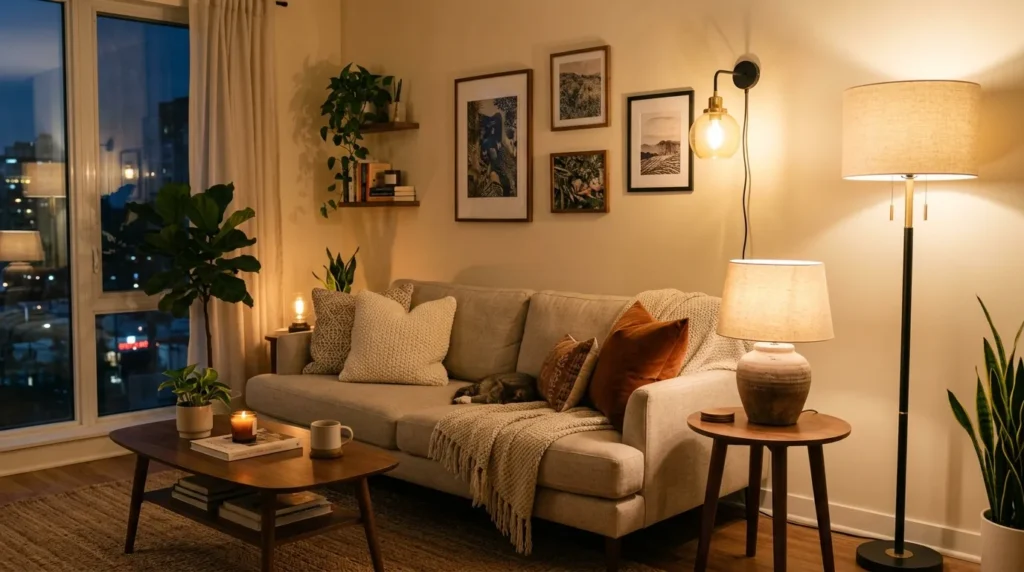
- Use floor lamps, table lamps, plug-in sconces, accent lights, and warm bulbs instead of one harsh ceiling light.
- Place lighting near real activity zones like the sofa, bed, desk, entry, and dining area.
- Add dimmable bulbs or smart plugs for easy brightness control without rewiring.
- Choose lamp materials such as brass, matte black metal, ceramic, paper, glass, or rattan.
- Keep cords tidy with clips, covers, or furniture placement so the look stays clean.
Layered lighting can change the whole apartment without moving any furniture. Many rentals come with one harsh overhead light that makes the room feel flat and unfinished. Instead, use a mix of floor lamps, table lamps, plug-in sconces, and small accent lights. Warm bulbs create a softer glow, while dimmable smart plugs make the space flexible for work, dinner, movie nights, and relaxing. Good lighting adds depth and makes even simple furniture look more thoughtful.
The apartment becomes more useful because each zone gets the right kind of light. Place a lamp near the sofa for reading, a sconce near the bed, a small lamp on the entry console, and an accent light near shelves or artwork. I’ve seen this work well in many homes because layered light makes evenings feel cozy instead of harsh. Choose finishes that repeat elsewhere, such as brass, black metal, ceramic, or smoked glass, to keep the design connected.
6. Soft Textures
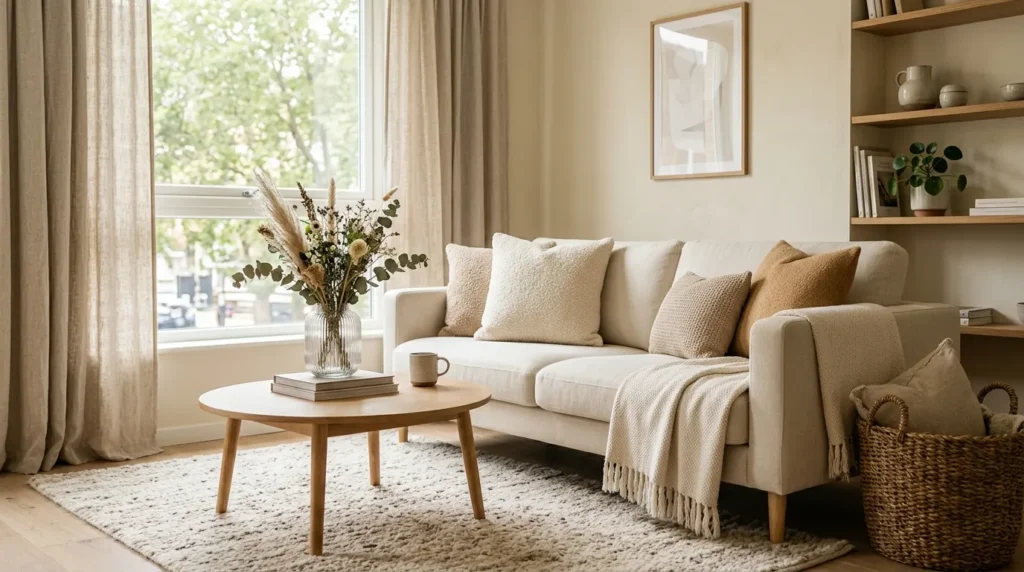
- Add rugs, pillows, throws, curtains, upholstered chairs, woven baskets, and soft bedding.
- Mix materials like linen, wool, cotton, boucle, velvet, jute, leather, and ribbed glass.
- Keep the color palette controlled so texture adds interest without making the room busy.
- Use washable fabrics in high-use areas for easier maintenance.
- Add texture to flat rental finishes, including plain walls, basic floors, and simple cabinets.
Soft textures make a clean apartment feel welcoming instead of cold. A room with only smooth walls, flat cabinets, and hard furniture can look unfinished, even if the layout is good. Add softness through a wool rug, linen curtains, cotton throw, boucle pillow, velvet cushion, woven basket, or upholstered chair. These materials give the eye something to notice without needing loud colors. Texture is especially helpful in rentals where flooring, walls, and cabinets may feel basic.
The result is a space that feels lived in but still polished. That’s why many designers recommend mixing smooth, woven, matte, and plush materials in the same room. A jute rug can ground the seating area, linen curtains can soften windows, and ribbed glass can add detail to a shelf. Choose washable pillow covers, durable rugs, and stain-resistant upholstery where daily use is heavy. Your apartment will feel warmer, more layered, and easier to enjoy every day.
7. Vertical Lines

- Hang curtains high, use tall mirrors, add vertical art, and choose narrow shelving to draw the eye upward.
- Use vertical details in rooms with low ceilings or limited floor space.
- Try tall bookcases, floor lamps, long curtain panels, and arched mirrors.
- Keep tall pieces slim so they add height without overwhelming the room.
- Repeat vertical elements in different areas for a more cohesive design.
Vertical lines help an apartment feel taller and more graceful. When the eye moves upward, the room feels less cramped and more balanced. You can create this effect with high-hung curtains, tall mirrors, vertical artwork, slim bookcases, floor lamps, and narrow shelving. These pieces make the ceiling feel higher without changing the structure of the apartment. This is especially useful in older rentals or compact rooms where the ceiling height feels average and the layout needs visual lift.
The transformation is subtle but powerful. Hang curtains close to the ceiling, choose long panels that reach the floor, and use a tall mirror near a window to reflect light. I’ve noticed that vertical styling makes small bedrooms and living rooms feel more finished because it adds shape to plain walls. Keep tall pieces slim and avoid overcrowding every wall. The space will feel brighter, more elegant, and more open while still remaining practical for everyday apartment living.
8. Statement Rug
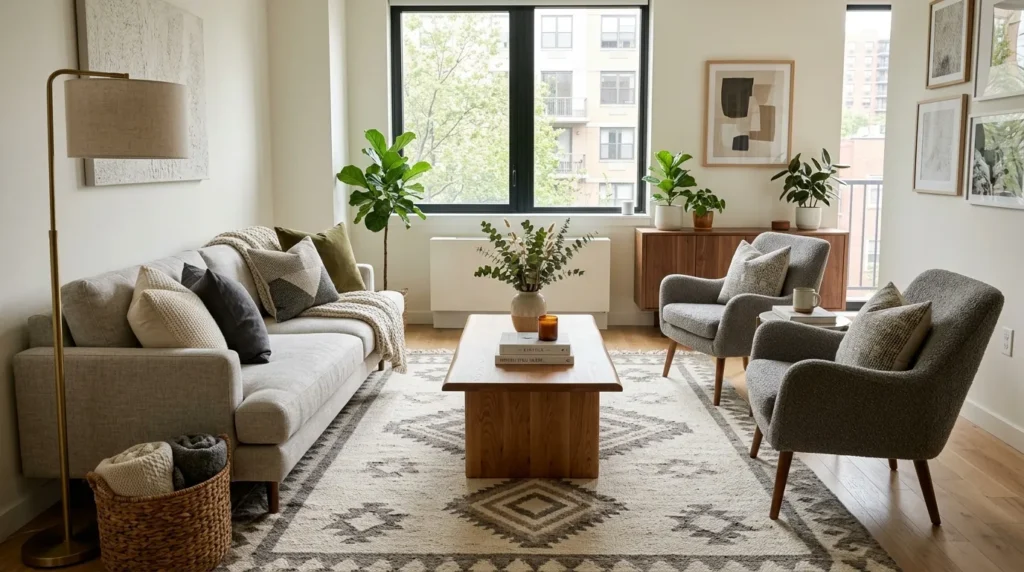
- Use a large rug to anchor the living room, bedroom, or dining corner.
- Choose a rug big enough for furniture legs to sit on it where possible.
- Try neutral patterns, soft geometrics, vintage-inspired designs, or textured solids.
- Use washable rugs in kitchens, dining spaces, entries, or pet-friendly homes.
- Match rug tones with curtains, pillows, and wood finishes for a connected look.
A statement rug can make an apartment feel designed because it gives the room a clear foundation. Small rugs often make furniture look disconnected, while a larger rug pulls the seating area together. Choose a size that allows at least the front legs of the sofa and chairs to sit on it. For bedrooms, let the rug extend beyond the bed so your feet land on something soft. Patterns can be subtle, including vintage-inspired prints, soft geometrics, or textured solids.
The right rug also improves comfort and sound control, which matters in apartments with downstairs neighbors or hard flooring. In my experience, rugs are one of the easiest ways to make basic furniture look more intentional. Choose wool, cotton, jute, washable polyester, or low-pile blends depending on traffic and maintenance needs. Repeat colors from the rug in pillows, curtains, or artwork so the room feels connected. This single piece can add warmth, structure, and personality without making the space feel busy.
9. Curated Walls
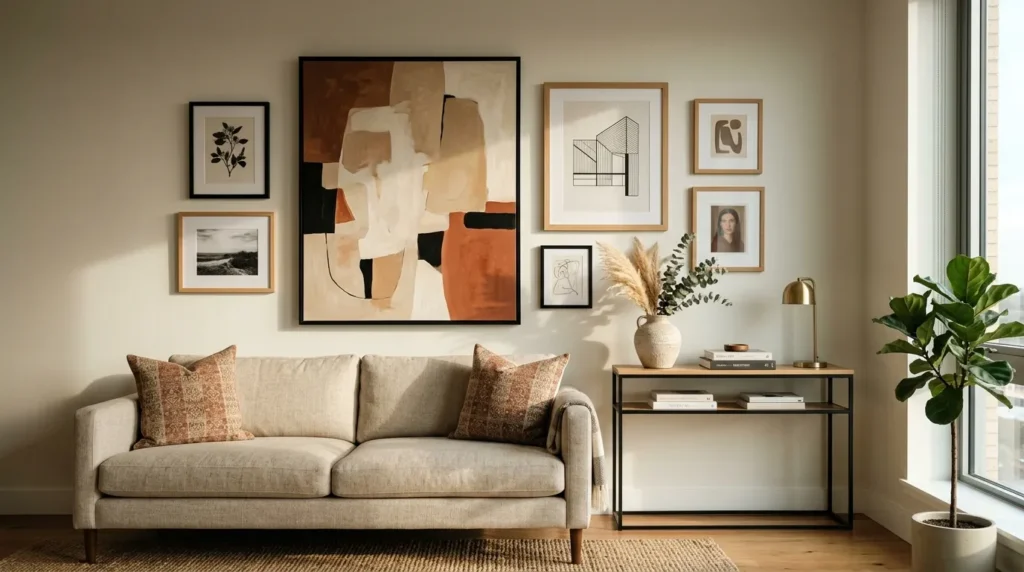
- Use one oversized artwork, a balanced gallery wall, or a framed textile to create focus.
- Keep frames consistent in black, oak, white, brass, or another repeated finish.
- Avoid covering every wall; leave negative space for a cleaner look.
- Use renter-friendly hanging strips or lightweight frames if drilling is limited.
- Choose art that connects with your color palette and personal style.
Curated walls give an apartment personality without making it feel cluttered. Instead of filling every blank space, choose one main wall to style with intention. This could be an oversized canvas above the sofa, a balanced gallery wall in the hallway, or a framed textile above the bed. The key is consistency. Use similar frame colors, repeat tones from the room, and leave enough blank space around the arrangement. This makes the wall feel polished rather than crowded.
The best wall styling feels personal but controlled. I’ve seen this work well in many homes where plain rental walls made the apartment feel temporary. Use photos, abstract prints, sketches, travel-inspired artwork, or soft landscapes that connect with your life and palette. Removable hanging strips, lightweight frames, and leaning art can work well for renters. A curated wall adds focus, warmth, and visual identity, making the apartment feel complete without needing paint, wallpaper, or built-in architectural details.
10. Compact Dining
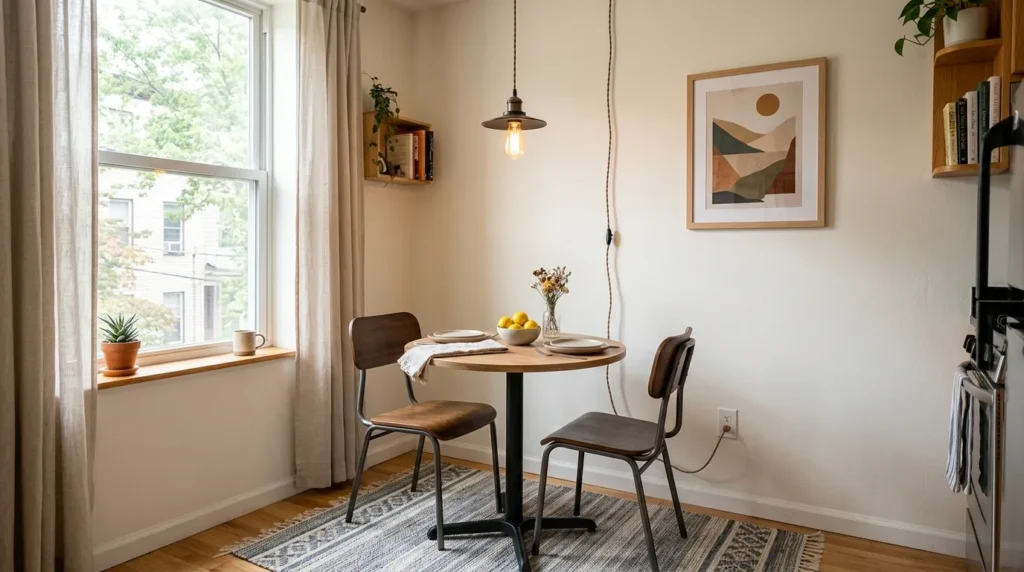
- Create a small dining zone with a round table, wall-mounted counter, narrow table, or pedestal base.
- Choose chairs that tuck fully under the table to save space.
- Add a rug, pendant-style light, framed print, or small centerpiece to define the area.
- Use easy-clean materials like wood veneer, laminate, metal, ceramic, and washable cushions.
- Keep the dining area close to the kitchen if possible for smoother daily use.
Compact dining makes apartment living feel more complete, even without a formal dining room. A small table near a window, kitchen wall, or living room corner creates a real place for meals, coffee, remote work, and casual hosting. Round bistro tables, narrow rectangular tables, pedestal bases, and wall-mounted counters work especially well in tight spaces. Choose chairs that tuck in fully, or use stools and benches that slide away when not in use.
The dining zone becomes more stylish when it feels intentional. Add a small rug, plug-in pendant, framed print, or simple vase to create visual separation from the living area. That’s why many designers recommend defining small zones in open apartments instead of letting every activity blend together. Materials like wood veneer, laminate, metal, ceramic, and washable seat cushions keep the setup practical. Your apartment gains function, charm, and a more organized rhythm without requiring a separate room.
11. Polished Kitchen

- Clear counters and keep only the appliances or tools you use daily.
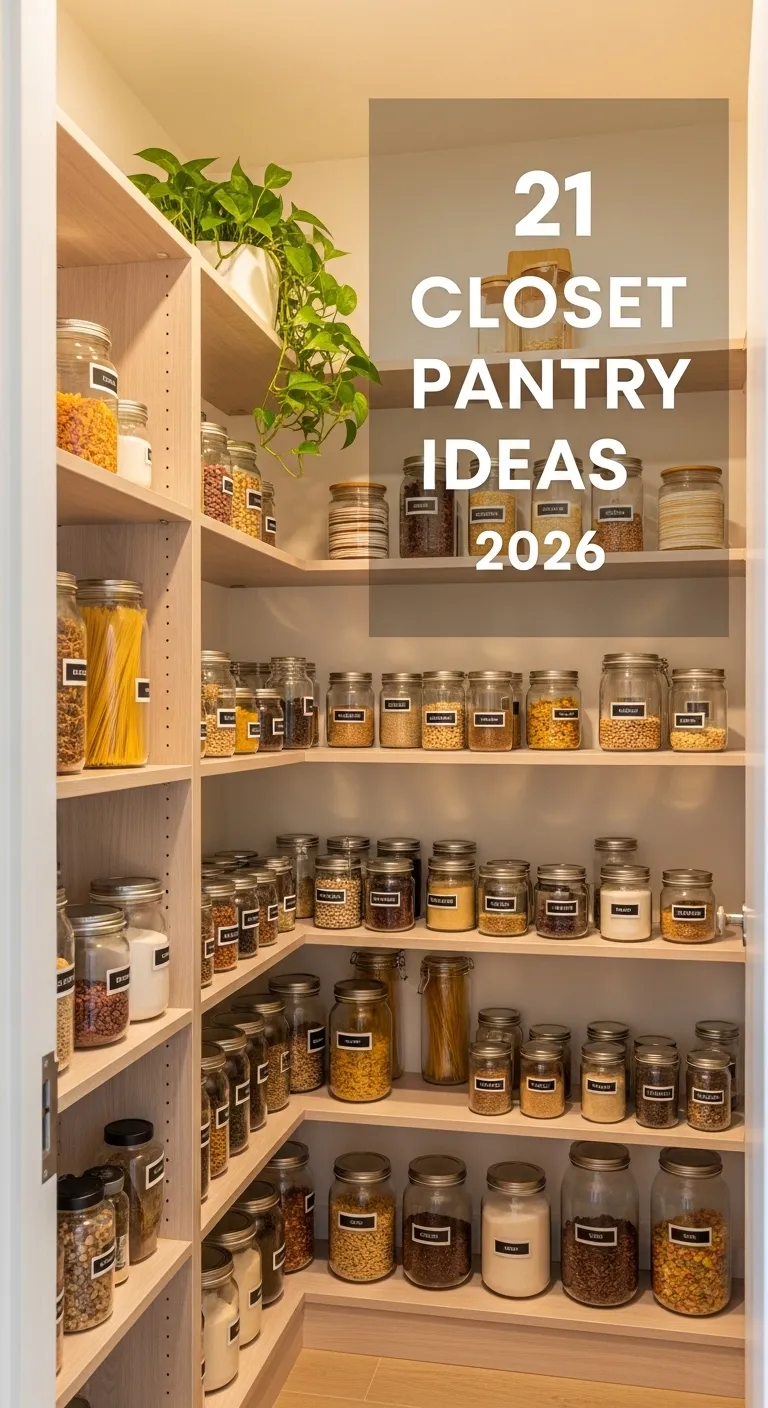
- Use matching jars, refillable bottles, drawer dividers, trays, and ceramic containers.
- Add renter-friendly upgrades like peel-and-stick backsplash, under-cabinet lights, or modern pulls.
- Repeat materials from nearby rooms, such as wood, black metal, white ceramic, or brass.
- Add one plant, framed print, or sculptural bowl for warmth without clutter.
A polished kitchen can elevate the entire apartment because it is often visible from the living area. Start by clearing counters and keeping out only what you truly use every day. Replace mismatched soap bottles with refillable dispensers, store dry goods in glass jars, and use trays to group coffee supplies or cooking essentials. Small changes like bamboo drawer dividers, ceramic canisters, and stainless steel accents make the kitchen feel more organized without replacing cabinets or appliances.
The transformation comes from making practical items look deliberate. If the backsplash feels dated, try removable peel-and-stick tile. If cabinets feel plain, consider modern pulls if your lease allows changes. In my experience, kitchens look cleaner when finishes repeat from the rest of the apartment, such as black metal, warm wood, white ceramic, or brass. Add under-cabinet lighting, one small plant, or a framed print for softness. The kitchen will feel fresher, easier to use, and more connected to the home.
12. Calm Bedroom
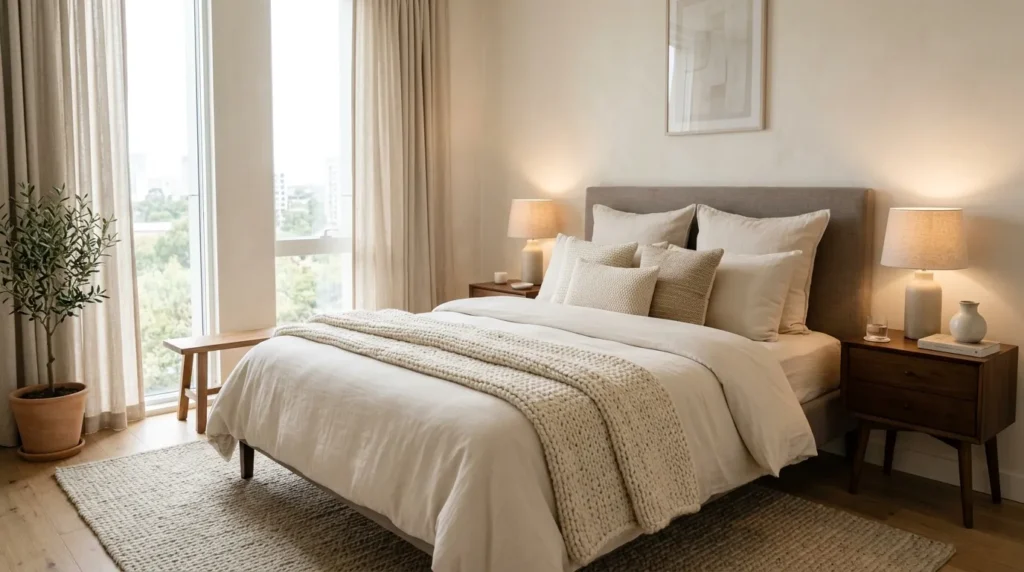
- Use breathable sheets, a smooth duvet, structured pillows, and one textured throw.
- Choose restful colors like cream, warm white, mushroom, sage, taupe, or soft gray.
- Add matching lamps or nightstands for symmetry and a more finished look.
- Use under-bed bins, drawer organizers, and baskets to reduce visible clutter.
- Hang curtains high and use warm bedside lighting to create a softer mood.
A calm bedroom makes the whole apartment feel easier to live in. Start with the bed, because it is usually the largest visual piece in the room. Use breathable cotton, linen, or bamboo sheets, a smooth duvet, structured pillows, and one textured throw. Keep the palette soft with cream, warm white, mushroom, sage, taupe, or muted gray. A low headboard, matching lamps, and simple nightstands create symmetry without making the space feel stiff.
The room becomes more restful when storage and lighting support your routine. Use under-bed bins, drawer organizers, baskets, or floating nightstands if space is tight. I’ve noticed bedrooms look more expensive when bedside surfaces are simple and cords are hidden. Add blackout curtains if outside lights bother you, and use warm bulbs for evening comfort. A quiet bedroom reset makes mornings feel less chaotic and evenings feel more peaceful, even in a small apartment with limited closet space.
13. Fresh Bathroom

- Replace mismatched towels, worn bath mats, and cluttered bottles with coordinated basics.
- Use refillable dispensers, covered storage, adhesive shelves, and under-sink bins.
- Choose moisture-safe materials like teak, ceramic, cotton, acrylic, and stainless steel.
- Add a clean shower curtain, soft lighting, and a small plant or eucalyptus bundle.
- Keep the color palette simple so the bathroom feels brighter and larger.
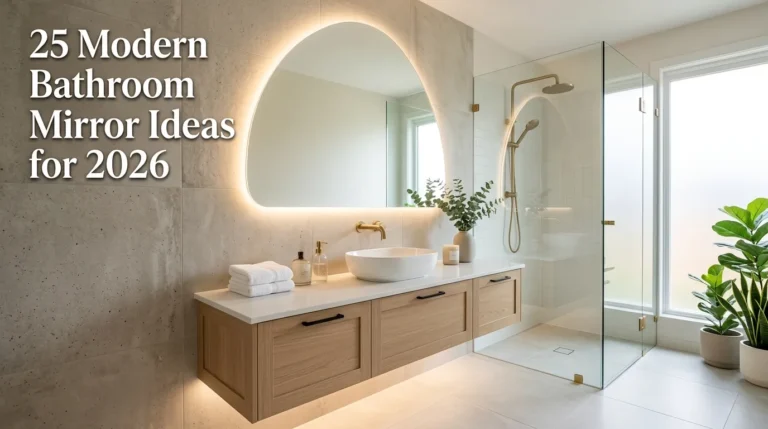
A fresh bathroom can make a rental feel much cleaner without any renovation. Focus on the details you can change easily: towels, bath mat, shower curtain, soap dispenser, storage bins, and wall hooks. Choose a tight color palette like white, stone, sage, warm gray, or beige. Refillable bottles and matching containers instantly reduce visual clutter around the sink and shower. Even if the tile or vanity is basic, these small upgrades make the room feel more cared for.
The bathroom becomes more functional when everything has a place. Use adhesive shelves inside the shower, acrylic organizers under the sink, and a covered basket for extra supplies. That’s why many designers recommend moisture-safe materials like teak, ceramic, cotton, stainless steel, and clear acrylic. Add a small plant, eucalyptus bundle, or framed print if the room has space. The result feels brighter, cleaner, and more relaxing, turning a plain apartment bathroom into a simple spa-inspired corner.
14. Personal Details
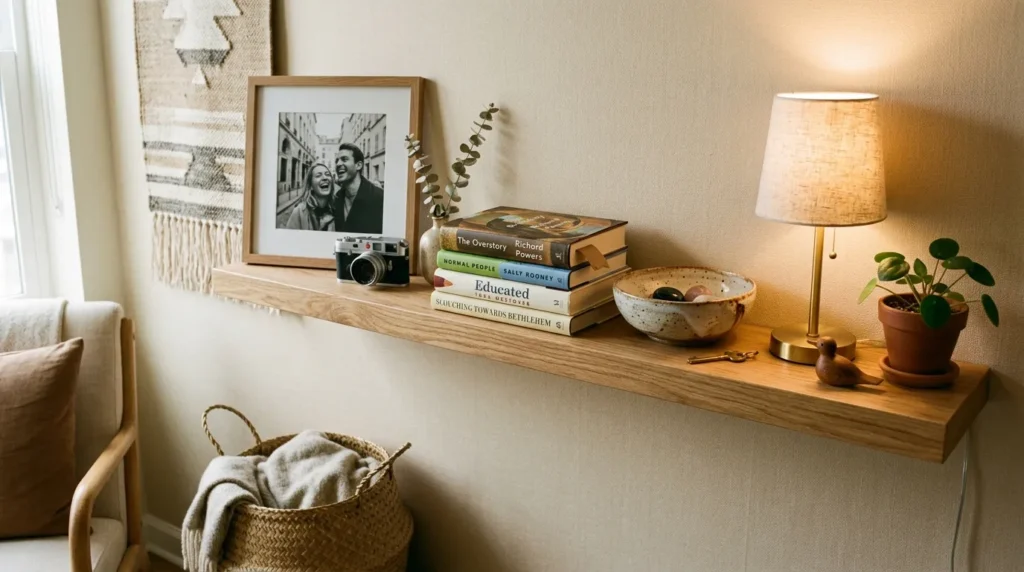
- Add meaningful decor through books, framed photos, travel pieces, handmade items, or favorite objects.
- Keep personal accents edited so the apartment feels styled rather than cluttered.
- Use trays, shelves, or small vignettes to group decor intentionally.
- Repeat colors or materials from the room so personal pieces blend naturally.
- Choose items that tell your story while still supporting the clean overall look.
Personal details are what keep a stylish apartment from feeling like a catalog. Once the foundation is clean and functional, add pieces that reflect your life. This might include framed photos, favorite books, travel objects, handmade pottery, meaningful art, or a small collection displayed on a shelf. The key is editing. A few personal pieces placed with intention will feel warmer and more elevated than many small items scattered across every surface.
The transformation is emotional as much as visual. In my experience, apartments feel most inviting when they balance clean design with real personality. Use trays, shelves, picture ledges, or small vignettes to group meaningful objects. Repeat colors or materials already in the room so these accents blend naturally. A ceramic bowl from a trip, a favorite coffee table book, or one framed family photo can make the space feel yours. The apartment stays polished while still feeling warm, lived in, and memorable.
Image Descriptions / Prompts
1. Neutral Base
Bright apartment living room with warm white walls, beige sofa, oatmeal rug, taupe curtains, pale oak coffee table, ceramic vases, boucle pillows, rattan basket, soft daylight, calm neutral palette, realistic interior photography, clean and elegant rental-friendly mood.
2. Open Layout
Modern apartment with open walking paths, light sofa, slim coffee table, defined rug area, clear entry flow, large window, pale wood accents, soft natural lighting, minimal decor, realistic wide-angle interior, airy and functional small-space layout.
3. Slim Furniture
Compact apartment living room with slim sofa, open-leg chair, narrow console, low coffee table, neutral rug, walnut and black metal finishes, bright window light, clean lines, realistic interior photography, sleek spacious rental design.
4. Hidden Storage
Small apartment living room with storage ottoman, closed media cabinet, lidded woven baskets, lift-top table, clean surfaces, warm neutral decor, soft daylight, organized functional layout, realistic interior photography, clutter-free and polished mood.
5. Layered Lighting
Cozy apartment evening scene with floor lamp, ceramic table lamp, plug-in wall sconce, warm bulbs, neutral sofa, brass and matte black accents, soft shadows, tidy cords, realistic interior photo, layered lighting with relaxed stylish atmosphere.
6. Soft Textures
Apartment interior with linen curtains, wool rug, boucle pillows, cotton throw, woven basket, ribbed glass vase, cream sofa, warm neutral palette, natural daylight, realistic home decor photography, soft layered textures and inviting mood.
7. Vertical Lines
Small apartment room with high-hung curtains, tall mirror, slim bookcase, vertical artwork, floor lamp, light neutral walls, pale wood furniture, soft daylight, realistic interior photography, taller spacious look with elegant vertical styling.
8. Statement Rug
Modern apartment living area with large patterned neutral rug anchoring sofa and chairs, warm wood coffee table, soft pillows, floor lamp, natural daylight, cohesive color palette, realistic interior photography, cozy and well-designed apartment mood.
9. Curated Walls
Apartment wall with oversized art and small gallery arrangement, black and oak frames, neutral sofa, slim console, ceramic vase, warm sunlight, balanced negative space, realistic interior photography, personal curated wall styling with polished mood.
10. Compact Dining
Small apartment dining nook with round bistro table, two tuck-in chairs, plug-in pendant light, framed print, washable rug, wood and metal finishes, soft daylight, realistic interior photo, practical cozy dining corner.
11. Polished Kitchen
Clean apartment kitchen with clear counters, glass jars, ceramic canisters, bamboo drawer organizers, refillable soap bottle, under-cabinet lighting, peel-and-stick backsplash, small plant, warm neutral finishes, realistic bright kitchen photography.
12. Calm Bedroom
Soft apartment bedroom with cream bedding, smooth duvet, structured pillows, textured throw, low headboard, matching lamps, high curtains, warm bedside light, muted neutral palette, realistic interior photography, peaceful and organized bedroom mood.
13. Fresh Bathroom
Small apartment bathroom with white shower curtain, sage towels, refillable dispensers, teak stool, acrylic storage, ceramic tray, soft lighting, eucalyptus stems, clean counters, realistic spa-inspired rental bathroom with bright fresh mood.
14. Personal Details
Stylish apartment shelf with framed photo, favorite books, handmade ceramic bowl, small travel object, neutral wall, warm lamp light, woven texture, curated decor grouping, realistic interior photography, personal and polished apartment styling mood.