These 16 Modern Apartment Ideas Will Make Your Space Feel Bigger
Modern Apartment Ideas Will Make Your Space Feel Bigger
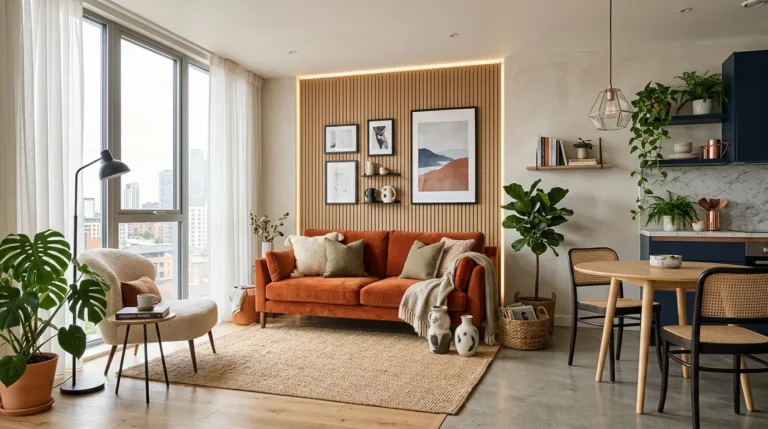
A small apartment can feel open, bright, and beautifully styled when every design choice works with the space instead of against it. Many USA renters and apartment owners deal with narrow living rooms, limited closets, low ceilings, shared layouts, and strict lease rules. Still, a compact home does not have to feel crowded or temporary. With the right furniture scale, colors, lighting, storage, and layout tricks, you can make each room feel more breathable, more practical, and more visually polished without needing a full renovation or a large decorating budget.
The best apartment ideas for a bigger-looking space usually come down to smart visual decisions. You are not just decorating; you are guiding the eye, improving movement, reducing clutter, and allowing natural light to do more work. A slim table, tall curtain, soft neutral wall, or well-placed mirror can completely change how a room feels. These details matter because apartments often combine living, working, dining, and relaxing in one open area, so the design needs to feel beautiful while still supporting real daily routines.
This guide focuses on practical, renter-friendly design moves that create the feeling of more space. You will find layout advice, material suggestions, visual styling tips, and everyday usability ideas that work in studios, one-bedroom rentals, city apartments, and compact suburban homes. Each section is written to help you make your apartment look brighter, taller, cleaner, and more intentional. Use one idea for a quick weekend refresh, or combine several for a complete transformation that feels stylish, comfortable, and easy to maintain.
1. Clear Walkways
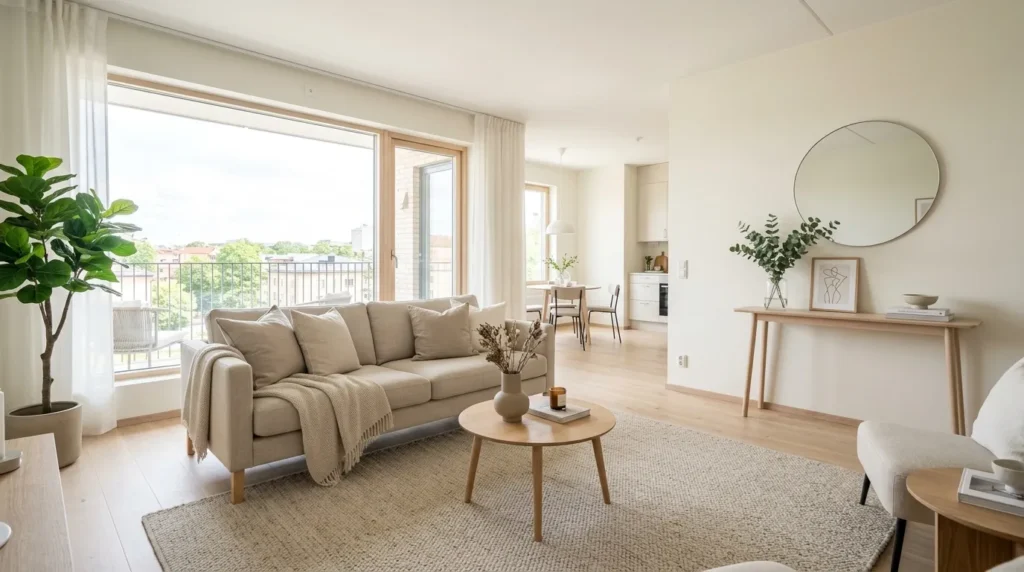
- Keep main walking paths open between the sofa, kitchen, windows, entryway, and bedroom area.
- Avoid placing large furniture where it blocks natural movement or cuts the room in half.
- Use slim consoles, open-leg chairs, and smaller side tables to reduce visual heaviness.
- Leave breathing room around furniture so the apartment feels easier to move through.
- Arrange pieces around daily routines, not just around the walls.
Clear walkways instantly make an apartment feel larger because the room becomes easier to understand. When furniture blocks the natural path from the entry to the sofa, kitchen, window, or bedroom, the whole space feels tighter than it really is. Start by noticing where you walk every day, then move furniture out of those routes. A slim console, open-leg chair, or smaller coffee table can create more movement without removing function. This simple layout shift makes the apartment feel calmer, more breathable, and much easier to live in.
The transformation is both visual and practical. Open paths allow light to travel farther, help guests move comfortably, and make cleaning less frustrating. In my experience, apartments feel more expensive when the layout looks intentional instead of squeezed together. Avoid oversized sectionals near doorways, bulky tables in narrow zones, and chairs that interrupt traffic. Keep at least a comfortable walking gap wherever possible. The result is a home that feels open, organized, and naturally bigger, even when the actual square footage stays exactly the same.
2. Low Furniture
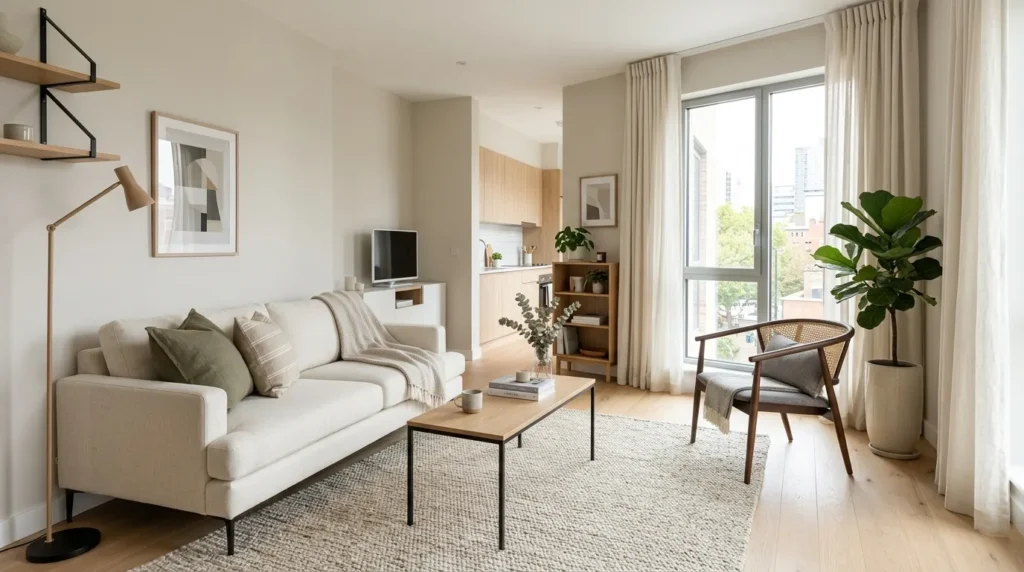
- Choose low-profile sofas, beds, chairs, and coffee tables to create more visible wall space.
- Use furniture with open legs so light can pass underneath and reduce visual weight.
- Pair low seating with tall curtains or vertical art to make ceilings feel higher.
- Avoid heavy rolled arms, tall backs, and oversized bases in compact rooms.
- Select materials like linen, boucle, walnut, metal, and performance fabric for comfort and durability.
Low furniture can make ceilings look higher and rooms feel wider without changing the architecture. Sofas with lower backs, slim arms, and visible legs create more open wall space behind them, which helps the eye travel farther. A low bed frame, thin coffee table, or streamlined accent chair can also reduce heaviness in a small room. This does not mean choosing uncomfortable pieces. Look for deep seats, supportive cushions, soft upholstery, and sturdy frames that feel relaxed while still keeping the overall silhouette clean and light.
This idea works especially well in apartments with standard ceiling heights because it creates a better sense of proportion. Pair low furniture with tall curtains, vertical artwork, or a floor lamp to pull the eye upward. I’ve noticed this trick works beautifully in living rooms where bulky seating once made the space feel cramped. Materials like performance linen, boucle, light wood, chrome, and powder-coated metal keep the look modern and practical. The apartment feels sleeker, brighter, and less crowded while still remaining comfortable for everyday lounging.
3. Light Palette
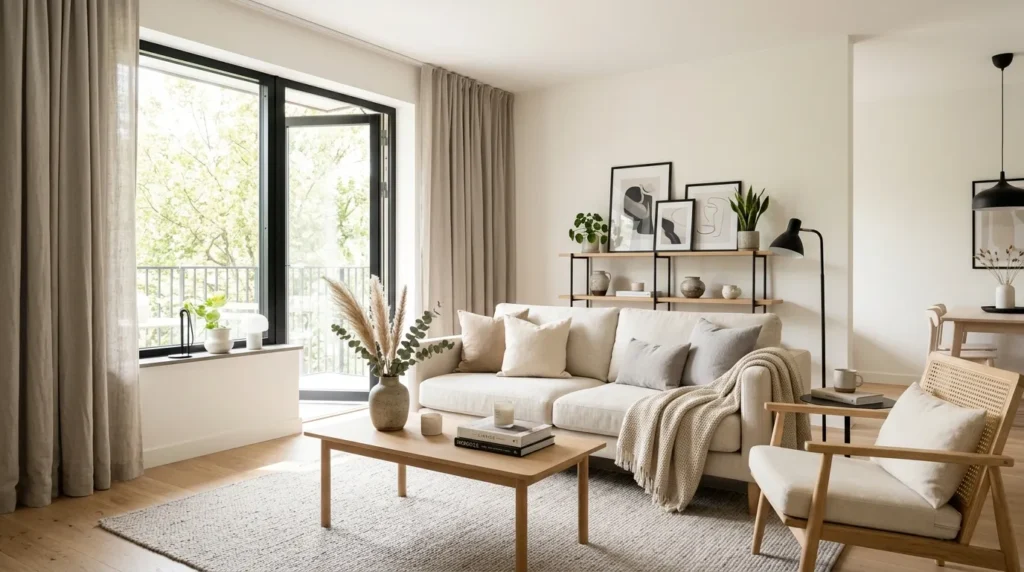
- Use soft whites, warm creams, pale taupe, greige, sand, and light gray to brighten the room.
- Add depth through texture instead of relying on too many dark or bold colors.
- Keep larger furniture pieces in lighter shades to reduce visual heaviness.
- Use darker accents only in small doses, such as frames, lamps, or hardware.
- Choose washable and stain-resistant fabrics when using light colors in busy homes.
A light palette makes an apartment feel bigger because it reflects more natural and artificial light. Instead of using stark white everywhere, build a softer mix of warm white, cream, pale taupe, greige, sand, and light gray. These shades create an airy foundation while still feeling cozy and lived-in. Use the lightest colors on larger surfaces like sofas, rugs, curtains, bedding, and walls when possible. Then add small contrast through black frames, brass lamps, wood tables, or textured baskets so the space does not feel flat.
The beauty of a light color scheme is that it visually connects different areas. In open apartments, a soft neutral palette can make the living room, dining corner, and workspace feel like one larger space instead of separate crowded zones. That’s why many designers recommend limiting strong colors in compact homes. Choose washable slipcovers, performance fabrics, and patterned rugs if you worry about stains. The result is a brighter, cleaner apartment that feels calm in the morning, welcoming in the evening, and easier to refresh seasonally.
4. Large Mirrors
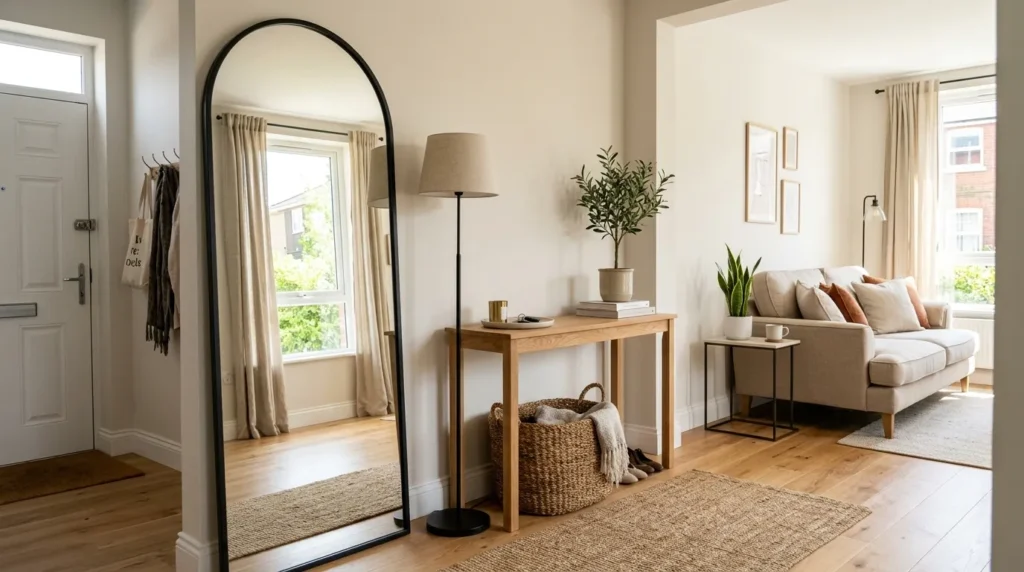
- Place a large mirror across from or near a window to reflect natural light.
- Use floor mirrors to add height and depth without adding bulky furniture.
- Choose simple frames in black, oak, brass, or white for a clean modern look.
- Avoid placing too many small mirrors, which can make the wall feel busy.
- Use mirrors in entries, bedrooms, dining corners, and narrow living rooms.
A large mirror is one of the fastest ways to make a small apartment feel more open. When placed near a window, it reflects daylight and visually doubles the brightness of the room. A tall floor mirror can also create the illusion of depth, especially in narrow living rooms, bedrooms, or entryways. Choose a frame that matches your existing finishes, such as black metal, natural oak, brushed brass, or simple white. The goal is to make the mirror feel like part of the architecture, not random decoration.
The biggest impact comes from scale. One large mirror usually looks more polished than several tiny mirrors scattered across the wall. In my experience, a floor mirror leaning beside a console, dresser, or plant adds height while keeping the room relaxed. For rentals, use secure leaning placement or renter-friendly mounting methods. Mirrors also help darker corners feel less closed in when paired with lamps or light curtains. The apartment gains brightness, dimension, and a more spacious feeling without changing the floor plan or buying extra furniture.
5. Floating Storage
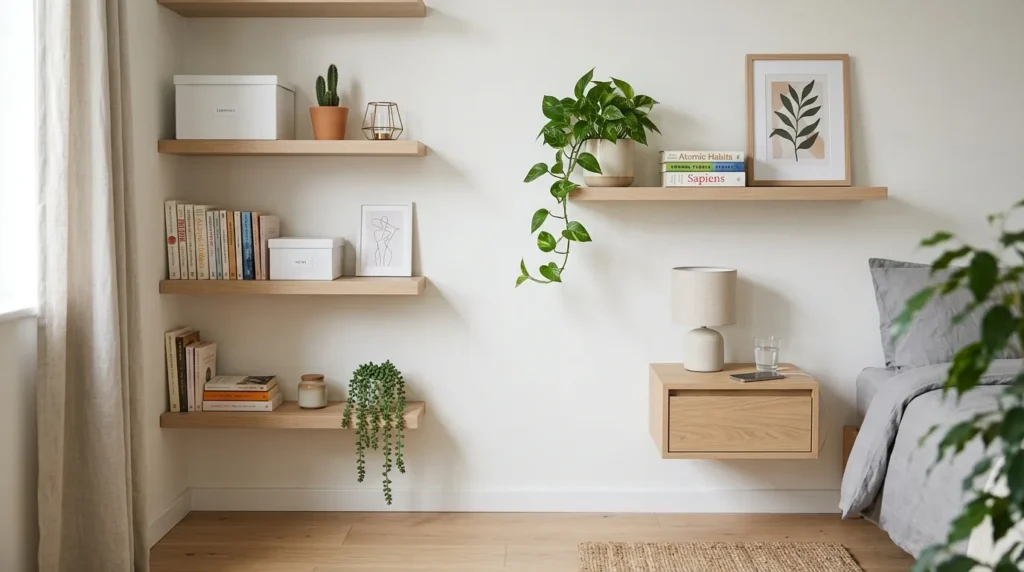
- Use floating shelves, wall cabinets, or mounted nightstands to free up floor space.
- Choose shallow wall storage in narrow rooms, hallways, and beside beds.
- Keep shelves lightly styled so they look airy instead of crowded.
- Use matching baskets, boxes, or containers to hide smaller everyday items.
- Mount pieces securely and follow rental-friendly rules when drilling is not allowed.
Floating storage helps an apartment feel bigger by lifting function off the floor. Wall-mounted shelves, floating nightstands, narrow wall cabinets, and picture ledges create storage without adding bulky furniture bases. This is especially useful in small bedrooms, bathrooms, entryways, and work corners where floor space disappears quickly. Choose shallow designs so the storage does not project too far into the room. Light wood, matte white, black metal brackets, and simple ledges can look clean while offering a practical place for books, plants, keys, skincare, or decorative objects.
The key is to style floating storage with restraint. Leave empty space between objects, group smaller items in baskets, and avoid filling every inch of each shelf. I’ve seen this work well in many homes where bookcases made rooms feel crowded. Floating pieces keep the floor visible, which makes the apartment feel more open. Use renter-friendly anchors, removable ledges where possible, or freestanding ladder shelves if drilling is not allowed. The result is a functional wall that feels light, organized, and visually lifted.
6. Hidden Clutter
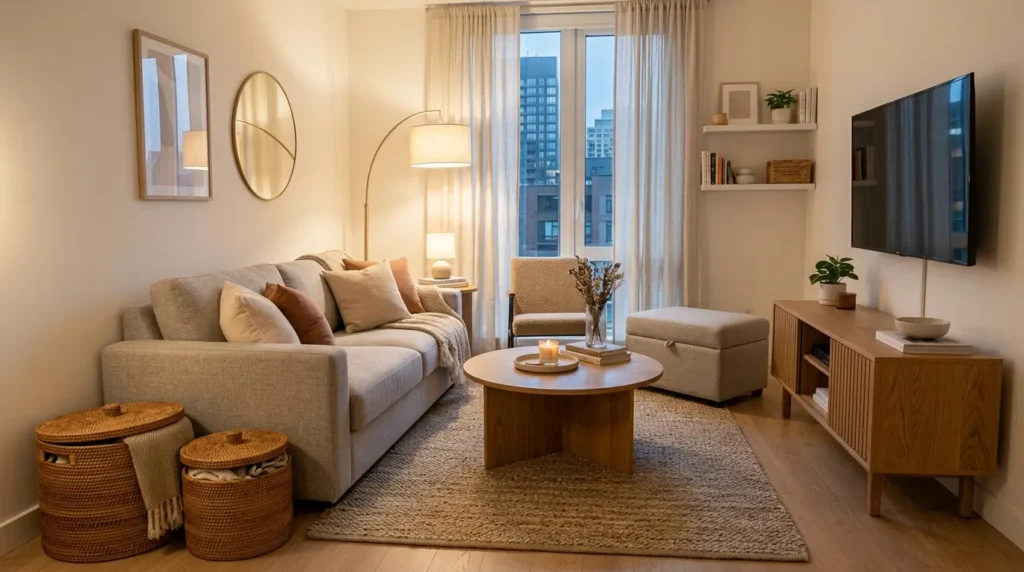
- Use closed storage for items that do not need to be visible every day.
- Choose ottomans, benches, beds, coffee tables, and media cabinets with hidden compartments.
- Store similar items together so the apartment is easier to reset quickly.
- Use drawer dividers, lidded baskets, and under-bed containers to control small clutter.
- Keep counters, nightstands, and coffee tables as clear as possible.
Hidden clutter control is essential if you want a small apartment to feel bigger. Even beautiful decor can look overwhelming when too many everyday items sit on open surfaces. Use storage ottomans, closed media cabinets, drawer organizers, lidded baskets, under-bed bins, and benches with compartments to give everything a home. Focus first on clutter zones like the entry, coffee table, kitchen counter, bathroom sink, and bedside area. When those areas stay clear, the apartment immediately feels more peaceful, polished, and open to the eye.
This is not about creating a perfect showroom. It is about making daily life easier to manage. In my experience, the best storage is placed exactly where clutter naturally happens. Keep remotes near the sofa, shoes near the entry, chargers near the bed, and cleaning supplies near the kitchen or bathroom. Closed storage also helps open-plan apartments feel calmer because fewer small items compete for attention. Your home becomes easier to reset before guests arrive, and the rooms feel larger because the eye sees surfaces, not mess.
7. Tall Curtains
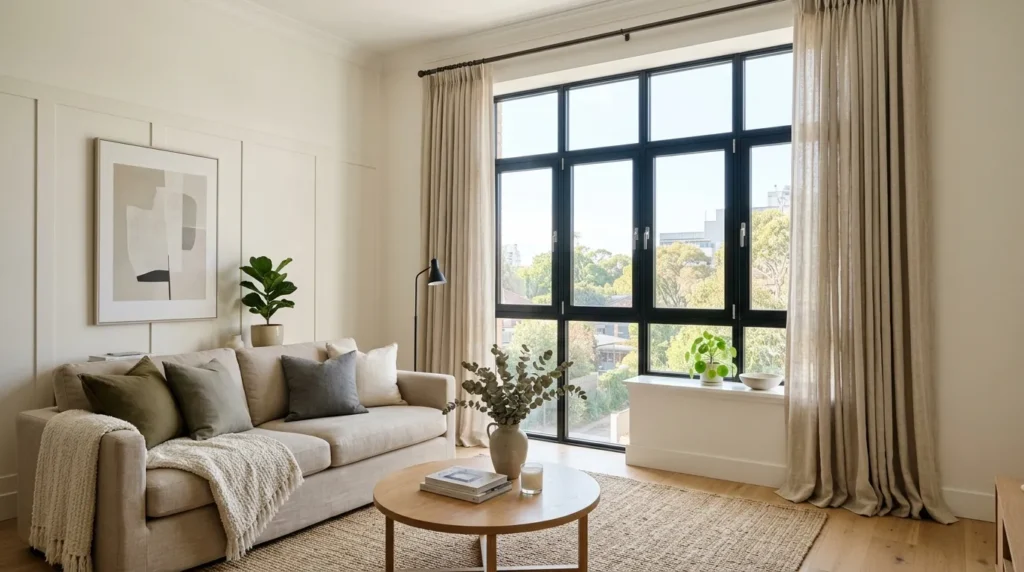
- Hang curtain rods close to the ceiling to make windows feel taller.
- Extend rods wider than the window frame so curtains do not block light.
- Choose floor-length panels for a cleaner and more elevated look.
- Use linen, cotton, velvet, or light-filtering fabric depending on privacy needs.
- Stick with soft neutral colors to create an airy, spacious effect.
Tall curtains can visually stretch an apartment and make the ceiling feel higher. Instead of placing the curtain rod directly above the window frame, hang it closer to the ceiling and extend it several inches wider on each side. This allows the curtain panels to frame the window instead of covering the glass, which lets in more natural light. Floor-length panels create a cleaner line from top to bottom. Linen, cotton, velvet, and light-filtering fabrics can all work, depending on how much privacy and softness you need.
The result is a room that feels more finished and more architectural. That’s why many designers recommend treating curtains like a design feature, not an afterthought. Light-colored panels in ivory, oatmeal, soft gray, or warm beige keep the look open, while blackout liners can improve sleep in bedrooms. Make sure the fabric lightly kisses the floor or breaks gently for a polished effect. This simple window upgrade can make a basic rental feel taller, brighter, and more custom without painting, remodeling, or replacing the blinds.
8. Slim Lighting
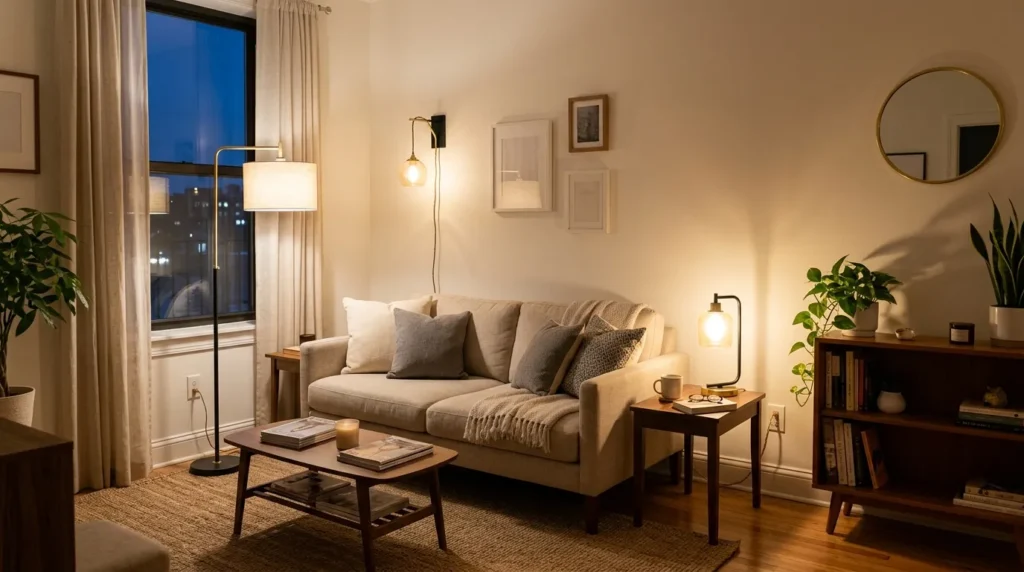
- Use thin floor lamps, plug-in sconces, and compact table lamps to save space.
- Choose warm bulbs to soften the room and reduce harsh shadows.
- Place lighting at different heights to create depth and visual comfort.
- Use wall-mounted lights beside beds or sofas when table space is limited.
- Select finishes like brass, matte black, ceramic, paper, or glass for style balance.
Slim lighting makes an apartment feel bigger because it adds mood without taking up much room. Instead of relying only on a ceiling light, use narrow floor lamps, plug-in wall sconces, small table lamps, and picture lights to brighten different areas. Thin lamp bases save floor space, while wall-mounted options free up nightstands and side tables. Warm bulbs soften hard corners and make furniture look more inviting. Materials like brass, matte black metal, ceramic, glass, and paper shades can add style without making the room feel crowded.
Layered light also helps define areas in an open apartment. A lamp beside the sofa creates a living zone, a plug-in sconce beside the bed creates a sleep zone, and a small lamp on a console makes the entry feel welcoming. I’ve noticed apartments feel much more spacious at night when light comes from several soft sources instead of one harsh overhead fixture. Use cord covers or clips to keep wires tidy. The space becomes warmer, more flexible, and visually deeper without adding bulky furniture.
9. Glass Tables
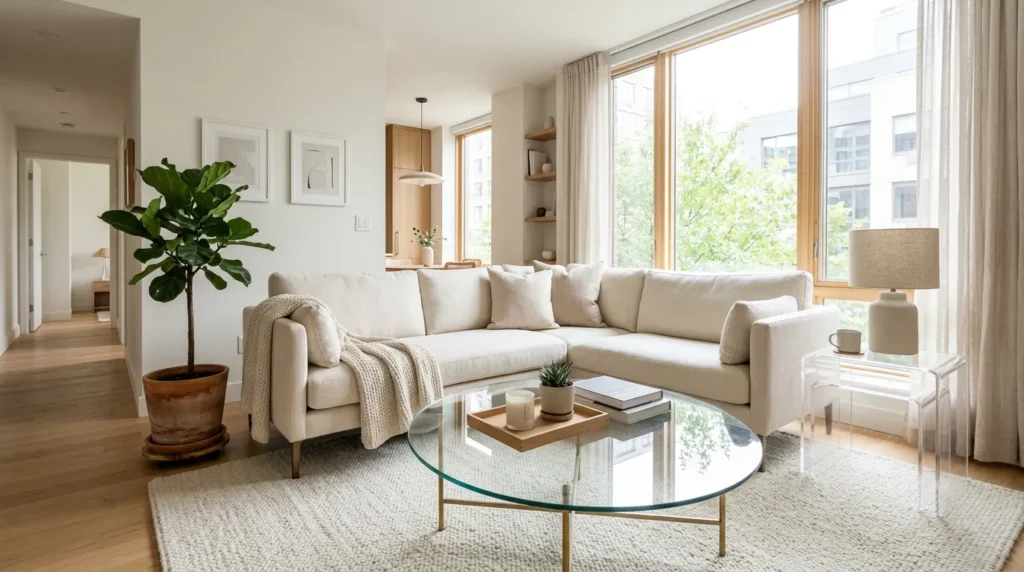
- Use glass or acrylic tables to keep sightlines open in compact living rooms.
- Choose rounded edges for better movement in tight spaces.
- Pair glass with soft rugs, wood accents, or upholstered seating for warmth.
- Avoid overloading transparent tables with too many decorative objects.
- Try glass coffee tables, acrylic side tables, or slim console tables.
Glass tables are perfect for small apartments because they offer function without blocking the view. A transparent coffee table, acrylic side table, or glass console keeps the room feeling open while still giving you space for drinks, books, lamps, or decor. This works especially well in narrow living rooms where solid wood or bulky tables can feel heavy. Choose rounded edges if movement is tight, and pair the glass with a soft rug or upholstered seating so the room still feels comfortable and balanced.
The visual trick is simple: when you can see through a table, the floor appears more open. That helps the entire seating area feel lighter and less crowded. In my experience, glass works best when it is styled minimally. Use one tray, one small vase, or one book stack instead of filling the surface. Add warmth with wood legs, woven baskets nearby, or textured pillows on the sofa. The apartment feels cleaner, brighter, and more spacious while still keeping all the practical surfaces you need.
10. Open Shelving
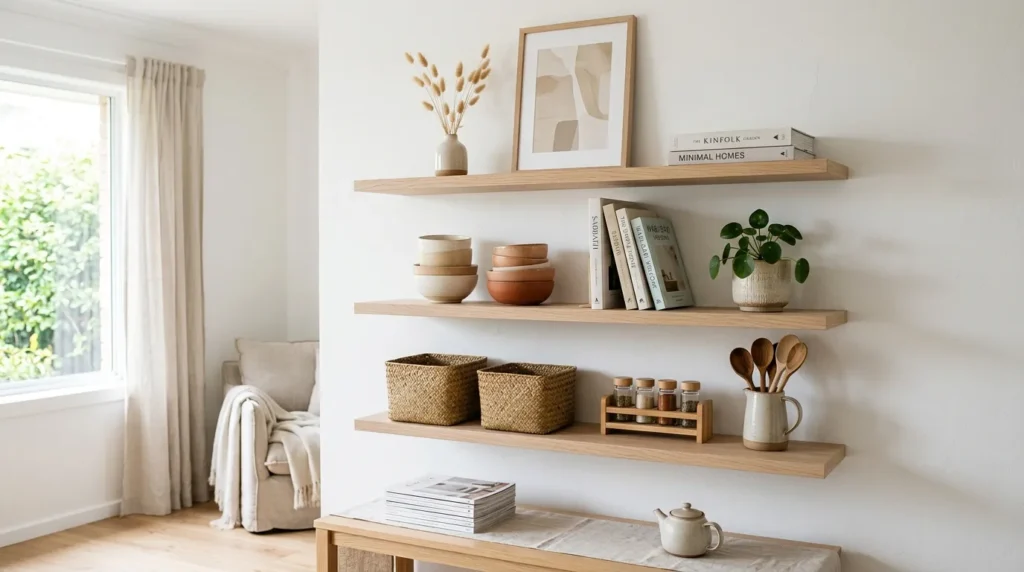
- Use open shelves only where they can stay organized and lightly styled.
- Mix storage with decor so the shelves feel useful and attractive.
- Keep colors consistent through baskets, ceramics, books, and frames.
- Leave empty space between objects to prevent a crowded look.
- Use shelves in kitchens, living rooms, bathrooms, and work corners.
Open shelving can make a room feel bigger when it is styled with breathing room. Unlike heavy closed cabinets, shelves keep the wall feeling lighter and allow your eye to continue across the space. The secret is editing. Use open shelves for items that are both useful and attractive, such as ceramics, books, baskets, glassware, plants, or framed art. Keep the palette consistent so the shelves do not look chaotic. In a small apartment, even a few open shelves can add storage without making the room feel boxed in.
The transformation depends on balance. Too many objects will make the shelves feel cluttered, but too few can look unfinished. I’ve seen this work well in kitchens where upper cabinets feel heavy, or in living rooms where a bulky bookcase takes up too much floor space. Use matching baskets for practical items, stack books horizontally and vertically, and repeat materials like wood, glass, ceramic, or woven fiber. The result is storage that feels light, decorative, and useful while helping the apartment maintain an open feeling.
11. Rounded Pieces
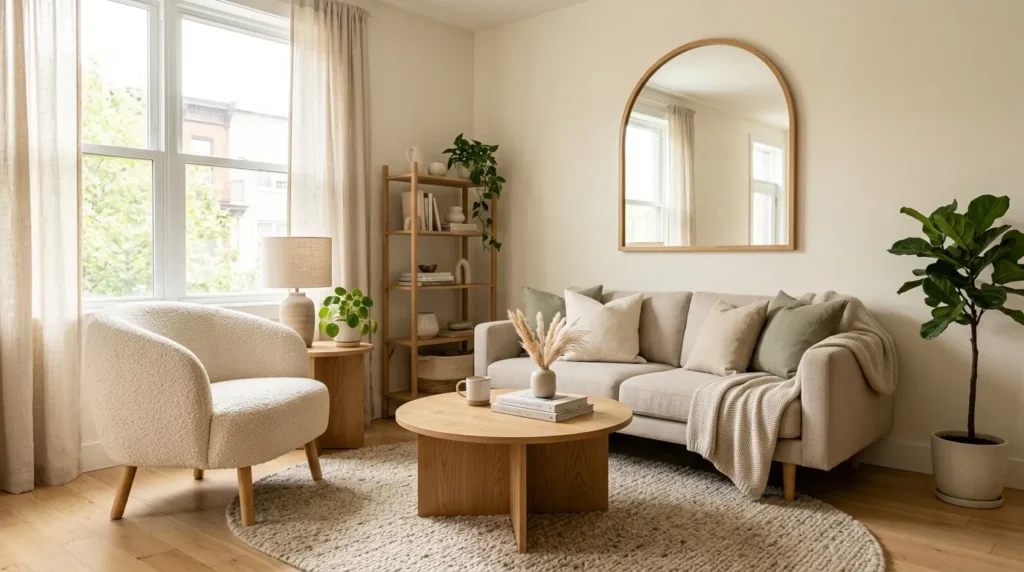
- Choose round tables, curved chairs, arched mirrors, and soft-edged decor.
- Use rounded shapes to improve movement in small or narrow rooms.
- Balance curves with straight-lined furniture so the space still feels modern.
- Try oval coffee tables, circular dining tables, or arched floor lamps.
- Select soft materials like boucle, velvet, rattan, and upholstered fabric for warmth.
Rounded pieces help a small apartment feel easier to move through. Sharp corners can interrupt flow, especially in tight living rooms, small dining areas, and narrow bedrooms. A round coffee table, oval dining table, curved chair, arched mirror, or circular side table softens the layout and reduces visual tension. These shapes also make the room feel more relaxed and modern. Materials like boucle, velvet, rattan, smooth wood, and rounded metal frames add comfort while keeping the overall look polished and current.
The practical benefit is better movement. A round table beside a sofa is easier to pass than a bulky square one, and a circular dining table can fit more naturally into a small corner. That’s why many designers recommend curves for compact spaces. Balance rounded pieces with straight lines, such as a simple sofa, rectangular rug, or clean shelving, so the room does not feel too playful. Your apartment will feel softer, more open, and more comfortable for daily use without losing its modern edge.
12. Defined Zones
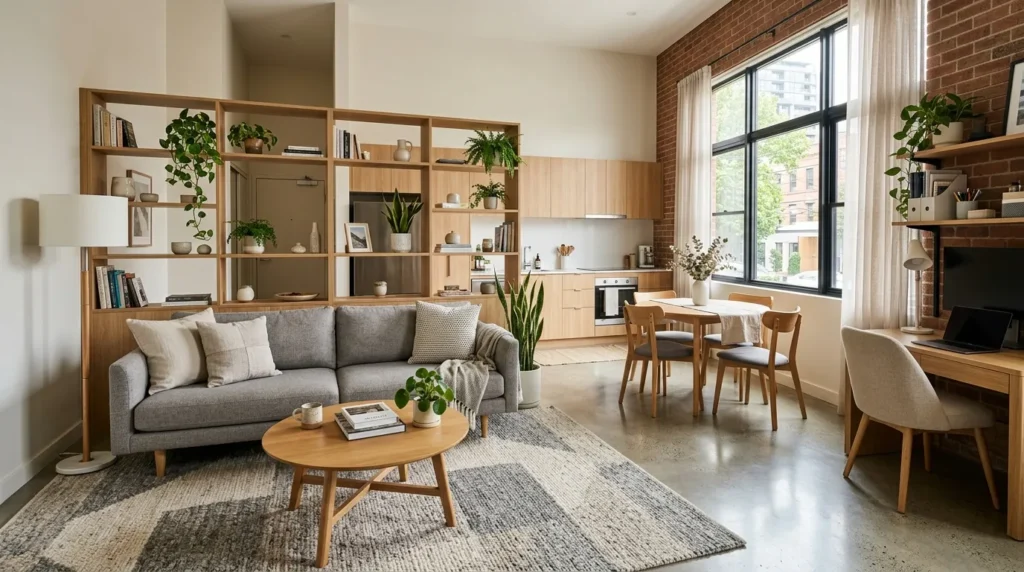
- Use rugs, lighting, furniture placement, and shelves to separate areas without walls.
- Create clear zones for lounging, eating, working, sleeping, and storage.
- Keep each zone visually connected through color and repeated materials.
- Avoid large dividers unless they are light, open, or multifunctional.
- Use furniture backs, open bookcases, or curtains to gently define spaces.
Defined zones make an apartment feel bigger because each area has a clear purpose. When a studio or open-plan rental has no visual structure, the space can feel messy even when it is clean. Use rugs, lighting, furniture placement, open shelves, or curtains to separate lounging, dining, working, and sleeping areas. A sofa can face the living zone, a rug can ground the seating area, and a small desk lamp can define a work corner. These subtle boundaries create order without closing the space.
The goal is separation without heaviness. In my experience, apartments feel more spacious when zones are clear but still visually connected. Repeat colors, woods, metals, or fabrics so the areas flow together. Avoid tall solid dividers unless privacy is truly needed, because they can block light and shrink the room. Instead, try a low bookcase, curtain panel, open shelving unit, or furniture arrangement that suggests a boundary. The apartment becomes easier to use, easier to style, and more comfortable for multitasking.
13. Compact Dining
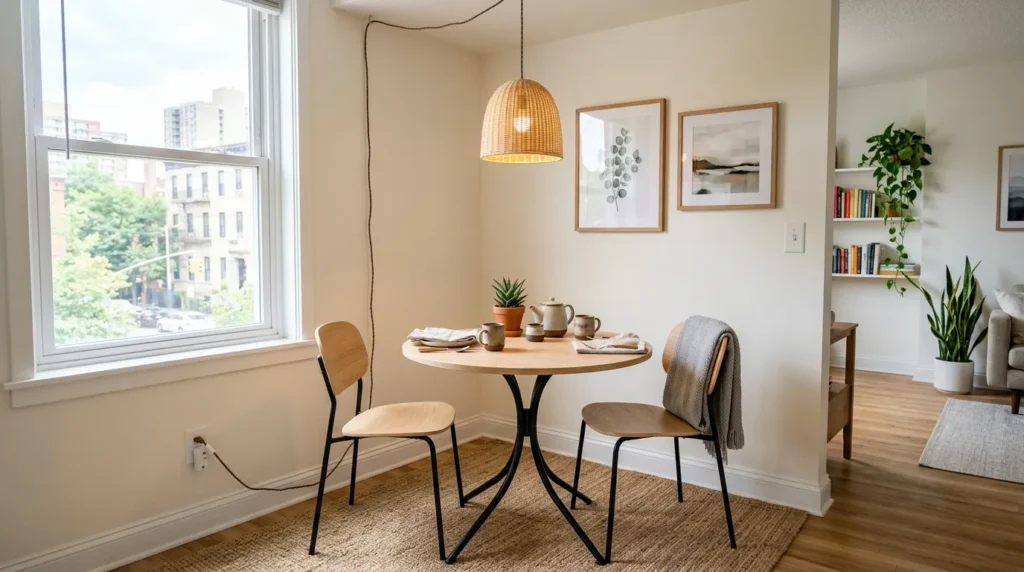
- Use round bistro tables, wall-mounted counters, or narrow dining tables.
- Choose chairs that tuck fully under the table to save space.
- Add a small pendant, rug, or wall art to make the dining zone feel intentional.
- Use benches or stools when traditional chairs take up too much room.
- Select easy-clean materials like laminate, wood veneer, metal, and washable cushions.
Compact dining can make an apartment feel more complete without stealing too much space. Even if you do not have a formal dining room, a small table near a window, kitchen wall, or living room corner can create a useful eating area. Round bistro tables, narrow rectangular tables, wall-mounted counters, and pedestal bases work well in small layouts. Choose chairs that tuck in fully, or use a bench that slides underneath. Easy-clean materials like laminate, wood veneer, metal, and washable cushions keep the setup practical.
A defined dining spot improves daily rhythm because meals no longer have to happen on the sofa or bed. Add a small rug, plug-in pendant, framed print, or simple centerpiece to make the area feel intentional. I’ve noticed that compact dining zones also make open apartments feel more organized because they give one corner a clear role. Keep the furniture lightweight so it can shift for guests or cleaning. The apartment gains function, charm, and a sense of spacious order without requiring a separate room.
14. Bright Corners
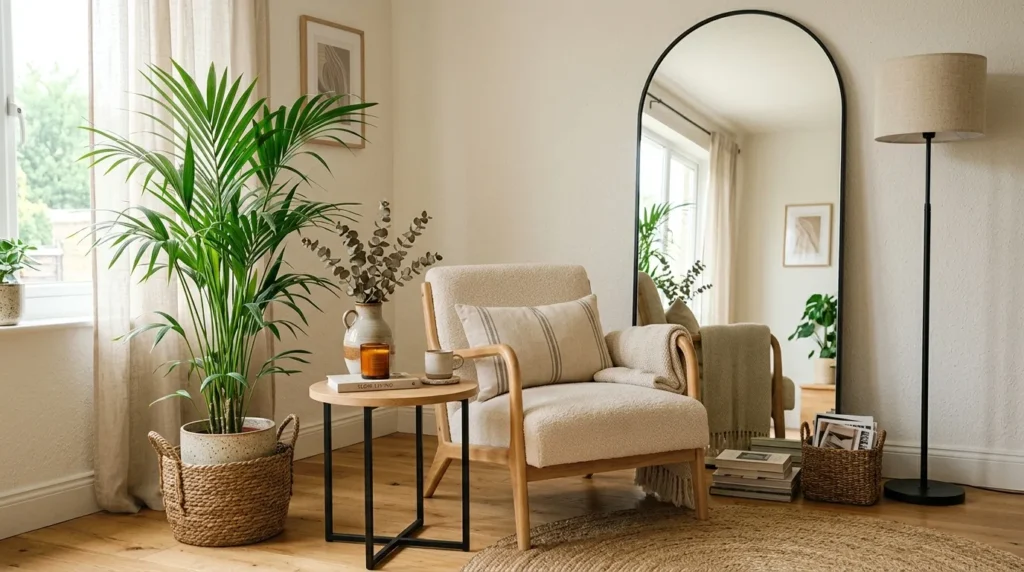
- Add lamps, mirrors, plants, or pale decor to dark corners.
- Use vertical pieces like floor lamps or tall plants to draw the eye upward.
- Avoid letting corners become cluttered storage spots.
- Place a chair, small table, or plant stand where the corner can serve a purpose.
- Choose light-reflecting materials like ceramic, glass, brass, and pale wood.
Bright corners prevent an apartment from feeling smaller at the edges. Dark unused corners can make a room feel closed in, even when the center is nicely decorated. Add a slim floor lamp, tall plant, arched mirror, pale chair, or small table to bring those corners to life. The goal is to create depth and light without adding clutter. Materials like glass, ceramic, brass, pale wood, and woven baskets can make a neglected corner feel styled while still staying useful for real daily life.
The transformation is subtle but powerful. When every corner feels considered, the whole apartment appears more complete and spacious. In my experience, a dark corner beside a sofa or bed often needs only one tall element and one light source. Try a plant with an uplight, a small reading chair, or a mirror that catches window light. Avoid stacking boxes or unused items in visible corners, because that visually shrinks the room. A bright corner adds balance, warmth, and a more open feeling.
15. Clean Surfaces
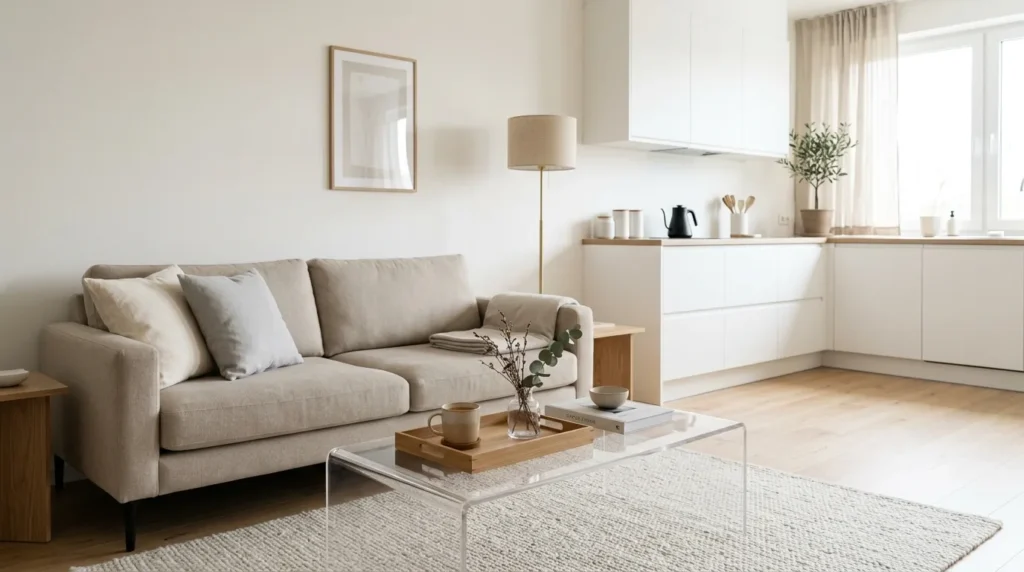
- Keep counters, tables, desks, and nightstands mostly clear.
- Use trays to group necessary items in a visually organized way.
- Store paperwork, chargers, skincare, remotes, and kitchen tools in drawers or bins.
- Choose one or two decorative pieces per surface instead of many small objects.
- Reset surfaces daily to keep the apartment feeling calm and open.
Clean surfaces make a small apartment feel instantly larger because the eye gets more places to rest. Coffee tables, kitchen counters, desks, nightstands, and bathroom sinks can quickly collect everyday items. Instead of leaving everything visible, use trays, drawers, baskets, and organizers to keep only the essentials out. One lamp, one tray, one vase, or one book stack often looks more stylish than a crowded surface. This creates a calmer visual field and makes the apartment feel easier to maintain.
The best part is that this habit costs almost nothing. Set a daily five-minute reset for surfaces that collect clutter, especially near the sofa, kitchen, and bed. That’s why many designers recommend editing before buying more decor. When surfaces are clear, furniture looks better, lighting feels softer, and rooms appear wider. Use small bowls for keys, drawer dividers for office supplies, and lidded containers for bathroom items. Your apartment will look more open, more polished, and more relaxing every single day.
16. Soft Bedroom
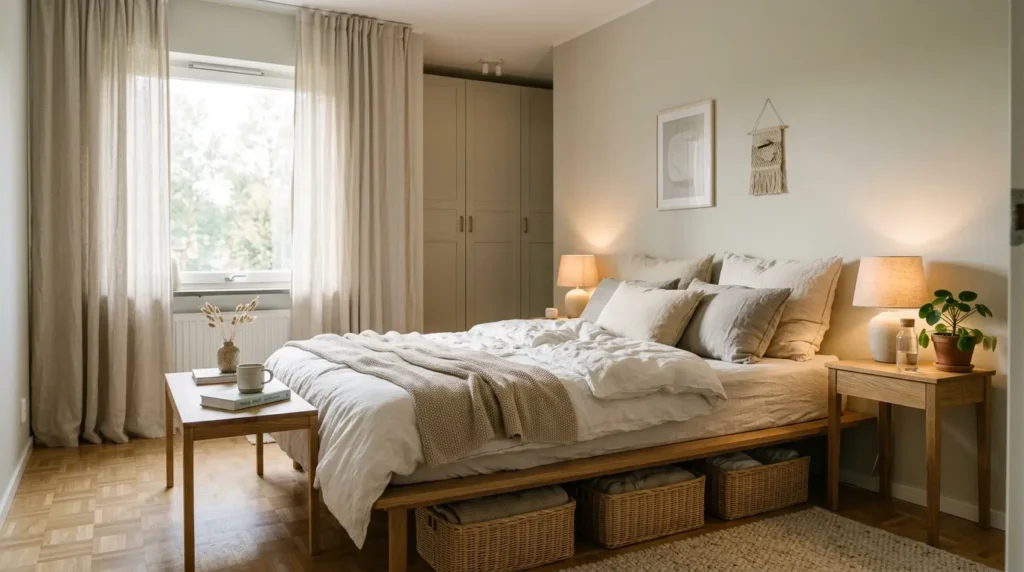
- Use light bedding, simple nightstands, and low-profile furniture to open the room.
- Choose breathable cotton, linen, or bamboo sheets for comfort and visual softness.
- Keep bedside surfaces minimal with lamps, books, and only daily essentials.
- Add under-bed storage to reduce visible clutter in small bedrooms.
- Use mirrors, curtains, and layered lighting to make the room feel bigger.
A soft bedroom can make the entire apartment feel more restful and spacious. Start with light bedding, a low-profile bed frame, simple nightstands, and curtains that hang high. Choose breathable cotton, linen, or bamboo sheets in white, cream, pale gray, or muted beige. These materials feel comfortable while keeping the room visually calm. If your bedroom is small, avoid oversized headboards, bulky dressers, and heavy dark furniture. A lighter setup helps the walls feel farther apart and makes the room easier to move through.
The real improvement comes from reducing bedroom clutter. Use under-bed bins, floating nightstands, slim dressers, and baskets inside closets to keep clothing and accessories out of sight. I’ve seen this work well in many homes where the bedroom also doubles as storage. Add a mirror, warm bedside lamps, and one textured throw for softness without crowding the bed. A calm bedroom supports better sleep, looks cleaner in the morning, and makes the apartment feel more spacious from the moment you wake up.
Image Descriptions / Prompts
1. Clear Walkways
Bright apartment living room with open walking paths, slim console, light sofa, small coffee table, large window, neutral rug, airy layout, pale wood accents, soft daylight, minimal decor, realistic interior photography, spacious and calm modern rental mood.
2. Low Furniture
Modern small apartment with low-profile cream sofa, slim coffee table, open-leg accent chair, tall curtains, neutral rug, soft natural lighting, uncluttered floor space, light wood and metal accents, realistic wide-angle interior, airy comfortable living room mood.
3. Light Palette
Airy apartment interior with warm white walls, cream sofa, pale taupe rug, greige curtains, light wood furniture, black frame accents, ceramic decor, soft sunlight, cohesive neutral palette, realistic modern home photography, bright open and peaceful atmosphere.
4. Large Mirrors
Compact apartment entry or living room with large floor mirror reflecting window light, oak console, woven basket, pale walls, slim lamp, simple decor, warm daylight, realistic interior design image, bright spacious rental-friendly mood with visual depth.
5. Floating Storage
Small apartment wall with floating shelves, wall-mounted nightstand, pale wood ledges, matte white storage boxes, small plants, books, framed art, clean floor space, soft daylight, realistic modern interior photo, light organized and functional mood.
6. Hidden Clutter
Modern apartment living room with storage ottoman, closed media cabinet, lidded baskets, clean coffee table, neutral sofa, warm lamp light, organized surfaces, woven textures, realistic interior photography, clutter-free and spacious small-space design.
7. Tall Curtains
Bright rental apartment with floor-length linen curtains hung near ceiling, wide window, warm white panels, neutral sofa, light rug, soft sunlight, simple furniture, realistic interior photo, taller ceiling effect, airy and polished living space.
8. Slim Lighting
Small apartment room with slim floor lamp, plug-in wall sconce, compact table lamp, warm bulbs, neutral furniture, tidy cords, soft shadows, matte black and brass accents, realistic evening interior, cozy layered lighting and spacious mood.
9. Glass Tables
Compact living room with transparent glass coffee table, acrylic side table, cream sofa, soft rug, wood accents, minimal tray decor, natural light, clean sightlines, realistic interior photography, airy modern apartment design with open floor feel.
10. Open Shelving
Modern apartment wall with lightly styled open shelves, ceramic bowls, books, baskets, small plants, pale wood, white wall, soft daylight, negative space, organized kitchen or living corner, realistic interior photo, airy and useful storage mood.
11. Rounded Pieces
Small apartment living area with round coffee table, curved accent chair, arched mirror, oval rug, soft neutral colors, boucle and wood textures, bright natural light, realistic interior photography, smooth flow and cozy modern atmosphere.
12. Defined Zones
Open studio apartment with rug-defined living zone, compact desk corner, small dining table, neutral palette, open shelving divider, soft window light, coordinated wood and fabric textures, realistic wide-angle interior, organized spacious multifunctional layout.
13. Compact Dining
Small apartment dining nook with round bistro table, two tuck-in chairs, plug-in pendant light, neutral rug, framed wall art, pale wood and metal finishes, soft daylight, realistic interior photography, practical cozy eating space.
14. Bright Corners
Apartment corner with tall leafy plant, slim floor lamp, arched mirror, pale accent chair, small side table, warm daylight, neutral wall, woven basket, ceramic vase, realistic interior photo, bright open and balanced corner styling.
15. Clean Surfaces
Minimal apartment living room with clear coffee table, organized tray, neutral sofa, simple lamp, pale rug, clean kitchen counter in background, soft daylight, realistic interior photography, calm uncluttered surfaces and spacious modern mood.
16. Soft Bedroom
Small apartment bedroom with light linen bedding, low bed frame, slim nightstands, high curtains, warm bedside lamps, under-bed storage baskets, pale neutral palette, realistic morning light, calm airy sleep space with soft textures.