11 These Cozy Decor Tips Are Perfect for Small Spaces
4. Introduction:
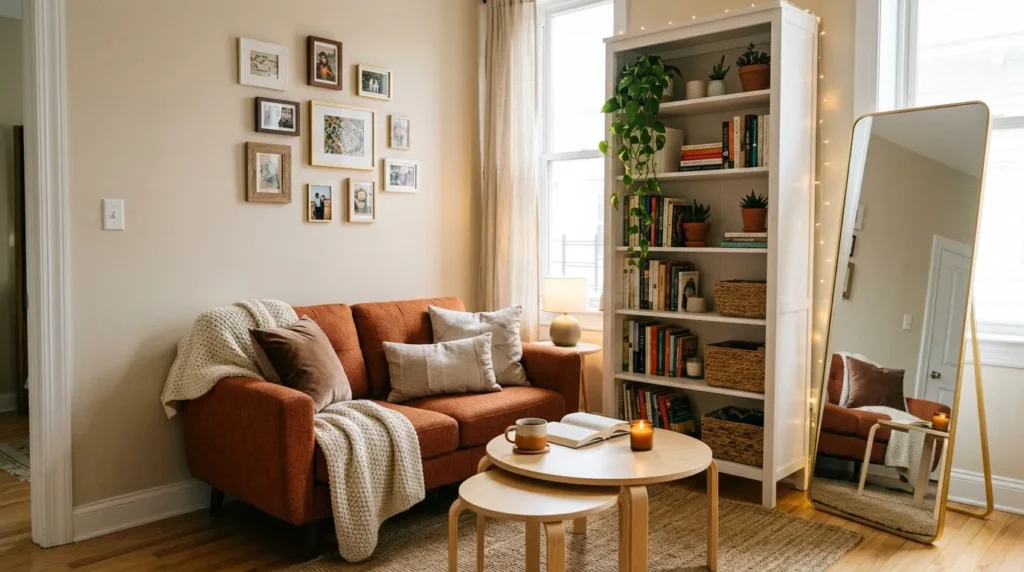
Small spaces can be challenging to decorate, especially when you want them to feel both cozy and stylish. In the USA, many homeowners face limitations with apartments, condos, or smaller rooms where every inch counts. That’s why these practical strategies matter—they help you maximize comfort, visual appeal, and functionality without overcrowding. This guide shares 11 carefully selected ideas designed to make small rooms feel inviting, layered, and thoughtfully styled. Each tip is actionable, easy to implement, and visually inspiring, proving that even compact areas can feel warm, organized, and welcoming.
1. Layered Lighting
- Combines overhead, task, and accent lighting
- Adds depth and dimension to compact spaces
- Highlights decor and architectural details
- Adjustable light levels improve mood and usability
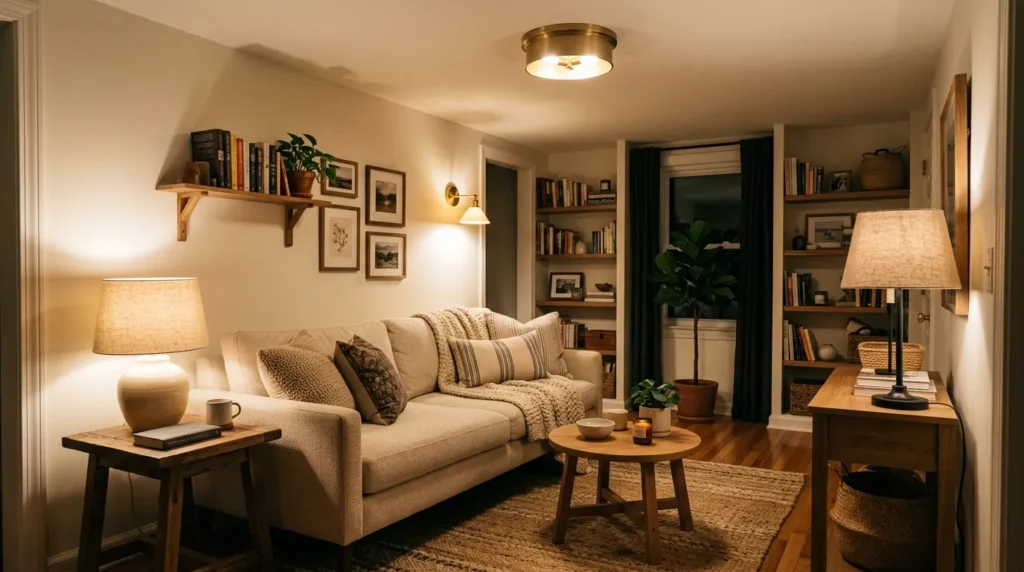
Layered lighting is essential for creating warmth in small spaces. Relying solely on ceiling fixtures can make rooms feel flat or cramped, while combining floor lamps, table lamps, and wall-mounted lights adds depth. In my experience, layering lights creates visual interest, highlights textures, and draws attention to furniture or art pieces. It also allows you to control brightness and mood, making a small room more versatile for activities like reading, working, or relaxing. Proper lighting transforms a space from functional to inviting without needing major renovations or expensive fixtures.
Using layered lighting effectively enhances both perception and usability. Accent lights can emphasize shelving, artwork, or textured walls, while task lights provide focused illumination for desks or reading nooks. Installing dimmers gives control over ambiance, creating cozy evenings or bright daytime settings as needed. Warm bulbs (2700K–3000K) complement neutral or colorful schemes, softening corners and making compact areas appear more open. Properly positioned lights balance the room visually, ensuring every part feels intentional, layered, and welcoming.
2. Floating Shelves
- Maximizes vertical storage in limited floor space
- Keeps surfaces organized and uncluttered
- Adds decorative display areas
- Enhances visual interest without crowding the room
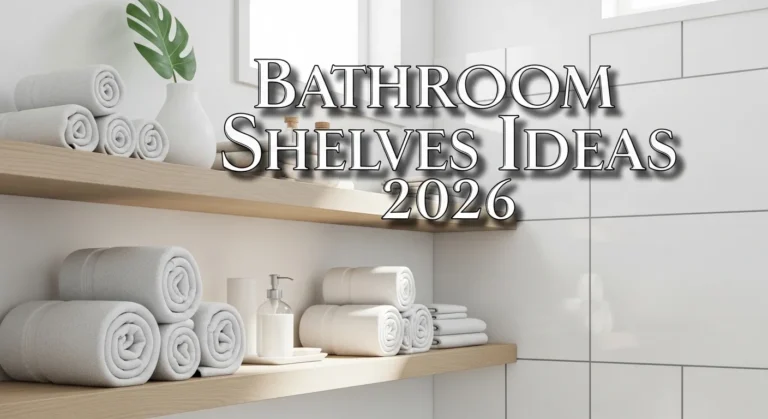
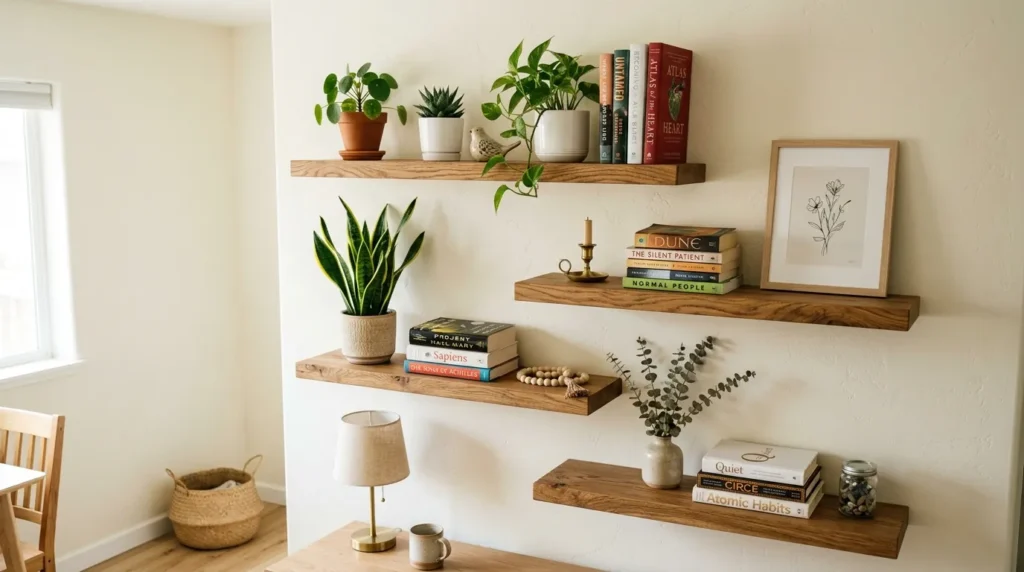
Floating shelves are ideal for small rooms because they free up floor space while providing storage and display areas. These shelves create vertical interest and help maintain a tidy, organized environment. I’ve noticed that using multiple small floating shelves in staggered arrangements transforms walls into decorative focal points while keeping surfaces clear. Materials like wood, metal, or glass can complement various decor styles, and the open design ensures rooms feel airy and spacious rather than cramped.
Functionally, floating shelves improve usability in small spaces by holding books, plants, or collectibles without taking up valuable floor area. Staggered layouts or asymmetrical arrangements add visual depth, creating a sense of dimension. Pairing shelves with baskets or decorative boxes hides clutter while maintaining aesthetic appeal. This approach allows homeowners to display personal items while keeping compact spaces practical, organized, and visually engaging.
3. Light-Colored Walls
- Reflects natural light to open the space
- Creates an airy, spacious feel
- Complements both minimal and layered decor
- Enhances the perception of room size
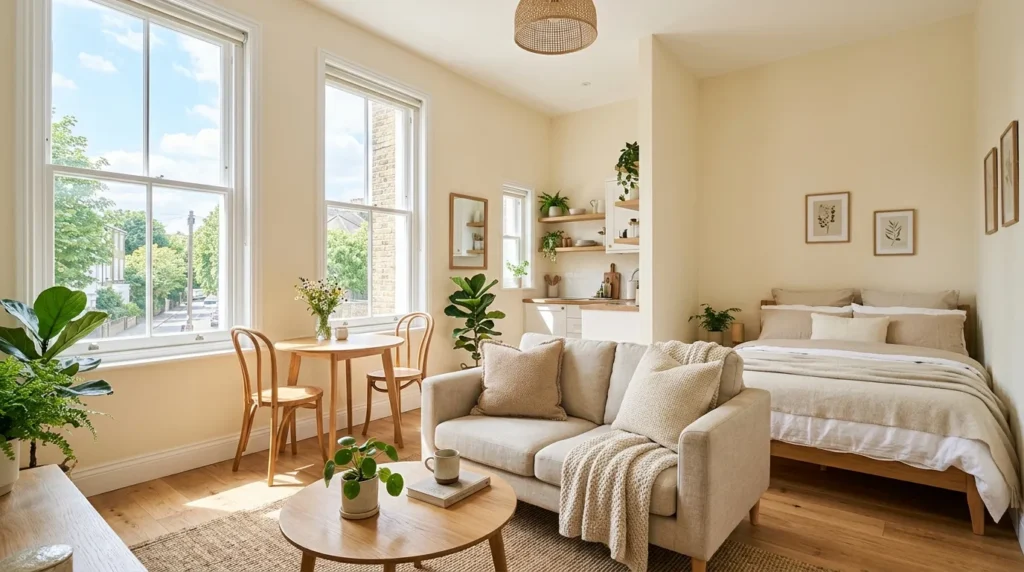
Choosing light-colored walls is a simple yet effective method for making small spaces feel larger. Shades of white, cream, or pale pastels reflect natural light, which increases brightness and enhances depth. That’s why many designers recommend light tones in compact areas—they visually expand the room while keeping it soft and inviting. I’ve seen small apartments feel significantly more open with neutral wall colors paired with warm accents or textured furnishings. This technique works across modern, contemporary, and traditional decor styles.
Light walls also improve the usability of the space by supporting flexible styling. They serve as a clean backdrop for artwork, rugs, or furniture of varying colors and patterns, allowing decor to pop without overwhelming the room. Layering textures and warm accents against light walls creates balance and comfort. Additionally, reflective surfaces like mirrors, metallic decor, or glass accents work even better against light tones, maximizing perceived space and enhancing visual appeal in compact interiors.
4. Multi-Functional Furniture
- Combines seating, storage, and workspace
- Saves space without sacrificing comfort
- Supports organization in compact layouts
- Enhances flexibility for different activities
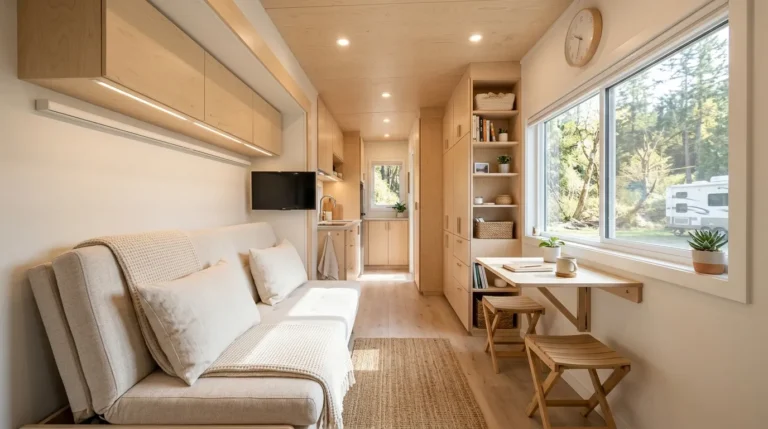
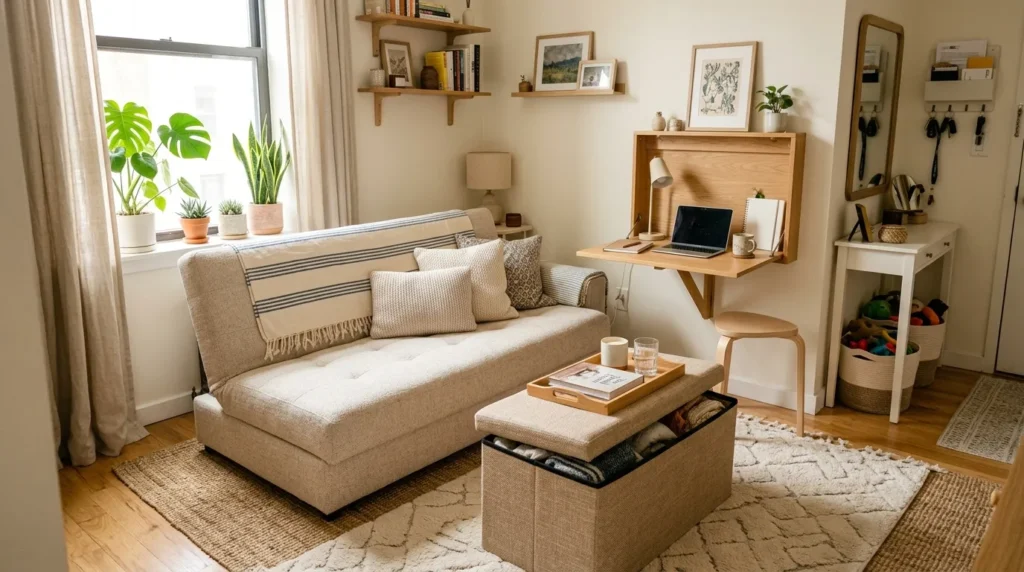
Multi-functional furniture is a must-have for small spaces. Pieces like storage ottomans, sofa beds, or foldable desks serve multiple purposes, helping rooms feel open and uncluttered. In my experience, combining functionality with aesthetic appeal is key—furniture should support daily living while complementing the decor style. Materials like upholstered wood or metal frames with hidden compartments provide durability and versatility. Choosing adaptable pieces ensures you can optimize floor space without sacrificing comfort or style.
Using multi-functional furniture transforms usability in compact interiors. For example, a coffee table with storage can hold books, blankets, or toys while maintaining a clean surface. A bed with drawers underneath eliminates the need for bulky dressers, freeing floor space. These items also allow for seasonal or situational rearrangements, supporting different activities like work, entertaining, or relaxation. The result is a small space that functions efficiently while feeling cozy, organized, and visually appealing.
5. Mirrors for Depth
- Reflects light to create a sense of space
- Highlights decor and architectural features
- Works in hallways, living areas, or bedrooms
- Adds decorative appeal without bulk
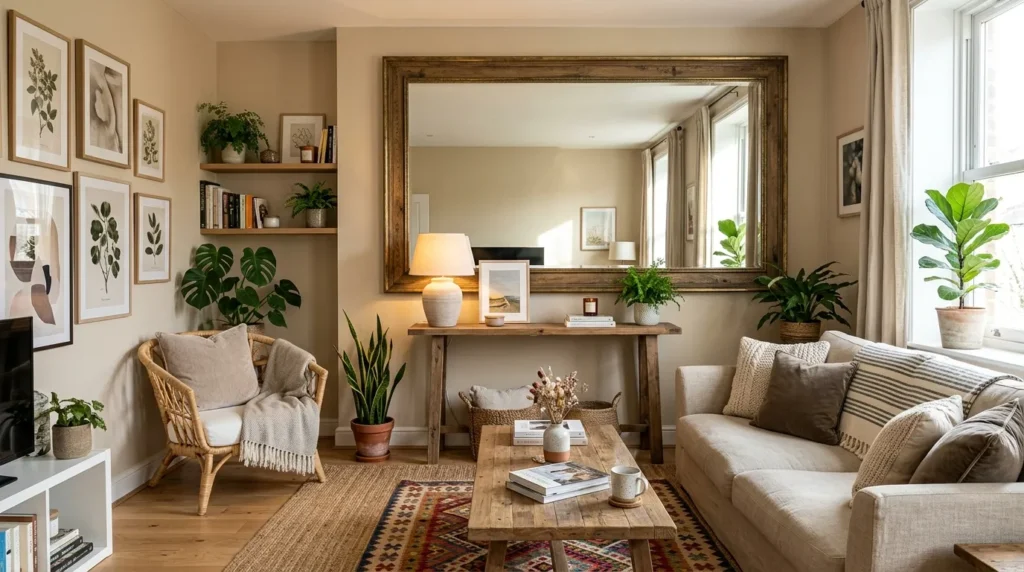
Mirrors are a small-space design hack that instantly adds depth and brightness. Placing mirrors opposite windows or light sources reflects light, enlarging the perceived area. I’ve noticed that even a single strategically positioned mirror can transform a narrow room or compact living area. Beyond functionality, mirrors act as decorative pieces, complementing furniture and accent colors while visually elevating the overall style. Frames in wood, metal, or minimalist designs contribute personality without cluttering limited space.
Mirrors also enhance usability by defining functional areas and improving navigation in tight layouts. They can make hallways, entryways, or corners feel less confined and more inviting. Pairing multiple small mirrors in a gallery arrangement or using large statement mirrors creates dynamic visual layers. This technique improves both aesthetics and comfort, turning small spaces into bright, airy, and thoughtfully designed interiors.
6. Vertical Storage Solutions
- Utilizes wall height efficiently
- Reduces floor clutter
- Adds decorative and functional layers
- Works with open shelving, hooks, or tall cabinets
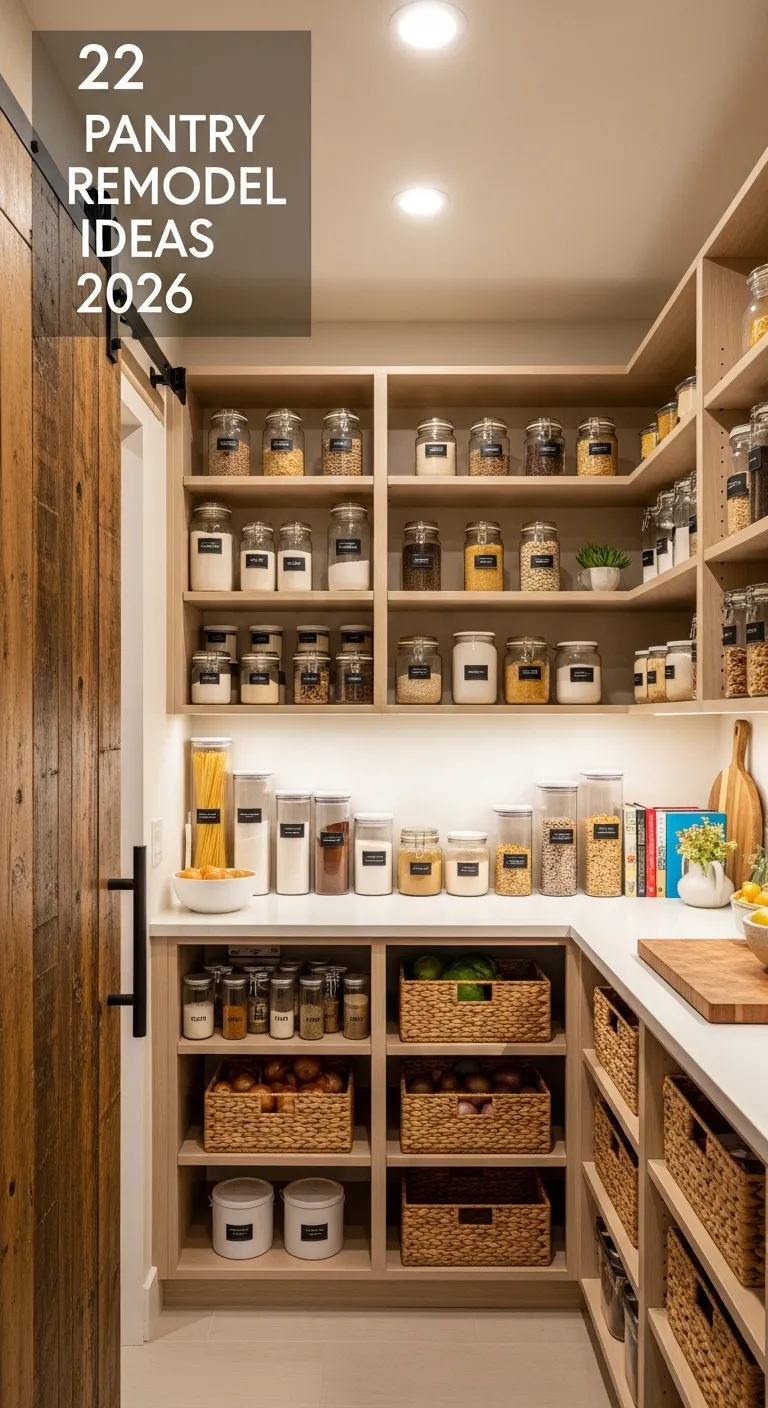
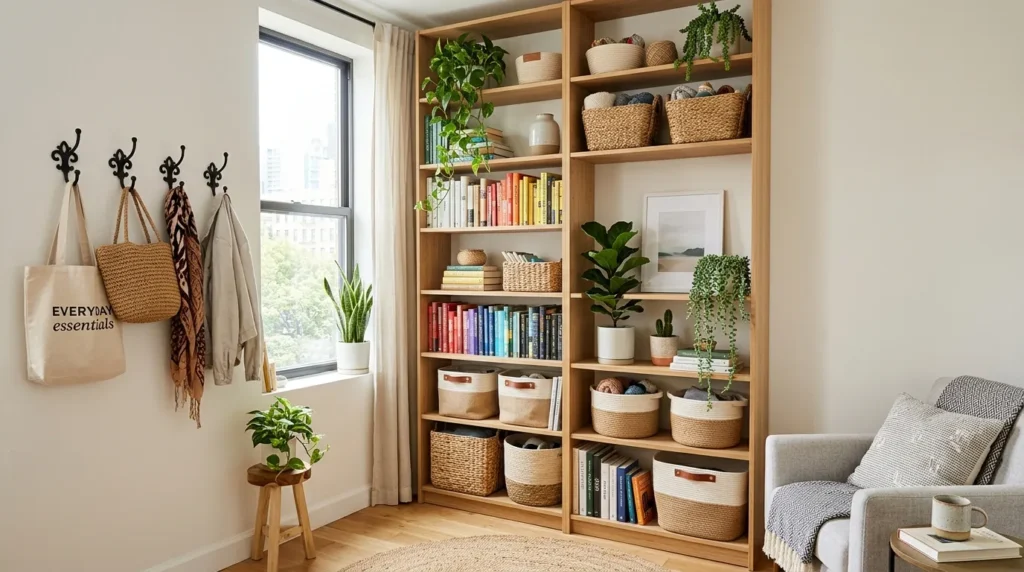
Vertical storage solutions help small spaces remain organized and visually appealing. By maximizing wall height, you keep essential items accessible without crowding floors. I’ve seen apartments with minimal floor area feel dramatically larger when cabinets, hooks, or open shelving were installed vertically. Materials such as metal frames, wood shelves, or acrylic racks provide durability while enhancing style. Vertical storage not only organizes belongings but also adds layered visual interest, creating a cohesive, curated appearance in tight interiors.
Functionally, vertical storage improves usability by storing items in reach while freeing walkways. Hooks for coats or bags, tall shelving for books, or stacked storage boxes optimize compact layouts. Incorporating decorative elements like plants, framed photos, or woven baskets softens vertical arrangements. Layered storage creates the illusion of depth, maintains tidy spaces, and ensures everyday items are easily accessible. It balances aesthetic and practical considerations, making small rooms both cozy and highly functional.
7. Soft Textiles

- Adds tactile warmth and comfort
- Works with throws, pillows, and rugs
- Enhances visual layering in small rooms
- Complements color palettes and decor styles
Incorporating soft textiles is crucial for creating cozy, intimate small spaces. Items like plush rugs, velvet cushions, or knit throws introduce tactile comfort while adding visual layers. I’ve noticed that textiles soften hard surfaces like wood, tile, or metal, making rooms feel welcoming without taking up space. Mixing textures—linen with wool, cotton with faux fur—creates interest and depth, ensuring compact interiors don’t feel sterile. The right textiles complement color palettes, tying together decor elements for a cohesive, inviting environment.
Beyond aesthetics, soft textiles improve usability by designating functional zones and enhancing comfort. A plush rug defines seating areas, while cushions and throws encourage relaxation. Layering these elements creates depth, making small rooms feel thoughtfully styled rather than cramped. Additionally, textiles absorb sound, improve warmth, and provide visual cohesion, turning limited square footage into an inviting, practical, and stylish home space.
8. Compact Seating
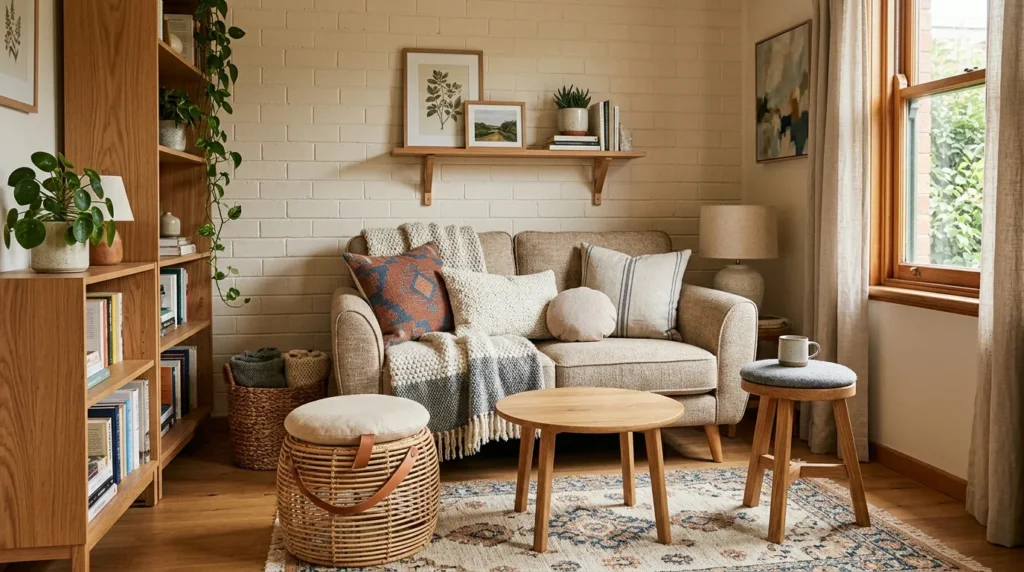
- Supports comfort without overwhelming space
- Works with loveseats, stools, or ottomans
- Flexible arrangements for multi-use rooms
- Adds style while maximizing floor area
Choosing compact seating is a smart solution for small interiors. Smaller sofas, loveseat options, or versatile ottomans offer comfort without dominating the room visually or physically. I’ve seen apartments feel more open and breathable when seating was scaled to the room size rather than oversized. Materials like upholstered wood frames or lightweight metal structures maintain both durability and mobility. Compact seating balances cozy comfort with functional circulation, ensuring every square foot serves a purpose without creating clutter.
From a practical perspective, compact seating supports flexibility. Ottomans double as footrests, storage, or extra seating, while stools can tuck under tables when not in use. Arranging small-scale furniture strategically encourages conversation areas or multi-purpose layouts, making rooms adaptable for work, dining, or lounging. This approach maintains a cozy atmosphere while keeping movement unimpeded, proving that comfort and style can coexist in small spaces.
Image Descriptions for Pinterest ALT Text
- Layered Lighting: Small living room with overhead lights, table lamps, and wall sconces; neutral sofa with textured pillows; warm lighting enhances space depth; wooden furniture and cozy textiles; inviting, airy interior; compact layout with balanced lighting.
- Floating Shelves: Staggered wooden floating shelves on a light-colored wall; small potted plants, books, and decor accents; compact room; uncluttered surfaces; airy and organized; layered visual interest; functional and stylish display.
- Light-Colored Walls: Studio apartment with cream walls; natural light streaming through windows; neutral furniture with soft textiles; bright and spacious feel; small space visually expanded; cozy, airy ambiance.
- Multi-Functional Furniture: Small living area with storage ottoman, sofa bed, and foldable desk; compact layout; light-colored furniture and layered textiles; versatile, organized, and cozy interior; practical design maximizing floor space.
- Mirrors for Depth: Large framed mirror reflecting sunlight in compact living room; neutral furniture with wood accents; layered rugs and textiles; visually expanded, bright, and inviting small space; decorative and functional.
- Vertical Storage Solutions: Tall shelving with books, baskets, and plants; hooks for bags; small apartment corner; light-colored walls; organized and layered; floor space preserved; functional and visually appealing.
- Soft Textiles: Knit throw, velvet pillows, and plush rug in a small studio; neutral sofa; layered textures creating depth; cozy tactile atmosphere; compact room with inviting comfort.
- Compact Seating: Small loveseat and stools arranged in a compact living room; layered textiles, wooden furniture; cozy and functional seating area; space-efficient layout; inviting and visually balanced.