12 Stop Buying Toys — Create a DIY Mud Kitchen for Outdoor Play
Introduction
Tired of constantly buying toys that end up forgotten in corners? Transforming your backyard into a DIY mud kitchen offers endless opportunities for creative, hands-on experiences that are both educational and fun. Outdoor play provides children with tactile, sensory engagement, helping develop motor skills, problem-solving, and imaginative thinking. Mud kitchens encourage experimentation with water, sand, and natural elements while nurturing collaboration and independent play. By designing versatile stations using accessible materials, parents can provide interactive, eco-friendly entertainment that grows with children, turning ordinary outdoor spaces into immersive learning environments.
Beyond saving money on toys, DIY mud kitchens foster curiosity and confidence. Children explore textures, mix materials, and role-play without limits, discovering practical lessons in creativity, cooperation, and patience. Incorporating features like counters, water stations, and sensory tables ensures that outdoor activities remain organized and visually appealing. This approach strengthens the connection between play and learning while encouraging kids to spend time in nature, away from screens. By focusing on multi-functional, safe setups, families can create engaging backyard zones that entertain, educate, and inspire, enhancing overall outdoor play experiences.
1. Rustic Wooden Counter
- Durable surface for mud and water experiments
- Supports multiple children simultaneously
- Natural aesthetic complements garden environment
- Easy to accessorize with hooks and shelves
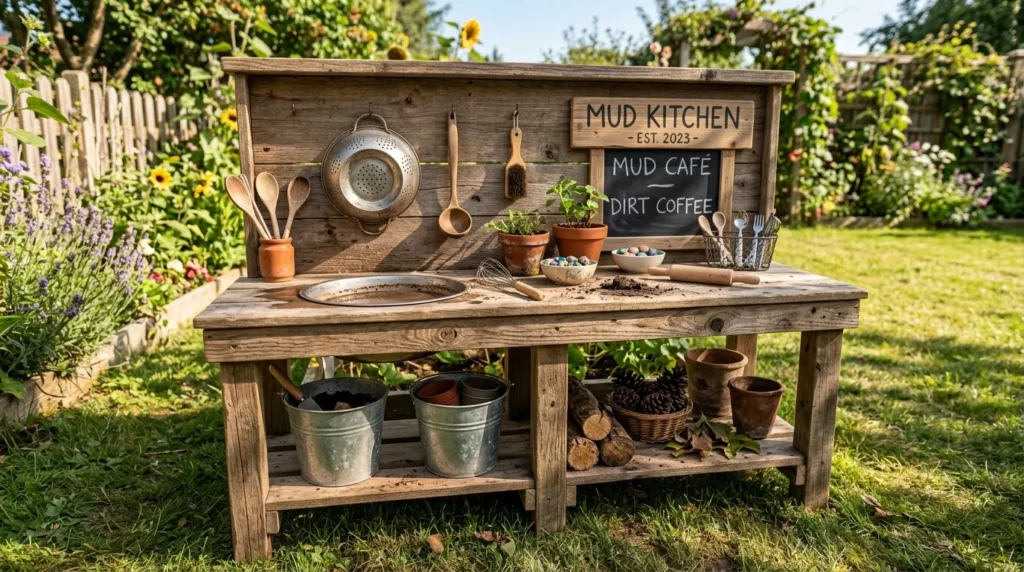
A rustic wooden counter is a foundational element for a DIY mud kitchen. I’ve noticed children naturally gravitate toward tactile materials, and wood offers a warm, durable surface perfect for hands-on activities. Pallets, reclaimed timber, or untreated boards create an eco-friendly structure that blends with outdoor greenery. Adding hooks or small shelves allows for practical storage of tools, containers, and mud cups. Its stable surface encourages safe, independent play while supporting imaginative culinary creations. The rustic counter also acts as a central hub, inviting children to engage in social play while experimenting freely with textures, water, and mud.
Integrating this counter transforms your backyard into a multi-functional sensory area. Children can craft mud pies, mix water experiments, or create pretend dishes, enhancing creativity and hand-eye coordination. The counter height can be tailored to toddlers or older kids, ensuring ergonomic comfort. Over time, natural wear adds charm, making it visually appealing and inviting. Combining the counter with planters, greenery, or small decorative elements reinforces aesthetic cohesion. This simple yet versatile addition provides both functionality and a creative focal point, elevating the backyard into an interactive and educational outdoor play space.
2. Upcycled Sink Station
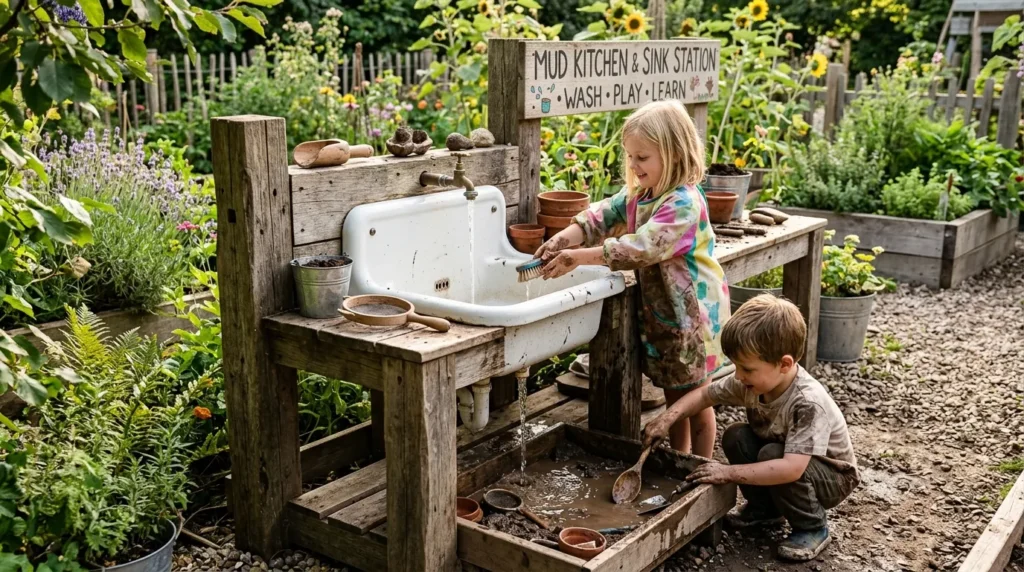
- Repurposes old sinks for interactive water play
- Promotes sensory learning and coordination
- Budget-friendly and eco-conscious
- Can include detachable basins for easy cleaning
Transforming an old sink into a water station adds both fun and functionality. I’ve seen this design work exceptionally well in family backyards because it encourages exploration with liquids while remaining contained. Mounting a ceramic or metal sink on a wooden or sturdy frame provides a realistic kitchen feel. Children can pour, mix, and experiment with mud, sand, or water in a safe and engaging way. Adding detachable basins allows for easy cleanup and flexibility. The sensory stimulation of water flowing, combined with tactile mud experiences, makes the station ideal for multi-sensory play and educational discovery.
This sink station elevates outdoor play into an interactive learning experience. Kids experiment with pouring techniques, measure ingredients, and observe cause-and-effect interactions while fostering creativity. Positioning the station near counters or trays creates a workflow that supports independent or collaborative play. Children learn to manage materials responsibly while having fun, enhancing both motor and problem-solving skills. Additionally, the visual impact of moving water paired with mud activities creates a dynamic backyard focal point. Over time, this element becomes a reliable feature, inspiring repeated engagement and enhancing the overall DIY mud kitchen experience.
3. Potting Table Twist
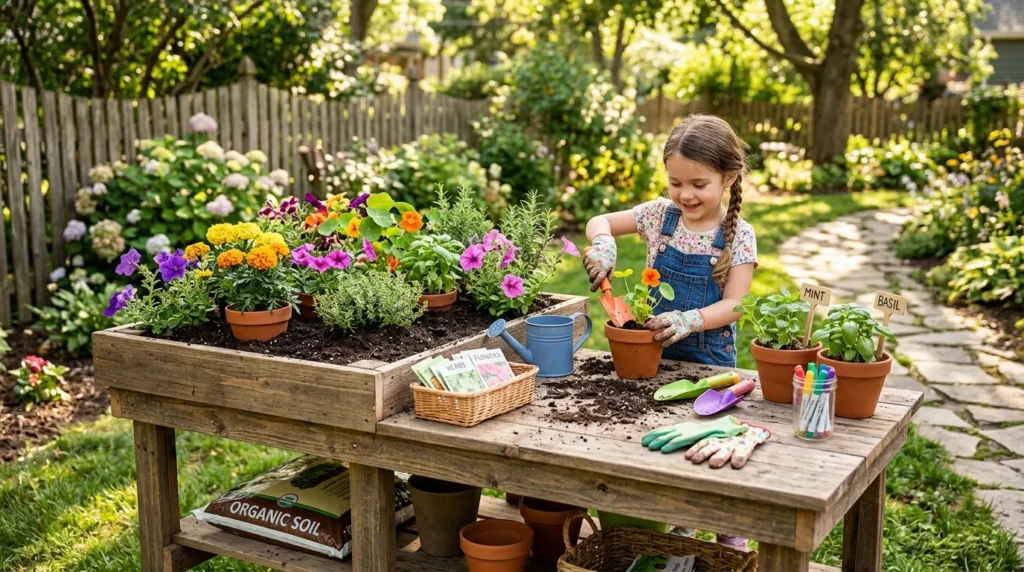
- Combines gardening with imaginative mud play
- Encourages responsibility and observation
- Enhances sensory engagement
- Supports multi-use creativity
Integrating a potting table into a mud kitchen adds a multi-dimensional sensory element. Children can fill pots with soil, create mud recipes, or plant herbs while role-playing culinary activities. I’ve noticed that blending gardening with tactile experimentation improves concentration, curiosity, and imaginative thinking. Using a sturdy wooden table or an elevated planter ensures ergonomic comfort and accessibility for children of varying ages. Herbs and small flowers provide additional scents, textures, and visual interest. This combination encourages experimentation, teaches practical skills, and cultivates a connection with nature, creating a rich environment for both play and learning.
The potting table transforms outdoor areas into a multi-functional play and learning zone. Kids can alternate between creating mud “recipes” and nurturing plants, fostering imagination, responsibility, and observation skills. Storage compartments beneath the table can hold tools, seeds, and mud containers, keeping the area organized. Parents can initially guide planting, but children develop autonomy, problem-solving, and independent experimentation over time. By combining tactile engagement with greenery and visual appeal, the potting table enhances the backyard’s usability, sensory richness, and charm, making it an essential component of a well-rounded DIY mud kitchen.
4. Tiered Shelf Station
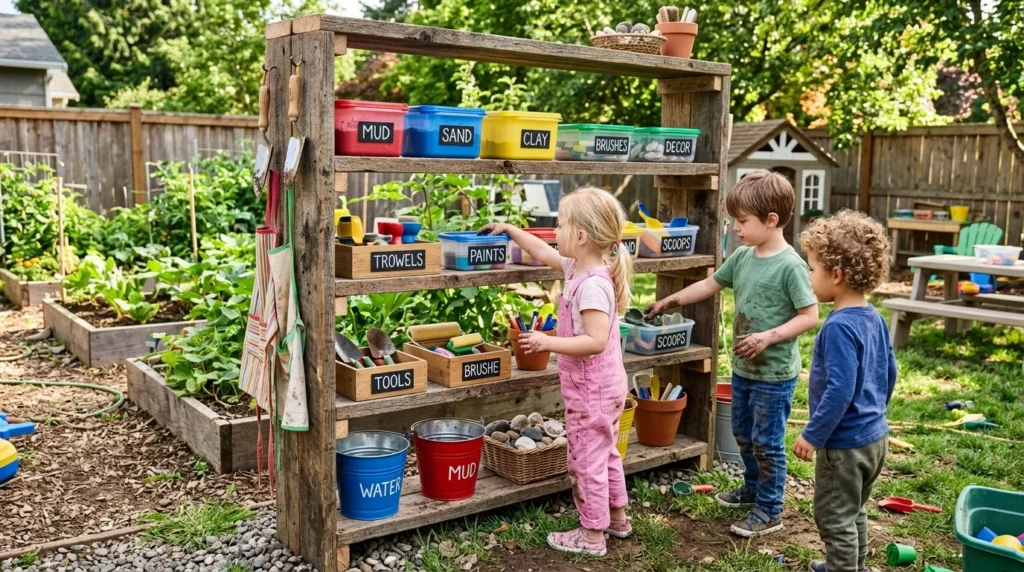
- Maximizes vertical storage for tools and containers
- Supports organized, independent play
- Encourages collaborative group use
- Adds aesthetic structure to the space
A tiered shelf station is both practical and visually appealing. I’ve noticed that children enjoy reaching containers and tools independently, which fosters autonomy and organization skills. Wooden crates, small bookcases, or DIY pallet shelves create a rustic, functional backdrop while optimizing vertical space. Labeling or color-coding shelves helps children identify items and return them to their designated spots. This organization supports multiple users simultaneously, preventing conflicts and encouraging cooperation. The visual structure adds charm and complements other mud kitchen elements, creating a cohesive and inviting backyard environment that invites repeated interaction.
Adding tiered shelving improves the usability and flow of a mud kitchen. Children can experiment freely with containers, mud, and water while keeping materials organized. Decorative touches such as potted plants, painted jars, or natural textures enhance aesthetics. The vertical design allows simultaneous engagement, giving children enough space for independent or group activities. It also provides easy access for parents to supervise without disrupting play. Over time, the shelves promote tidiness, responsibility, and visual appeal, making them an indispensable feature for interactive outdoor play areas.
5. Clay Pizza Oven
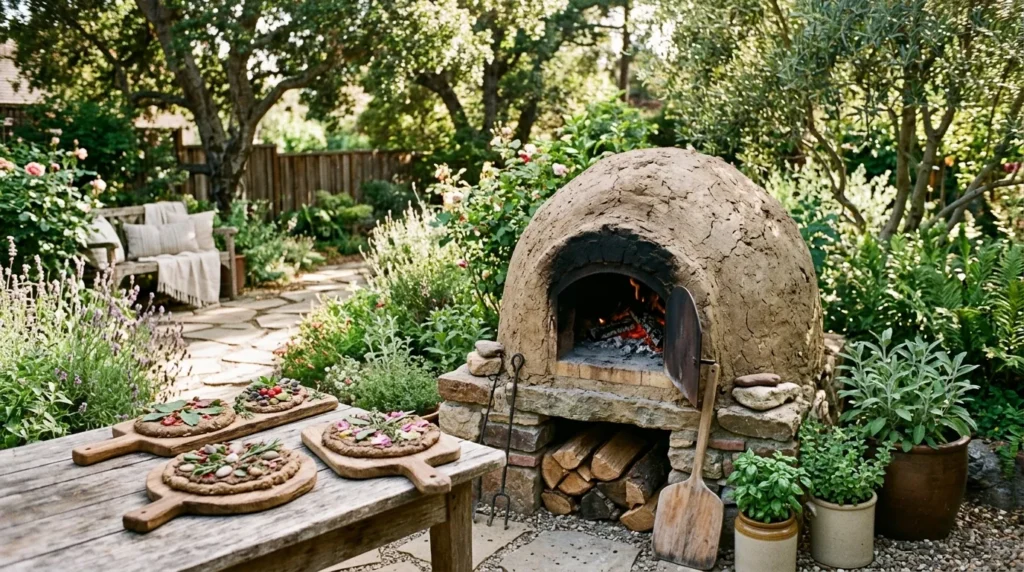
- Introduces imaginative cooking experiences
- Encourages role-play and cooperative interaction
- Supports tactile learning and creativity
- Adds a visually striking centerpiece
A clay or mud pizza oven becomes the centerpiece of a backyard mud kitchen. Children can shape “pizzas” from mud, add leaves or flowers as toppings, and experiment with imaginary cooking. I’ve seen this idea inspire cooperative play, storytelling, and problem-solving, making it highly engaging. Constructed using recycled bricks, clay, or stones, the oven is lightweight, safe, and visually appealing. Its textures and interactive features captivate attention and provide tactile feedback, combining creativity with sensory learning. The oven also serves as a focal point, naturally drawing children into sustained engagement with their DIY kitchen environment.
The pizza oven transforms outdoor play into immersive culinary exploration. Children develop coordination, measurement awareness, and social skills while pretending to cook and serve dishes. It can also double as storage for small utensils or containers, adding practicality. Visually, the earthy tones complement garden spaces and other mud kitchen elements. Over time, children refine their imaginative games, enhancing problem-solving and teamwork skills. This feature adds depth, engagement, and aesthetic appeal, making the backyard mud kitchen a central hub for creativity, learning, and sensory-rich outdoor play.