11 These DIY Mud Kitchen Ideas Will Transform Your Outdoor Play Area
Backyard spaces are more than just grass and fences—they can become immersive, creative zones where children learn, explore, and imagine. DIY mud kitchens are an ideal way to combine outdoor play with hands-on sensory experiences. These setups allow kids to experiment with textures, water, and natural materials while developing motor skills, creativity, and social collaboration. By introducing thoughtfully designed features, families can transform ordinary yards into engaging, multi-functional play environments. Children enjoy independent exploration while parents can feel confident knowing the space is safe, organized, and educational.
In addition, these creative kitchens promote longer outdoor engagement. Kids are naturally drawn to tactile exploration, mixing mud, water, and sand in playful recipes. A well-structured layout encourages independence, collaboration, and imaginative role-play. Over time, children learn problem-solving, planning, and responsibility while interacting with their environment. By incorporating accessible materials, sensory elements, and functional design, families can maximize usability, safety, and visual appeal. These DIY ideas bridge learning, creativity, and entertainment, offering enriching experiences that make outdoor play irresistible.
1. Rustic Wooden Counter
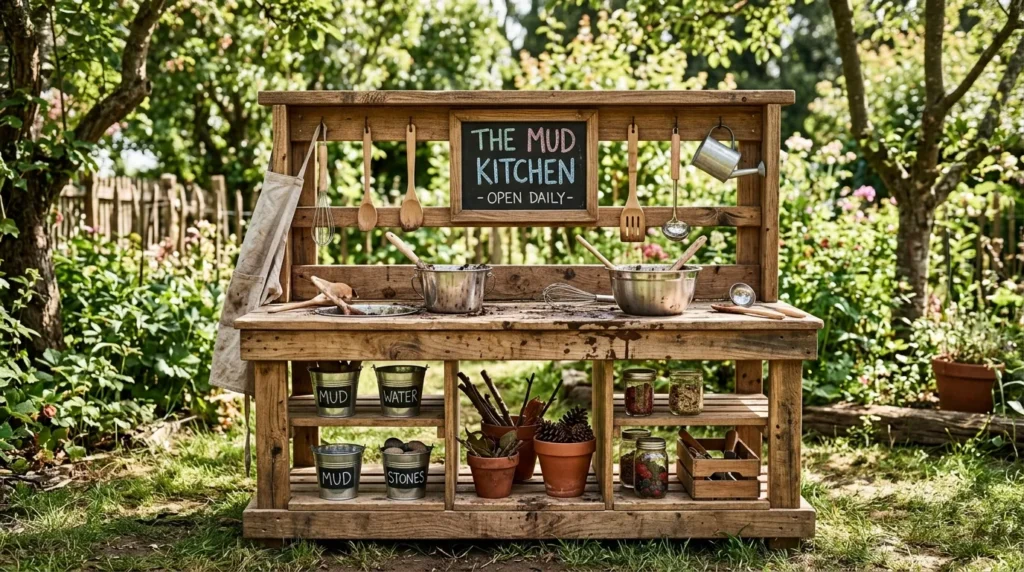
- Provides a stable, durable work surface for children
- Encourages imaginative cooking and role-playing
- Adds a natural, visually appealing aesthetic
- Supports multiple users simultaneously
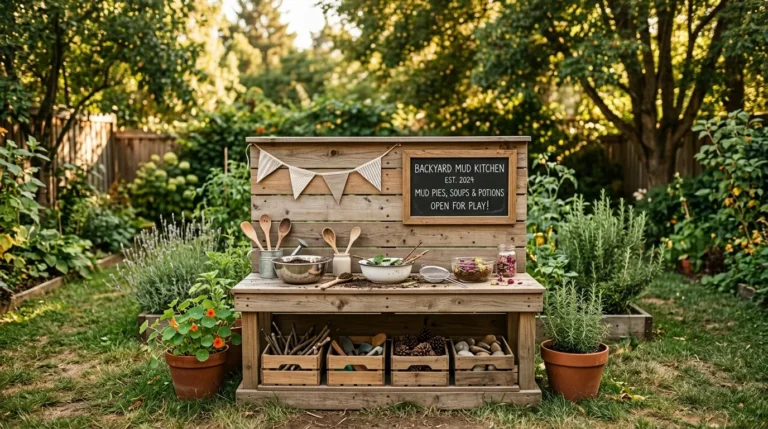
A rustic wooden counter instantly enhances the outdoor play environment. Using untreated timber, pallets, or reclaimed wood creates a tactile and eco-friendly surface that children respond to intuitively. I’ve noticed kids engage more deeply when interacting with natural textures, and the solid counter height encourages comfortable play. Adding hooks or small shelves underneath provides storage for buckets, spoons, and containers, keeping materials organized. This setup allows kids to work independently or collaboratively, inspiring creativity while maintaining functionality. The rustic design also blends naturally with outdoor greenery and other backyard elements.
Transforming a backyard with this counter creates a central hub for hands-on exploration. Children can experiment with mud pies, water mixing, or imaginative recipes while standing comfortably. Over time, the wood develops character, enhancing visual appeal. Pairing the counter with greenery or small decorative elements adds charm and cohesion to the space. It ensures the mud kitchen becomes a practical and engaging focal point, encouraging frequent use. With proper design, the counter remains functional, safe, and inspiring, making it an essential feature for extended outdoor play experiences.
2. Upcycled Sink Station
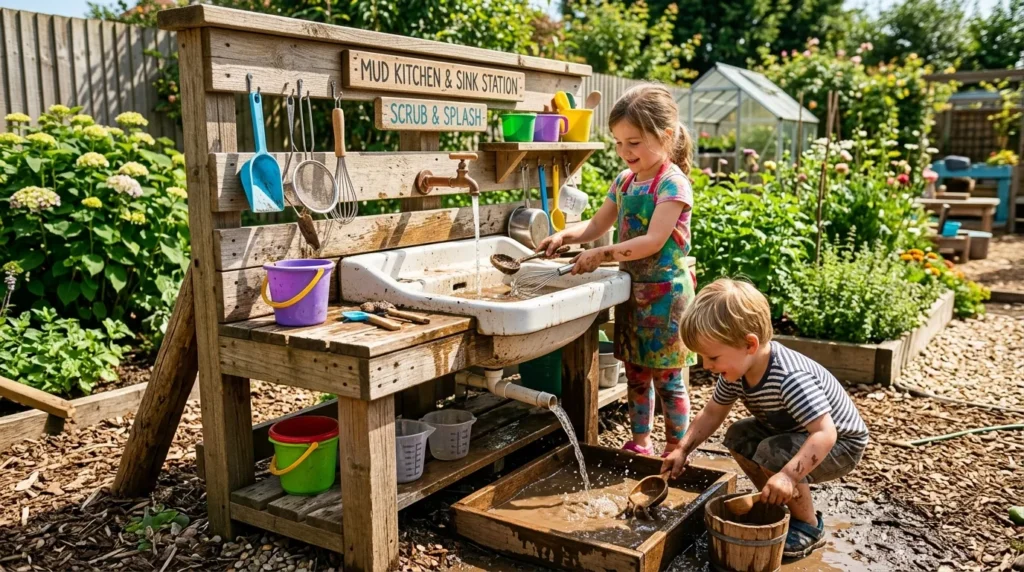
- Repurposes old sinks or basins for water play
- Supports independent, sensory-focused activities
- Eco-friendly, cost-effective, and visually appealing
- Enhances hands-on experimentation with liquids
Repurposing a sink or basin is a practical way to introduce water play into a mud kitchen. I’ve seen this approach keep children engaged for long periods as they pour, mix, and experiment. A wooden frame or sturdy table supports the basin, creating a realistic kitchen feel. Children can explore water flow, create pretend recipes, and practice coordination while enjoying the tactile sensation of liquids. This setup offers sensory stimulation while allowing for structured, safe interaction with water, making it an ideal addition for smaller backyards or compact outdoor spaces.
The sink station transforms ordinary play into an interactive learning experience. Children learn cause-and-effect as they pour, mix, and manipulate water in creative ways. Adding buckets or small taps encourages independent play, while a nearby tray or shelf keeps utensils organized. This setup also promotes cooperative group activity as children share resources and experiment with water features. By integrating functionality and play, the station enhances both sensory and imaginative experiences. Its compact, eco-friendly design ensures long-lasting usability, creating a dynamic and educational feature in the backyard mud kitchen.
3. Potting Table Twist
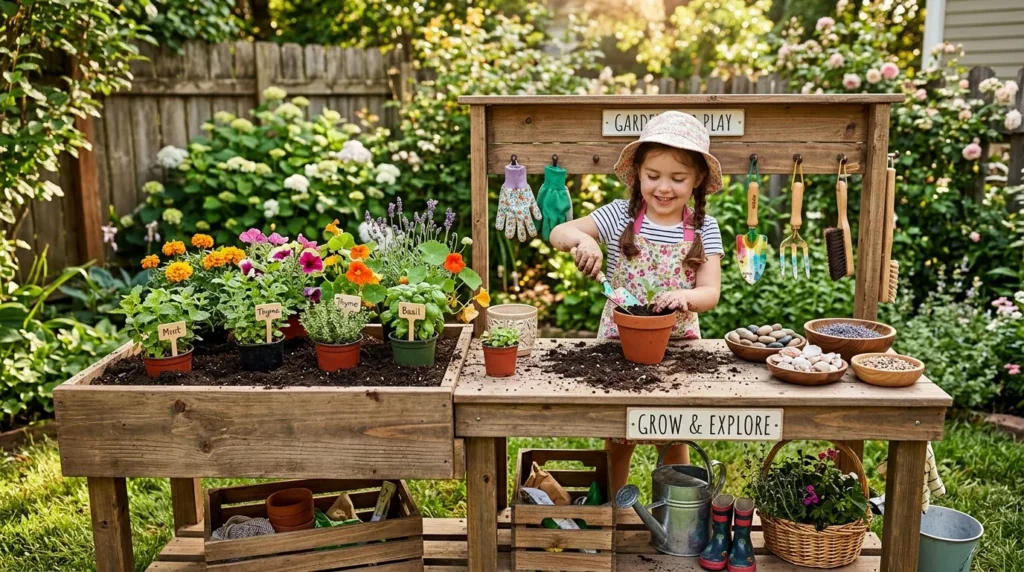
- Combines gardening with creative mud play
- Encourages responsibility through plant care
- Enhances sensory and observational skills
- Supports multi-sensory engagement with herbs or flowers
A potting table adds versatility to any outdoor play space. Children can plant seeds, mix soil, and incorporate mud into imaginative recipes. I’ve noticed that combining gardening with tactile play enhances focus, patience, and creativity. Using a sturdy wooden table or elevated planter allows for ergonomic access for younger children. Herbs and flowers add fragrance and visual appeal, engaging multiple senses simultaneously. The combination of planting and mud experimentation promotes curiosity while teaching practical skills, such as measuring, pouring, and caring for living plants in a playful setting.
Integrating a potting table transforms backyard activities into multi-dimensional learning experiences. Kids can switch between mud-based recipes and nurturing seedlings, fostering creativity and responsibility. The elevated design helps maintain order, preventing mess while keeping materials accessible. Parents can guide planting initially, but children develop independent problem-solving and observational skills over time. Adding small tools and containers enhances usability, ensuring that both planting and mud play remain interactive and organized. Overall, the potting table enriches outdoor play while making the space visually appealing and educational.
4. Tiered Shelf Station
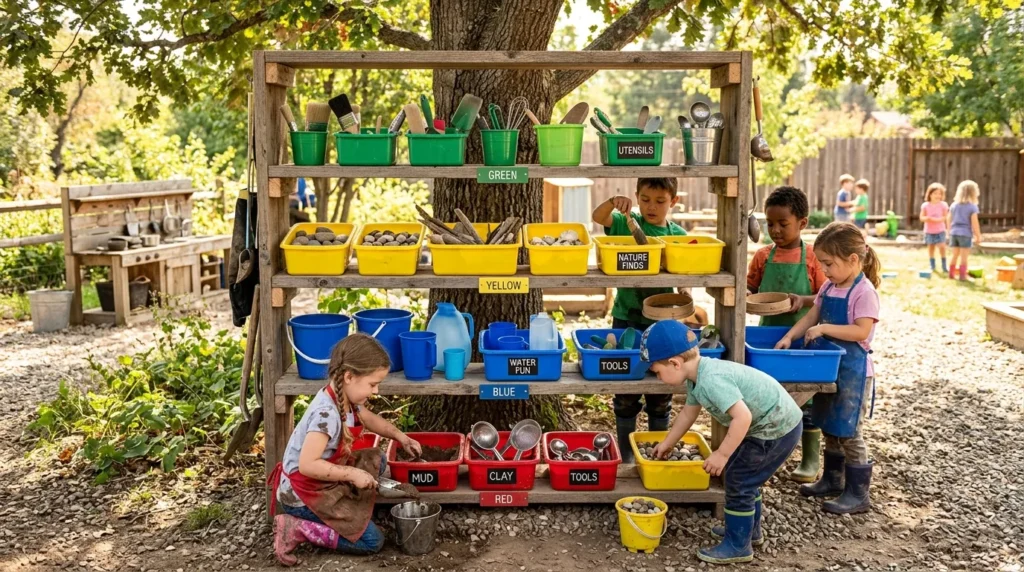
- Provides organized storage for tools, containers, and ingredients
- Supports easy access for multiple children
- Adds visual interest and structure to the mud kitchen
- Encourages tidiness and independent use
Tiered shelves create functional and aesthetic value in a mud kitchen. I’ve noticed children enjoy being able to reach utensils and containers without asking for assistance, which promotes autonomy. Using wooden crates, small bookcases, or DIY pallet shelves adds rustic charm while maximizing vertical space. Labeling or color-coding storage encourages early organizational skills. By separating play materials into designated sections, multiple children can interact simultaneously without conflicts. This setup enhances usability, encourages cooperation, and provides a visually structured backdrop that integrates well with other mud kitchen features.
The shelf station transforms both organization and workflow in outdoor play areas. Children can experiment with different tools and containers, accessing materials independently and learning to return them after use. Adding small decorative elements like potted plants or colorful jars enhances aesthetics while keeping functional access intact. Multiple tiers allow simultaneous engagement, increasing play efficiency and interaction. By combining vertical storage with child-friendly design, the shelves become a practical and visually appealing feature that improves usability, encourages responsibility, and enhances the overall backyard experience.
5. Clay Pizza Oven
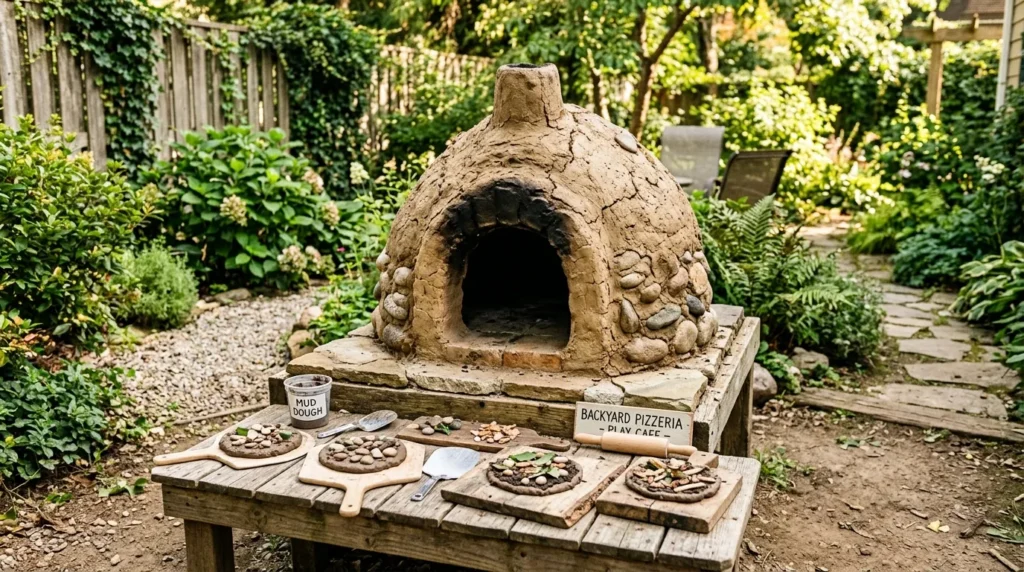
- Creates an imaginative cooking element for children
- Encourages role-play, cooperation, and creativity
- Supports sensory and tactile learning
- Serves as a visually striking backyard feature
A clay or mud-based pizza oven becomes the centerpiece of a mud kitchen. Children enjoy shaping “pizzas” from mud, adding leaves or flowers as toppings, and experimenting with imaginative cooking. I’ve seen this work well in many homes because it fosters collaboration, storytelling, and problem-solving. A lightweight design using recycled clay, bricks, or stones makes it easy to construct. The oven provides a realistic culinary element while remaining safe for children, combining sensory play with creative design. Its tactile textures and interactive features capture attention and inspire repeated engagement.
The pizza oven transforms backyard play into an immersive culinary experience. Kids gain confidence through pretend cooking and collaborative activities, exploring textures, shapes, and construction principles. The visual appeal enhances outdoor aesthetics, making the mud kitchen a playful focal point. The oven can also function as storage for small tools or ingredients, adding practical value. Over time, this element encourages imaginative play, problem-solving, and independent experimentation while creating a dynamic and engaging outdoor zone that integrates seamlessly with other DIY mud kitchen features.