13 Your Kids Will Love This DIY Mud Kitchen Outdoor Play Setup
4. Introduction
A backyard mud kitchen is a game-changer for children’s imaginative play. It combines sensory exploration, creativity, and hands-on learning into one engaging space. Setting up a DIY mud kitchen doesn’t need to be complicated or expensive—many ideas can be completed in a single day using recycled or simple materials. These spaces provide children with opportunities to explore textures, experiment with water and soil, and practice cooperative skills with siblings or friends. In this guide, you’ll find practical, visually appealing, and easy-to-follow setups that transform a corner of your yard into a dynamic, interactive, and educational outdoor play area for kids.
1. Wooden Pallet Base
- Repurposes old pallets for a strong, rustic base
- Provides natural textures for tactile exploration
- Easy to add shelves, hooks, or trays
- Cost-effective and eco-friendly solution
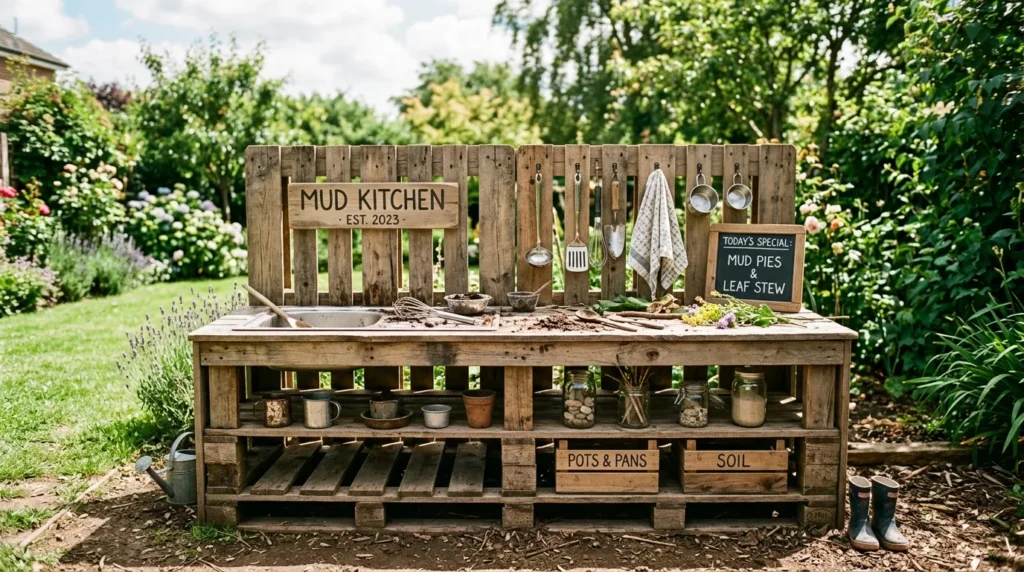
Starting with a wooden pallet base creates a sturdy and visually appealing foundation for your DIY mud kitchen. Pallets are widely available, durable, and provide a natural texture that children enjoy touching and manipulating. The slatted design also allows water to drain safely, reducing mess during active play. By sanding the edges and treating the wood with non-toxic sealant, you ensure safety without compromising aesthetics. This approach not only saves money but also introduces kids to eco-conscious design principles, making the setup both functional and environmentally friendly.
Once established, the pallet base can be customized to include shelving for bowls, baskets, or utensils. Hooks can hold small scoops or ladles for easy access, encouraging organization. The structure allows multiple children to play simultaneously, promoting cooperative and imaginative activities. Its modular nature means you can expand or rearrange the setup as needed. The combination of durability, tactile appeal, and practical design transforms an ordinary backyard corner into a lively, interactive play zone, perfect for sensory engagement and creative outdoor learning.
2. Portable Mixing Bowls
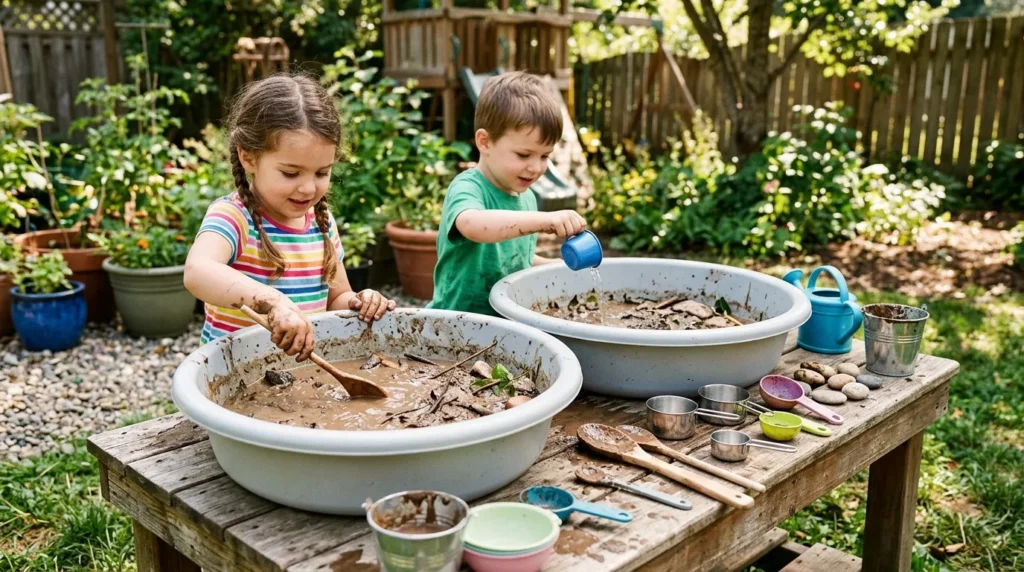
- Uses shallow bowls or basins for contained mud and water play
- Easy to move, clean, and store when not in use
- Accommodates multiple children at once
- Encourages tactile exploration and sensory learning
Portable mixing bowls offer a flexible way to manage outdoor messy play. Wide, shallow containers allow children to experiment with soil, water, and leaves safely, providing hands-on sensory experiences. These bowls can be made of plastic, metal, or recycled materials depending on durability and budget. The portability makes setup and cleanup quick and simple, ensuring parents are not overwhelmed by mess. In my experience, children are drawn to contained areas where they can mix and stir without spilling everything, which promotes longer, more engaged play sessions and encourages creativity.
These bowls can be placed on tabletops, benches, or directly on the ground with a waterproof tray underneath. Children can pour, scoop, and stir materials, experimenting with textures and creating imaginative “recipes.” By adding utensils, sieves, and small containers, you can increase the complexity of play and enhance fine motor skills. This simple yet effective setup transforms ordinary backyard space into a functional and engaging mud kitchen. It encourages experimentation, problem-solving, and social interaction among kids while keeping mess manageable for parents.
3. Upcycled Furniture Counter
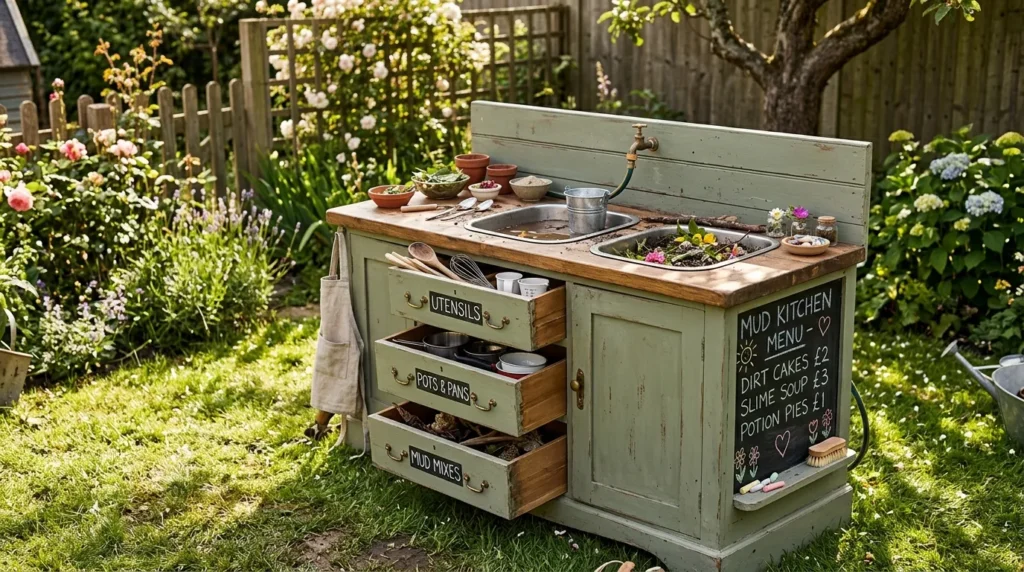
- Converts old cabinets, dressers, or tables into functional kitchens
- Drawers or shelves hold tools and sensory materials
- Paint or chalkboard panels enhance visual appeal
- Creates a realistic, kid-friendly kitchen environment
Transforming old furniture into a mud kitchen counter is a creative and practical solution. Cabinets or dressers offer sturdy surfaces for mixing and provide storage for bowls, utensils, and natural materials. Painting with weather-resistant or chalkboard paint can add personalization and functional signage for menus or recipes. I’ve noticed that children feel more engaged when their play area resembles a real kitchen, boosting imaginative play and role-playing scenarios. Upcycling reduces waste and provides an eco-friendly approach while adding charm to the backyard setup.
Furniture counters can be modified with hooks, baskets, or trays to further organize materials and utensils. Kids can “prepare meals,” sort ingredients, and return tools independently, which fosters responsibility and collaboration. The furniture adapts to different themes, whether cooking with mud, creating potions, or mixing natural elements. This approach provides a visually appealing focal point in your outdoor space and ensures functional, hands-on play. By combining practicality with aesthetic appeal, an upcycled furniture kitchen delivers an accessible and versatile DIY solution for creative outdoor play.
4. Tiered Crate Shelves
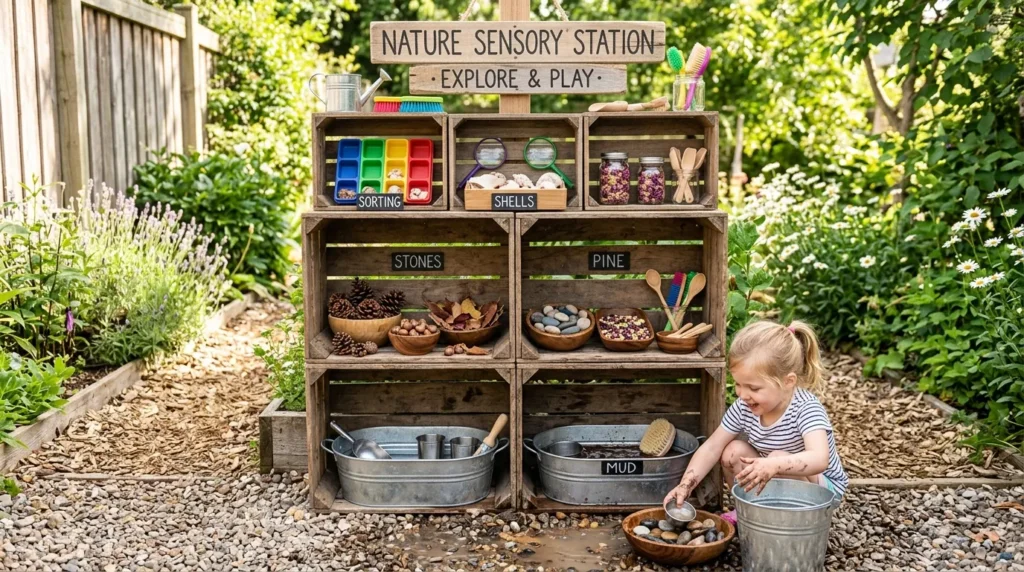
- Maximizes vertical space for tools, bowls, and containers
- Promotes organization and sorting skills
- Easy to rearrange or expand for growing play needs
- Adds depth and dimension to the backyard setup
Tiered crate shelving is a clever solution for compact outdoor areas. Stacking wooden or plastic crates creates multiple levels for storing utensils, bowls, and mud ingredients. The vertical layout encourages organization while keeping items accessible for children. I’ve seen this setup work well for multiple children playing at once, as each shelf can serve a specific purpose. Lightweight crates allow for repositioning, making the mud kitchen adaptable to various activities and yard layouts. This design is cost-effective, visually appealing, and functional, enhancing both usability and the overall aesthetic of your backyard.
In practice, each tier can be designated for different materials—mud, water, leaves, or small natural tools—helping children develop sorting and organizational skills. The layered design adds depth and interest to the setup, making it Pinterest-ready and visually attractive. Children enjoy accessing different levels, which adds variety to play experiences. Parents benefit from a tidy, modular system that is easy to maintain. Overall, tiered shelving increases storage capacity while providing an engaging and interactive environment that supports creativity and cooperative play.
5. Hanging Utensil Rod
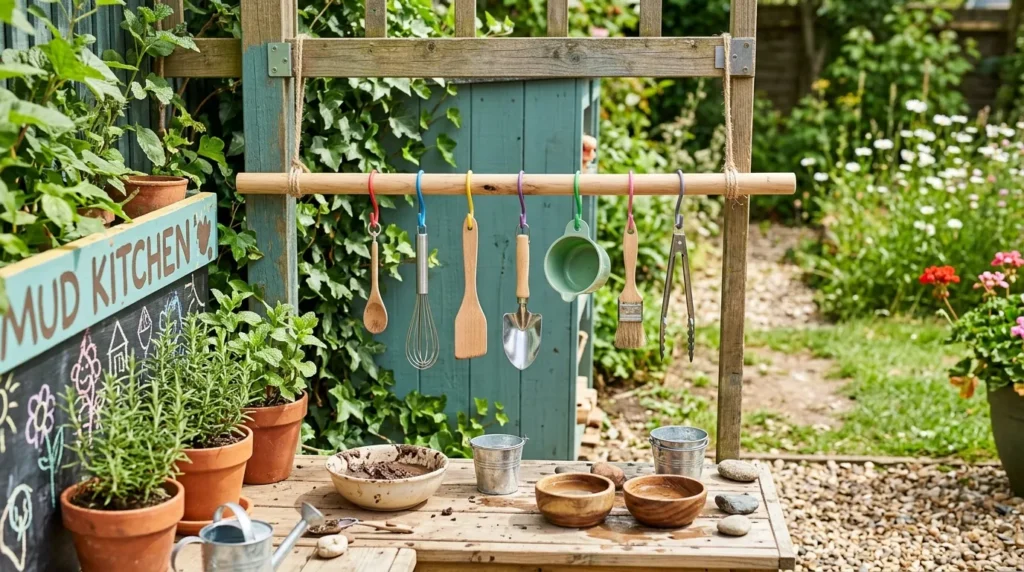
- Hooks spoons, scoops, and small pots for accessibility
- Keeps counters clear and organized
- Encourages children to take responsibility for tools
- Adds vertical visual interest to the play area
A hanging utensil rod instantly improves organization and accessibility in a mud kitchen. Installing a wooden dowel or metal rod above a counter provides a designated spot for small tools, making them easy for children to grab and return. I’ve noticed that kids are more engaged and play longer when utensils are within easy reach, which encourages independent and creative play. Using S-hooks or small clips allows flexibility for different sizes of spoons, ladles, and small containers, enhancing the functionality and visual appeal of the setup.
This feature transforms the workspace into a functional mini-kitchen where counters remain clear for mixing and playing. Children can sort utensils by size or type, learning organizational skills while enhancing fine motor development. The vertical element adds a visually appealing design detail that makes the setup feel structured yet playful. Hooks or baskets can hold extra items, ensuring everything has a place. Overall, a hanging rod enhances accessibility, usability, and aesthetics, creating a polished, interactive, and engaging backyard mud kitchen.