12 DIY Mud Kitchen Outdoor Play Ideas for Creative Backyard Fun

Introduction
Extending the backyard mud kitchen ideas further, these setups focus on multi-sensory experiences, creative experimentation, and collaborative play. Outdoor environments allow children to explore textures, liquids, and natural materials while building coordination and problem-solving skills. Thoughtful designs can combine imaginative cooking, gardening, and crafting elements to keep kids engaged for longer periods. Each idea is designed to maximize functionality while inspiring creativity, all using accessible materials for U.S. families. By incorporating practical layouts and visual appeal, children enjoy both the process and the outcome of their hands-on experiments.
Additionally, well-planned mud kitchens enhance the overall aesthetics of a backyard. Children naturally interact with their environment, learning spatial awareness, teamwork, and organization. Providing dedicated spaces for each type of activity ensures that multiple children can play simultaneously without conflicts. By merging imaginative cooking, water features, planting zones, and sensory elements, these setups encourage children to experiment safely while cultivating curiosity. Over time, these creative environments foster independence and confidence, transforming ordinary outdoor spaces into dynamic, educational playgrounds where kids can explore freely.
6. Herb Garden Counter
- Integrates edible plants into creative play
- Provides sensory stimulation through smell and texture
- Encourages responsibility and plant care
- Adds aesthetic greenery and natural textures
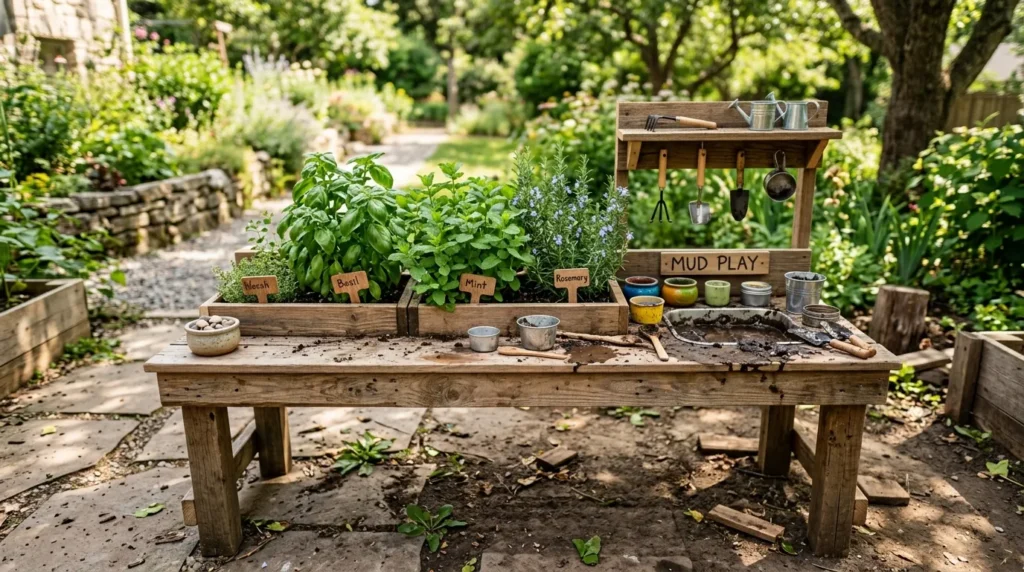
Introducing an herb garden counter enhances both function and visual appeal in a mud kitchen. Kids can plant, water, and harvest herbs while engaging in pretend cooking or mud recipes. I’ve noticed that aromatic plants such as basil, mint, or rosemary greatly enhance sensory engagement, making the setup more immersive. Wooden counters with integrated planting boxes create a stable, versatile surface for mud experiments and real-life gardening. By combining tactile exploration with natural scents, children develop a richer understanding of their environment while enjoying hours of interactive, outdoor play.
This feature transforms backyard mud kitchens into multi-sensory experiences. Children learn basic plant care, observe growth over time, and experiment with textures and scents in combination with their imaginative cooking projects. The elevated planter also keeps soil separate from mud activities, preventing cross-contamination while maintaining accessibility. Parents can encourage responsibility through watering schedules and creative arrangements, turning playtime into both a learning and visually appealing activity. Over time, the herb counter becomes a living, evolving feature that supports long-term engagement and outdoor experimentation.
7. Water Wheel Feature
- Adds movement and visual fascination
- Introduces principles of physics and flow
- Promotes sensory exploration with water
- Interactive feature encourages group play
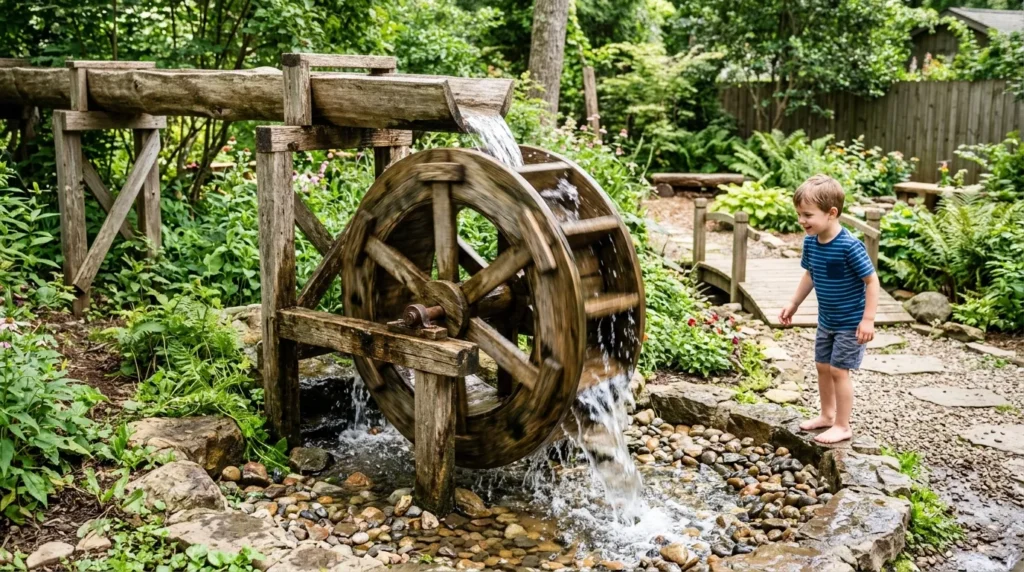
A water wheel is an exciting addition to any mud kitchen. Children love watching water move objects, turn the wheel, and create dynamic effects. I’ve seen this idea capture attention for hours in backyard setups. A simple DIY design using recycled bottles or small wooden paddles can introduce basic concepts of motion, gravity, and water flow. Positioning it near a sink station or mud tray ensures a continuous water source. Its kinetic element naturally encourages observation, experimentation, and hands-on learning while keeping play both fun and educational.
The water wheel transforms an ordinary water play zone into an engaging, dynamic feature. Children can experiment with flow rates, direction, and even objects to carry across the wheel. It promotes teamwork as multiple kids adjust paddles, pour water, and observe movement. Over time, this element becomes a sensory anchor, drawing children back for repeated engagement. The visual appeal of moving water and spinning components enhances the backyard’s aesthetics while encouraging independent experimentation, problem-solving, and imaginative play.
8. Mud Pie Table
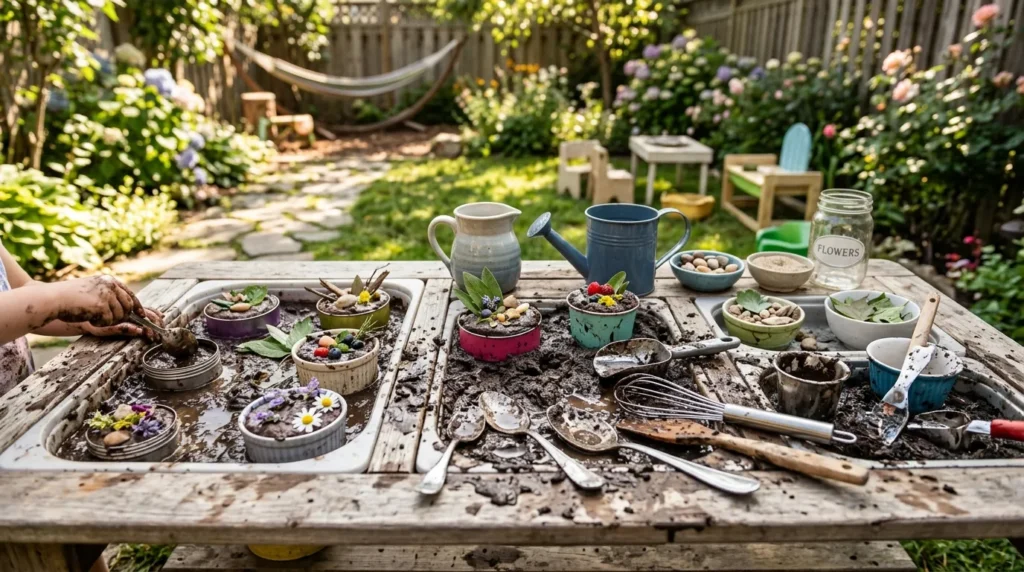
- Dedicated surface for creative mixing
- Encourages tactile play and culinary imagination
- Easy to clean with removable trays or liners
- Supports collaborative group activities
Creating a dedicated mud pie table allows children to focus on tactile and creative play. I’ve noticed that children thrive when they have a stable surface for mixing mud, sand, and water into imaginative creations. Tables can be constructed from pallets or wooden boards with shallow trays, making it easy to contain materials and maintain cleanliness. The tactile experience supports sensory development, hand-eye coordination, and fine motor skills. Providing cups, spoons, and small containers further encourages experimentation, recipe invention, and imaginative role-playing while offering a practical, organized workspace.
This setup transforms backyard spaces into interactive, multi-user zones. Kids can experiment freely without disrupting other stations, creating a balance between freedom and organization. Removable trays simplify cleanup, and shallow edges prevent spills. The visual presentation of mud pies and layered textures adds charm and a sense of accomplishment. Over time, children learn to manage materials, share space, and combine creativity with practical organization, making the mud pie table a key feature for extended outdoor engagement and playful learning.
9. Mini Greenhouse Station

- Introduces plant growth experiments
- Combines sensory play with science learning
- Protects seedlings while maintaining interactive space
- Visual appeal with clear panels and natural lighting
A mini greenhouse is a clever addition to backyard mud kitchens, blending hands-on gardening with observation and experimentation. Children can plant seeds, watch germination, and care for plants while using nearby mud or water features to enhance play. Clear plastic or acrylic panels allow light to enter, while wooden or PVC frames provide stability. In my experience, this setup encourages curiosity about biology, plant lifecycles, and environmental conditions. Its interactive design ensures children can participate without disrupting other zones while adding an aesthetically pleasing focal point to the backyard.
This feature transforms garden play into an educational, multi-sensory experience. Kids can monitor growth, compare soil textures, and adjust watering, combining science with creativity. The enclosed structure protects delicate seedlings while remaining accessible for observation. Integrating the greenhouse with nearby counters or trays enhances usability, creating a seamless workflow between planting, mud experiments, and water play. Over time, children develop a sense of ownership, learning patience and care while engaging in meaningful outdoor activities.
10. Hanging Utensil Rack
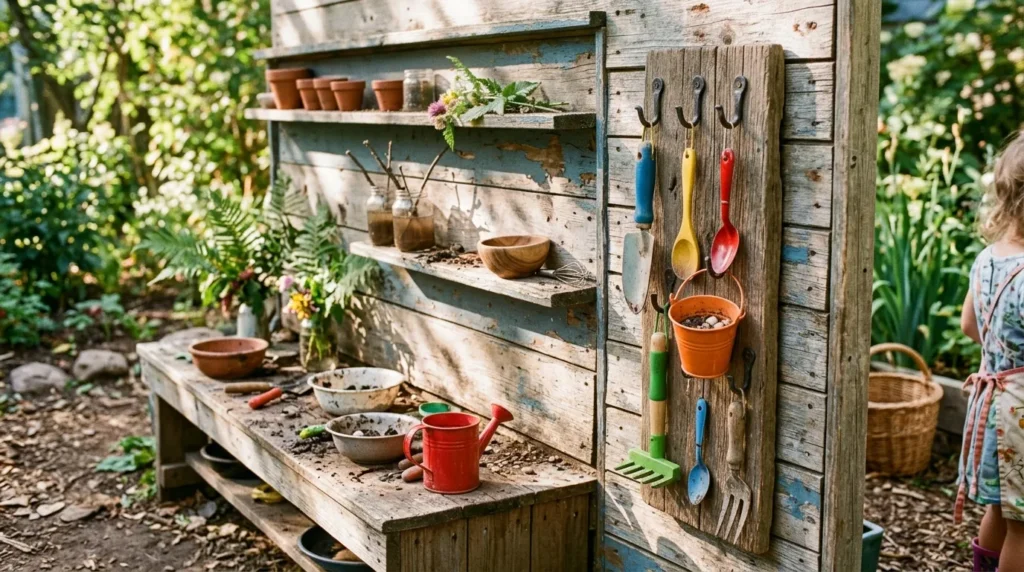
- Keeps tools organized and accessible
- Encourages independent play and clean habits
- Adds vertical visual interest to the mud kitchen
- Supports multiple children using the space simultaneously
A hanging utensil rack is a simple yet transformative addition to backyard mud kitchens. I’ve seen this setup reduce clutter, making spoons, trowels, and containers easy for children to grab and return. Materials can include hooks, pegs, or small rods mounted above counters or trays. This vertical storage optimizes space, adds visual appeal, and allows children to access tools independently, fostering responsibility and organization. It also supports multiple users simultaneously, preventing conflicts over materials and improving workflow during play sessions.
This addition changes the usability and visual impact of outdoor play areas. Children learn to manage their tools, hang items after use, and maintain a tidy space without direct supervision. The rack can be customized with colorful labels or painted pegs to enhance visual clarity and aesthetic charm. By keeping tools visible and accessible, children remain engaged longer, combining organization with play. Overall, this feature supports collaborative, structured, and creative activities while maintaining a visually attractive, functional backyard mud kitchen.
11. Sandbox Integration
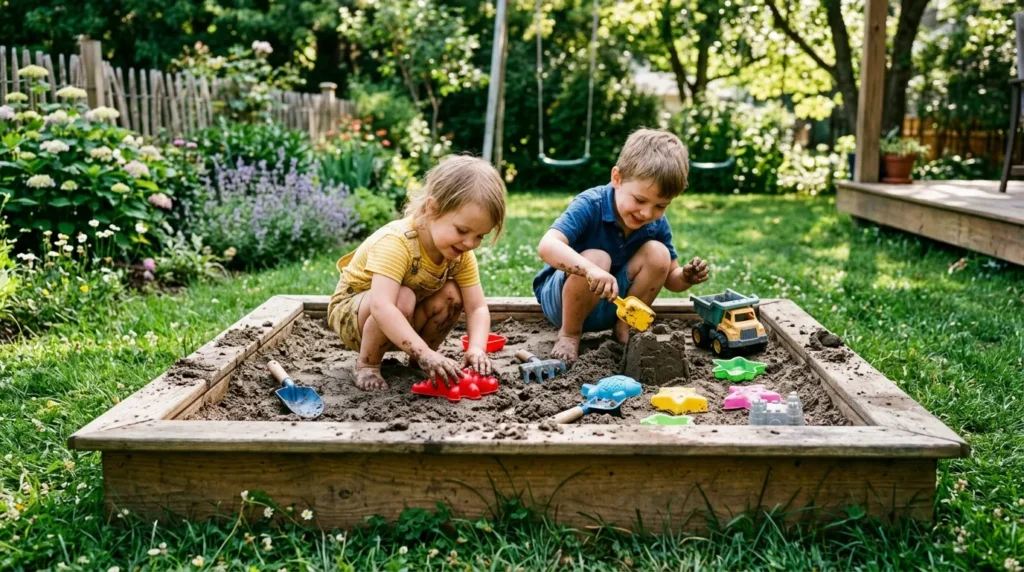
- Combines sand and mud for versatile textures
- Enhances sensory exploration and tactile learning
- Encourages construction, shaping, and experimentation
- Provides a multi-use creative play zone
Integrating a sandbox into a mud kitchen introduces a variety of textures and play possibilities. Children can experiment with wet and dry materials, building structures, mud pies, or sandcastles. I’ve noticed that alternating between sand and mud fosters fine motor skills, creativity, and problem-solving abilities. A raised sandbox with drainage or removable liners helps maintain cleanliness while providing a dedicated sensory area. Combining both materials allows children to explore moisture control, texture differences, and imaginative construction techniques, enhancing learning and engagement during outdoor play.
This feature transforms an ordinary sandpit into a multi-functional sensory station. Kids can combine mud and sand in recipes, build structures, or engage in collaborative projects. The tactile variety supports experimentation with form, density, and construction techniques. Parents can supervise from a distance, knowing the setup contains materials and remains manageable. Aesthetically, sand and mud combinations add visual appeal, natural color contrasts, and depth to backyard play areas. This integration ensures long-term engagement and encourages exploration, creativity, and cooperative play.
12. Decorative Roof Canopy
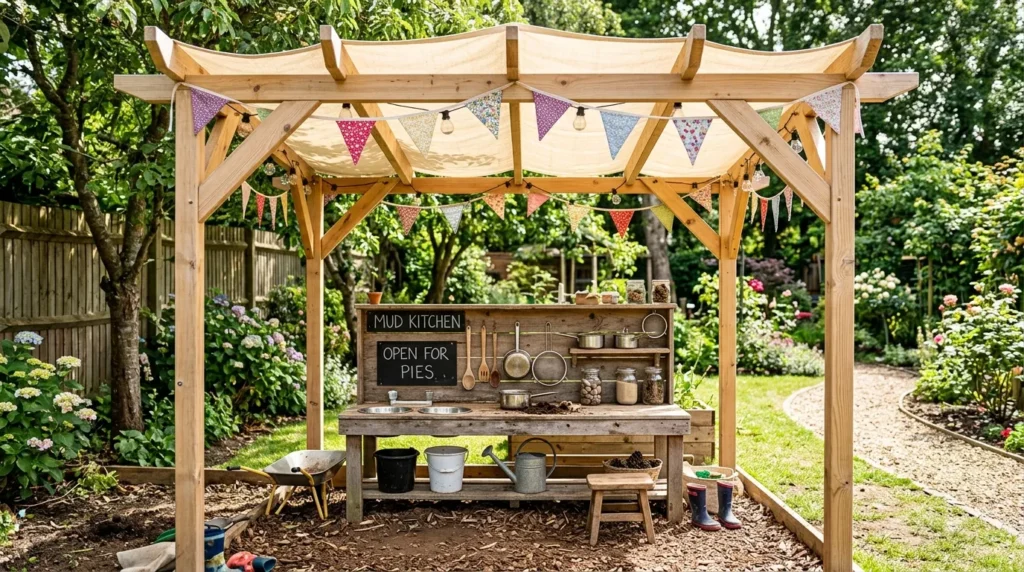
- Provides shade and visual cohesion
- Protects play area from sun and rain
- Adds charm and playful aesthetic
- Encourages longer outdoor play sessions
Adding a decorative roof canopy enhances comfort, usability, and visual impact. I’ve seen families use fabric, bamboo, or lightweight wooden frames to create shaded areas that protect children from harsh sunlight while maintaining an open, airy feel. This addition allows extended outdoor play without exposure risks and visually anchors the mud kitchen as a distinct backyard zone. By combining functional protection with decorative elements, the canopy creates a visually appealing, inviting space that encourages children to engage more consistently with their creative activities.
This feature transforms backyard setups into all-weather play zones. Children remain comfortable and safe, which encourages longer and more frequent outdoor engagement. Canopies can be adorned with colorful fabrics, bunting, or lightweight decorations, enhancing charm and creating a playful focal point. It also visually separates the mud kitchen from other backyard elements, establishing it as a designated creative zone. Over time, children develop a routine around this space, enjoying extended sensory and imaginative play under protective, attractive coverage.