How to Reverse a Bathroom Door Swing to Open Outward
Reversing a bathroom door swing to open outward is a common renovation project for homeowners looking to maximize floor space or improve accessibility in tight quarters. By changing an inswing door to an outswing configuration, you can eliminate the dead space behind the door, allowing for a larger vanity or a more functional layout.
While the process requires precision with tools like a wood chisel and a power drill, it is a manageable task for most DIY enthusiasts. Understanding the structural requirements of your door frame and the necessary adjustments to the latch mechanism will ensure the transition is both safe and aesthetically seamless.
Step-by-Step Conversion Process
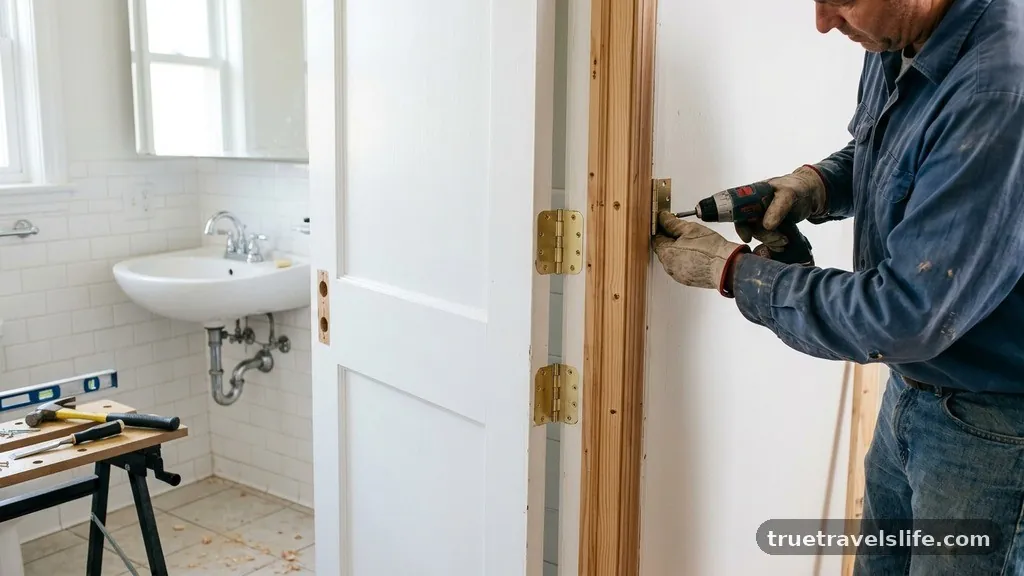
To successfully complete an outswing conversion, you must relocate the hardware and modify the door stop. The primary challenge involves flipping the door so the hinges move from the interior side of the jamb to the exterior, or re-hanging the slab to swing in the opposite direction.
Hardware and Frame Adjustments
- Remove the door slab from the hinges by pulling the hinge pins with a hammer and nail set.
- Unscrew the strike plate from the door jamb and the latch mechanism from the door edge.
- Use a wood chisel to carefully deepen or adjust the hinge mortise if the new orientation requires it.
- Fill old screw holes with wood glue and dowels or high-quality wood filler before drilling new pilot holes.
- Install the hinges on the opposite side of the frame to accommodate the new door hand.
Refining the Door Stop
The door stop is the thin strip of wood that prevents the door from swinging through the frame. When you reverse the swing, this piece must be moved to the opposite side of the jamb to provide a new contact point. Use a pry bar to gently remove the casing trim and door stop, then reinstall them on the new stop side. If the wood splits during removal, you may need to purchase new trim to match your existing interior door hardware.
Comparison of Door Swing Orientations
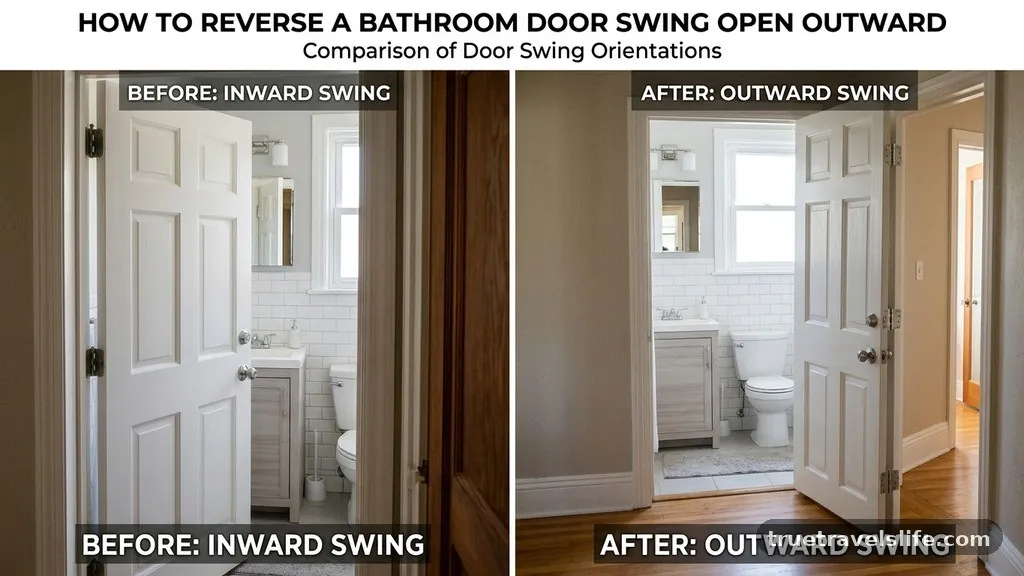
Understanding the differences between configurations helps you determine if your specific door frame can handle the change. The following table highlights the critical differences between standard inswing doors and modified outswing conversions.
| Feature | Inswing Door | Outswing Conversion |
|---|---|---|
| Hinge Location | Inside bathroom | Outside bathroom |
| Floor Space | Occupied by swing arc | Clear interior space |
| Safety/Egress | Can be blocked by person | Easier emergency access |
| Privacy Lock | Standard thumb turn | Requires outswing-compatible lock |
Compliance and Practical Considerations
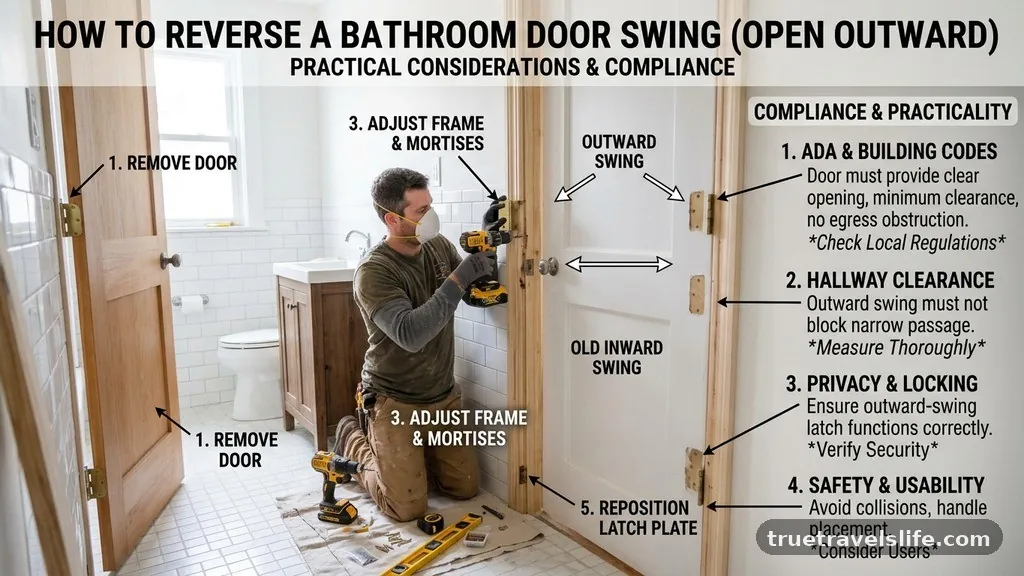
Before you begin, verify your local building code compliance regarding door swing direction. In many jurisdictions, bathroom doors are required to swing outward to ensure that if a person collapses inside, they do not block the door from opening. This is especially important for aging-in-place designs or rooms requiring bathroom accessibility.
Ensure that your new outswing setup does not obstruct hallways or create a tripping hazard for people walking past the bathroom. You should also check the door handle orientation, as some privacy locks are specific to the swing direction.
If the latch mechanism does not engage properly, use a shim behind the strike plate to align the bolt with the hole in the jamb. Always use a level to confirm the door remains plumb after re-hanging; even a slight tilt can cause the door to swing open or closed on its own.
Finalizing the Installation
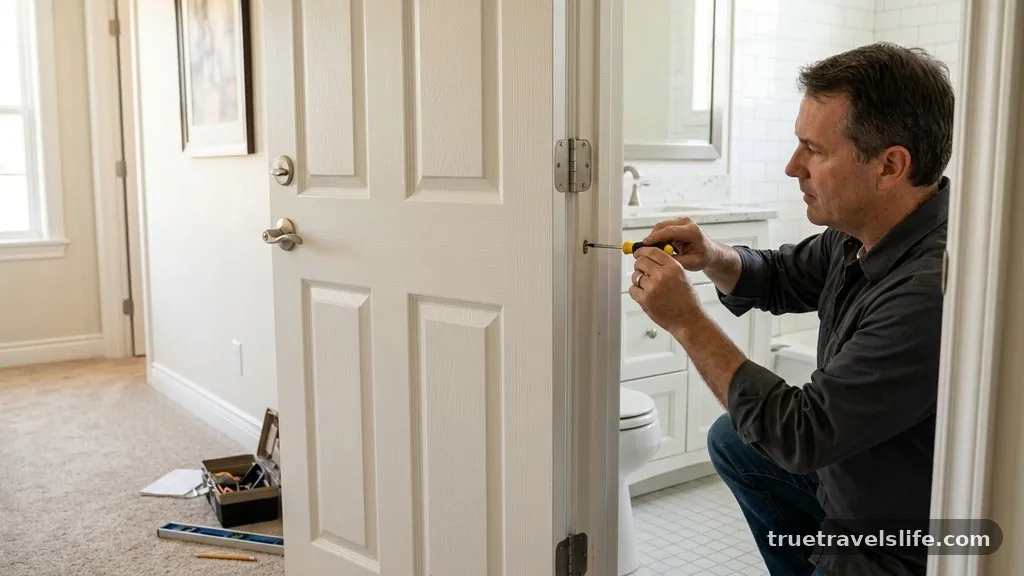
Successfully reversing a bathroom door swing to open outward significantly improves the utility of smaller rooms. Once the slab is hung, test the door multiple times to ensure the latch mechanism engages smoothly and the hinges do not bind. If you notice any gaps between the door and the frame, use adhesive-backed weatherstripping to create a clean, finished look.
If you encounter significant resistance during the door frame modification, consult a professional to ensure the structural integrity of the wall remains intact. With the right tools and attention to detail, this simple change can transform how you utilize your home’s most frequently visited space.