Stop Wasting Space — Try These Clever RV Living Room Ideas
Making the most of your RV living room is both an art and a science. In the USA, RV owners face the challenge of balancing comfort, style, and functionality in very compact spaces. Every inch counts, and smart design choices can make a small interior feel open, organized, and inviting. This guide provides actionable strategies to maximize space, improve circulation, and maintain visual appeal. From foldable furniture and multi-use tables to light-enhancing tricks, each idea allows you to create a functional, cozy environment that feels bigger, while keeping everyday living simple, enjoyable, and stylish.
1. Modular Seating
Bullet Points
- Rearrangeable sectional pieces for flexibility.
- Hidden storage beneath cushions.
- Durable, easy-to-clean upholstery for travel.
- Adaptable layouts for social, work, or sleeping use.
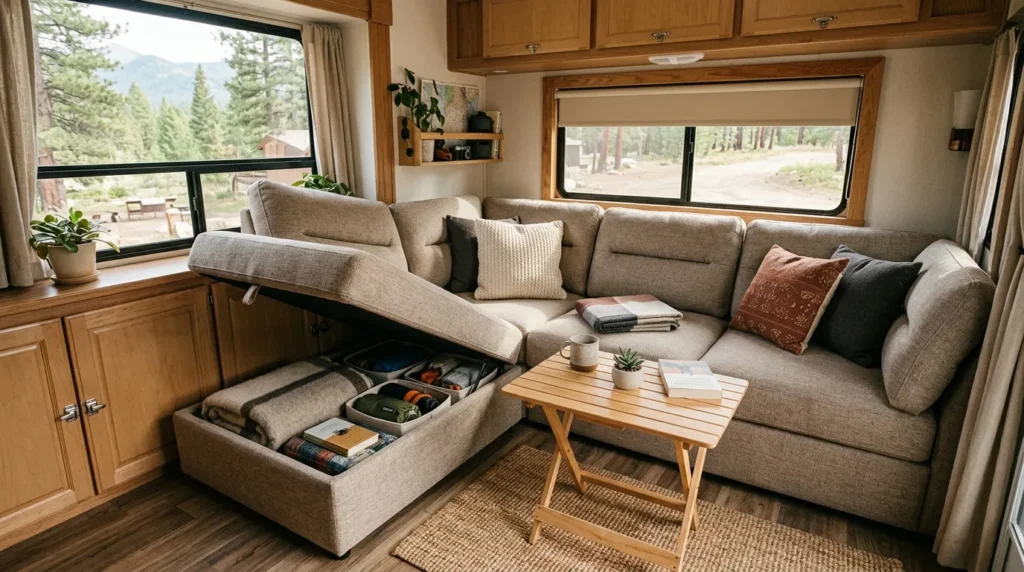
Modular seating is the cornerstone of flexible RV interiors. I’ve noticed that sofas with removable or foldable sections allow owners to create social, work, or sleeping areas depending on the situation. Multi-purpose designs often include hidden storage beneath cushions, which keeps blankets, pillows, and essentials organized. Choosing durable upholstery like microfiber, leather, or high-performance fabric ensures long-term use while remaining visually appealing. Modular furniture helps define seating zones without overcrowding, maintaining an airy feel. Its versatility is perfect for maximizing the limited square footage of a compact RV living area while keeping comfort and style intact.
The practical advantage of modular seating lies in its adaptability. Rearranging sections can instantly change the function of the space from entertaining to lounging or sleeping. Hidden storage minimizes visible clutter and keeps personal items accessible. This approach maintains open circulation and visual balance in small interiors. High-quality fabrics and flexible layouts increase durability and usability, allowing RV owners to enjoy both practicality and aesthetics. Modular seating makes a small living room feel spacious, organized, and comfortable without compromising the overall design.
2. Multi-Purpose Tables
Bullet Points
- Functions as dining, workspace, or prep surface.
- Includes foldable extensions or hidden compartments.
- Lightweight and durable materials for mobility.
- Optimizes limited floor space in small RVs.
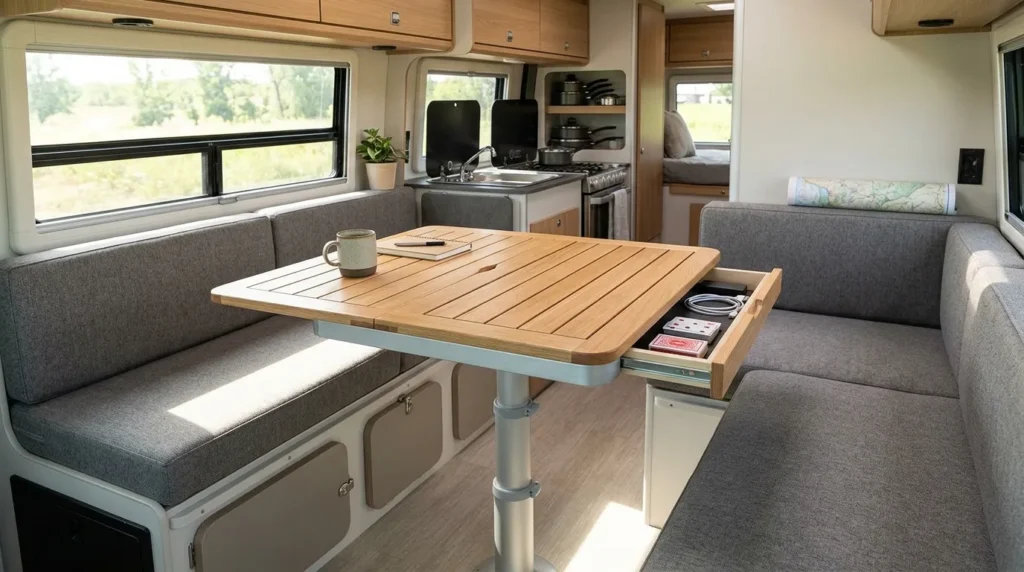
Multi-purpose tables are critical for maximizing function in RV living rooms. I’ve seen compact tables that serve as dining surfaces, workstations, or storage areas transform cramped interiors into highly functional spaces. Some include foldable sections or hidden compartments to store supplies or electronics, keeping surfaces clutter-free. Lightweight materials like aluminum, treated wood, or composites ensure portability without compromising strength. Multi-purpose tables maintain visual simplicity while enhancing utility. This strategy allows RV interiors to remain flexible and organized, providing a functional solution that improves everyday usability while maintaining aesthetic appeal in tight quarters.
The transformation offered by multi-purpose tables extends beyond storage. They can switch between dining, working, or crafting functions, supporting multiple activities in the same area. Foldable surfaces free up floor space for movement, while hidden compartments keep essential items organized. Properly positioned tables complement seating arrangements and traffic flow. This practical strategy enhances functionality and visual appeal, helping small RV interiors feel larger and more flexible without sacrificing style or comfort. Multi-purpose tables are key for efficient and adaptable mobile living spaces.
3. Fold-Down Surfaces
Bullet Points
- Wall-mounted desks or tables that collapse when not in use.
- Ideal for temporary dining, workspace, or crafting areas.
- Lightweight, sturdy construction suitable for travel.
- Frees up floor space for better circulation.
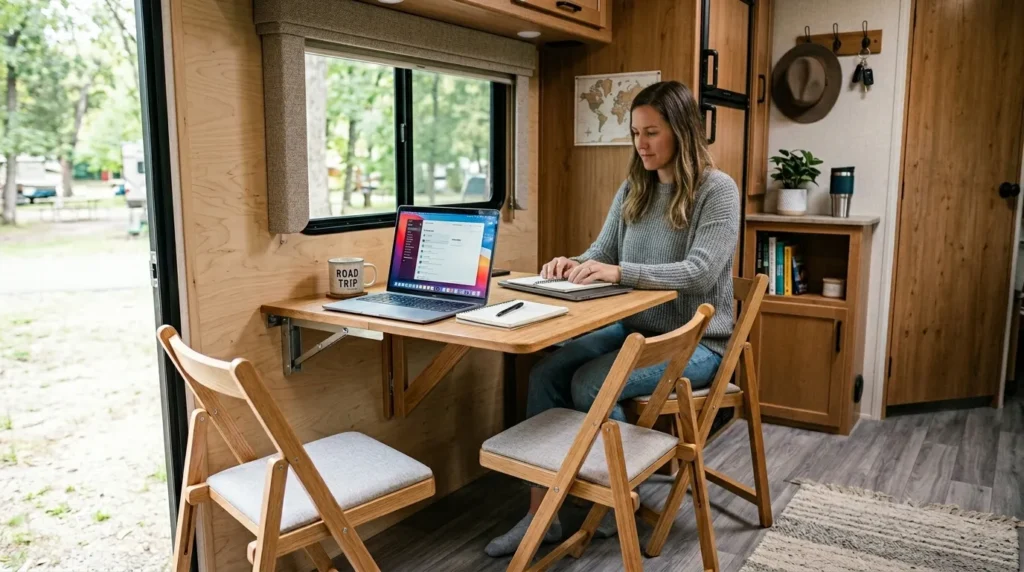
Fold-down surfaces provide instant versatility in RV interiors. Wall-mounted desks or tables create a functional workspace, dining area, or hobby zone, then fold neatly against the wall to clear the floor. Lightweight materials like aluminum or reinforced wood ensure stability while keeping the setup portable and travel-friendly. Fold-down designs prevent congestion in tight spaces and allow quick reconfiguration according to need. I’ve noticed this approach balances practicality with visual clarity, ensuring RV interiors remain organized, open, and aesthetically appealing while optimizing limited square footage effectively for everyday use.
Practical benefits include improved movement and multi-functionality. Fold-down surfaces can transition quickly from meal prep to workspace or crafting zone without permanently occupying floor space. This maintains circulation while reducing visual clutter. Durable construction ensures long-term usability, while strategic placement enhances convenience. Fold-down solutions allow small RV living rooms to feel larger and more adaptable while supporting various activities. Integrating collapsible surfaces ensures compact interiors remain functional, safe, and stylish for daily living or travel adventures.
4. Built-In Storage
Bullet Points
- Under-seat drawers and cabinets maximize every inch.
- Overhead compartments for vertical space efficiency.
- Hooks and hanging organizers for essentials.
- Keeps surfaces clear and maintains a tidy interior.
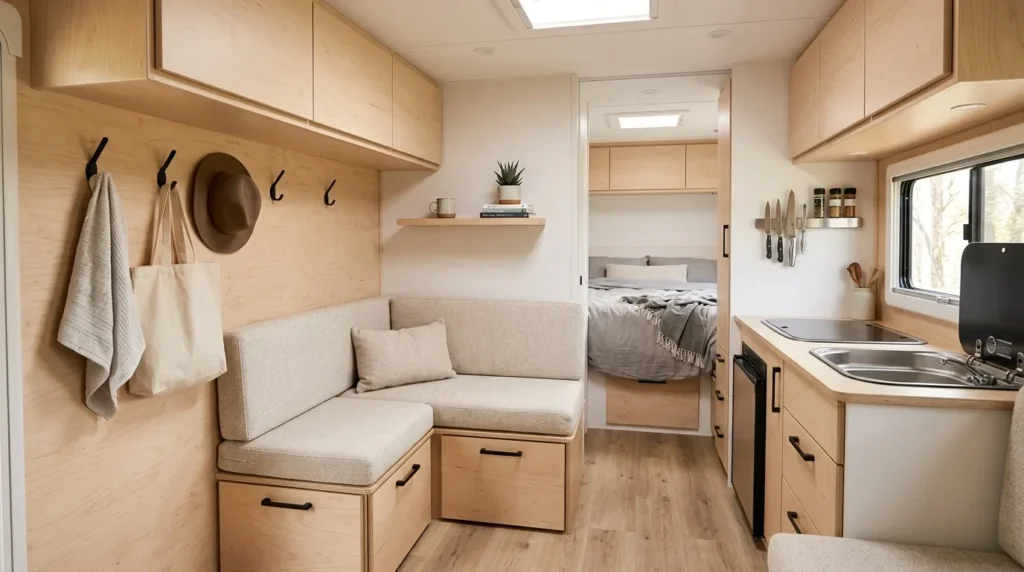
Built-in storage is essential in small RV interiors to reduce clutter and improve functionality. Drawers beneath benches, cabinets under seating, and overhead compartments optimize every inch without crowding the floor. Hooks and hanging organizers allow frequent-use items like jackets, keys, or kitchen tools to remain accessible yet out of sight. I’ve noticed that well-designed built-in storage keeps the living area organized while preserving circulation and aesthetic appeal. Vertical space utilization ensures maximum efficiency, while seamlessly integrated storage contributes to a clean, open, and welcoming mobile interior suitable for both short trips and extended travel.
Functionally, built-in storage enhances usability and daily convenience. Bedding, cookware, or electronics can be stored efficiently and retrieved quickly. Overhead compartments maximize height without cluttering floor space, while hooks and shelves maintain accessibility. Thoughtful integration blends with interior design, ensuring cohesion and balance. Built-in storage also enhances safety by keeping items secure during movement. Strategically designed storage solutions help RV owners maintain a functional, organized, and visually appealing living area, optimizing limited square footage while supporting comfort and style simultaneously.
5. Light-Reflecting Colors
Bullet Points
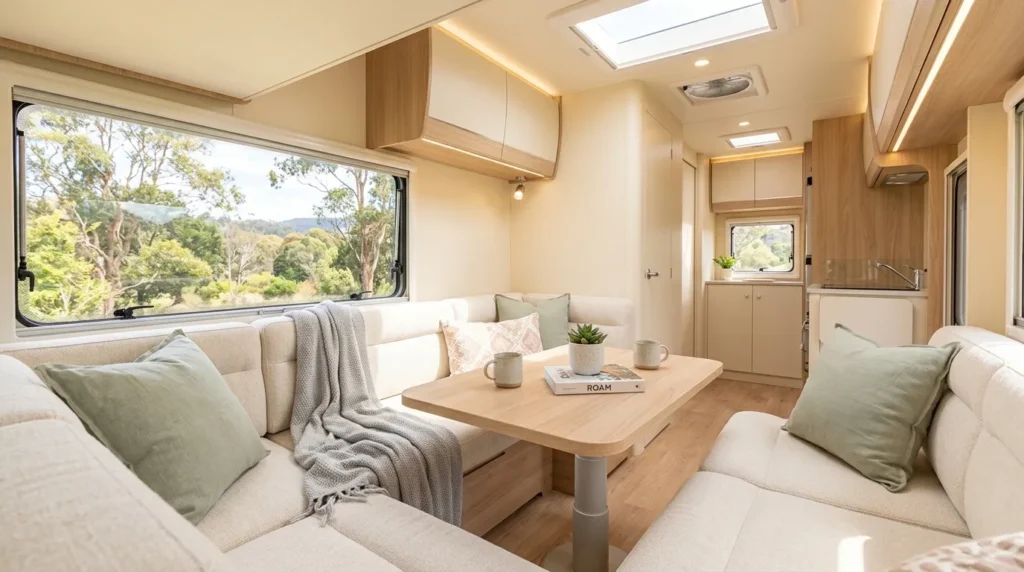
- Soft neutrals like cream, beige, or pastels create a sense of openness.
- Reflect natural and artificial light to brighten interiors.
- Complement accent colors or patterned textiles.
- Make narrow interiors appear larger and airy.
Light-reflecting colors dramatically improve the perception of space in small RV interiors. Pale tones bounce light around the cabin, making it feel more open and airy. I’ve noticed cream, pastel, or soft gray walls and furnishings can instantly enhance spatial perception, visually expanding narrow layouts. These tones create a neutral backdrop for accent cushions, rugs, or wall art, adding personality without overwhelming the interior. Using reflective surfaces alongside light tones further amplifies brightness and depth, improving both aesthetics and comfort. Light colors are an inexpensive yet high-impact strategy for maximizing the visual appeal of compact spaces.
Beyond visual impact, light-reflecting colors improve usability and ambiance. Brighter interiors allow better task lighting and support more flexible furniture arrangements. Soft neutrals reduce the feeling of confinement and create a calm, welcoming environment. Paired with mirrors or metallic accents, these colors enhance the perception of space while maintaining cohesion. Using light-reflecting tones ensures a clean, open atmosphere in RV living rooms, making interiors feel comfortable, stylish, and visually expansive despite limited square footage.
6. Mirrors for Depth
Bullet Points
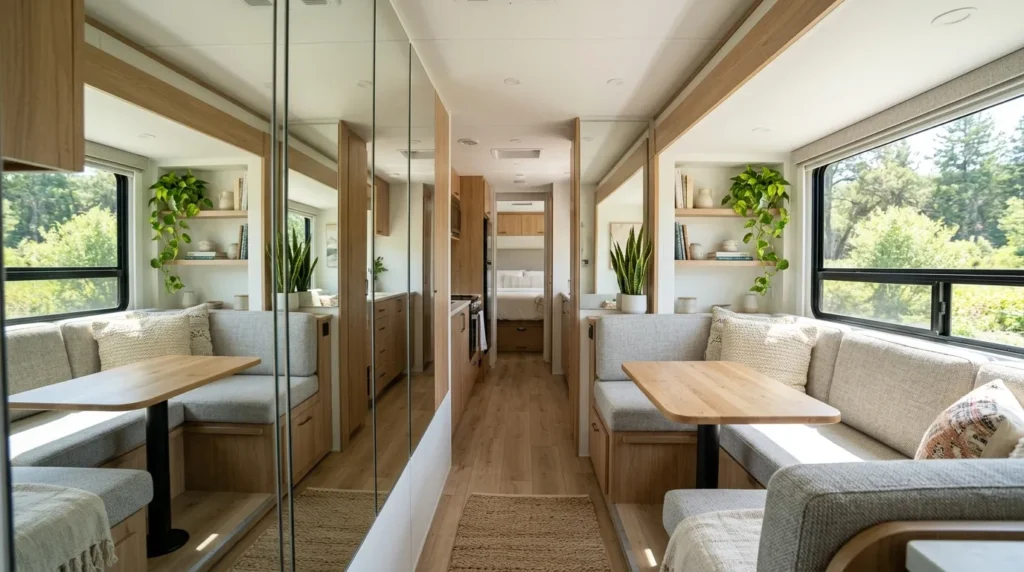
- Expand perception of space by reflecting surroundings.
- Lightweight or frameless mirrors for safe mobile use.
- Place near windows or lighting for maximum effect.
- Adds style and balances room proportions.
Mirrors are a clever and effective tool for creating depth in compact RV interiors. They reflect light and surroundings, giving the illusion of additional space while enhancing brightness. I’ve seen lightweight or frameless mirrors mounted on walls or cabinetry make interiors appear significantly larger. Strategic placement opposite windows or near lamps amplifies natural and artificial light. Mirrors also help balance furniture and decor elements, break monotony, and provide a visually appealing focal point. In small mobile interiors, mirrors are both functional and decorative, optimizing perception of space efficiently while maintaining style.
Practical benefits include improved circulation and usability. Reflected light brightens corners, while mirrors make furniture and decor stand out without overcrowding. They create visual depth, balancing narrow or long spaces. Lightweight and securely mounted mirrors are safe during travel. This combination of aesthetic and functional advantages enhances the sense of openness, making RV living rooms feel larger, brighter, and more comfortable without adding bulk or complexity. Mirrors are a versatile, high-impact solution for small-space design.