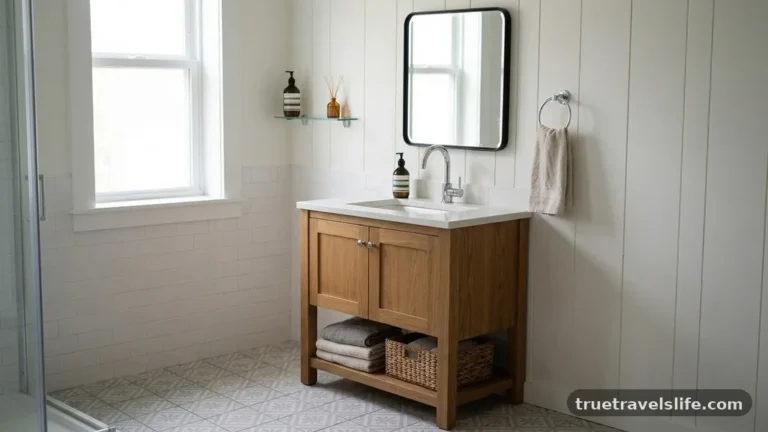
Door Stop Solutions to Protect Vanity Cabinets from Dents
Finding effective door stop solutions to protect vanity cabinets from dents is a priority for homeowners looking to preserve their bathroom hardware. When a bathroom door handle or lever strikes a cabinet door, it often leaves permanent marks or structural damage. You can easily prevent these issues by installing simple, low-profile hardware that absorbs impact before contact occurs.
Choosing the right method depends on your door’s swing range and the proximity of your vanity to the entry. This article explains how to select the most reliable buffers and physical stops to ensure your cabinetry remains in pristine condition for years to come.
Choosing the Right Protective Barrier
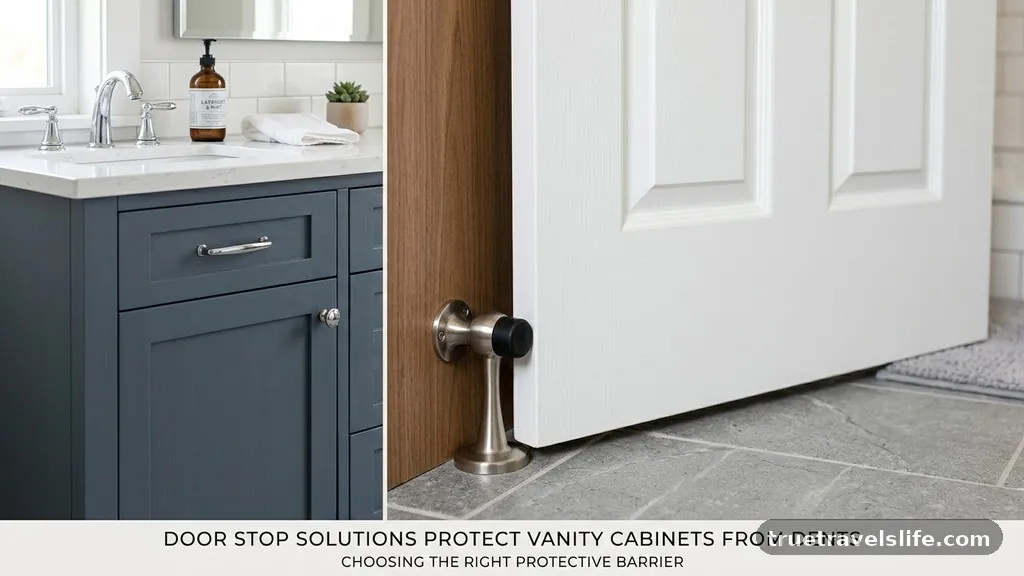
The most common way to address contact damage is by using adhesive bumpers. These small, clear silicone pads attach directly to the cabinet face or the door edge to cushion any potential impact. They are nearly invisible, making them an excellent choice for modern bathrooms where you want to maintain a clean aesthetic.
Types of Protective Buffers
* Adhesive Silicone Bumpers: These are inexpensive, peel-and-stick pads that provide a soft landing for swinging doors.
* Felt Pads: While softer, these can collect moisture and dust in a bathroom environment, so silicone is generally preferred.
* Hinge Pin Stoppers: These devices replace one of your door hinge pins to restrict how far the door can open, preventing it from ever reaching the cabinet.
* Magnetic Catches: While primarily for holding doors open, they can be calibrated to stop a door at a specific point if installed as a custom hardware solution.
Comparing Common Protection Methods
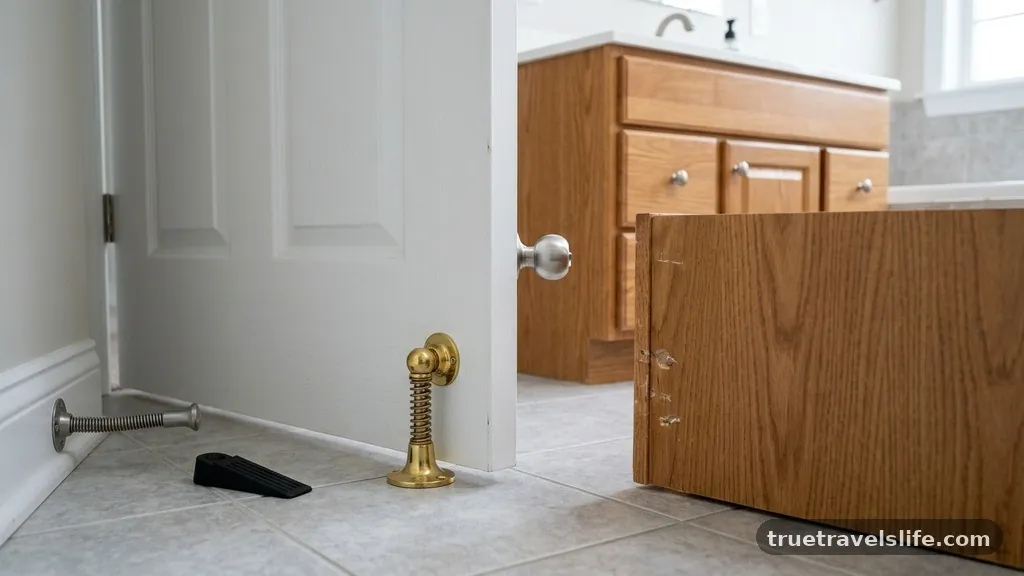
When deciding between different hardware options, consider the installation effort and the level of protection provided. Some solutions require tools, while others are purely adhesive and temporary.
| Solution Type | Ease of Install | Protection Level | Visibility |
|---|---|---|---|
| Adhesive Bumpers | Instant | Moderate | Very Low |
| Hinge Pin Stop | Low (requires pliers) | High | Low |
| Wall-Mounted Stop | Moderate (requires drill) | Very High |
Installing Hinge Pin and Wall Stops
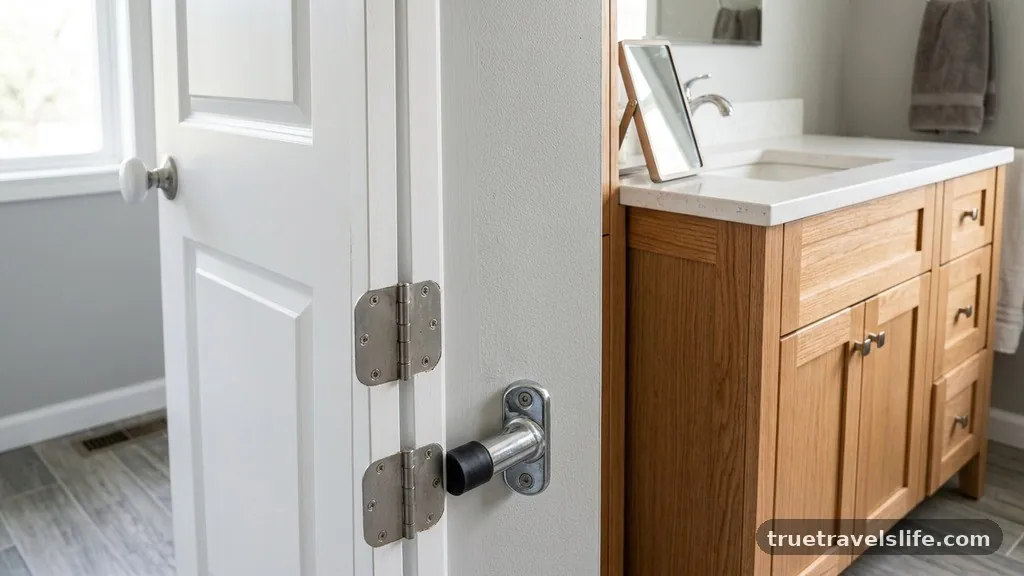
If your bathroom door has enough clearance, a hinge pin stopper is often the most effective way to stop a door before it hits a vanity. You simply remove the existing hinge pin, slide the stopper onto the pin, and reinsert it into the hinge. This creates a mechanical limit that prevents the door from swinging open past a set degree.
For tighter spaces where the door handle itself is the culprit, a wall-mounted stop is a reliable alternative. These are typically small, stainless steel or rubberized discs that screw directly into the wall behind the door. They ensure that the knob or lever strikes the wall-mounted buffer instead of the vanity cabinet.
Maintaining Your Cabinet Hardware
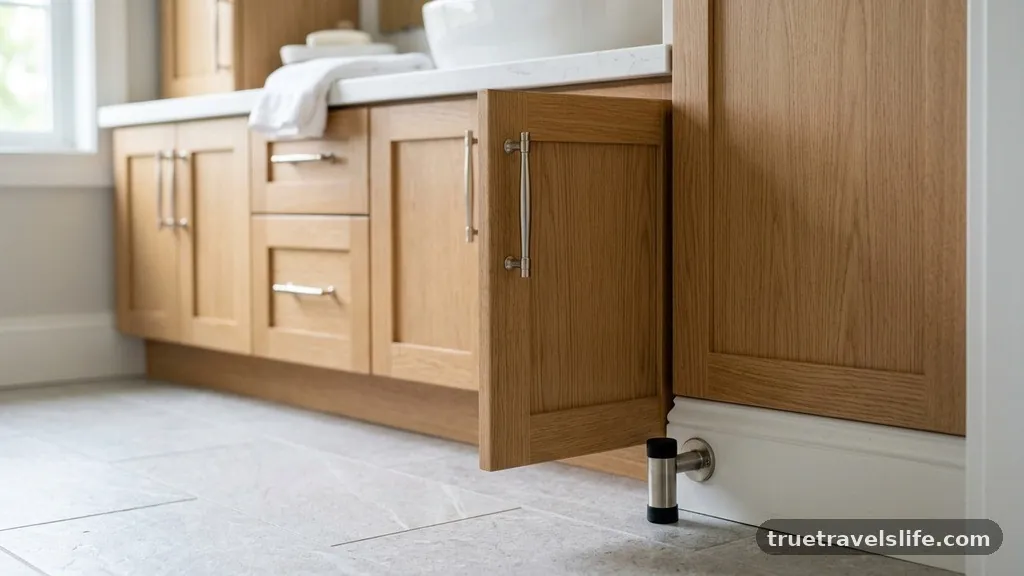
Regular maintenance ensures that your door stop solutions to protect vanity cabinets from dents remain functional. Adhesive silicone bumpers can lose their stickiness over time due to high humidity in bathrooms. If a bumper falls off, simply clean the surface with rubbing alcohol and apply a fresh pad to ensure the bond is secure.
Check your hinge pin stoppers periodically to ensure they haven’t loosened from the vibration of the door. Tightening the adjustment screw on the stopper every few months will keep the door swing precisely where you need it. By taking these small steps, you effectively shield your cabinets from the daily wear and tear that leads to unsightly dents and scratches.
Long-Term Cabinet Preservation
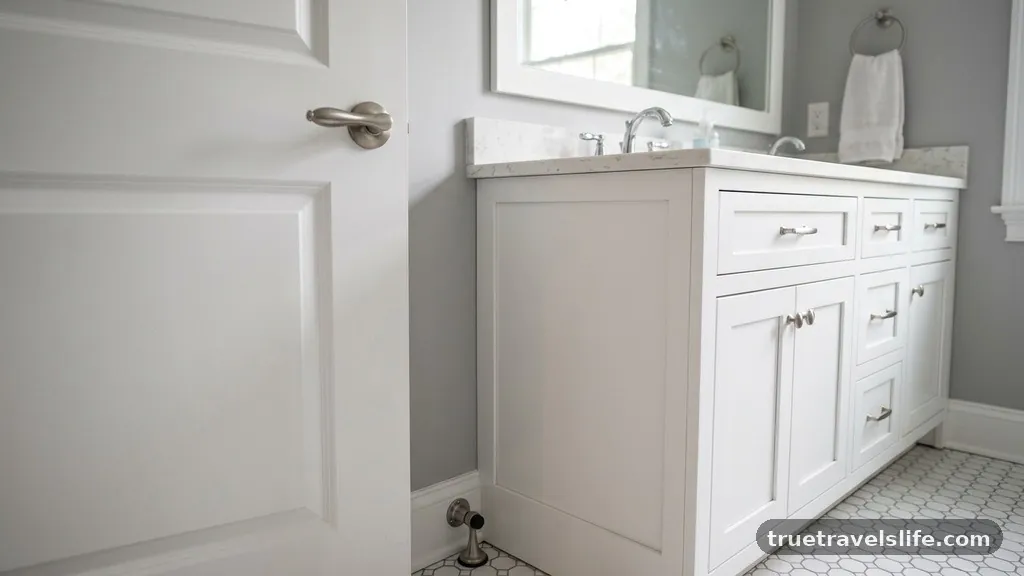
Implementing these preventative measures is a straightforward process that significantly extends the lifespan of your bathroom furniture. Whether you opt for simple adhesive silicone feet or more robust mechanical hinge stops, the goal is to create a reliable buffer zone.
By choosing the right door stop solutions to protect vanity cabinets from dents, you avoid the need for costly repairs or refinishing work later. We encourage you to assess your bathroom layout today and install the hardware that best fits your specific clearance needs to keep your space looking its best.