11 Stop Decorating Cold Spaces — Try These Cozy Decor Tips Instead

Introduction
A cold room does not always mean the temperature is low. Sometimes the space has furniture, paint, and decor, yet it still feels stiff, empty, or unfinished. Many USA homes have this problem because open floor plans, gray walls, builder-grade finishes, bright ceiling lights, and hard flooring can make rooms feel sharp instead of restful. The good news is simple: you do not need a full remodel to make your home feel warmer.
These Decor Tips are designed for real homes, not perfect magazine spaces. You can use them in apartments, rental homes, small bedrooms, suburban living rooms, townhouses, and family spaces. The focus is comfort, softness, and practical beauty. Every idea below helps you change how a room feels without wasting money on random accessories that only add clutter.
The biggest mistake people make is decorating cold spaces with more cold pieces. They add metal tables, thin curtains, tiny rugs, bright white bulbs, and flat wall art, then wonder why the room still feels uncomfortable. Cozy styling is different. It works through texture, scale, lighting, warm materials, and small emotional details that help a room feel lived-in.
By the end of this guide, you will know how to soften a hard room, warm up neutral spaces, style furniture better, choose useful materials, and create Pinterest-friendly corners that still work for daily life. You do not need to buy everything at once. Start with one section, fix one cold corner, then keep building slowly.
1. Warm Lighting
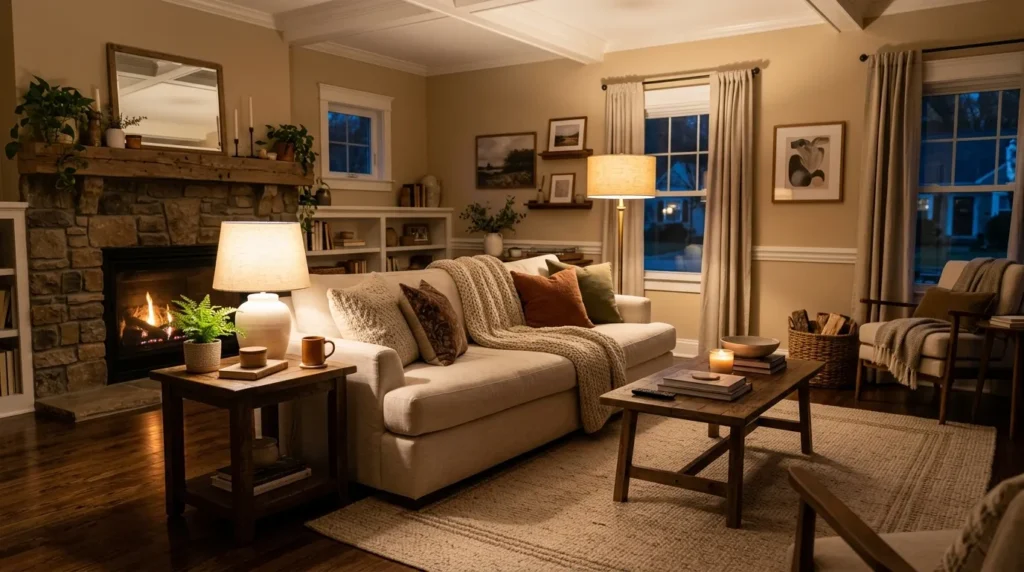
- Use warm white bulbs instead of cool daylight bulbs.
- Add floor lamps, table lamps, and shaded accent lights.
- Place lights near seating, corners, shelves, and artwork.
- Use dimmers or smart bulbs for flexible evening brightness.
- Avoid relying only on harsh overhead ceiling fixtures.
Cold lighting can make even expensive furniture look uncomfortable. Many rooms feel harsh because one bright ceiling light is doing all the work. Warm lighting creates depth because it spreads glow across different levels instead of flattening the space from above. Use bulbs around 2700K to 3000K for a soft, homey feel. A floor lamp near the sofa, a table lamp beside a chair, and a small accent light on a shelf can make the same room feel calmer, richer, and more inviting without changing the furniture.
Once the lighting improves, the room becomes easier to enjoy at night. You can read, watch TV, host guests, or relax without feeling like you are sitting under office lights. In my experience, this one change often makes the biggest difference in cold living rooms and bedrooms. Choose linen shades, ceramic lamp bases, warm wood, aged brass, or matte black fixtures for a cozy but polished look. If you rent, plug-in lamps and battery picture lights are simple options that need no wiring.
2. Soft Textures
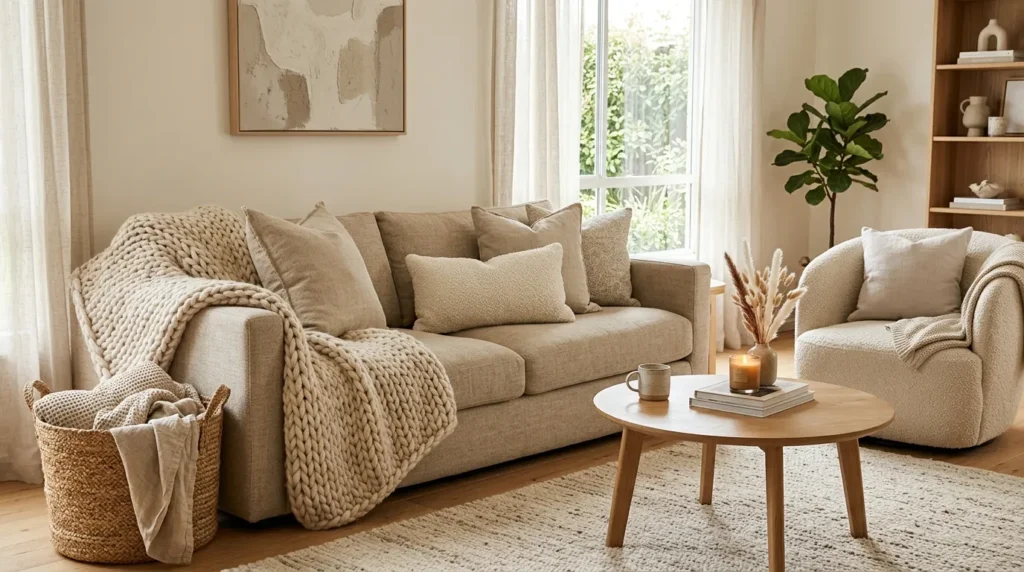
- Add throw blankets, woven pillows, and soft rugs.
- Mix cotton, linen, wool, boucle, velvet, and knit fabrics.
- Use baskets, curtains, and upholstered pieces to soften hard rooms.
- Choose touchable materials that make the room feel relaxed.
- Balance smooth furniture with layered fabric details.
Texture is the fastest way to make a cold space feel human. A room with smooth floors, flat walls, leather furniture, glass tables, and metal finishes may look clean, but it can also feel hard. Soft textures break that stiffness. Add a knit throw over a chair, linen curtains at the window, a wool-style rug underfoot, and woven pillow covers on the sofa. These layers do not need to be loud or colorful. Their job is to make the room feel touchable and visually warmer.
The best part is that texture works in every design style. A modern room can use boucle pillows and a low-pile rug. A farmhouse space can use cotton throws, woven baskets, and linen curtains. A small apartment can use soft bedding and a textured runner to add comfort without taking up space. I’ve noticed that rooms feel more finished when at least three textures are visible from one angle. Try fabric, wood, and woven materials together for a balanced, comfortable look that still feels clean.
3. Earthy Colors
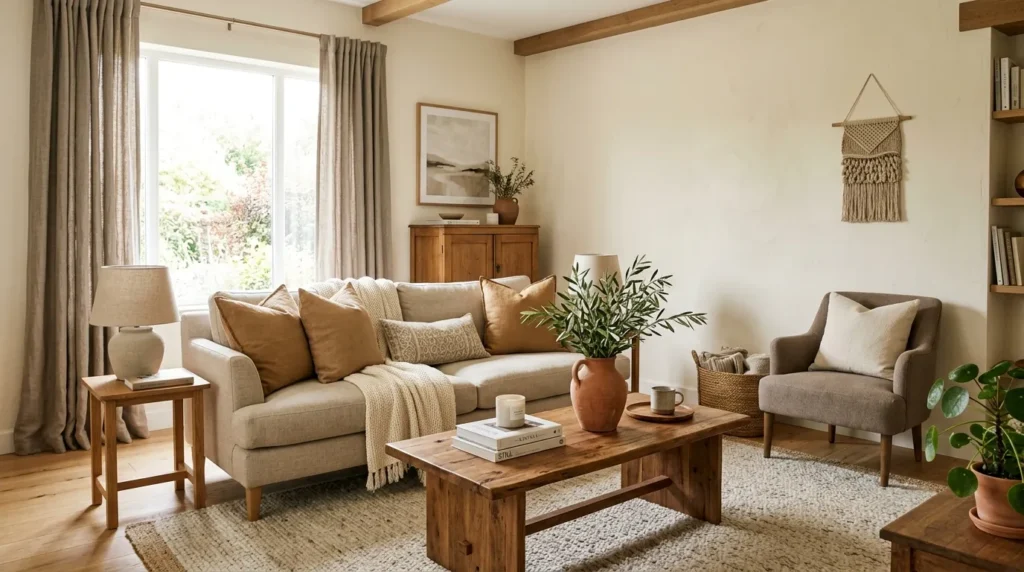
- Use beige, cream, taupe, clay, olive, camel, and warm white.
- Avoid too many icy grays or blue-white tones.
- Bring color through pillows, rugs, art, curtains, and pottery.
- Use muted shades if you want a calm, timeless look.
- Repeat colors across the room for a connected design.
Color temperature matters more than people realize. A space can feel cold when every shade leans blue, gray, or stark white. Earthy colors fix that by bringing warmth without making the room look dark. Cream walls, camel pillows, taupe curtains, olive branches, terracotta pottery, and warm beige rugs can soften a room while keeping it sophisticated. These tones feel natural because they connect to wood, stone, clay, greenery, and sunlight. That makes them easy to live with year-round.
You do not need to repaint the entire house to use earthy color. Start with smaller pieces that are easy to change, such as pillow covers, throw blankets, vases, framed prints, or table linens. If your room already has gray walls, add warm woods, oatmeal fabrics, and muted clay accents to balance the cool base. That’s why many designers recommend repeating one warm tone in three places. For example, use camel in a pillow, artwork, and basket. This makes the room look intentional instead of randomly decorated.
4. Oversized Rugs
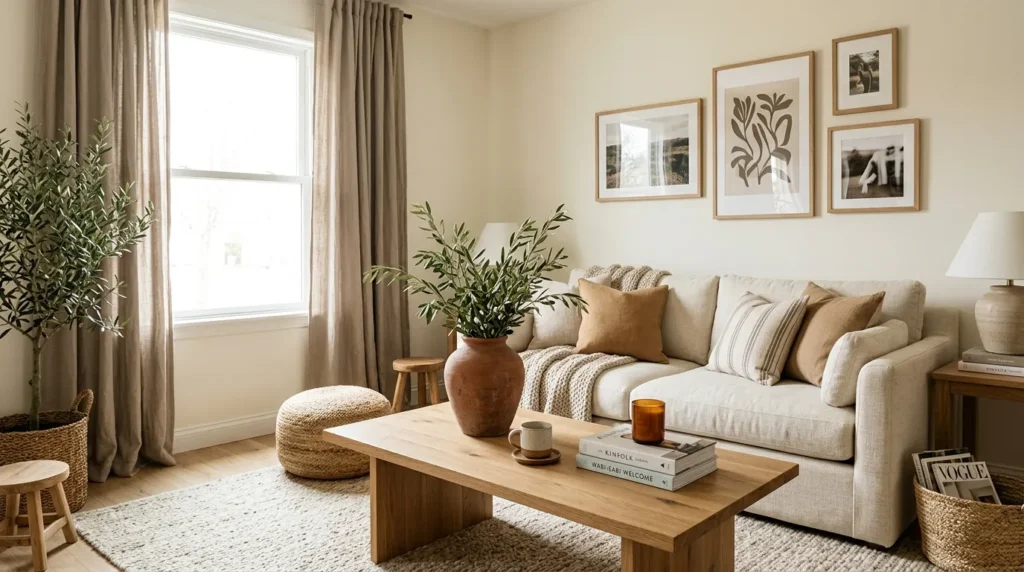
- Choose rugs large enough to connect the furniture.
- Place sofa and chair front legs on the rug.
- Use soft low-pile, wool-style, washable, or jute-blend rugs.
- Avoid tiny rugs that make the room feel unfinished.
- Pick warm patterns or textures to soften hard flooring.
A small rug can make a room feel colder than no rug at all. When furniture floats around a tiny rug, the space feels disconnected and unfinished. An oversized rug anchors the room by pulling the sofa, chairs, coffee table, and side tables into one cozy zone. For many USA living rooms, an 8×10 or 9×12 rug works better than a small accent size. In bedrooms, a large rug under the bed adds warmth underfoot and makes the room feel softer every morning.
The material should match the way you live. Families with children or pets may prefer washable rugs or low-pile synthetic blends. If you want a more natural feel, try wool, cotton, or jute-blend options. A rug with subtle pattern hides daily wear better than a flat solid color. I’ve seen this work well in many homes where hard floors made everything echo. A larger rug reduces noise, adds comfort, and makes the entire layout feel more expensive even when the furniture is simple.
5. Window Layers
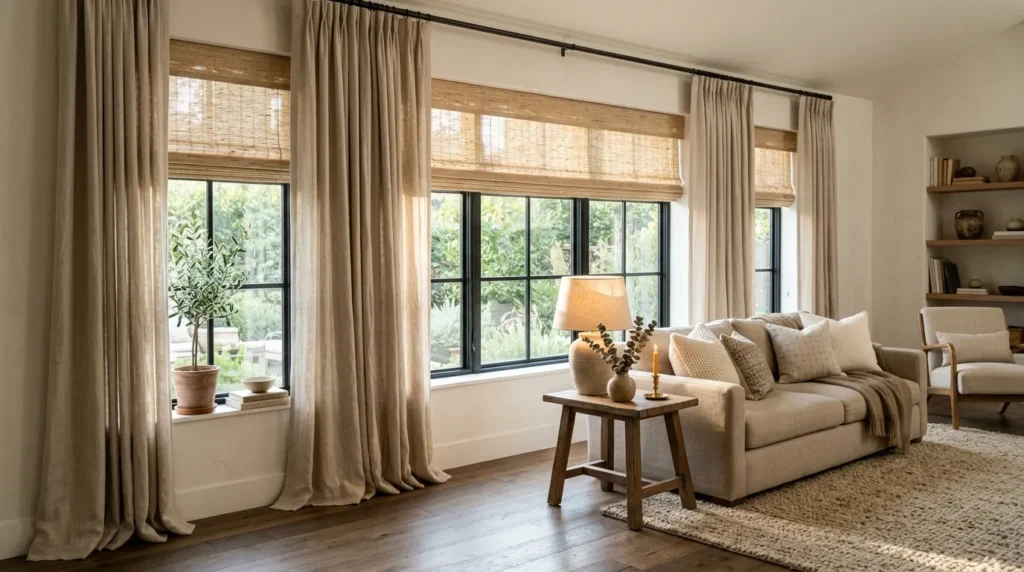
- Hang curtains higher and wider than the window frame.
- Use linen-look panels, cotton curtains, or woven shades.
- Layer blackout curtains in bedrooms for better sleep.
- Choose soft fabrics to reduce hard edges around windows.
- Let curtains touch or lightly break at the floor.
Bare windows can make a room feel exposed and unfinished. Window treatments soften the edges of a space, frame natural light, and add movement to flat walls. Hang curtain rods several inches above the window and wider than the frame to make windows look larger. Linen-look panels are a smart choice because they filter light beautifully without feeling heavy. Woven shades also add natural texture, especially in living rooms, dining rooms, and bedrooms that need a warmer finish.
Good window layers also improve daily comfort. In bedrooms, blackout curtains help with sleep, privacy, and temperature control. In living rooms, light-filtering panels reduce glare while keeping the space bright. If your home faces a busy street, layered treatments can make the room feel more private and peaceful. Choose curtain colors close to your wall shade for a calm look, or choose warm beige, oatmeal, or soft taupe for gentle contrast. This change often makes cold rooms feel taller, quieter, and more complete.
6. Natural Wood
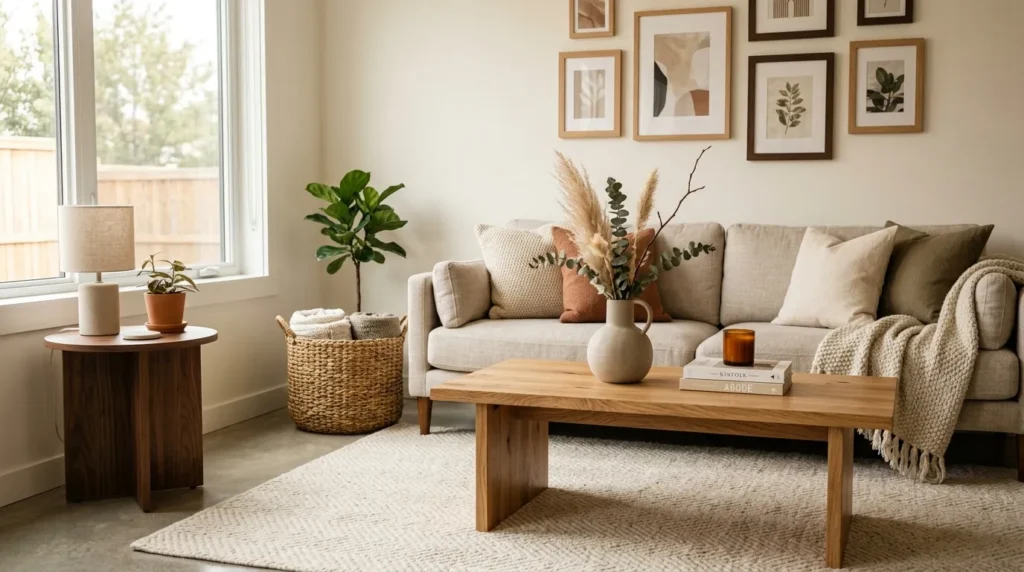
- Add wood through tables, frames, shelves, trays, or stools.
- Use warm oak, walnut, pine, maple, or reclaimed finishes.
- Balance painted furniture with natural wood accents.
- Choose matte or lightly textured finishes over glossy pieces.
- Mix wood with linen, stoneware, greenery, and woven materials.
Wood brings warmth that cold surfaces cannot copy. A room filled with glass, metal, white cabinets, or painted furniture can feel sterile, but one natural wood piece changes the balance. Try a wood coffee table, oak picture frames, a walnut side table, floating shelves, a wooden tray, or a small stool beside the bathtub. The grain adds movement and character, while the color makes neutral rooms feel grounded. Matte and lightly textured finishes usually feel warmer than shiny polished surfaces.
You can use wood even if your style is modern or minimal. The key is choosing clean shapes with warm finishes. A simple wood bench in an entryway, a round wood mirror in a bathroom, or a natural side table beside a cream sofa can soften the whole space. If your floors are already wood, use pieces with slightly different tones so the room does not look flat. Pair wood with linen, ceramic, woven baskets, and greenery for a cozy balance that feels natural, useful, and timeless.
7. Cozy Corners
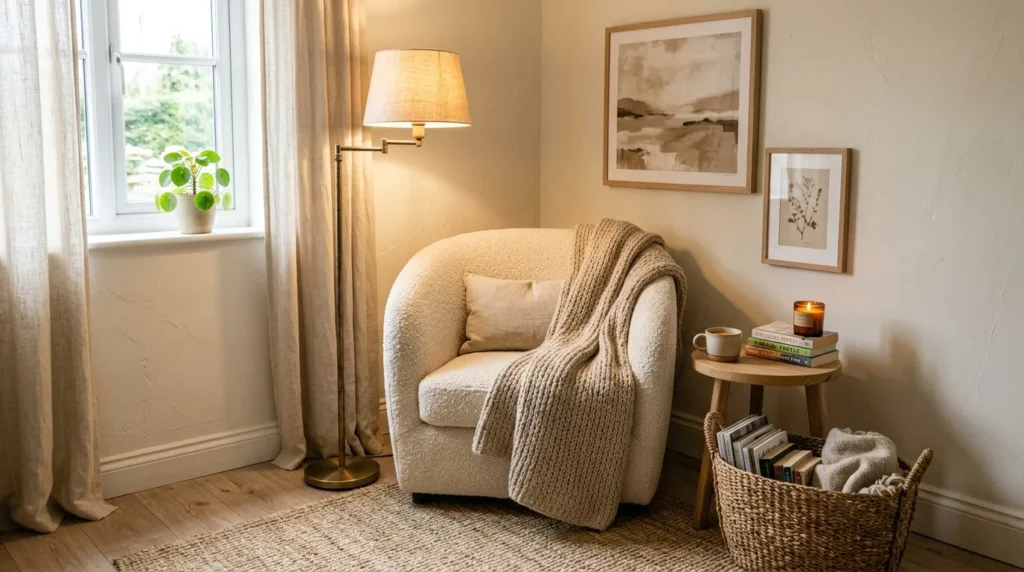
- Turn empty corners into reading, coffee, or rest zones.
- Use a chair, lamp, small table, and soft throw.
- Add a basket for books, blankets, or magazines.
- Place a rug under the corner to define the area.
- Keep the setup simple enough for daily use.
Empty corners often make a room feel colder than it should. A blank corner can look forgotten, especially in bedrooms, living rooms, and open floor plans. Instead of filling it with random decor, give it a clear purpose. A comfortable chair, warm lamp, small table, soft throw, and basket can turn an unused spot into a reading nook or morning coffee corner. The goal is not to overdecorate. The goal is to create one small place that invites someone to pause.
This works especially well in homes where the main living area feels busy. A cozy corner gives the room a quieter layer, almost like a small retreat inside the larger space. Add a framed print, a plant, or a floor cushion if the area needs more softness. Keep the table big enough for a mug, book, or phone. When a corner has purpose, the whole room feels more thoughtful. It also creates a Pinterest-friendly moment without sacrificing comfort or practical use.
8. Layered Bedding
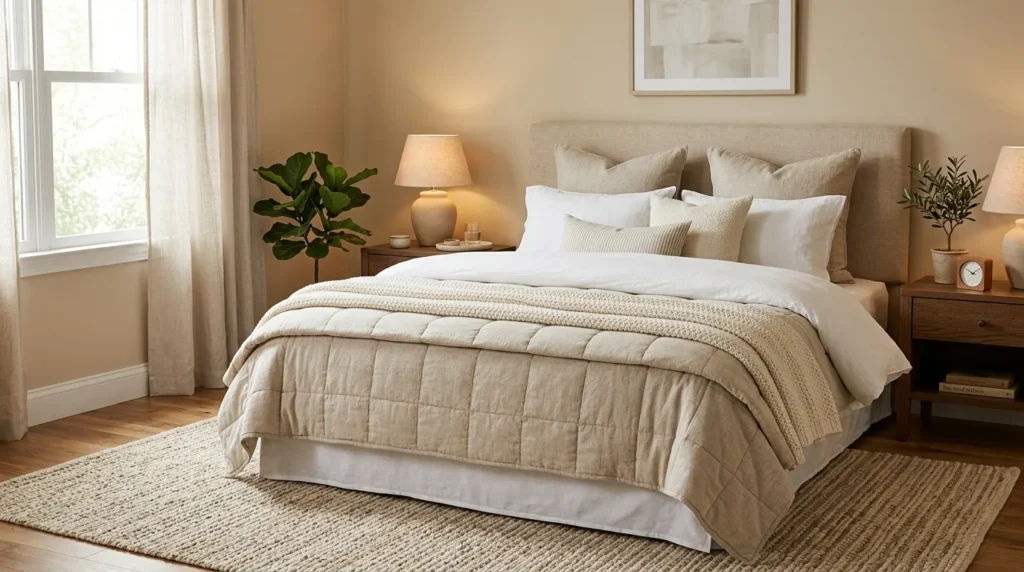
- Use sheets, quilts, duvets, coverlets, and throws.
- Choose cotton, linen, waffle, knit, or quilted textures.
- Keep colors calm but vary the fabric finishes.
- Fold blankets neatly at the foot of the bed.
- Adjust layers by season for comfort and style.
A cold bedroom often starts with a flat-looking bed. Since the bed is usually the largest piece in the room, it sets the emotional tone immediately. Layered bedding makes the space look softer, fuller, and more restful. Start with comfortable sheets, then add a quilt, duvet, or coverlet depending on the season. A folded throw at the foot of the bed adds texture and makes the room look finished. Use cotton, linen, waffle, quilted, or knit fabrics for a cozy mix.
The bed should look inviting, but it should not become a daily chore. Use two sleeping pillows, two larger shams, and one lumbar pillow if you want a styled but manageable arrangement. In summer, keep layers light with breathable cotton or linen. In winter, add a warmer quilt or chunky knit blanket. This is one of those Decor Tips that improves both style and comfort because the room looks better and sleep feels more pleasant. A layered bed can make even a plain room feel peaceful.
9. Styled Surfaces
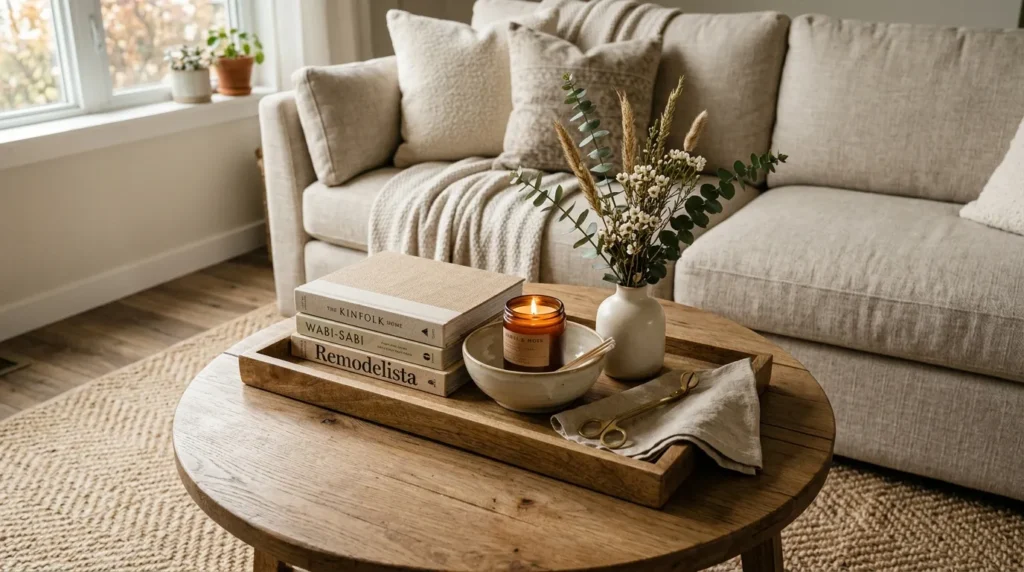
- Use trays to organize coffee tables, counters, and dressers.
- Mix useful items with decorative pieces.
- Add candles, books, bowls, vases, and small plants.
- Vary height, shape, and texture for visual interest.
- Leave open space so surfaces stay functional.
Flat, empty surfaces can feel cold, but cluttered surfaces feel stressful. The middle ground is intentional styling. Use trays, books, bowls, candles, vases, and small plants to create neat arrangements that still leave room for daily life. On a coffee table, try a tray, two books, a candle, and a small vase. On a dresser, use a lamp, jewelry dish, framed photo, and one decorative object. The secret is grouping pieces so they look planned instead of scattered.
Styled surfaces should still serve the people who live there. Leave space for drinks, keys, glasses, remotes, or chargers. Choose materials that add warmth, such as ceramic, wood, woven rattan, marble, linen, or aged brass. I’ve noticed that a room looks calmer when small items are gathered in containers instead of spread across every surface. This approach makes cleaning easier, too. You can lift a tray, wipe the table, and put everything back in seconds. It brings beauty and order together.
10. Personal Layers
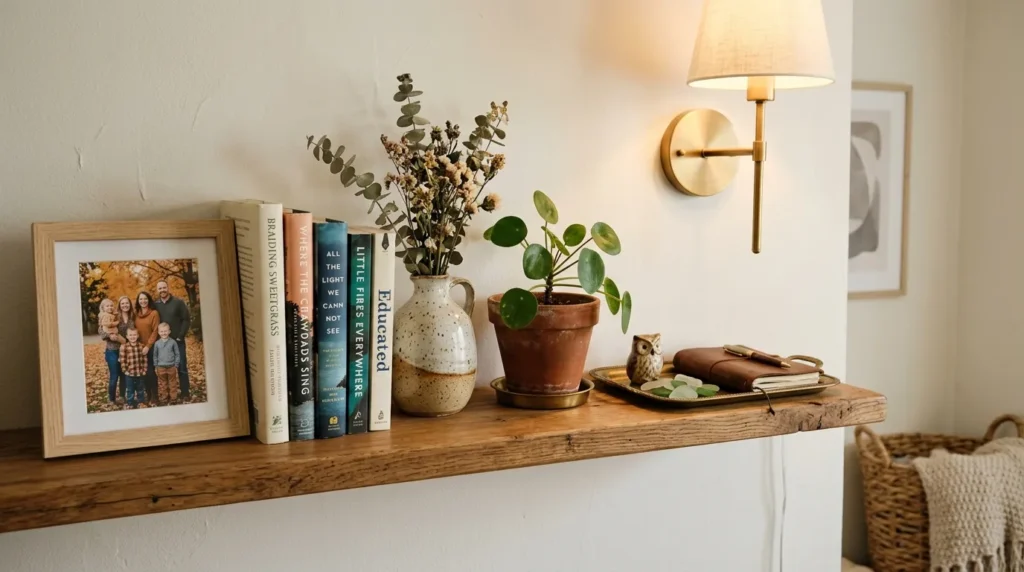
- Display meaningful photos, books, art, and keepsakes.
- Mix sentimental pieces with modern frames or simple trays.
- Avoid overcrowding shelves with too many small objects.
- Use personal items where people naturally pause.
- Choose pieces that reflect your life, not just trends.
A room without personal details can feel like a showroom. It may look neat, but it does not feel connected to the people who live there. Personal layers bring warmth because they add memory, identity, and emotion. Use framed family photos, travel prints, favorite books, handmade pottery, inherited pieces, or meaningful textiles. The key is editing. A few personal items placed carefully will feel more powerful than shelves packed with everything you own.
Try mixing personal pieces with cleaner modern elements so the room feels balanced. Place an old photo in a simple frame, put a handmade bowl on a sleek console, or stack favorite books beside a modern lamp. These combinations keep sentimental items from feeling dated. They also make trendy rooms feel less copied. In my experience, the most welcoming homes always have something personal in view. It could be small, but it gives the space heart and makes guests feel the room belongs to real people.
11. Daily Reset
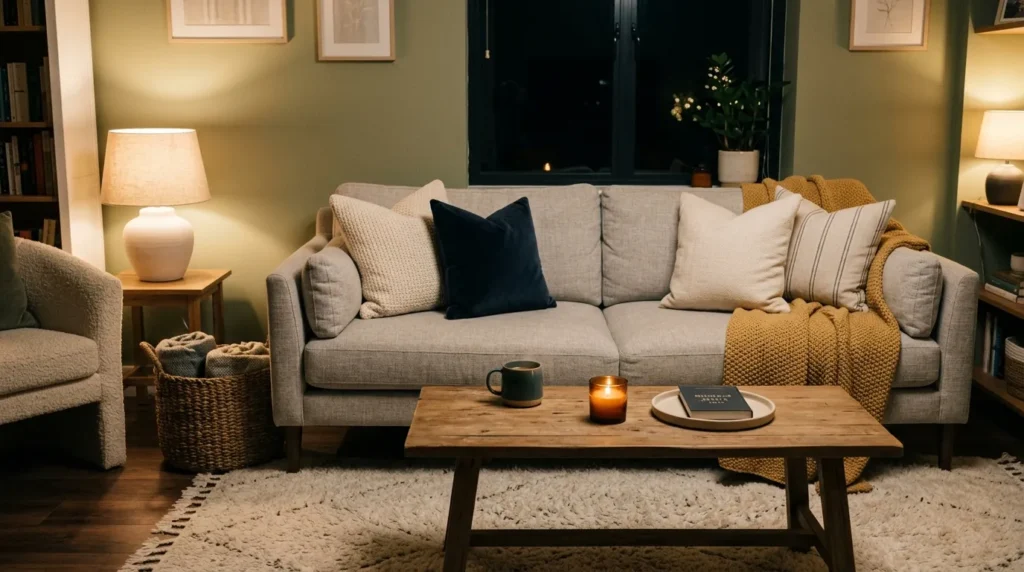
- Fold throws, fluff pillows, and clear surfaces each evening.
- Use baskets for quick cleanup in shared spaces.
- Keep remotes, chargers, and papers in assigned spots.
- Reset the room before bed to reduce morning stress.
- Make the routine simple enough to repeat daily.
A cozy room is easier to love when it does not stay messy. Daily reset habits protect the comfort you worked hard to create. This does not mean deep cleaning every night. It means spending a few minutes folding blankets, fluffing pillows, clearing cups, putting remotes away, and placing loose items in baskets. These small actions help the room return to a calm baseline before the next day begins. A styled room feels much better when it is easy to maintain.
The trick is to make cleanup almost effortless. Keep a lidded basket near the sofa, a tray for remotes, a drawer for chargers, and hooks near the entry. If everything has a simple home, the room resets quickly. This final habit makes all the other cozy changes last longer. Use these Decor Tips as a flexible system, not a strict rulebook. Your home should feel warm, useful, and peaceful in real life, not just clean for a photo.