
Floating vs Freestanding 30-Inch Vanity: Which Holds More Weight?
Choosing between a floating vs freestanding 30-inch vanity often comes down to how much weight you need the unit to carry. While both styles fit well in small bathrooms, their structural integrity depends entirely on how they transfer force to your home’s frame. Many homeowners assume a wall-mounted unit is inherently weaker, but the reality depends on the quality of your wall blocking and the vanity’s construction.
This overview helps you decide which configuration better suits your storage needs and structural constraints, ensuring you don’t end up with a sagging sink or damaged drywall. Understanding the differences in how these units support heavy stone tops and daily use is essential for a long-lasting bathroom renovation.
Weight Capacity and Structural Support

When comparing a floating vs freestanding 30-inch vanity, the freestanding model almost always holds more total weight without requiring special wall preparation. Because a freestanding unit rests directly on the floor, it transfers the weight of the cabinet, sink, and countertop straight into the subfloor. This design is inherently stable and requires no additional reinforcement beyond leveling the feet.
In contrast, a floating vanity relies entirely on the strength of the wall. Its weight capacity is defined by the integrity of the mounting hardware and the studs it is anchored into. If you plan to install a heavy marble or quartz countertop, a wall-mounted unit requires professional-grade wall blocking between studs to distribute the load safely.
Key Load Factors
- Floor Support: Freestanding units bear weight through their legs or toe kicks, making them ideal for heavy stone surfaces.
- Wall Integrity: Floating vanities require solid wood blocking behind the drywall to prevent the unit from pulling away from the wall.
- Hardware Limits: The weight capacity of wall-mounted brackets varies, but even high-end systems typically have a lower threshold than a floor-anchored cabinet.
- Dynamic Load: Consider that people often lean on vanities while brushing their teeth, which adds significant downward force to the mounting points.
Comparison of Design and Utility

The choice between these two styles affects more than just weight limits; it changes the entire feel of the room. A floating vanity creates an open, airy appearance by exposing the floor beneath, which can make a small bathroom feel larger. However, this design eliminates the extra storage space typically found in the bottom of a floor-mounted cabinet.
| Feature | Floating Vanity | Freestanding Vanity |
|---|---|---|
| Weight Support | Wall-dependent | Floor-supported |
| Installation Difficulty | High (Requires blocking) | Low (Leveling only) |
| Storage Potential | Limited | High |
| Visual Impact | Minimalist/Modern | Traditional/Substantial |
Installation Considerations
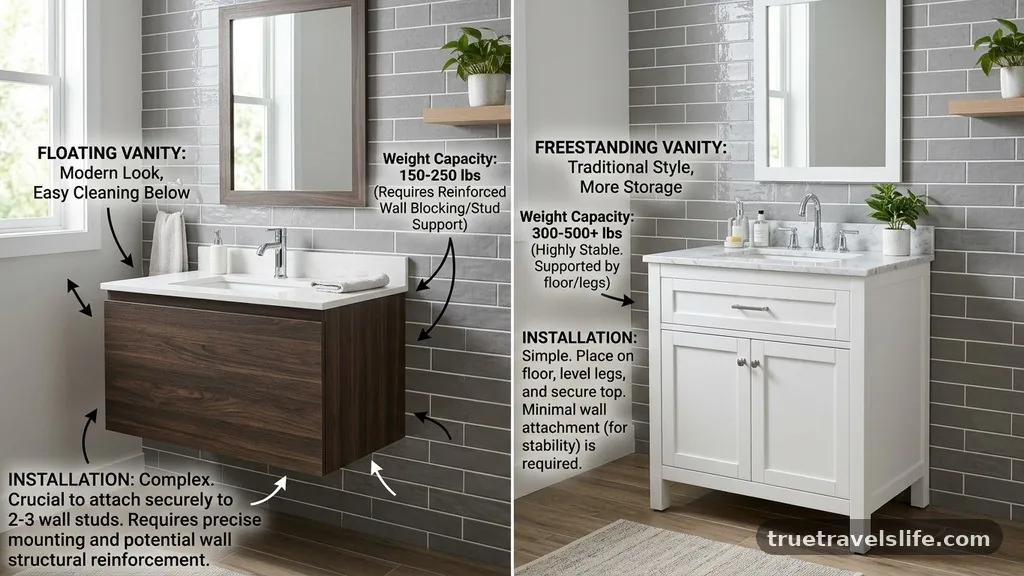
Installing a floating vanity is a more involved process than setting up a freestanding one. You must locate the studs accurately and ensure that your plumbing rough-in aligns perfectly with the cabinet’s internal layout. If the wall isn’t reinforced with plywood or 2×6 lumber, you may need to open the drywall to install the necessary support before the vanity can be safely mounted.
Freestanding vanities are significantly more forgiving during installation. They are usually delivered fully assembled, requiring only that you level the unit and secure it to the wall with a simple bracket to prevent tipping. This makes them the preferred choice for DIY renovations where opening up wall cavities is not desired.
Final Verdict on Capacity
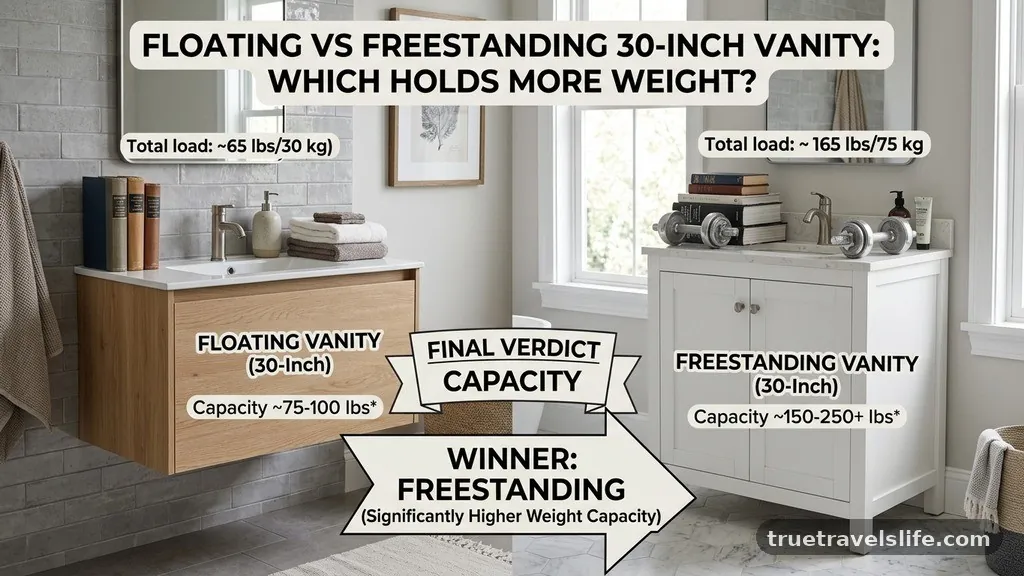
When evaluating a floating vs freestanding 30-inch vanity, the freestanding option remains the clear winner for raw weight capacity and ease of installation. If your primary goal is to support a heavy stone countertop or you want a low-maintenance setup, the floor-mounted design is the safer bet. Floating units offer a sleek, modern aesthetic that is excellent for small bathrooms, provided you commit to the necessary structural reinforcements in the wall.
Always check the manufacturer’s weight rating for your specific unit before purchasing. Proper installation, whether into floor joists or reinforced wall blocking, is the single most important factor in the longevity of your bathroom vanity. If you have questions about your wall construction, consulting a contractor before starting your project can prevent costly repairs later.