10 Bathroom Floor Tile Ideas Modern That Make a Small Space Feel Elevated
Choosing a bathroom floor can completely change the atmosphere of the room. The right tile creates a foundation for everything else, from the vanity and lighting to the shower walls, hardware, and accessories. In a modern bathroom, flooring also has to balance appearance with practical concerns such as moisture, cleaning, traction, and everyday wear.
That balance becomes even more important when the bathroom is small. A busy floor pattern can make a compact room feel visually crowded, while a carefully selected tile can create continuity and make the entire space feel more intentional.
Modern bathroom design has moved well beyond plain white squares. Large-format porcelain, subtle stone patterns, terrazzo-inspired surfaces, elongated tiles, warm beige tones, charcoal floors, and geometric layouts all offer different ways to create personality without making the room feel dated.
In my experience, the most successful bathroom floors are rarely the ones with the most decoration. They are the ones that complement the architecture and allow a few beautiful details to stand out.
This guide explores ten modern flooring directions that work across different bathroom sizes and decorating styles. Each idea includes practical styling advice, material considerations, layout suggestions, and ways to coordinate the floor with the rest of the room.
Whether you’re planning a full bathroom renovation or simply gathering inspiration for a future project, these ideas can help you choose a floor that feels contemporary, comfortable, and timeless.
Table of Contents
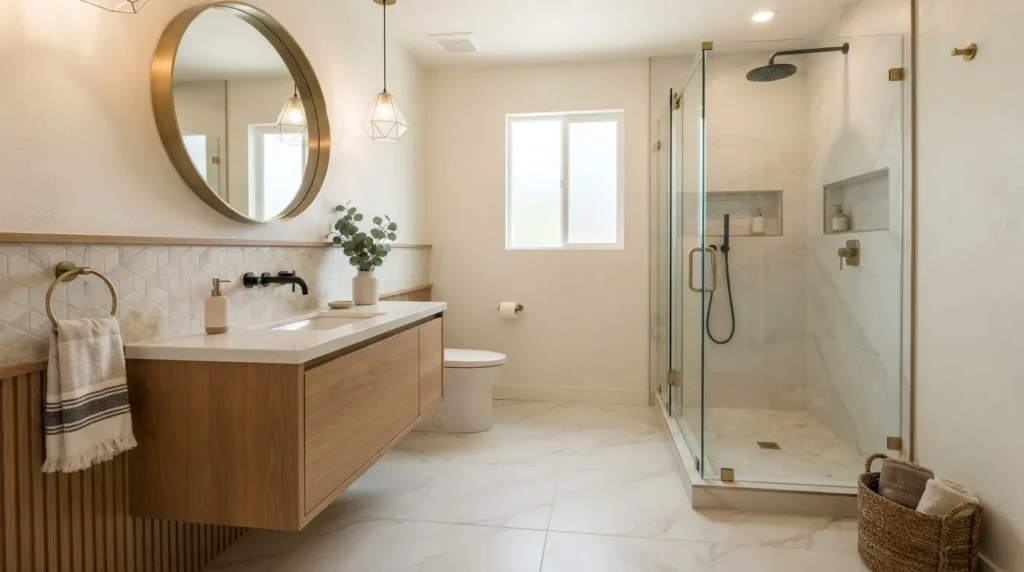
1. Large Format Stone
Create a seamless modern foundation with oversized stone-look floor tiles.
2. Warm Beige Porcelain
Bring softness and warmth into contemporary bathrooms with understated beige flooring.
3. Matte Charcoal Tile
Use deep flooring to create contrast against lighter walls and fixtures.
4. Modern Terrazzo
Introduce subtle pattern and texture with contemporary terrazzo-inspired surfaces.
5. Geometric Floor Pattern
Add personality through carefully arranged geometric tile shapes.
6. Natural Stone Look
Create an organic atmosphere with realistic stone-inspired porcelain.
7. Soft Gray Concrete
Give the bathroom an urban modern character with concrete-look flooring.
8. Wood Look Porcelain
Add the warmth of timber while using a bathroom-friendly porcelain surface.
9. Checkerboard Contrast
Give a classic pattern a modern update with restrained colors and clean styling.
10. Minimal Neutral Tile
Create a calm foundation using simple neutral flooring and refined textures.
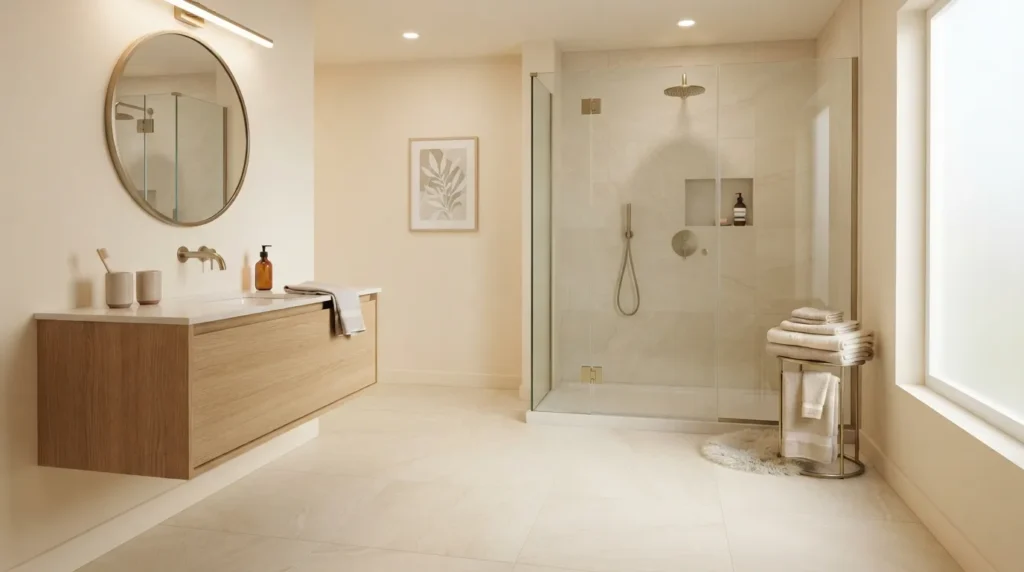
1. Large Format Stone
Quick Benefits
- Creates fewer visible grout lines
- Makes the floor feel more continuous
- Gives the bathroom a sophisticated appearance
- Works beautifully with modern fixtures
- Complements minimalist interiors
Why It Works
Large-format tile can make a modern bathroom feel calmer because there are fewer grout lines interrupting the visual surface. This effect is especially useful in smaller bathrooms where a highly segmented floor can feel busy.
Stone-look porcelain is particularly versatile. It can mimic limestone, marble, travertine, or other natural materials while offering a practical surface for everyday bathroom use.
The best large-format designs usually feature subtle variation rather than dramatic patterns. Soft veining and tonal movement add interest while preserving the clean character associated with contemporary interiors.
Large tiles also pair naturally with floating vanities, frameless shower enclosures, and simple architectural lighting.
How To Style It
Choose a stone-look tile in warm white, ivory, beige, greige, or soft gray depending on the rest of the bathroom.
Pair it with a floating vanity to emphasize clean horizontal lines. Brushed brass hardware can add warmth, while matte black creates stronger contrast.
Keep wall surfaces relatively simple if the floor already contains visible stone variation.
Before installation, discuss tile size, substrate conditions, drainage, and grout layout with a qualified installer. Large-format tile requires appropriate preparation for a successful installation.
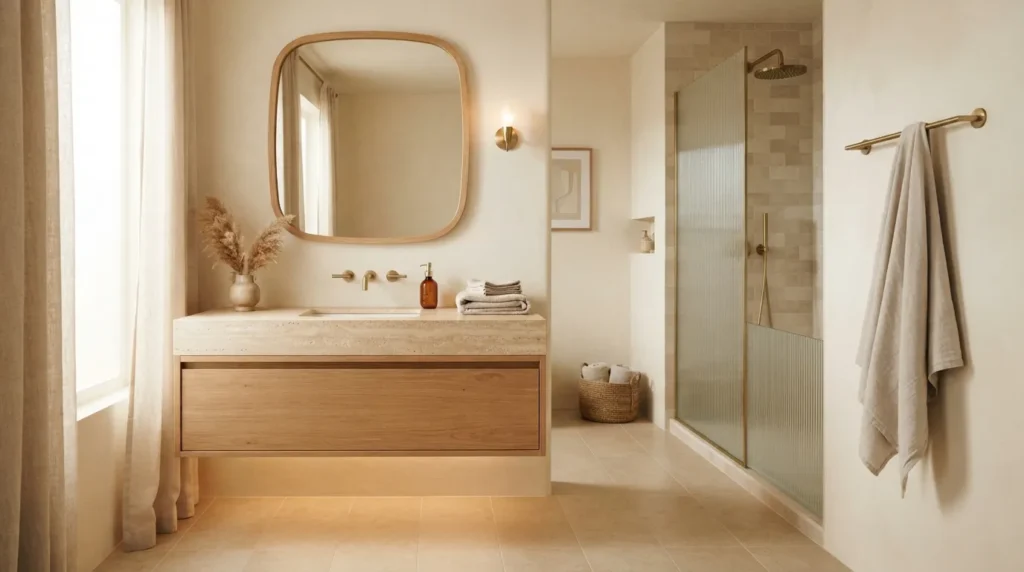
2. Warm Beige Porcelain
Quick Benefits
- Adds warmth
- Softens modern interiors
- Works with wood cabinetry
- Creates a relaxed atmosphere
- Coordinates with many neutral colors
Why It Works
Modern bathrooms do not have to feel cold. Warm beige flooring introduces a subtle earthy quality that works beautifully with contemporary cabinetry and clean-lined fixtures.
Unlike stronger yellow-toned beige, modern versions often lean toward sand, oat, mushroom, or warm greige. These shades provide warmth without making the room feel traditionally decorated.
Beige also creates a flexible foundation. It can work with cream walls, white tile, natural wood, brushed brass, bronze, or muted green accents.
For bathrooms with limited natural light, a lighter beige floor can help maintain a bright appearance while providing more warmth than stark white.
How To Style It
Combine warm beige floor tile with creamy walls and a natural wood vanity.
Use brushed brass or champagne-toned hardware for a softer luxury look. For a more contemporary direction, choose black fixtures and simple white walls.
Add texture through towels, woven baskets, stone accessories, and natural wood.
If using beige tile throughout the bathroom, vary the texture rather than introducing many additional colors. A matte floor paired with lightly textured wall tile can create depth without visual clutter.
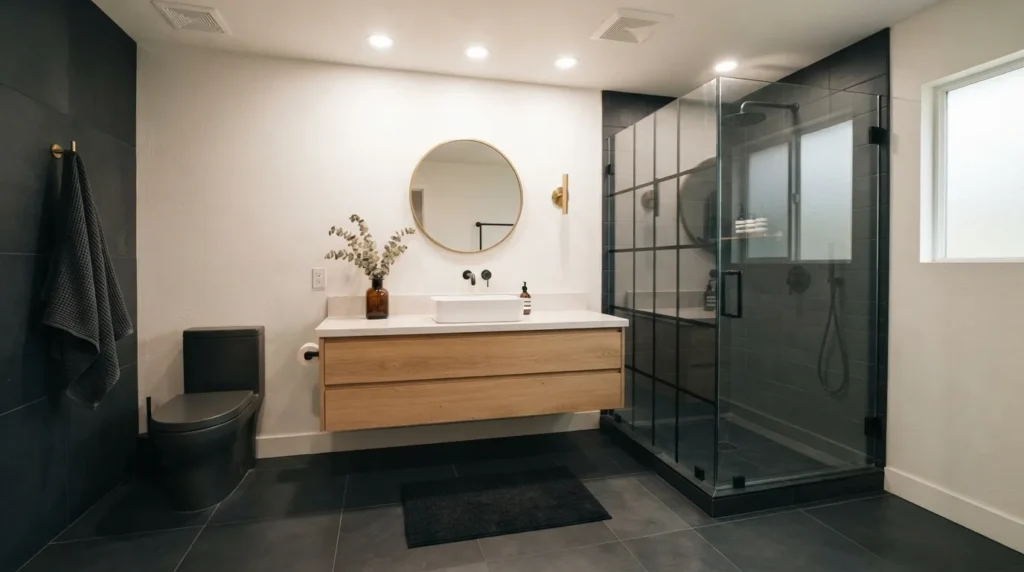
3. Matte Charcoal Tile
Quick Benefits
- Creates dramatic contrast
- Hides minor visual marks
- Works with white fixtures
- Adds contemporary character
- Complements industrial interiors
Why It Works
A dark bathroom floor can create a striking modern foundation. Charcoal has a softer appearance than pure black while still providing strong contrast against white walls, pale cabinetry, and bright fixtures.
Matte finishes are particularly effective because they reduce glare and create a more architectural appearance.
This approach works best when the room receives enough visual brightness from walls, mirrors, windows, or layered lighting. In a very dark bathroom, an extremely dark floor combined with dark walls can make the room feel enclosed.
The solution is contrast.
How To Style It
Pair charcoal floor tile with white or warm ivory walls.
A floating wood vanity can soften the contrast, while white cabinetry creates a crisp contemporary appearance.
Use brushed nickel, brass, or matte black hardware depending on the overall direction.
For a sophisticated look, choose a charcoal tile with subtle tonal variation rather than a completely flat black surface.
Keep decorative accessories minimal so the floor remains the primary contrast element.
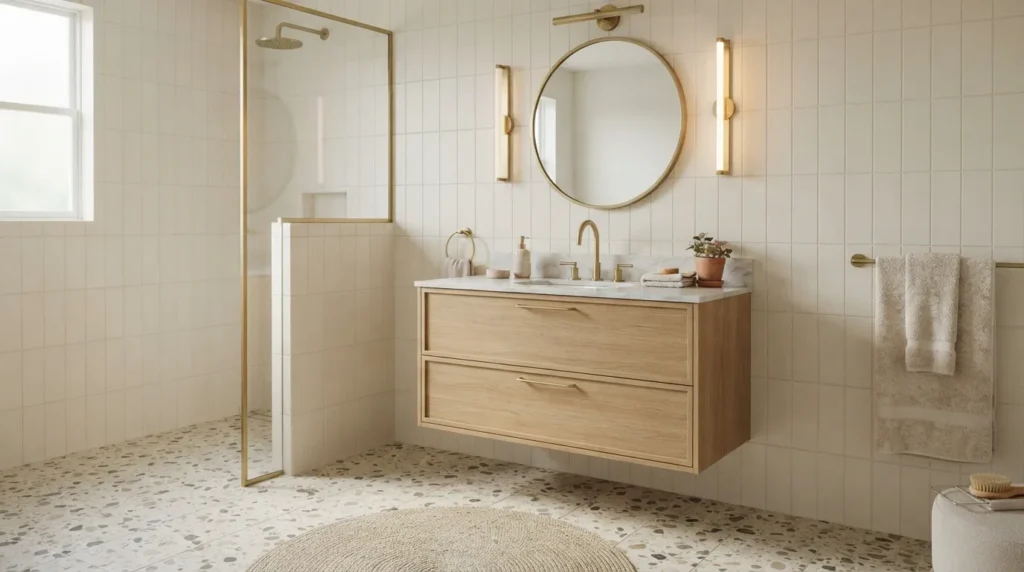
4. Modern Terrazzo
Quick Benefits
- Adds subtle visual interest
- Combines multiple colors
- Works with contemporary spaces
- Can coordinate with wall colors
- Creates a designer-inspired appearance
Why It Works
Terrazzo-inspired tile is useful when you want more personality than a plain neutral floor can provide.
Its scattered stone pattern introduces several related colors, making it easier to coordinate the bathroom’s palette. A floor containing cream, gray, taupe, and small charcoal details can connect multiple finishes throughout the room.
Modern terrazzo does not have to look heavily patterned. Fine aggregate designs can feel quiet and sophisticated, particularly when paired with simple cabinetry.
It is also an excellent choice for bathrooms where you want the flooring to become the decorative feature while keeping the walls relatively understated.
How To Style It
Choose terrazzo with a restrained color combination.
For a warm bathroom, look for cream flooring with beige, tan, and muted brown chips. For a cooler design, gray and white versions work beautifully.
Use one or two of the floor’s accent colors elsewhere in the room. For example, a small black detail can be repeated in the faucet and mirror frame.
Avoid introducing several unrelated accent colors. Let the floor establish the palette.
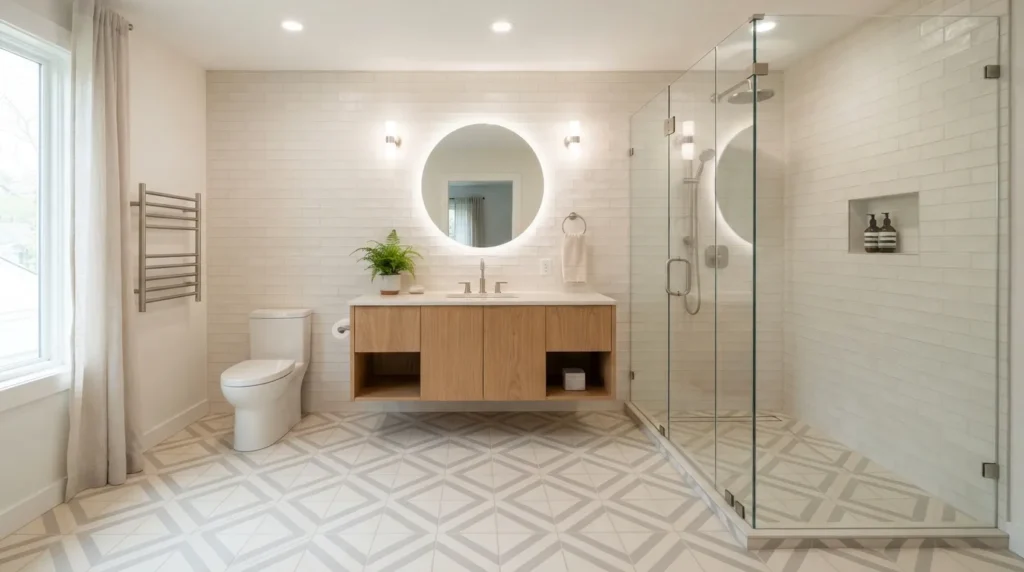
5. Geometric Floor Pattern
Quick Benefits
- Adds personality
- Creates visual movement
- Works in contemporary bathrooms
- Can emphasize room proportions
- Makes a simple space memorable
Why It Works
Geometric tiles bring structure to a bathroom without relying on decorative accessories. Hexagons, diamonds, elongated shapes, and other modern configurations can create a distinctive floor while maintaining a clean overall appearance.
The trick is controlling the color palette.
A geometric pattern in two neutral colors often feels more contemporary than a multicolored design. The shape creates enough visual interest on its own.
The scale also matters. Small geometric tiles create more grout lines and a busier surface, while larger shapes create a stronger architectural statement.
How To Style It
Choose two related or contrasting colors depending on the desired effect.
A soft white and warm gray combination can create subtle movement. Black and cream can produce stronger contrast.
Keep the walls simple so the floor has room to breathe.
For a small bathroom, consider using a larger geometric format to avoid overwhelming the space.
Coordinate the grout carefully with the tile colors. High-contrast grout emphasizes every shape, while a closer grout color creates a softer pattern.
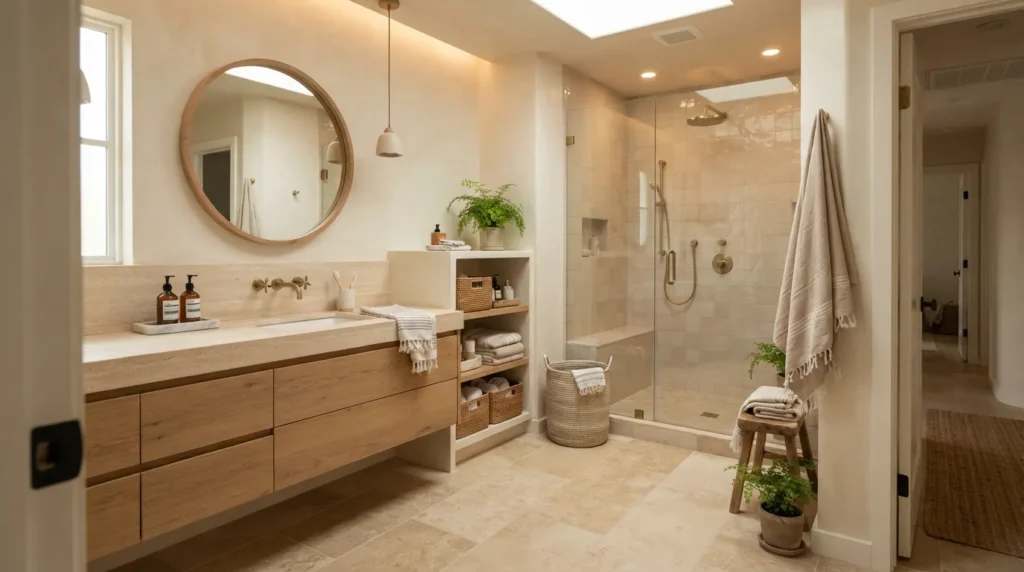
6. Natural Stone Look
Quick Benefits
- Creates an organic atmosphere
- Adds visual texture
- Works with warm and cool palettes
- Complements wood
- Provides a high-end appearance
Why It Works
Natural stone-inspired flooring brings an organic quality into contemporary bathrooms. The subtle variation found in stone-look porcelain can make a minimalist room feel more connected to nature.
This style works particularly well with modern organic interiors that combine clean architecture with warm materials.
Look for limestone-inspired, travertine-inspired, or softly veined surfaces in neutral shades.
Porcelain can provide the stone appearance while offering practical benefits for bathroom applications. Product suitability still depends on the specific tile and installation requirements.
How To Style It
Pair natural stone-look flooring with a wood vanity, creamy wall tile, and simple brushed metal hardware.
Keep the accessories organic: folded linen towels, wood trays, woven baskets, and simple ceramic containers.
For a spa-inspired appearance, use warm beige stone-look flooring with a frameless glass shower and soft lighting.
Avoid mixing too many stone patterns. If the floor has strong variation, keep the countertop and wall surfaces quieter.
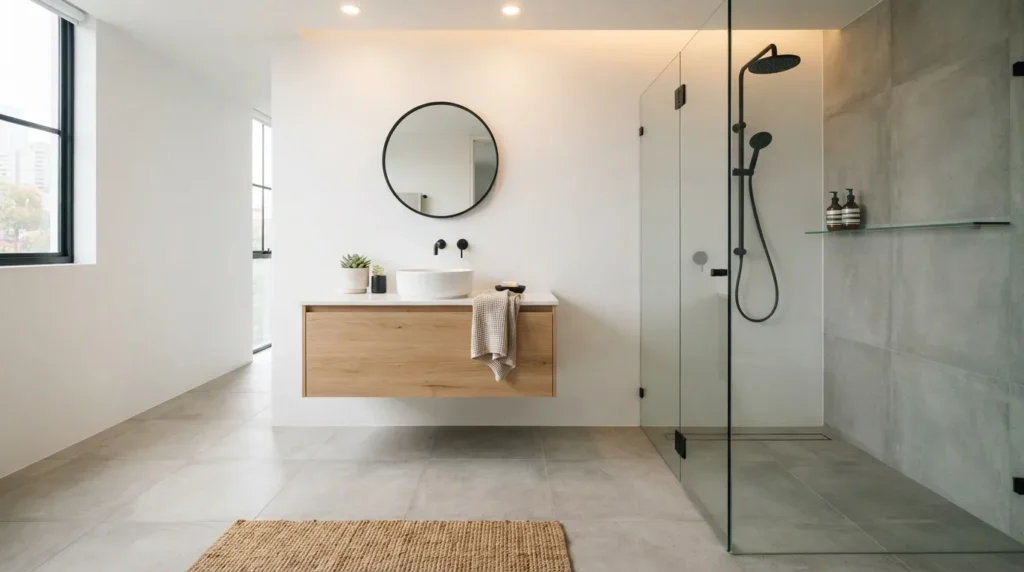
7. Soft Gray Concrete
Quick Benefits
- Creates an urban feel
- Works with modern architecture
- Provides a neutral backdrop
- Pairs well with black fixtures
- Supports minimalist styling
Why It Works
Concrete-look flooring gives a bathroom an understated architectural character. It works especially well in modern apartments, industrial-inspired interiors, and minimalist homes.
Soft gray is more versatile than very dark gray because it can work with both warm and cool finishes.
The subtle tonal variation found in concrete-look tile adds texture without creating a busy pattern.
This flooring can also create continuity between a bathroom and other contemporary areas of the home when similar gray tones are repeated elsewhere.
How To Style It
Pair soft gray flooring with white walls and a light wood vanity for a warm modern look.
For an industrial direction, combine it with black fixtures, clear glass, and dark metal details.
Use warm lighting to prevent the gray palette from feeling overly cool.
A few natural accessories can soften the look. Wood, linen, woven baskets, and plants where suitable can add contrast without changing the minimalist character.
8. Wood Look Porcelain
Quick Benefits
- Adds warmth
- Creates natural visual texture
- Complements modern cabinetry
- Works with neutral walls
- Offers a wood-inspired appearance
Why It Works
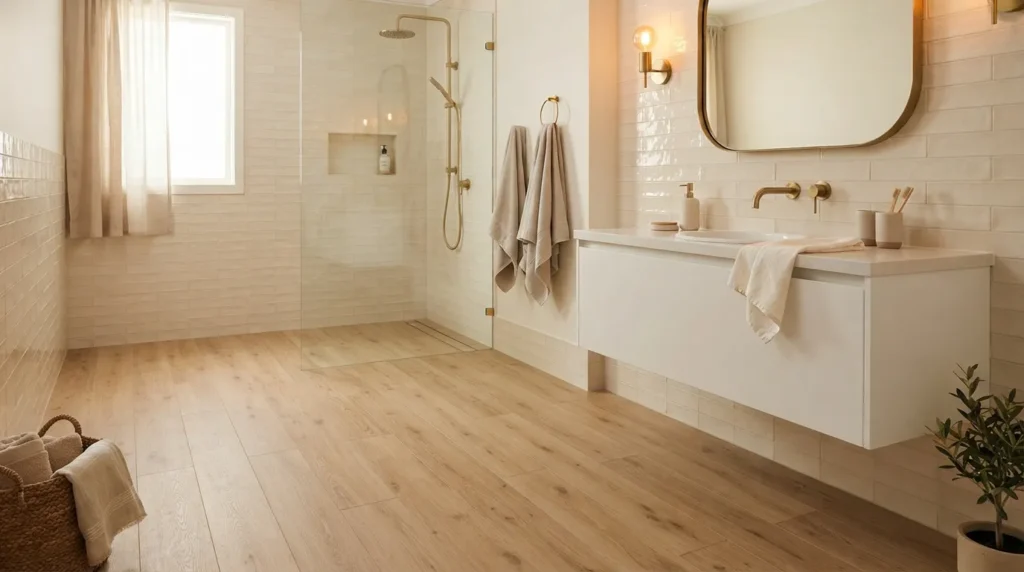
Wood-look porcelain can bring the visual warmth of timber into a bathroom while providing a tile surface designed for appropriate bathroom applications.
This style is particularly effective in modern organic bathrooms where stark white surfaces might feel too sterile.
Long plank-style tiles can also create directional movement. Depending on the installation pattern, they can emphasize the length or width of a room.
The most convincing designs feature realistic grain, varied plank tones, and restrained color variation.
How To Style It
Choose a light or medium wood tone based on the bathroom’s existing finishes.
Pair it with creamy wall tile, a simple stone countertop, and brushed brass or matte black fixtures.
Use a floating vanity to maintain a modern appearance.
Keep the rest of the room relatively simple. The wood pattern already provides texture, so excessive wall patterns can compete with it.
Always select a product specifically rated for the intended floor application and follow manufacturer installation guidance.
9. Checkerboard Contrast
Quick Benefits
- Adds classic structure
- Creates strong visual contrast
- Works with modern fixtures
- Makes a memorable floor
- Can be adapted to neutral palettes
Why It Works
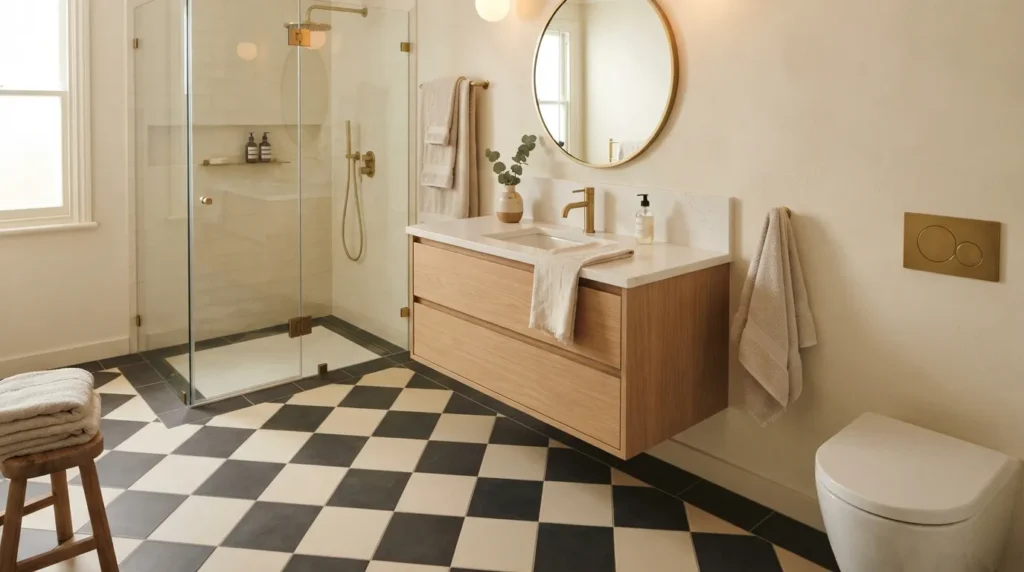
Checkerboard flooring has a traditional design history, but it can look remarkably modern when the colors, scale, and surrounding materials are carefully selected.
Instead of the traditional stark black-and-white combination, try softer pairings such as cream and charcoal, warm white and taupe, or pale gray and medium gray.
The pattern adds structure to the floor while allowing the rest of the bathroom to remain simple.
This is particularly effective in bathrooms with plain walls because the floor becomes the main decorative feature.
How To Style It
Use simple white or cream wall tile to balance the patterned floor.
Choose contemporary fixtures with clean silhouettes.
A floating vanity can prevent the room from feeling overly traditional.
For a softer appearance, select low-contrast tile colors. For a dramatic bathroom, black and ivory can create a strong statement.
Keep accessories minimal and let the checkerboard layout provide the visual interest.
10. Minimal Neutral Tile
Quick Benefits
- Creates a calm atmosphere
- Works with many styles
- Supports long-term flexibility
- Makes accessories easy to change
- Keeps the room visually clean
Why It Works
Sometimes the most successful modern floor is the simplest one.
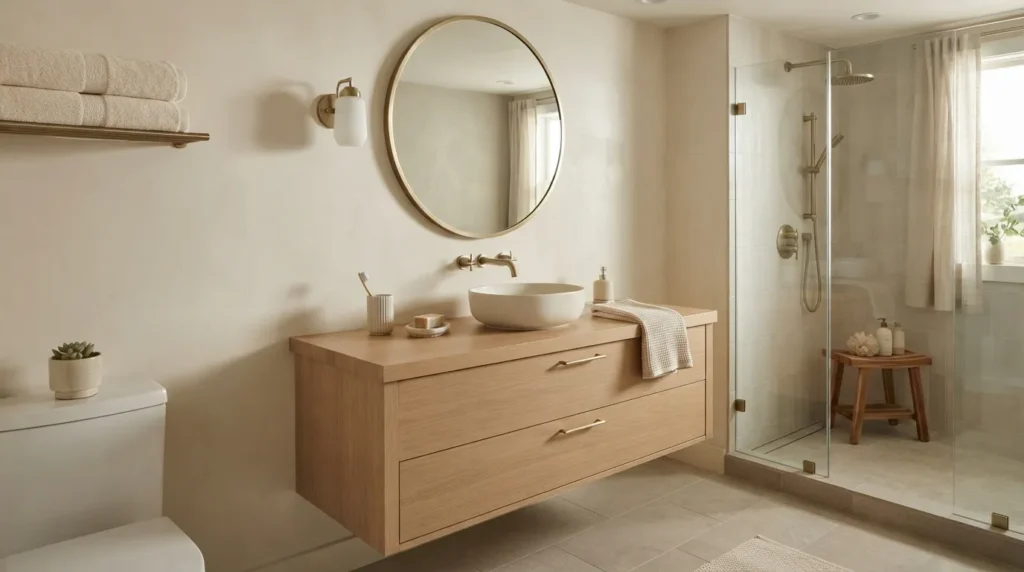
A soft neutral tile creates a quiet foundation that allows the vanity, lighting, mirror, shower design, or hardware to become the focal point.
This is especially useful if you expect your decorating preferences to change. A timeless floor can support different accent colors and materials over time without requiring another renovation.
The key is selecting a tile with enough texture or tonal variation to avoid looking flat.
Matte surfaces, subtle stone movement, handmade-inspired edges, or gentle color variation can provide depth while maintaining a minimalist appearance.
How To Style It
Choose a neutral shade that relates to the bathroom’s permanent finishes.
Warm beige works well with wood and brass. Soft gray complements black, chrome, and white. Cream works beautifully with natural materials.
Use simple wall tile and introduce personality through lighting, artwork, towels, and accessories.
For a cohesive result, repeat the floor’s undertones in at least one other surface.
How to Choose Modern Bathroom Floor Tile
Start with the practical requirements before choosing the appearance.
Bathroom floors experience moisture, cleaning products, foot traffic, and frequent temperature changes. The specific tile needs to be suitable for the intended application, and the finished installation needs appropriate waterproofing and drainage.
Look at:
- Tile material
- Surface finish
- Slip resistance
- Size
- Grout requirements
- Maintenance
- Color variation
- Installation method
- Compatibility with the existing floor
- Manufacturer specifications
Porcelain and ceramic are common choices, but suitability depends on the individual product and installation conditions.
For wet areas, ask the tile supplier or installer about the product’s appropriate use and slip-resistance characteristics rather than choosing solely based on appearance.
How Tile Size Changes a Bathroom
Tile size can influence how spacious a bathroom feels.
Large-format tiles create fewer grout lines and can produce a continuous appearance. Smaller tiles provide more flexibility around drains and curved areas and can introduce stronger patterns.
In a compact bathroom, a large tile does not automatically make the room feel bigger. The actual dimensions, layout, drainage, and installation conditions all matter.
A professional installer can help determine what size works with the room’s substrate and floor slope.
Modern Bathroom Floor Color Combinations
A successful color palette usually starts with the floor and then moves upward.
For a warm modern bathroom, consider:
- Beige floor
- Cream walls
- Light oak vanity
- Brushed brass hardware
For a cool contemporary bathroom:
- Soft gray floor
- White walls
- Gray vanity
- Brushed nickel hardware
For dramatic contrast:
- Charcoal floor
- Ivory walls
- Wood vanity
- Matte black fixtures
For an organic look:
- Stone-look beige floor
- Warm white walls
- Natural wood
- Soft green accents
Keeping the palette controlled makes even a patterned floor easier to live with.
Bathroom Floor Tile Mistakes to Avoid
One common mistake is choosing flooring based only on a photograph. Tile can look very different depending on room lighting, surrounding colors, and installation scale.
Order samples when possible and view them in both natural and artificial light.
Another mistake is selecting grout without considering maintenance. Highly contrasting grout can emphasize the pattern and may require more visible upkeep.
Avoid using too many competing tile patterns. If the floor is dramatic, the walls can remain quieter.
Finally, do not overlook installation. A beautiful tile can perform poorly when the underlying surface, waterproofing, drainage, or installation method is inappropriate.
Related Articles
- 10 Modern Bathroom Design Ideas With Luxury Details
- 10 Small Bathroom Ideas That Feel Spacious
- 10 Bathroom Shower Tile Ideas for a Modern Home
- 10 Bathroom Vanity Ideas for Elegant Storage
- 10 Modern Bathroom Decor Ideas for a Clean Look
Frequently Asked Questions
What type of tile is best for a modern bathroom floor?
Porcelain and ceramic are common options, with many modern designs available in stone, concrete, terrazzo, and wood-inspired finishes. The best choice depends on the specific product’s suitability, surface characteristics, maintenance requirements, and installation conditions. Check manufacturer specifications and consult a qualified tile professional for wet-area applications.
What color floor tile makes a small bathroom look bigger?
Light and medium neutral tones such as warm beige, cream, soft gray, and pale stone can help create a visually open appearance. Using related tones across the floor and walls can also reduce visual breaks. Lighting, tile size, grout color, and the overall layout influence the final effect.
Are large tiles good for small bathrooms?
Large tiles can create fewer grout lines and a more continuous appearance, but they are not automatically the right choice for every small bathroom. The room’s dimensions, floor slope, drain location, and installation requirements matter. A qualified installer can recommend an appropriate tile size for the specific space.
Is matte or glossy tile better for bathroom floors?
Matte finishes are commonly preferred for bathroom floors because they generally produce less glare and can provide a more understated appearance. However, the specific surface characteristics and slip-resistance rating matter more than the visual finish alone. Always check the manufacturer’s specifications for the intended application.
How do you make bathroom floor tile look modern?
Choose clean shapes, restrained colors, subtle textures, large-format surfaces, or contemporary interpretations of classic patterns. Pair the flooring with simple cabinetry, streamlined fixtures, good lighting, and limited decorative clutter. Modern style usually comes from the relationship between all the elements rather than one specific tile.
Should bathroom floor and wall tile match?
They do not have to match. Using related colors or undertones can create continuity, while contrasting textures or patterns can add visual interest. If the floor contains a strong pattern or pronounced stone variation, simpler wall tile can help balance the room.
How do you make a tiled bathroom feel warmer?
Introduce warm undertones through beige or cream flooring, natural wood cabinetry, brass hardware, warm lighting, and soft textiles. Stone-look tile can also add organic texture. Even a gray bathroom can feel comfortable when warm materials and lighting are layered thoughtfully.
Conclusion
The bathroom floor sets the tone for the entire room. A beautiful modern design does not require the most dramatic tile; it requires a surface that works with the space, the lighting, and the materials around it.
Large-format stone can create a seamless appearance, while warm beige adds softness. Charcoal flooring brings contrast, terrazzo introduces pattern, and wood-look porcelain adds natural warmth. Geometric and checkerboard layouts can make the floor a focal point, while simple neutral tile provides a flexible foundation.
Before choosing a design, consider the practical side. Check the tile’s intended use, surface characteristics, maintenance requirements, and installation needs. Samples viewed in your actual bathroom can also reveal undertones that may not be obvious online.
Then build the rest of the room around the flooring rather than trying to make every surface compete for attention.
A modern bathroom feels most successful when the materials work together. Start with one floor you genuinely love, keep the surrounding palette intentional, and allow the room’s architecture to remain visible.