11 Explore 15 Clever RV Living Room Ideas for Small Spaces
Introduction
Maximizing space in an RV living room is both a creative challenge and an opportunity to craft a functional, inviting environment. Small mobile interiors require smart furniture, multi-use solutions, and clever design tricks to make every square foot count. In the USA, RV owners increasingly prioritize comfort without sacrificing style, looking for ways to transform compact areas into cozy, organized, and visually appealing hubs. This guide provides actionable ideas that improve usability, aesthetics, and storage. From modular seating to light-enhancing strategies, each concept helps turn your RV living space into a comfortable and stylish retreat while optimizing every inch.
1. Modular Seating
Bullet Points
- Adapt seating arrangements for socializing or sleeping.
- Utilize sofas that fold or rearrange for space efficiency.
- Choose materials that are durable and easy to clean.
- Integrates seamlessly with storage solutions under cushions.
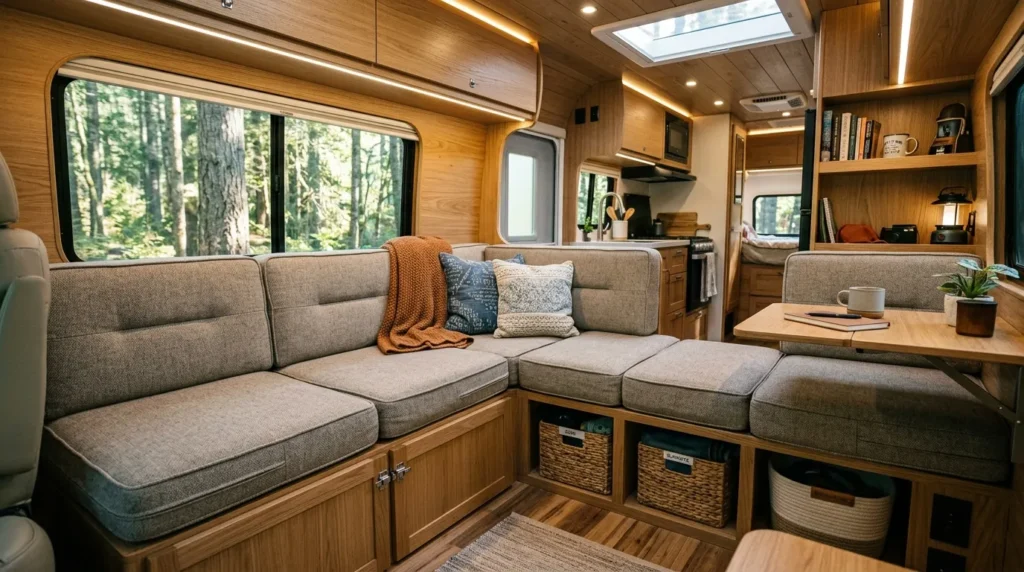
Modular seating offers flexibility and functionality, perfect for small RV living spaces. I’ve noticed that sofas with removable or foldable sections allow owners to adjust configurations according to needs, whether entertaining guests, relaxing, or sleeping. Durable upholstery like microfiber, leather, or performance fabric ensures longevity while handling frequent use. Modular pieces often incorporate hidden storage beneath cushions, adding practicality to comfort. The adaptability of modular seating creates a visually clean layout while optimizing floor space, allowing RV owners to shift furniture without compromising style or comfort.
Beyond adaptability, modular seating transforms the usability of small spaces. You can create a lounge area for day-to-day activities, rearrange components for overnight sleeping, or separate zones for dining and relaxing. Built-in storage under cushions reduces clutter, keeping essentials organized and accessible. Materials like leather or high-quality microfiber resist wear and are easy to maintain during travel. Modular designs allow maximum versatility without requiring custom construction, making them practical, stylish, and efficient for any RV living room configuration.
2. Multi-Functional Furniture
Bullet Points
- Tables that double as storage or extendable surfaces.
- Ottomans that serve as seats and storage containers.
- Murphy-style furniture that folds to create open space.
- Lightweight materials for easier mobility and rearrangement.
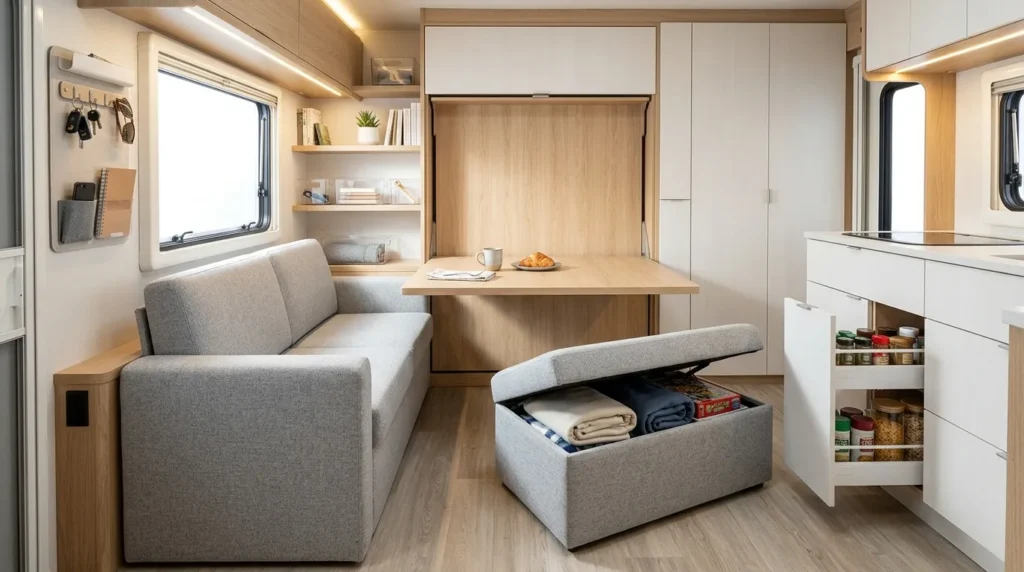
Multi-functional furniture is essential in RV living areas where space is limited. Pieces that serve multiple purposes reduce clutter and add value to every square foot. I’ve seen owners transform small tables into dining and workspaces with hidden compartments, while ottomans act as both seating and storage. Murphy-style elements allow walls or beds to fold away, opening the floor for circulation or other activities. Lightweight, durable materials make repositioning furniture easy while preserving design appeal, maximizing utility without overcrowding. Multi-functional solutions combine efficiency with style, enhancing usability in compact mobile environments.
The practical impact of multi-functional furniture is significant. Hidden compartments provide storage for bedding, games, or kitchen items, keeping the RV organized. Foldable or extendable tables can switch between casual dining, meal prep, or workspace functions. Furniture that adapts to multiple uses reduces the need for separate pieces, conserving floor space and improving traffic flow. This versatility transforms how small RV living rooms feel, allowing owners to adjust layouts based on activity while maintaining a polished, cozy, and functional environment that works for travel and everyday living.
3. Foldable Tables
Bullet Points
- Create dining, work, or craft areas without permanent bulk.
- Mount on walls with hinges to save floor space.
- Pair with folding chairs for easy storage.
- Durable materials like treated wood or lightweight metal for longevity.
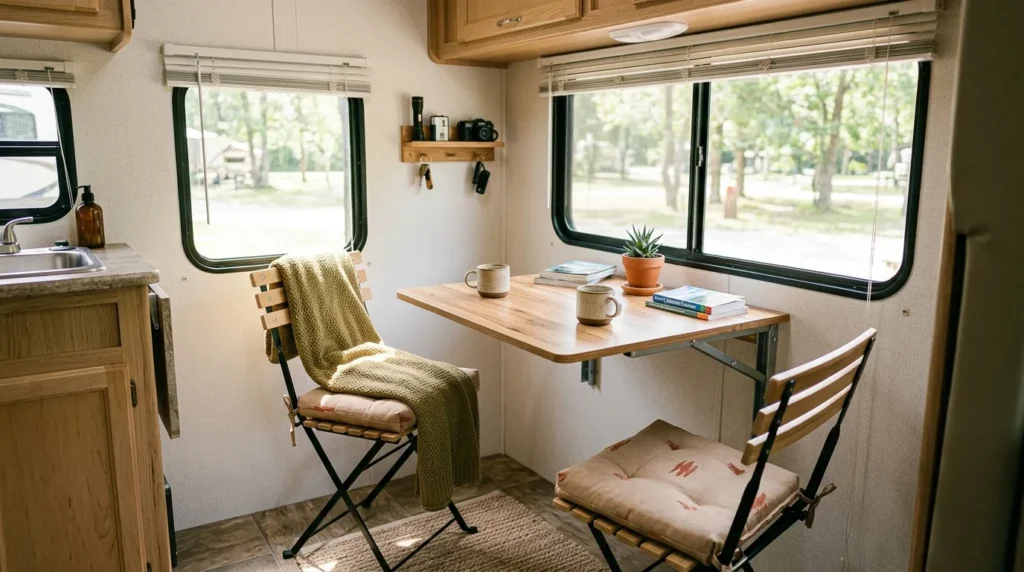
Foldable tables are a practical way to expand function in compact RV living rooms. They provide a temporary surface for meals, crafts, or workspace, then tuck away to free circulation. I’ve noticed wall-mounted foldable tables allow mobility and maintain a tidy aesthetic. Pairing them with foldable chairs creates a flexible, organized setup. Materials such as treated wood, aluminum, or composite surfaces provide durability while being lightweight enough for travel. Foldable solutions maintain openness without compromising usability, maximizing the functional potential of small interiors.
The transformation offered by foldable tables extends beyond floor space. They can be used in multiple zones—kitchen, living, or entry area—according to need. Easy deployment and storage ensure no visual clutter, maintaining a clean, spacious look. Durable finishes resist scratches or spills, supporting everyday life on the road. With foldable surfaces, RV owners gain versatility without investing in permanent fixtures. This approach creates a flexible, practical, and visually pleasing environment, making small living areas feel larger, functional, and well-planned.
4. Built-In Storage
Bullet Points
- Cabinets and drawers integrated under seating and counters.
- Utilize overhead compartments efficiently.
- Maximize vertical space with shelves or hooks.
- Keeps essentials accessible while maintaining a clean look.
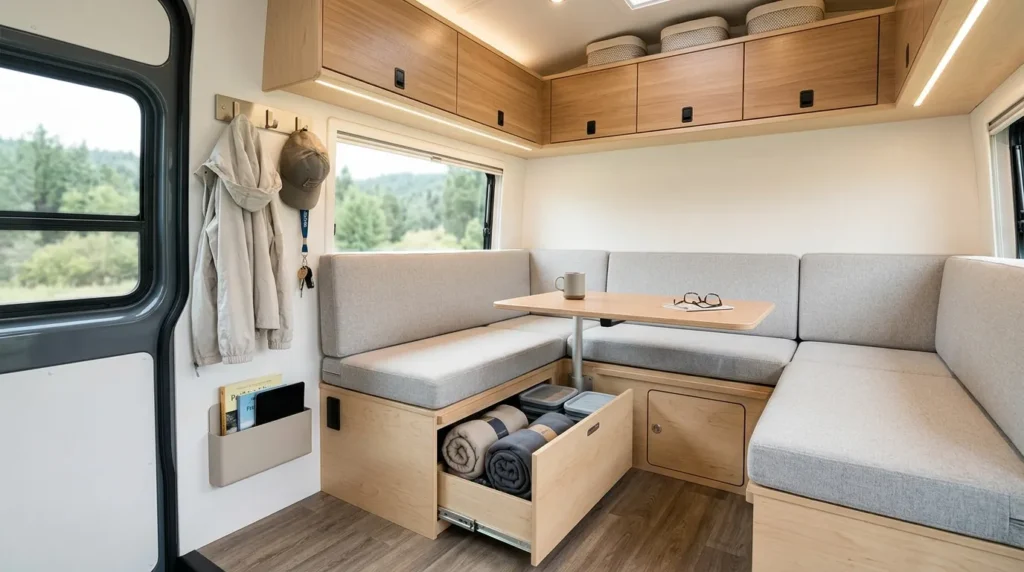
Built-in storage transforms RV living rooms by maximizing every inch of space. Integrating drawers and cabinets under seats, tables, and counters keeps items neatly stored and accessible. Overhead compartments and vertical shelving take advantage of areas often left unused, optimizing interior capacity. Hooks or hanging organizers create additional storage without sacrificing design appeal. I’ve noticed that built-in solutions reduce clutter and create a cohesive, organized aesthetic. This approach preserves walkways and maintains a visually open feel, critical in compact mobile interiors.
Practical outcomes of built-in storage improve daily usability significantly. Bedding, books, or kitchenware can be stored out of sight yet remain reachable. Overhead compartments prevent items from moving during travel, enhancing safety. Properly designed built-in storage blends seamlessly with décor, maintaining style without crowding the space. This strategy allows for better traffic flow, cleaner surfaces, and more functional areas for cooking, relaxing, or working. Built-in storage is essential for small RV living rooms, balancing efficiency, accessibility, and aesthetics simultaneously.
5. Light Colors
Bullet Points
- Soft shades of cream, beige, or pastels reflect light.
- Make spaces feel larger and more open.
- Pairs with bright accents for personality.
- Works well with natural and artificial lighting.
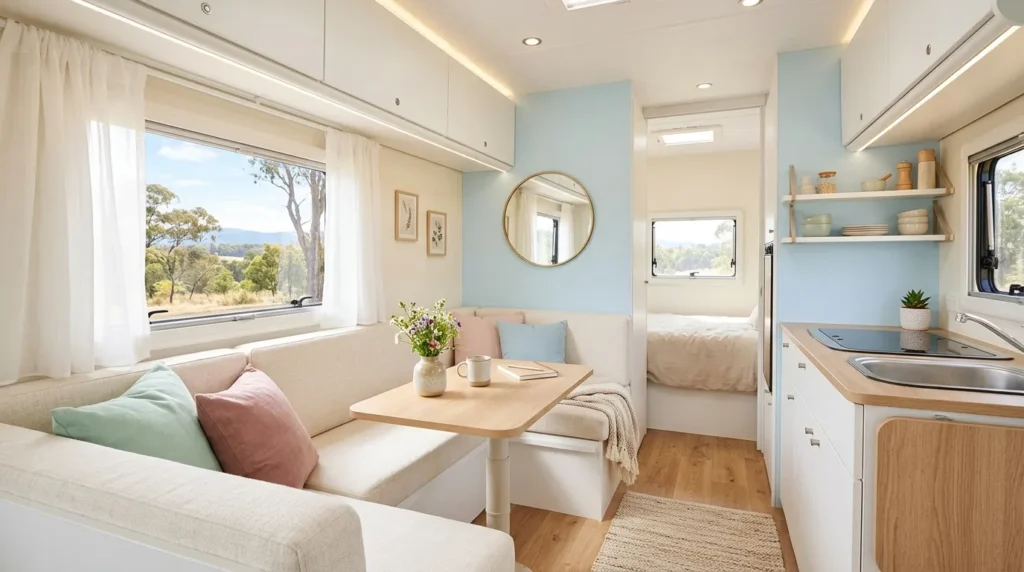
Light colors are transformative in small RV interiors. Pale shades reflect both daylight and artificial lighting, creating a sense of openness and brightness. I’ve noticed that cream, soft gray, or pastel walls instantly make narrow spaces feel wider and less confined. Light-colored upholstery and finishes reduce visual weight and pair effectively with colorful accents or textured fabrics. This technique enhances perception of space, balances functional furniture, and makes interiors feel airy while maintaining warmth and comfort, essential for small mobile living rooms.
Beyond visual impact, light colors improve usability and mood. Bright, reflective surfaces enhance ambient lighting, reducing the need for additional fixtures. Light tones create a cohesive backdrop, making furniture and decor stand out without overwhelming the room. The perceived spaciousness increases flexibility in furniture arrangements, improving circulation and comfort. Soft palettes also promote a calm atmosphere, enhancing relaxation and usability during travel. Using light colors is a simple, high-impact strategy to optimize small RV living spaces visually and functionally.
6. Mirrors
Bullet Points
- Reflect light to make spaces feel larger.
- Create depth and enhance visual interest.
- Use lightweight, frameless options for safety in motion.
- Strategic placement near windows or lights for maximum effect.
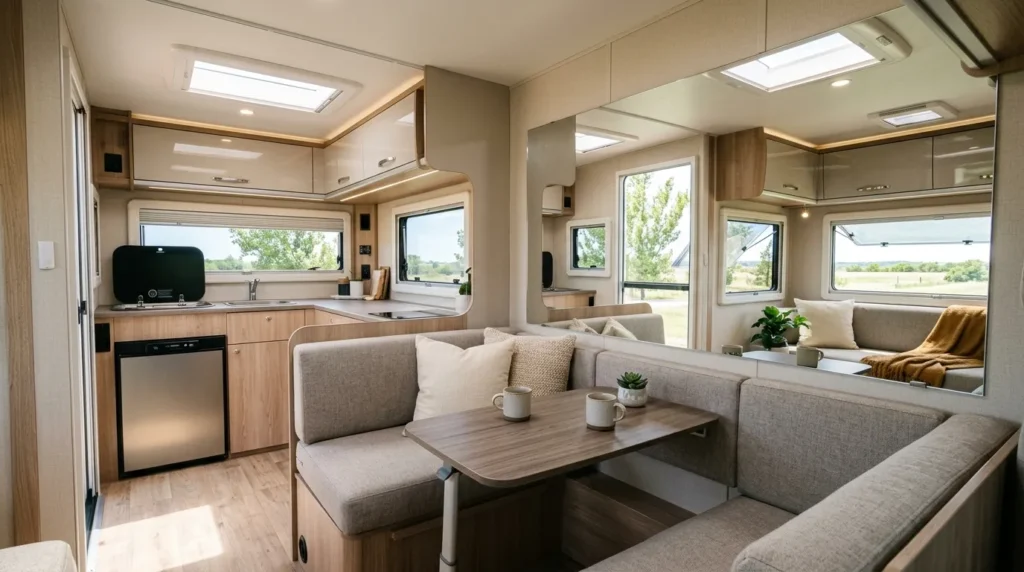
Mirrors are a clever design tool to expand compact RV living rooms. By reflecting light and creating the illusion of depth, mirrors make interiors feel larger than they are. I’ve seen lightweight, frameless mirrors used successfully on walls or cabinet fronts to open narrow corridors and seating areas. Mirrors can also accentuate decor elements and contribute to a balanced aesthetic. Strategic positioning near windows or light sources enhances natural brightness and visual appeal. In mobile interiors, mirrors serve both decorative and practical functions, optimizing perception of space efficiently.
The practical benefits of mirrors extend beyond aesthetics. Reflective surfaces can double perceived room size and illuminate dim corners. Properly mounted mirrors increase functional brightness without consuming extra floor space. They can highlight focal points, such as seating arrangements or wall art, enhancing visual cohesion. In travel environments, lightweight mirrors minimize hazards while providing stylistic impact. By incorporating mirrors thoughtfully, RV owners gain a versatile design element that maximizes space, enhances lighting, and elevates the overall living experience.