10 Kitchen Island Ideas Modern
A kitchen island can completely change the way a kitchen looks, feels, and functions. It can become the visual centerpiece of the room while adding valuable workspace, storage, seating, and a comfortable place for everyday activities. The best modern island designs do more than look beautiful in photos. They fit the way a household actually cooks, gathers, works, and entertains.
Modern kitchens are also moving beyond one-size-fits-all layouts. Some homeowners prefer a streamlined island with waterfall countertops and hidden storage, while others want a warm wood centerpiece that softens an otherwise contemporary space. Smaller kitchens can benefit from compact islands, while open-concept homes often use larger islands to create a natural transition between cooking and living areas.
Color, proportion, lighting, countertop material, cabinet style, and seating all influence how an island feels within the room. Even small details, such as the overhang for stools or the placement of pendant lights, can make a noticeable difference in everyday comfort.
If you’re planning a kitchen update or simply looking for inspiration, these modern kitchen island ideas offer practical ways to create a space that feels polished without becoming cold or overly formal. Each concept combines visual appeal with real-world function, so you can choose details that make sense for your kitchen’s size, layout, and lifestyle.
Table of Contents
1. Waterfall Edge Island
A sculptural countertop detail that gives a modern kitchen a seamless, finished appearance.
2. Warm Wood Contrast
Natural wood introduces warmth and texture while balancing sleek contemporary finishes.
3. Two-Tone Island
Contrasting cabinetry creates a defined focal point without requiring a complete kitchen redesign.
4. Marble Statement Island
Elegant stone creates a sophisticated centerpiece with timeless visual appeal.
5. Compact Seating Island
A streamlined island provides useful prep space and casual seating in smaller kitchens.
6. Fluted Cabinet Details
Textured cabinet fronts add architectural interest while keeping the overall design contemporary.
7. Minimalist White Island
A clean white island creates an airy, bright appearance with strong modern simplicity.
8. Dark Dramatic Island
Deep cabinetry gives the kitchen a sophisticated focal point and adds visual depth.
9. Multifunctional Work Island
A carefully planned island combines cooking, storage, dining, and everyday household activities.
10. Curved Modern Island
Soft edges bring movement and a more inviting feel to contemporary kitchen layouts.
1. Waterfall Edge Island
Quick Benefits
- Creates a sleek architectural focal point
- Makes the countertop feel visually continuous
- Works beautifully in open-concept kitchens
- Highlights premium countertop materials
- Gives contemporary cabinetry a polished finish
Why It Works
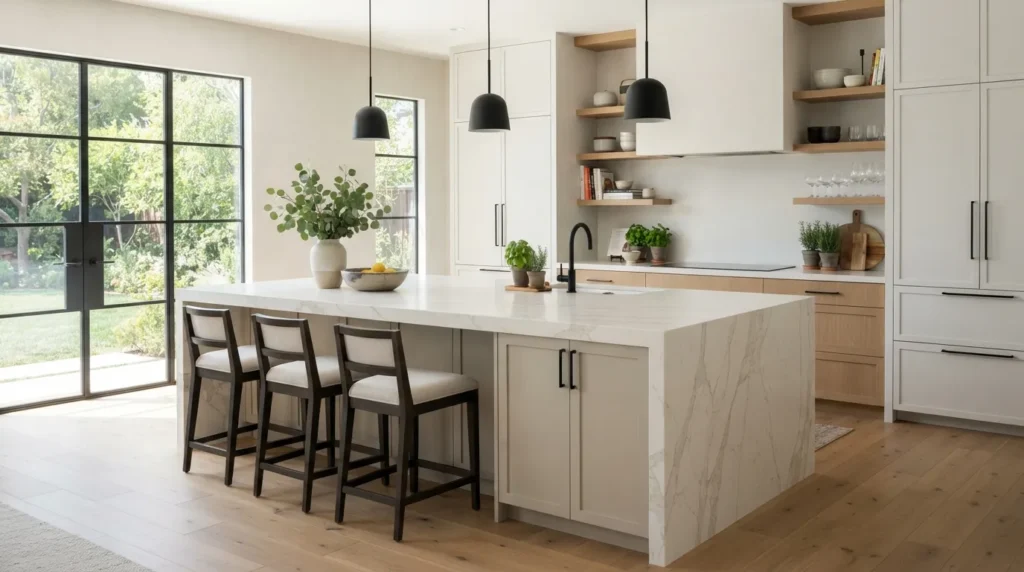
A waterfall edge island takes the countertop material over the side of the island, creating a continuous surface that reaches toward the floor. The result is clean, architectural, and especially effective in kitchens where the island can be seen from the living or dining area.
This design works because it simplifies the visual lines of the room. Instead of seeing separate cabinet and countertop surfaces, the stone becomes a strong sculptural element. Quartz, porcelain, and natural stone are popular choices because they create the uninterrupted appearance associated with contemporary interiors.
A waterfall island can also make an island feel more substantial without relying on decorative trim. In an open-plan home, that visual weight can help define the kitchen zone while keeping the overall design cohesive.
One practical consideration is proportion. A waterfall edge looks most balanced when the island has enough width and visual presence to support the detail. The slab pattern also matters because veining that continues down the side can create an especially dramatic effect.
How To Style It
Choose a countertop with subtle veining if you want an understated modern look, or select stronger stone movement when the island is intended to become the room’s centerpiece. Pair the countertop with flat-panel cabinetry for a streamlined appearance.
For a warmer result, combine a stone waterfall surface with wood flooring, natural stools, or woven accessories. Keep countertop decoration restrained so the architectural edge remains visible.
Pendant lights can frame the island without competing with it. Three smaller pendants work well over a longer island, while two larger fixtures can suit a more compact layout.
If seating is included, leave enough knee clearance beneath the overhang. The island needs to remain comfortable for everyday use rather than functioning only as a visual feature.
2. Warm Wood Contrast
Quick Benefits
- Adds warmth to contemporary kitchens
- Creates natural visual texture
- Softens cool stone and metal finishes
- Works with neutral color palettes
- Makes the island feel inviting
Why It Works
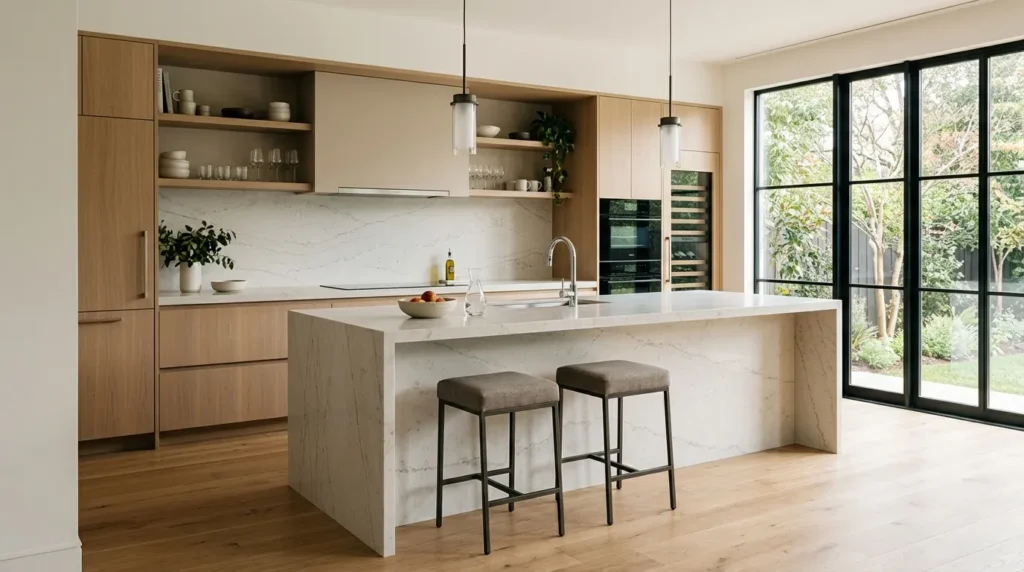
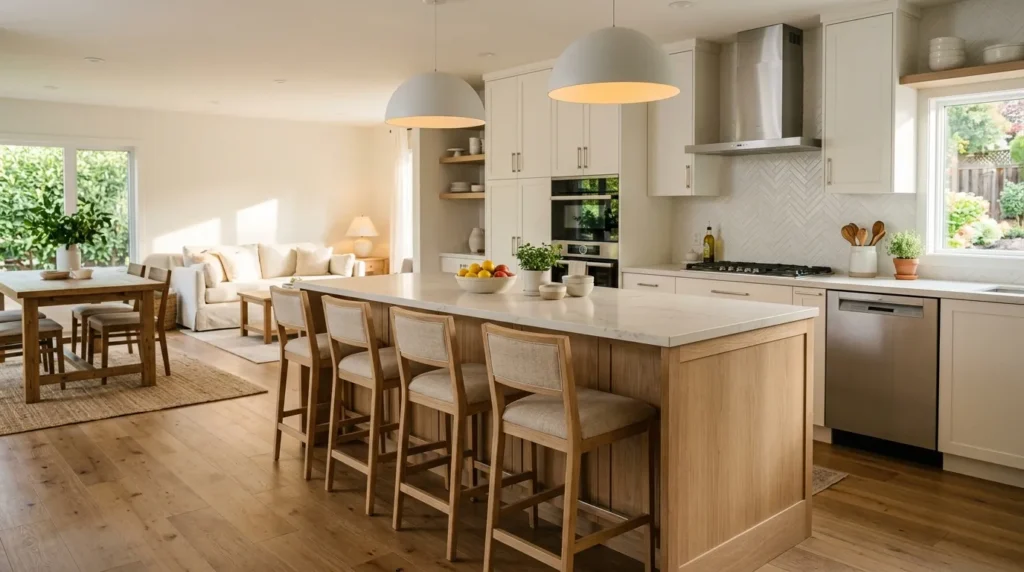
Modern design does not have to mean an entirely white, gray, or monochromatic kitchen. A warm wood island can add character to a contemporary space while maintaining a clean and sophisticated appearance.
Wood introduces natural variation that manufactured surfaces cannot always replicate. Grain patterns, knots, and subtle tonal differences make the island feel more tactile. This is particularly useful in modern kitchens that contain smooth cabinetry, polished countertops, and stainless-steel appliances.
A wood island also provides an easy way to introduce warmth without changing every cabinet in the kitchen. For example, a kitchen with white perimeter cabinets can gain an entirely different personality when the island is finished in oak, walnut, or another natural wood tone.
The contrast works because the island becomes visually distinct while still connecting with other natural elements throughout the room. Wood flooring, cutting boards, dining furniture, and woven stools can reinforce the connection.
How To Style It
For a contemporary look, choose cabinetry with simple slab doors rather than heavily decorative profiles. Natural white oak creates a light Scandinavian-inspired feeling, while walnut produces a deeper and more luxurious appearance.
Pair the wood with a light quartz or stone countertop for contrast. Matte black hardware can add definition, while brushed metal fixtures create a softer transition between materials.
Keep accessories simple. A ceramic bowl, a small vase, or a wooden serving board can provide enough decoration without making the island look cluttered.
If the kitchen already contains several wood finishes, coordinate undertones carefully. Matching every wood surface exactly is unnecessary, but finishes that are extremely different in warmth can make the room feel disconnected.
3. Two-Tone Island
Quick Benefits
- Creates an instant focal point
- Adds visual contrast
- Defines the kitchen work zone
- Allows more flexibility with finishes
- Works in both large and small kitchens
Why It Works
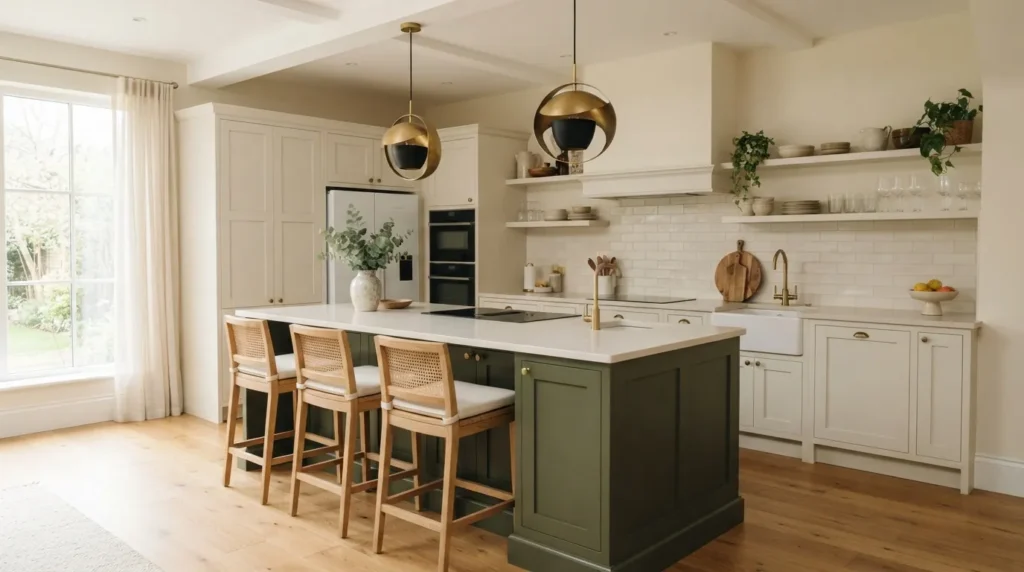
A two-tone island gives homeowners a way to create contrast without replacing the entire kitchen. The perimeter cabinetry can remain one color while the island receives a different finish, making it feel like a deliberate centerpiece.
This approach works particularly well in open-concept kitchens because the island naturally attracts attention. A deep green, navy, charcoal, natural wood, or warm taupe island can stand apart from lighter surrounding cabinets while maintaining an elegant overall palette.
The trick is to create contrast without introducing too many unrelated colors. The island finish can connect with another element in the room, such as flooring, pendant lighting, backsplash details, or nearby furniture.
A two-tone design can also visually organize a kitchen. The perimeter cabinets handle storage, while the contrasting island communicates the central preparation and gathering area.
How To Style It
Start by identifying the dominant cabinet color. If your perimeter cabinets are white or cream, a darker island can create depth. If the surrounding cabinetry is dark, a lighter wood or soft neutral island can brighten the center.
Use the countertop as a bridge between the two finishes. A stone surface containing subtle tones from both cabinet colors can make the transition feel intentional.
For seating, select stools that complement rather than perfectly match the island. Leather, wood, upholstered fabric, and metal can all work depending on the desired mood.
Avoid adding too many accent colors elsewhere. The island already provides contrast, so allowing it to remain the main visual feature keeps the kitchen polished.
4. Marble Statement Island
Quick Benefits
- Creates an elegant centerpiece
- Adds natural pattern and movement
- Works with modern and transitional interiors
- Provides a luxurious visual finish
- Complements simple cabinetry
Why It Works
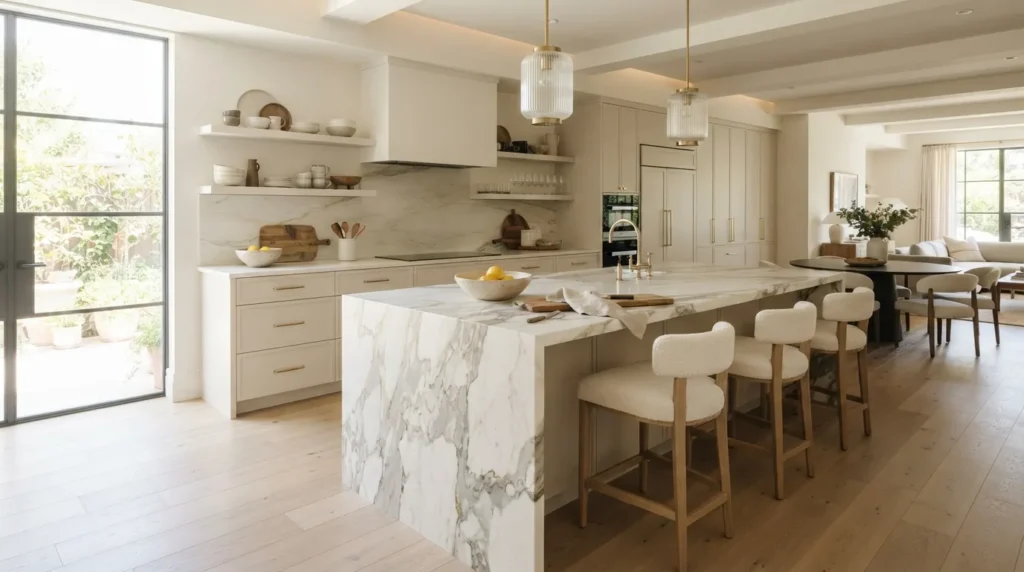
A large stone island can serve as the centerpiece of a kitchen without requiring elaborate decoration. Marble is particularly effective because its natural veining creates movement across an otherwise simple surface.
The beauty of this approach comes from contrast. Minimal cabinetry provides a quiet background while the stone becomes the visual statement. This prevents the kitchen from feeling overloaded with decorative details.
For homeowners who love a sophisticated aesthetic, a marble-look island can also introduce a sense of permanence. Natural marble has individual veining patterns, while engineered alternatives can offer similar visual characteristics with different maintenance considerations.
The size of the island influences the overall effect. A generous island allows the stone pattern to become more visible, especially when the slab is positioned so its most attractive veining can be appreciated from the main living area.
How To Style It
Pair statement stone with understated cabinets. White, warm beige, soft gray, or natural wood cabinetry can allow dramatic veining to remain the star.
Consider slab placement carefully. If the stone has prominent veining, ask your fabricator how the pattern will appear across the countertop and any waterfall edges before final fabrication.
Use simple pendant lighting above the island. Glass, metal, or sculptural fixtures can work, but avoid visually complicated designs that compete with the stone.
Keep countertop accessories minimal. A large cutting board, simple fruit bowl, or small arrangement of greenery is often enough.
If natural marble is being considered, research sealing and maintenance requirements before choosing the material. The right countertop is one that fits both your aesthetic preferences and your everyday habits.
5. Compact Seating Island
Quick Benefits
- Adds function without overwhelming the room
- Provides casual dining space
- Improves kitchen workflow
- Works in smaller homes
- Creates an everyday gathering point
Why It Works
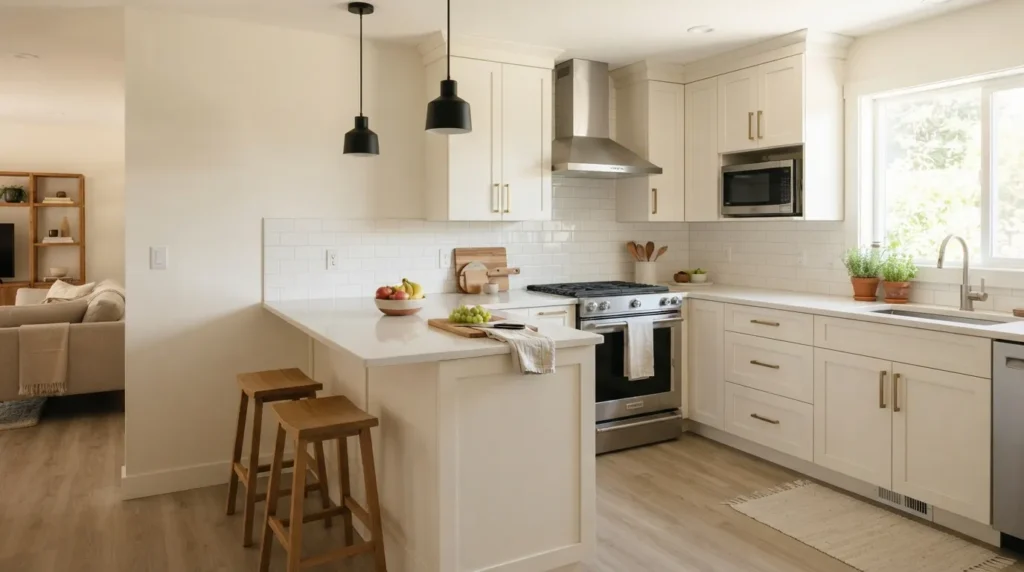
Not every kitchen has space for an oversized island. A compact design can provide many of the same benefits while preserving comfortable walking areas around it.
The most successful small islands prioritize function. Instead of adding unnecessary cabinetry or decorative features, the design focuses on useful countertop space, storage, and perhaps two or three comfortable seats.
This can be especially helpful in smaller homes, apartments, and kitchens with limited floor area. A compact island can serve as a breakfast spot in the morning, a food preparation surface during cooking, and a homework or work-from-home station later in the day.
Proportion is more important than size. An island that fits comfortably within the room often looks better than a larger island that restricts movement.
How To Style It
Choose a simple rectangular island with clean cabinet fronts. A light countertop can visually reduce its weight, while open shelving at one end can provide accessible storage.
For seating, look for stools that tuck neatly beneath the counter. Backless stools often create a lighter appearance and make it easier to maintain clear sightlines.
If the island is narrow, consider reducing decorative items on the countertop. The available surface area is valuable, so it deserves to remain functional.
Pendant lighting can still define the island, but select appropriately scaled fixtures. Oversized pendants can visually overwhelm a compact kitchen.
Before installing an island, measure the walking clearance carefully. Comfortable circulation around doors, appliances, and work zones matters more than squeezing in extra countertop space.
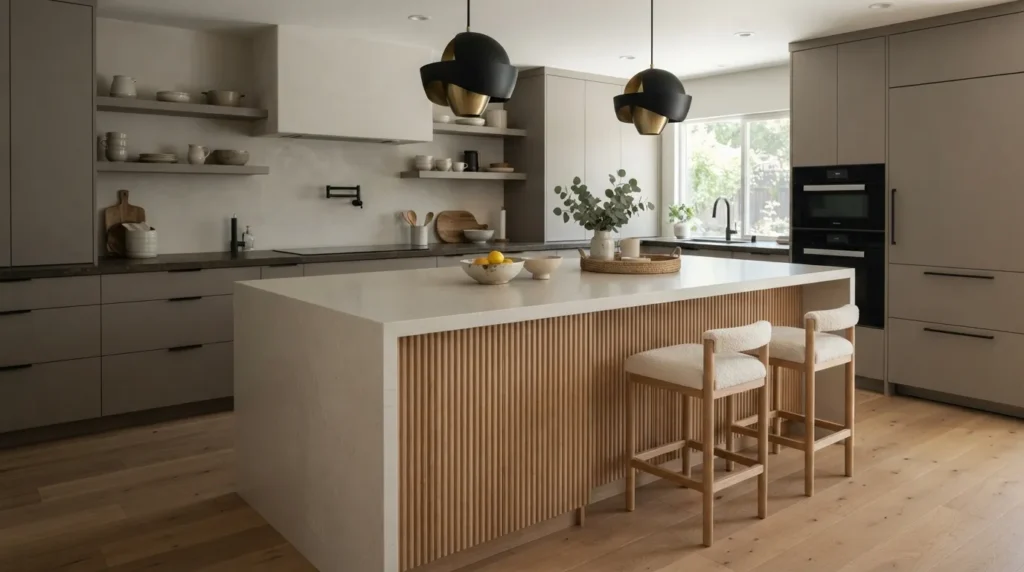
6. Fluted Cabinet Details
Quick Benefits
- Adds texture without excessive decoration
- Creates a sophisticated contemporary look
- Works with neutral colors
- Adds shadow and dimension
- Makes simple cabinetry more distinctive
Why It Works
Fluted surfaces have become a popular way to introduce texture into modern interiors. Vertical grooves create subtle shadows that change throughout the day as natural and artificial light moves across the surface.
On a kitchen island, this detail can make otherwise simple cabinetry feel more architectural. The texture provides visual interest without requiring ornate molding, decorative hardware, or multiple colors.
Fluting can also complement other modern materials. Pairing textured wood with smooth quartz, metal lighting, and simple cabinetry creates a layered design that feels contemporary but not sterile.
The scale of the grooves matters. Fine fluting creates a delicate texture, while wider channels make a stronger architectural statement.
How To Style It
Natural wood fluting works especially well when the goal is a warm modern kitchen. Oak, walnut, and other wood tones can bring softness to stone-heavy interiors.
For a more dramatic look, consider painted fluted cabinetry in a deep neutral. Charcoal, olive, muted blue, or warm taupe can create depth without becoming visually overwhelming.
Keep surrounding finishes relatively simple. A clean countertop and streamlined backsplash allow the island texture to remain noticeable.
Use lighting strategically. Pendant fixtures above the island can highlight the vertical grooves, especially when the light creates soft shadows across the cabinet fronts.
Because fluted surfaces contain more visual texture, avoid covering the island with numerous decorative objects. Let the cabinetry itself provide the character.
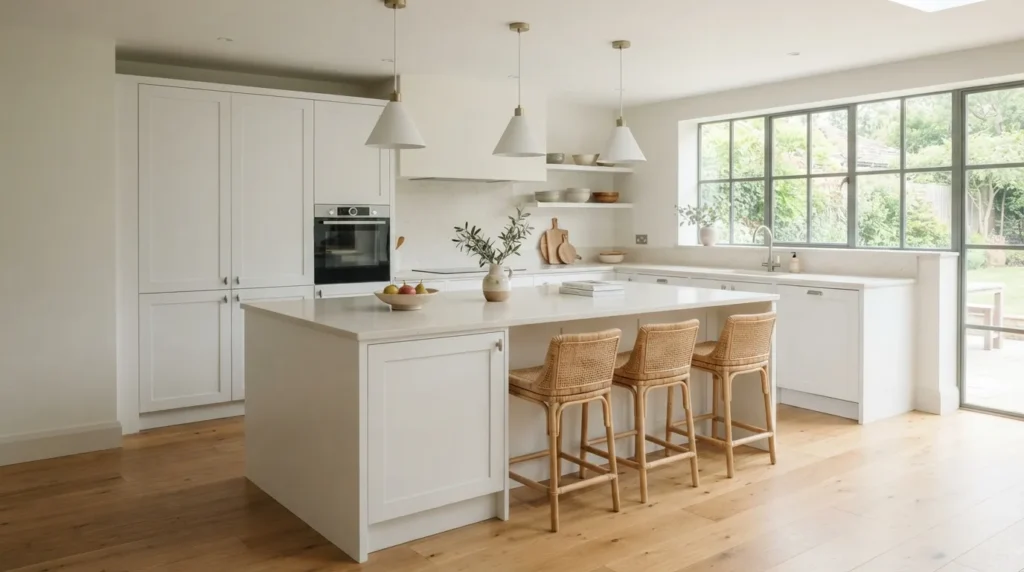
7. Minimalist White Island
Quick Benefits
- Makes the kitchen feel bright
- Creates a clean contemporary appearance
- Works with many decorating styles
- Visually opens smaller spaces
- Provides a timeless foundation
Why It Works
A white island remains one of the easiest ways to create a bright and streamlined kitchen. Its simplicity allows other features, such as flooring, lighting, countertops, and appliances, to become part of the overall design without competing for attention.
White also reflects available light, making it particularly useful in kitchens that do not receive abundant natural sunlight. Combined with simple cabinetry and a restrained palette, it can create an airy atmosphere.
The key to making a white island feel sophisticated rather than plain is layering. Texture, material variation, hardware, and lighting give the monochromatic design depth.
Warm white is often more forgiving than an extremely bright white because it creates a softer transition with wood flooring and natural materials.
How To Style It
Choose flat-panel or subtly recessed cabinet doors for a clean modern appearance. A quartz countertop can provide durability and a consistent surface, while natural stone adds more visual movement.
Introduce warmth through wood stools, cutting boards, woven accents, or nearby furniture. Brass or brushed metal hardware can create a refined touch without disrupting the minimalist aesthetic.
Consider a backsplash with subtle texture rather than a highly complicated pattern. The goal is to create layers while preserving visual calm.
Pendant lights are another opportunity to add personality. Sculptural fixtures can make the island feel more intentional, particularly when the rest of the kitchen has a restrained design.
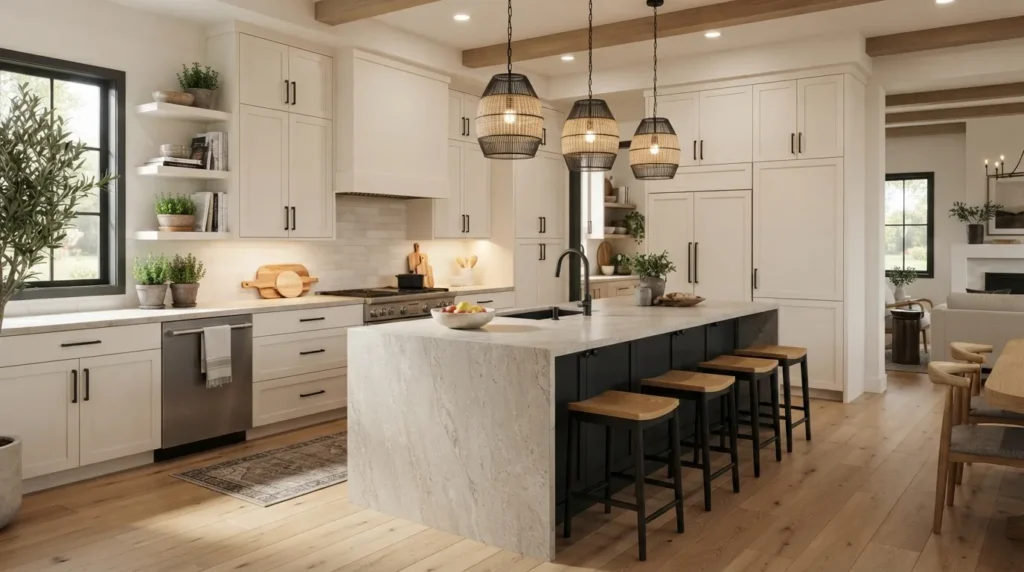
8. Dark Dramatic Island
Quick Benefits
- Adds depth and contrast
- Creates a sophisticated focal point
- Works beautifully with light cabinetry
- Grounds an open kitchen
- Creates a high-end visual effect
Why It Works
A dark island can transform an otherwise bright kitchen by introducing depth. Charcoal, black, deep green, navy, and espresso tones can all create a strong focal point while maintaining a contemporary aesthetic.
This approach works particularly well when the perimeter cabinetry is light. The contrast gives the kitchen a defined center and prevents a large open room from feeling visually flat.
Dark cabinetry can also make natural materials stand out. Light stone, warm wood, brass hardware, and greenery become more noticeable against a deeper background.
The biggest consideration is lighting. Dark finishes absorb more light, so the kitchen needs sufficient natural or artificial illumination to remain comfortable and inviting.
How To Style It
Pair a dark island with a lighter countertop for contrast. White or cream stone can create a crisp appearance, while warm beige or softly veined surfaces produce a more relaxed effect.
Use pendant lighting to illuminate the working surface directly. Under-cabinet lighting and recessed fixtures can further improve visibility throughout the kitchen.
For seating, natural wood stools can soften the darker finish. Upholstered seats can add comfort if the island is used for longer meals or work sessions.
Keep the surrounding palette balanced. Light flooring, reflective surfaces, and warm wood accents can prevent the room from becoming visually heavy.
A dark island is especially effective when its color appears in one or two smaller details elsewhere, creating subtle repetition throughout the room.
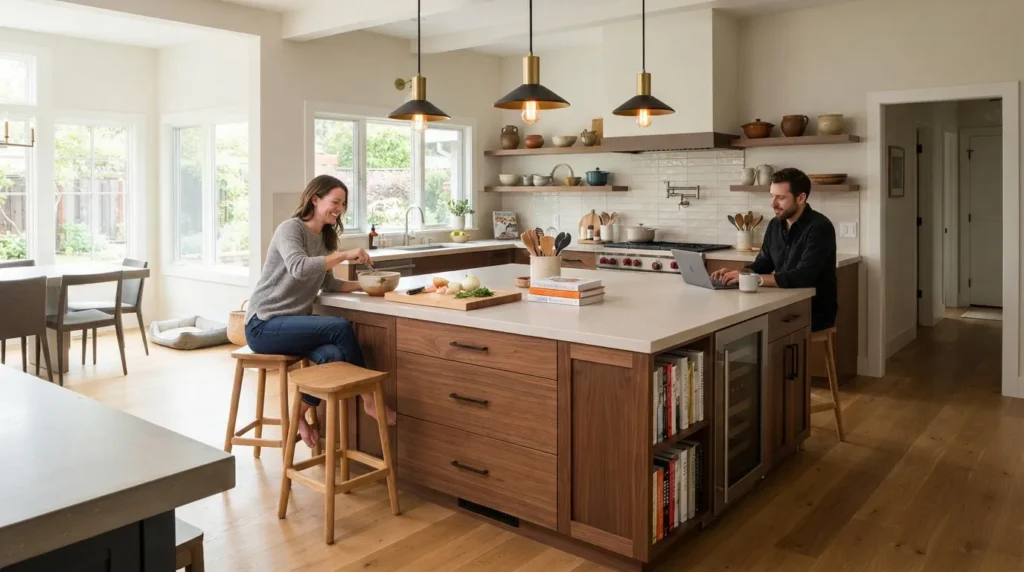
9. Multifunctional Work Island
Quick Benefits
- Combines several everyday functions
- Adds storage and preparation space
- Supports casual meals
- Helps organize busy kitchens
- Maximizes the value of available floor space
Why It Works
The modern kitchen often serves many purposes beyond cooking. It can become a breakfast area, homework station, home office, entertaining space, and gathering point. A multifunctional island responds to those needs by organizing several activities around one central feature.
The best multifunctional islands are planned around actual routines. A family that eats most meals at the island may prioritize comfortable seating and a generous overhang. Someone who cooks frequently may value a wide preparation surface and storage for frequently used tools.
Storage can also be customized. Deep drawers, pull-out organizers, recycling compartments, tray storage, and appliance garages can reduce clutter elsewhere in the kitchen.
The island becomes more successful when every feature has a clear purpose. Adding functions simply because there is room can make the design complicated.
How To Style It
Begin by listing what happens in your kitchen every day. Cooking, eating, coffee preparation, schoolwork, entertaining, and storage all have different spatial requirements.
If seating is important, dedicate one side of the island to comfortable knee clearance. If cooking is the priority, keep the main preparation surface open and place frequently used tools within easy reach.
Drawers are often highly useful for utensils, cookware, and small appliances because they provide easy access without requiring you to reach deep into cabinets.
Add a few decorative pieces to make the island inviting, but preserve generous working space. A beautiful island remains practical when its countertop can still be used comfortably.
10. Curved Modern Island
Quick Benefits
- Softens strong architectural lines
- Improves visual flow
- Creates a distinctive focal point
- Adds a welcoming quality
- Works beautifully in open layouts
Why It Works
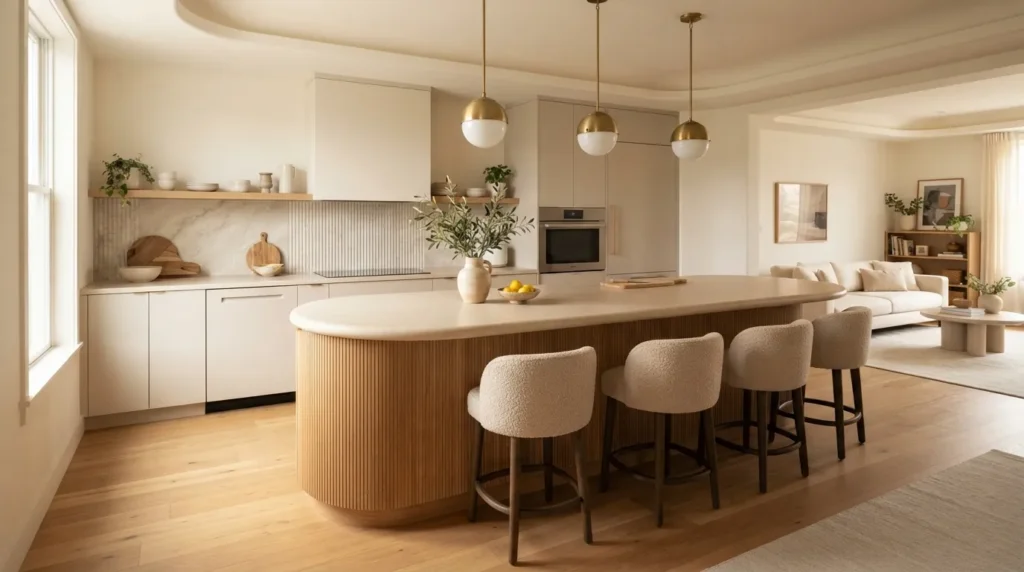
Curved kitchen islands bring a softer interpretation of modern design. Instead of relying entirely on straight lines and sharp corners, rounded edges introduce movement and create a more welcoming transition between the kitchen and adjacent living spaces.
This design can be particularly effective in open-concept homes. A curved edge creates a natural visual flow and can make circulation around the island feel less rigid.
Rounded islands also create a different seating experience. Rather than arranging stools along a perfectly straight edge, seating can follow the curve and encourage conversation.
The design does require more careful planning because cabinetry, countertops, seating, and circulation need to work together. The curve needs to feel intentional rather than simply decorative.
How To Style It
Keep the surrounding cabinetry relatively simple so the curved island becomes the main architectural feature. A soft wood finish, neutral paint color, or smooth stone surface can all work beautifully.
For countertops, select materials that can accommodate the shape cleanly. Fabrication requirements vary depending on the radius and material, so planning with a qualified professional is important for complex curves.
Use rounded pendant fixtures or globe-shaped lighting to repeat the island’s softer geometry. Upholstered stools with curved backs can reinforce the same design language.
Avoid overcrowding the countertop. The curved silhouette already provides visual interest, so a few carefully chosen accessories are enough.
FAQ
What makes a kitchen island look modern?
A modern kitchen island typically combines clean lines, practical storage, simple cabinet profiles, and carefully selected materials. Popular details include waterfall countertops, flat-panel cabinetry, natural wood, neutral colors, fluted textures, and streamlined lighting. The overall design looks most successful when the materials relate to the surrounding kitchen rather than appearing as isolated features.
What is the best countertop for a modern kitchen island?
The best countertop depends on your lifestyle, maintenance preferences, budget, and desired appearance. Quartz offers a consistent look and is widely used in contemporary kitchens. Natural stone provides unique veining and texture, while porcelain can create a modern architectural appearance. Consider durability, heat exposure, staining, cleaning requirements, and the visual relationship between the countertop and cabinetry before choosing.
How big should a modern kitchen island be?
There is no single ideal island size because kitchen layouts vary. The island needs enough room to provide its intended functions while preserving comfortable circulation around it. Measure appliance doors, cabinet openings, walkways, and seating areas before finalizing dimensions. A smaller, well-proportioned island often works better than an oversized island that restricts movement.
What colors work best for modern kitchen islands?
Popular modern island colors include white, warm beige, charcoal, black, navy, muted green, natural oak, and walnut. Two-tone combinations are also effective. The best choice depends on the surrounding cabinets, flooring, countertops, backsplash, and available light. Using one repeated color or material elsewhere in the room can make a contrasting island feel more cohesive.
Are kitchen islands useful in small kitchens?
Yes. A compact island can provide preparation space, storage, and seating without requiring a large footprint. Slim islands, movable islands, and peninsula-style layouts can work particularly well in smaller kitchens. The important consideration is maintaining comfortable clearance around the island so doors, appliances, and people can move freely.
How do you make a kitchen island feel more luxurious?
Luxury comes from proportion, material quality, lighting, and thoughtful detailing rather than simply using expensive finishes. A well-designed countertop, attractive pendant lighting, refined cabinet hardware, natural textures, and uncluttered styling can make an island feel elevated. Repeating materials throughout the kitchen also creates a more intentional and cohesive appearance.
What should you put on a kitchen island?
Keep island styling functional and restrained. A large cutting board, fruit bowl, ceramic vessel, small plant, or simple centerpiece can add personality without taking over the workspace. If the island is frequently used for cooking or dining, leave enough open counter space for everyday activities. The most attractive island is often the one that looks organized while remaining genuinely useful.
Conclusion
A modern kitchen island can become much more than an attractive centerpiece. With the right proportions, materials, lighting, storage, and seating, it can improve the way the entire kitchen functions.
The strongest designs balance beauty with everyday practicality. A waterfall edge creates architectural drama, natural wood adds warmth, two-tone cabinetry introduces contrast, and a dark finish can give a bright kitchen greater depth. For smaller spaces, a compact island can provide valuable preparation and seating space without overwhelming the room. Multifunctional designs can support cooking, dining, working, and gathering in one convenient location.
When choosing your island style, start with the way you actually use your kitchen. Think about where you prepare food, where people naturally gather, how much storage is required, and how much clearance the room allows. Then choose finishes that complement the existing architecture rather than trying to follow every trend at once.
You don’t need to incorporate every design idea. Start with one or two features that genuinely fit your home. A thoughtful countertop, warm cabinet finish, beautiful lighting fixture, or practical seating arrangement can completely change the character of the space.
The best kitchen island is one that looks beautiful in photographs but feels even better during an ordinary day at home.
Related Articles
- 10 Modern Kitchen Cabinet Ideas for a Fresh and Timeless Look
- 10 Small Kitchen Ideas That Maximize Every Inch
- 10 Modern Kitchen Lighting Ideas for a Beautiful Space
- 10 Neutral Kitchen Ideas With Warm and Elegant Style
- 10 Modern Farmhouse Kitchen Ideas for a Cozy Home