10 Kitchen Countertops Ideas Modern Quartz
A kitchen countertop does far more than provide a surface for chopping vegetables or setting down a cup of coffee. It influences the color palette, visual balance, maintenance routine, and overall personality of the room. When the goal is a modern kitchen, quartz offers an especially versatile starting point because it comes in a wide range of colors, patterns, finishes, and edge profiles.
The challenge is choosing a look that feels current without becoming dated after a few years. A dramatic veined slab can make a kitchen island feel like a statement piece, while a quiet white surface can create the calm, open feeling many homeowners want. Warm beige, soft gray, and natural-looking stone patterns also make it easier to connect the countertop with wood cabinetry and other popular kitchen finishes.
In my experience, the best countertop choices begin with the kitchen as a whole rather than with the countertop alone. Cabinet color, backsplash, flooring, lighting, hardware, and island size all affect how a quartz surface looks once it is installed. A sample that appears soft and neutral in a showroom can look completely different beside warm oak cabinets or under cool LED lighting.
This guide explores ten modern quartz countertop ideas that balance visual appeal with everyday practicality. You’ll find options for bright kitchens, cozy farmhouse-inspired spaces, dramatic islands, minimalist interiors, and transitional homes. Each idea includes styling guidance so you can picture how the surface could work in a real kitchen rather than simply choosing a pretty slab.
Table of Contents
1. White Veined Quartz
A timeless surface with soft movement that brightens modern kitchens.
2. Calacatta Quartz
Dramatic marble-inspired veining creates an upscale focal point.
3. Warm Beige Quartz
A cozy neutral option that works beautifully with natural materials.
4. Gray Quartz
Soft gray surfaces add contemporary character without overwhelming the room.
5. Dark Quartz
Deep charcoal and black surfaces create sophisticated contrast.
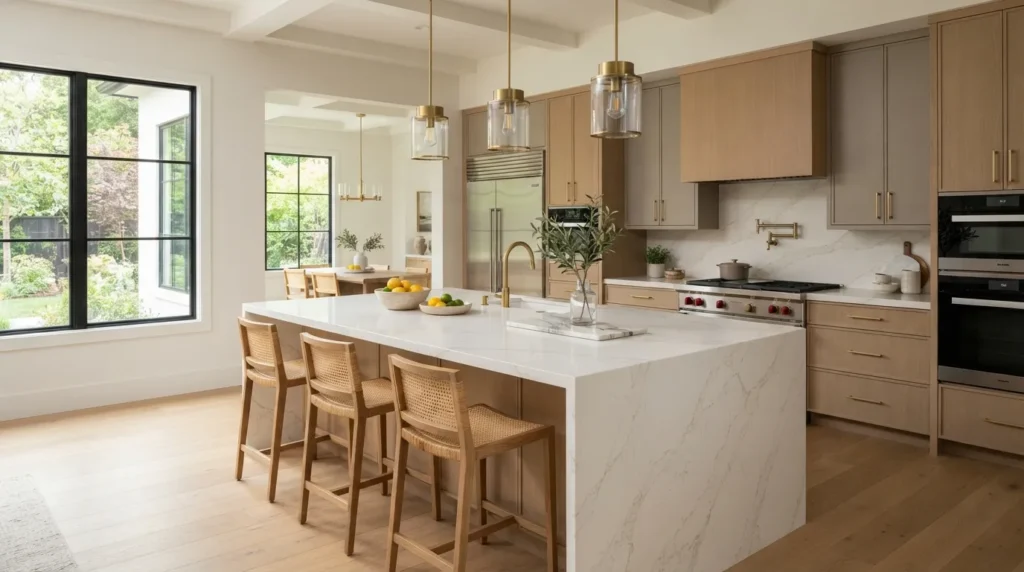
6. Waterfall Quartz Island
A continuous quartz edge gives the kitchen island a sleek architectural finish.
7. Bold Veined Quartz
Statement-making patterns turn a countertop into a major design feature.
8. Quartz and Wood
Warm cabinetry paired with light quartz creates balanced modern appeal.
9. Quartz Slab Backsplash
Extending quartz up the wall creates a streamlined, luxurious appearance.
10. Two-Tone Quartz
Different countertop tones create visual separation between the island and perimeter.
1. White Veined Quartz
Quick Benefits
- Creates a bright, spacious appearance
- Works with many cabinet colors
- Adds subtle visual movement
- Complements modern and transitional kitchens
- Creates a timeless foundation for changing decor
Why It Works
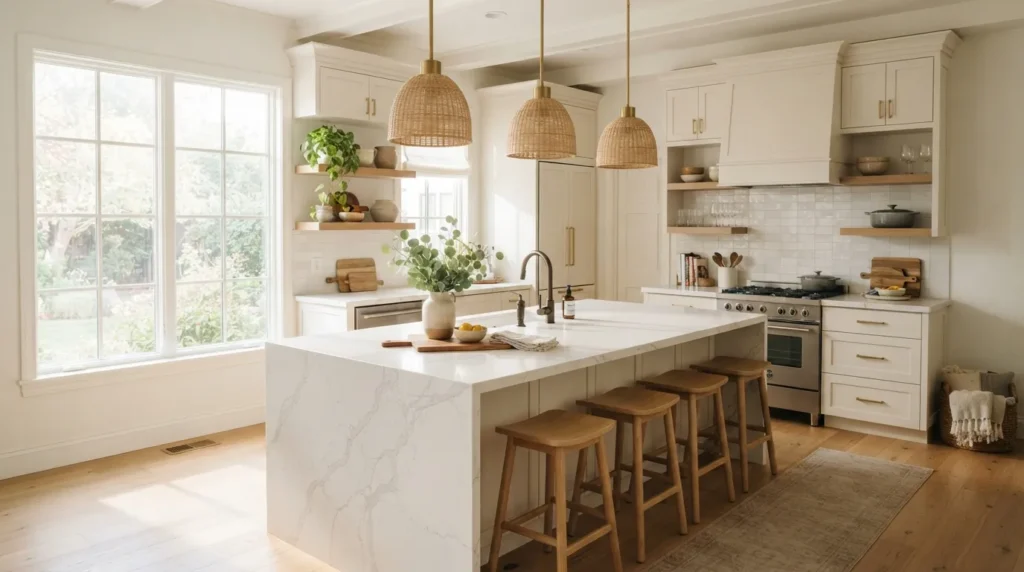
White quartz with delicate gray or taupe veining remains one of the easiest ways to create a polished modern kitchen. The pale background reflects available light and gives cabinetry, hardware, and decorative details room to stand out. Subtle veins also add enough movement to keep a large countertop from looking completely flat.
This option works particularly well when you want the appearance of natural stone without introducing a busy pattern throughout the room. The key is matching the undertone to the rest of the kitchen. A cooler white can complement crisp white cabinetry and stainless steel, while a warmer white works beautifully with cream cabinets, brass hardware, and natural wood.
A mistake many homeowners make is selecting a countertop based only on a small sample. Large quartz surfaces reveal considerably more pattern, so viewing a larger sample alongside your cabinet and backsplash selections gives a more realistic impression.
How To Style It
Pair white veined quartz with white, light gray, natural oak, or muted green cabinetry. For a contemporary look, use flat-panel cabinets and simple hardware. For a softer transitional kitchen, shaker cabinets create a comfortable balance.
A white quartz island looks particularly striking when surrounded by warm wood flooring. Add pendant lights above the island and keep the backsplash relatively quiet if the countertop has noticeable veining.
For everyday usability, choose a layout that gives you generous preparation space beside the sink and cooktop. The countertop then becomes both a visual anchor and a practical work surface.
2. Calacatta Quartz
Quick Benefits
- Creates a luxurious marble-inspired appearance
- Makes kitchen islands visually dramatic
- Works well with simple cabinetry
- Adds movement to large surfaces
- Fits modern and transitional interiors
Why It Works
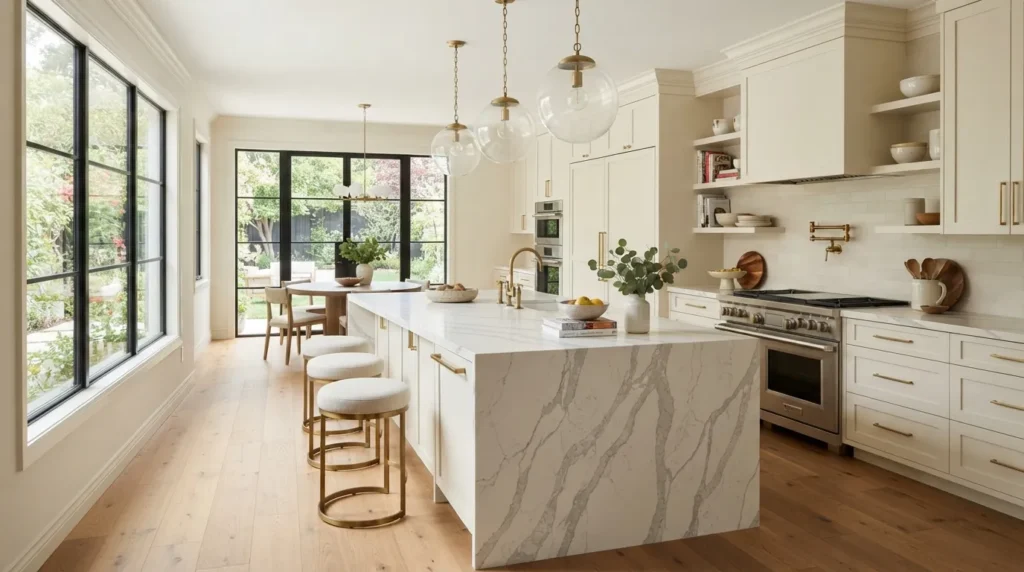
Calacatta-inspired quartz is ideal when you want the countertop to become one of the most noticeable features in the kitchen. Its characteristic broad gray or taupe veining creates a marble-like appearance while giving the room a more contemporary visual direction.
This style works especially well on oversized islands because there is enough uninterrupted surface area for the veining to become visible. Instead of competing with the countertop, cabinetry can act as a quiet backdrop.
The balance is important. When the countertop already contains dramatic movement, adding a heavily patterned backsplash, ornate hardware, and numerous decorative finishes can make the kitchen feel visually crowded. A simpler surrounding palette allows the quartz to make its statement.
How To Style It
Use Calacatta-style quartz with white, cream, light taupe, or warm gray cabinets. Brushed brass hardware can emphasize the warmer veins, while polished chrome or matte black creates a cooler contemporary appearance.
If the slab has strong veining, consider using a simple backsplash with minimal visual competition. A matching quartz backsplash can create a continuous look, while a plain tile provides a more traditional transition.
For an island, pay attention to how the slab is positioned before installation. The direction and placement of dramatic veins can significantly affect the final appearance, particularly around waterfall edges.
3. Warm Beige Quartz
Quick Benefits
- Adds warmth to contemporary kitchens
- Complements wood cabinetry
- Creates a softer alternative to bright white
- Works with earthy color palettes
- Helps create a cozy atmosphere
Why It Works
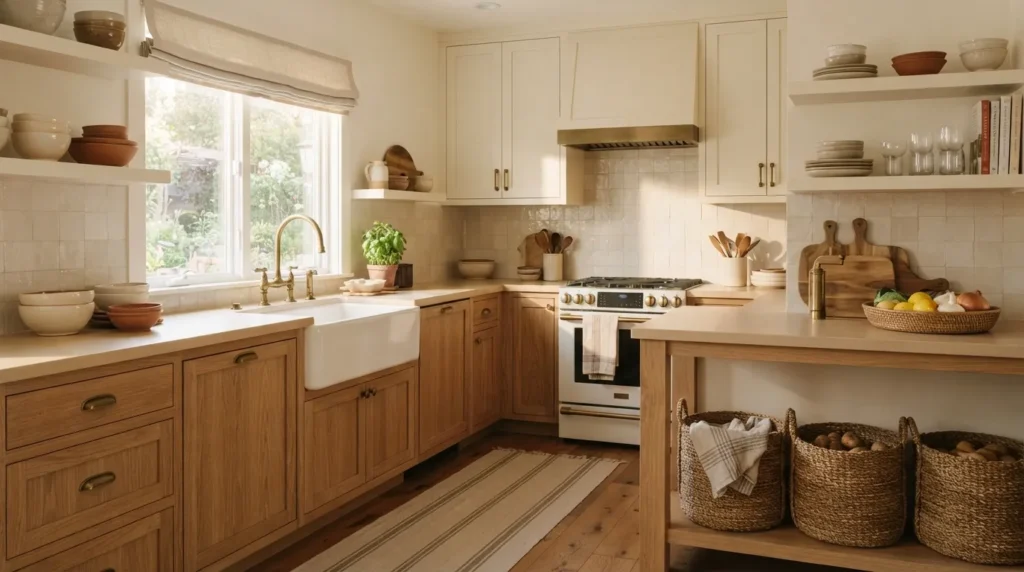
Warm beige quartz is an excellent choice for homeowners who want a modern kitchen without an overly cool or stark appearance. Its creamy undertones pair naturally with wood, brass, woven textures, and warm neutral paint colors.
This countertop direction is particularly useful in homes with existing warm finishes. Instead of fighting the undertones of honey oak flooring or walnut cabinetry, beige quartz connects those elements visually.
The surface can also make a large kitchen feel more comfortable. Rather than creating a high-contrast black-and-white palette, warm neutrals produce a softer transition between cabinets, walls, floors, and countertops.
How To Style It
Combine beige quartz with natural oak cabinets, cream-painted cabinetry, or warm greige finishes. Add aged brass or bronze hardware for a classic look, or choose simple black pulls for a more contemporary contrast.
A wood island paired with beige quartz creates an inviting centerpiece. For the backsplash, consider handmade-look tile, warm white subway tile, or a stone-inspired surface that repeats subtle colors from the countertop.
Keep textiles and accessories natural. Linen-style window treatments, woven baskets, wooden cutting boards, and ceramic serving pieces reinforce the relaxed character without making the kitchen feel overly decorated.
4. Gray Quartz
Quick Benefits
- Provides a sophisticated neutral base
- Works with white and darker cabinetry
- Adds depth without overwhelming the room
- Fits modern minimalist interiors
- Coordinates easily with metal finishes
Why It Works
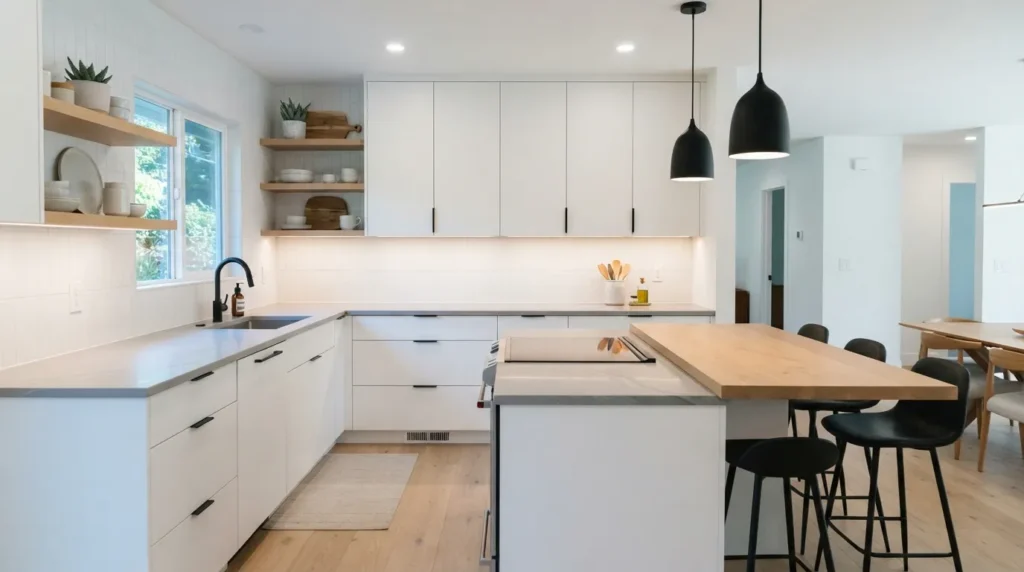
Gray quartz offers a refined alternative to traditional white countertops. Depending on its undertone, it can create anything from a soft Scandinavian-inspired kitchen to a deeper contemporary space.
Light gray quartz works especially well when you want a little more contrast against white cabinets. Medium gray creates a stronger visual foundation and can balance pale walls or light wood. Cooler gray complements stainless steel, while warmer gray pairs naturally with brass and wood.
The versatility makes gray useful when the kitchen already contains several competing colors. Rather than adding another strong visual statement, the countertop can quietly connect the other finishes.
How To Style It
For a modern kitchen, combine light gray quartz with white flat-panel cabinetry and slim black hardware. Add natural wood accents to keep the room from feeling too cool.
Medium gray quartz can work beautifully with navy, charcoal, forest green, or natural walnut cabinets. In larger kitchens, use layered lighting so the countertop remains visually comfortable throughout the day.
A simple backsplash is often the best companion. White rectangular tile, softly textured ceramic, or a subtle stone pattern can complement the countertop without creating excessive visual noise.
5. Dark Quartz
Quick Benefits
- Creates dramatic contrast
- Adds sophisticated character
- Works well with light cabinets
- Defines kitchen islands
- Complements contemporary interiors
Why It Works
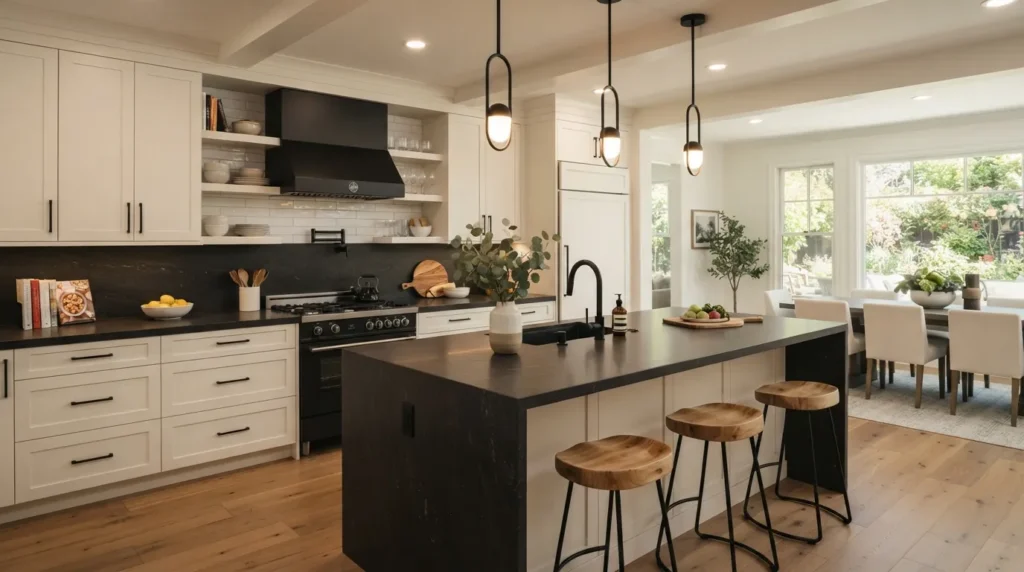
Dark quartz can completely change the mood of a kitchen. Charcoal, deep gray, and black surfaces create depth and contrast, especially when paired with light cabinetry.
This look is particularly effective when you want the island to feel like a substantial piece of furniture. A dark island against white or cream cabinetry creates a strong visual center without requiring elaborate decoration.
Lighting plays an important role here. Dark surfaces absorb more visual light than pale countertops, so a kitchen with this style benefits from layered overhead lighting, under-cabinet illumination, and well-placed pendants.
How To Style It
Pair dark quartz with white, cream, light gray, or natural wood cabinets. Matte black hardware creates a coordinated monochromatic appearance, while brass hardware adds warmth.
A dark countertop can also work with dark cabinetry if the finishes are intentionally layered. In that situation, introduce lighter walls, flooring, or backsplash materials to prevent the room from feeling visually heavy.
For a smaller kitchen, consider using dark quartz specifically on the island while keeping perimeter countertops lighter. This creates contrast while maintaining an open overall appearance.
6. Waterfall Quartz Island
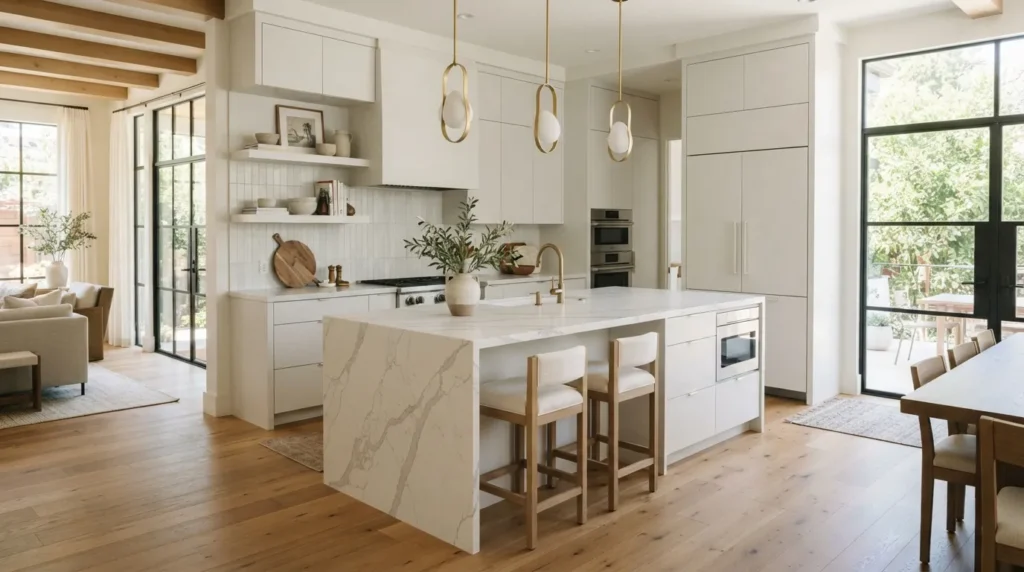
Quick Benefits
- Creates a clean architectural appearance
- Makes the island a focal point
- Highlights dramatic quartz patterns
- Works well in contemporary kitchens
- Provides a polished custom look
Why It Works
A waterfall edge continues the countertop material down the side of the island, creating a continuous visual line. With quartz, this detail can look particularly striking because the surface pattern flows from the horizontal countertop toward the vertical panel.
The design works best when the island is large enough to showcase the material. On a substantial island, the waterfall edge gives the piece a sculptural quality and makes the kitchen feel intentionally designed.
It also provides a strong visual boundary between the island and surrounding cabinetry. This can be useful in open-concept homes where the kitchen is visible from the living or dining area.
How To Style It
Choose a quartz pattern with enough movement to make the waterfall edge worthwhile. Veined surfaces can create beautiful continuity when the slab is carefully fabricated.
Keep island cabinetry relatively simple. Flat-panel doors, slim pulls, and a restrained color palette let the countertop remain the main feature.
For seating, select stools that complement rather than compete with the island. Wood stools warm up a cool quartz surface, while upholstered or metal seating can reinforce a more contemporary direction.
Before fabrication, discuss vein placement and slab orientation with the fabricator. This planning detail can have a major effect on the finished island.
7. Bold Veined Quartz
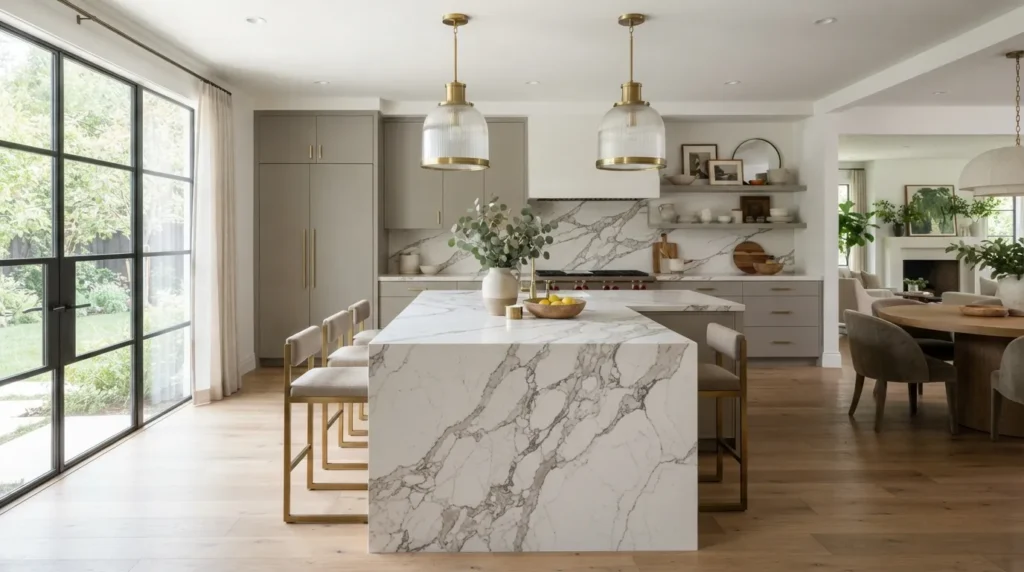
Quick Benefits
- Creates an instant focal point
- Adds personality to large kitchens
- Works beautifully on islands
- Reduces the need for excessive decoration
- Creates a luxury-inspired appearance
Why It Works
Some kitchens benefit from a countertop that does more than quietly support the surrounding finishes. Boldly veined quartz creates that statement while still maintaining the practical qualities expected from a modern countertop.
Large-scale kitchens are especially suited to this look because they provide enough surface area for the pattern to breathe. A dramatic vein can move across the island and create a visual connection between different parts of the kitchen.
The trick is restraint. When the countertop becomes the focal point, other elements can become quieter. This approach often produces a more sophisticated result than trying to make every finish equally dramatic.
How To Style It
Use simple cabinet profiles and neutral colors around a bold quartz surface. White, soft taupe, natural wood, and charcoal cabinetry can all work depending on the undertones in the slab.
Choose lighting fixtures with clean silhouettes. Large glass or metal pendants can frame the island without competing with the stone pattern.
Keep countertop decor minimal. A wooden cutting board, ceramic bowl, or small arrangement of greenery can add life without covering the surface that you intentionally selected as a feature.
8. Quartz and Wood
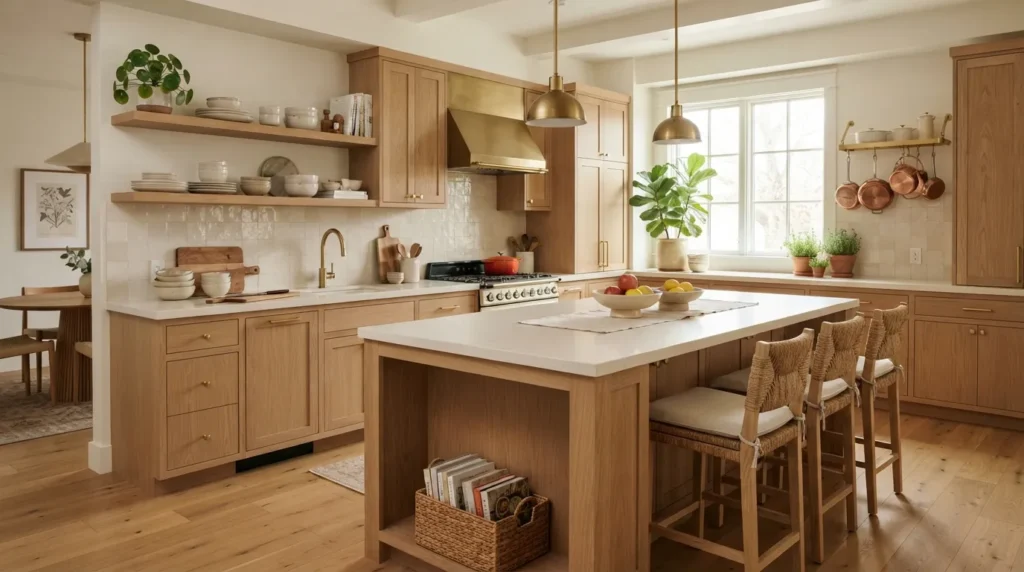
Quick Benefits
- Balances modern and natural materials
- Adds warmth to contemporary spaces
- Works with many cabinet styles
- Creates visual texture
- Feels inviting and lived-in
Why It Works
Modern kitchens can sometimes feel too uniform when every surface has the same smooth, manufactured appearance. Pairing quartz with natural wood introduces contrast in both texture and color.
White or cream quartz against oak cabinetry is a particularly approachable combination. The light countertop keeps the kitchen fresh, while the wood adds warmth and organic character.
This pairing also works well in transitional and modern farmhouse kitchens. It gives you a clean contemporary foundation without sacrificing the relaxed feeling that makes a kitchen comfortable.
How To Style It
Use light quartz with oak, walnut, or medium-toned wood cabinets. If the cabinetry has strong grain, choose a countertop with subtle movement so the two materials complement rather than compete with each other.
Wood shelving can repeat the cabinet finish and create continuity around the room. A wood island paired with quartz perimeter counters is another option for introducing contrast.
Add simple ceramic dishes, woven accessories, and greenery for a natural finish. Keep the overall palette restrained so the combination of quartz and wood remains the primary visual feature.
9. Quartz Slab Backsplash
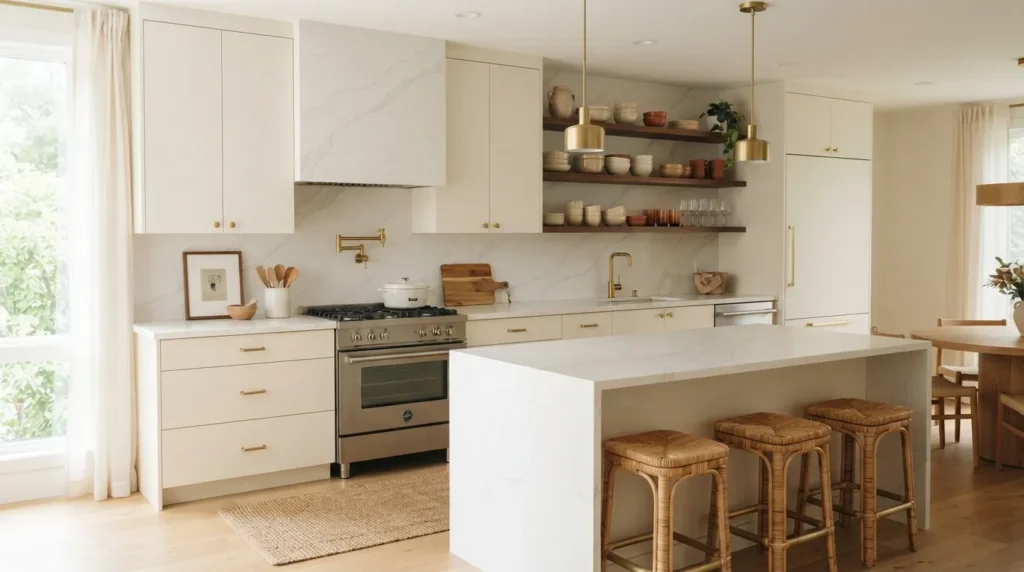
Quick Benefits
- Creates a continuous visual effect
- Makes the kitchen feel streamlined
- Reduces grout lines
- Highlights quartz patterns
- Gives the backsplash a custom appearance
Why It Works
Extending quartz from the countertop onto the backsplash creates a seamless transition between horizontal and vertical surfaces. This treatment is especially effective in modern kitchens where clean lines and uninterrupted surfaces are central to the design.
A slab backsplash can also showcase a beautiful quartz pattern more effectively than a small tile backsplash. The continuous material allows veins and subtle movement to remain visible across a larger area.
It can be especially attractive behind a range or cooktop, where the uninterrupted surface becomes an architectural feature.
How To Style It
Use the same quartz on the countertop and backsplash for a cohesive appearance. This works particularly well with white, Calacatta-inspired, and soft gray surfaces.
Keep upper cabinetry simple if the backsplash contains dramatic movement. Open shelving can also work beautifully because it allows more of the quartz surface to remain visible.
For hardware, choose finishes that repeat elsewhere in the room. Brass, black, chrome, and bronze can all work depending on the countertop undertones and cabinet color.
10. Two-Tone Quartz
Quick Benefits
- Creates visual separation
- Defines the kitchen island
- Adds dimension to neutral kitchens
- Allows multiple colors to work together
- Creates a custom-looking design
Why It Works
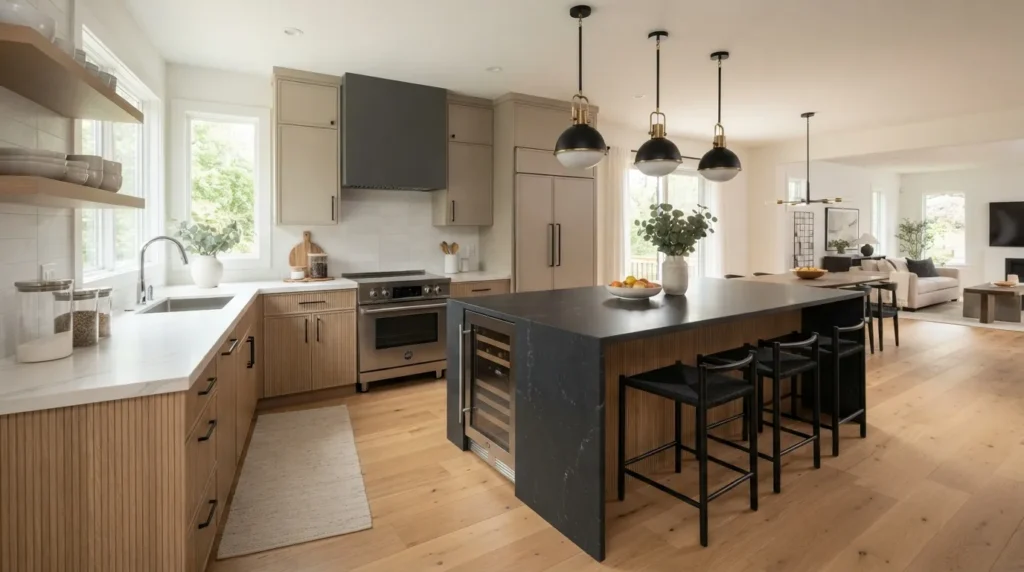
Using two complementary countertop colors creates visual hierarchy in a kitchen. Instead of treating every counter as one continuous design element, you can use the island to create a distinct focal point.
For example, a bright white perimeter countertop can keep the kitchen feeling open while a darker island adds depth. The reverse approach can also work when you want the island to feel lighter against deeper cabinetry.
The key is choosing colors that share a relationship. Completely unrelated patterns can make the kitchen look disconnected, while coordinated undertones create a more intentional appearance.
How To Style It
Start by deciding which surface deserves the most attention. If the island is the centerpiece, choose the more dramatic quartz there and keep perimeter counters quieter.
Repeat at least one color from each countertop somewhere else in the kitchen. Cabinet hardware, backsplash tones, stools, or lighting can create these visual connections.
Avoid introducing too many additional countertop patterns. Two surfaces are enough to create contrast; the rest of the room can remain relatively restrained.
How to Choose the Right Quartz Countertop
Choosing a quartz countertop becomes much easier when you evaluate the entire kitchen instead of shopping from countertop samples alone.
Start with your cabinets. If the cabinetry is already installed, place large quartz samples directly beside the doors. Look at them in morning, afternoon, and evening light because undertones can change noticeably under different lighting.
Next, consider your backsplash. A heavily veined countertop paired with an equally dramatic backsplash can create unnecessary competition. If your countertop has strong movement, a simpler backsplash often creates a more balanced result.
Island size also matters. Large islands can handle bold veining, waterfall edges, and darker colors. Smaller islands often benefit from lighter surfaces that visually preserve openness.
Think about the mood you want, too. White and pale gray quartz create an airy feeling, warm beige creates softness, dark quartz adds drama, and natural-looking patterns provide a connection to traditional stone.
Finally, bring samples home before making a final decision. A countertop viewed under showroom lighting can look surprisingly different under the lighting conditions in your own kitchen.
Quartz Countertop Color Guide
A simple color comparison can make the selection process easier:
White: Best for bright, clean, versatile kitchens.
Warm Beige: Excellent for cozy kitchens with wood and warm neutral finishes.
Light Gray: Works well when you want subtle contrast without a dramatic statement.
Dark Gray: Adds depth and pairs beautifully with light cabinetry.
Black: Creates a bold contemporary focal point, especially on islands.
Veined White: Offers a marble-inspired look with visual movement.
The right choice depends less on what is currently popular and more on how the color interacts with your existing finishes.
How to Make Quartz Look More Expensive
A polished kitchen is rarely about one expensive-looking material. It is usually the result of several finishes working together.
Use large, uninterrupted surfaces where possible. A continuous quartz backsplash can make a simple countertop feel more architectural. Coordinated hardware and lighting also create visual consistency.
Pay attention to edge details. A clean, simple edge often suits contemporary kitchens better than an overly decorative profile.
Another effective approach is limiting the number of competing materials. Two or three strong finishes usually create more visual impact than six unrelated ones.
And don’t forget styling. A few attractive cutting boards, ceramic pieces, a bowl of fresh fruit, and a small plant can make the countertop feel lived-in without covering its surface.
Quartz Countertops for Small Kitchens
Small kitchens benefit from thoughtful visual continuity. Light quartz can reflect available light and create a clean backdrop, while subtle veining adds interest without making the room feel busy.
A matching quartz backsplash can further reduce visual breaks. Instead of stopping the countertop at the wall, continuing the same material upward can create a more spacious appearance.
For a small island or peninsula, consider a simple edge rather than a large waterfall treatment. Save dramatic patterns for a single focal point so the room retains a sense of openness.
Use lighting strategically. Under-cabinet lights can illuminate the countertop and make the kitchen feel more functional in the evening.
Modern Quartz and Kitchen Hardware
Hardware provides a small but important opportunity to connect your countertop with the rest of the room.
Warm quartz tones often work beautifully with brass, bronze, or champagne finishes. Cooler gray and white surfaces can complement chrome, stainless steel, or black hardware.
This does not mean every metal finish must match perfectly. Mixing finishes can work when there is a clear visual hierarchy.
For a clean modern kitchen, simple bar pulls or streamlined knobs generally reinforce the countertop’s contemporary appearance. More traditional hardware can soften a modern quartz surface and move the overall look toward transitional farmhouse style.
Common Quartz Countertop Design Mistakes
One common mistake is selecting the countertop before considering cabinet undertones. White cabinets can have warm, cool, or neutral undertones, and the wrong quartz can make them appear mismatched.
Another issue is choosing a pattern that is too busy for the size of the room. Dramatic veining looks beautiful on a large island but can become overwhelming when repeated across every surface.
Ignoring lighting is another easy mistake. Always evaluate samples under the lighting conditions in your own kitchen.
Finally, don’t overlook the practical layout. A beautiful countertop cannot compensate for poor workflow. Keep useful preparation areas around the sink, cooktop, and refrigerator so the kitchen remains comfortable to use.
Frequently Asked Questions
Is quartz a good choice for a modern kitchen?
Yes. Quartz offers a broad range of colors and stone-inspired patterns that work well with modern cabinetry, contemporary hardware, and streamlined backsplashes. White, gray, beige, and dramatic veined options can each create a different look. Its versatility makes it easier to coordinate the countertop with the overall kitchen design rather than limiting the room to one specific style.
What quartz color looks most modern?
White, soft gray, warm beige, and marble-inspired veined quartz all work well in modern kitchens. The most appropriate choice depends on the cabinetry, flooring, backsplash, and lighting. A simple white surface creates a minimalist appearance, while bold veining provides a more dramatic contemporary focal point.
Is white quartz still popular for kitchens?
White quartz remains a versatile kitchen choice because it works with many cabinet colors and design styles. Instead of choosing an extremely plain white surface, homeowners can select subtle veining or warm undertones for more visual depth. This creates a polished appearance while giving the kitchen additional character.
Does quartz work with wood cabinets?
Quartz and wood are a particularly effective combination because the materials provide contrast in texture. Light quartz can brighten warm oak or walnut cabinetry, while beige and gray surfaces can create softer transitions. Keeping the countertop pattern appropriate to the strength of the wood grain helps the two materials complement each other.
What countertop works best with a white kitchen?
Several quartz styles work beautifully with white kitchens. Soft white quartz creates a seamless appearance, gray veining introduces subtle contrast, and bold marble-inspired patterns create a statement island. Warm white quartz can also prevent the kitchen from feeling too cold when paired with natural wood flooring or brass hardware.
Should the kitchen island countertop match the perimeter?
It does not have to match. Using different but coordinated quartz surfaces can define the island and create visual interest. A common approach is a quiet countertop around the perimeter with a more dramatic surface on the island. The colors and undertones still benefit from having a clear relationship so the kitchen feels cohesive.
How can I choose quartz without regretting the color?
Bring large samples home and compare them directly with cabinet doors, backsplash materials, flooring, and hardware. Examine the samples in both natural and artificial light. Looking at the materials together gives a much more accurate impression than choosing a quartz color from a small showroom sample or online photograph.
Related Articles
- 10 Modern Kitchen Island Ideas for a Stylish Home
- 10 White Kitchen Cabinet Ideas with Timeless Style
- 10 Modern Farmhouse Kitchen Ideas for a Cozy Home
- 10 Kitchen Backsplash Ideas for Modern Homes
- 10 Small Kitchen Ideas That Maximize Every Inch
Conclusion
The right quartz countertop can shape the entire personality of a kitchen. A quiet white surface creates a bright foundation, warm beige adds softness, gray introduces contemporary depth, and dark quartz creates dramatic contrast. For homeowners who want a stronger focal point, bold veining, waterfall edges, and slab backsplashes can turn an ordinary island into an architectural feature.
The most successful kitchen designs balance beauty with everyday function. Consider your cabinet undertones, backsplash, flooring, lighting, island size, and daily cooking habits before choosing a slab. A countertop that looks beautiful on its own still has to work comfortably within the entire room.
If you’re drawn to more than one style, begin by narrowing your choices to two or three samples and compare them at home. Look at them throughout the day, place them beside your actual finishes, and consider how the kitchen will feel once everything is installed.
The best choice is the one that supports the way you live while giving your kitchen the visual character you love. Start with one strong idea, build the surrounding finishes around it, and create a modern kitchen that feels polished without losing its warmth.