Pocket Door vs Out-Swing Door for a 5×8 Bathroom Remodel
Choosing between a pocket door vs out-swing door for a 5×8 bathroom remodel is a critical decision that dictates the flow and functionality of your space. In a compact 40-square-foot footprint, every inch of floor clearance matters, yet structural constraints often dictate which option is viable. You need to weigh the convenience of a sliding mechanism against the reliability of a traditional hinge.
This analysis helps you decide which configuration best serves your daily routine and long-term home value. By understanding the mechanical trade-offs, you can avoid common pitfalls that lead to costly corrections during your renovation project.
The most direct answer for a 5×8 bathroom is that a pocket door is usually the superior choice for maximizing floor space. Because a standard 30-inch swinging door requires roughly 6.25 square feet of clearance to open fully, it effectively kills the utility of a corner or wall section in a small room.
An out-swing door solves the interior floor space issue by opening into the hallway, but it often creates a traffic hazard or blocks adjacent bedroom doors. If your wall structure allows for the necessary framing, the pocket door is the gold standard for small-scale bathroom design.
The Spatial Math of a Small Bathroom
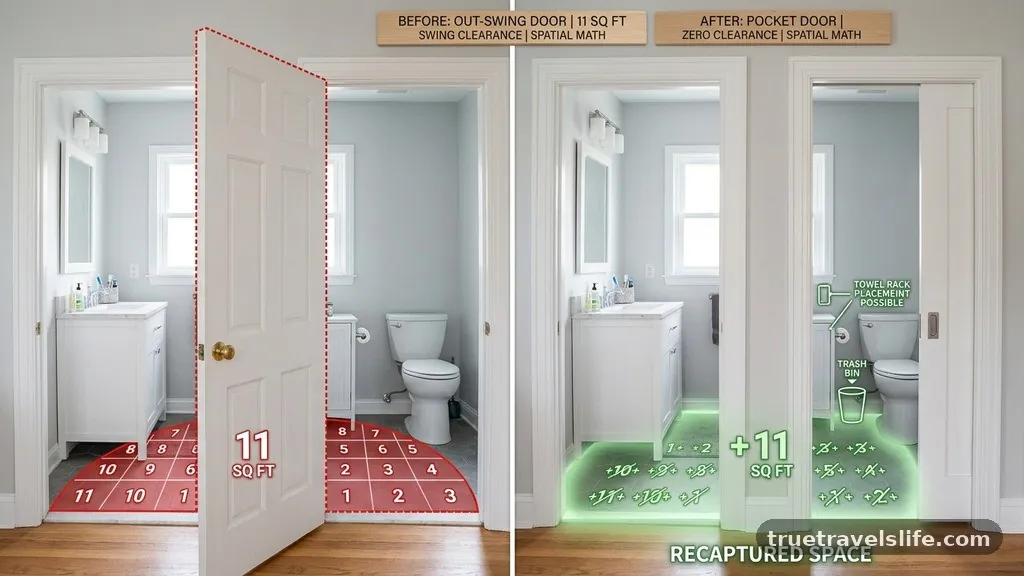
When you look at a 5×8 bathroom, you are dealing with a tight, often unforgiving layout. Standard building codes generally require at least 21 inches of clearance in front of a toilet and 30 inches in front of a vanity.
A door that swings into the room eats into these mandatory clearances, making the space feel cramped and difficult to navigate. You might find yourself performing a dance to close the door while standing next to the toilet or sink.
An out-swing door moves that problem to the hallway, which keeps the interior footprint clear. However, hallways are often narrow, and an open bathroom door can create a bottleneck or a collision point.
If the bathroom is located near a bedroom or a closet, the doors may clash repeatedly. You must measure the hallway width carefully before opting for an out-swing model to ensure it doesn’t create a secondary obstruction.
Structural Requirements for Pocket Doors
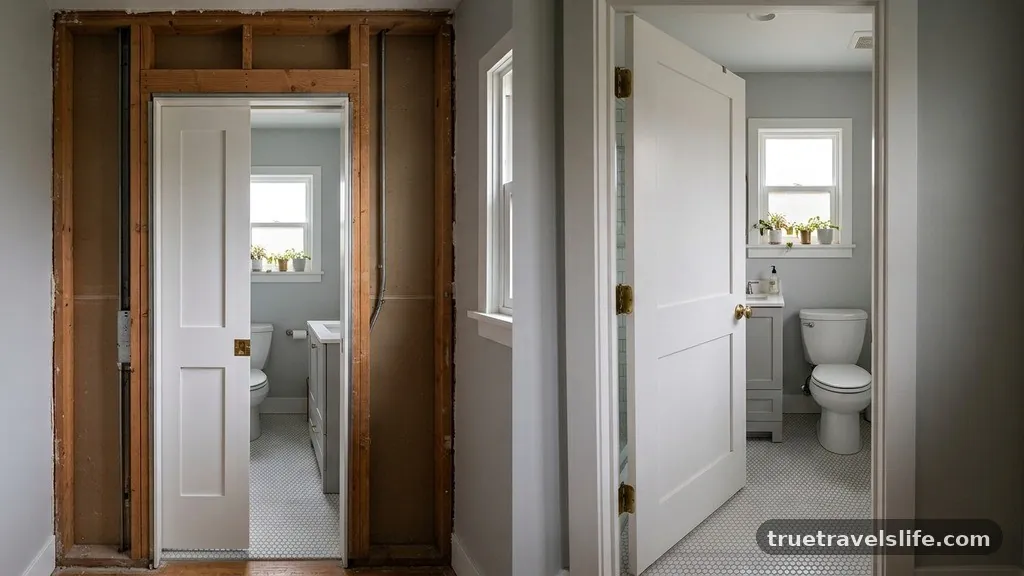
Installing a pocket door isn’t as simple as swapping out a slab. You need enough cavity space within the wall to house the door when it is fully open.
This means you must have a stud wall that is free of electrical wiring, plumbing supply lines, or HVAC ducts. If your 5×8 bathroom shares a wall with a kitchen or a utility room, those pipes might be impossible to move without significant expense.
You also have to consider the framing components of the pocket door kit. Most kits require a header that is twice the width of the door, plus a bit of extra room for the hardware.
If that wall is load-bearing, you will need a structural engineer to approve the modification. This is why many people opt for out-swing doors; they avoid the structural headache entirely.
Pros and Cons of the Sliding Mechanism
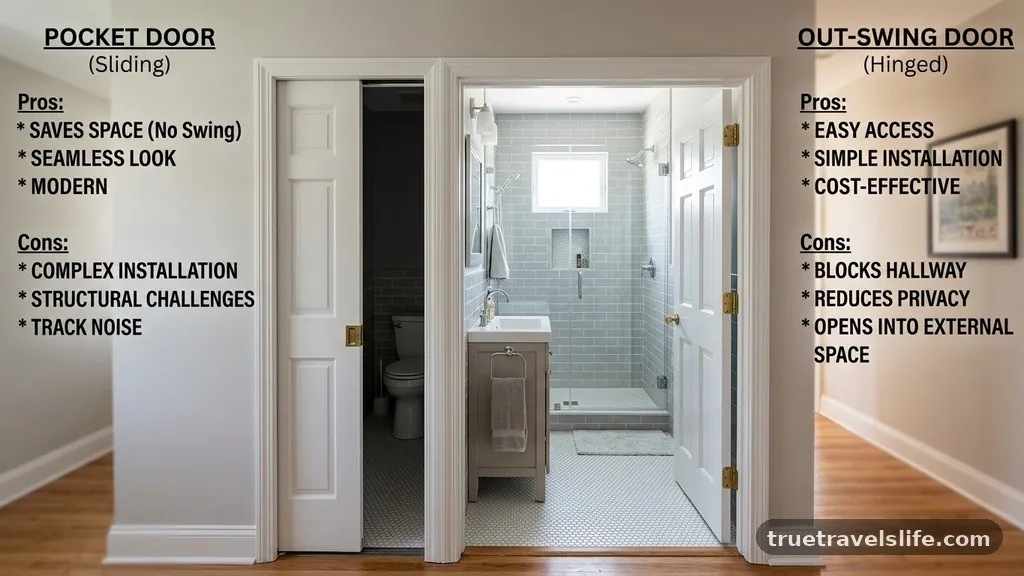
Pocket doors offer a sleek, modern aesthetic that feels invisible when open. They are the ultimate space-savers because they require zero floor clearance, allowing you to place furniture or towel racks right up to the door frame.
However, the hardware is the most vulnerable point of the system. If the rollers fail or the track gets misaligned, you may have to tear into the drywall to fix it.
Swinging doors, by contrast, are mechanically simple and robust. They rarely fail, and when they do, the fix is usually just a tighten of the hinge screws.
They also provide a better seal for sound and moisture than most pocket doors. If you live in a busy household, the sound-dampening qualities of a solid-core swinging door might be more important than the extra few inches of floor space.
Privacy and Hardware Considerations
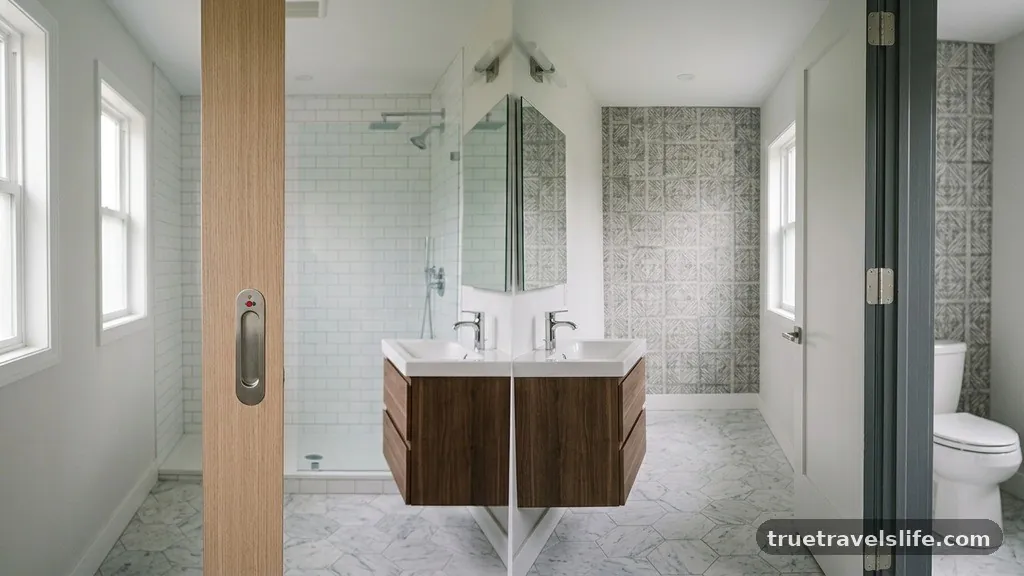
Privacy is a non-negotiable requirement for any bathroom. Traditional swinging doors accept standard privacy locks with ease, providing a secure and reliable latching mechanism.
Pocket doors require specialized hardware, such as hook-style locks or edge pulls, which can be finicky. If the door isn’t perfectly aligned, the latch might not catch, leading to frustration for users.
If you choose a pocket door, you must invest in high-quality track systems and heavy-duty hardware. Cheap, big-box store kits often use plastic rollers that will eventually fail under the weight of a solid-core door.
A premium wall-mounted track or a high-end pocket frame system is worth the added cost. The goal is to ensure the door glides smoothly without jumping off the track during daily use.
The Impact on Hallway Traffic
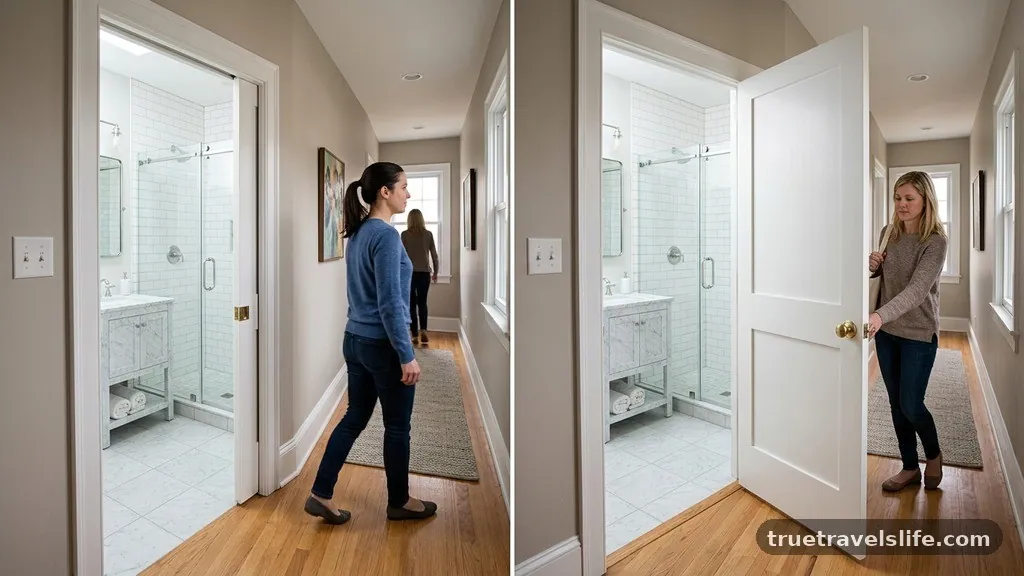
Out-swing doors can be a nuisance in high-traffic hallways. If someone opens the bathroom door suddenly, they could strike a person walking down the hall.
This is particularly problematic in homes with children or elderly residents who may not hear the door moving. You might consider installing a door stop or a hinge pin that limits the swing, but this reduces the effective width of the doorway.
If the bathroom is located at the end of a short hallway, an out-swing door might be less of a liability. It effectively acts as a barrier that prevents people from walking into the bathroom while someone is inside.
However, you must ensure the door doesn’t block access to a light switch or a thermostat. A 5×8 bathroom remodel usually involves a complete gut, so it is the perfect time to relocate electrical switches to accommodate the door swing.
Comparing Installation Costs and Complexity
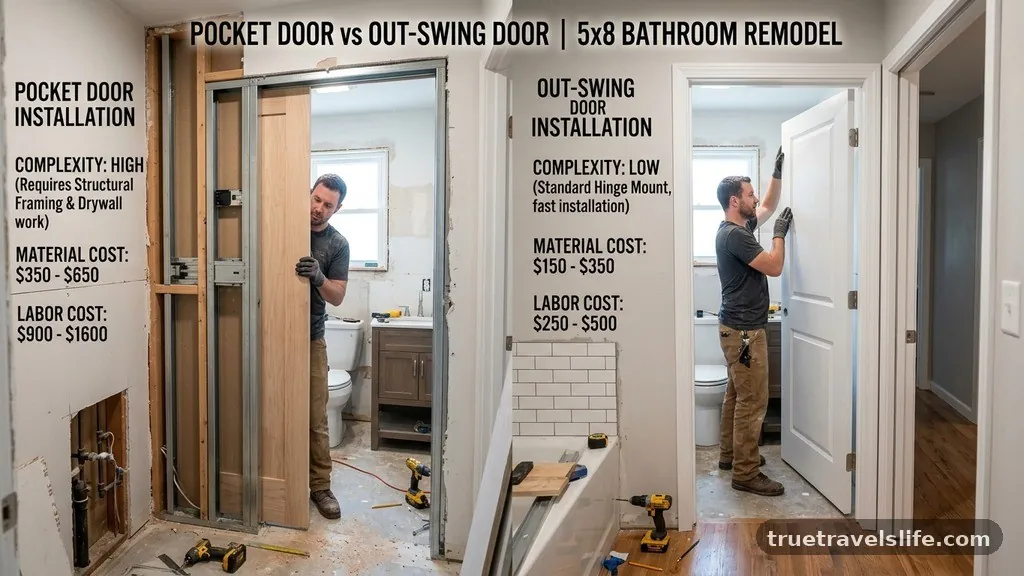
The cost difference between these two options is significant when you factor in labor. A swinging door can be installed in an hour or two by a skilled carpenter.
A pocket door requires wall demolition, reframing, drywall repair, and finishing work. You are essentially paying for a mini-construction project just to hang one door.
| Feature | Pocket Door | Out-Swing Door |
|---|---|---|
| Floor Clearance | None required | Full door width |
| Installation Effort | High (requires wall work) | Low (standard framing) |
| Hardware Reliability | Moderate (requires maintenance) | High (durable) |
| Sound Isolation | Lower (gaps at edges) | Higher (tight seal) |
| Cost to Install | $800 – $1,500+ | $200 – $500 |
Design Aesthetics and Modern Trends
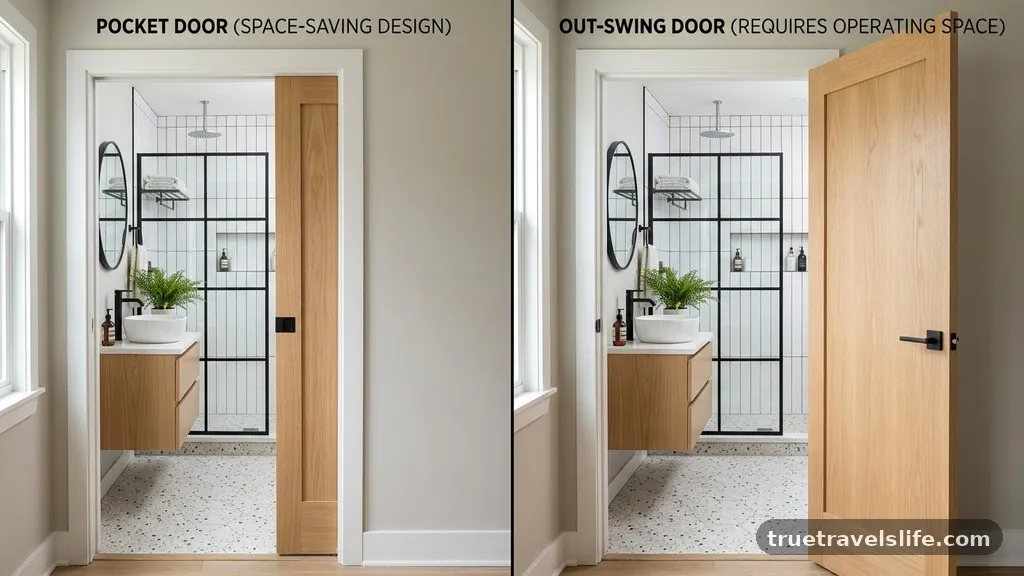
The trend toward “minimalist design” has made the pocket door a popular choice for modern bathrooms. It hides the door away, making the transition between rooms feel more fluid and less segmented.
In a small 5×8 space, this can make the room feel larger because your eyes aren’t drawn to the bulk of the door slab. If you have a tight budget, however, a well-painted swinging door with modern hardware can look just as sharp.
You can also use a swinging door as a design feature by choosing a bold color or a unique handle. Conversely, if you want the pocket door to stand out, you can leave it exposed or use a glass insert.
Just remember that glass in a bathroom door requires careful consideration of privacy. If you use frosted or textured glass, you get the benefit of light transmission without sacrificing comfort.
Maintenance and Long-Term Durability
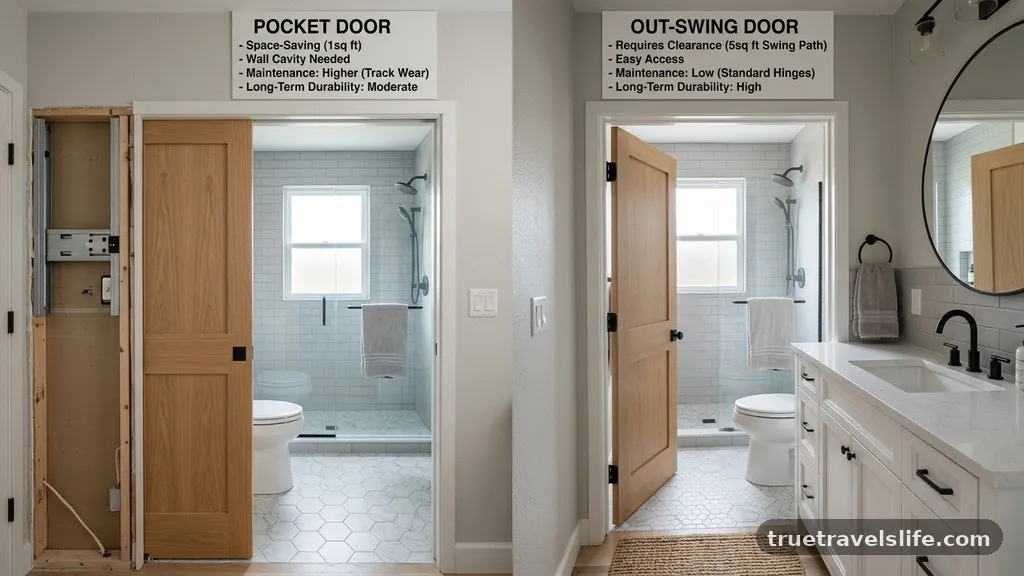
Mechanical parts in a pocket door are hidden inside the wall. If a screw backs out or a roller breaks, you are looking at a messy repair.
You should always opt for an installation that allows for the door to be removed from the track without tearing down the wall. Some modern systems have a top-hung design that makes this easier.
Swinging doors are essentially maintenance-free for decades. Aside from the occasional squeak that needs a drop of oil, they rarely cause trouble.
If you plan to live in your home for many years, the long-term reliability of a swinging door might outweigh the space-saving benefits of a pocket door. Think about your tolerance for future repairs before making your final decision.
Alternative Solutions for Tight Spaces
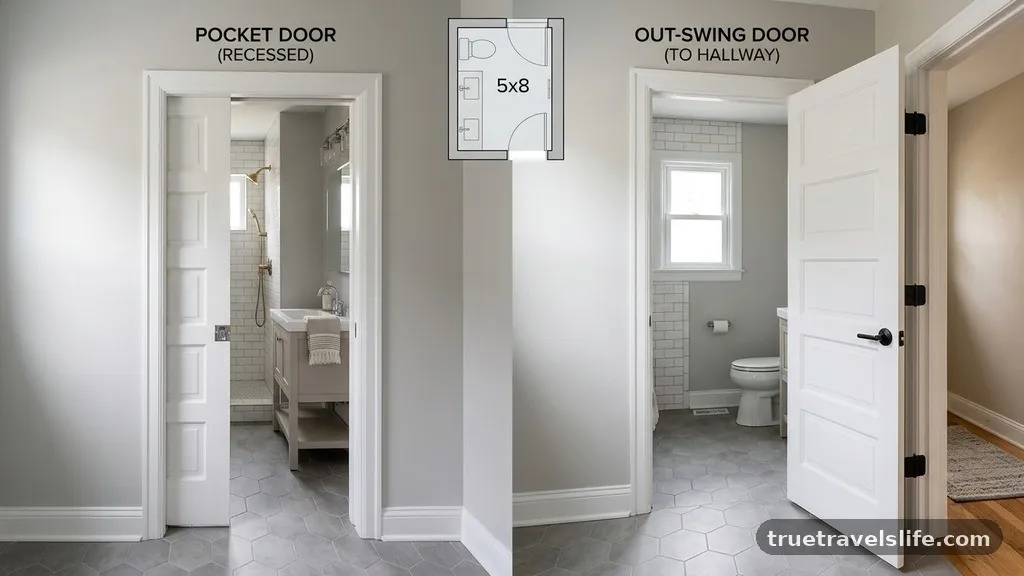
If neither a pocket door nor a traditional out-swing door feels right, look into other options. A bi-fold or accordion door can be used, though these are often considered less durable and less attractive.
A “barn door” style slider is another possibility, but it requires wall space outside the bathroom for the door to slide across. This effectively kills your wall space in the hallway, similar to how an out-swing door does.
Another option is a smaller door width. While 30 inches is standard, a 28-inch door can sometimes save the day in a tight 5×8 bathroom.
It won’t solve the clearance issue entirely, but it reduces the footprint of the door swing. Consult with your local building codes to ensure you aren’t violating any minimum width requirements for egress.
FAQ: Making the Right Choice
Is a pocket door for a bathroom a good idea?
A pocket door is a fantastic idea for a small bathroom if you have the wall capacity to accommodate the frame. It removes the door swing entirely, which is the single biggest factor in making a small room feel usable. Just ensure you use high-quality hardware to avoid future maintenance headaches.
Why did builders stop using pocket doors in the past?
Builders moved away from them because early hardware was prone to jumping off the track and the frames were often flimsy. Poorly installed pocket doors earned a reputation for being difficult to operate and hard to repair. Modern kits are much more reliable, but they still require expert installation to perform correctly.
What should I do if my wall has plumbing in it?
If your wall is full of pipes, you cannot install a pocket door without a massive, expensive plumbing relocation. In this case, an out-swing door is the most practical choice. You can mitigate the hallway obstruction by using a door stop to limit the swing or by choosing a narrower door.
Is a 5×8 bathroom too small for a swinging door?
It isn’t “too small,” but it is inefficient. If you choose an in-swing door, you will likely have to stand in a specific spot just to close it. If that spot is in front of the toilet, it can feel awkward. An out-swing door is almost always preferred in a 5×8 layout if the hallway allows it.
The decision between a pocket door vs out-swing door for a 5×8 bathroom remodel ultimately comes down to your priorities. If you value every square inch of floor space and have the budget for a professional installation, the pocket door is the clear winner for modernizing your home. It creates a cleaner, more open feel that is hard to replicate with any other hardware.
If your budget is tight or the wall structure is too complex, an out-swing door is a perfectly respectable and reliable alternative. Just be sure to measure your hallway clearance and consider the safety of others in your home before you hang the door.
Take the time to finalize your plan, and you will enjoy a functional, comfortable bathroom for years to come. Feel free to consult with a local contractor to see which option works best with your specific wall layout.